
Figuring out what to wear to a masquerade ball is really two decisions wearing one invitation: the outfit and the mask, and the order you decide them in makes or breaks the look. The gown comes first, the mask answers to it, and the hair and makeup answer to the mask. This guide runs that sequence start to finish, including the dress-code decoder, the color logic, and the mask logistics nobody warns you about.
Start with the Invitation, Not the Mask
Masquerade balls descend from Venetian carnival tradition, but modern ones range from black-tie galas to themed parties, and the invitation wording tells you which one you got. “Black tie” or “formal” means floor length, “cocktail” or “semi-formal” means a dressy short look, and a printed theme outranks everything else. When the wording is vague, look at the venue: a hotel ballroom or charity gala leans formal, a bar or private party leans playful, and dressing one polished step above your guess never reads wrong at an event built on drama.
What to Wear to a Masquerade Ball by Dress Code
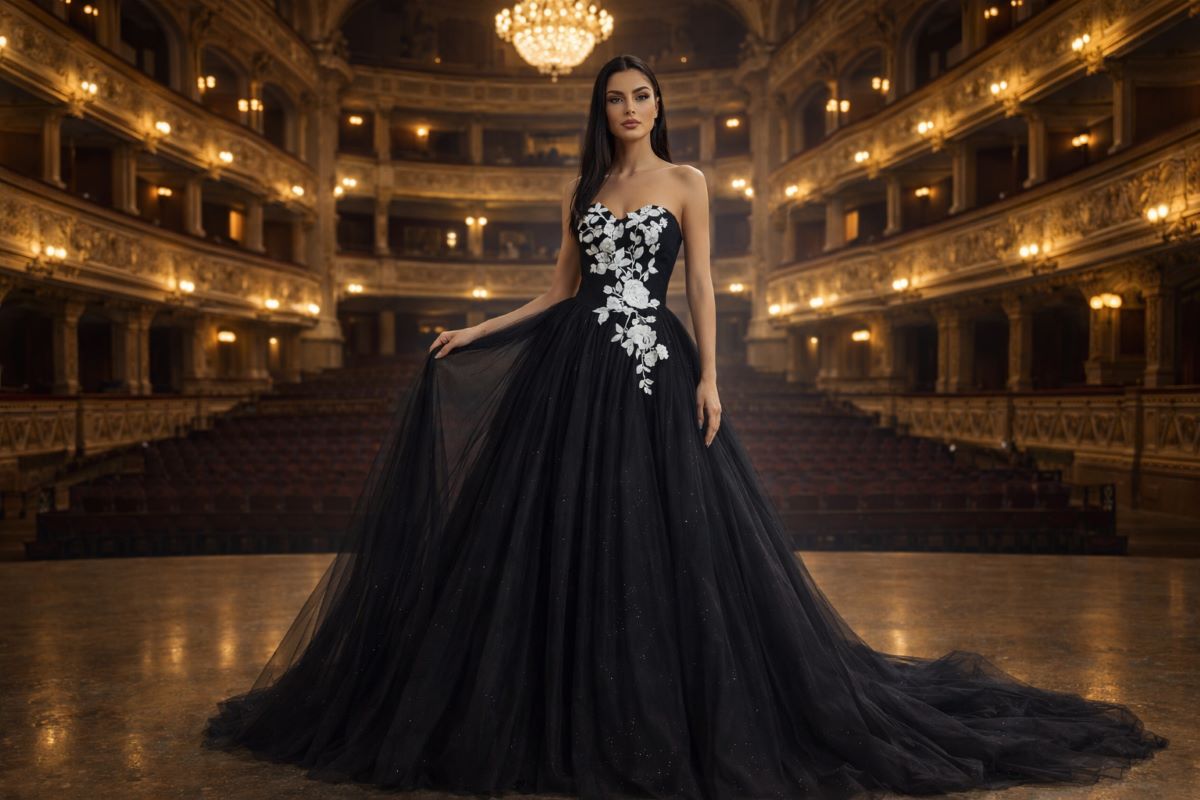
For formal masquerades, this is the one night the biggest silhouette in the closet earns its space: ball gowns evening dresses photograph like the event was designed around them, and a full skirt balances the visual weight a mask adds at eye level. A masquerade ball gown does not need to be a costume; it needs presence.
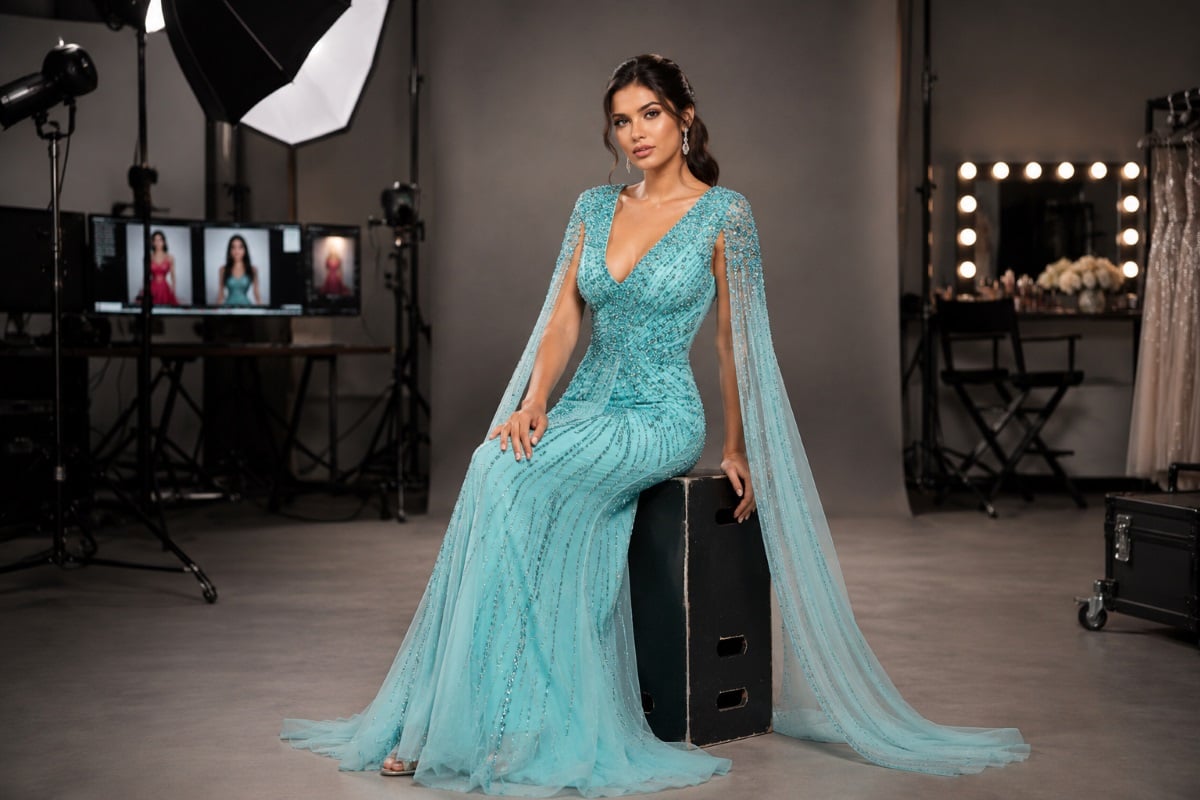
Prefer a sleeker line at a formal event? A fitted column or trumpet in a deep tone carries the same authority, and our gala night dresses guide breaks down the long-gown formality range if you are choosing between silhouettes.
For semi-formal and party-level masquerades, short and rich beats long and plain. A classic little black dress with a dramatic mask is the most reliable masquerade outfit there is: the dress plays the straight man, the mask delivers the mystery, and you can dance until the venue kicks everyone out.
The Color Logic: Echo or Contrast, Never Random
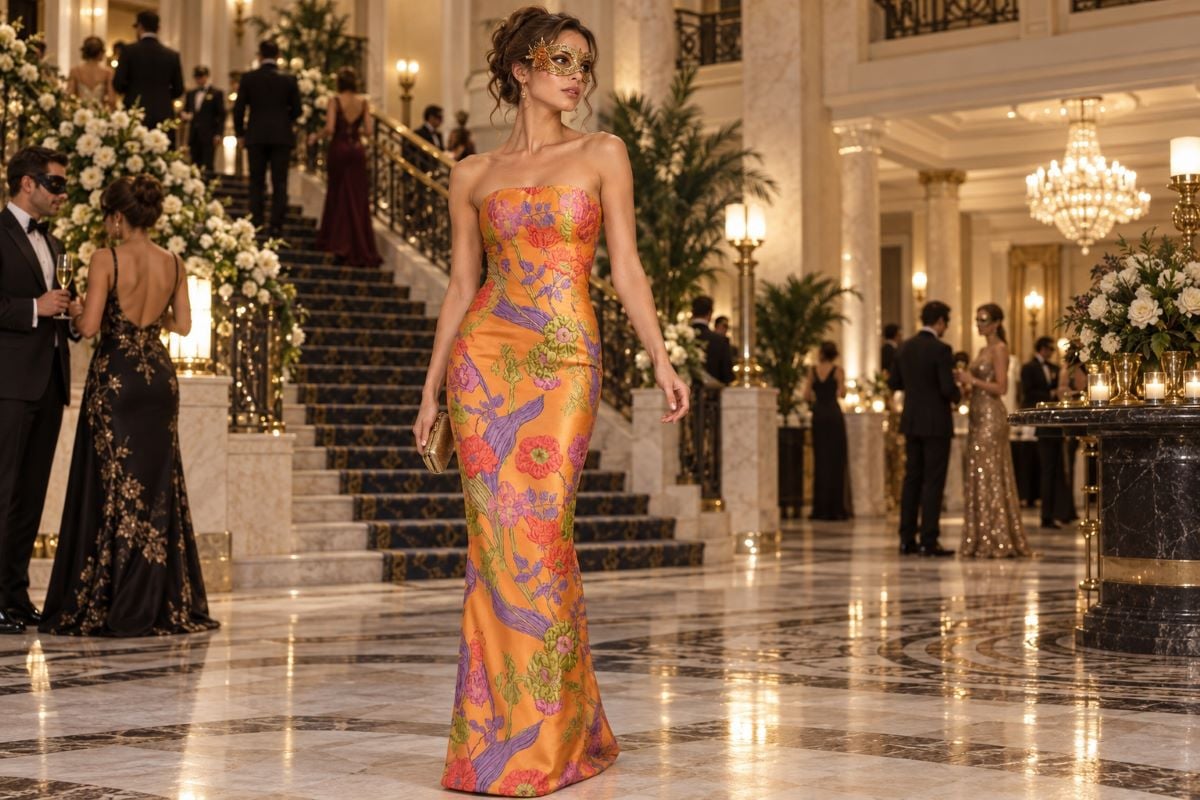
Masquerade attire runs on one color rule: the mask should either echo the dress or contrast it on purpose. Deep, saturated tones give the mask something to work against, which is why black evening dresses anchor half the room at any masquerade: black takes a gold, silver, or jewel-tone mask without competing. Metallic masks read glamorous, dark masks read mysterious, and a white or ivory mask against a dark gown is the highest-contrast move in the building.
Want the room to find you? Reverse the formula: make the dress the statement and quiet the mask. Floor-length red evening dresses with a simple black mask own a masquerade in a way no accessory can, because red plus mystery is the whole genre in one look.
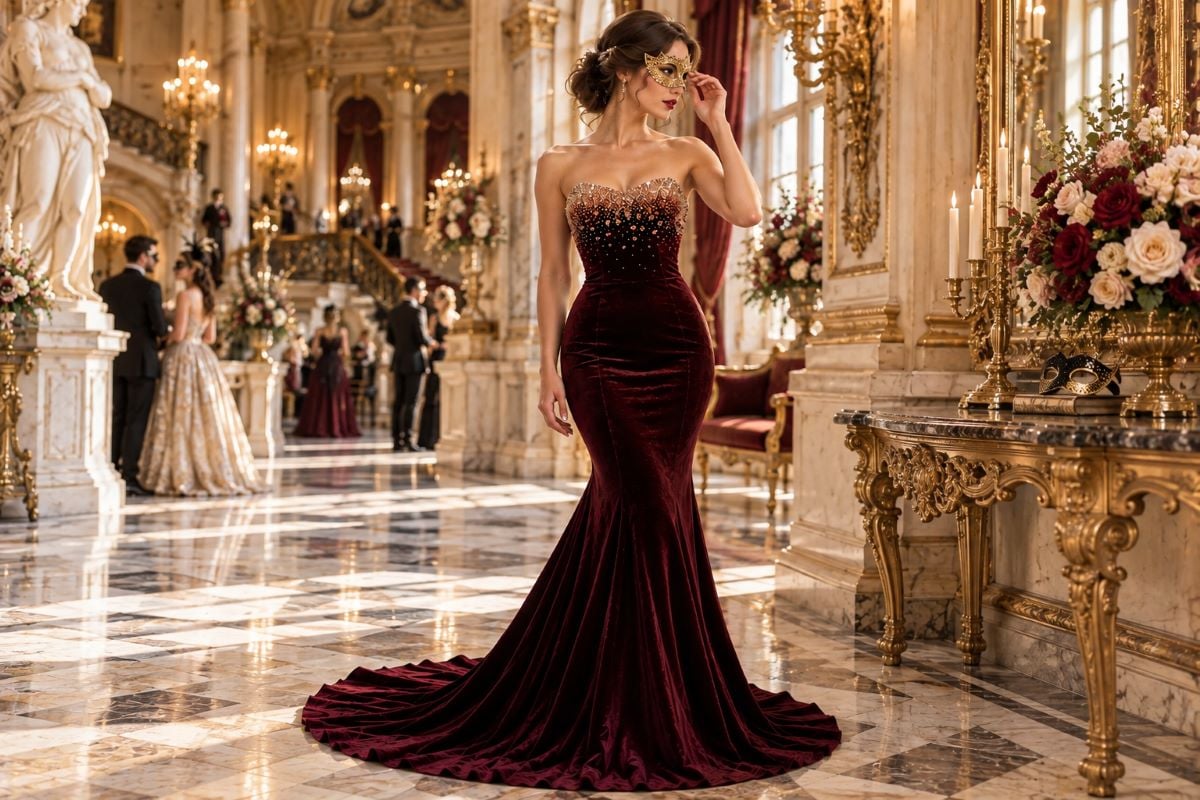
October and winter masquerades also reward texture. The nap of velvet gowns catches candlelight and low ballroom lighting the way flat fabrics cannot, which is exactly the lighting these events are staged in.
Pick the Mask for Your Face, Hair, and Night
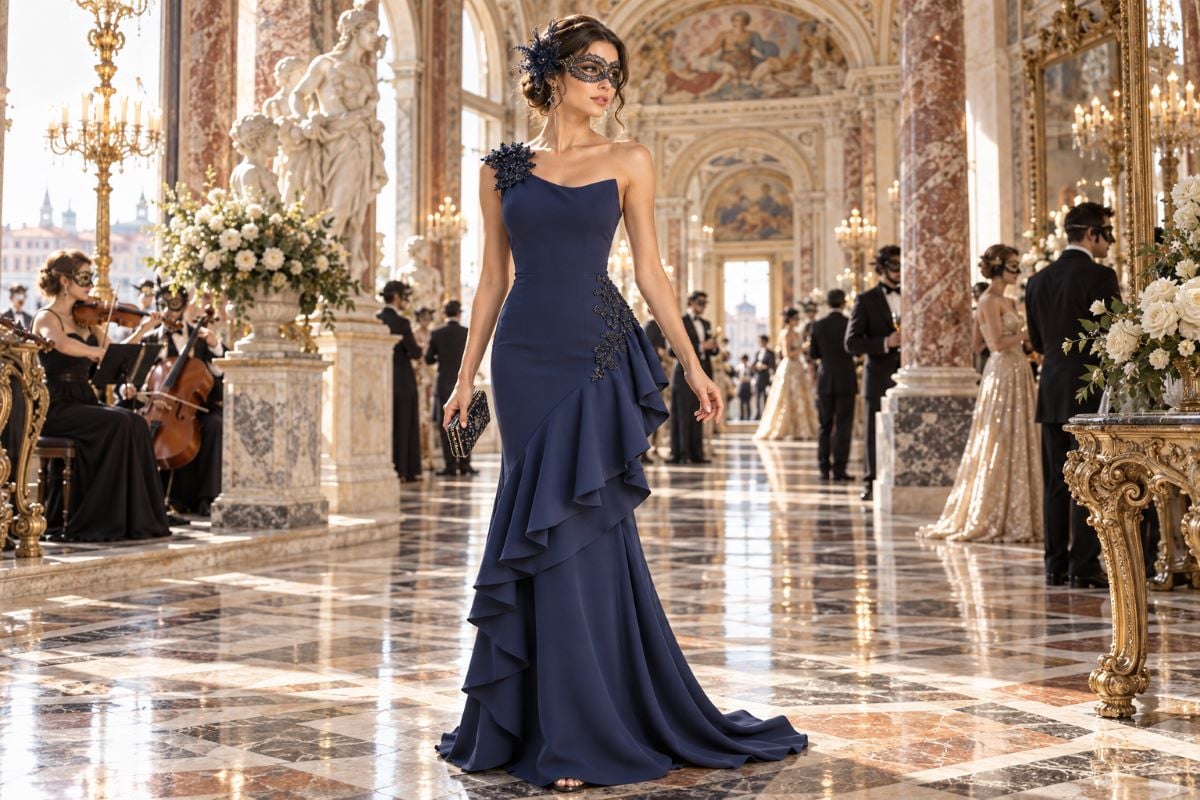
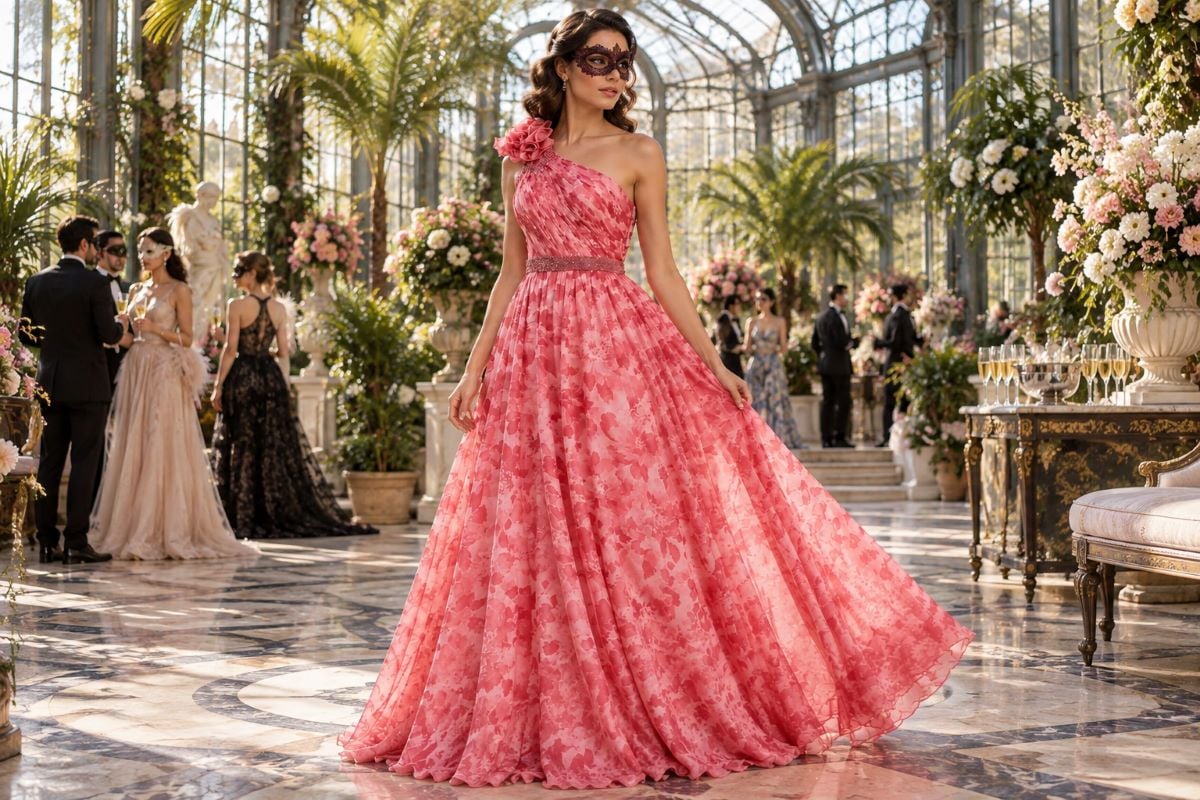
The mask decision is comfort math as much as style. Half masks and eye masks let you talk, drink, and be recognized by friends, so they dominate real events, while full-face masks look extraordinary and last about forty minutes.
If you wear glasses, choose a mask shaped to sit over or above the frames and test the pairing at home, because this is the single most common masquerade regret. Ribbon-tie masks are the most secure for a night of dancing but demand a hairstyle that leaves room for the knot, headband styles protect a blowout, and stick masks are for looking incredible in photos and then setting down at dinner.
Hair and Makeup Around a Mask
Hair goes up or back more often than not, since ribbon ties and mask edges fight loose styles all night; the updo section of our hairstyles for formal gowns guide maps the options by gown neckline. Makeup flips its usual priorities: the mask covers or shadows the upper face, so the lip carries the look. A bold, long-wear lip color does more for a masquerade than any eye look, and whatever eye makeup shows through the mask openings should be smudge-proof, because masks touch skin all night.
The Two Masquerade Seasons
Masquerades cluster in two windows: the October run of galas and themed balls, and the New Year’s Eve formal circuit. That makes early fall the smart shopping moment, since the same masquerade ball dress can headline both nights with a mask swap and different jewelry. If your invitation is the black-tie kind, our black tie evening dress guide covers the formal-floor rules that masquerade galas inherit.
Mystery Is a Plan, Not an Accident
Deciding what to wear to a masquerade ball comes down to sequence: decode the invitation, choose the gown for that formality, give the mask one clear job of echo or contrast, and style hair and makeup around the mask’s demands. Do it in that order and the most theatrical dress code on the calendar becomes the easiest one to get right. Try the gown half of the equation in person at an authorized Jovani retailer near you, and let the mask meet its match.
Masquerade Ball FAQ
What do you wear to a masquerade ball?
A formal masquerade calls for a floor-length gown with a coordinating mask; a semi-formal or party version calls for a rich short dress, most reliably black. The mask should either echo the dress color or contrast it deliberately.
Can you wear a short dress to a masquerade ball?
Yes, when the invitation says cocktail, semi-formal, or party. Choose rich fabric and a dramatic mask so the look reads masquerade rather than dinner. If the invitation says black tie or formal, stay floor length.
What color should a masquerade dress be?
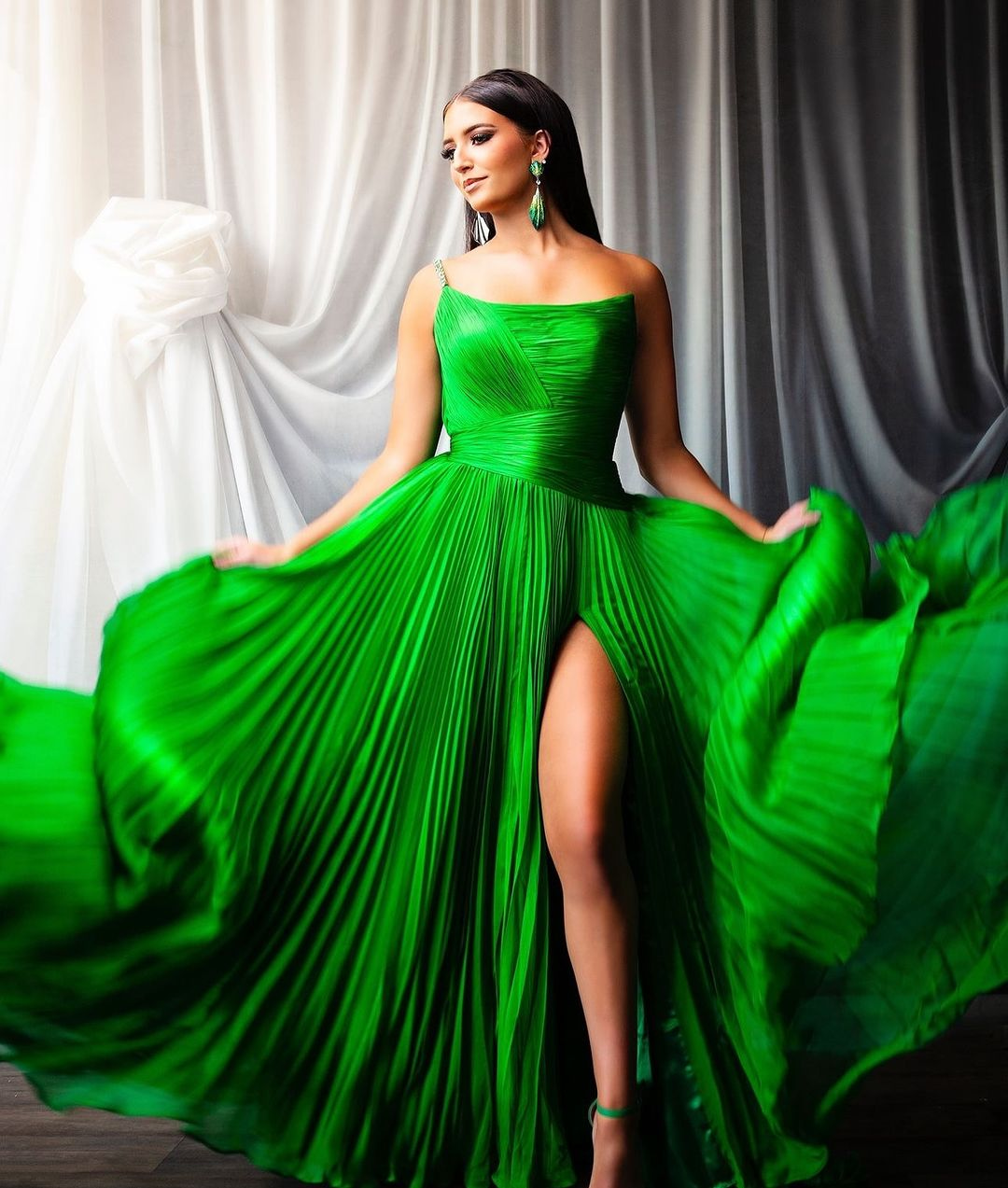
Deep and saturated works best: black, red, emerald, navy, or metallics. Dark tones give the mask contrast to work against, while a statement-color gown pairs best with a simple dark mask so the two never compete.
How do you wear a mask all night?
Choose a half or eye mask for comfort, fit it over glasses at home if you wear them, and match the attachment to your hair: ribbon ties with an updo for dancing, headband styles to protect loose hair, stick masks for photos only.