
How to Choose Lightweight Summer Black Tie Dresses
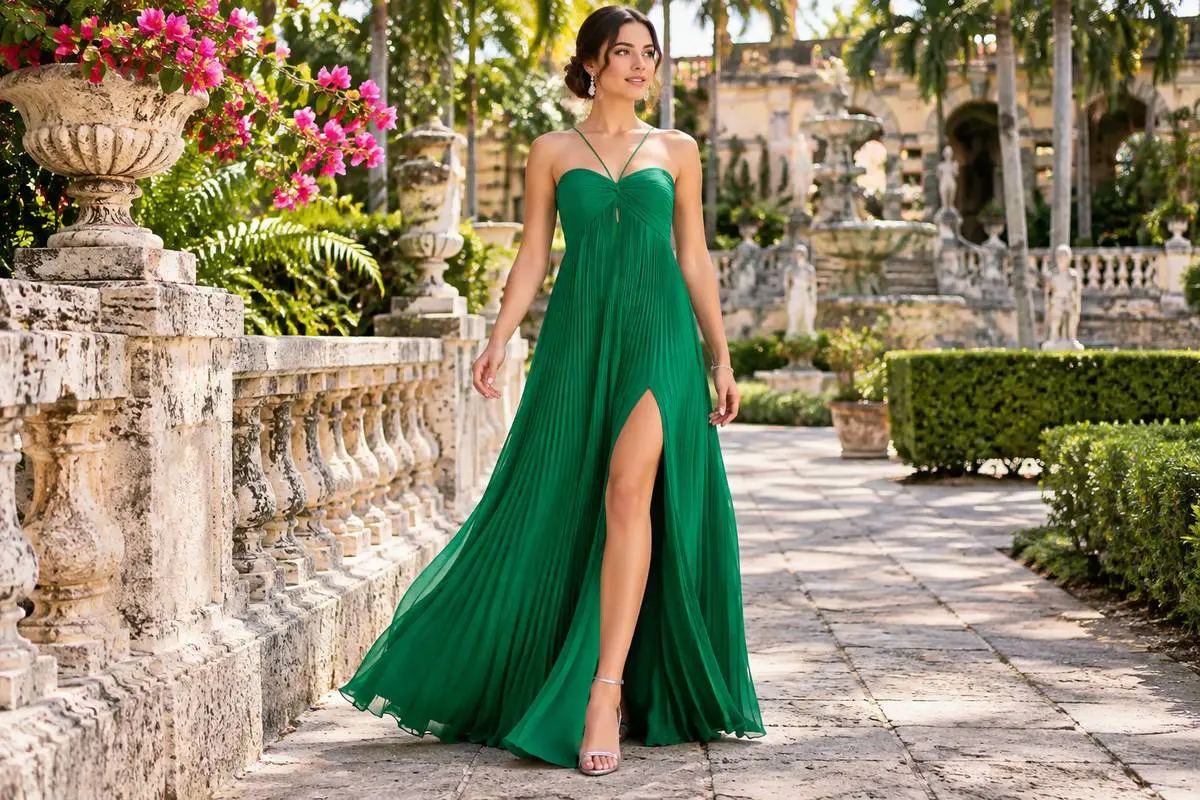
Choose a floor-length gown in lined chiffon, lighter crepe, or light satin for a summer black tie event. Check the lining and skirt layers before judging how cool it will feel. A gown should read as eveningwear and stay comfortable through the warmest part of the event.
Start with the invitation, then picture the hours you will spend outdoors and indoors. A garden ceremony in direct sun asks more of the fabric than a short walk from the car to an air-conditioned ballroom. Look for that distinction as you compare evening dresses (opens in new tab).
What Makes Summer Black Tie Dresses Formal Enough?
A floor-length hem is the safest starting point for strict black tie, even in hot weather. A clean neckline and a well-fitted bodice can make a simple gown feel formal without heavy beadwork. Compare the finish and fit across black tie dresses (opens in new tab) rather than assuming the fullest skirt is the dressiest.
A lightweight gown and a daytime maxi can have the same hem but look right at different events. Look for an opaque skirt, a bodice that sits securely, and a hem that hangs evenly in your shoes. If the invitation uses a different dress code, check the black tie guide for women (opens in new tab) before choosing a length.
Which Fabrics Work for Black Tie in the Heat?
Start with chiffon for an outdoor stretch, crepe for a quieter finish, or satin when most of the event is indoors. Each comes in different weights, so use those names to narrow the rack, not to judge the dress on its own.
Chiffon for a Skirt That Moves
An outer layer of chiffon gives the skirt movement without the bulk of a stiff overskirt. Jovani style 47820 uses pleated chiffon in a floor-length A-line with an empire waist and narrow straps. In A-line evening gowns (opens in new tab), see how far the skirt falls from your legs when you walk.
Crepe for a Matte Finish
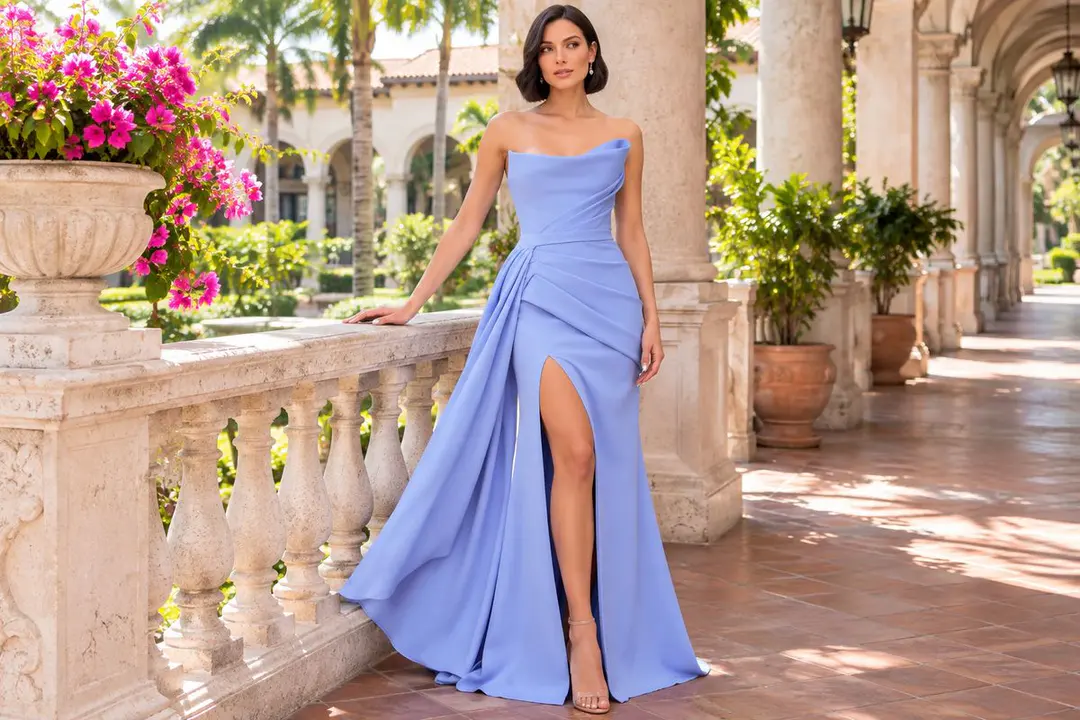
Lighter crepe works if you want a smoother outline without a glossy finish. Jovani style 53165 shows what that can look like in a strapless crepe column with a draped bodice and open back. Sit in a close cut to see whether the fabric pulls across your lap.
Satin for an Indoor Reception
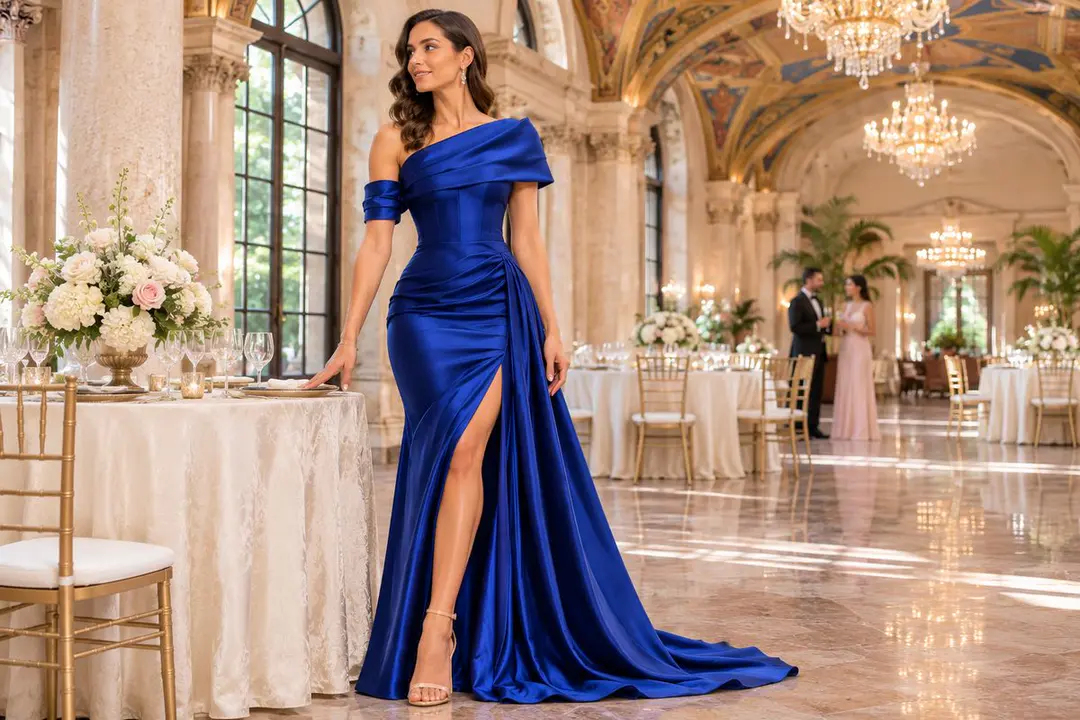
Among satin evening dresses (opens in new tab), look for one that falls smoothly without a stiff layer under the entire skirt. Jovani style 49563 pairs satin with an asymmetric folded neckline and a floor-length mermaid silhouette. Try sitting for a few minutes, then stand and check how visibly the skirt creases.
Check the Lining and Bodice Before You Buy
A gown can look airy on the hanger and still feel warm in humidity if the lining fits closely or the skirt has several layers. Lift the hem to see what sits under the outer fabric. Then check opacity in daylight, especially if the color is pale or the outer layer is sheer.
Look at where the dress gets its structure. A fitted bodice can hold the neckline in place without needing the same stiffness through the skirt. If you want more coverage than thin straps offer, compare one-shoulder styles (opens in new tab) with lighter skirts and check that the strap stays put when you reach.
If you like beadwork, compare a gown with detail at the neckline against one beaded through the skirt. Beading in one area can give you the finish you want without adding weight along the full length.
Match the Gown to the Warmest Part of the Venue
For a garden ceremony or terrace reception, choose a skirt you can manage in wind and on uneven ground. Walk in the shoes you plan to wear and check that the front hem clears your toes. A floor-length dress without a long train is easier to manage on grass.
On an exposed terrace, test how far a front slit opens when you sit. If you have to hold it closed, try a similar shape with a lower slit or none at all.
For a ballroom dinner or benefit, start with the shape you can sit in comfortably. A slim skirt can be easier around closely spaced chairs, provided you can take a full step. If the invitation is for a fundraiser, use the gala dress code guide (opens in new tab) to check the expected level of formality.
If the wedding starts at a house of worship and moves outdoors, check whether the ceremony calls for shoulder coverage. Plan the layer for that part of the day, not for the entire reception. The summer wedding guest dress guide (opens in new tab) covers venue and coverage choices across other dress codes too.
Keep the Finishing Layers Light
Let the neckline or the fabric carry the look if you want to keep accessories simple. A light wrap you can fold into a bag can help when you move indoors, without committing to sleeves outside. Try it against the gown to check it does not catch on embellishment.
Before choosing between summer black tie dresses, compare two floor-length styles with different linings in the same shoes. An authorized Jovani retailer (opens in new tab) can help you try both and check the hem before you decide.
Frequently Asked Questions
Can I Wear Black to a Summer Black Tie Event?
Yes, black works at a summer black tie event, including most evening weddings. Follow any colors the couple has requested or reserved. If you like the color but want a lighter feel, compare black gowns with different skirt layers.
Can I Wear a Floral Gown to a Summer Black Tie Wedding?
Yes, a floral print can work on a floor-length gown with an evening finish. Skip a mostly white background unless the couple requests it. Check the print in a full-length photo so you see the pattern across the whole dress.
Can I Wear a Midi Dress to Summer Black Tie?
Choose floor length for strict black tie unless the host confirms a shorter dress is welcome. For black tie optional, a dressy midi may work if the fabric and cut suit the venue.
Do I Have to Wear Heels to a Summer Black Tie Event?
No, dressy flats can work if they fit the venue and the gown is hemmed for them. Try the actual pair before altering the dress, since switching from heels to flats brings the hem closer to the ground.