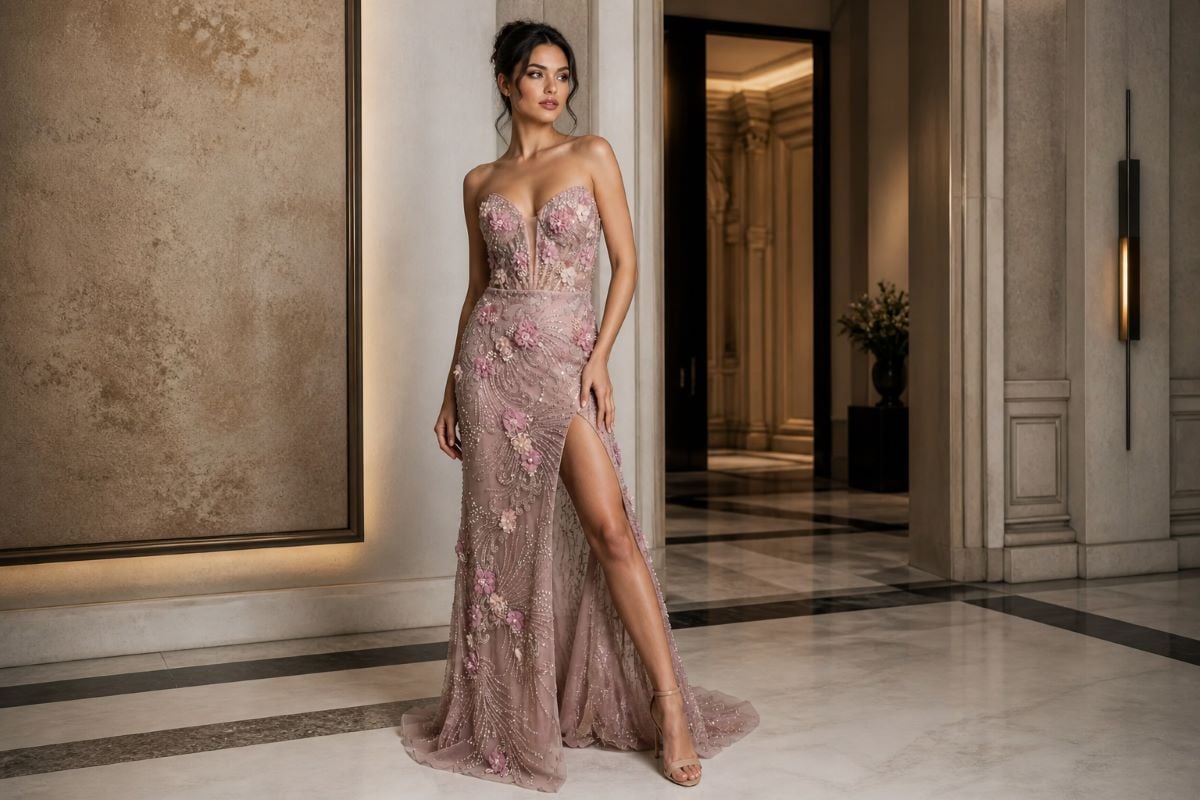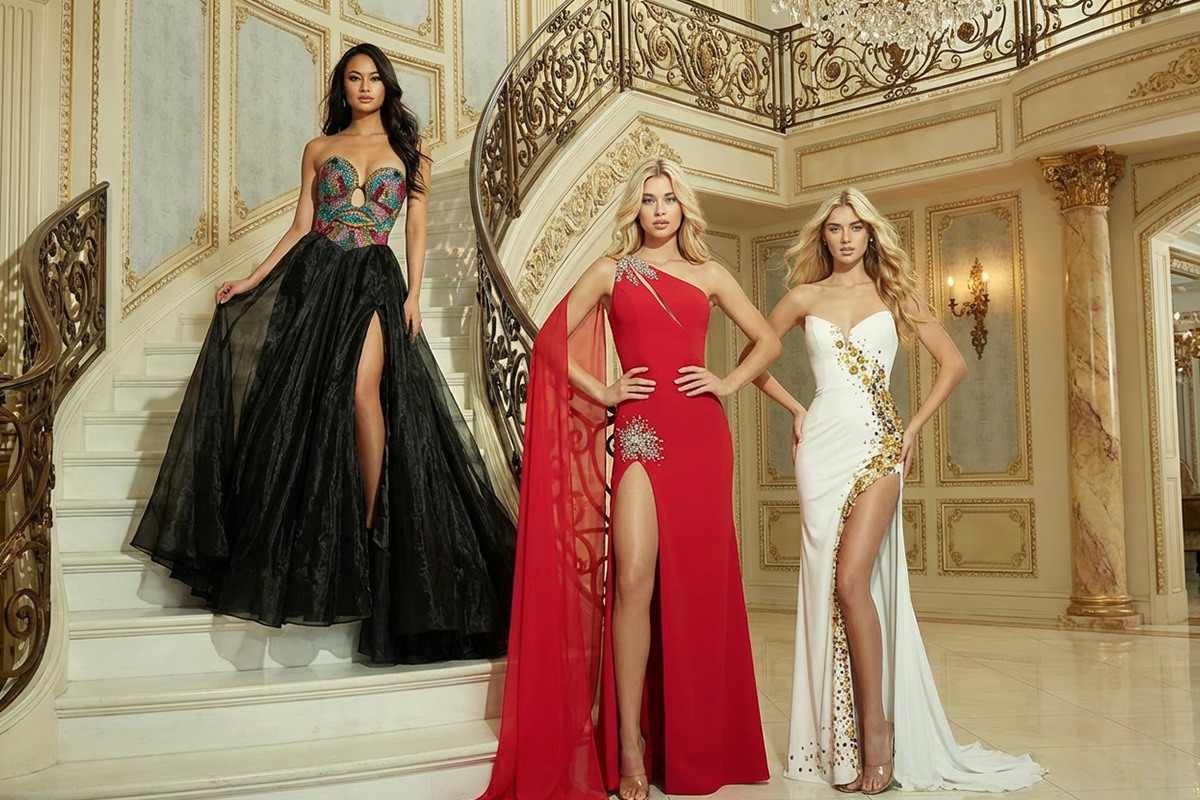

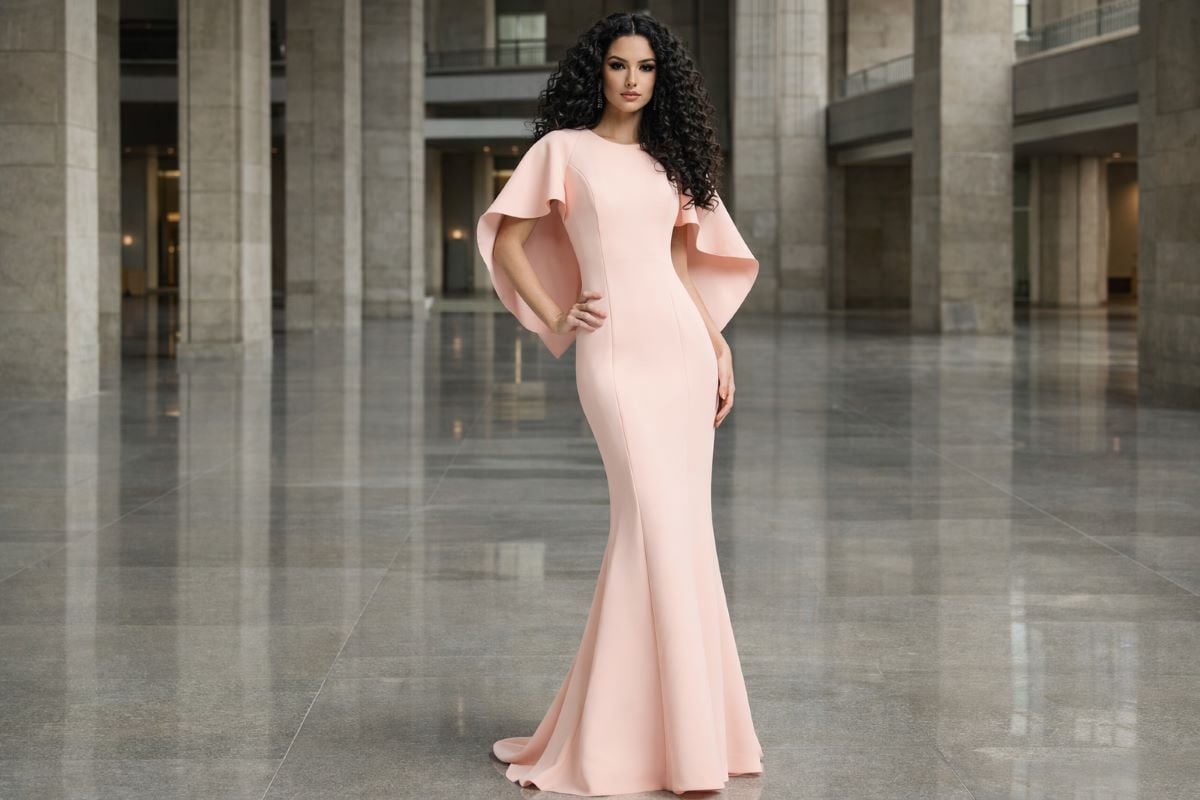
Minimalist evening gowns have nowhere to hide. Strip out the beading, the tulle layers and the applique, and what remains is cut, fabric and fit. That is exactly why the style has grown: a gown that works on construction alone reads as more expensive than one carrying its cost on the surface. It is also why a badly made minimalist dress fails instantly, in a way a heavily beaded one can disguise.
This guide covers what actually makes a simple gown work, which silhouettes and fabrics hold up, and where minimalism stops being appropriate. It is written for someone deciding between a clean gown and an embellished one, not for someone browsing.
What makes a minimalist evening dress work?
How do you tell a good minimalist gown from a plain one? Look at the seams, the fabric weight and the fit at the shoulders. On a clean gown, every seam is visible, so a puckered dart or a wandering side seam shows immediately. The fabric has to hold its own shape, which means matte crepe, mikado, heavy satin or silk charmeuse rather than a thin lining fabric. And the shoulder and bust fit has to be exact, because there is no surface detail drawing the eye away from a gap. A plain dress fails those three tests. A minimalist one passes all three.
Silhouettes that carry minimalism
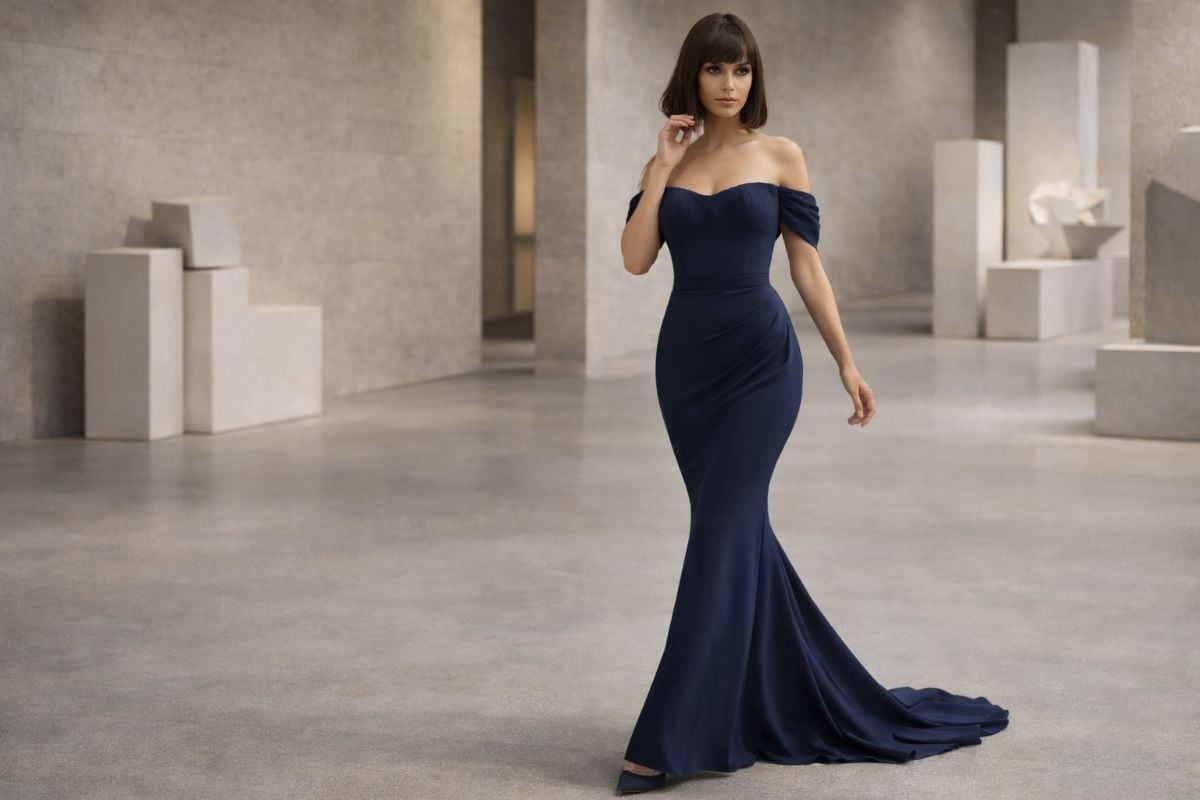
Column and sheath shapes are the obvious choice and the most reliable. A body-skimming column in matte crepe follows the natural line of the body without adding volume, which creates the elongated look the style is known for. It is also the least forgiving shape in the group, so the fit matters more here than anywhere else.
A modern minimalist dress does not have to be narrow, though. An A-line skirt in heavy unadorned mikado reads as clean rather than sparse, because the fabric holds a sculptural shape on its own. The rule is that the surface stays smooth and the line from bodice to hem stays uninterrupted. Add a ruffle or a tier and the effect breaks.
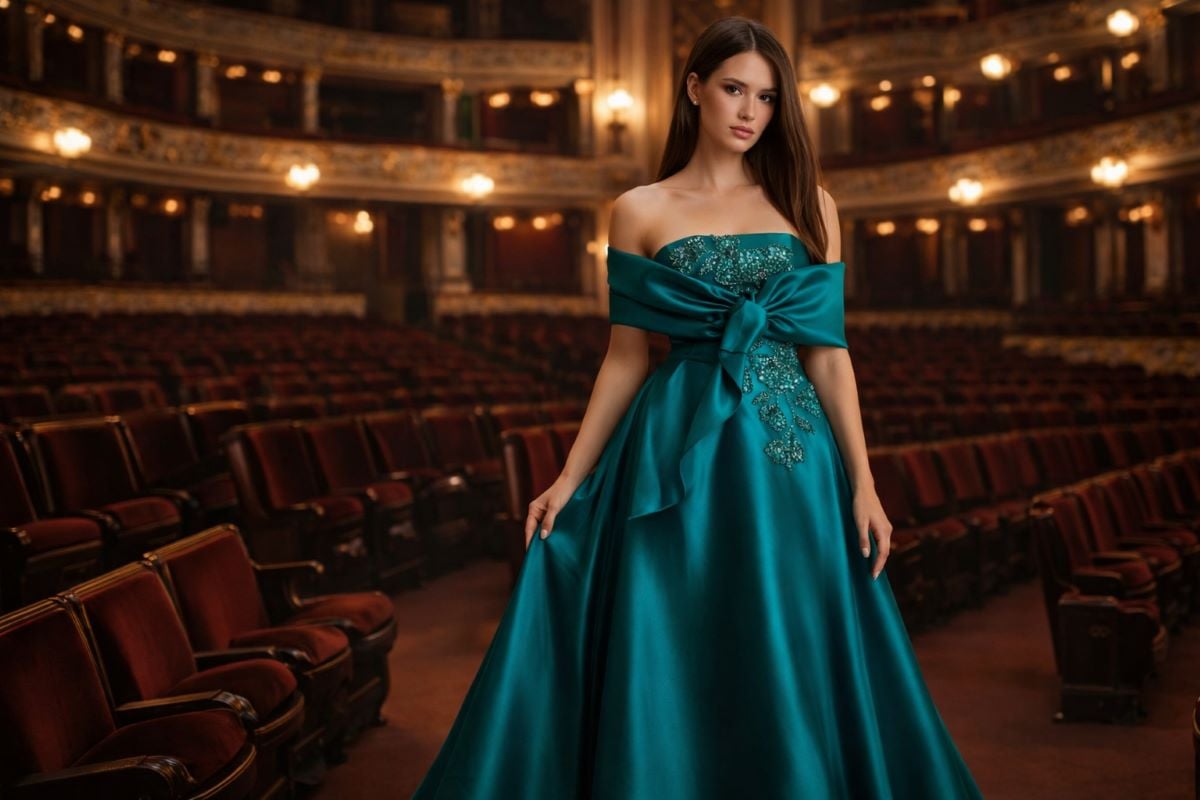
Slip-style gowns in liquid satin or silk charmeuse belong to the same family but behave differently. They drape rather than hold, they show everything underneath, and they need either a smooth foundation garment or a built-in lining. They photograph beautifully and they are the least tolerant of a poor fit.
Where minimalism does not work well is on a gown that needs internal structure to sit correctly. A strapless bodice with heavy boning, a corseted waist or a full ball skirt all rely on visible construction, and stripping the surface detail from them tends to look unfinished rather than restrained. If you are weighing the two approaches directly, our comparison of luxury versus simple evening dresses sets out where each one is the better answer.
Necklines and structural detail
With no embellishment on the surface, the neckline becomes the design. Square necklines give a clean horizontal line that frames the collarbone and suits a broader shoulder. A deep V lengthens the torso and is the easiest neckline to wear on a fuller bust. The straight-across strapless cut has returned and reads as sharp rather than sweet, though it needs the most precise fit of the three.
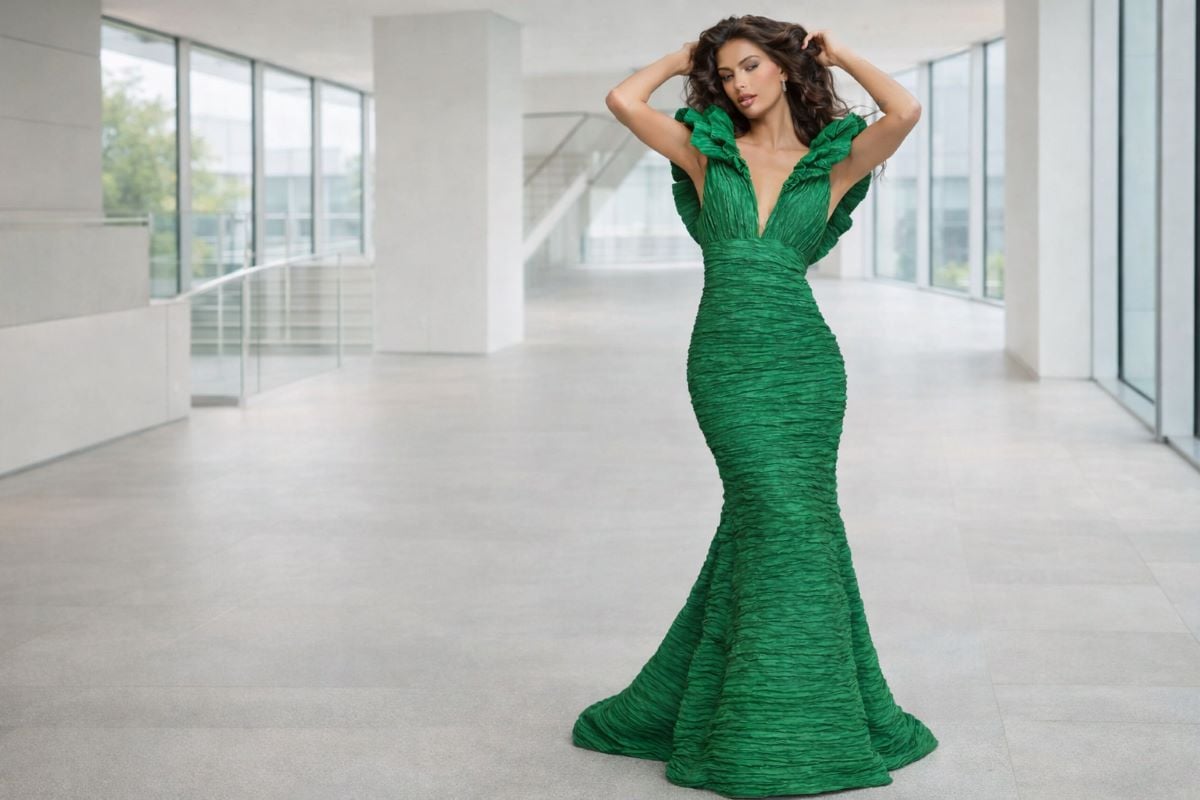
Sleeves work the same way. A structured shoulder adds architecture and gives a clean gown some visual weight. A tailored sleeveless bodice does the opposite, keeping the focus on the collarbone and arms. Both are valid; what does not work is an unstructured sleeve, because a soft cap or a loose flutter reads as an afterthought on a gown with no other detail.
Cowl necks, open backs and a single high slit are the three details that add movement without breaking the aesthetic, because each is a shape rather than an ornament. For a wider look at how neckline choice changes a gown, our guide to trending necklines in evening dresses covers the full range.
Color, and why monochrome matters here
On a clean gown the color carries more of the impression than it would on a beaded one, because there is nothing else competing. Neutrals are the foundation of the look: optical white, ivory, champagne and taupe all read as modern and deliberate.
Black is the strongest option rather than the safest one. A black gown with a sharp neckline and an exact fit is the clearest expression of the style, and it is what most people actually mean by elegant and understated. It is also the least forgiving color under photography flash, which shows every fit issue.
Deep jewel tones work if the look stays monochromatic. Emerald, midnight navy and burgundy all suit a clean silhouette, but the moment a second color enters through a contrast belt or a two-tone bodice, the effect shifts from restrained to designed. One color, one fabric, one line is the working rule.
Fabric choices, and how they behave
Without crystals or embroidery, the fabric does all the work, so it is worth knowing how each one behaves before an event rather than after.
| Fabric | How it behaves | Best silhouette | Watch out for |
|---|---|---|---|
| Matte crepe | Opaque, smooth, holds a crisp seam | Column, sheath, tailored A-line | Shows pressure marks if it sits creased in a garment bag |
| Mikado | Heavy and sculptural, holds its own shape | Structured A-line, architectural bodice | Stiff to sit in through a long dinner |
| Liquid satin | Fluid drape, reflects light strongly | Slip, bias-cut column | Shows every line underneath and every fit flaw |
| Silk charmeuse | Soft, close to the body, very fluid | Slip, draped cowl | Creases easily and marks with water |
| Heavy velvet | Deep matte texture with visible depth | Column, long sleeve gown | Warm, so it suits cooler-season events only |
Texture is the one way to add richness without breaking the rules, since a velvet or a ribbed crepe brings depth through the weave rather than through applied decoration. Our guide to the best fabrics for luxury evening dresses goes further into how each textile performs over a full evening.
Minimalist gowns at black tie
The common worry is that a clean gown will read as underdressed at a formal event. In practice, formality comes from length, fabric quality and fit rather than from surface decoration. A floor-length crepe gown with a single side slit meets a black tie dress code without difficulty, and a structured satin mermaid does the same.
Where it goes wrong is when the fabric is too light for the room. A thin polyester satin in a bright ballroom reads as cheap precisely because there is nothing to distract from it. That is the trade the style asks for, and it is why a simple gown is not automatically the budget option. Our guide to black tie evening dresses sets out where the formality line actually sits.
Styling carries more weight than usual here. A clean gown works as a backdrop, which means you can either keep everything quiet with fine jewelry and a slim clutch, or let one strong piece do all the talking. What does not work is the middle ground, where several medium-sized accessories compete and the discipline of the look collapses. Our piece on how to accessorize an evening dress covers both routes.
Minimalism as a longer-term choice
A gown covered in a specific season’s beadwork tends to date within a year or two, because the embellishment itself is the trend. A well-cut minimalist gown has less to date, so it stays wearable across several events and can be restyled with different accessories each time.
That is a practical argument rather than a moral one. It also comes with a condition: the value only holds if the fit was right in the first place and the fabric was good enough to survive repeated wear and cleaning. A cheap clean gown ages faster than a good beaded one. If you want the wider context on where this sits in evening wear, our piece on quiet luxury evening dresses covers the same territory from the styling side.
Minimalist Evening Gown Questions
Does a minimalist dress look too casual for a formal gala?
No, provided the length and the fabric are right. Formality is set by floor length, fabric weight and fit rather than by embellishment. A floor-length gown in heavy satin, silk or high-grade crepe is fully appropriate for a gala or a black tie event. What reads as casual is a thin fabric or a hem that stops short, not the absence of beading.
How should you accessorize a minimalist evening dress?
Choose one route and commit to it. Either keep everything restrained with fine jewelry and a slim clutch, or use the gown as a backdrop for a single strong piece such as a wide cuff or sculptural earrings. The combination that fails is several medium-sized accessories at once, since they compete with each other and undo the discipline of the gown.
Are minimalist gowns flattering on every body type?
The style works across body types, but the silhouette has to match the shape rather than the other way round. An A-line defines the waist and skims the hip. A sheath suits a straighter frame or works with a built-in foundation. A slip is the least forgiving of the group. Because there are no bulky layers, the fit at the shoulders and bust matters more than in an embellished gown.
Which fabrics suit minimalist evening wear best?
Matte crepe holds a crisp seam and is the most practical for a long event. Mikado gives a sculptural shape without decoration. Liquid satin and silk charmeuse suit slip styles and drape fluidly, though both show every line underneath. Heavy velvet adds depth through texture and suits cooler-season events.
What hair and makeup suits a clean, unadorned gown?
A polished, deliberate look works better than a soft one. Hair pulled back into a chignon, a sleek ponytail or a sharp bob matches the lines of the dress. For makeup, either a strong lip against otherwise bare skin, or a fully tonal nude palette, keeps the face and the gown in balance rather than competing.
When is a minimalist gown the wrong choice?
Skip it when the gown relies on internal structure that wants to be seen, such as a heavily boned strapless bodice or a full ball skirt. Skip it too when the budget only reaches a thin fabric, since a clean gown exposes poor material immediately. In both cases an embellished dress at the same price will look better.
Seeing a simple gown in person
A minimalist gown is the hardest type to judge from a photograph, because everything that makes it work is fit and fabric weight. A screen flattens both. Standing in the dress tells you in seconds what an image cannot, from how the seams sit to whether the fabric holds its line when you move.
To narrow the field before you go, work through the simple evening dresses collection and shortlist by silhouette rather than by color, since silhouette is the part a fitting will confirm or rule out.
Then take that shortlist to an authorized Jovani retailer near you, where the fit at the shoulders and bust can be checked properly and the hem set for the shoes you plan to wear.