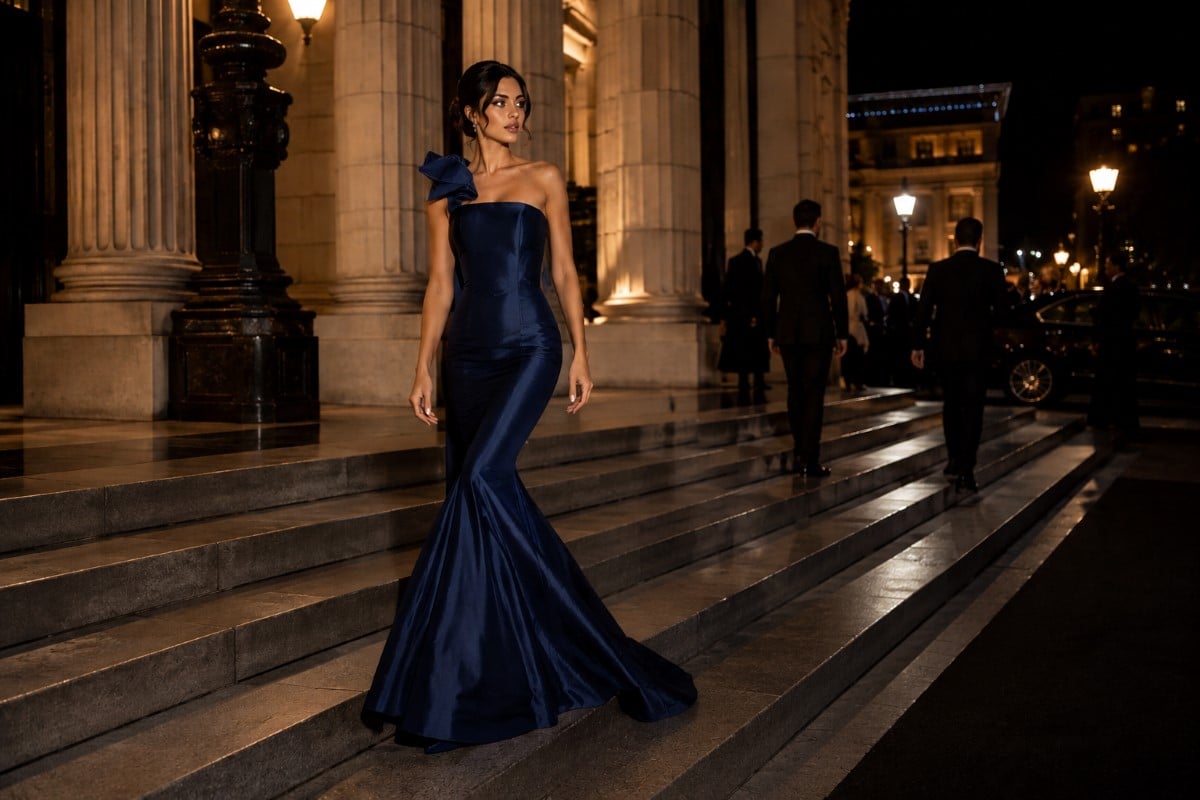

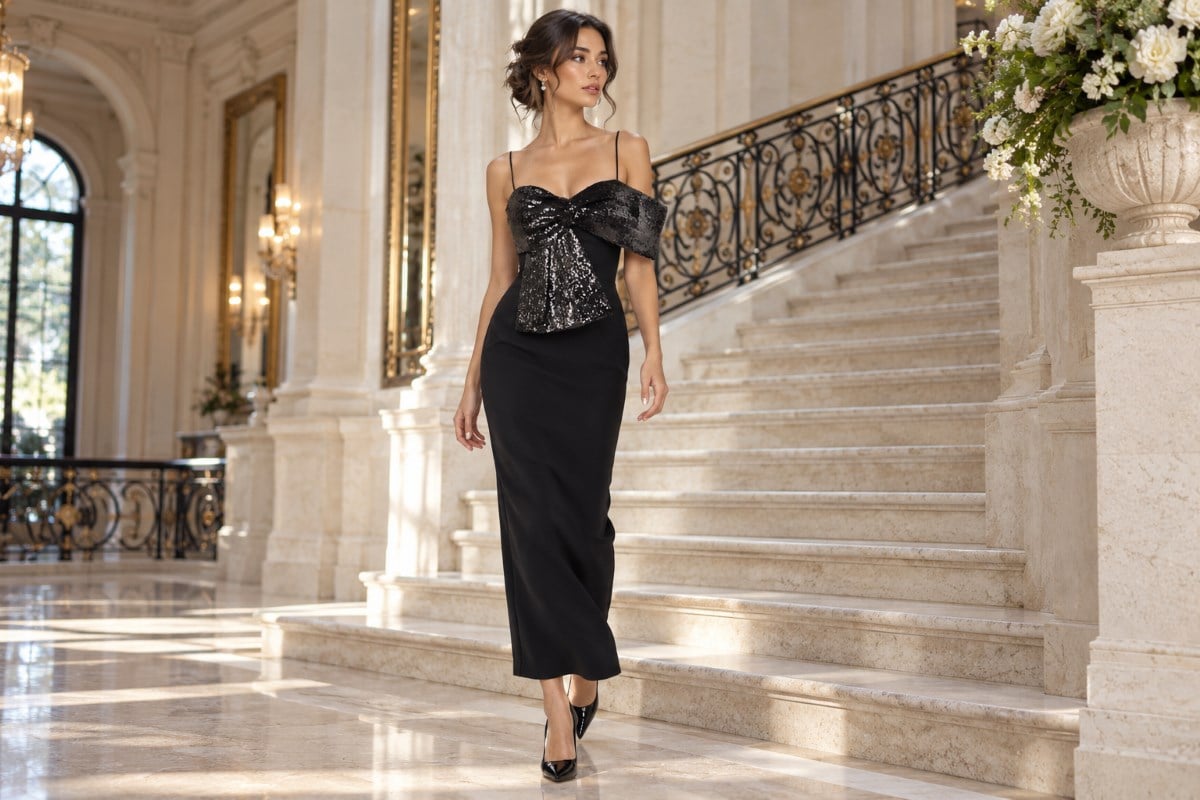
What color shoes to wear with a black dress is the easiest color question in your closet and the hardest styling one. Black is a neutral, so nothing clashes with it, which means the usual list of shades that work is the whole spectrum and helps nobody. The useful question is what you want the shoe to do: disappear, set the formality, or be the statement. Pick the job, and the shortlist under it is short.
What Color Shoes to Wear With a Black Dress: Why the Usual List Fails
With a green or a red dress, the shoe has to agree with a color that already exists, so a list of compatible shades is genuinely useful. Black solves that problem before you start. Every neutral works, every metallic works, every saturated color works, and animal print behaves like a neutral too. So finding the best shoes for black dress outfits is really a question of intent, and the three jobs below are the honest version of the answer. The dress is the constant; the shoe decides what kind of evening it becomes.
Job One: Disappear
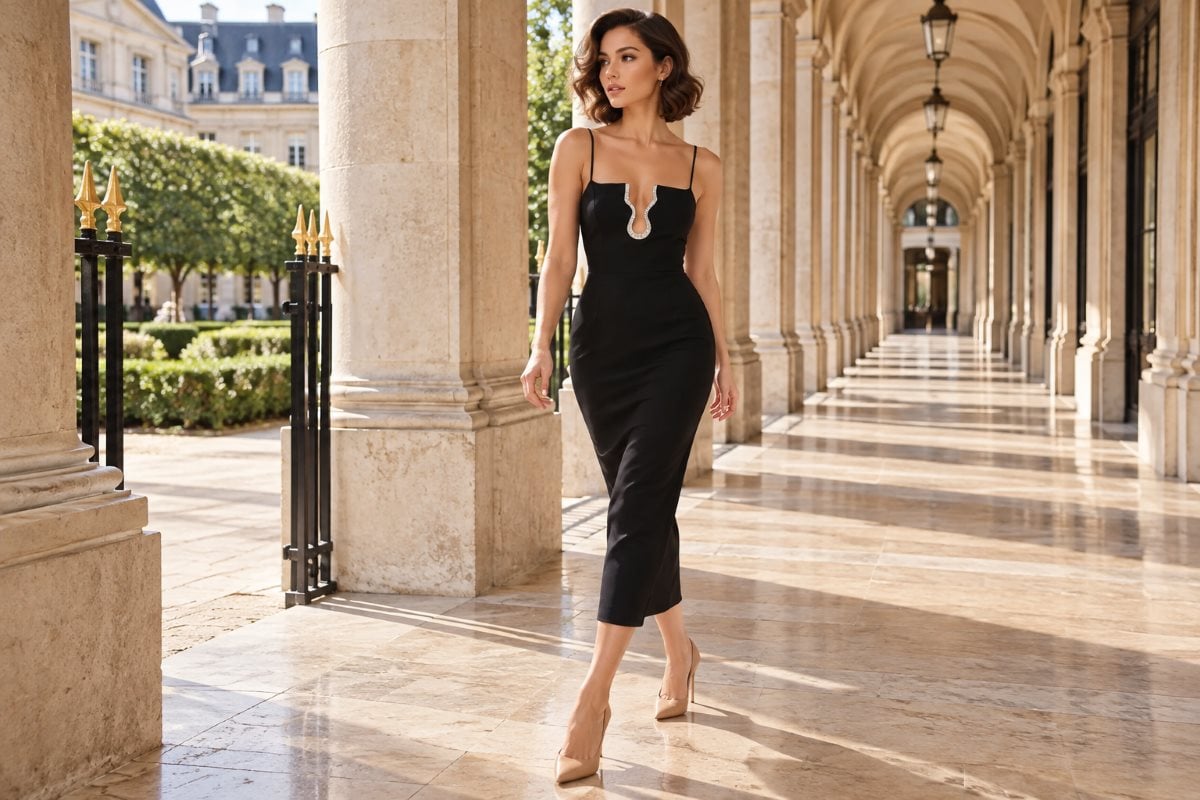
When the dress, the jewelry, or the occasion is carrying the look, the shoe should get out of the way, and a nude matched to your own skin does that better than black does. It continues the line of the leg instead of cutting it at the ankle, which is why it reads longer in photographs. Black shoes are not the automatic partner most people assume; they are a choice with a visible edge. The full styling argument for the dress itself sits in our guide to styling little black dress looks.
Job Two: Set the Formality
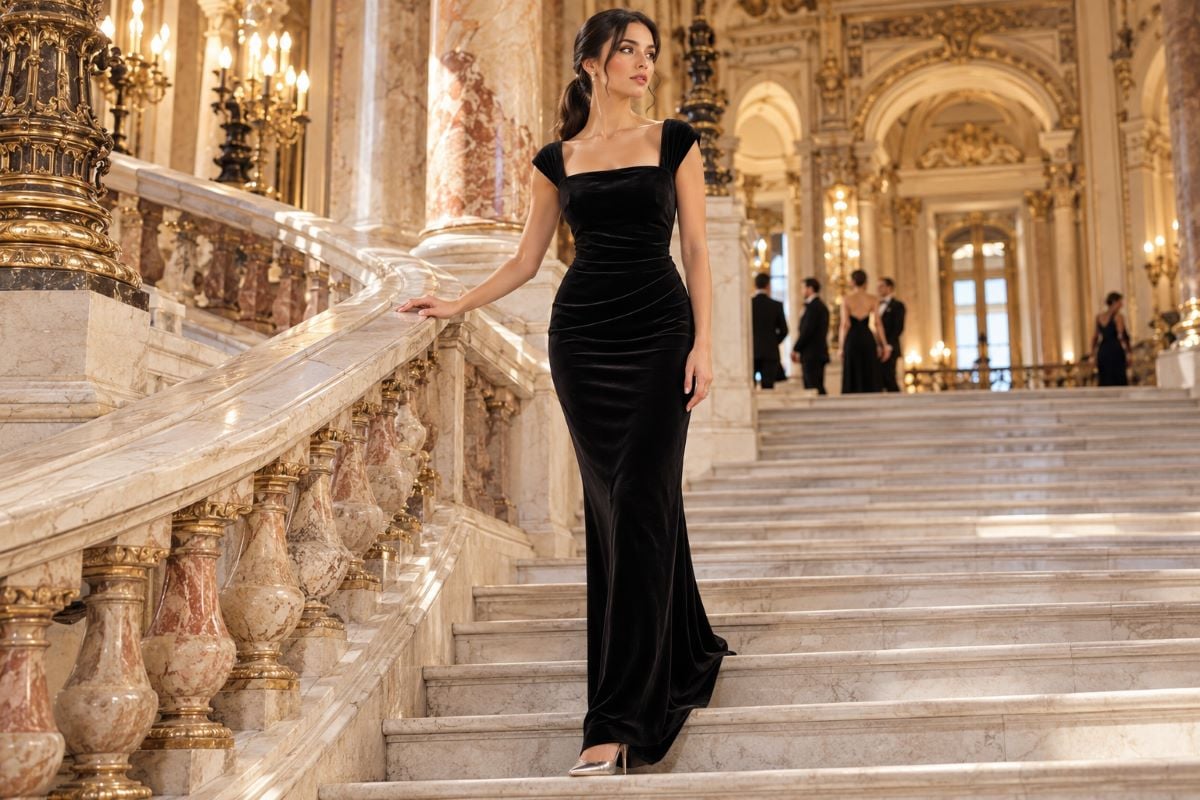
Here the shoe is a dial rather than a color. Matte black, suede, and leather flats keep a black dress in daytime. Satin, patent, and a fine heel push it into evening. Metallic in silver, gold, or pewter announces a party without adding a color, which is why it partners so easily with black tie dresses at the most formal end. Move one step up or down this dial and the same dress covers a work dinner and a gala, which is the whole reason it lives in your closet.
Job Three: Let the Shoe Speak
Black hands the entire color story to the shoe, the way only white also does, and it carries more weight while doing it, so this is where red, emerald, cobalt, white, or leopard belongs. The pairing works because there is no competing color to argue with, and it fails only when a second voice joins in. One rule keeps it clean: when the shoe speaks, the bag either matches it exactly or goes neutral, and the jewelry stays quiet. The effect is sharpest against the simple lines of black formal dresses, where the gown is the frame and the shoe is the picture.

Does Black With Black Still Work?
Yes, and the fix is finish, not color. Black fabrics are not one black: satin reflects, crepe absorbs, jersey softens, and a dress that has been worn and washed for two seasons has usually drifted a shade lighter. Put a hard patent shoe under a softened black dress and the shoe exposes it instantly. Match the finish instead, shine with shine and matte with matte, then vary the texture so the monochrome has depth rather than looking like one flat shape. Check the pairing in daylight, since store lighting flatters every black equally.
The Brown Rule Has Flipped
The old warning against wearing black with brown is finished, and chocolate, cognac, and tan are now among the most current answers in the category. A cognac boot under a black day dress reads deliberate and modern, and a chocolate heel gives a black cocktail dress a warmth that pure black cannot. The one place to stay careful is the very formal end, where brown still carries daytime with it. Below that, the pairing works especially well with black short cocktail dresses at autumn events.
Where Each Job Lands: Work, Weddings, Galas
Work and daytime take matte black, cognac, or a skin-matched nude. Weddings are where black has fully arrived as a guest color, and there a metallic or a jewel-tone shoe keeps it celebratory, while plain black pumps can read severe in daylight photographs. The dresses for that invitation are in black wedding guest dresses.
Cocktail parties take the statement shoe. Galas take satin, patent, or metallic, and the reasoning behind black at the most formal events is argued in why a black dress is perfect for any formal event.
The Job, Then the Shoe
Back to the question of what color shoes to wear with a black dress: name the job first, then choose. Nude to disappear, finish and metal to set the formality, one saturated color to speak, cognac when the mood is modern, and black itself when the finish genuinely matches. That settles what shoes go with a black dress for every event you own one for, and it turns the most common dress in your closet into several outfits.
The dress side of that same decision is covered in black formal dresses.
The shortest version of the whole wardrobe is the little black dress itself. Two pairs and one fitting at an authorized Jovani retailer near you will settle the finish question faster than guessing at home.
Shoes With a Black Dress: FAQ
What color shoes go best with a black dress?
All of them work, so choose by job. A nude matched to your skin disappears and lengthens the leg line, black or metallic sets the formality, and one saturated color turns the shoe into the outfit’s only statement.
Do black shoes go with a black dress?
Yes, but it is a choice rather than an automatic match. Match the finish rather than the shade, since a hard patent shoe under a softened black dress exposes it, and vary the texture so the monochrome has depth.
Can you wear brown shoes with a black dress?
Yes. The old rule against black with brown is gone, and cognac, chocolate, or tan reads deliberate and modern, especially for daytime and autumn. Keep brown away only from the most formal evening end.
What shoes go with a black dress at a wedding?
A metallic or jewel-tone heel keeps the look celebratory, which matters in daylight photographs where plain black pumps can read severe. A skin-matched nude is the quiet alternative that still photographs well.