
A green cocktail dress is one of the most interesting choices in formalwear, and also one of the most likely to be chosen badly. The problem is that green covers an unusually wide territory. Emerald, sage, olive, forest, mint, and chartreuse are all accurately described as green, and they behave so differently against skin, under lighting, and in photographs that treating them as one color guarantees disappointment. Someone who tried a sage dress and decided green did not suit her may look extraordinary in emerald. This guide covers what each green shade actually does, which ones flatter which colorings, how green behaves under venue lighting, when it works as a wedding guest, and how to accessorize it.
Why green is worth considering for a cocktail dress
Green occupies a useful position in a room. It is not the expected choice, so it stands apart from a sea of black, and it is not attention-seeking in the way red can be, so it reads as considered rather than loud. For a cocktail event where you want to be noticed without appearing to try, that combination is hard to match.
There is a technical reason green flatters as often as it does. Green sits opposite red on the color wheel, and human skin carries red undertones in every complexion. A color placed opposite those undertones tends to make skin look clearer and more even rather than flushed, which is why so many people find a green dress unexpectedly flattering when they finally try one.
Green also photographs unusually well under the warm lighting typical of evening venues, holding its depth where some colors either wash out or shift. The range of green cocktail dresses shows how broad the family is once you start looking at the shades side by side.
The green shades and how each behaves
Choosing green well means choosing a specific green, so it helps to know what each one does.
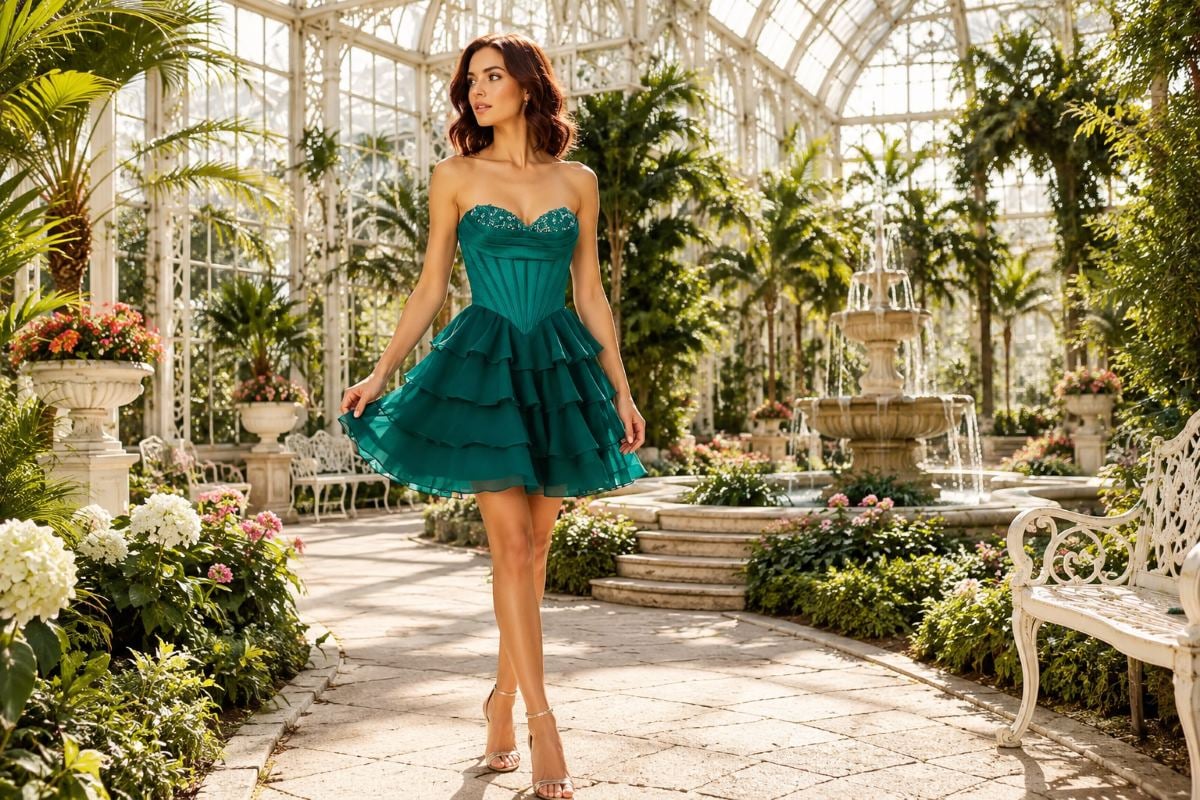
Emerald is the most reliably flattering
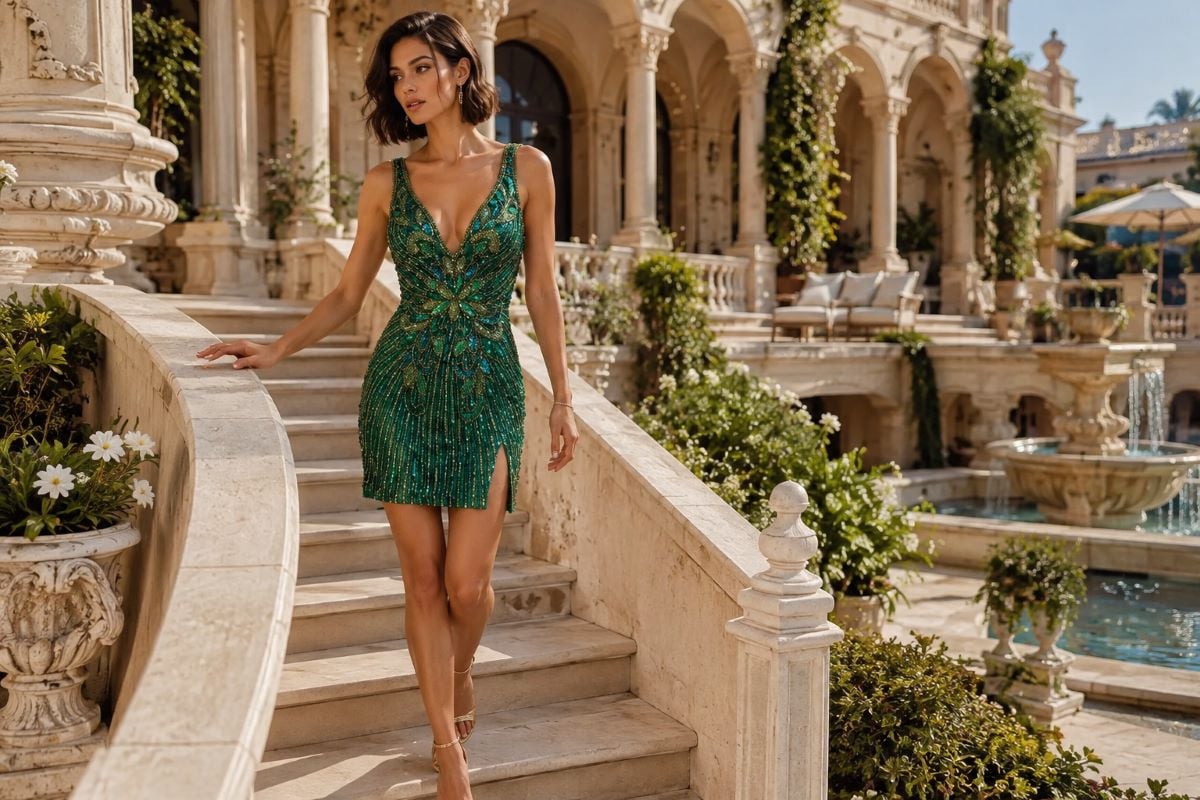
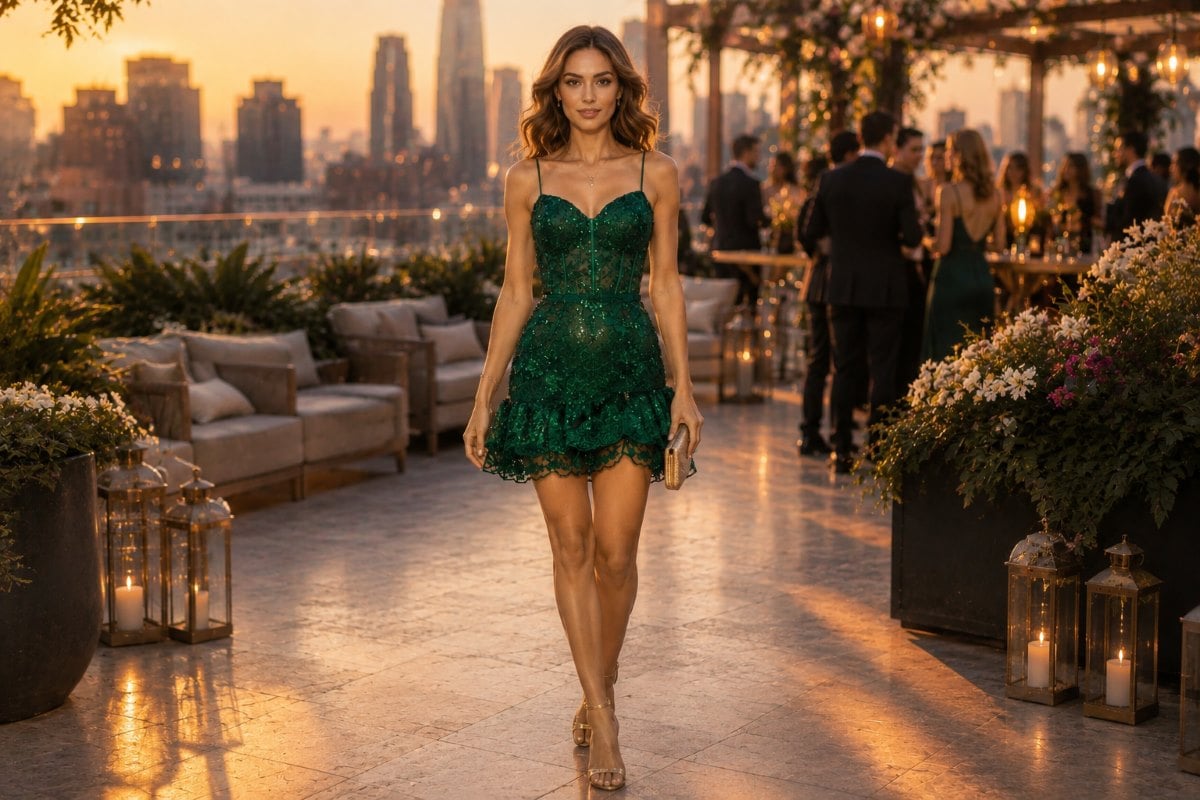
Emerald is a true jewel tone: saturated, blue-leaning, and balanced enough in undertone that it suits an unusually wide range of complexions. It reads as formal and rich, it holds its intensity under low evening lighting rather than going flat, and it photographs with depth. If you are uncertain which green to try first, emerald is the one that goes wrong least often. It also carries embellishment well, since beading and sequins on an emerald ground read as luxurious rather than busy.
Sage, olive, forest, and the bolder greens
Sage is muted and gray-leaning, soft and modern, and it reads as understated rather than formal. It suits cool and neutral undertones and can look dull against very warm coloring. Olive is the warm counterpart, earthy and slightly yellow-based, and it flatters warm and olive complexions particularly well while sometimes reading as sallow against cool ones. Forest and hunter are the deep, blue-based greens, close to black in their formality and excellent for a formal evening event. Mint is pale and cool, reading as youthful and soft. Chartreuse and lime are the fashion-forward extreme, high-impact and unmistakably deliberate, and they suit someone who wants the dress to be the statement.
Matching green to your coloring
Undertone matters more with green than with most colors, because the greens themselves split cleanly along warm and cool lines. Working out which side you sit on resolves most of the choice.
Cool undertones, which show as pink or blue beneath the skin, generally suit the blue-leaning greens: emerald, forest, hunter, and mint. These sit in the same temperature family as the skin and read as harmonious.
Warm undertones, showing as golden, peach, or yellow, suit the yellow-leaning greens: olive, moss, and the warmer end of chartreuse. Emerald still works on warm coloring, which is part of why it is the safe universal choice, but sage and mint can look washed out.
Neutral undertones have the widest range and can wear nearly any green, in which case the choice comes down to the effect wanted rather than what is permitted. Depth of complexion matters too: deeper skin tones carry saturated and bright greens beautifully, including emerald, chartreuse, and jewel-toned forest, while very fair skin often looks best with either a deep green for contrast or a soft one, avoiding mid-tones that can sit too close to the skin’s own value. The guidance on the best dress colors for your skin tone covers how to identify your undertone in the first place.
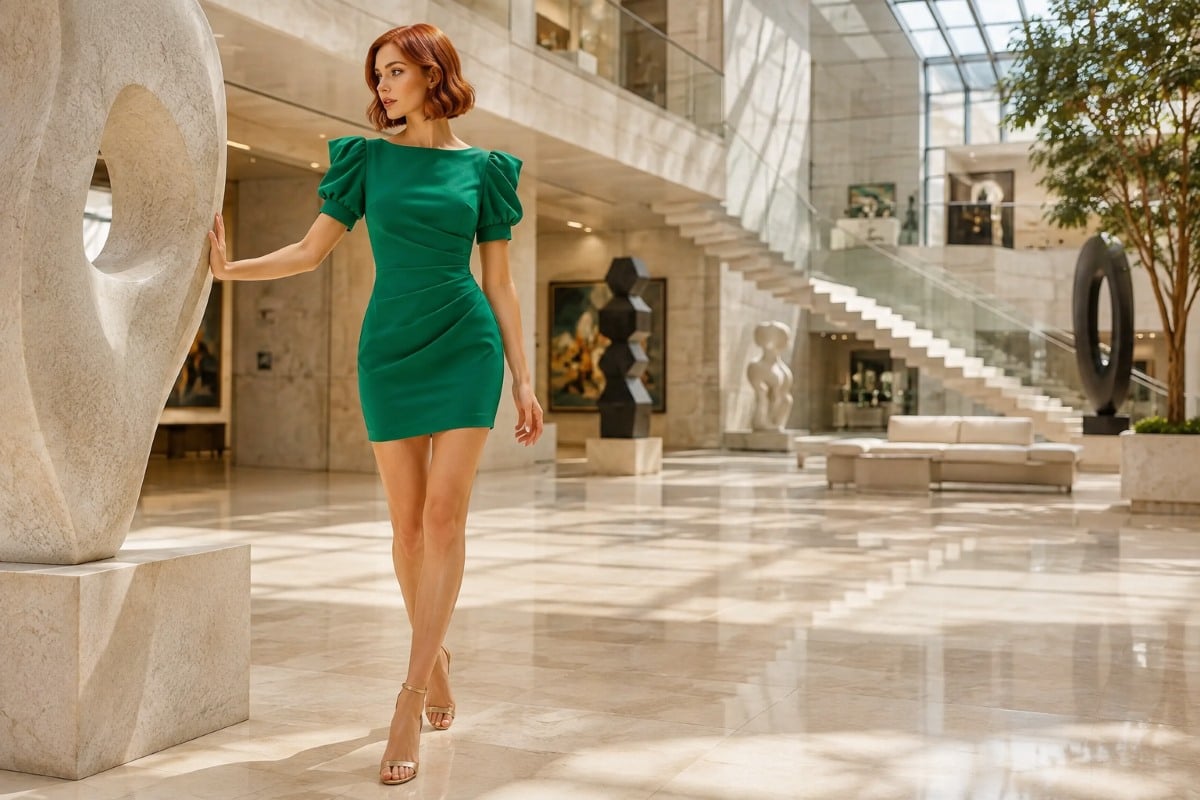
How fabric changes a green dress
The same green in three fabrics produces three genuinely different dresses, and this catches people out more with green than with neutrals.
Satin gives green a wet, saturated intensity, so emerald satin reads as a jewel and olive satin gains a richness it does not have in a matte cloth. Velvet deepens green further and absorbs light, which makes forest or emerald velvet read as extremely formal and slightly historic. Crepe mutes green into something modern and understated, and it is the fabric that makes sage look most current. Chiffon lightens green considerably, so a color that looks strong on a swatch becomes soft and airy in layers of chiffon.
Sequins and beading in green shift the effect again, since a beaded green dress reads as far bolder than a plain one in the same shade. If you like a green but find it too strong, changing the fabric is often more effective than changing the shade. The green styles among green evening dresses show how the same family behaves across formal fabrics.
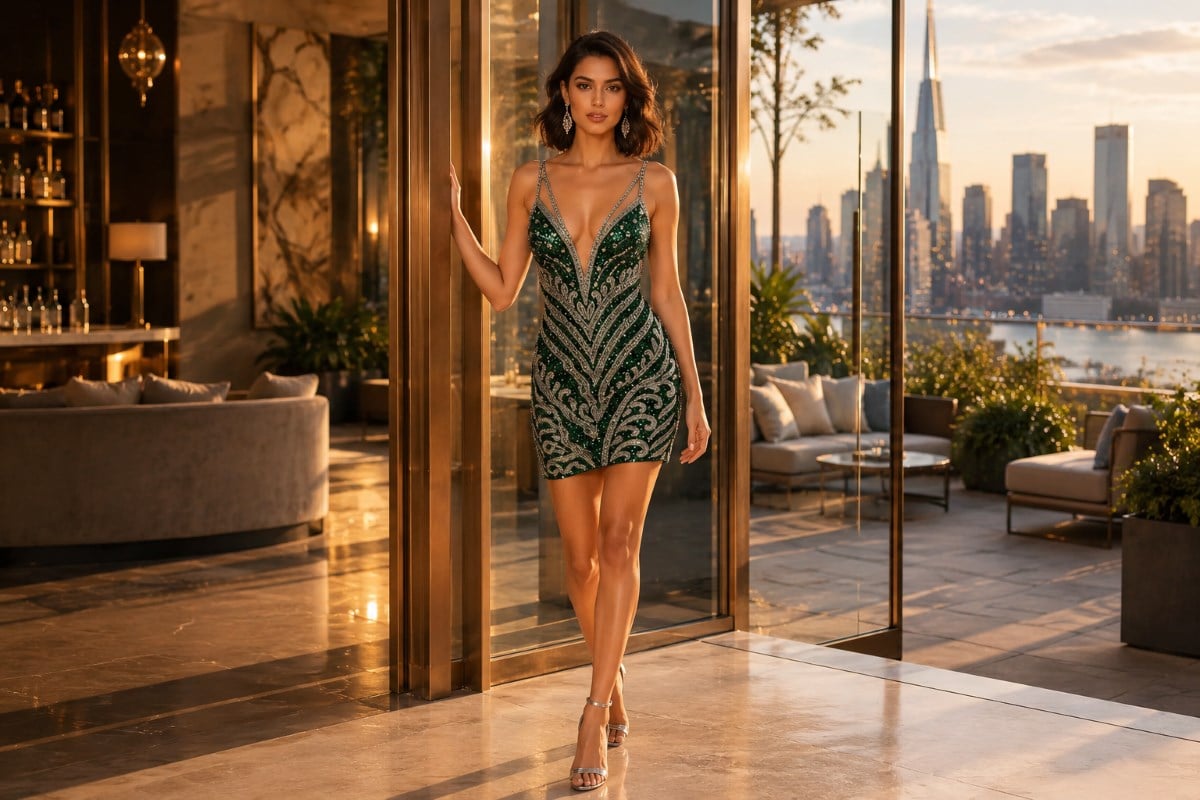
Neckline decides how much the color touches your face
With a strong color, the neckline controls how much of the shade sits directly against your complexion, and that changes the effect considerably. A higher neckline puts the green right up against the skin of the neck and jaw, which intensifies both the flattering effect and any mismatch in undertone. A lower or wider neckline creates a buffer of skin between the color and the face, which softens the relationship and makes a slightly imperfect shade far more forgiving. If you love a particular green but it feels almost right rather than exactly right, changing the neckline is often a more effective fix than changing the shade.
Green works with both metallic and neutral detail
One practical advantage of green is that it accepts embellishment in more than one direction. Gold beading against emerald or olive reads as warm and rich, while silver or crystal detail against the same shades reads as crisp and cool. Black beading deepens a forest or hunter green into something quite dramatic, and tonal beading in the same green adds texture without changing the color at all. This flexibility means a green dress can be pushed toward whichever mood you want, which is not true of every strong color.
Green under venue lighting
Cocktail events are usually held in the evening under warm artificial light, and this changes colors in ways that are worth anticipating rather than discovering.
Warm lighting pushes colors toward yellow. On a green dress this generally works in your favor, since it deepens and warms the shade rather than draining it. Emerald under warm light stays emerald. Forest gains depth. The one to watch is sage, which can lose its cool gray character under strongly warm light and drift toward a muddier tone than it appeared in daylight.
Cooler or white lighting, common at daytime events and in some modern venues, keeps green closer to its true shade and lets sage and mint read as intended. If you know the venue, trying the dress under similar lighting is the most reliable check available, and if you cannot, emerald and forest are the shades least likely to shift on you.
Hair color deserves a mention here, because green interacts with it more visibly than most shades do. Red and auburn hair sits opposite green on the color wheel in the same way skin does, so the pairing produces a strong, deliberate contrast that has been a staple of portraiture for centuries. Warm blonde and golden brown hair sit comfortably with olive and moss, where the shared warmth reads as harmonious. Cool blonde, ash brown, and black hair pair most cleanly with emerald and forest, where the blue content in the green matches the coolness of the hair. None of this outranks undertone, but when two greens seem equally good against your skin, hair color is a reasonable way to break the tie.
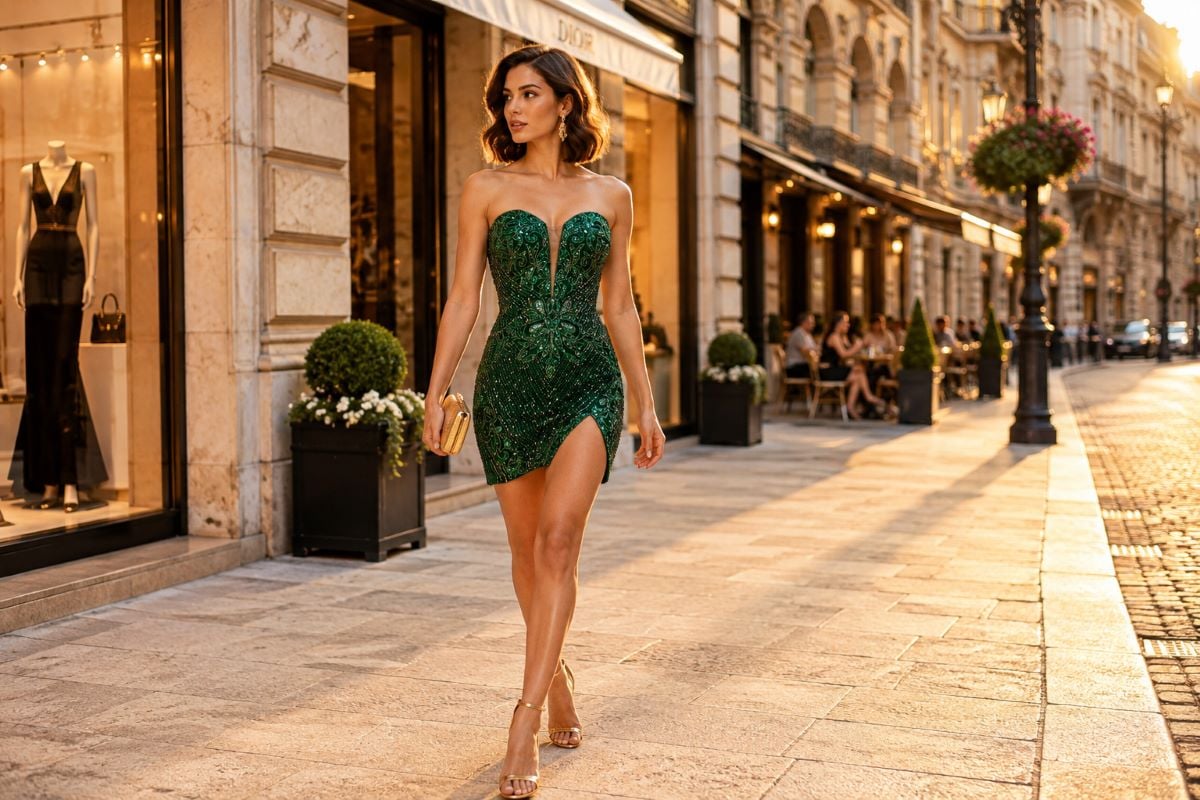
Green as a wedding guest color
Green is one of the strongest wedding guest colors available, for reasons that go beyond how it looks. It is clearly not bridal, it is not associated with mourning as black sometimes is, and it is celebratory without being attention-grabbing in the way that red can be at someone else’s wedding.
There is one genuine caution. Sage and eucalyptus have become extremely common bridesmaid colors, so a sage dress at a wedding carries a real risk of matching the bridal party. Emerald, forest, and olive are far less likely to collide. If the invitation or the couple’s colors are known, a quick check resolves it, and if not, the deeper greens are the safer bet.
For a formal wedding, emerald or forest in satin or velvet reads as appropriately dressed. For a daytime or garden celebration, a lighter green in chiffon or crepe suits the setting. The green styles among green wedding guest dresses show the range that works for the role.
Accessorizing a green dress
Green takes accessories more easily than most strong colors, and there are a few combinations that reliably work.
Gold is the classic partner, particularly with emerald, forest, and olive, since the warm metal against a cool or earthy green creates a rich contrast that reads as luxurious. Silver and white gold suit the cooler greens, especially mint and sage, and give a crisper, more modern result. Both work with emerald, so the choice there is a matter of taste.
For shoes, metallic gold or a nude matched to your skin depth both work and both keep the leg line long. Black shoes are acceptable with deep forest or hunter but can look heavy against emerald or olive. A dark green shoe matched to the dress produces the most sophisticated result and the longest line.
For the bag, gold, nude, or a tone drawn from the dress all work. What to avoid is a second strong color, since green is already doing the work and adding a competing shade tends to fragment the look. For the wider context of dressing for these events, the guide to the ultimate guide to cocktail attire covers what the code expects.
Narrowing the field quickly
The practical route to the right green cocktail dress is short. Decide first whether you sit warm or cool, since that halves the field immediately. Try emerald first regardless, because it is the shade most likely to work and it gives you a benchmark to judge the others against. Consider the fabric as seriously as the shade, since satin, velvet, crepe, and chiffon will change a green more than moving one step along the color range would.
Then check it in the lighting closest to your event, and check it against your face rather than only in a full-length mirror, since green’s flattering effect happens at the neckline and the color’s relationship with your skin is what you are actually assessing.
Green rewards this small amount of effort more than most colors, because the gap between the right green and the wrong green on the same person is unusually wide. For a shorter length the same logic applies across the wider range of short and cocktail dresses.
For a younger or more embellished take on the same family, the green prom dresses show the brighter end of the range, where saturation and sparkle are pushed further than a cocktail dress usually goes.
If you are still deciding what the occasion actually calls for, the explanation of what a cocktail dress is sets the boundaries before you commit to a shade. To find the green that reads correctly against your own coloring, explore the current styles through an authorized Jovani retailer.
Green, Shade by Shade
Which green suits most skin tones?
Emerald. It is a true jewel tone, saturated and blue-leaning, and balanced enough in undertone to suit an unusually wide range of complexions. It holds its intensity under low evening lighting rather than going flat, photographs with depth, and carries beading and sequins well. If you are uncertain which green to try, emerald is the one that goes wrong least often, and it makes a useful benchmark for judging the other shades against.
What is the difference between sage, olive, and emerald?
They are really different colors that happen to share a name. Sage is muted and gray-leaning, soft and understated, suiting cool and neutral undertones. Olive is warm and slightly yellow-based, flattering warm and olive complexions but sometimes reading as sallow against cool coloring. Emerald is a saturated blue-leaning jewel tone that reads as formal and rich and suits the widest range. Trying one and disliking it says nothing about the others.
Does green suit warm or cool undertones?
Both, but different greens. Cool undertones, showing as pink or blue beneath the skin, suit the blue-leaning greens: emerald, forest, hunter, and mint. Warm undertones, showing as golden or peach, suit the yellow-leaning greens: olive, moss, and warmer chartreuse. Emerald works on both, which is part of why it is the safe universal choice. Neutral undertones can wear nearly any green, so the choice becomes about effect rather than suitability.
Can you wear green to a wedding as a guest?
Yes, and it is one of the strongest guest colors available. Green is clearly not bridal, carries none of the associations black sometimes does, and is celebratory without competing for attention. The one caution is that sage and eucalyptus have become very common bridesmaid colors, so a sage dress risks matching the bridal party. Emerald, forest, and olive are far less likely to collide, and a quick check on the couple’s palette settles it.
Should you wear gold or silver with a green dress?
Gold is the classic partner, particularly with emerald, forest, and olive, since the warm metal against a cool or earthy green creates a rich contrast. Silver and white gold suit the cooler greens such as mint and sage and give a crisper, more modern result. Emerald takes both, so the choice is personal. For shoes, metallic gold, a nude matched to your skin depth, or a dark green matched to the dress all keep the line long.
Does fabric change how a green dress looks?
Considerably, and often more than moving one step along the color range would. Satin gives green a wet, saturated intensity. Velvet deepens it and absorbs light, which reads as very formal. Crepe mutes green into something modern and understated, and it is what makes sage look most current. Chiffon lightens green so a strong swatch becomes soft in layers. If a green appeals but feels too bold, changing the fabric is often the better fix.