
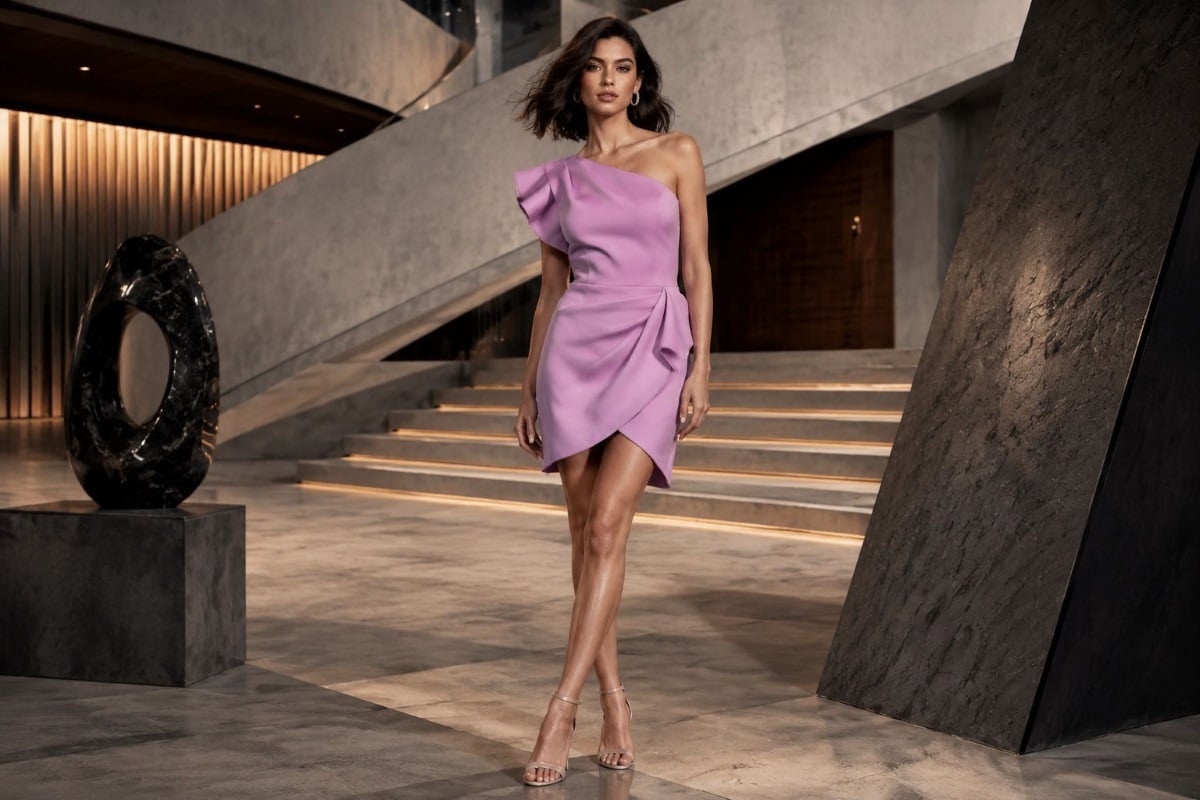
Among all the necklines a cocktail dress can take, the one-shoulder is the one that reads most like a design decision. Where a strapless or a symmetrical neckline plays it straight, the one-shoulder introduces a single, deliberate diagonal that changes the whole balance of the dress. It is architectural, a little unexpected, and consistently elegant. A one-shoulder cocktail dress covers one shoulder with a strap, sleeve, or draped panel while leaving the other bare, creating an asymmetric line that frames the face, elongates the figure, and gives a short dress a modern, sculptural edge. This guide walks through what the neckline actually does, who it flatters, how to choose the right version, and how to style an asymmetric look so it reads as polished and intentional.
What a one-shoulder neckline is
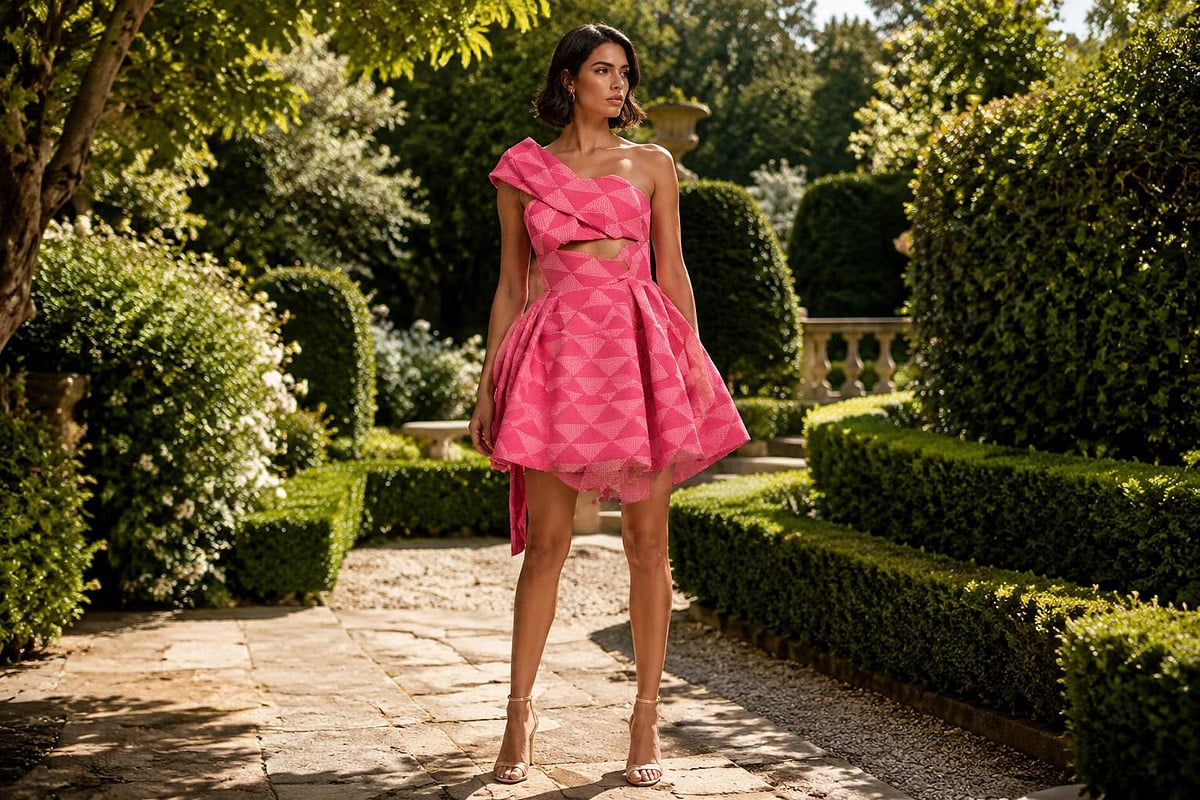
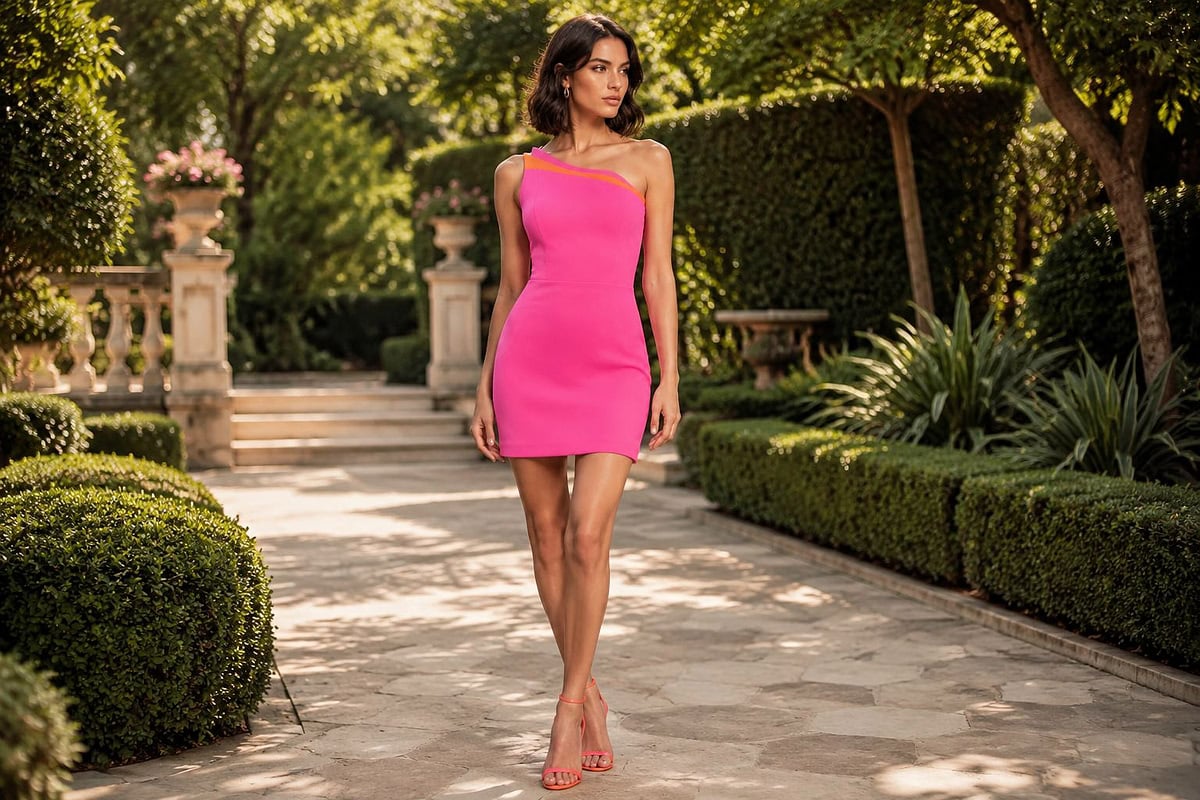
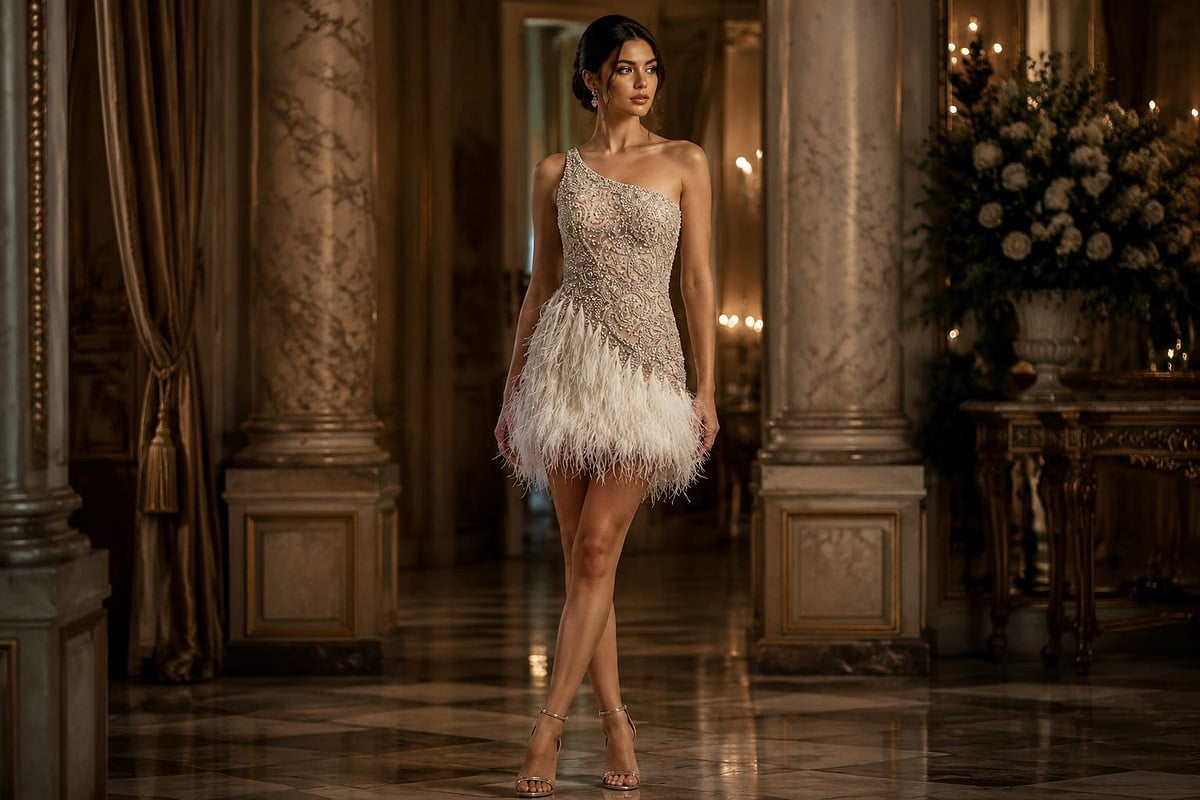
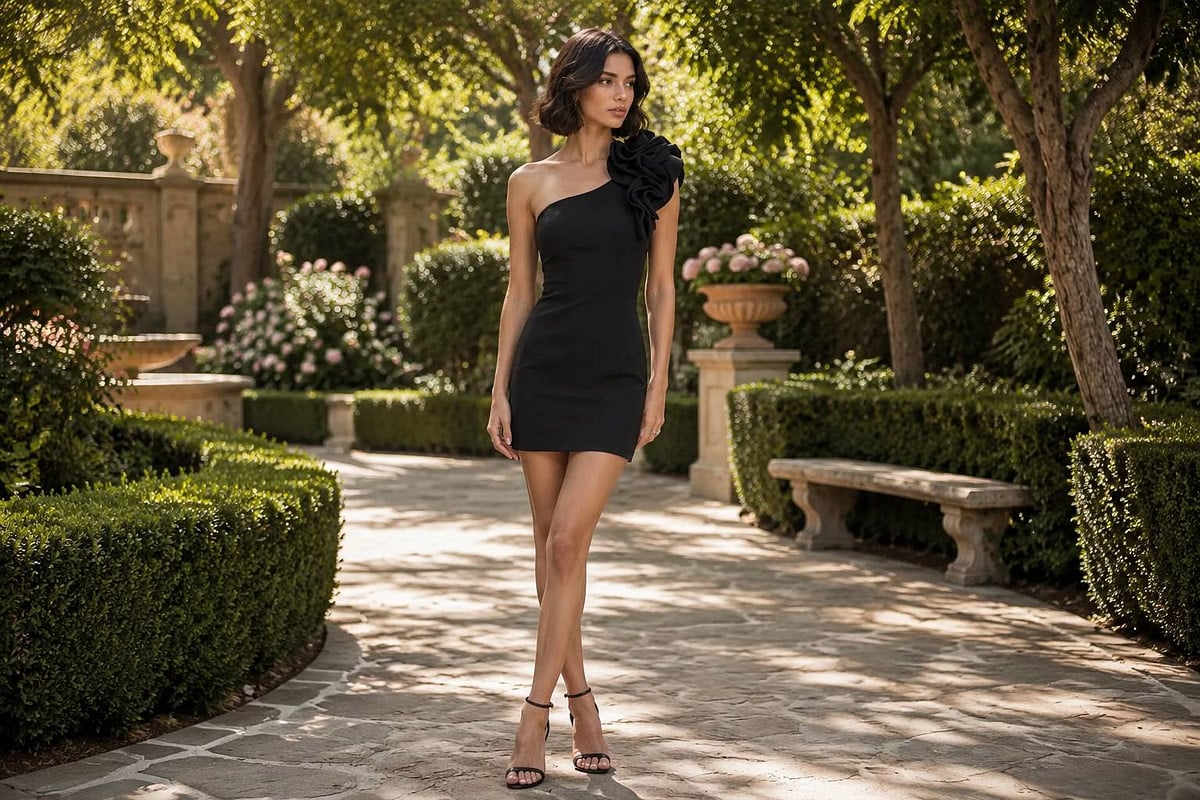
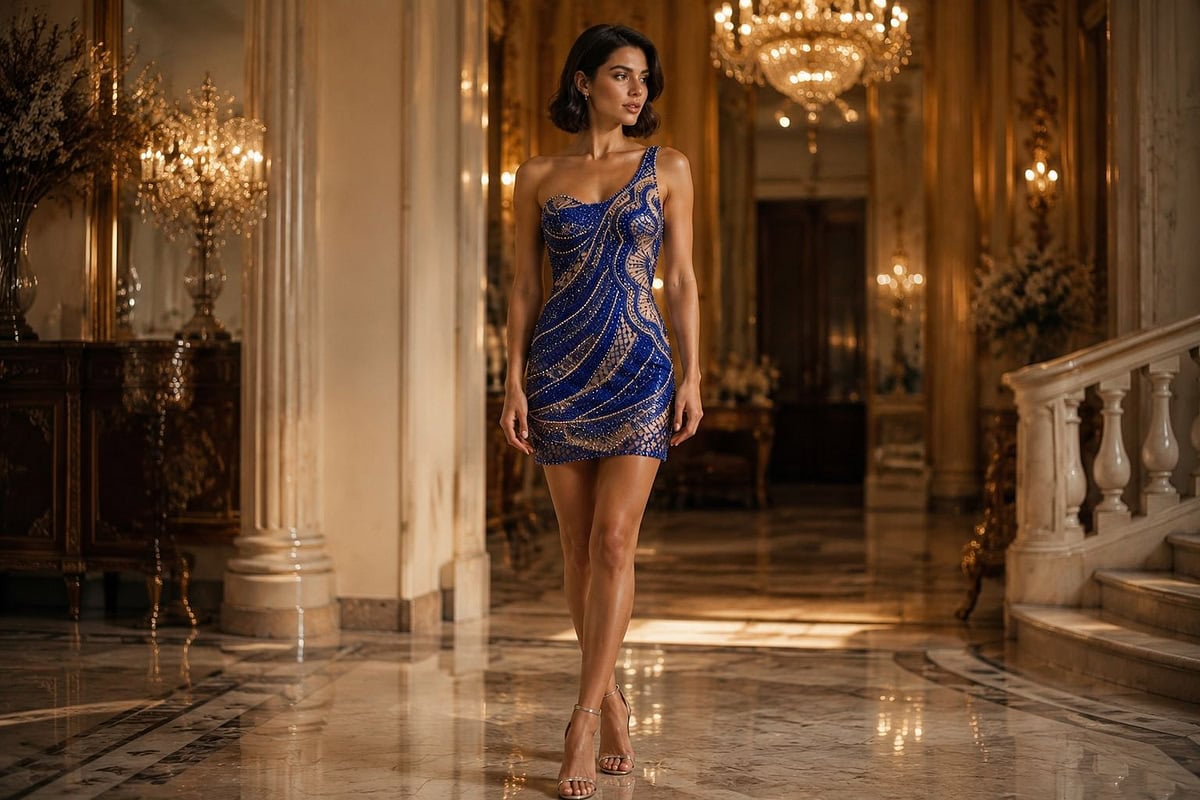
A one-shoulder dress is built around asymmetry: one shoulder is covered while the other is left bare, creating a single diagonal line across the upper body. That covered shoulder can take several forms, and the specific treatment changes the entire character of the dress. A clean single strap reads as minimal and modern. A draped one-shoulder, where fabric gathers softly over the shoulder, reads as romantic and fluid. A one-shoulder with a full sleeve adds coverage and drama on one side. An embellished strap, a ruffle, or a bow on the shoulder turns the neckline itself into the focal point. Each version shares the same underlying asymmetry but produces a different effect, from sleek to soft to statement-making.
The one-shoulder has seen a strong resurgence in cocktail fashion, valued for the way it draws the eye and frames the face while feeling more distinctive than a standard neckline. It sits comfortably in the modern cocktail wardrobe alongside other sharp, contemporary cuts, offering a sophisticated edge that still feels accessible. The styles among one-shoulder cocktail dresses show the range the neckline covers, from clean and minimal to draped and embellished. Understanding the different treatments is the first step to choosing a one-shoulder that suits a woman’s taste and the occasion.
Why the one-shoulder works so well
The neckline’s appeal comes down to the diagonal line it creates, which does several flattering things at once. A diagonal across the upper body draws the eye in a long, continuous sweep rather than cutting straight across, which has an elongating effect on the figure. It frames the face and neck, directing attention upward, and it creates visual interest and a sense of movement without any embellishment at all. The asymmetry also balances proportions, since the single covered shoulder and the bare one create a dynamic, intentional line that reads as designed. For a woman who wants a flattering, sophisticated neckline that does real work for the silhouette, the one-shoulder delivers on all counts.
The one-shoulder also strikes a balance that many necklines do not, covering one side while leaving the other bare, which reads as elegant and considered rather than either fully covered or fully exposed. This makes it versatile across cocktail occasions, suiting everything from a work-adjacent party to a celebratory evening event. It pairs naturally with a range of cocktail silhouettes, and seeing how it fits within the broader category helps, as the overview in cocktail dress versus evening gown places the asymmetric neckline among the sharp, contemporary cuts that define modern cocktail dressing. The neckline’s combination of flattery, balance, and modern edge is exactly why it has become such a reliable choice.
How it compares to other necklines
Placing the one-shoulder next to the necklines a woman might choose between makes its character clear. A halter wraps around the neck and frames the shoulders symmetrically, drawing attention to the collarbone in a balanced way, while the one-shoulder creates its effect through asymmetry instead. The styles among halter cocktail dresses show that symmetrical framing clearly, which makes the contrast with a single diagonal line easy to see.
A sweetheart neckline is soft and romantic, curving gently across the bust, where the one-shoulder is sharper and more architectural. The two represent different moods entirely, one rounded and classic and the other angular and modern, so the choice between them is partly a choice of personality. The styles among sweetheart cocktail and party dresses show that softer, more traditional line for comparison.
A V-neck creates a vertical line down the center of the body, while the one-shoulder creates a diagonal across it, so the two elongate the figure in different directions. The styles among v-neck cocktail dresses show that central, lengthening effect. Seeing these necklines side by side clarifies whether a woman wants the symmetry of a halter, the softness of a sweetheart, the vertical line of a V, or the architectural diagonal of a one-shoulder, since each frames the upper body in its own distinct way.
Choosing the right one-shoulder cocktail dress
The most important choice is the treatment of the shoulder itself, since it sets the whole tone of the dress. A clean single strap suits a woman who wants a minimal, modern look where the asymmetry does the work quietly. A draped one-shoulder suits someone drawn to softness and movement, since the gathered fabric reads as fluid and romantic. A one-shoulder with a sleeve adds coverage and a sense of drama on one side, which can feel both modern and elegant. An embellished strap, ruffle, or bow turns the shoulder into a statement, ideal for a woman who wants the neckline to be the focal point of the dress. Matching the treatment to the effect a woman wants is the key decision.
Silhouette is the next consideration, since the one-shoulder neckline pairs with a range of shapes and the combination shapes the overall look. The neckline works beautifully on a fitted dress, where the single diagonal balances a clean, body-skimming line, and it works just as well on a softer A-line, where the asymmetry adds interest to a more relaxed shape. The asymmetric top half also pairs naturally with a sleek skirt, since the dramatic neckline reads best when the rest of the dress stays clean. For a woman comparing how an asymmetric design fits among other modern cocktail looks, the guidance in cut-out cocktail dress covers how strategic, contemporary details read on a cocktail silhouette, which helps clarify how bold a woman wants her neckline to be. The right pairing lets the one-shoulder be the focal point without competing with other elements.
Why construction matters with a one-shoulder
A one-shoulder neckline asks more of a dress’s construction than a symmetrical one, because the support comes primarily from a single side. The covered shoulder and the dress’s internal structure have to hold the bodice securely in place, since there is no second strap to share the work, which makes quality construction genuinely important for this neckline. A well-made one-shoulder dress stays exactly where it should through movement, while a poorly constructed one can shift or sag. Jovani has built dresses in its New York studio since 1983, and that long focus on construction, including internal support like steel boning through the bodice and reinforced strap placement, is what allows an asymmetric neckline to stay secure and comfortable through an evening. When trying on a one-shoulder dress, a woman should move, sit, and raise her arms to confirm the neckline stays in place, since a secure fit is what lets her wear the look with confidence.
Color, fabric, and how the look reads
Because the one-shoulder is already a strong design statement, color and fabric work to support it rather than compete. A clean, structured fabric holds the diagonal line crisply and lets the neckline read as architectural, while a softer fabric suits a draped one-shoulder where movement is the point. Classic shades like black, navy, and jewel tones let the neckline carry the drama, while a bold color makes the whole dress a statement. The fabric and color should match the effect a woman wants, whether sleek and modern or soft and romantic, and the most flattering color is always the one that suits her complexion.
The neckline also reads differently depending on the formality a woman is dressing for, which is worth keeping in mind. A clean one-shoulder in a structured fabric reads as sharp and contemporary, suiting a modern cocktail event, while a draped or embellished version reads as more romantic or glamorous. Because the one-shoulder is versatile, the styling and fabric do much of the work of placing it on the formality scale, so choosing them with the specific occasion in mind matters. The broader range of short and cocktail dresses shows how the same neckline can read differently across fabrics and colors, which helps a woman picture the version that suits her event. Letting color and fabric support the neckline rather than crowd it keeps the look cohesive.
Styling an asymmetric look
The asymmetry of a one-shoulder dress shapes how a woman styles the rest of the look, particularly when it comes to jewelry. Because one shoulder is bare and the other covered, balance becomes the guiding principle. Earrings work beautifully, drawing attention upward to the framed face, and a single statement earring can even echo the dress’s asymmetry intentionally. A necklace is often best skipped or kept very delicate, since the neckline itself is already the focal point and a busy necklace can compete with the clean diagonal line. The bare shoulder and collarbone can be left to speak for themselves, which is part of the neckline’s elegance.
The rest of the styling works best kept simple, letting the neckline lead. A sleek hairstyle, particularly one swept to show the bare shoulder, lets the asymmetric line read clearly, while clean accessories and a comfortable heel finish the look without crowding it. For broader guidance on building a cocktail look around a distinctive feature, the principles in short sleeve cocktail dress on balancing coverage, accessories, and proportion apply directly to an asymmetric design, since both are about letting one strong element define the look. Keeping the styling balanced and restrained is what allows the one-shoulder to remain the focal point and read as intentional rather than busy.
Is a one-shoulder cocktail dress right for you?
A one-shoulder cocktail dress suits a woman who wants a neckline that does real work for her silhouette, who is drawn to a modern, architectural edge, and who likes a look that feels designed rather than ordinary. It rewards someone who appreciates the elongating, face-framing effect of a diagonal line and who wants a neckline more distinctive than a standard symmetrical cut. For that woman, the one-shoulder offers flattery, balance, and a contemporary sophistication that few necklines match.
For a woman who prefers symmetry, full coverage on both shoulders, or a more classic and understated neckline, the one-shoulder may feel like more of a statement than she wants, and a different cut might suit her better. There is no wrong answer, only the question of whether she wants the architectural drama of asymmetry or the balance of a symmetrical line. Either way, understanding what the one-shoulder does gives her one more strong, flattering option to consider for a cocktail occasion.
Frequently asked questions one-shoulder cocktail dress
What is a one-shoulder cocktail dress?
A one-shoulder cocktail dress covers one shoulder with a strap, sleeve, or draped panel while leaving the other bare, creating an asymmetric diagonal line across the upper body. The covered shoulder can be a clean single strap, a soft draped panel, a full sleeve, or an embellished detail like a ruffle or bow. This asymmetry is the neckline’s defining feature, giving a short dress an architectural, modern quality that frames the face and elongates the figure, which is why it reads as both flattering and distinctive.
Is a one-shoulder neckline flattering?
Yes, the one-shoulder is widely flattering because of the diagonal line it creates. A diagonal across the upper body draws the eye in a long, continuous sweep, which elongates the figure, while the neckline frames the face and directs attention upward. The asymmetry also balances proportions and adds visual interest without any embellishment. Because it covers one shoulder and leaves the other bare, it reads as elegant and considered, striking a balance that many find more flattering and sophisticated than either a fully covered or fully bare neckline.
How is a one-shoulder different from a halter?
The main difference is symmetry. A halter wraps around the neck and frames both shoulders evenly, drawing attention to the collarbone in a balanced, symmetrical way. A one-shoulder creates its effect through asymmetry, covering one shoulder and leaving the other bare to form a single diagonal line. The halter reads as balanced and classic, while the one-shoulder reads as architectural and modern. Both frame the upper body beautifully, but they create different effects, so the choice comes down to whether a woman prefers symmetry or an asymmetric, sculptural line.
What should I look for in a one-shoulder dress’s construction?
Because the support comes mainly from one side, secure construction is especially important for a one-shoulder dress. Look for internal structure like boning through the bodice and reinforced strap placement that holds the neckline firmly in place, since there is no second strap to share the work. When trying one on, move, sit, and raise your arms to confirm the neckline stays where it should rather than shifting or sagging. A well-constructed one-shoulder stays secure through an evening, which is what lets you wear the asymmetric look with confidence and comfort. The fabric weight matters here too, since a heavier embellished bodice asks more of a single strap than a light one, so the construction has to match the dress.
How do I accessorize a one-shoulder dress?
Balance is the guiding principle with an asymmetric neckline. Earrings work beautifully, drawing attention upward to the framed face, and a single statement earring can intentionally echo the dress’s asymmetry. A necklace is usually best skipped or kept very delicate, since the neckline is already the focal point and a busy necklace competes with the clean diagonal line. A sleek hairstyle swept to show the bare shoulder lets the line read clearly. Keeping the rest of the styling simple and balanced allows the one-shoulder to remain the centerpiece of the look.
What occasions suit a one-shoulder cocktail dress?
The one-shoulder is versatile across cocktail occasions because it balances coverage and bareness in an elegant way. It suits everything from a work-adjacent party to a celebratory evening event, a holiday gathering, or a dressy night out. The styling and fabric do much of the work of placing it on the formality scale, so a clean, structured one-shoulder reads as sharp and contemporary while a draped or embellished version reads as more glamorous or romantic. Choosing the treatment and fabric to match the specific event lets the neckline suit a wide range of cocktail settings.