
Little Black Dress Mistakes: How to Get the Fit and Styling Right

Most little black dress mistakes come from the fit, the event, or the finishing details, not from wearing black. Check whether the dress stays secure when you move, matches the invitation, and looks right in the actual lighting. Those three decisions prevent most last-minute outfit problems.
A reliable outfit also needs the right texture and accessories. Compare little black dresses (opens in new tab) by construction and occasion rather than assuming every short black style serves the same purpose.
Why Can a Little Black Dress Look Wrong?
A little black dress can look out of place when the hem, fabric, or level of decoration clashes with the occasion. The color itself does not establish the dress code. A simple cotton mini and a structured crystal-trimmed cocktail dress send different signals.
Start with the invitation, venue, and time of day. For broader guidance, Jovani’s cocktail attire guide (opens in new tab) explains how event formality shapes the entire outfit. Then use the checks below to catch errors in your specific dress.
Fit Mistakes That Only Appear When You Move
The biggest fit mistake is choosing a black dress that looks good while standing still but shifts when you sit or walk. Test the neckline, waist, and hem during ordinary movement. A smaller size is not a solution if the garment pulls across your hips.
A neckline that needs constant adjustment
Raise both arms, lean forward slightly, and turn your shoulders. If the neckline slides or the bodice feels painfully tight, check another size or design. Consider fit-and-flare party dresses (opens in new tab) if you need more room through the skirt without losing a defined waist.
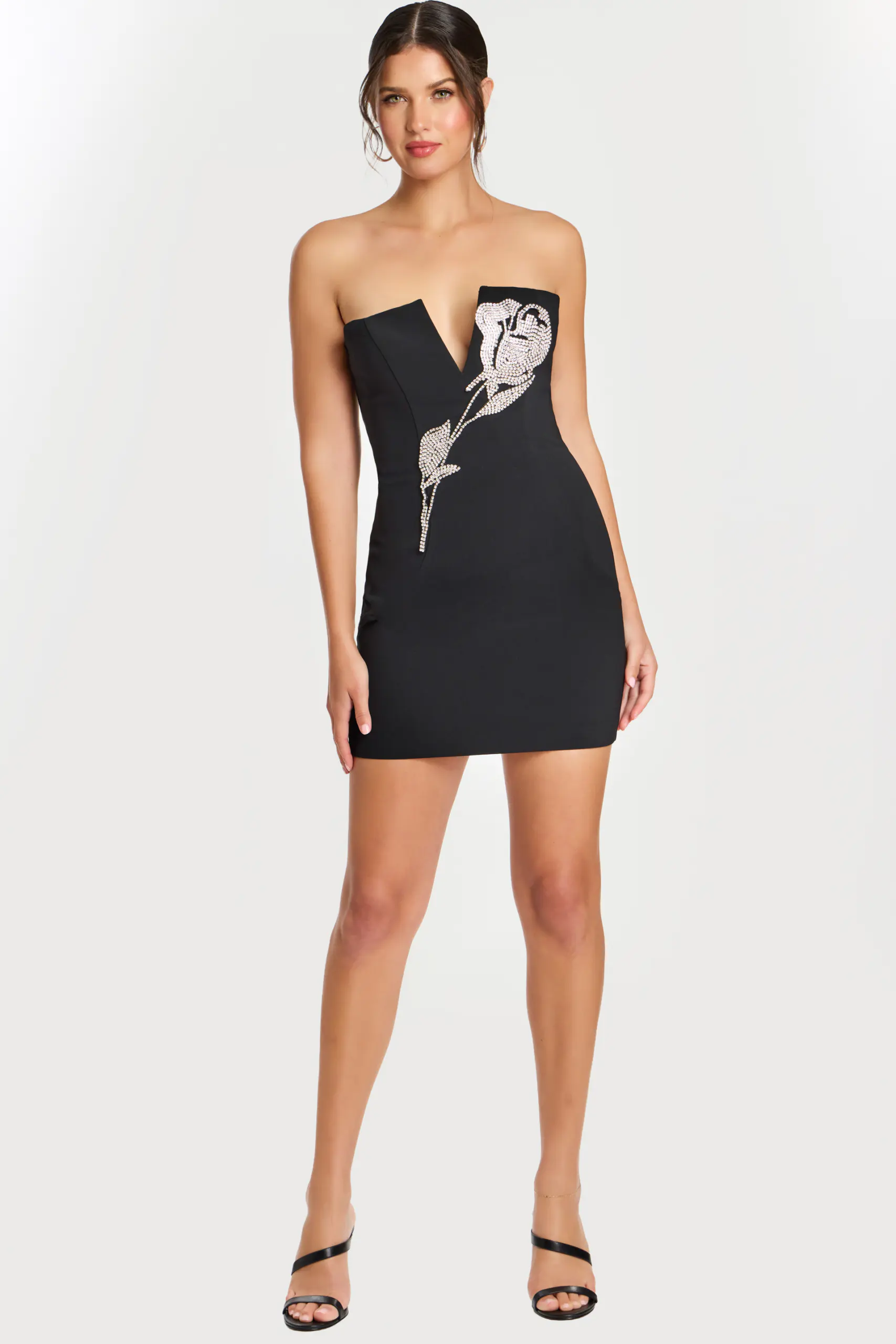
Jovani's Strapless Black Mini Dress with Rhinestone Rose Detail combines a strapless V-neck, fitted mini silhouette, and rhinestone rose applique. Its back zipper and sculpted shape make it a useful example for checking bodice security and ease of movement during a fitting.
A hem or lining that behaves differently when seated
Sit all the way down, cross your legs naturally if appropriate, and stand again. A skirt that rides higher than expected may not be comfortable for a seated dinner. Check the lining separately because it may restrict movement even when the outer fabric stretches.
Choosing Black Without Reading the Dress Code
A black dress is not automatically appropriate for every formal event. Compare the invitation with the garment’s length, neckline, structure, and embellishment. For a typical cocktail invitation, cocktail and party dresses (opens in new tab) provide a useful reference for the expected level of polish.

Mistaking a casual mini for cocktail attire
A very casual knit mini may be too relaxed for a reception or evening celebration. Look for intentional tailoring and a finish that matches the setting. Jovani’s guide to cocktail attire for women (opens in new tab) explains the standard more fully without treating every black dress as interchangeable.
Assuming a short black dress meets black tie
A black-tie invitation generally calls for a floor-length formal gown. A short dress may be too informal even when it is heavily embellished. For less formal events, short black cocktail styles (opens in new tab) can offer the appropriate balance of polish and comfort.
At weddings, also consider the couple’s preferences and the ceremony setting. Black may be welcome, but the color does not override a cultural tradition or an explicit dress request. If the invitation is unclear, ask the hosts before making assumptions.
Ignoring Fabric, Sheerness, and Lighting
Dark fabric can still become sheer under bright lighting. Inspect the dress near a window and under stronger indoor light, then move so the lining and seams are visible. Check for a different shade at the side panels and for shine that changes across the bodice.
The same finish can also feel different at two events. Dense crystals or high-gloss fabric may suit an evening party but appear too dramatic at an afternoon gathering. Jovani’s afternoon cocktail dress guide (opens in new tab) explains why daylight changes how embellishment and fabric read.
Fabric affects comfort as well as appearance. Stretch satin may follow the body closely, while a structured crepe or taffeta dress can retain more of its shape. Neither material replaces a proper fit test. Check the actual product details instead of relying on photographs alone.
Overloading an Already Detailed Dress
Too many competing accents can make a carefully designed black dress feel busy. Decide whether the neckline, skirt, jewelry, or shoes should lead. If the garment already carries extensive beading, keep the accessories smaller and simpler.
A strapless silhouette leaves room for jewelry, but it does not require a statement necklace. Compare strapless cocktail styles (opens in new tab) with your preferred earrings and bag to see whether the elements work together. Avoid combining a large necklace, chandelier earrings, and an embellished clutch by default.
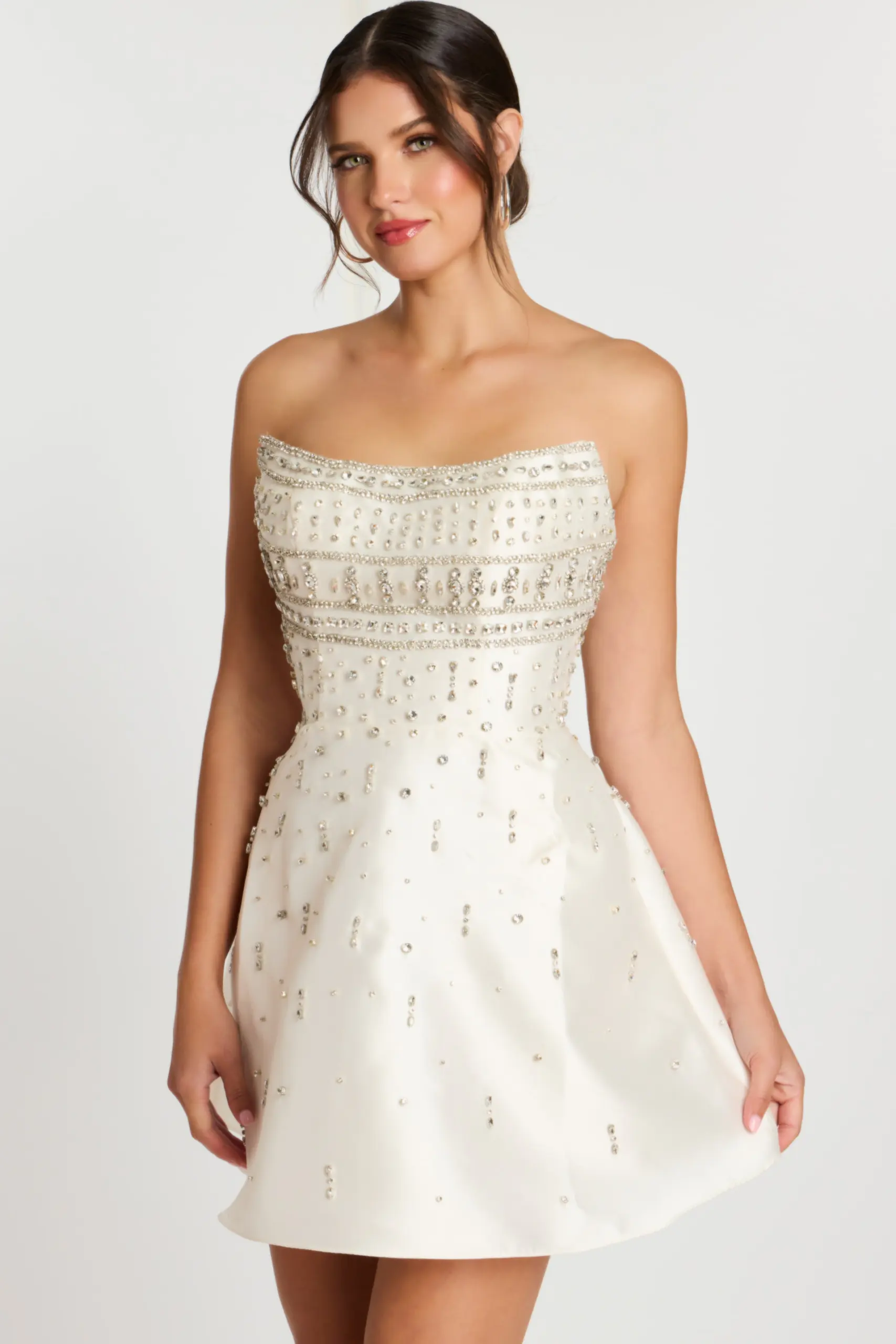
Jovani's Strapless Black Beaded Mini Dress with Flared Skirt features a fit-and-flare crepe shape, allover crystal beading, and a rhinestone bodice. Those details already provide a strong focal point. A restrained earring or compact bag can keep the outfit balanced without competing with the dress.
Keep a Black Dress Looking Fresh
Lint, faded areas, loose threads, and wrinkles become noticeable on dark clothing. Inspect the dress under strong light a day before the event, paying attention to seams and the lower hem. Follow its care label rather than assuming all black fabrics can be washed or steamed alike.
Use a suitable lint remover gently and check any beading before handling the garment. If the care label calls for professional cleaning, follow that instruction. Store the dress so structured details are not crushed, and ask the retailer about care for delicate decoration.
Your Final Little Black Dress Check
Run through the outfit in the same lighting and shoes you expect to use. Look at the front, back, and side views after sitting and walking. The final decision should feel practical as well as polished, without needing constant adjustments throughout the event.
- Read the invitation again and confirm the dress length is appropriate.
- Sit, walk, turn, and lift your arms without holding the outfit in place.
- Check opacity, lining, closures, seams, and the condition of embellishment.
- Choose one main visual accent and adjust jewelry or shoes around it.
- Inspect lint, wrinkles, and hems under bright light before leaving.
Avoiding little black dress mistakes starts with testing the garment rather than guessing from its color. For a closer fit and fabric comparison, visit an authorized Jovani retailer (opens in new tab) and try suitable black dresses in person.
Frequently Asked Questions
What is the most common little black dress mistake?
Choosing a dress that does not fit comfortably is one of the most avoidable errors. Check the bodice, waist, lining, and hem while sitting and moving before deciding.
Can a little black dress be too casual for a wedding?
Yes. A casual mini can fall short of a cocktail or formal wedding dress code. Check the invitation and choose a length, fabric, and finish appropriate to the event.
Should you wear a necklace with a detailed black dress?
Usually, one focal accessory is enough with a heavily embellished black dress. Small earrings or a simple bracelet can complement an ornate neckline without creating competing details.
How can you tell whether a black dress is see-through?
Check the dress under bright natural and indoor lighting while moving. Examine the skirt, lining, and side panels, then assess how the fabric behaves when seated.