
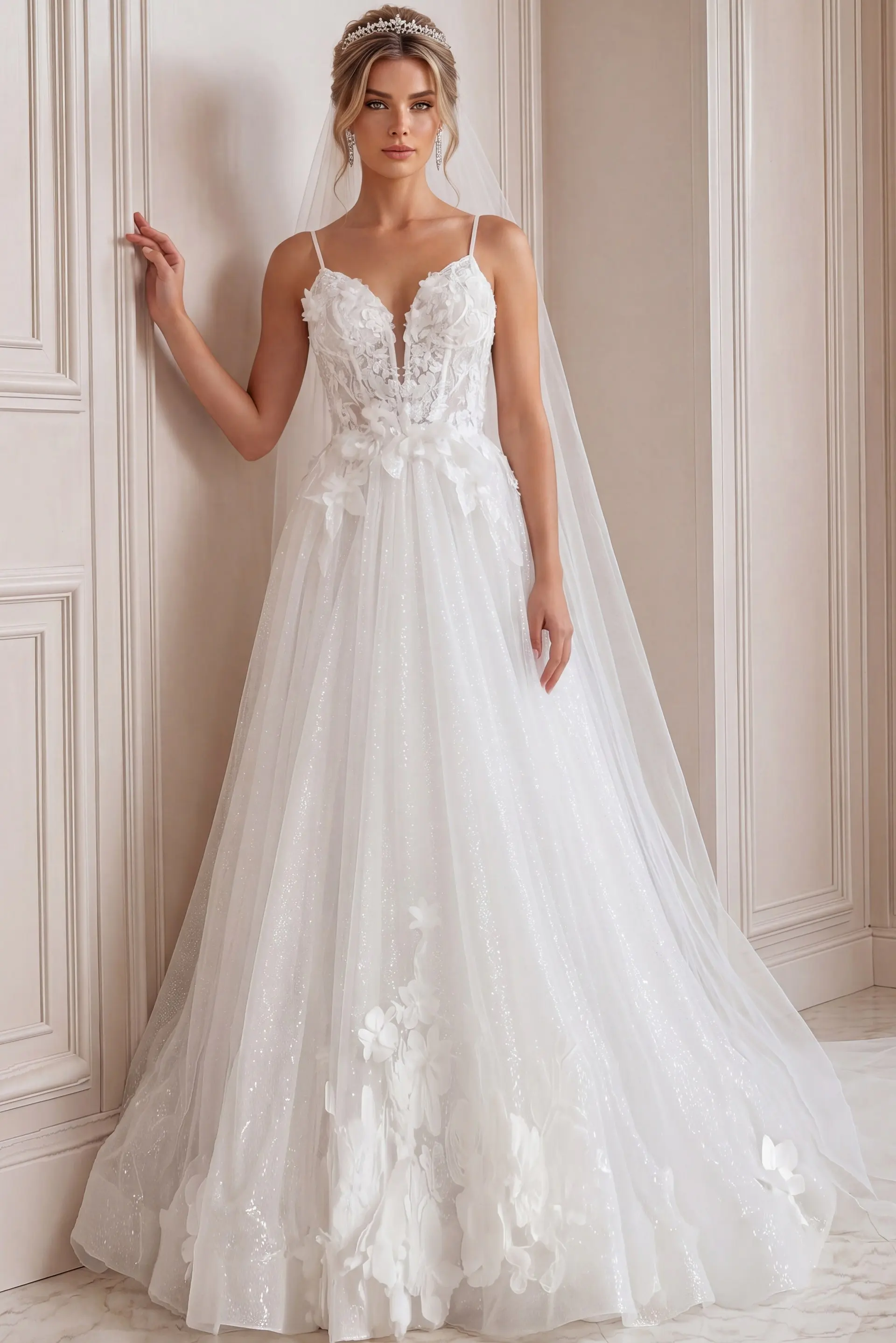
1 Color: IVORY/SAND
A line Wedding Dresses
A line wedding dresses balance a fitted bodice with a skirt that widens gradually from the waist. The silhouette can feel architectural in satin, airy in layered tulle or richly textured with floral lace. Corset construction offers a defined upper body, while softer draping creates a more relaxed effect. Jovani designs vary in neckline, waist placement and train length, so the most useful comparison is how each dress holds its shape as you move. When choosing an A line wedding dress, look beyond the front photograph: check the bodice support, side profile and back details to find the proportion that feels right for your ceremony.
Products
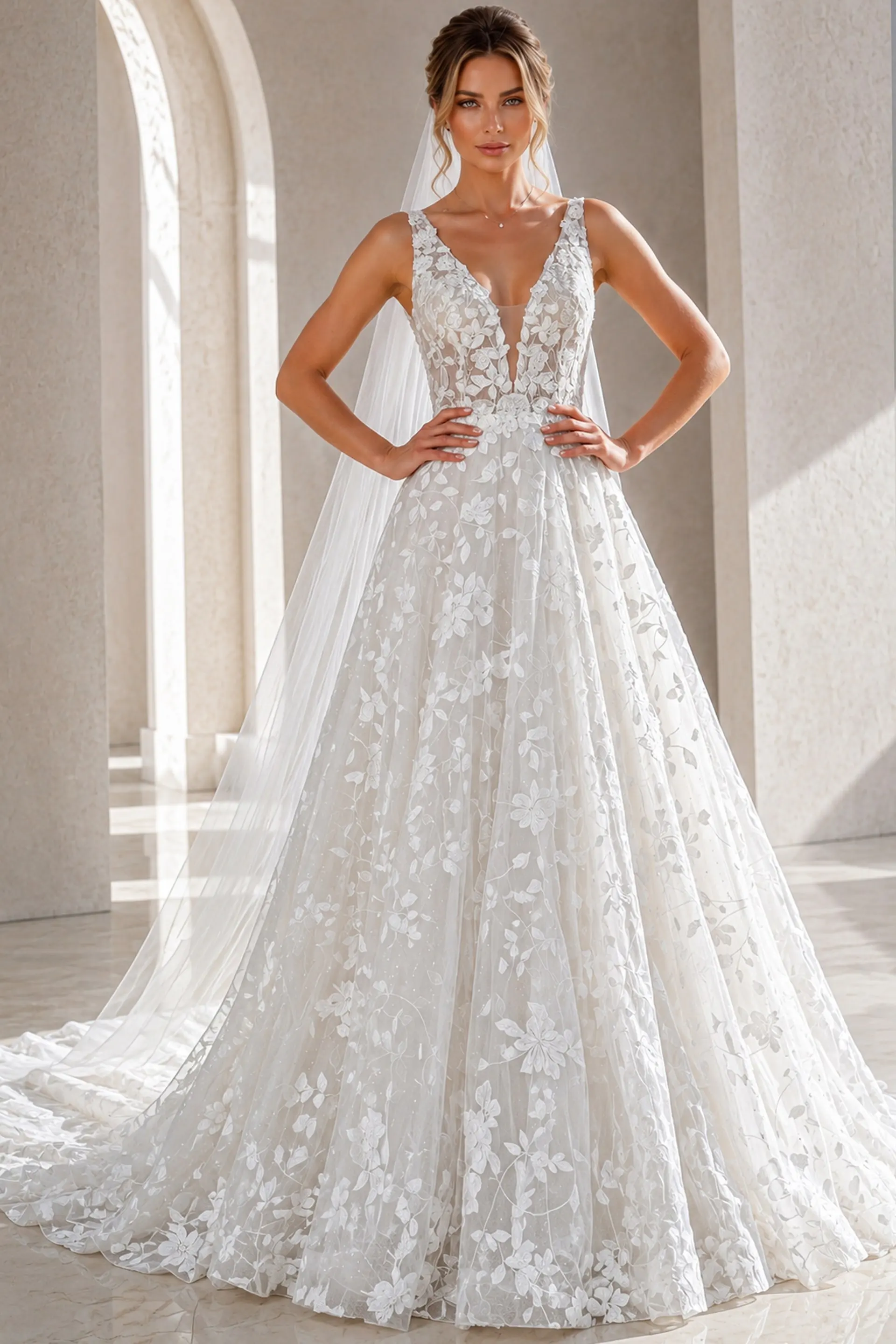
1 Color: IVORY/NUDE
Floral Lace A Line Gown with Deep V Neckline JB49748
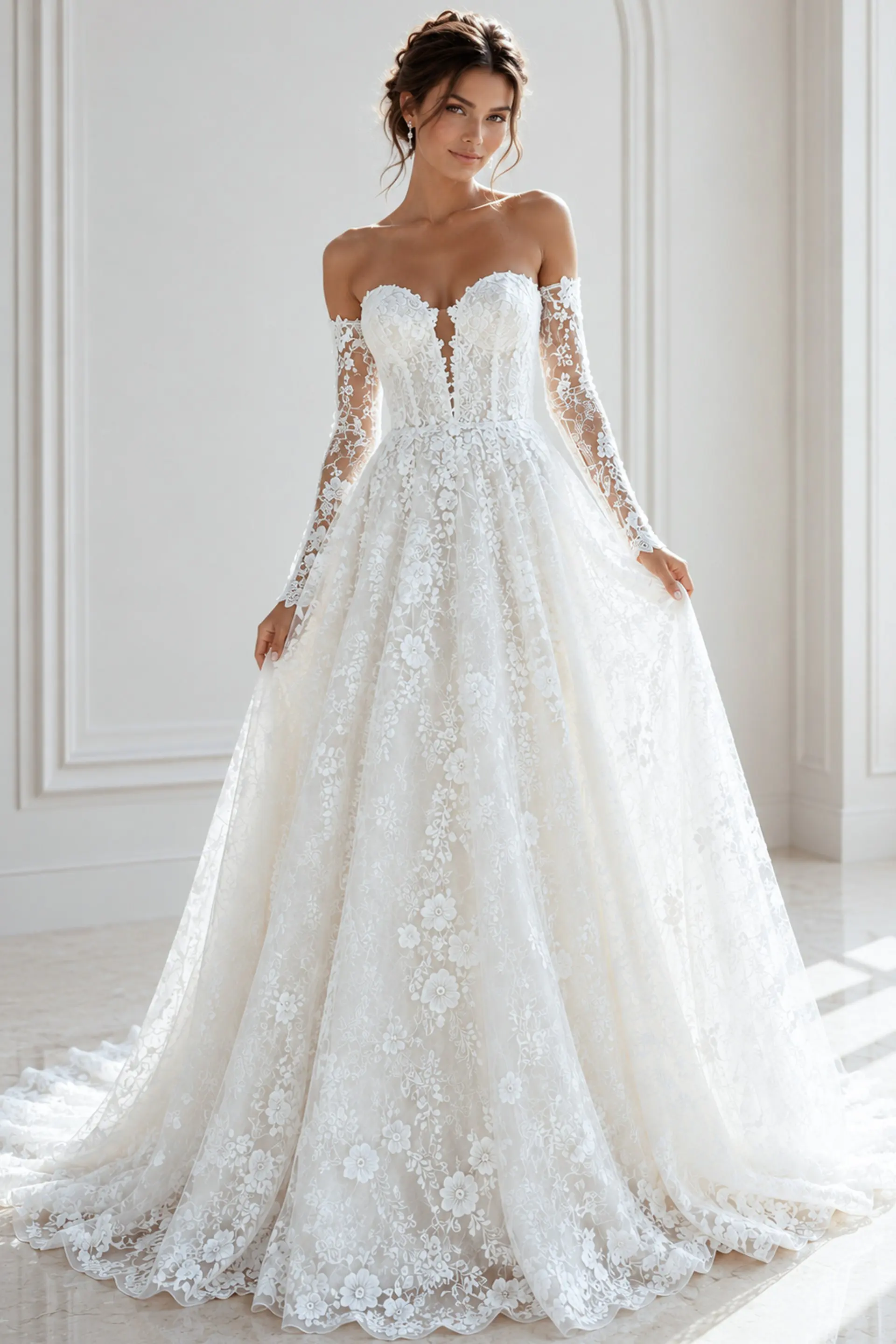
1 Color: IVORY
Off Shoulder Lace A Line Bridal Gown JB43864
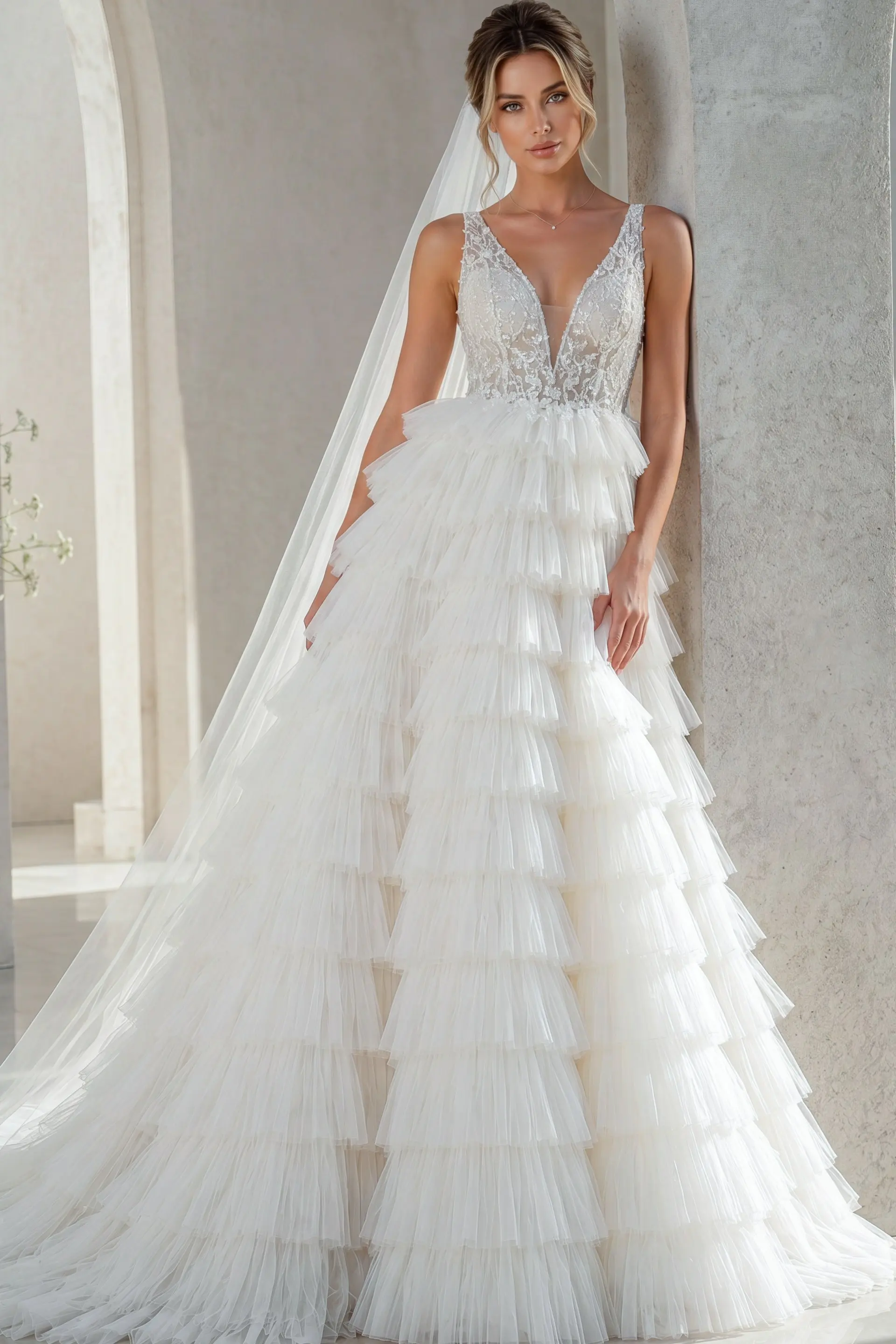
1 Color: IVORY/SAND
Lace Bodice Ball Gown with Layered Tulle Skirt JB43318
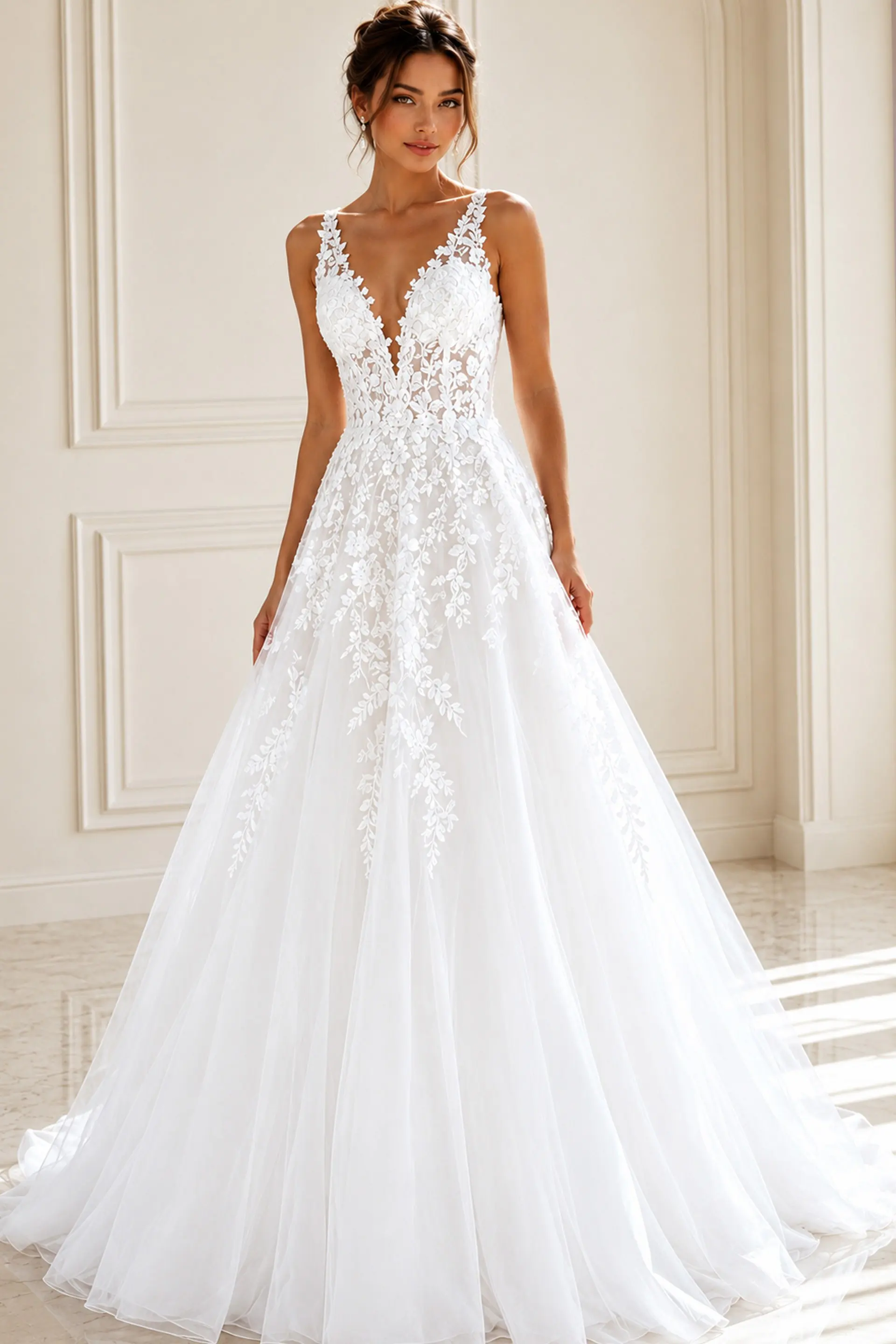
1 Color: IVORY
Floral Lace A Line Bridal Gown JB42323
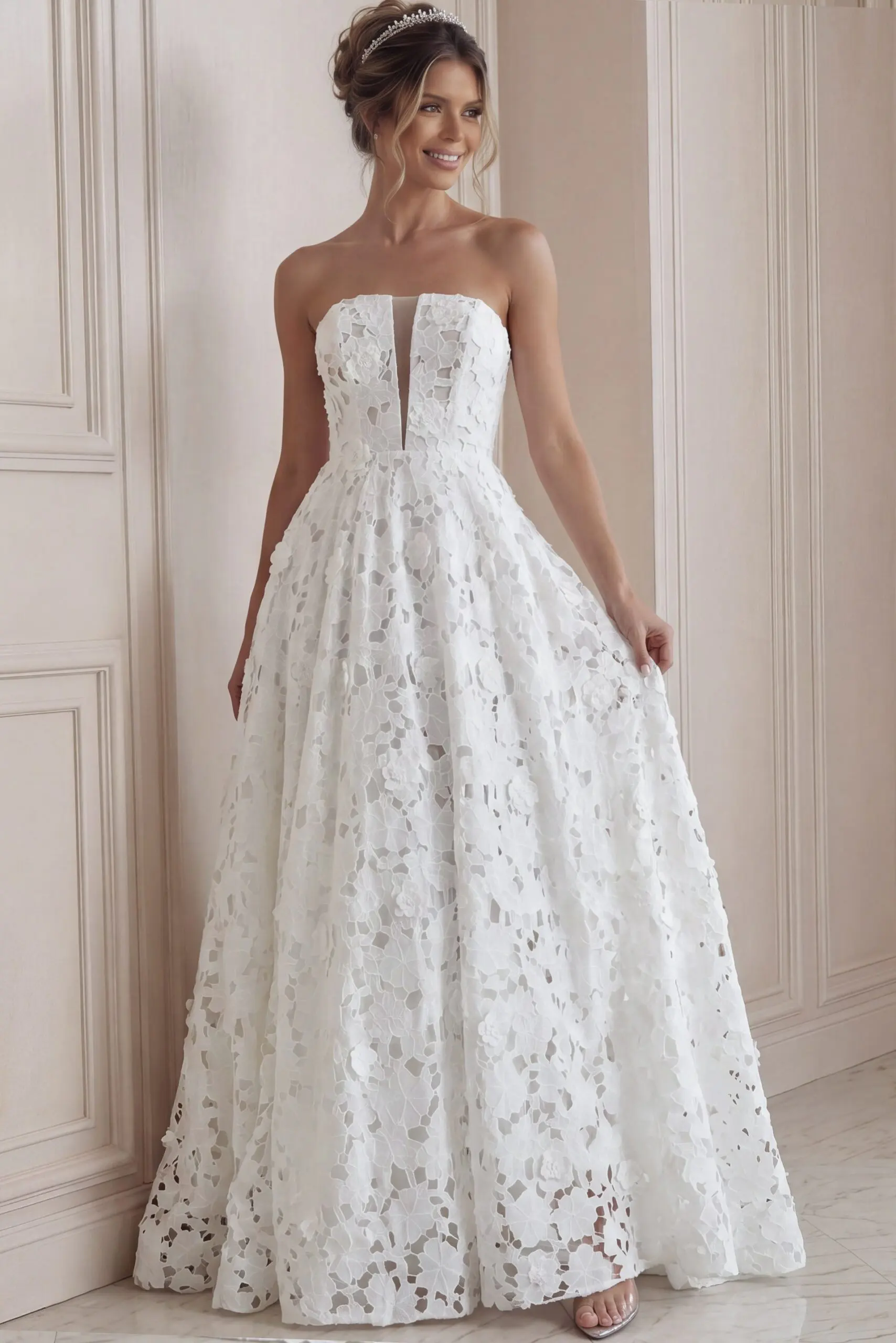
1 Color: IVORY
Lace Ball Gown Wedding Dress With Floral Appliqués JB45912
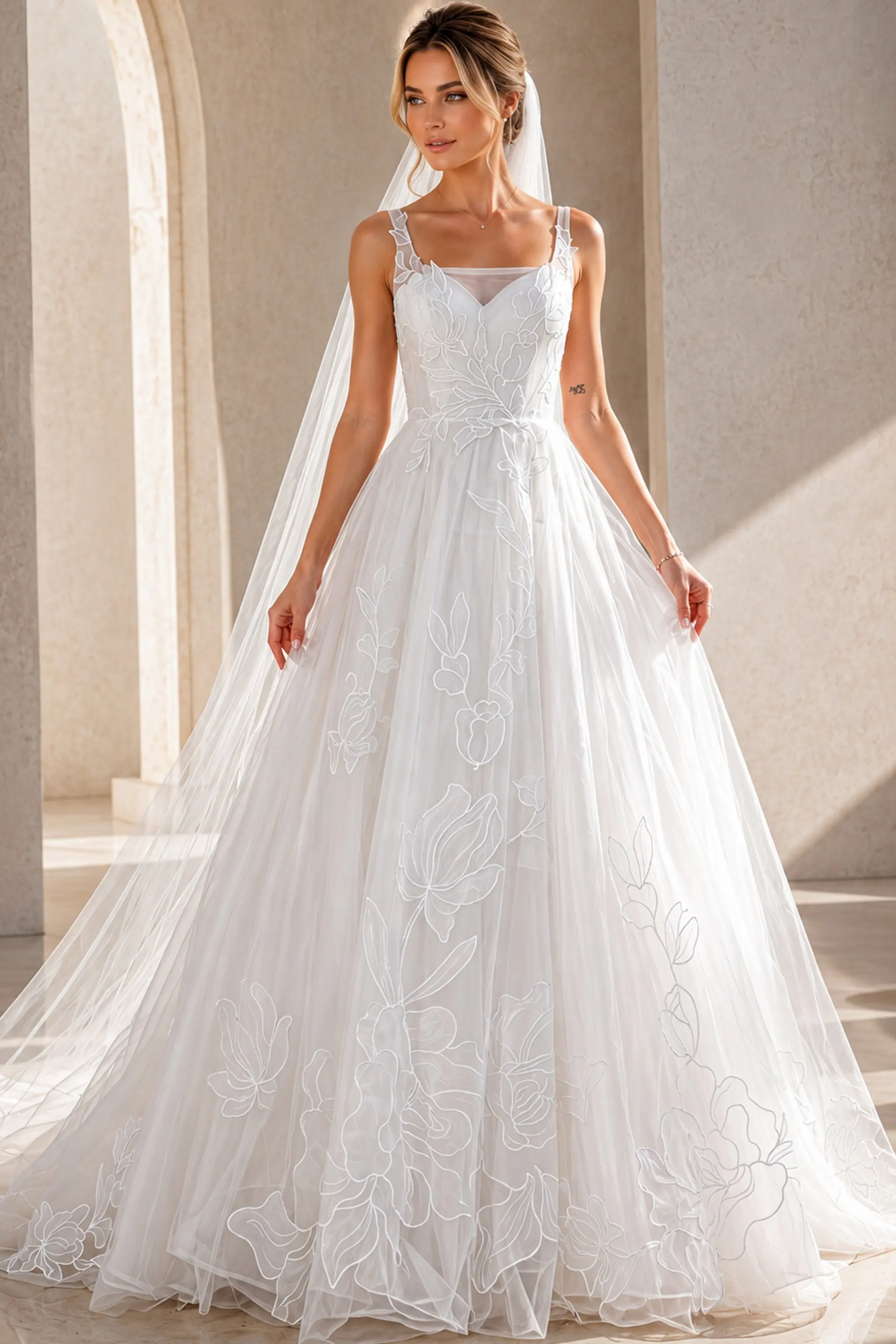
1 Color: IVORY
Floral Embroidered A Line Bridal Gown JB49761
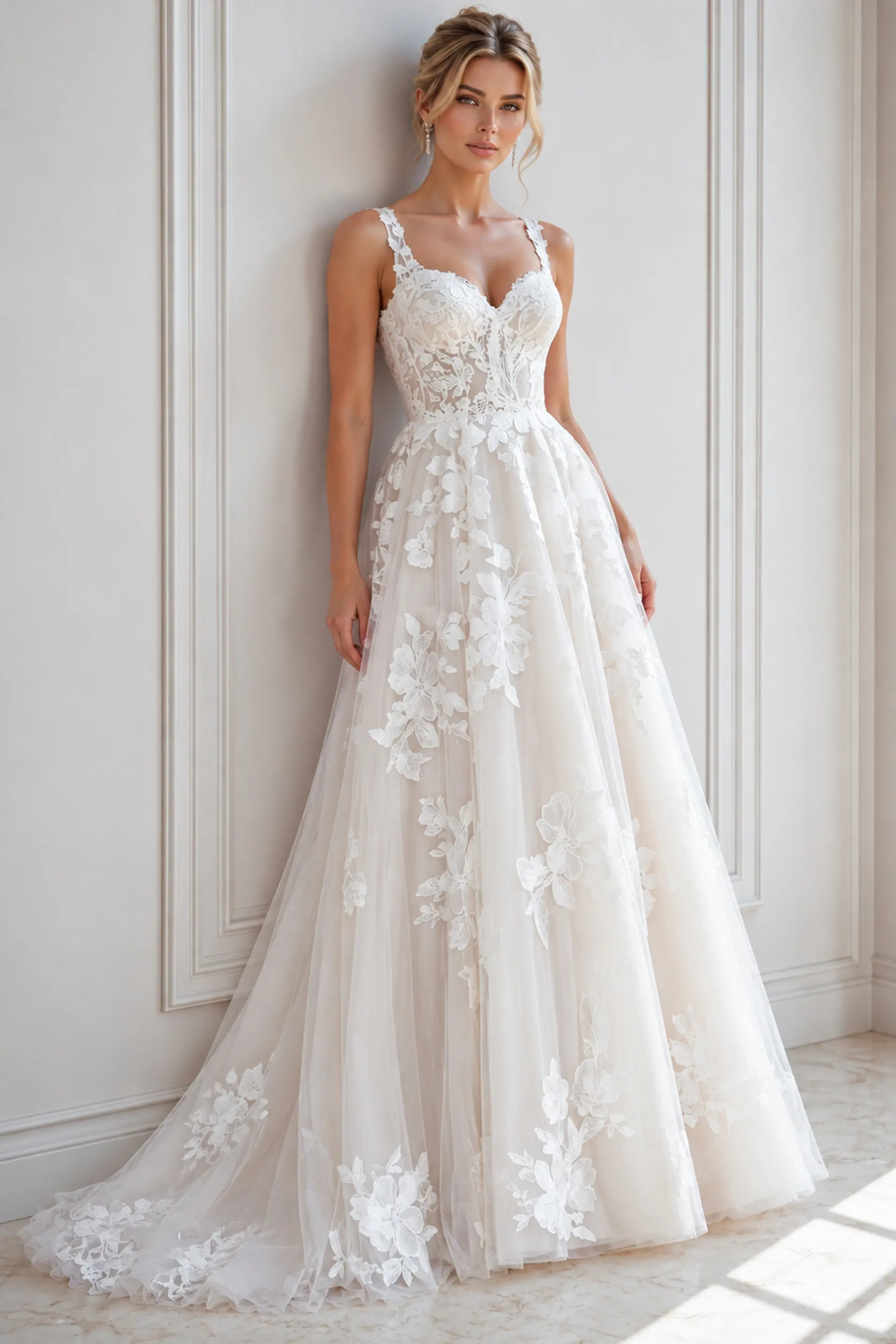
1 Color: LIGHT GOLD IVORY
Floral Lace A Line Bridal Gown With Sheer Bodice JB99062
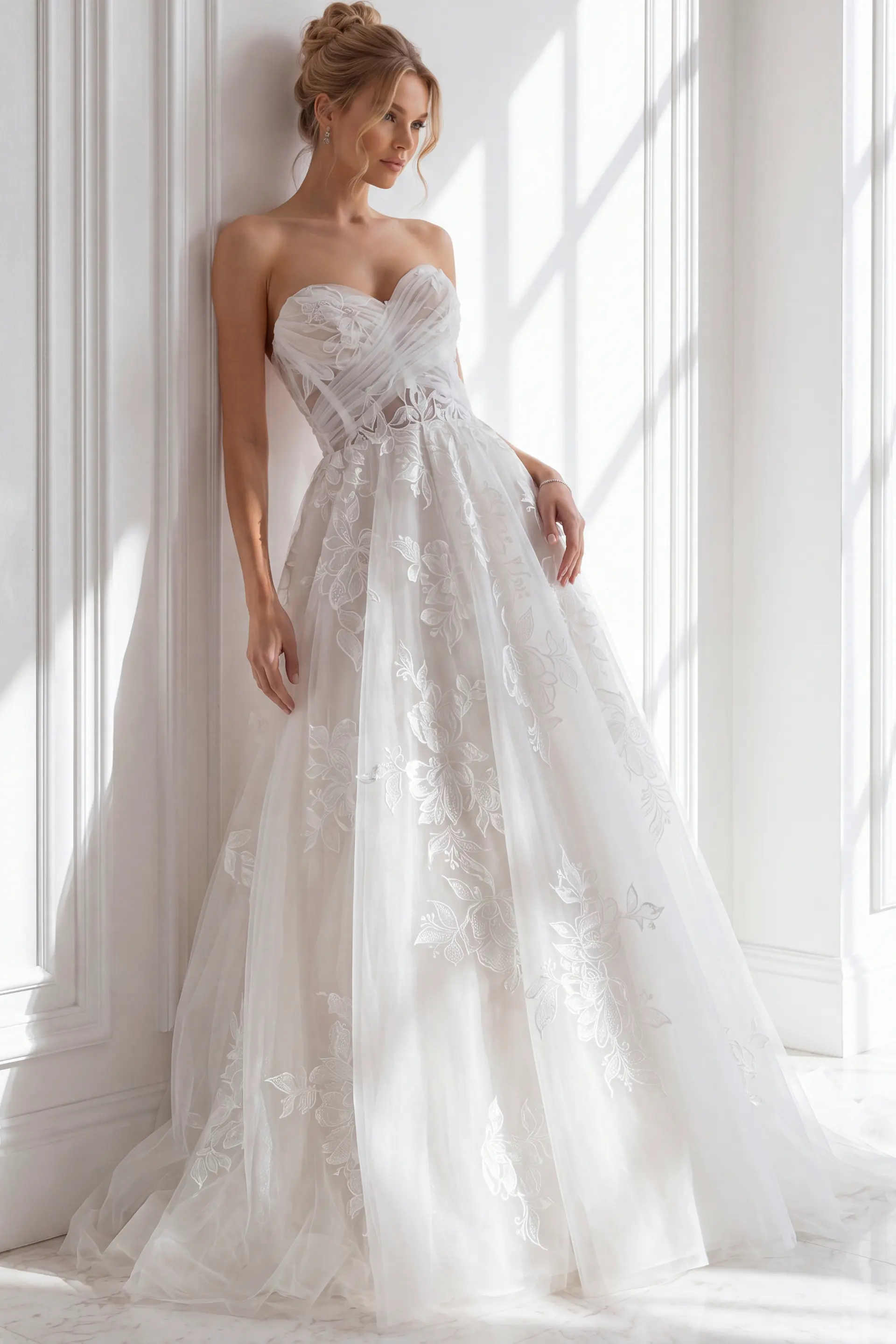
1 Color: IVORY/NUDE
Strapless Lace Ball Gown with Embroidered Tulle Skirt JB43191
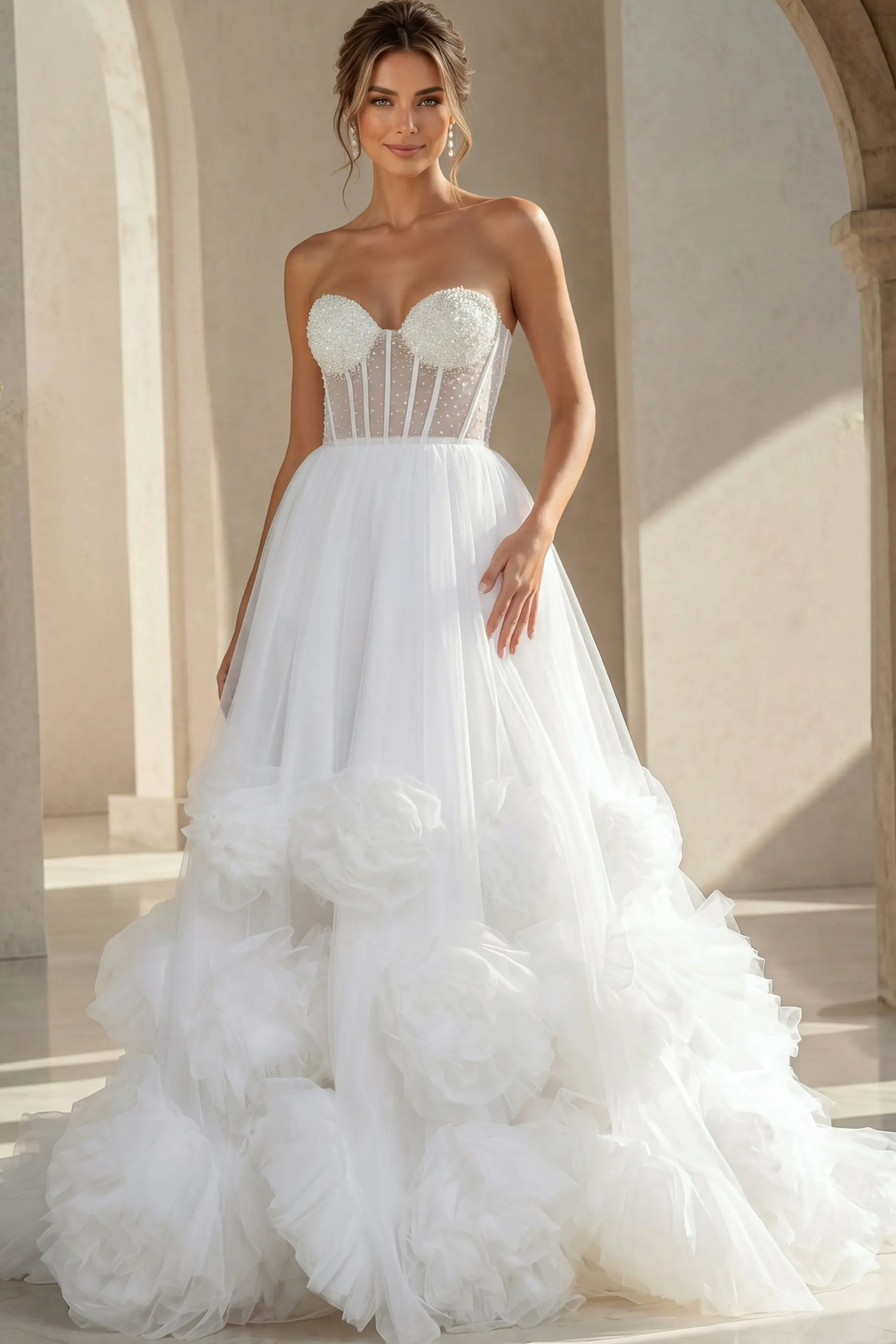
1 Color: OFF-WHITE
Strapless A Line Wedding Dress with Floral Ruffle Details JB42782
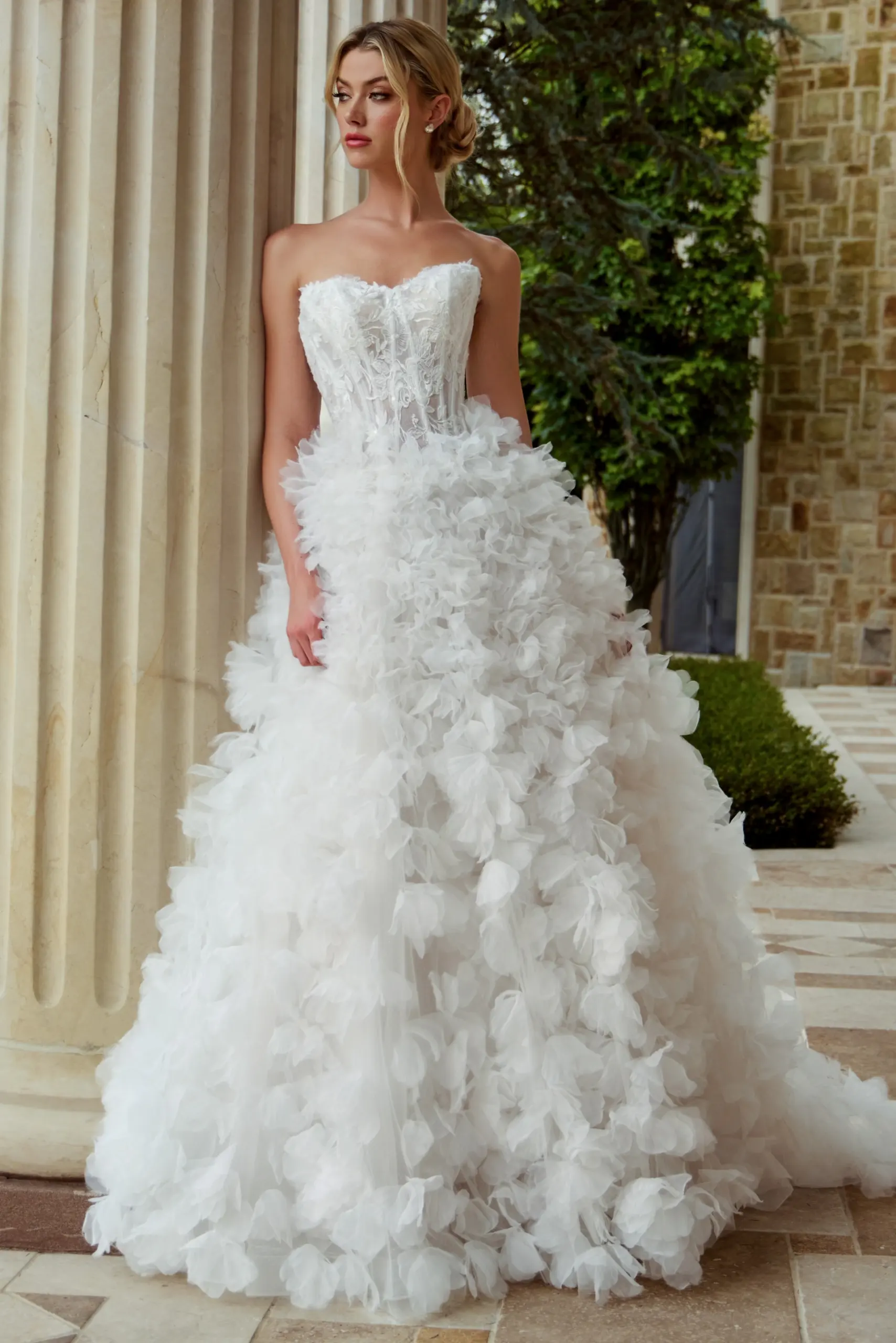
1 Color: IVORY
Strapless Sweetheart Ball Gown with 3D Floral Appliqués JB44604
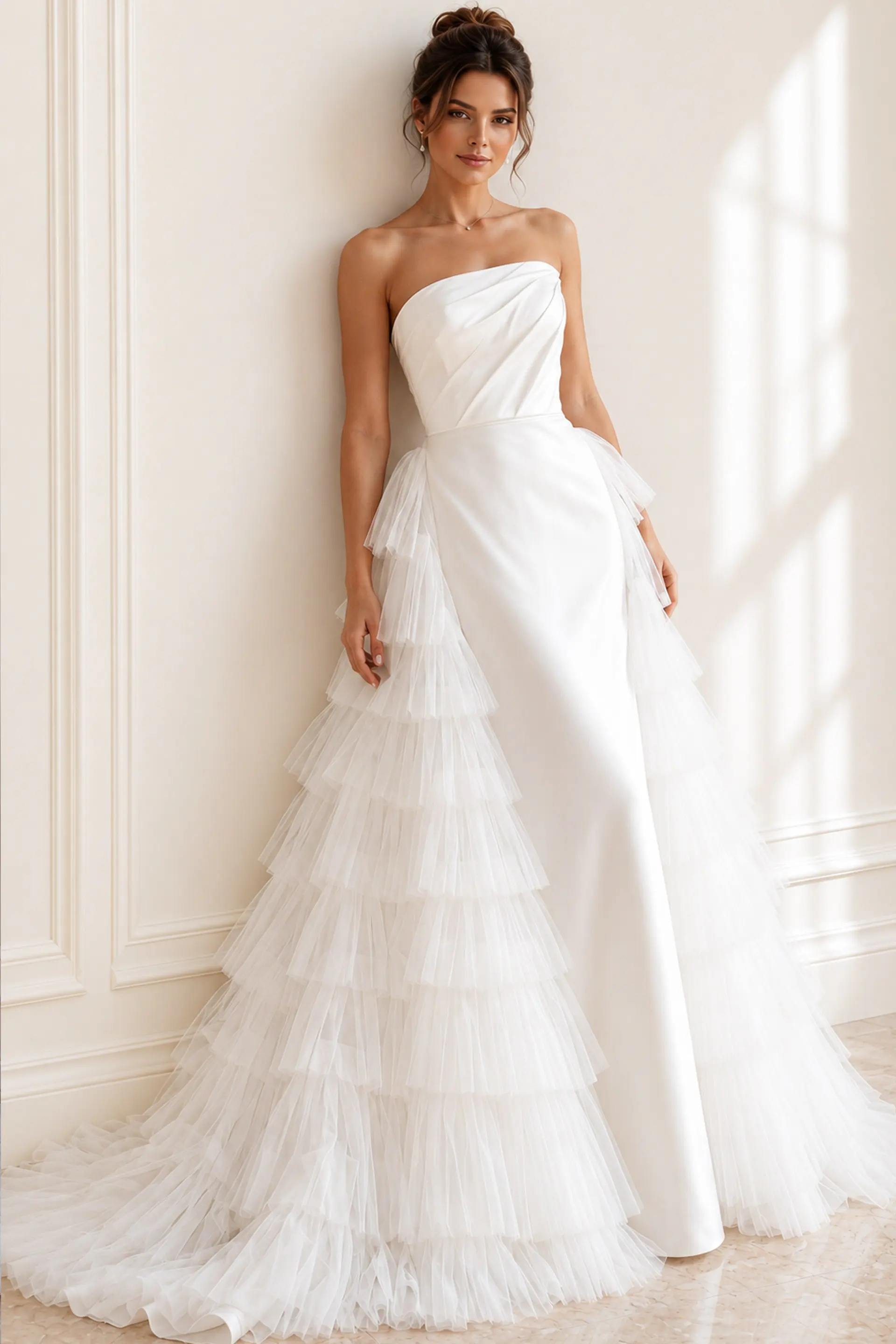
1 Color: OFF-WHITE
One Shoulder Tiered Tulle Bridal Gown JB42769
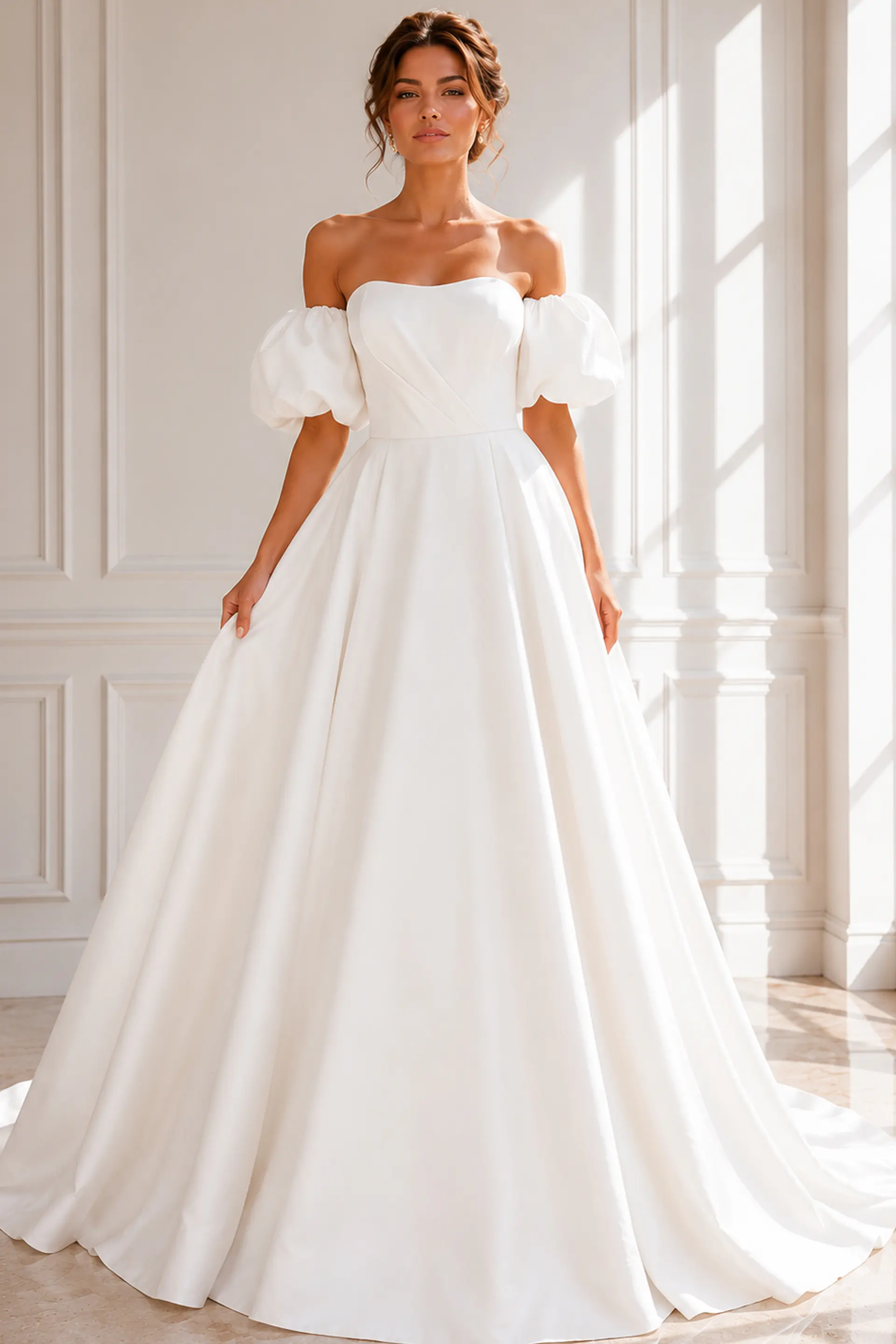
1 Color: IVORY
Puff Sleeve Off Shoulder Bridal Gown JB43232
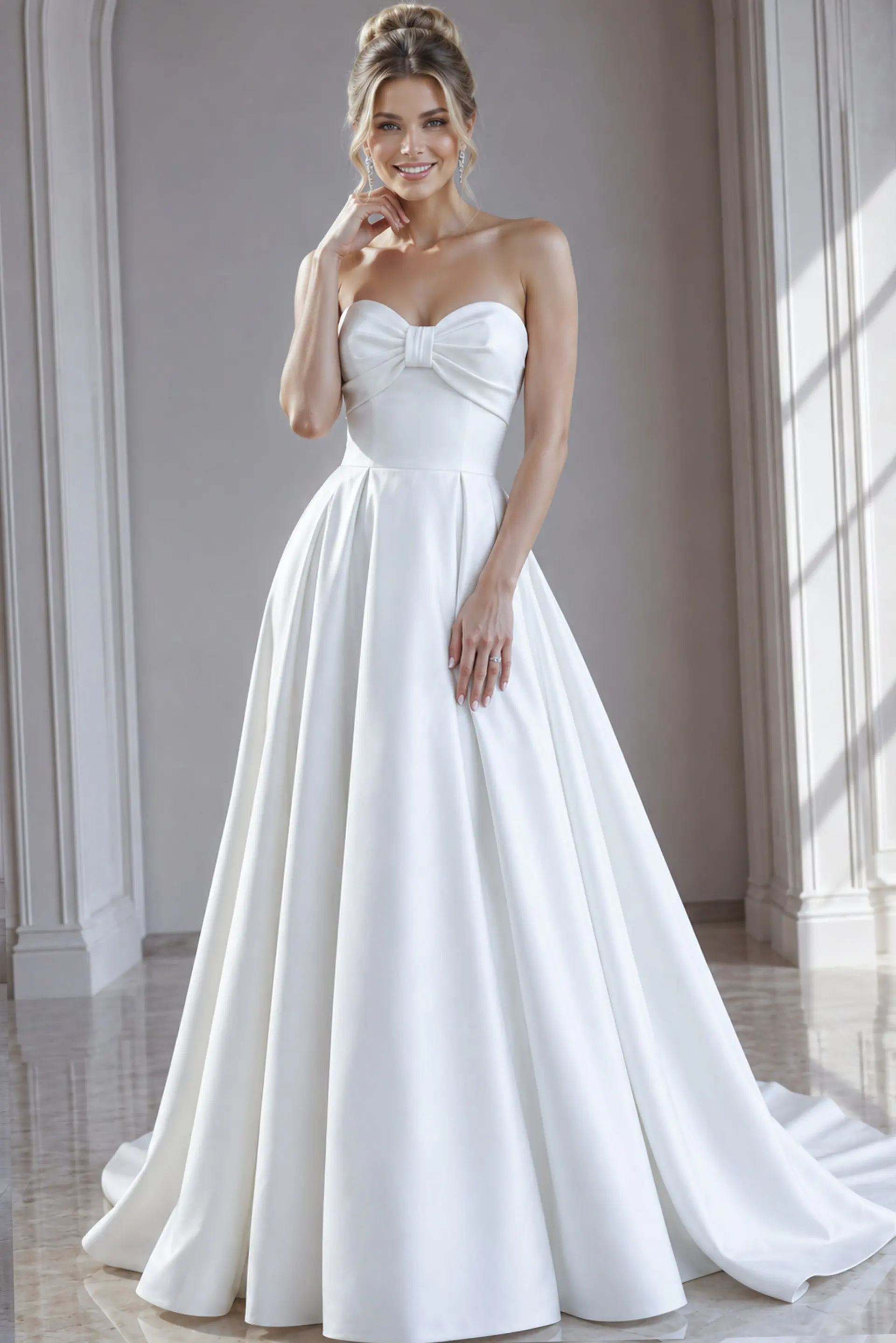
5 Colors: BLACK, BROWN, INK, NAVY, OFF-WHITE
Strapless Gown With Statement Bow Detail 50534
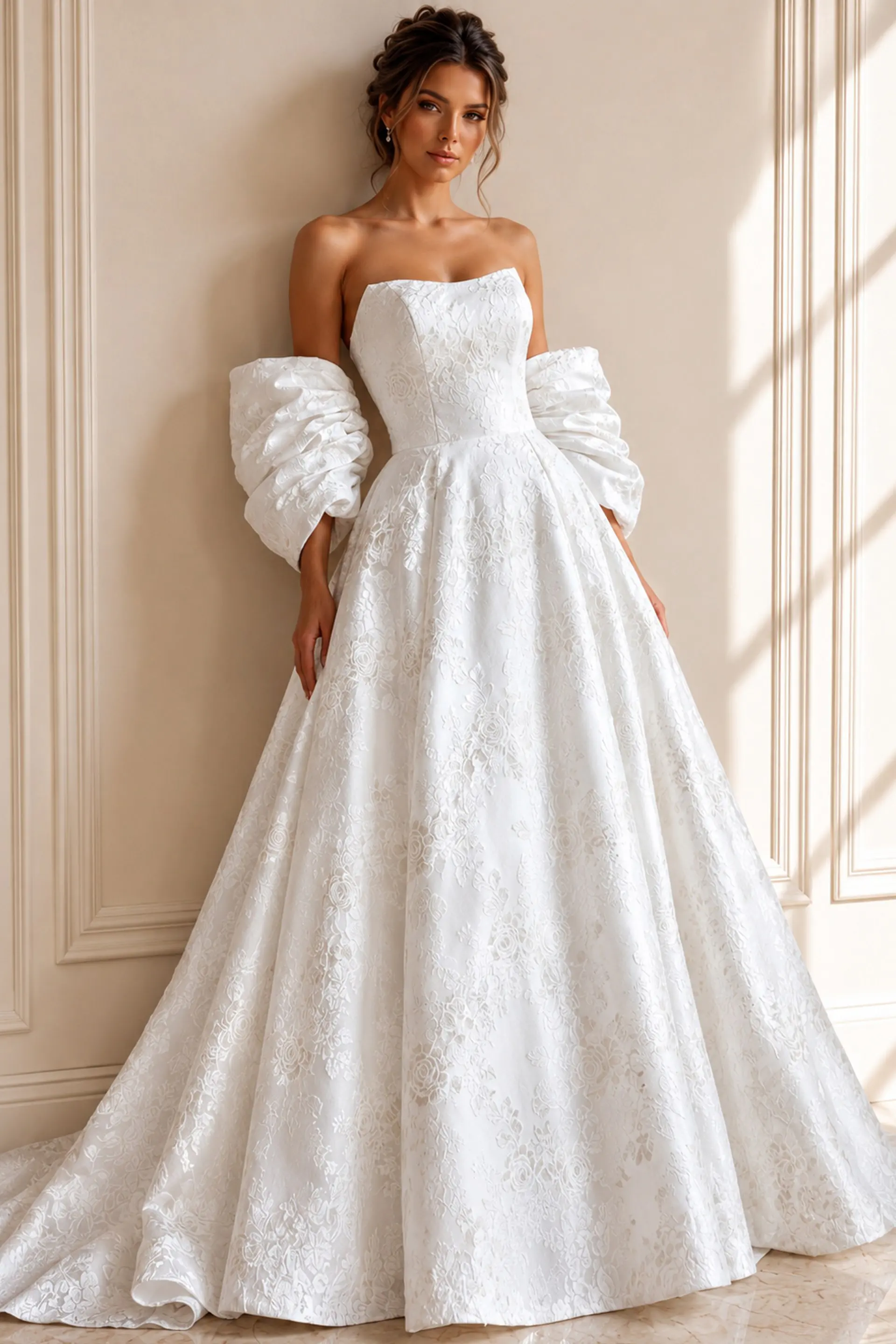
1 Color: WHITE
Floral Brocade Ball Gown With Dramatic Bow Train JB47701
1 Color: IVORY
Strapless Sweetheart Satin Wedding Dress JB46880
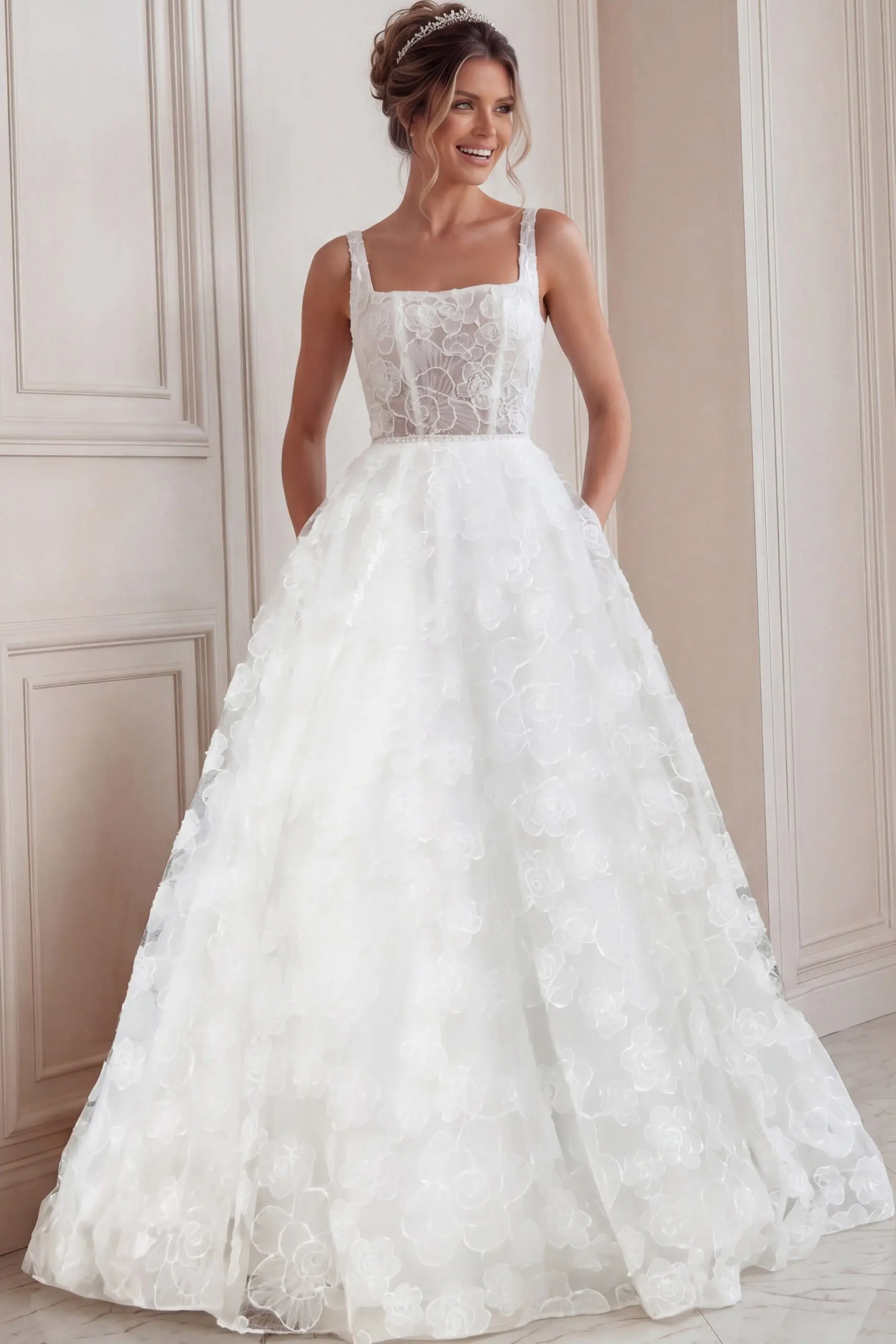
1 Color: IVORY
Square Neck Lace Ballgown with Floral Appliqué JB45834
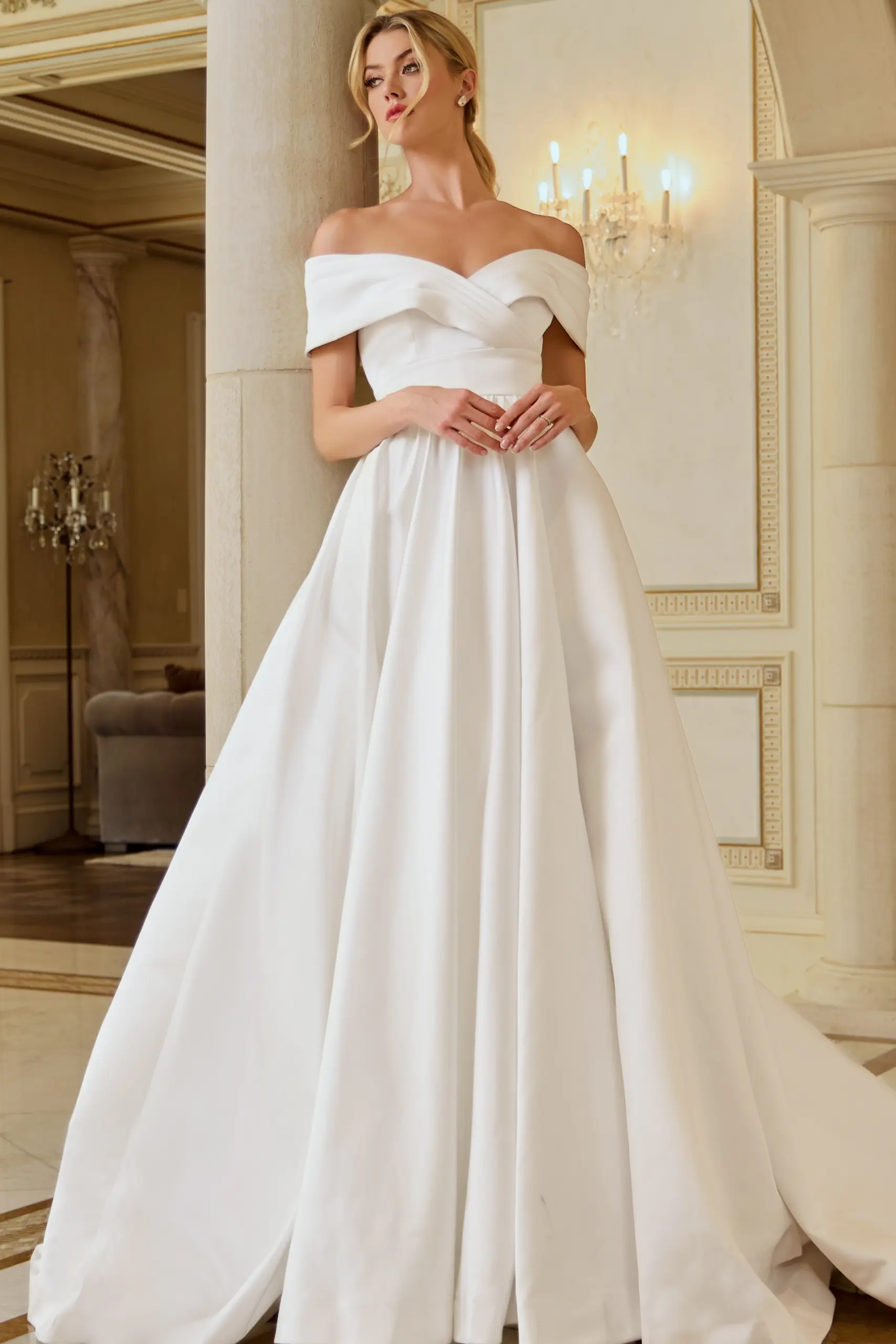
1 Color: WHITE
Strapless Satin Ball Gown with Crystal Beaded Bodice JB45169
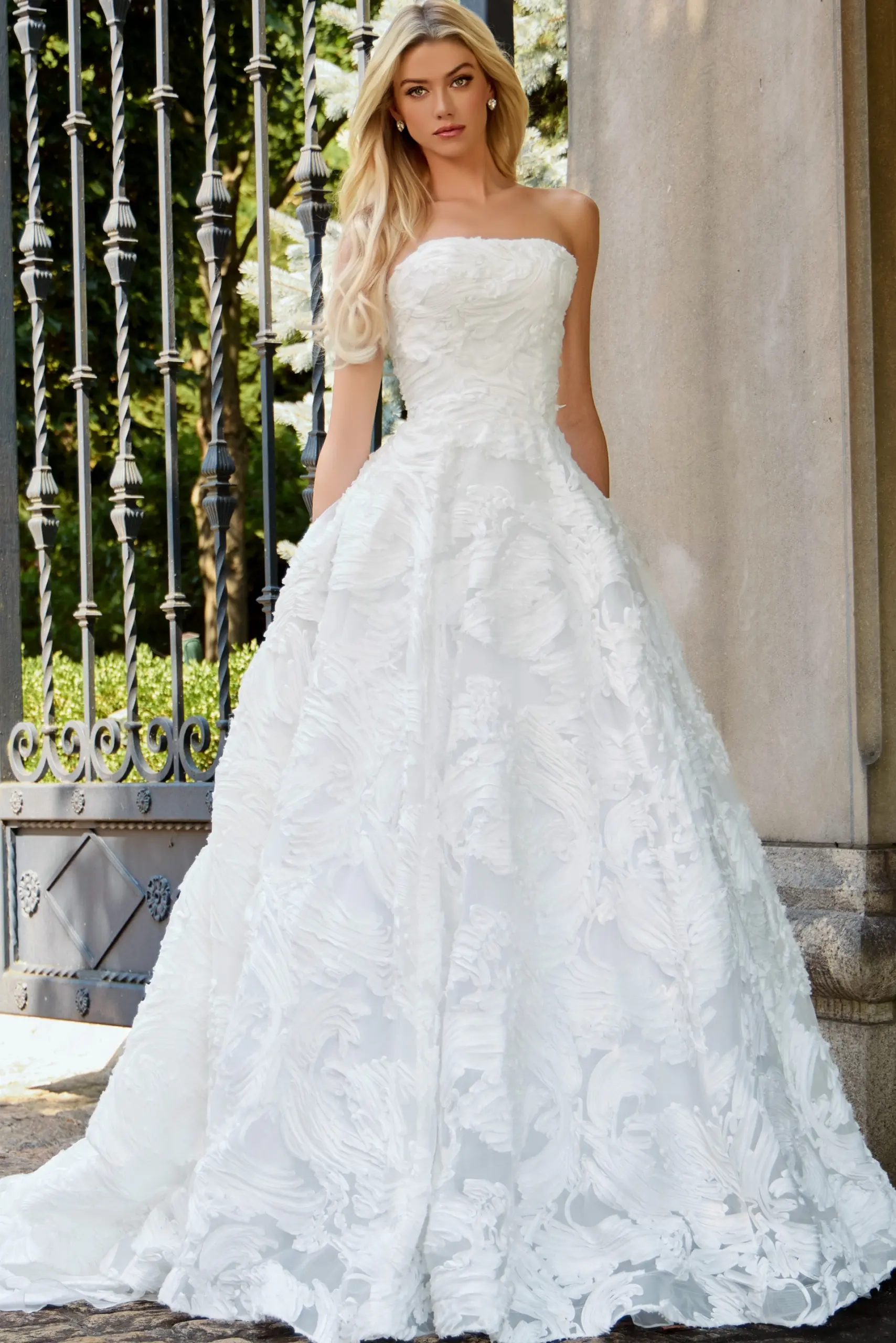
2 Colors: BLACK, WHITE
Strapless Textured Ball Gown Wedding Dress JB44115
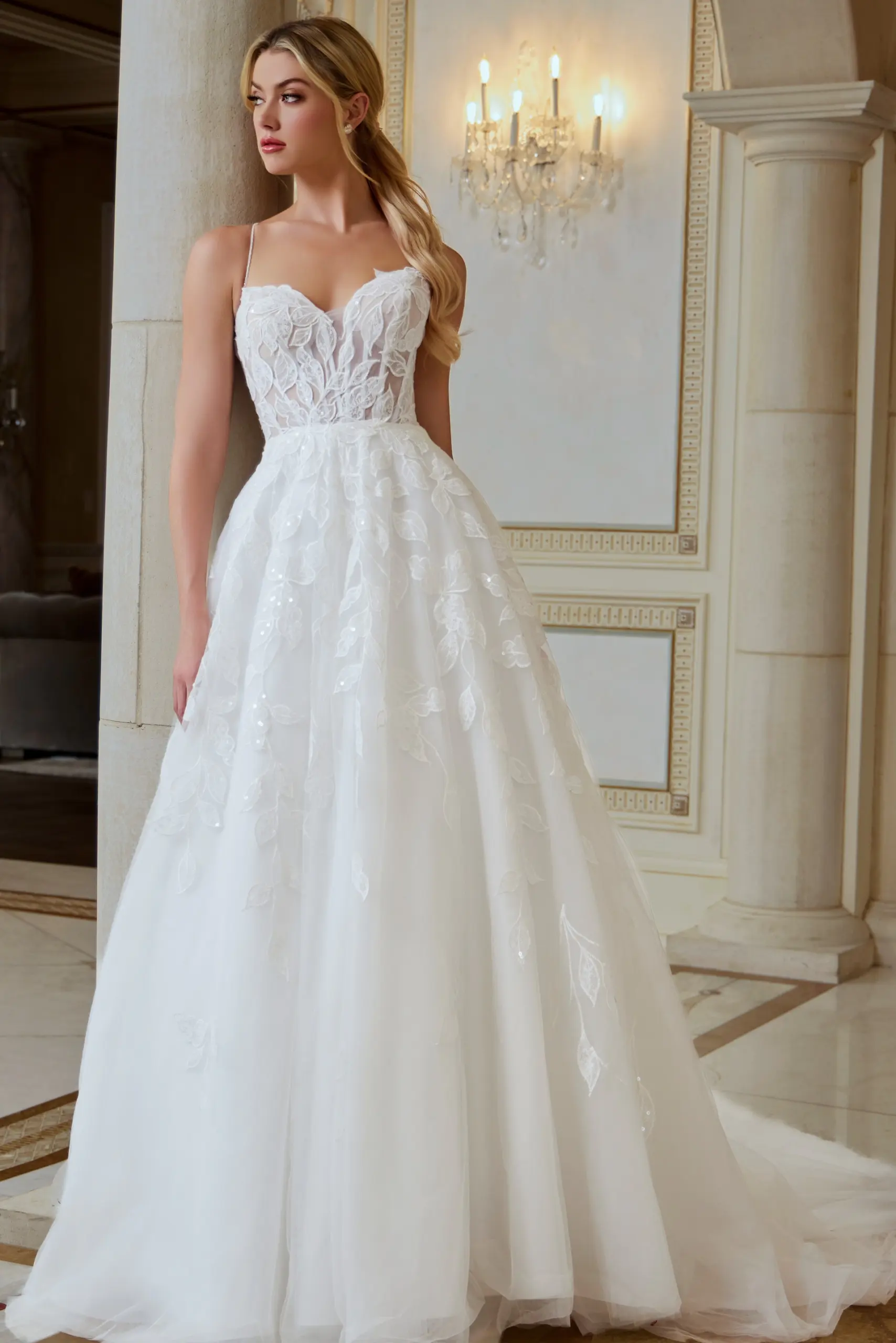
1 Color: IVORY
Floral Lace Ball Gown Wedding Dress JB43863
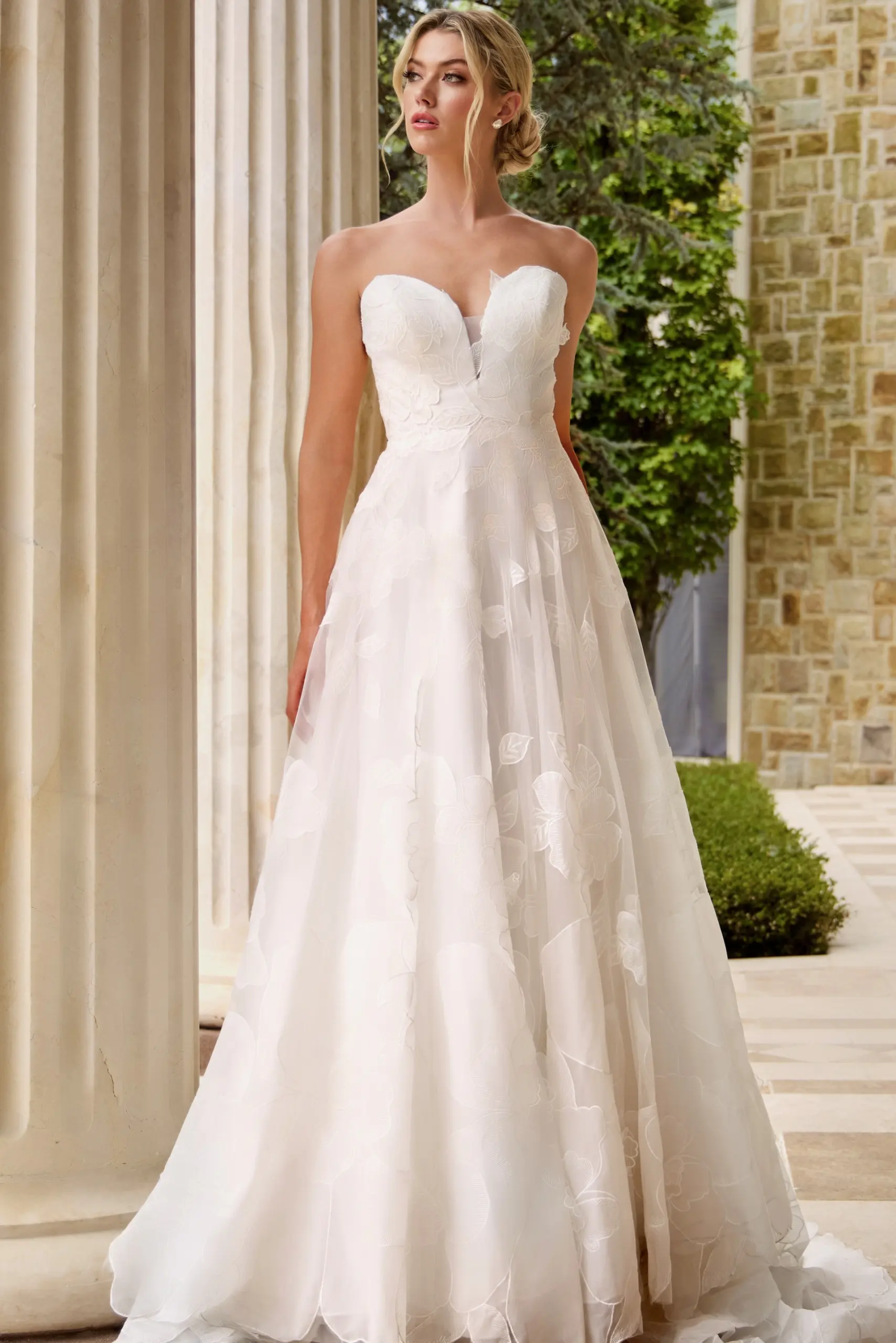
1 Color: IVORY
Floral Lace A-Line Wedding Gown JB42324
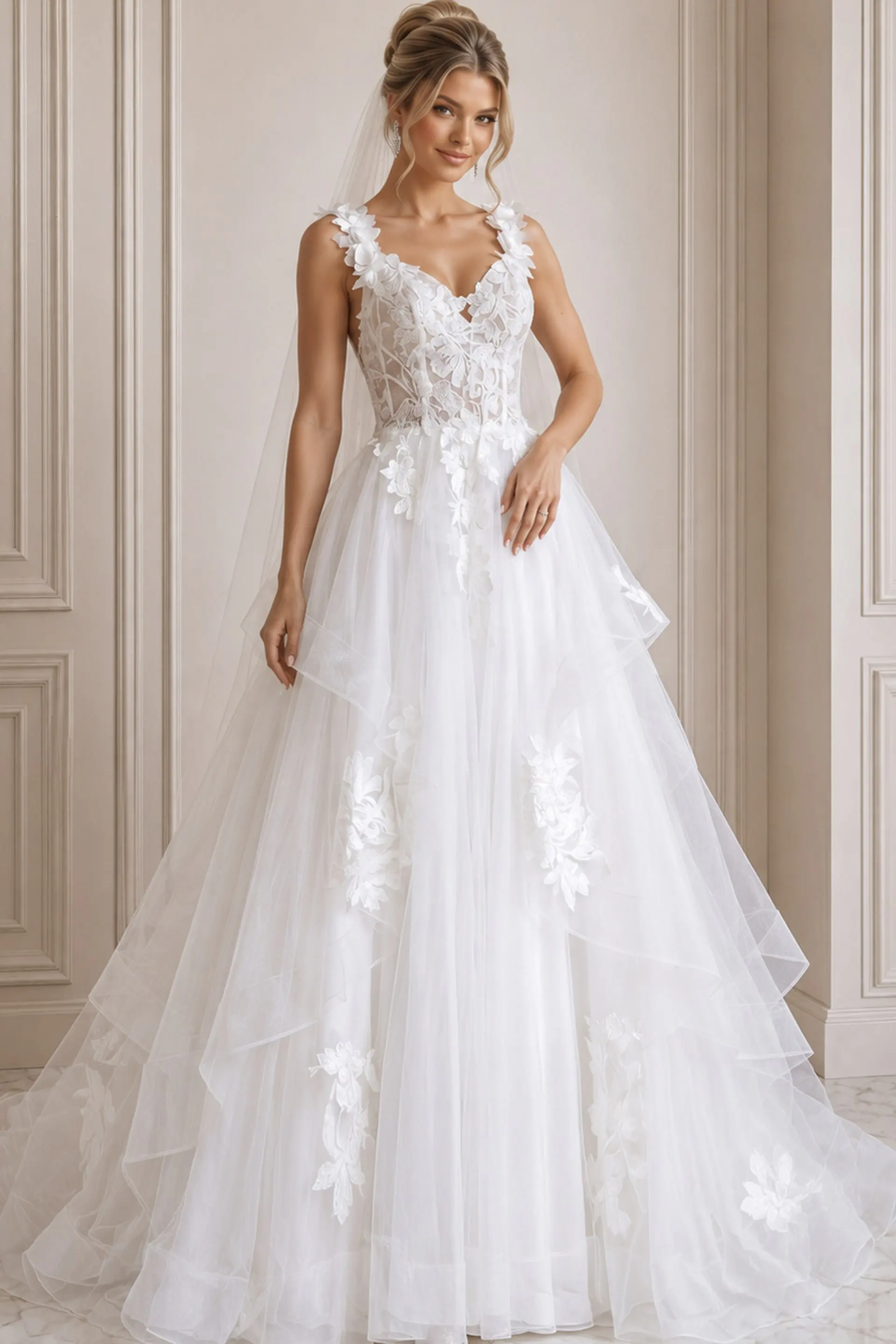
1 Color: IVORY/NUDE
Lace Bridal Dress with Floral Details JB43314
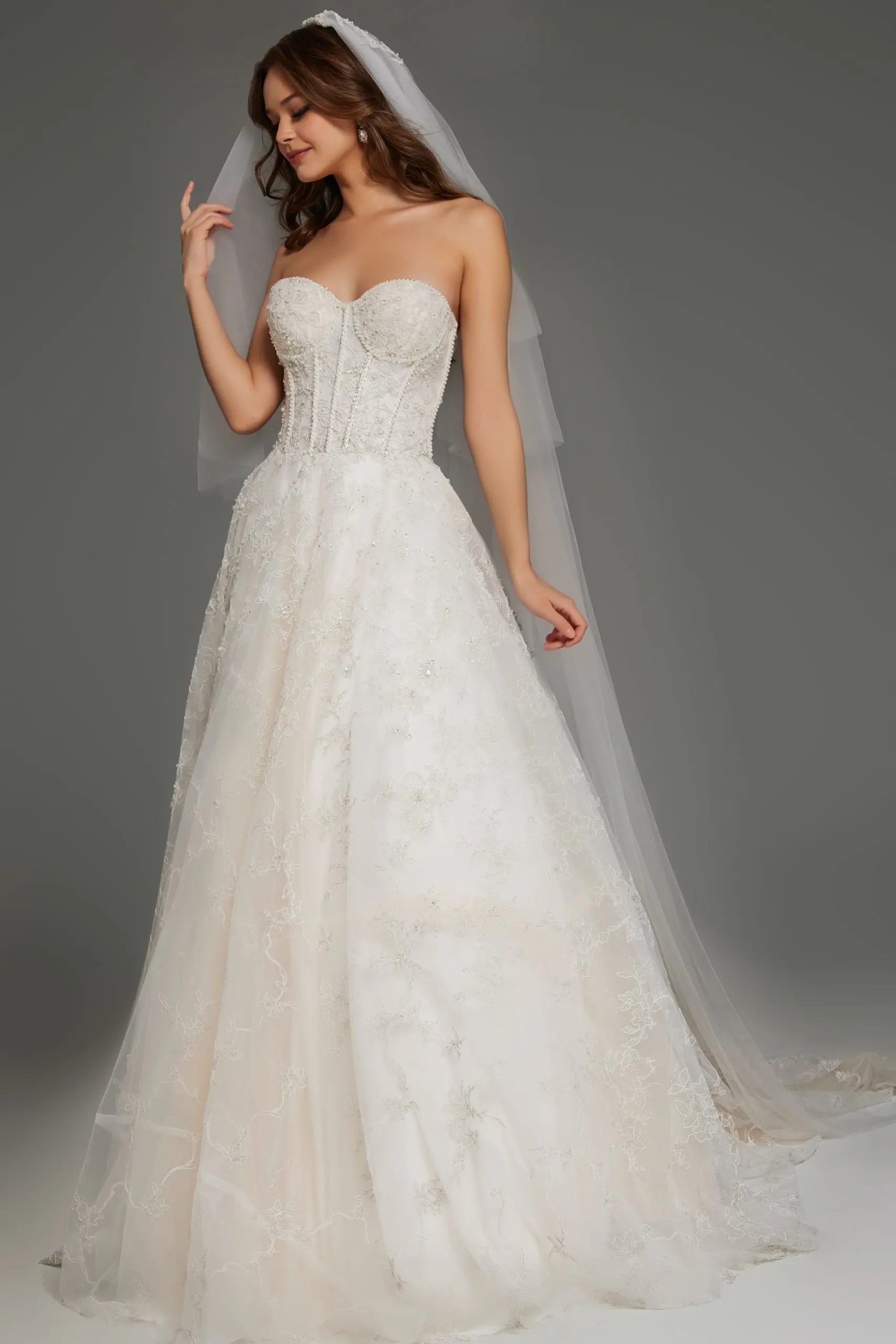
1 Color: OFF-WHITE
Elegant Strapless Corset Bridal Gown with Lace Details JB42766
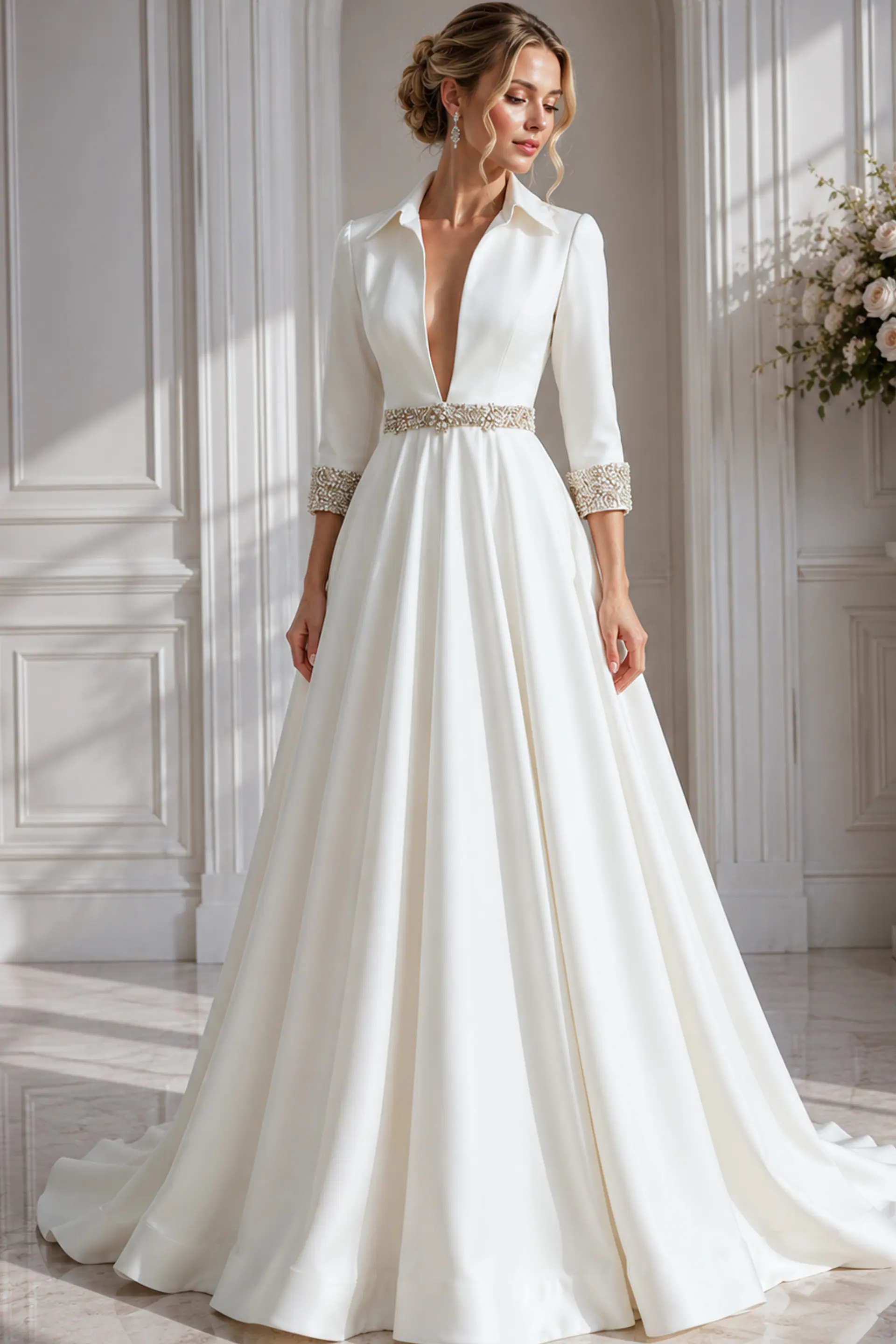
2 Colors: BLACK, OFF-WHITE
Elegant V Neck Satin Bridal Gown with Beaded Accents S61342
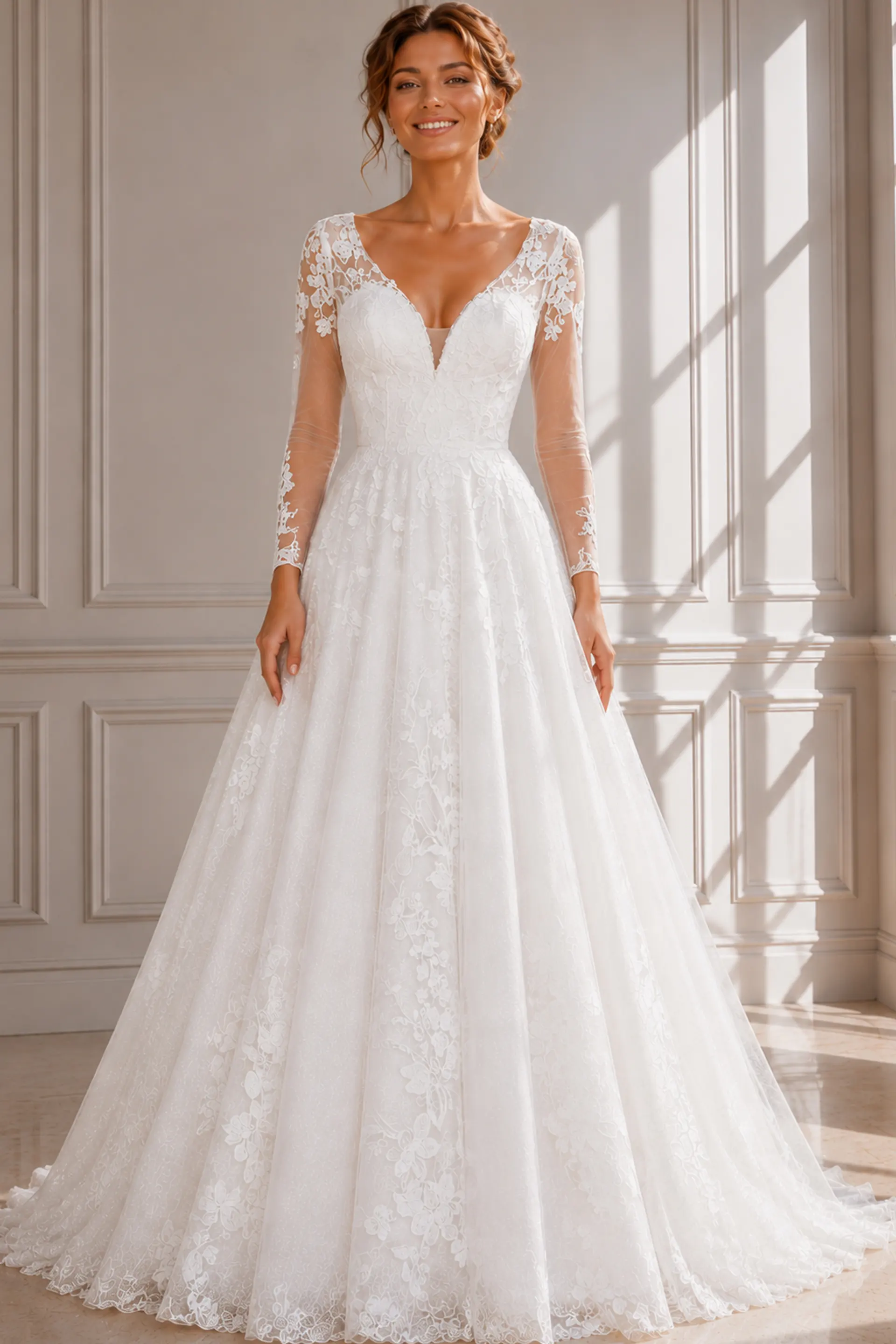
1 Color: IVORY/SAND
Lace A line Bridal Gown JB43317
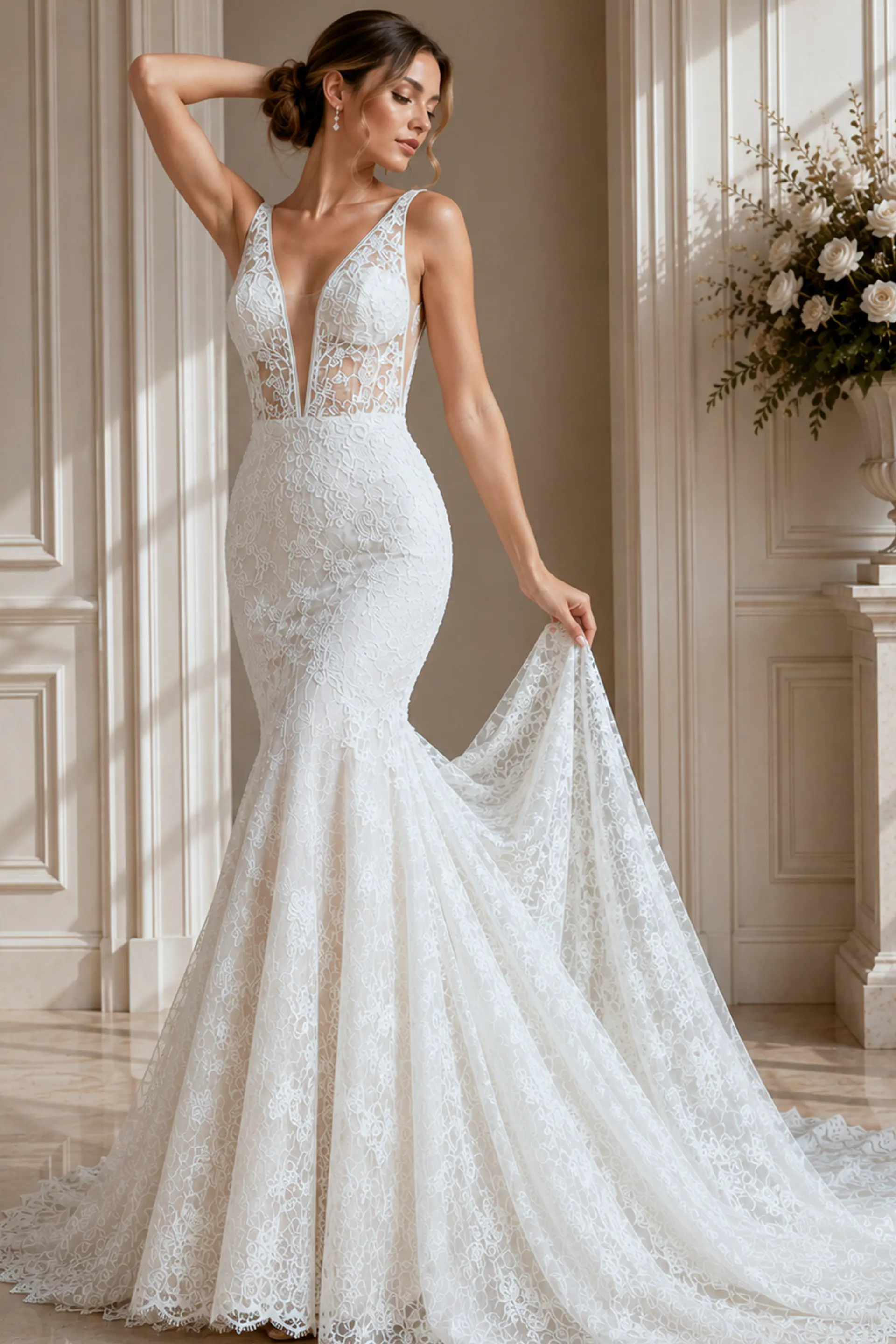
1 Color: IVORY/NUDE
Intricate Lace Wedding Gown with Deep V Neckline and Flowing Train JB43894
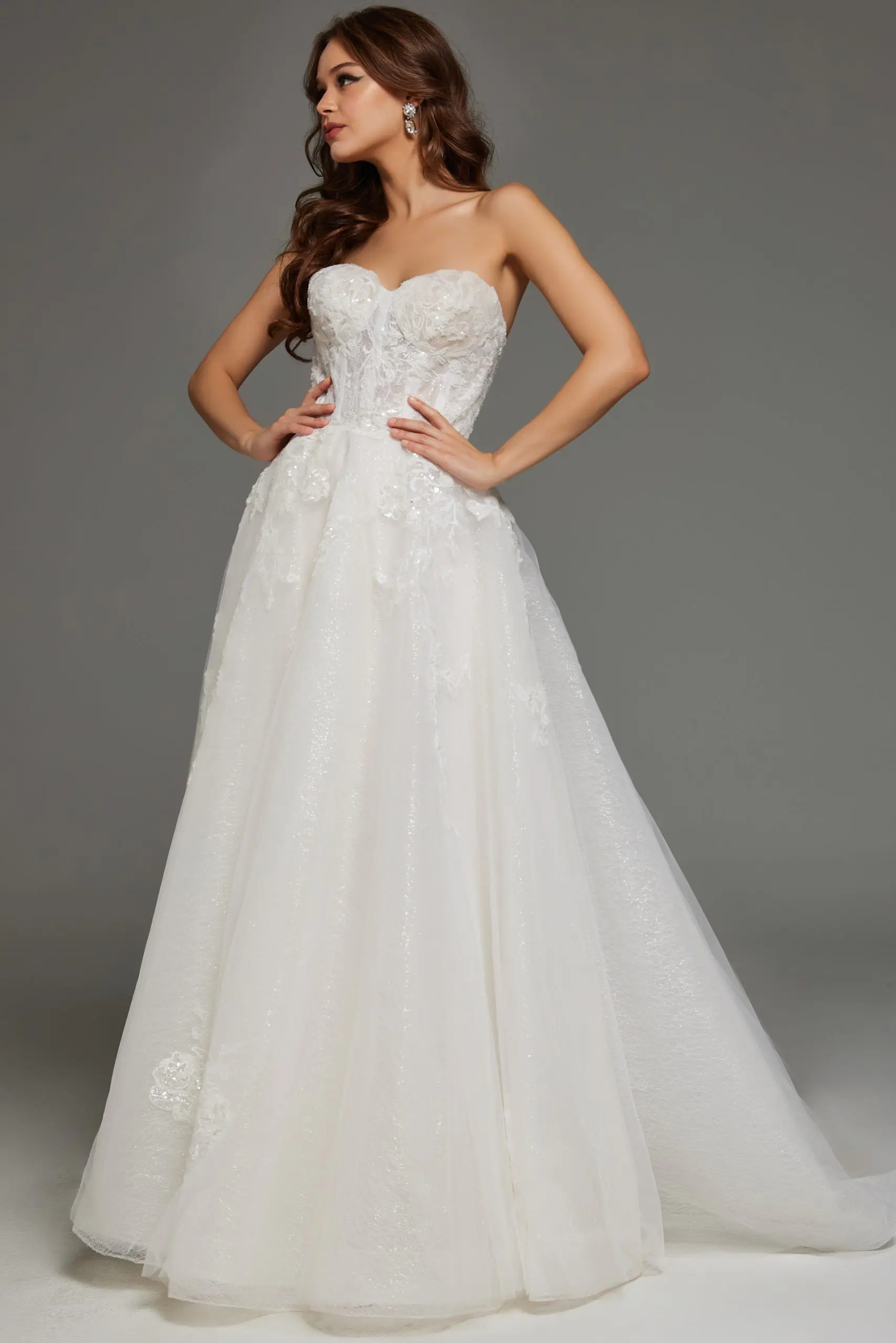
1 Color: IVORY/SAND
Strapless Lace Ball Gown with Embroidered Floral Appliqués JB43324
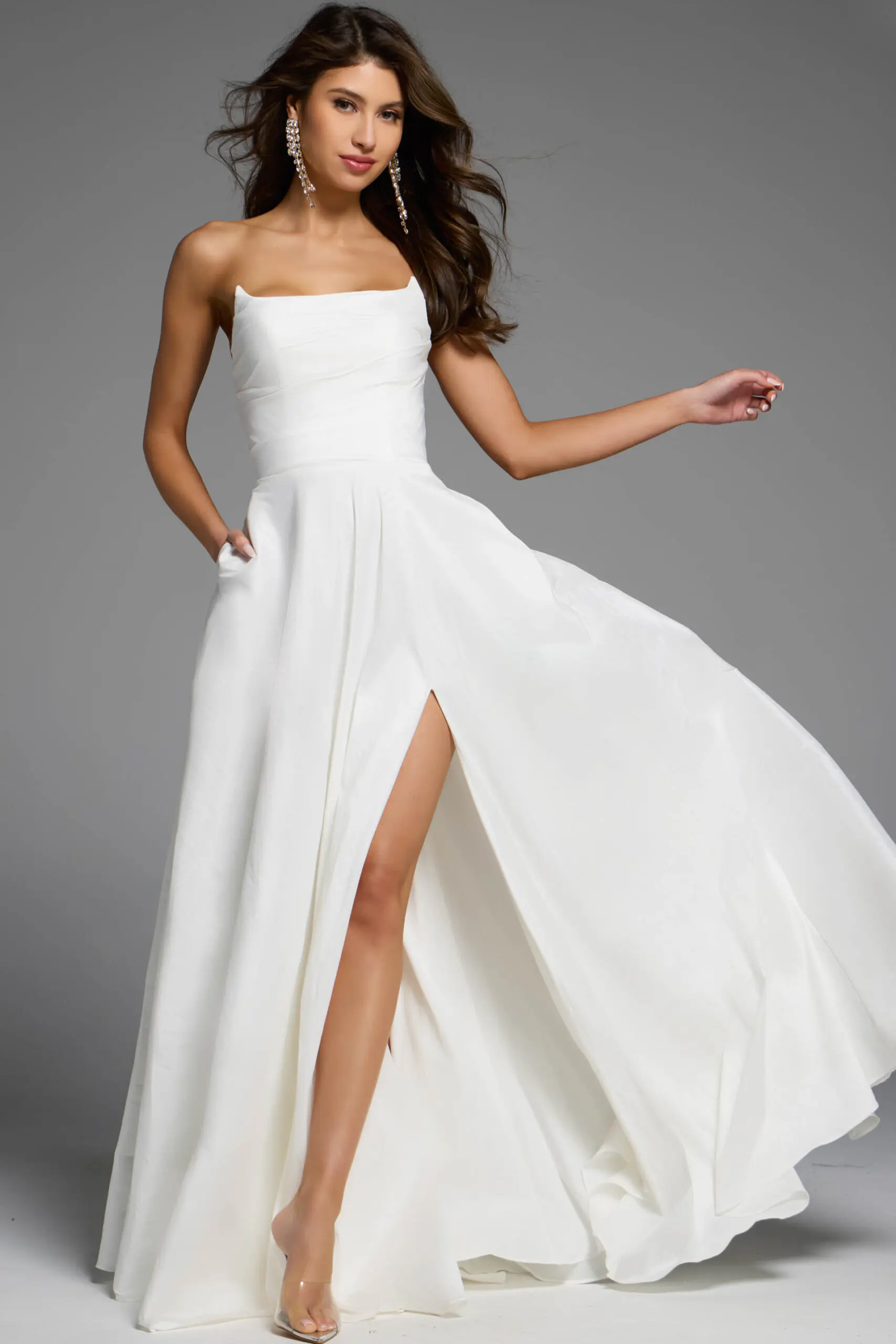
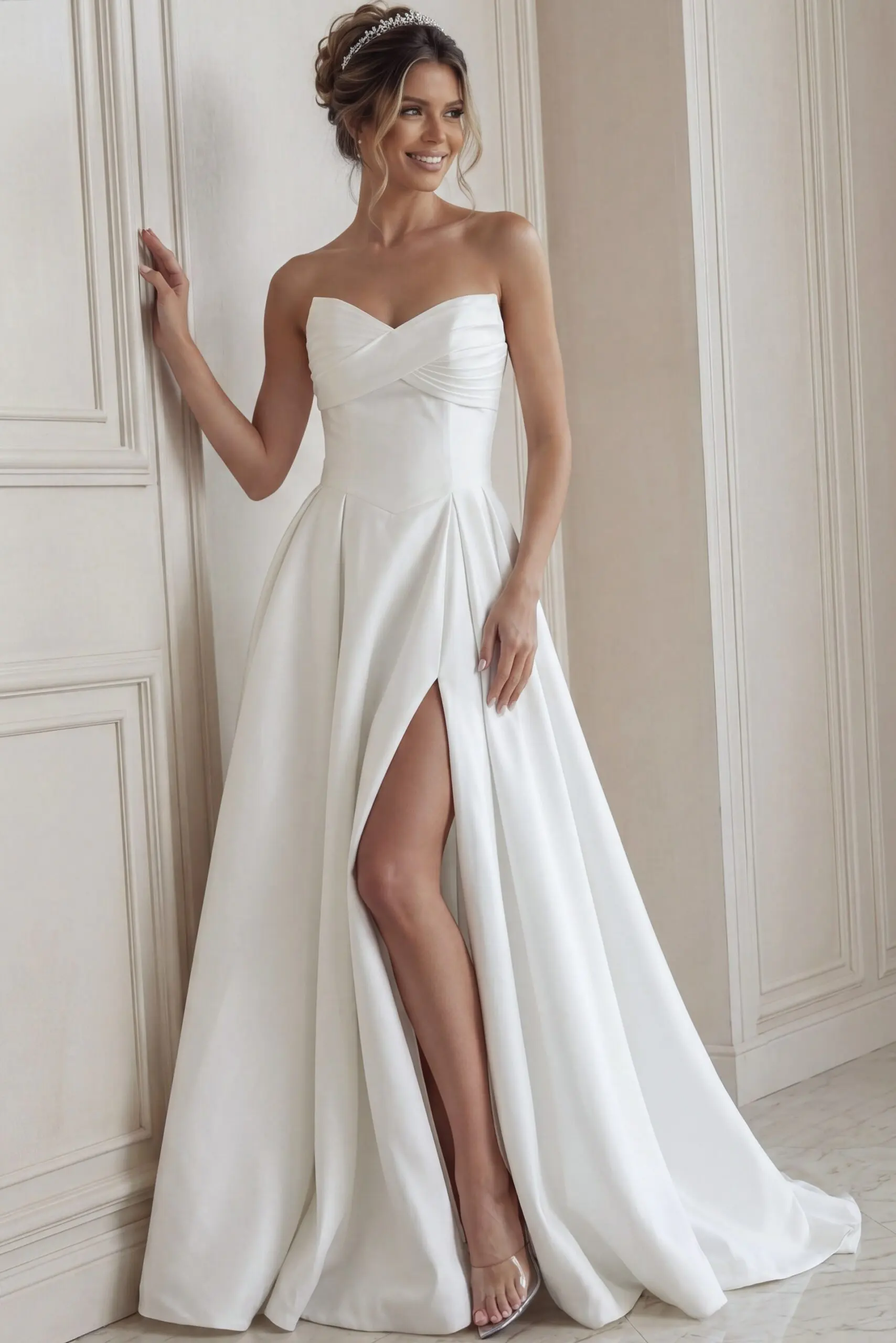
3 Colors: IVORY, NAVY, PLUM
Strapless Ivory Gown With High Slit And Flowing A-Line Skirt D5822
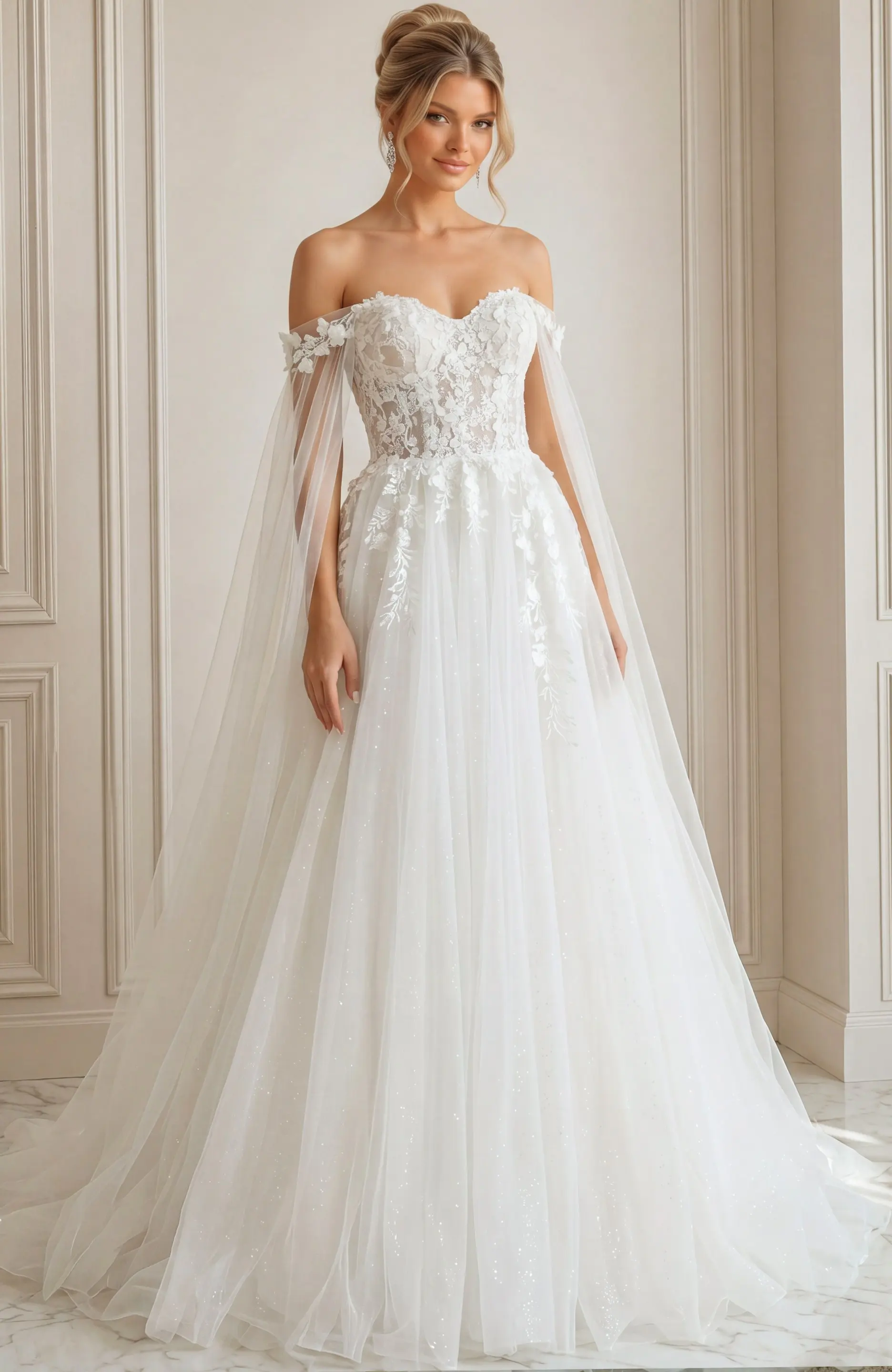
1 Color: OFF-WHITE
Off the Shoulder Wedding Gown with Delicate Floral Embroidery JB42481
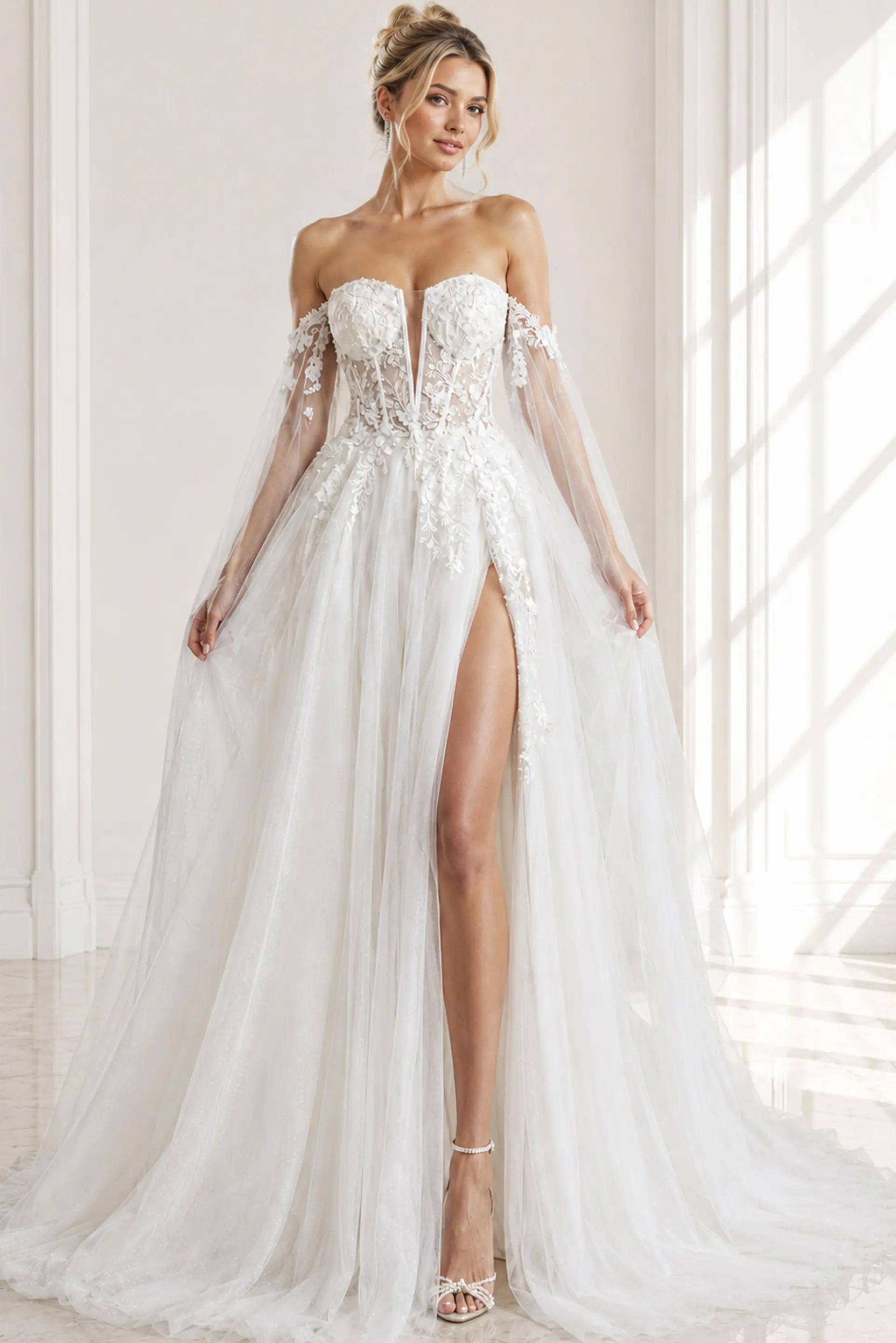
1 Color: OFF-WHITE
Sheer Bridal Gown with Floral Embellishments JB42480
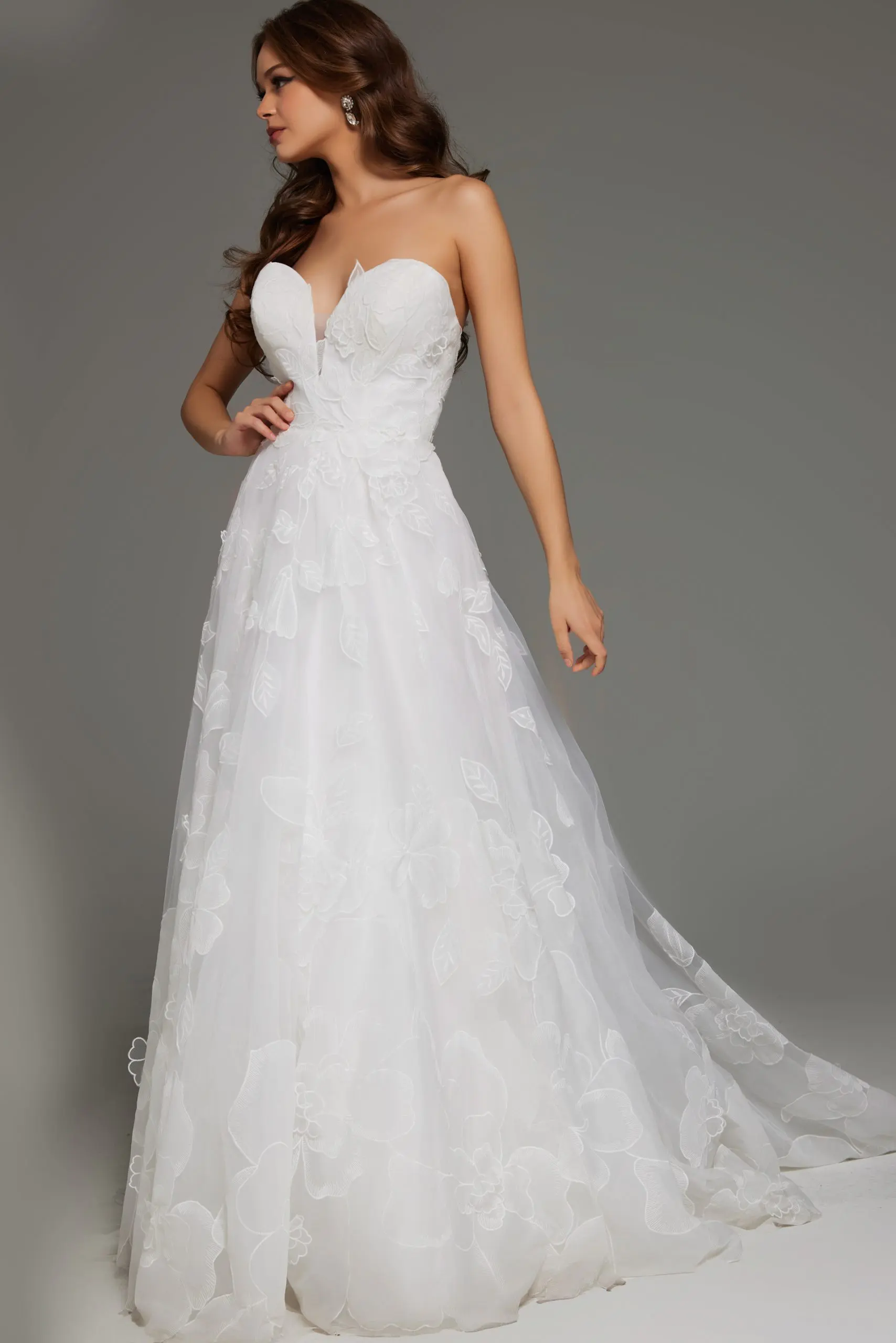
1 Color: IVORY
Strapless Floral Applique Wedding Dress with Sweetheart Neckline JB42324
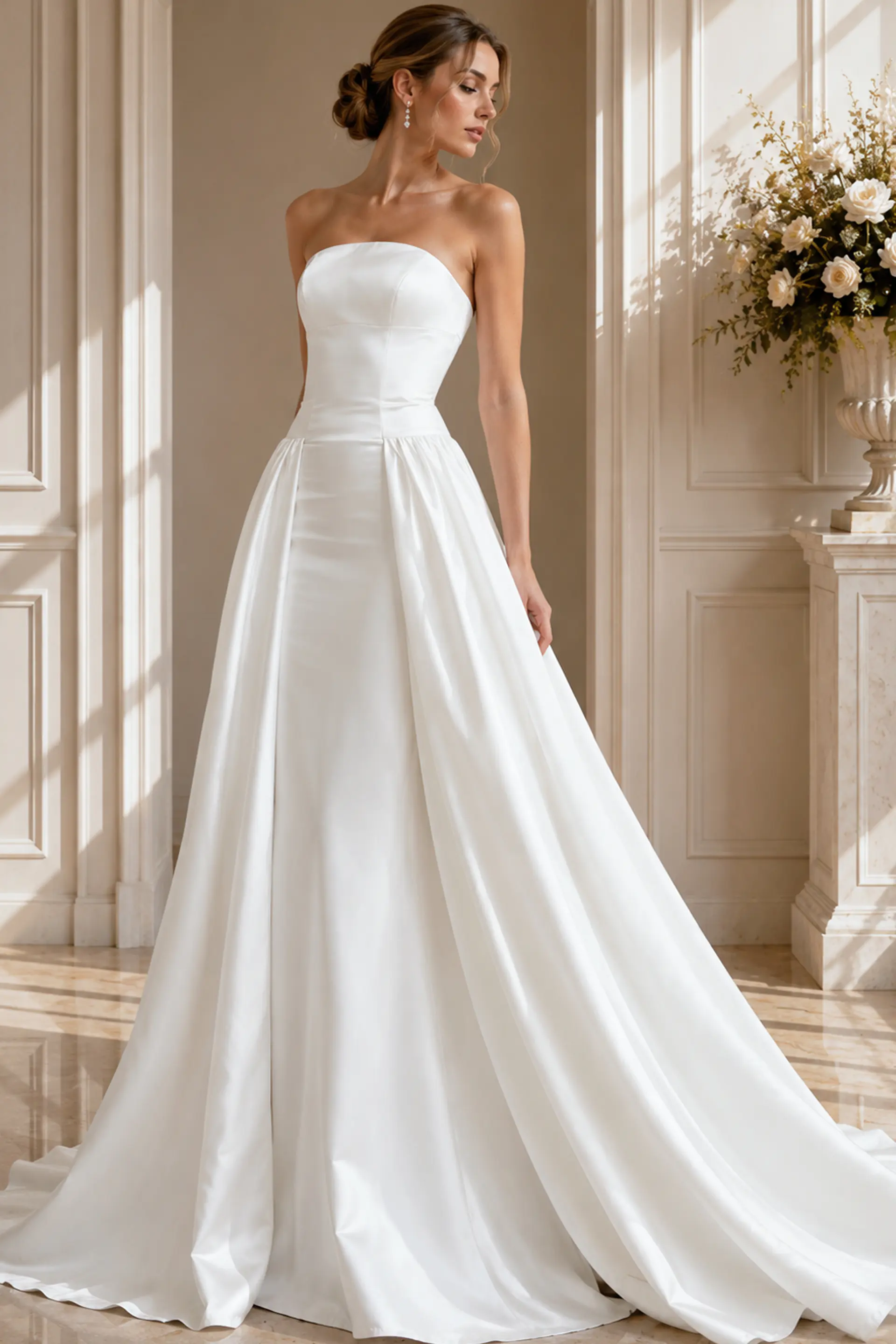
1 Color: OFF-WHITE
Strapless Satin Ball Gown Wedding Dress JB39250
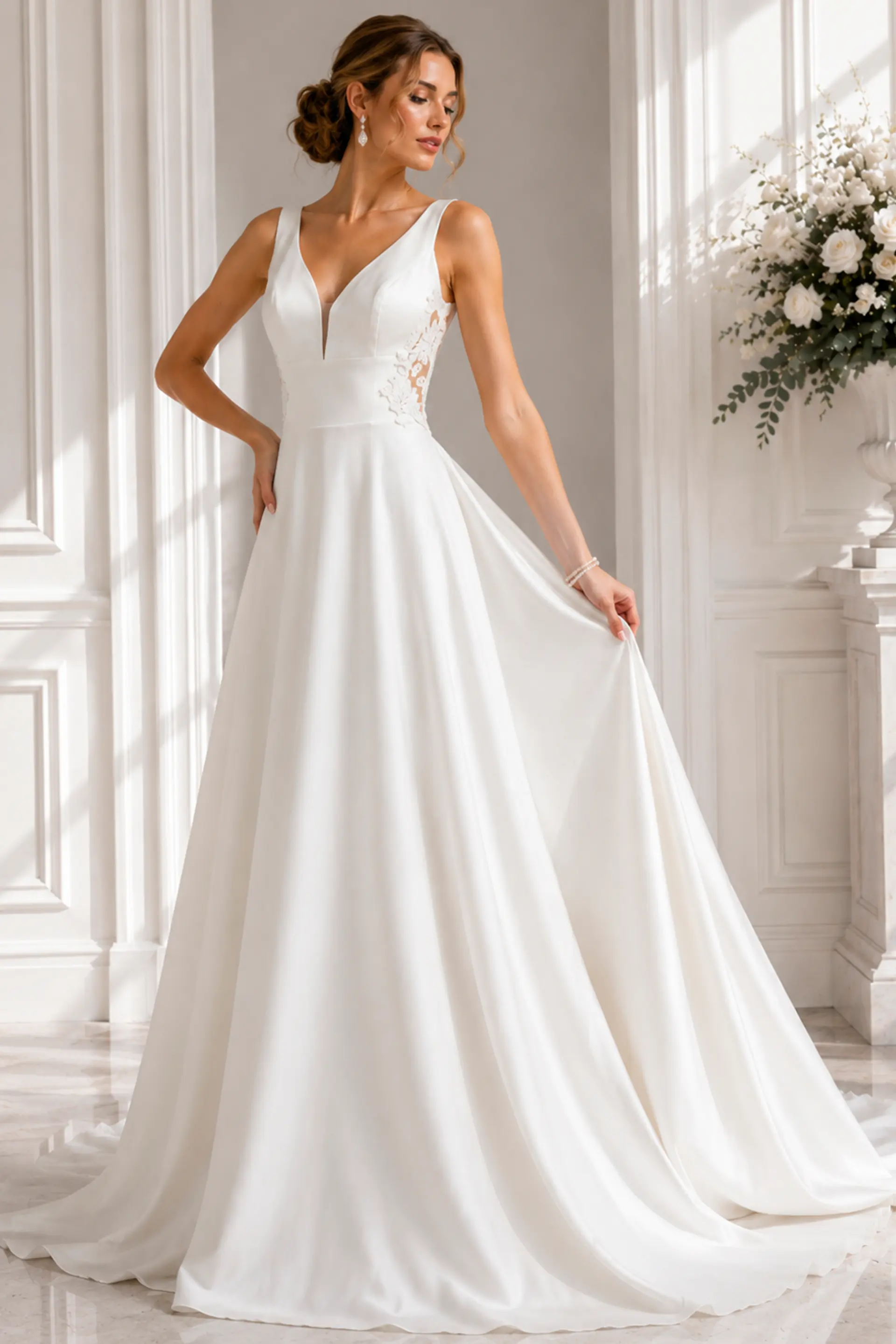
1 Color: IVORY/NUDE
Strapless Lace Corset Wedding Gown with Floral Embroidery JB42294
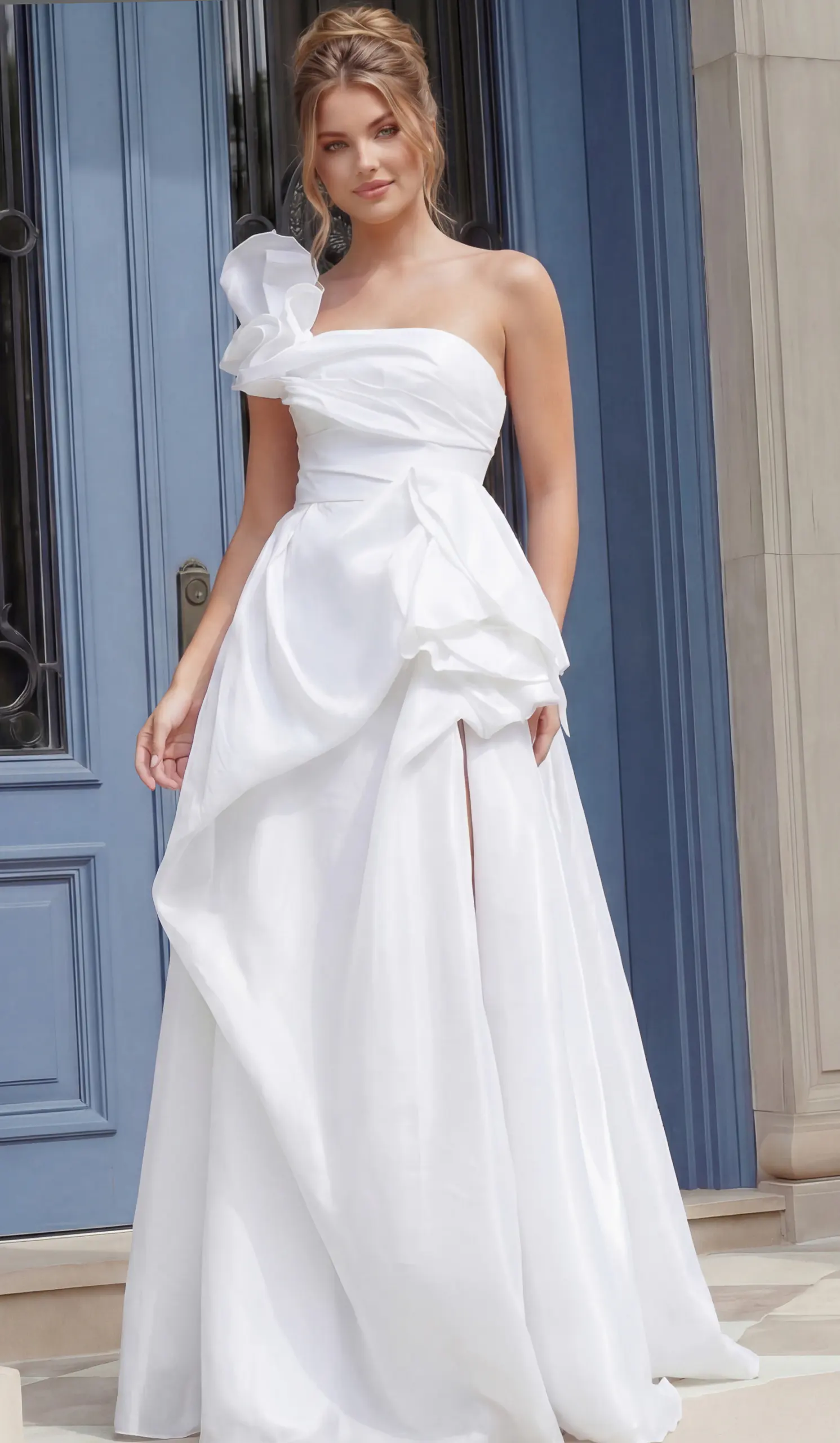
3 Colors: FUCHSIA, OFF-WHITE, RED
Elegant One Shoulder Bridal Gown with Floral Detail and Side Slit 39796
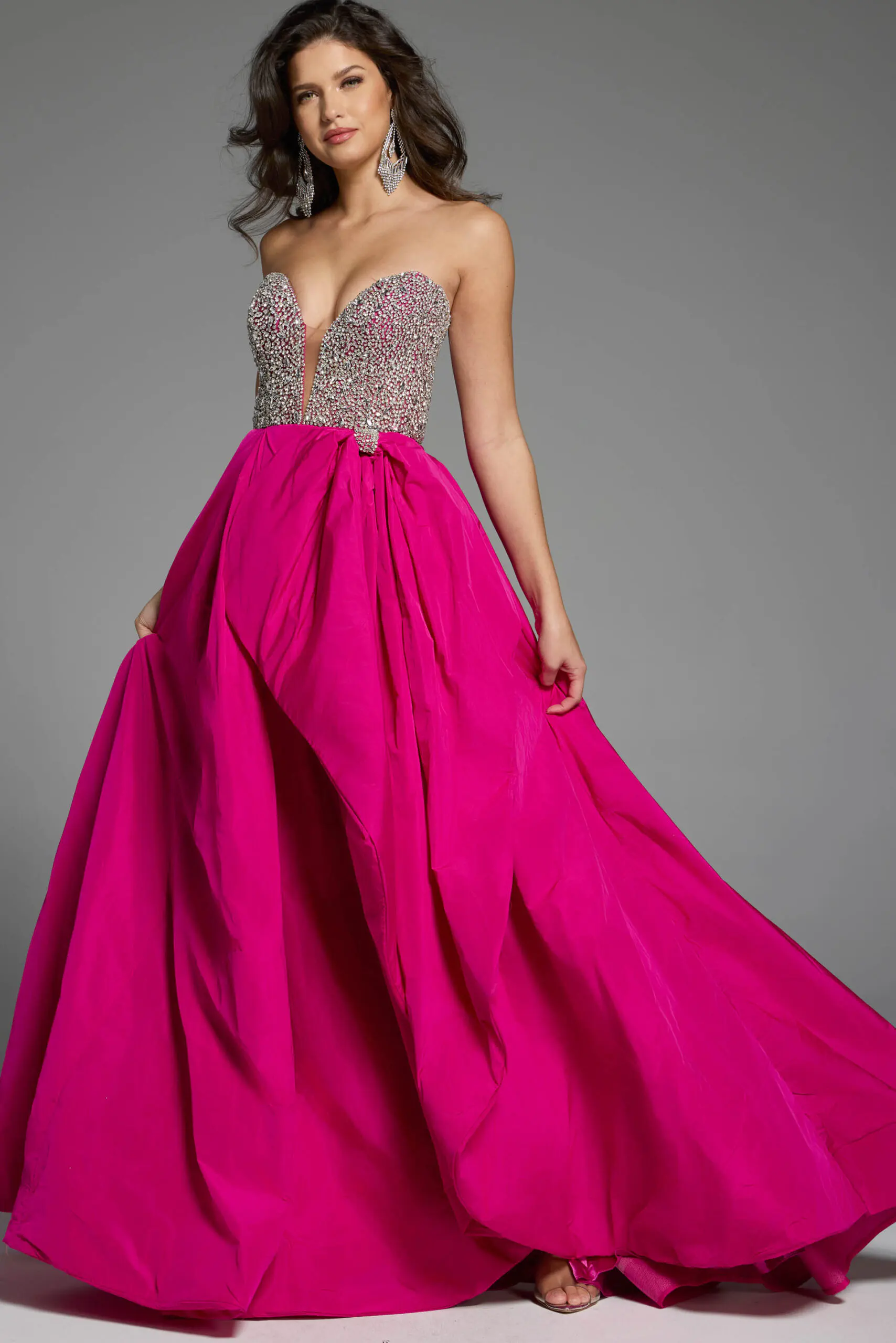
6 Colors: BLACK, EMERALD, FUCHSIA, OFF-WHITE, RED, ROYAL
Strapless Crystal Embellished Gown With Bold Ruffle Skirt 41141
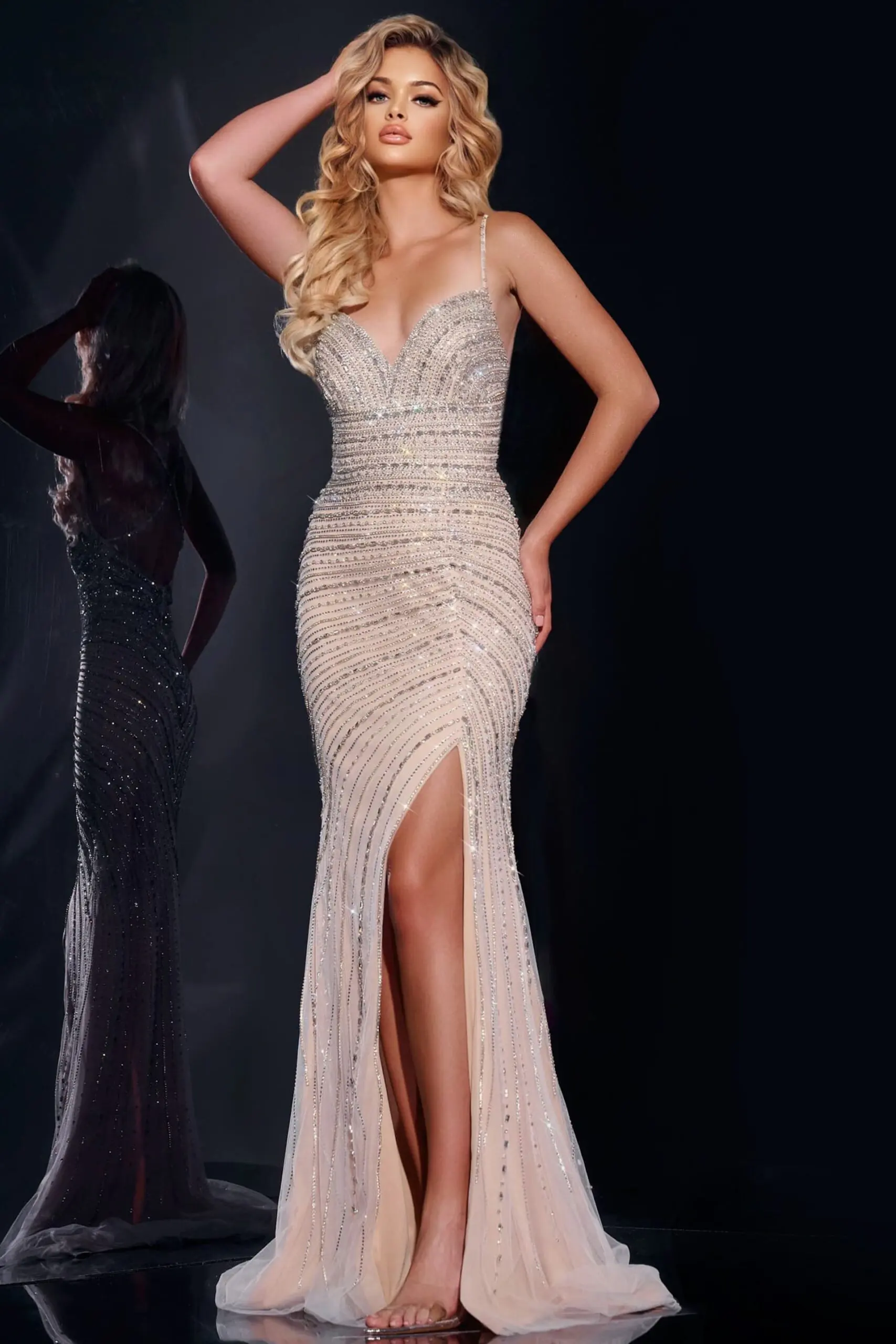
3 Colors: SILVER, EMERALD, HOT-PINK
Beaded Evening Gown with Sparkling Details 40820
Trending Now
About This Category
A line wedding dresses: Silhouette and Waist Definition
A line wedding dresses are defined by a bodice that follows the torso and a skirt that gradually widens toward the hem. But the flare is not the same in every design. A slim A-line falls closer to the hips, while a fuller skirt creates a broader sweep without the rounded volume of a ball gown. Look at front and side photographs together to see where the fabric starts to open.
Waist placement is the next distinction. A natural waist produces a clear break between bodice and skirt; a raised seam lengthens the visual line of the legs. A basque waist extends into a gentle point, drawing attention to the center of the torso. When comparing an A line wedding gown with other silhouettes, check that the seam lies flat rather than pulling across the ribs.
The wider Wedding Gowns selection offers a useful reference for how A-lines differ from column dresses and ball gowns.
Necklines and Corsetry for an A line wedding dress
Necklines can change the character of a gown even when the skirt stays the same. A straight strapless edge looks precise and modern; a sweetheart neckline introduces a softer curve. Square necks frame the collarbone, while a V-neck creates a longer vertical line. Consider how much visual detail sits above the waist before choosing a more elaborate skirt.
Support matters as much as shape. In A line wedding dresses with corseted bodices, boning, shaped cups and a stable waist seam help the top retain its structure. The effect should be secure, not restrictive: the neckline should remain level when you move, and the bodice should not dig into the ribs. Lace-up backs allow some adjustment, but they cannot correct a fundamentally unsuitable size.
Compare these construction choices in Strapless Wedding Dresses. During fittings, sit, lift your arms and turn to see how a design performs away from the mirror.
Lace, Satin and Tulle in A line wedding gowns
Fabric controls both the outline and the movement of a skirt. Substantial satin holds defined pleats and reveals precise seamwork; a lighter satin falls in softer folds. Tulle produces airy layers, while organza offers a more structured kind of transparency. Two gowns with identical waistlines can therefore feel quite different when worn.
Lace brings a second decision: pattern placement. Dense embroidery across the bodice can emphasize the waist, whereas floral appliques that taper down the skirt create a gradual transition. For A line wedding dresses, a scattering of motifs over plain tulle allows the silhouette to remain visible; allover lace makes texture the dominant feature. These variations are easy to compare in Lace Wedding Dresses.
Check the back as carefully as the front. The back of a lace A line wedding dress may have a sheer corset, a buttoned closure or additional embroidery along the train, each of which changes the balance and the alteration options.
Skirt Fullness and Trains for A line wedding dresses
Train length can change the presence of a gown without changing its basic silhouette. A sweep train extends slightly beyond the hem; a chapel train leaves more fabric behind the wearer and makes a more formal entrance. The result also depends on what sits underneath: layered tulle spreads differently from a single satin skirt.
Venue matters here. Long trains need managing on stairs, garden paths and crowded dance floors. Before selecting A line wedding dresses with extended hems, ask how the bustle fastens and whether it changes the look of the skirt. Take a few steps in the shoes you plan to wear, rather than judging length while standing still.
If you want the skirt to follow the hips more closely before flaring, Mermaid Wedding Dresses offer a clear comparison. An A line wedding gown releases volume higher up, creating a different balance between definition and freedom of movement.
Embellishments and Styling in A line wedding gowns
Embellishment works best when it follows the dress's construction. Floral appliques can continue from a fitted bodice onto a soft skirt; a concentrated band of embroidery can bring focus to the waist. Dimensional flowers, sculptural bows and delicate beadwork each create a different point of interest. A clean satin base often needs only one strong detail.
On A line wedding dresses, consider where the decoration appears rather than how much there is. Pearls reflect light softly, while crystals and sequins are more noticeable under evening lighting. The Beaded Wedding Dresses selection shows how embellishment changes a gown's surface without necessarily changing the cut.
Accessories should leave room for the silhouette. A heavily detailed neckline may call for small earrings; a simple strapless bodice may suit a longer veil. If an A line wedding dress already has dimensional flowers, restrained styling can keep the fabric and waistline from getting lost.
Fit, Movement and Alterations for an A line wedding dress
A flattering photograph is only one part of a good fit. The bust should sit securely without gaping, the waist seam should remain level and the skirt should hang evenly from both hips. Even in A line wedding dresses with generous skirt volume, the bodice needs precision; wrinkles through the ribs or a shifting neckline can indicate that the size or structure is wrong.
Alterations deserve attention before purchase. Shortening a plain hem is usually simpler than rebuilding boning or moving elaborate lace motifs. With A line wedding gowns, changing the waistline may also affect how embroidery meets the skirt. Ask a bridal tailor which adjustments are realistic for the exact construction, and leave enough time for fittings.
Jovani's bridal designs range from restrained fabrics to intricate surface detail, so evaluate each style on its own terms. At your fitting, sit, walk, climb a step and turn. The right choice should keep its intended shape through the ceremony and reception, not just while you stand still.