
An outdoor graduation at a stadium is a formal occasion held in a setting that is actively hostile to formal clothing. You will be outdoors for two to three hours, often in late May or June heat, on metal or concrete bleachers with no shade, walking across a field or up flights of stairs, in wind that comes off an open bowl with nothing to break it. Then you will be photographed, and those photographs will be looked at for decades. Most advice for this event solves the comfort problem by abandoning the occasion and recommending a sundress. That is a real answer but not the only one. You can dress for the conditions without giving up on looking like you made an effort, and what follows is how.
What makes a stadium ceremony different
An indoor ceremony asks very little of your outfit, while an outdoor graduation asks a great deal. The specific demands of an outdoor graduation are worth naming, because each one has a different solution.
The first is duration. These ceremonies run two to three hours as standard and sometimes longer at large universities, and almost all of it is spent seated. The second is heat, since most graduations fall in late spring or early summer and an open stadium has no shade over the seating. The third is the seating surface itself, which is usually metal or concrete, gets hot in direct sun, and is unforgiving of both delicate fabrics and light colors.
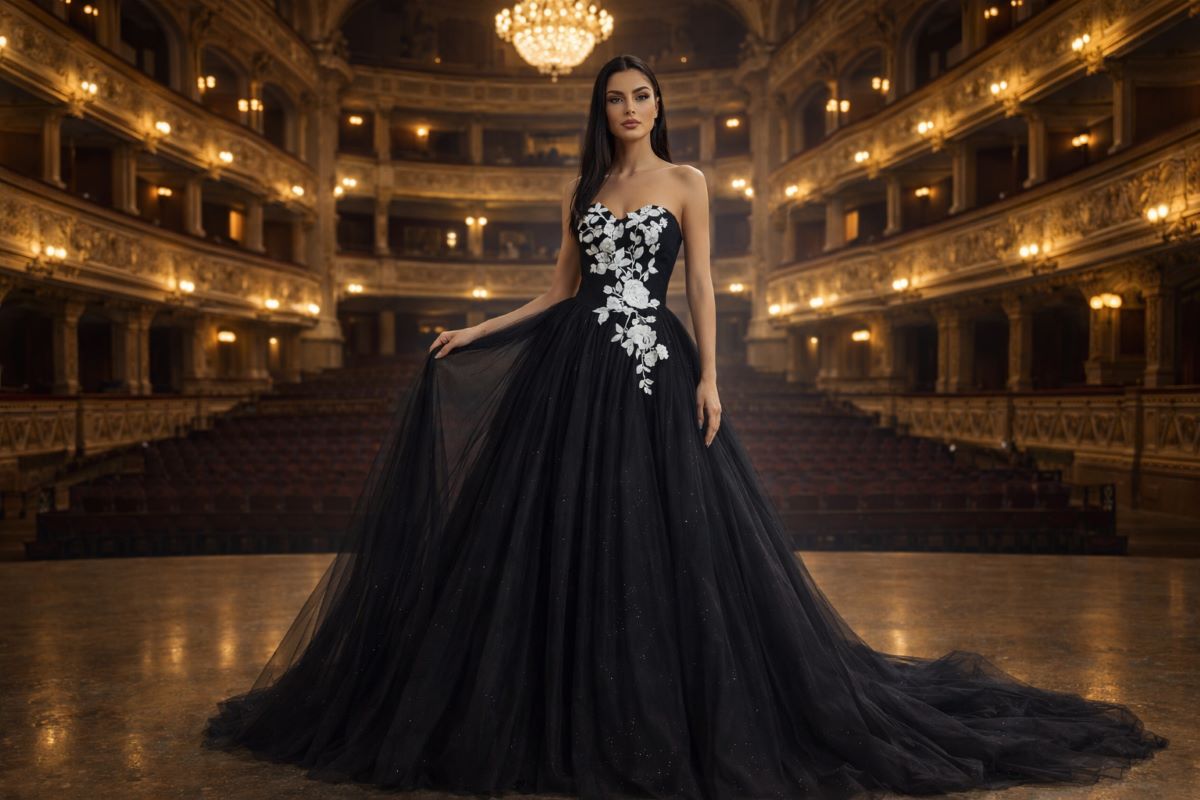
The fourth is wind, which is the one people underestimate. A stadium is an open bowl and it channels wind unpredictably, which affects hemlines, hair, and anything loose. The fifth is distance, since parking, gates, and seating often mean a long walk on grass, gravel, or stairs. Any outfit that fails on one of these five will make the day harder than it needs to be. The range of graduation dresses shows the level of formality the occasion calls for before the conditions are factored in.
Fabrics that survive three hours on a bleacher
Fabric decides more of your comfort than silhouette does, and the ranking here is not the same as for a summer party.
What works
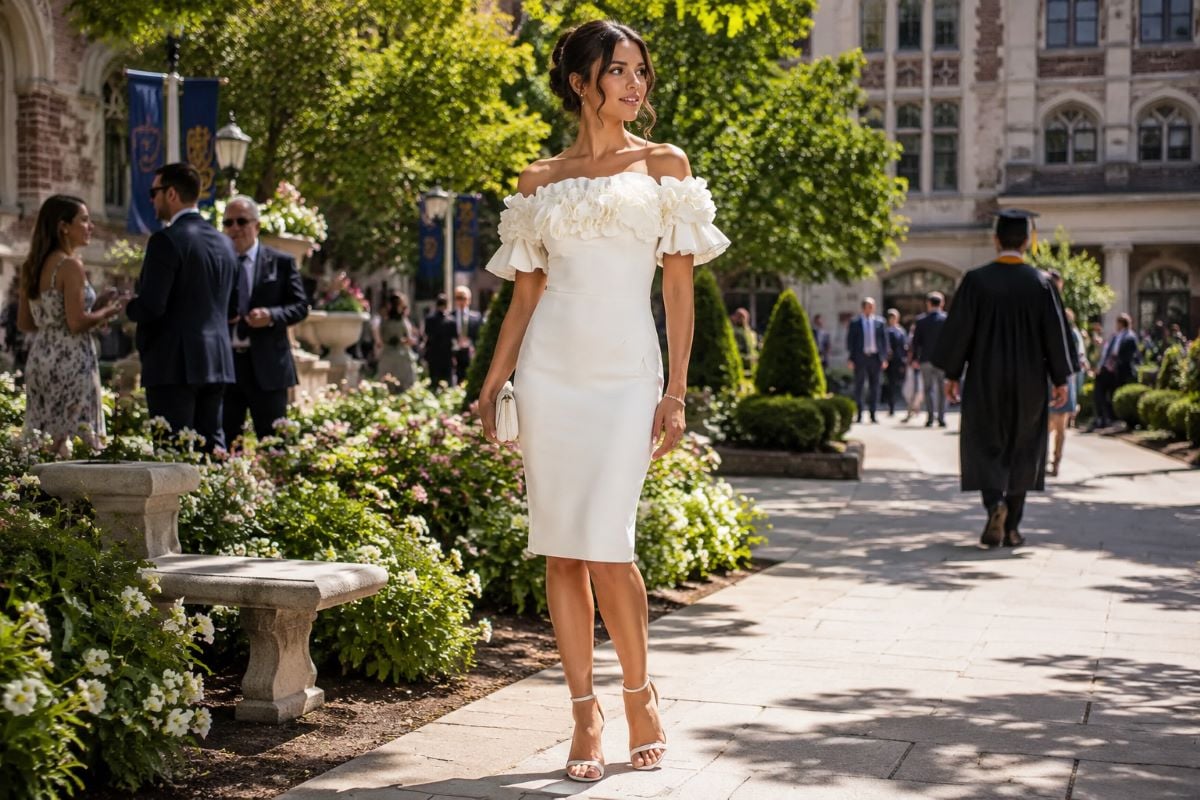
Chiffon and georgette are the strongest performers. They are light, they breathe, they move in wind rather than fighting it, and crucially they do not hold a crease from sitting. Lightweight crepe is nearly as good and looks more tailored. Cotton and linen blends are cool and appropriate for a daytime event, with the caveat below. Anything with a slight texture hides the marks that flat fabrics show after two hours of contact with a seat.
What causes problems
Pure linen is the classic trap. It is genuinely cool and it looks beautiful for the first thirty minutes, after which it creases from the seat, from the seatbelt, and from simply bending, and it will be visibly crumpled in every photograph taken after the ceremony. Heavy satin and polyester lining do not breathe and turn a warm bleacher into a considerably warmer one. Velvet and brocade are entirely wrong for the setting. Very stiff structured fabrics such as taffeta hold sitting creases sharply. And any fabric that becomes translucent in direct overhead sun deserves a check outdoors before the day, since stadium light is far stronger than fitting room light. The overview of popular evening dress fabrics covers how each material behaves.
Length, silhouette, and what wind does to them
Wind is the variable that most guides skip, and it makes some otherwise sensible choices difficult.
A midi length is the best all-round answer for a stadium. It is long enough to read as appropriate for a formal ceremony, short enough to clear stairs and bleacher steps, and light enough not to become a problem in wind. A knee-length dress works equally well and is easier on stairs still.
Floor length is where care is needed. A maxi in a light fabric can lift dramatically in stadium wind, and it also drags on ground you will be walking across to reach your seat. If you want a long dress, choose one with some weight to it or a narrower cut rather than a full, light skirt.
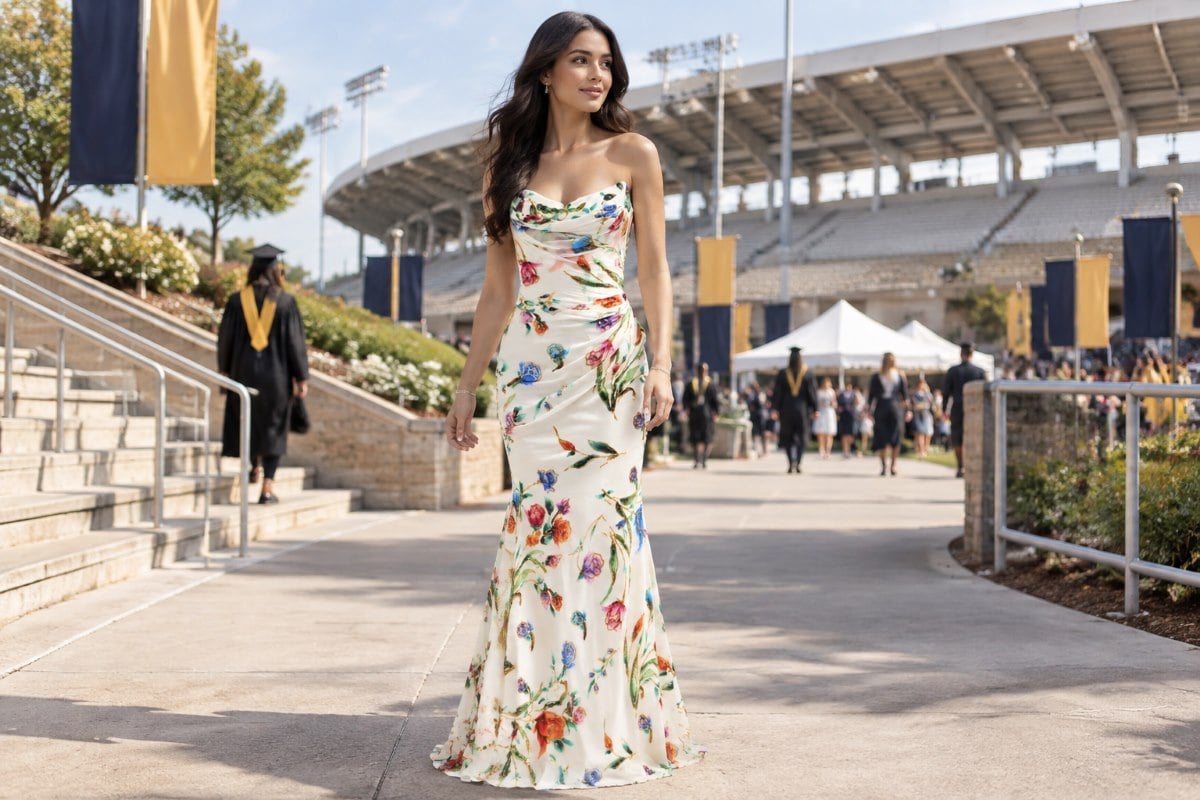
Very short and very full skirts share the same wind problem in a more acute form, and a bleacher seat sits high with people below and behind you, which makes a short hem harder to manage than it would be on a flat floor. A fit-and-flare or A-line at midi length in a fabric with a little weight is the shape that handles all of this most easily. Trousers and a formal jumpsuit remove the hemline question entirely and are entirely appropriate for the occasion. The range of midi formal gowns shows the length that suits the setting best.
Color, sun, and photographs
Color choice does more work at an outdoor daytime event than at an evening one, for reasons that are physical rather than aesthetic.
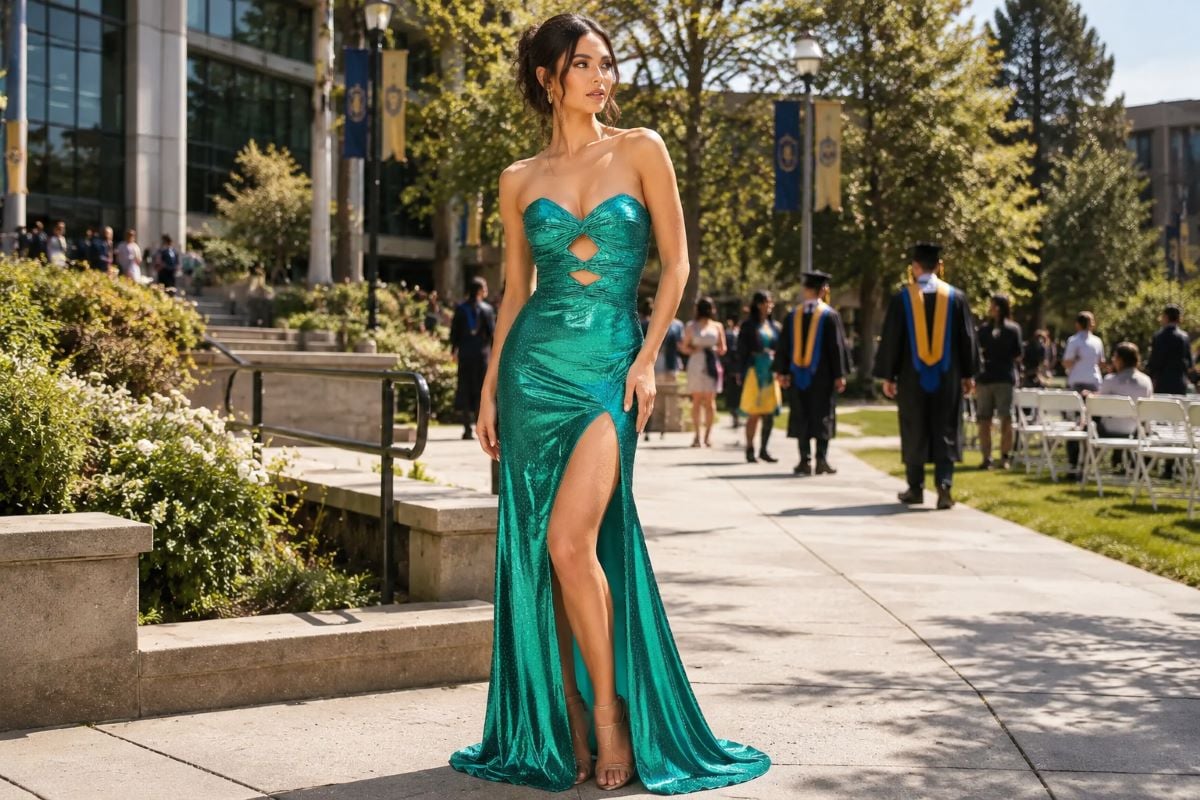
Dark colors absorb heat, and black in direct sun on a metal bleacher is meaningfully hotter than a light shade. Black also photographs harshly in bright overhead daylight, losing detail and creating strong shadows on the face. Mid-tones and lighter shades are the better performers on both counts.
The counterweight is that very light colors show perspiration and mark more easily against a stadium seat. This is the practical reason a mid-tone in a slightly textured fabric outperforms both extremes: it stays cooler than black, photographs better than black, and shows less than white.
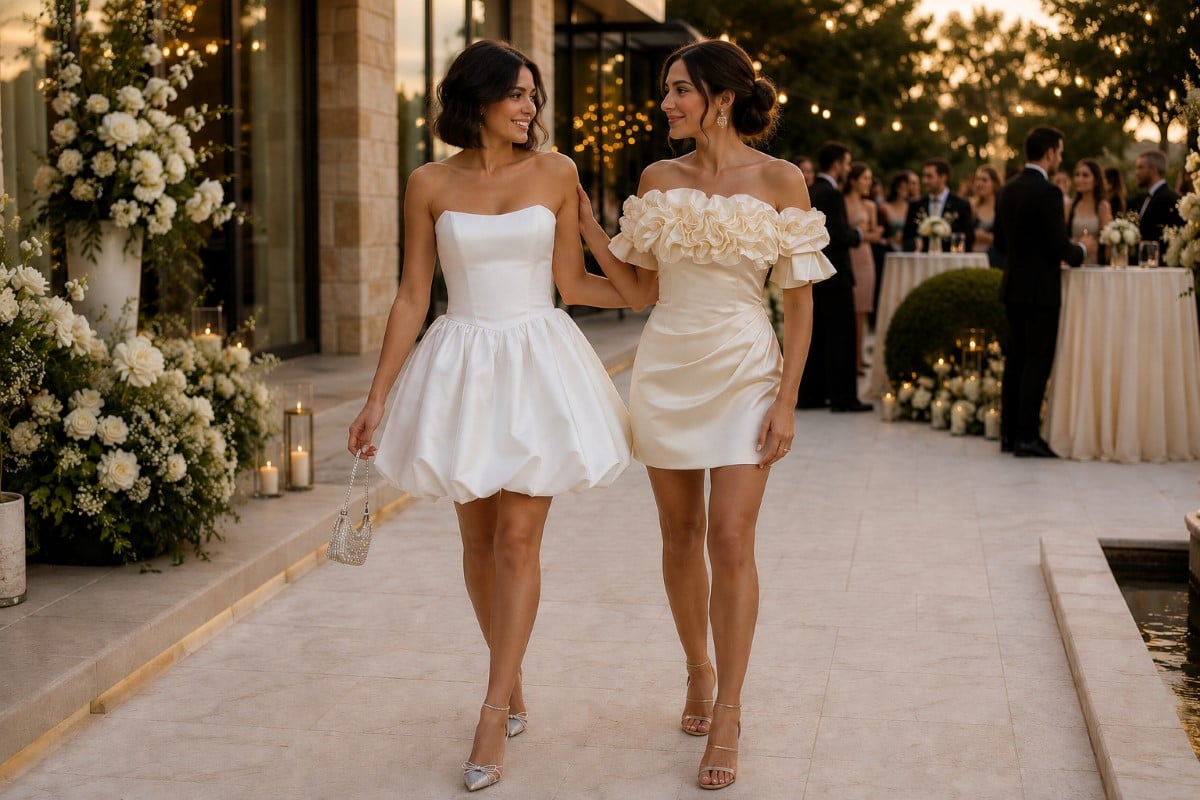
There is one more consideration for graduates specifically. Cap and gown are worn over everything for the ceremony, and the gown is usually a dark polyester that traps heat and can transfer color onto very light fabrics in sweat or rain. Under regalia, a light and breathable dress in a color that will not be ruined by contact is the sensible choice, and it should be short enough not to hang below the gown. The styles among little white dresses show the traditional graduate choice in the lighter shades that suit an outdoor ceremony.
The piece on white graduation dresses covers how the traditional choice behaves under a dark gown.
Shoes for grass, gravel, and stairs
You will walk further than you expect, on surfaces that are not flat, and then climb. Footwear is where a poor decision punishes you most immediately.
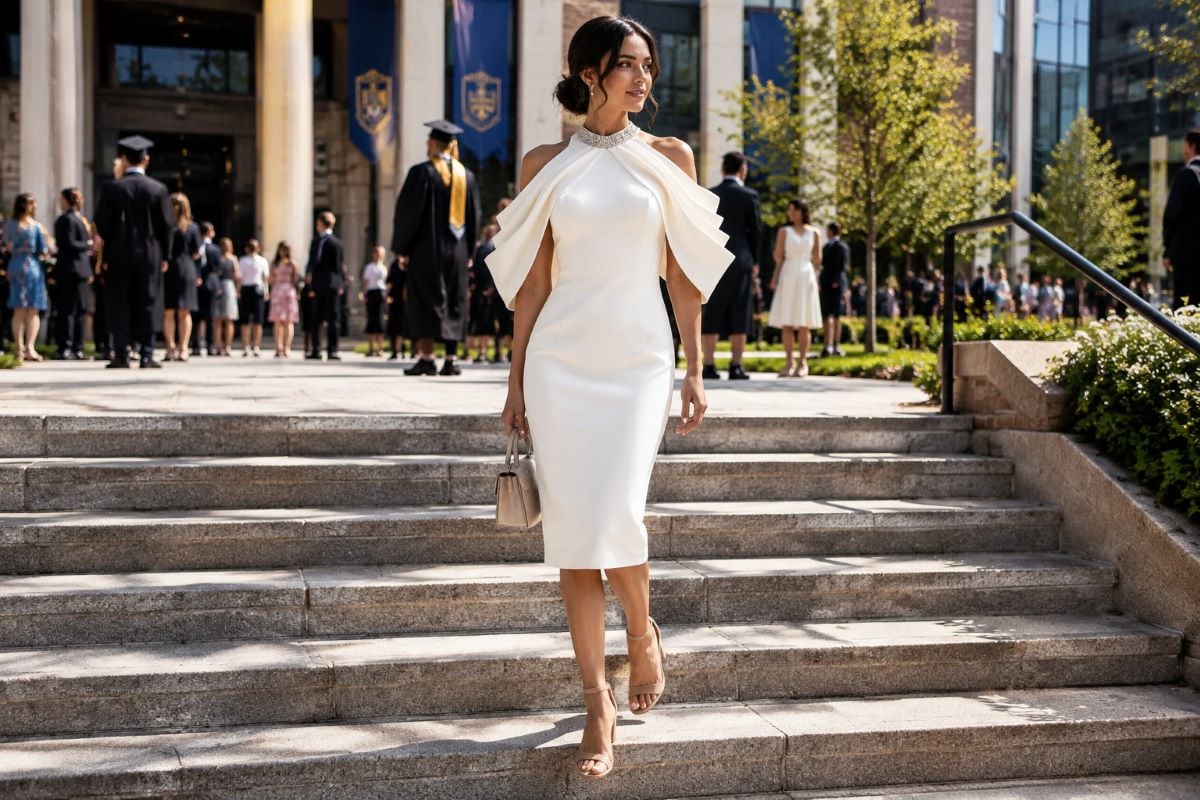
A stiletto is the wrong tool here. Thin heels sink into grass, catch in gravel, and slip on the metal edges of bleacher steps, and stadium stairs are frequently steeper and shallower than ordinary ones. A block heel or a wedge distributes weight and stays stable on soft ground, giving the height without the hazard.
A polished flat or a low-heeled sandal is entirely appropriate at a daytime ceremony and is often the smartest choice. Whatever you choose, wear it in beforehand, since new shoes plus a long walk plus heat is how the day ends with blisters.
One detail specific to graduates: check whether you will walk across a field or a stage surface, since both grass and polished staging are more slippery than they look, and you will be doing that walk while being photographed. Practicing in the actual shoes is worth the ten minutes.
Sun, wind, and the small things that matter
None of the following requires compromising the outfit, and each solves a specific problem the setting creates.
Managing sun and heat
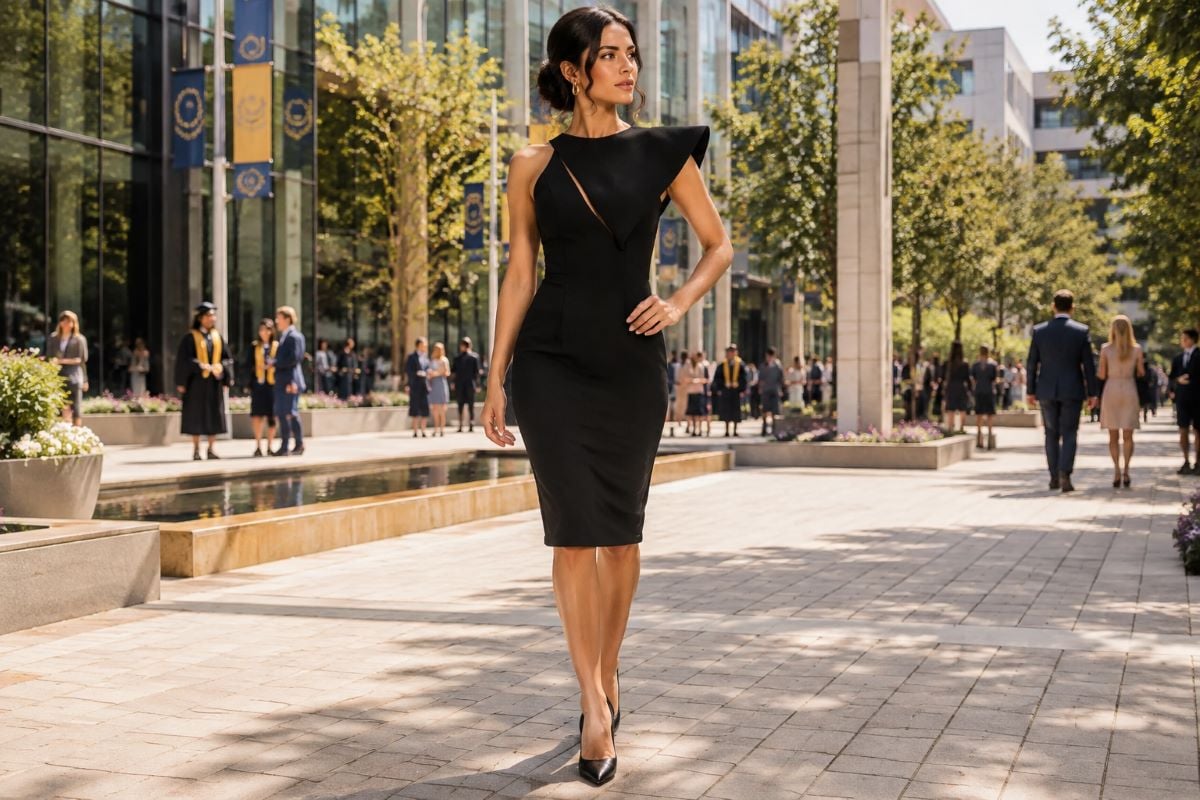
Two to three hours of direct sun is a genuine exposure. Sunscreen on the shoulders, chest, and any part of a parting is the obvious step and the most commonly forgotten. A light wrap or a linen-blend shirt over a sleeveless dress gives you shade you can remove, which is more useful than committing to sleeves. Sunglasses are practical rather than casual at an outdoor daytime event. A hat is genuinely useful, though a wide brim blocks the view of people behind you, so a smaller brim is the considerate choice. Water matters more than most people plan for, since heat plus a long seated period is exactly the recipe for feeling unwell.
Managing wind
Wind is best handled at the point of choosing rather than on the day. A skirt with some weight or a narrower cut is far easier than a light full one. Hair secured properly rather than left loose saves you managing it for three hours and photographs better afterward. Anything that relies on staying in place, such as a strapless neckline or a loose wrap, will need attention in an open stadium, so a dress with straps or sleeves is simply less work. A short sleeve or flutter sleeve handles both sun and wind without adding much heat, which makes it a practical middle ground between a sleeveless dress and full coverage.
The venue rules that catch people out
Many stadiums operate a clear bag policy, the same one used for sporting events. A standard handbag or clutch may not be permitted, and people arrive expecting to be waved through and are not. Checking the venue’s policy before the day is a two-minute task that prevents a bad start.
Umbrellas are frequently prohibited inside stadiums, which matters because these are usually rain-or-shine events. A packable rain jacket or poncho is the workaround, and it is worth having regardless of the forecast, since an outdoor ceremony proceeds in weather that would move an indoor one.
Seating is generally unreserved and often on backless bleachers, so a seat cushion is a reasonable thing to bring for a three-hour ceremony. And large venues mean long distances from parking to gate to seat, which is one more argument for the shoe advice above.
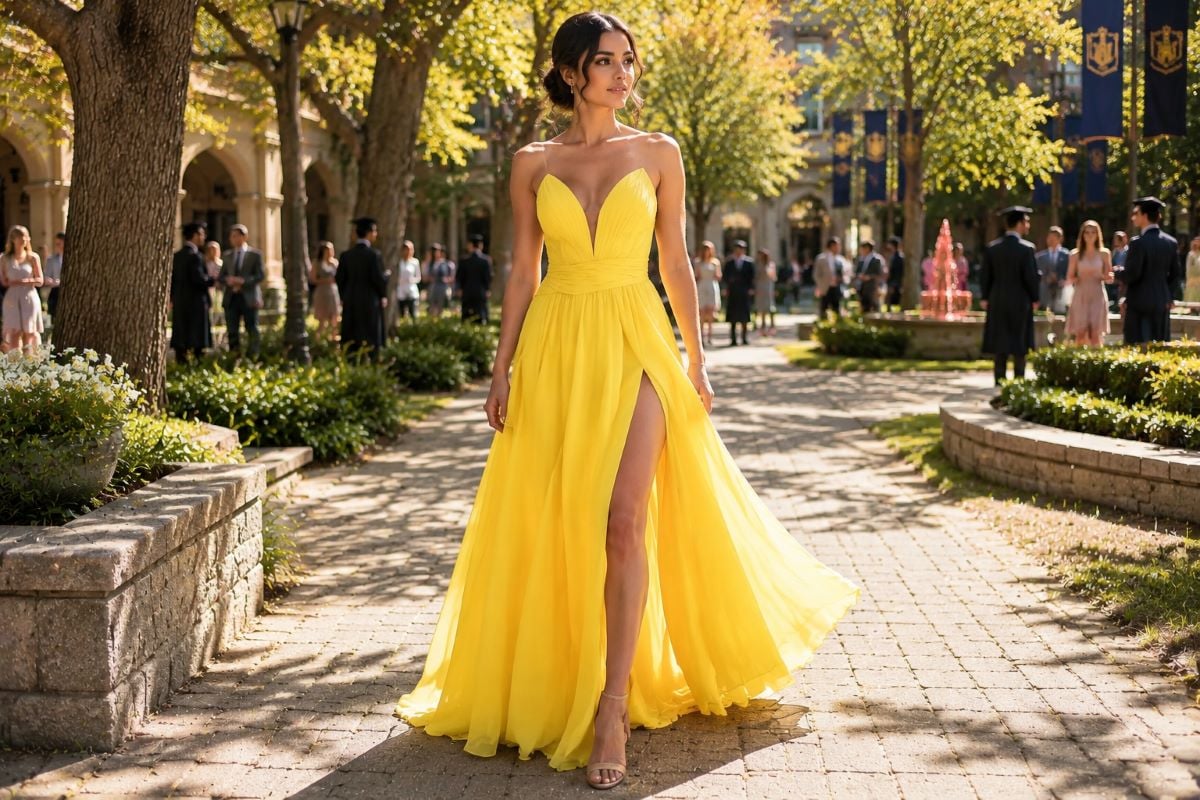
Putting the outfit together
The photographs are the lasting output of the day, and they are taken after the ceremony rather than during it, when you have already spent three hours outdoors. Choosing an outfit that still looks intentional at that point, rather than one that only looked good at nine in the morning, is really what this whole decision is about. The guide to choosing the perfect graduation dress covers the wider decision.
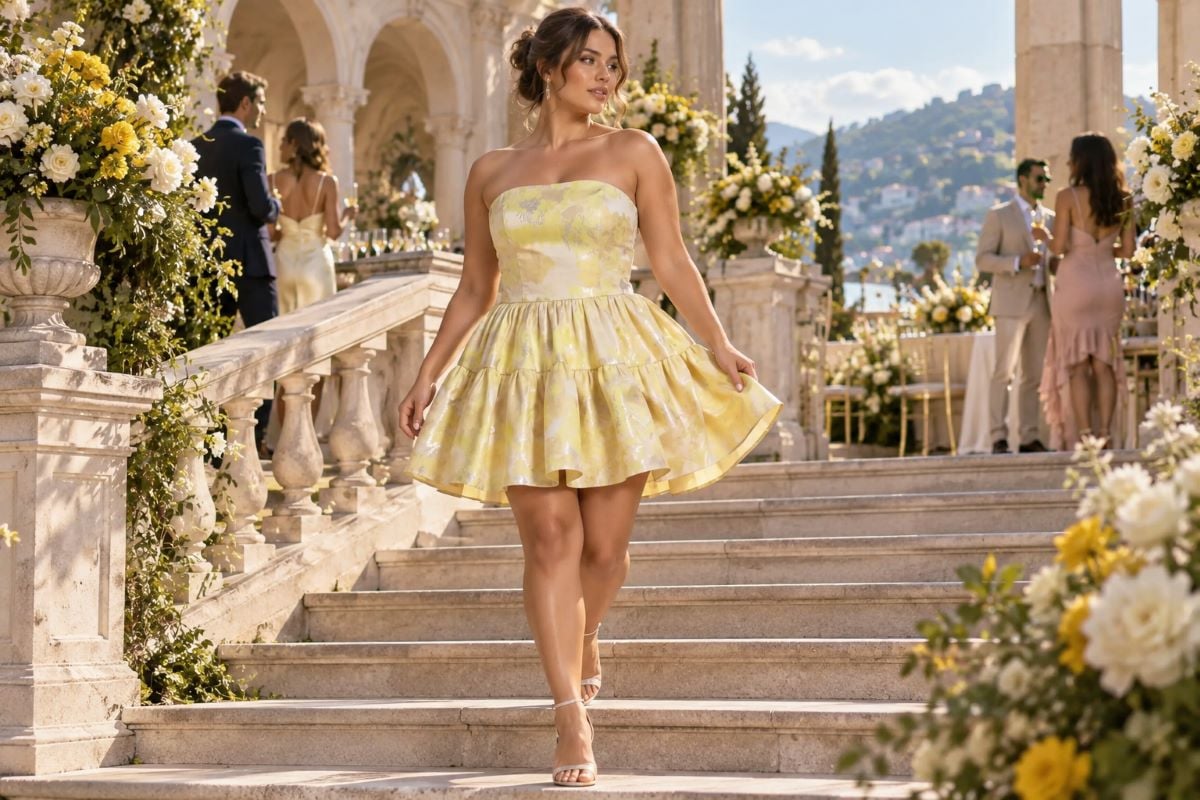
Parents attending rather than graduating have a slightly different problem, since nothing sits over the outfit and it is on show for the whole day. The range of cocktail and party dresses covers the semi-formal register that suits a guest at a daytime ceremony. To find a dress that suits an outdoor ceremony and still photographs the way you want it to, explore the current styles through an authorized Jovani retailer.
Surviving a Stadium Ceremony in Style
Which fabrics work best for a hot outdoor ceremony?
Chiffon and georgette perform best, since they are light, breathable, move well in wind, and do not hold creases from sitting. Lightweight crepe is nearly as good and looks more tailored. Pure linen is the common trap: it is cool but creases within thirty minutes and will look crumpled in every photograph. Heavy satin, polyester lining, velvet, and brocade all trap heat, and stiff fabrics like taffeta hold sitting creases sharply.
What color should you avoid at an outdoor graduation?
Black is the main one, for two reasons. It absorbs heat and becomes noticeably hotter on a metal bleacher in direct sun, and it photographs harshly in bright overhead daylight, losing detail and casting strong shadows on the face. Very light colors have the opposite problem, showing perspiration and marks from stadium seating. A mid-tone in a slightly textured fabric outperforms both extremes on comfort and in photographs.
What shoes should you wear to a stadium graduation?
A block heel, a wedge, or a polished flat. Stilettos are the wrong tool: thin heels sink into grass, catch in gravel, and slip on the metal edges of bleacher steps, which are often steeper and shallower than ordinary stairs. Whatever you choose should be broken in beforehand, since new shoes combined with a long walk from parking and heat is how the day ends in blisters.
Can you wear a long dress to an outdoor graduation?
You can, with care. A stadium is an open bowl that channels wind unpredictably, so a light full-skirted maxi can lift dramatically, and a floor-length hem also drags across the ground you walk over to reach your seat. If you want a long dress, choose one with some weight or a narrower cut rather than a full, light skirt. A midi is the easier answer, and formal trousers or a jumpsuit remove the hemline question entirely.
Should you bring a jacket to an outdoor ceremony in summer?
Usually yes, though not for the ceremony itself. Morning ceremonies often begin cool and warm up sharply, evening ones cool off as the sun drops, and any post-ceremony reception may move indoors into strong air conditioning. A light wrap or an unstructured blazer covers all three without adding heat while you are seated, and it doubles as sun protection across the shoulders during the ceremony, which is the part most people forget until afterward.
Are there venue rules that affect what you can bring?
Often, and this catches people out. Many stadiums operate a clear bag policy identical to the one used for sporting events, so a standard handbag or clutch may not be permitted at the gate. Umbrellas are frequently prohibited too, which matters because these are usually rain-or-shine events, making a packable rain jacket the practical alternative. Folding chairs are commonly banned as well, so a seat cushion rather than a chair is the thing to bring for a backless bleacher. Checking the venue policy before the day takes two minutes and prevents a difficult start.