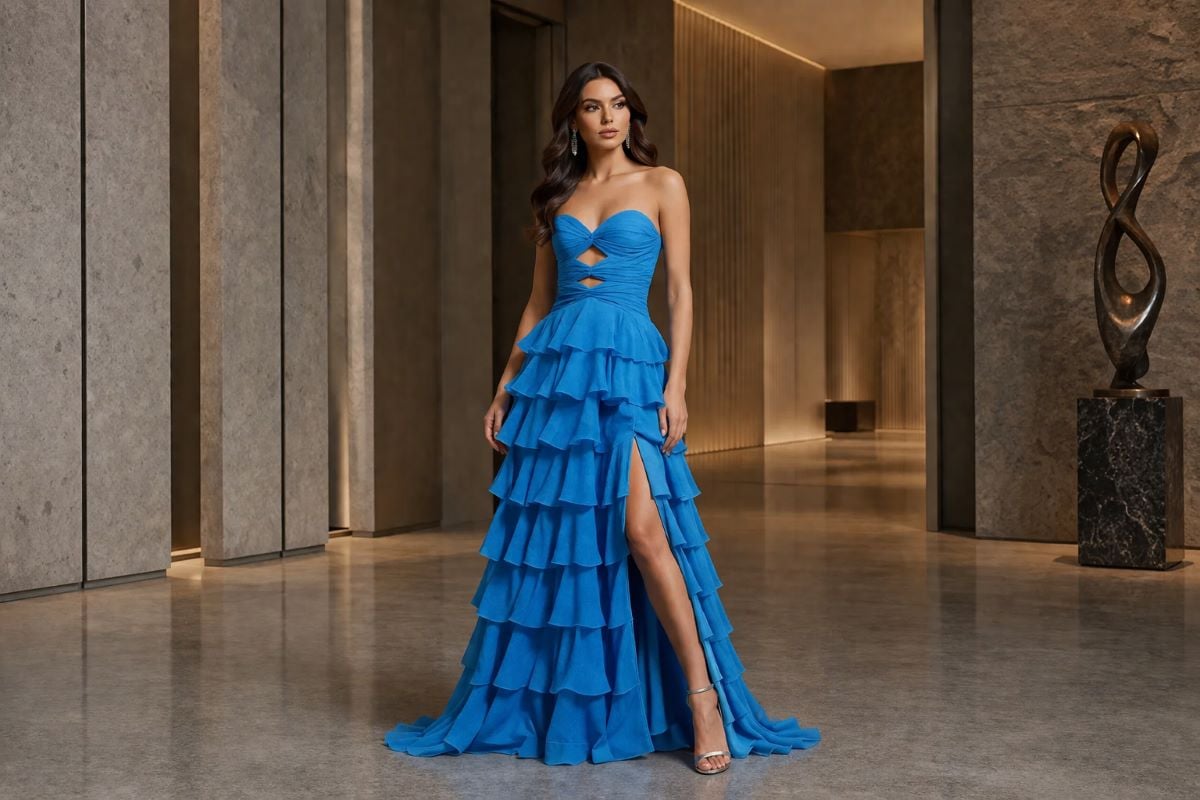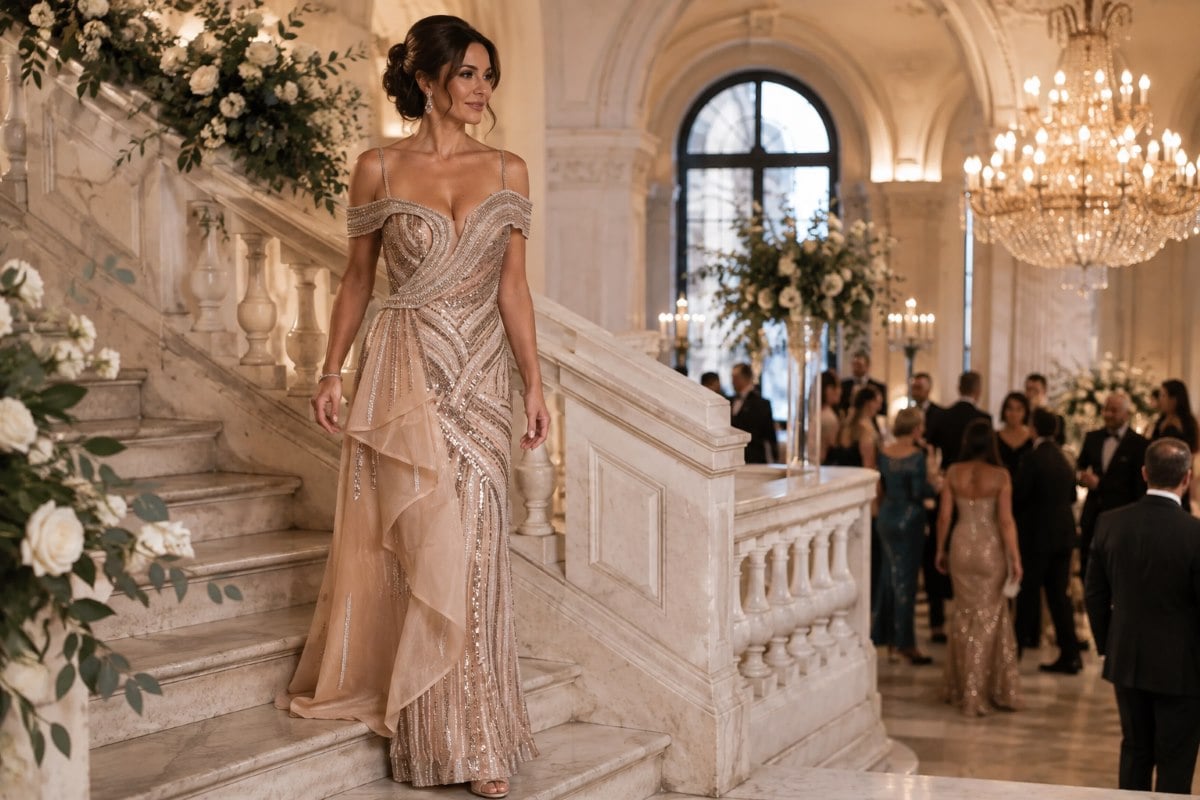

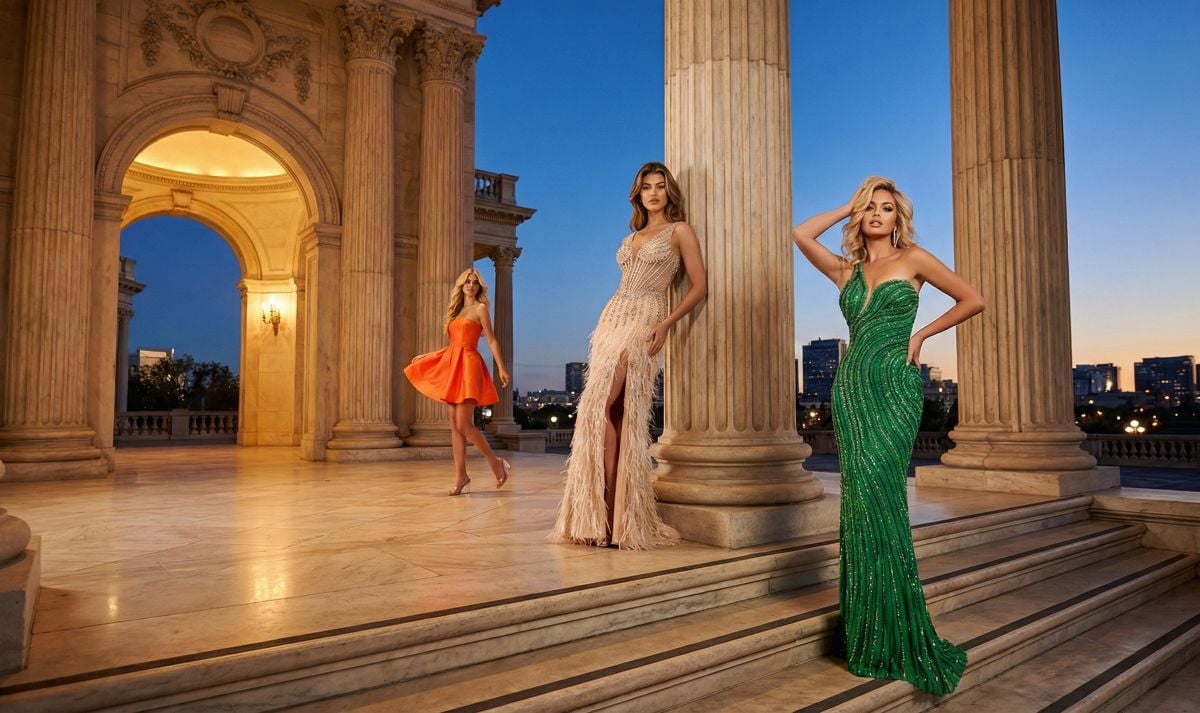
Most guides to gowns that make you look thinner say the same four things: wear dark colors, look for vertical lines, pick a V neck, choose an A line. All of that is true, and none of it explains why two dresses following every one of those rules can look completely different on the same person.
Prom dresses that make you look slimmer do it through three things working together: where the waist seam sits, how the fabric meets the body, and how well the dress actually fits. This guide covers the silhouettes and details that work, and it is direct about the ones that get recommended constantly but fail in practice.
What actually makes a prom dress look slimmer?
Which features make a dress slimming? Four things do most of the work. A waist seam that sits at your natural waist rather than below it, because a dropped waist shortens the whole line. Fabric that skims rather than clings or hangs loose, since both extremes add visible width. One continuous color from shoulder to hem, because every horizontal break divides the body into shorter sections. And structure through the bodice, meaning light boning and a proper lining, which holds a smooth line instead of letting fabric bunch. Fit matters more than any of them, since a dress one size too small always looks worse than the same dress in the right size.
Fit beats silhouette every time
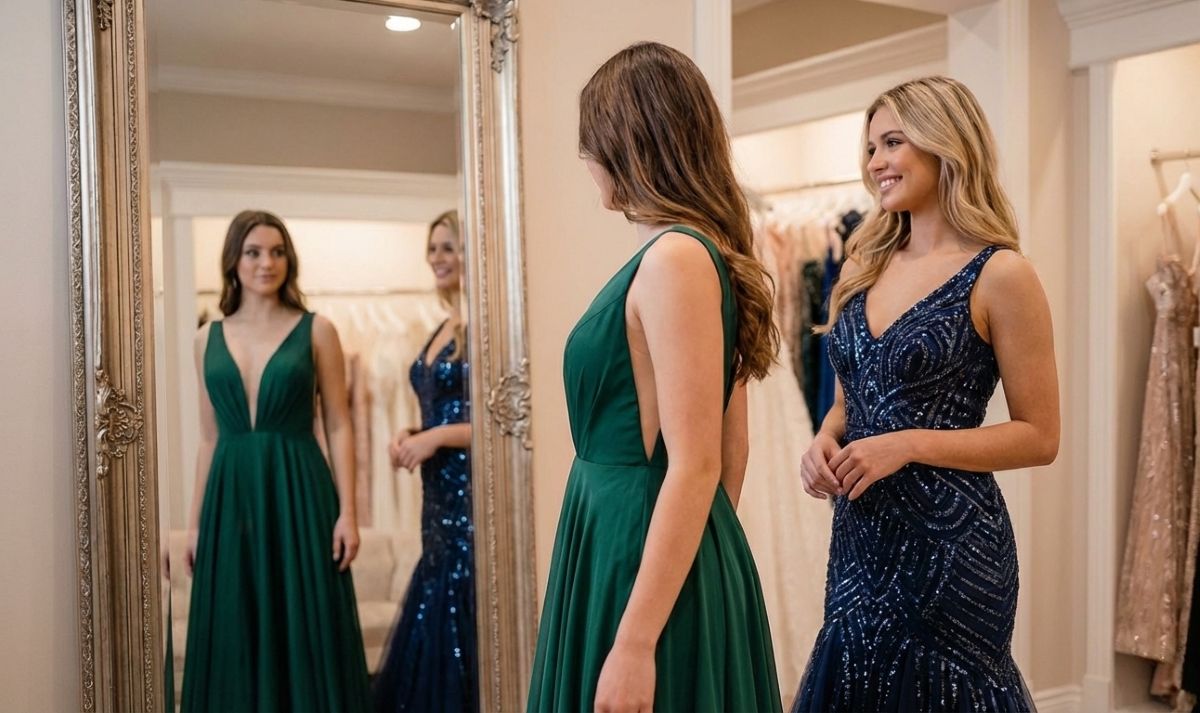
This is the part almost no guide leads with, and it is the single most useful thing on this page. A gown one size down does not look slimmer. It pulls at the zip, creates horizontal strain lines across the widest point, and every one of those lines draws the eye exactly where you did not want it. The same gown in the correct size, taken in at the seams by a tailor, looks smaller.
Order to your largest measurement and have the rest brought in. That is standard practice for formalwear and it is what produces a clean line. It also means you can sit, breathe and dance, and someone comfortable in a dress photographs better than someone managing one.
The second fit point is the bodice length. If the waist seam lands below your natural waist, the dress reads longer through the middle and shorter through the leg. Many gowns can have the bodice shortened, and it is worth asking, because it changes the proportion more than any styling trick.
Silhouettes that create a longer line
An A line skirt is the most reliable starting point and deserves its reputation. The bodice defines the waist, then the skirt releases away from the hip without clinging, which balances the proportion for most shapes. If you are unsure where to begin, begin here.
A fit and flare works on the same principle with a slightly higher release point, which suits anyone who wants more waist definition and less skirt volume.
An empire waist takes a different route, lifting the seam to just under the bust so the line runs uninterrupted from there to the hem. It creates the longest visible line of any silhouette, which is why it is the most lengthening option in an an empire style gown.
A mermaid or trumpet shape works differently again. It does not reduce anything, it creates contrast, holding close through the torso and releasing below the knee so the waist reads narrower by comparison. It is also the least forgiving shape here and depends entirely on precise fit, so it rewards alterations more than any other.
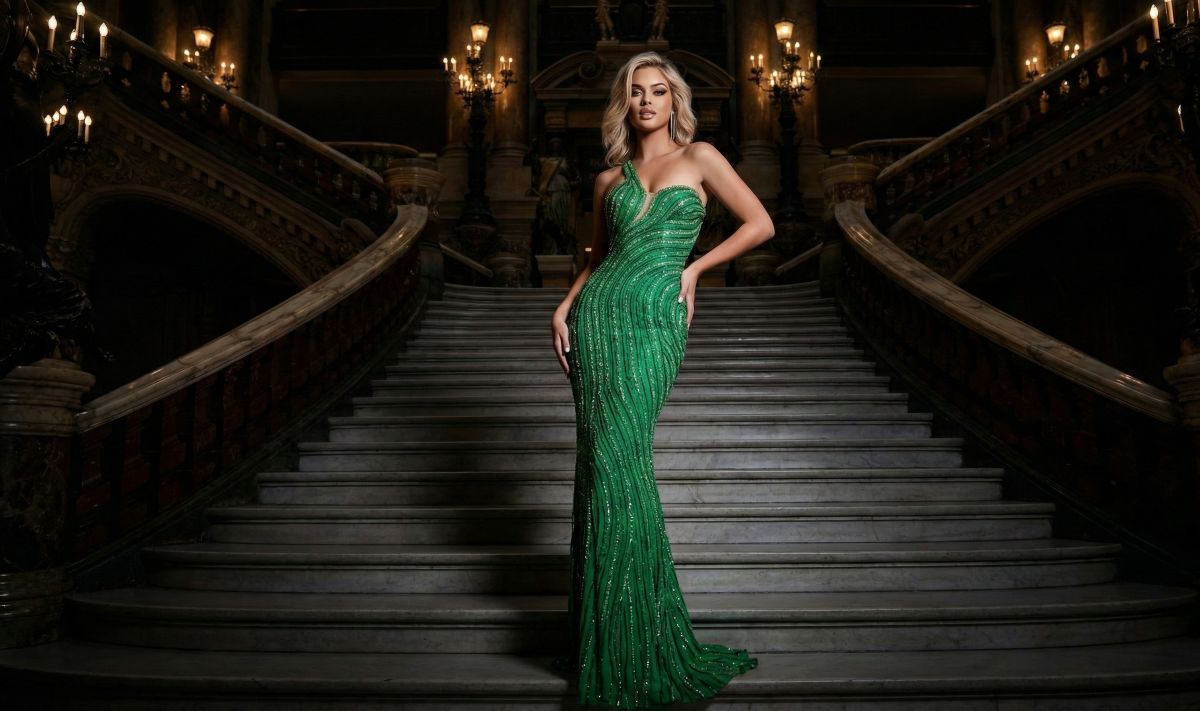
Ball gowns, and why they work better than expected
The common assumption is that volume adds width. In practice a structured ball gown often does the opposite, because a fitted bodice against a full skirt makes the waist read as the narrowest point in the outfit. The contrast does the work.
What matters is the skirt construction. Two or three well-cut layers hold a clean shape. Five or six thin layers create bulk right at the waist, which undoes the effect entirely. Ask what is under the skirt, because that is where the difference lives.
Structure: corsets, boning and lining
A corset bodice gives the most visible shaping of any construction detail, and it does it through two mechanisms rather than one. It holds a defined waist, and it supports the back so you stand straighter, which changes the whole line without changing anything else.
A lace-up back has a practical advantage as well. It gives several inches of adjustment, so the dress can be tightened exactly where you want and eased where you do not. A fixed zip offers none of that.
Lining matters more than people expect. A dress with a proper lining sits smoothly over whatever is underneath. A thin unlined dress in a clingy fabric shows every seam, edge and texture beneath it, and that is what usually causes the effect people are trying to avoid.
Necklines that lengthen the upper body
A V neckline creates a long diagonal down the center, which lengthens the torso and draws the eye toward the face. It is the most effective single neckline for this and works across a wide range of proportions.
Sweetheart, off shoulder and one shoulder all use a similar principle, opening the collarbone and shoulder line so the eye travels upward rather than across. One shoulder adds an asymmetric diagonal, which is the same trick again in a different direction.
An An illusion panel is worth knowing about because it lets you have an open neckline with coverage, keeping the lengthening effect without the exposure. Where necklines work against you is a wide horizontal boat neck or a high halter, since both cut a line straight across at the widest point of the shoulders.
Fabric, and how it meets the body
| Fabric | How it behaves | Best used for |
|---|---|---|
| Matte crepe | Skims without clinging, holds a crisp seam | The most reliable choice for a smooth line |
| Stretch jersey | Follows the body closely, forgiving to sit in | Column and sheath shapes with good lining |
| Structured satin | Holds its own shape, reflects light | Ball gowns and fitted bodices |
| Thin shiny satin | Clings and highlights every line underneath | Best avoided unless fully lined |
| Chiffon and tulle | Adds softness and light volume | Skirts, layered over a smooth lining |
| Ruched or ribbed | Texture breaks up the surface visually | Bodices and waistlines |
The fabric to think hardest about is thin shiny satin without a proper lining, because a reflective surface shows every contour beneath it. The same color in matte crepe behaves completely differently. Ruching is the opposite case, since gathered fabric creates texture that the eye reads as pattern rather than shape.
Color and print
Dark colors do work, and there is a real reason for it: darker shades absorb light rather than reflecting it, so edges read less sharply. A black gown is the obvious version, and navy, burgundy, deep emerald and plum all do the same job with more color.
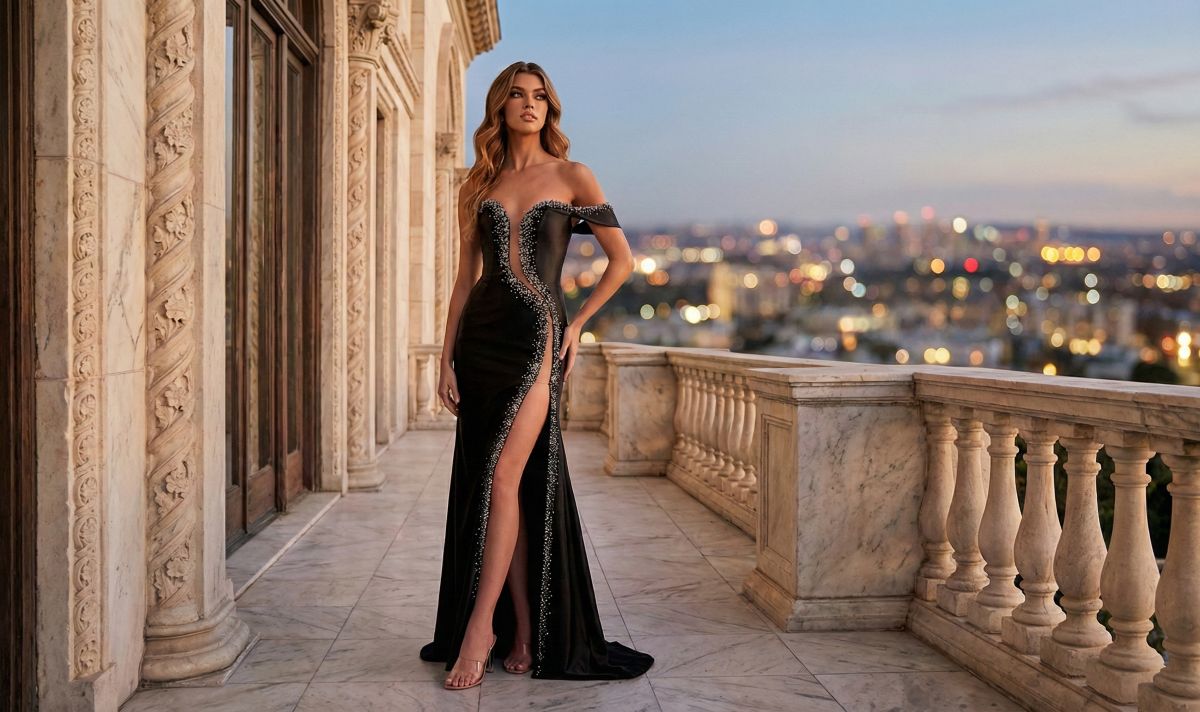
The more important point is that a single continuous color matters more than which color it is. A bright red gown in one uninterrupted tone creates a longer line than a black dress with a contrast belt, a two-tone panel or a light skirt against a dark bodice. Every horizontal change of color divides the body into shorter sections.
Prints follow the same logic. A small dense print keeps the surface moving without breaking it up, while a large placed print tends to sit like a block. Vertical elements help: a center seam, a front slit, a line of beading down the skirt or a narrow panel all pull the eye up and down.
Sparkle is about placement rather than amount. Beading concentrated on the bodice or scattered toward the hem adds interest without adding width across the middle, whereas dense all-over crystal work at the waist adds visual weight exactly where the eye stops.
What gets recommended but does not work
Shapewear that is too tight is the main one. It creates ridges at the top and bottom edges that show through most fabrics, and those horizontal lines are more visible than whatever they were meant to smooth. A lined dress or one with a built-in corselette does the same job from inside the garment.
Sizing down is the second, for the reasons above. Strain lines pull the eye rather than away from it.
The third is a very loose dress. Hiding the body under fabric removes the waist entirely, and without a defined waist the eye has no reference point, so the whole silhouette reads wider rather than smaller. Skimming works, draping does not.
Posture, and why photographs look different from mirrors
This is the cheapest improvement available and it costs nothing. Standing with your shoulders back and your weight on your back foot changes the line of the whole outfit, and it is a large part of why professional photographs look different from casual ones.
For photographs specifically, turning slightly rather than facing square on narrows the visible width of the body. Putting a hand on the hip creates a gap between arm and torso that reads as a defined waist. Both are standard techniques and neither requires a different dress.
Extended sizes follow all the same rules, and none of the advice above changes by size. The plus size prom dresses selection is cut to the same construction standards.
Slimming Prom Dress Questions
Which prom dress styles make you look slimmer?
A line and fit and flare are the most reliable, since both define the waist and release over the hip. Empire waists create the longest uninterrupted line. Mermaid shapes work through contrast rather than reduction, holding close through the torso and flaring below the knee. Structured ball gowns also work, because a fitted bodice makes the waist read as the narrowest point.
Do dark colors really make you look slimmer?
Yes, because darker shades absorb light instead of reflecting it, so edges read less sharply. Navy, burgundy, deep emerald and plum all do the same job as black. More important than the shade is keeping one continuous color, since a bright gown in a single tone creates a longer line than a dark dress with a contrast belt or two-tone panel.
Should I size down to look slimmer?
No. A dress one size too small pulls at the zip and creates horizontal strain lines across the widest point, which draws the eye there. Order to your largest measurement and have the dress taken in at the seams. The same gown in the correct size, properly altered, looks smaller and is far more comfortable to wear all evening.
Does shapewear help under a prom dress?
It can, but only if it fits properly. Shapewear that is too tight creates ridges at the top and bottom edges that show through most fabrics, and those lines are more visible than whatever they were meant to smooth. A well-lined dress or one with a built-in corselette often does the same job more comfortably.
Which fabrics are most flattering?
Matte crepe is the most reliable, since it skims without clinging and holds a crisp seam. Stretch jersey works well with good lining. Ruched and ribbed fabrics break up the surface visually. The one to watch is thin shiny satin without a proper lining, because a reflective surface shows every contour beneath it.
Do corset bodices actually make a difference?
Yes, through two mechanisms. A corset holds a defined waist, and it supports the back so you stand straighter, which changes the whole line without changing anything else. A lace-up back also gives several inches of adjustment, so the dress can be tightened where you want it and eased where you do not.
Trying the silhouettes side by side
Reading about gowns that make you look slimmer narrows the field, but two gowns described identically can behave completely differently depending on torso length, where the waist seam falls and how the skirt is weighted.
Try one A line, one mermaid and one structured ball gown in the same visit, since comparing three shapes directly answers the question faster than looking at any one alone. Book that fitting with an authorized Jovani retailer and ask what each gown would need in alterations before you decide.