
Stepping into a room wearing a meticulously crafted gown should be an experience of absolute confidence, effortless grace, and undeniable empowerment. The right formal wear has the power to transform not just your physical silhouette, but your entire demeanor, commanding attention and leaving a lasting impression on everyone you encounter. However, the journey to finding that flawless garment is often fraught with subtle, easily overlooked missteps. Navigating the world of high fashion and formal attire requires more than just a passing glance at a boutique window; it demands an intimate understanding of garment construction, personal styling parameters, and the nuanced rules of event etiquette. Making common mistakes when choosing an evening dress can easily turn what should be a joyful, confidence-boosting investment into an evening of physical discomfort or aesthetic regret.
At Jovani, our decades of experience in the luxury fashion industry have given us a front-row seat to the unique challenges women face when selecting their event wardrobes. We have seen firsthand how minor oversights in fabric selection, tailoring adjustments, or silhouette harmony can compromise an otherwise stunning look. Our design philosophy has always been rooted in empowering women through exceptional craftsmanship, but even the most beautifully designed garment requires the wearer to make informed, strategic choices. Understanding how to choose an evening gown correctly is a true art form. It is a process that blends an appreciation for couture techniques with a deep awareness of your own body, your personal aesthetic, and the environment you will be entering.
To help you navigate your next formal acquisition with the expertise and discerning eye of a seasoned fashion editor, we have compiled a deeply comprehensive guide detailing the most frequent errors made during the selection process. By learning to recognize, understand, and avoid the most common mistakes when choosing an evening dress, you can ensure that your next investment not only looks breathtaking on the hanger but performs flawlessly throughout your special event.
Ignoring the Nuances of the Dress Code and Venue Context
One of the most foundational evening dress shopping mistakes occurs before a woman even enters a boutique or consults a stylist. It is the failure to thoroughly analyze the event’s dress code and the physical realities of the venue itself. A dress does not exist in a vacuum; it exists in relationship to its surroundings.
Decoding Formal Dress Codes
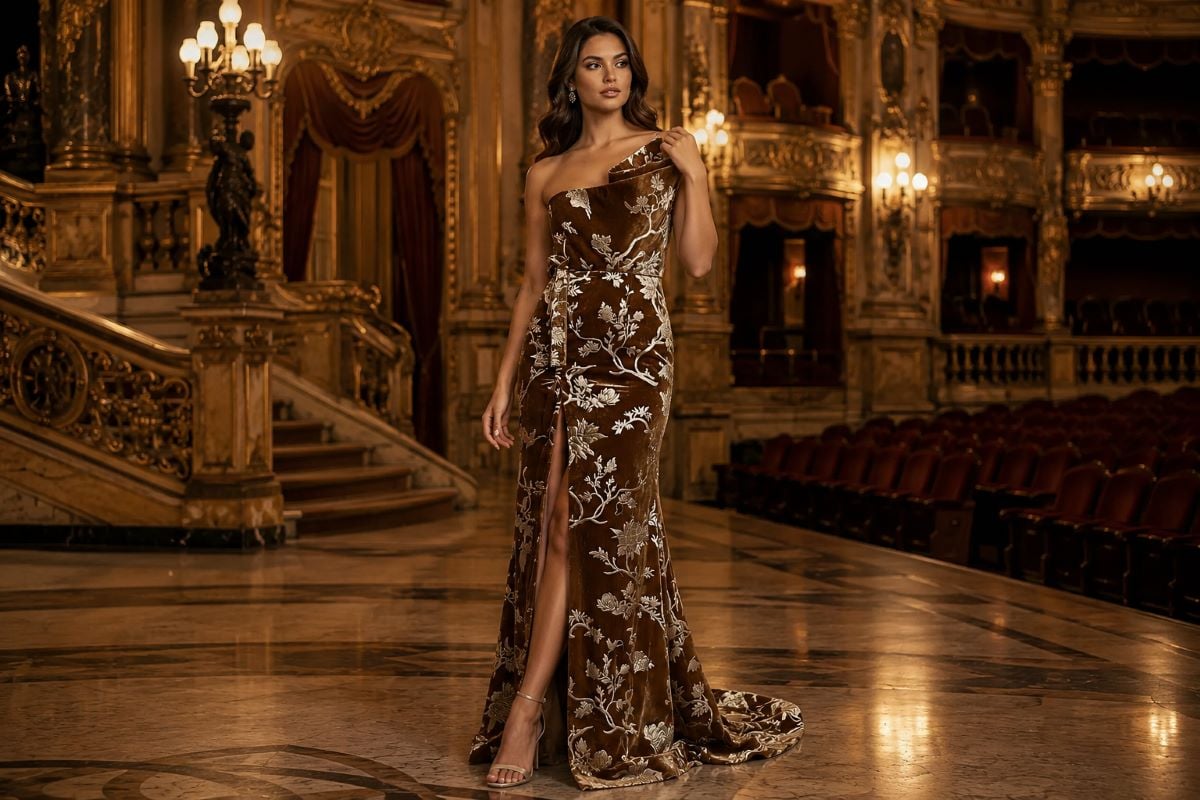
An invitation that dictates “black-tie” provides a general framework, but the context of the gathering dictates the specific nuances of your attire. Wearing a heavily structured, avant-garde piece to a romantic, garden-set formal wedding can feel visually jarring. Conversely, wearing a minimalist, unembellished slip dress to a grand, historic ballroom gala might leave you feeling underdressed and overshadowed by the opulence of the environment. Understanding the subtle differences between white-tie (requiring full, sweeping ballgowns), black-tie (allowing for elegant floor-length styles), and black-tie optional (where sophisticated midi-lengths may occasionally be permitted) is the first step in avoiding a sartorial misstep.
Venue Realities: Indoor Galas vs. Outdoor Estates
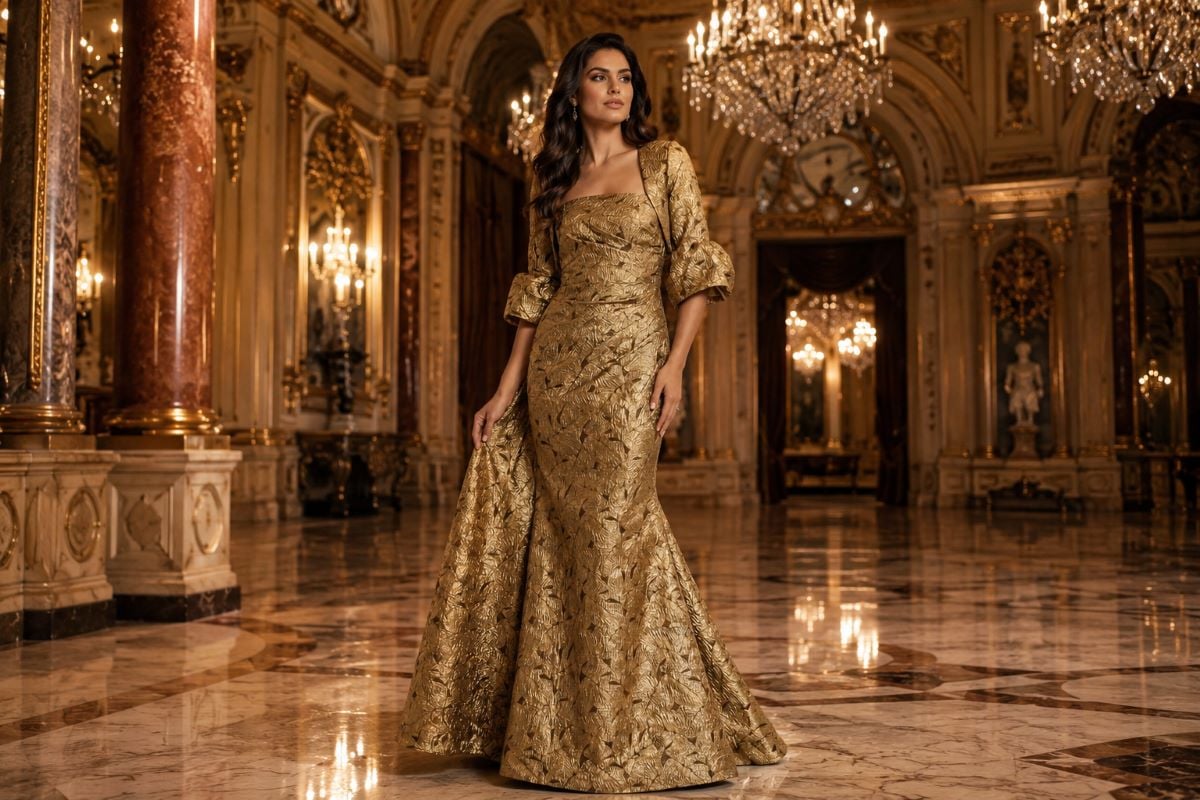
When considering how to choose an evening gown based on the setting, you must account for the scale of the room, the lighting, and the time of year. Grand venues with soaring ceilings and ornate architectural details call for garments with immense presence and volume. This is where long evening dresses with sweeping trains or structured architectural bodices truly belong, as they possess the visual weight necessary to anchor the wearer in a massive space without being swallowed by the decor.
Furthermore, the physical environment must heavily dictate your choices. A gala held outdoors in the early autumn requires you to consider the evening chill, the potential for a breeze, and the terrain. In such cases, a gown with ethereal, lightweight chiffon layers might become unmanageable in the wind, whereas a garment constructed from a sturdier crepe would maintain its shape gracefully. Overlooking these environmental factors is a surefire way to compromise both your aesthetic presentation and your personal comfort throughout the night.
Disregarding Your Natural Architectural Silhouette
Fashion is inherently architectural. A gown is a structured form designed to interact with the human body, and the most captivating looks occur when the garment’s architecture works in seamless harmony with the wearer’s natural proportions. One of the most prevalent common mistakes when choosing an evening dress is shopping for a body type you admire rather than the one you possess.
Understanding Proportion and Visual Balance
The concept of dressing for your shape is not about masking flaws or adhering to outdated beauty standards; it is entirely about manipulating visual balance. When finding the perfect dress for your body type, you are essentially playing with focal points. You are utilizing waist placements, necklines, and skirt volumes to draw the eye exactly where you want it to go. For instance, a woman with a naturally athletic, straight figure might make the error of wearing a shapeless column gown, which does nothing to create the illusion of curves. Instead, selecting a design with strategic side cutouts, dramatic draping at the hip, or an exaggerated sweetheart neckline can introduce a beautiful sense of softness and curvature.
Selecting High-Impact Styles for Your Frame
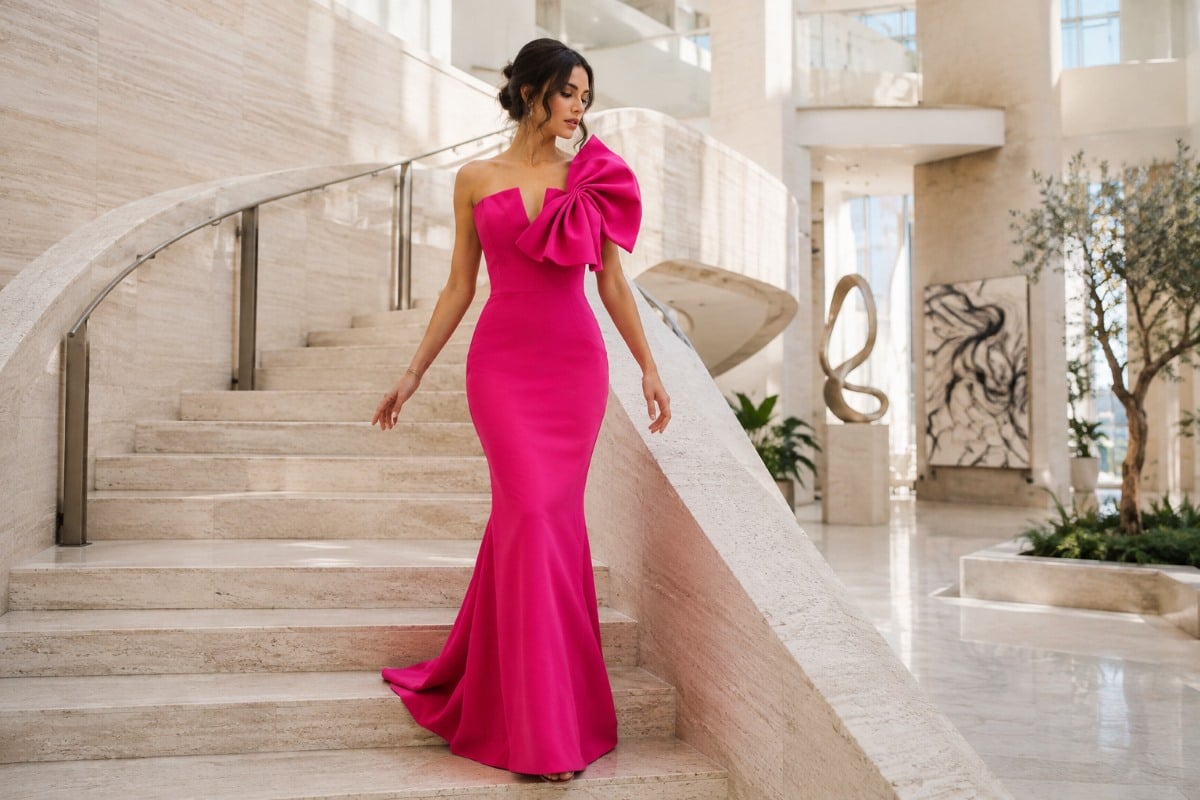
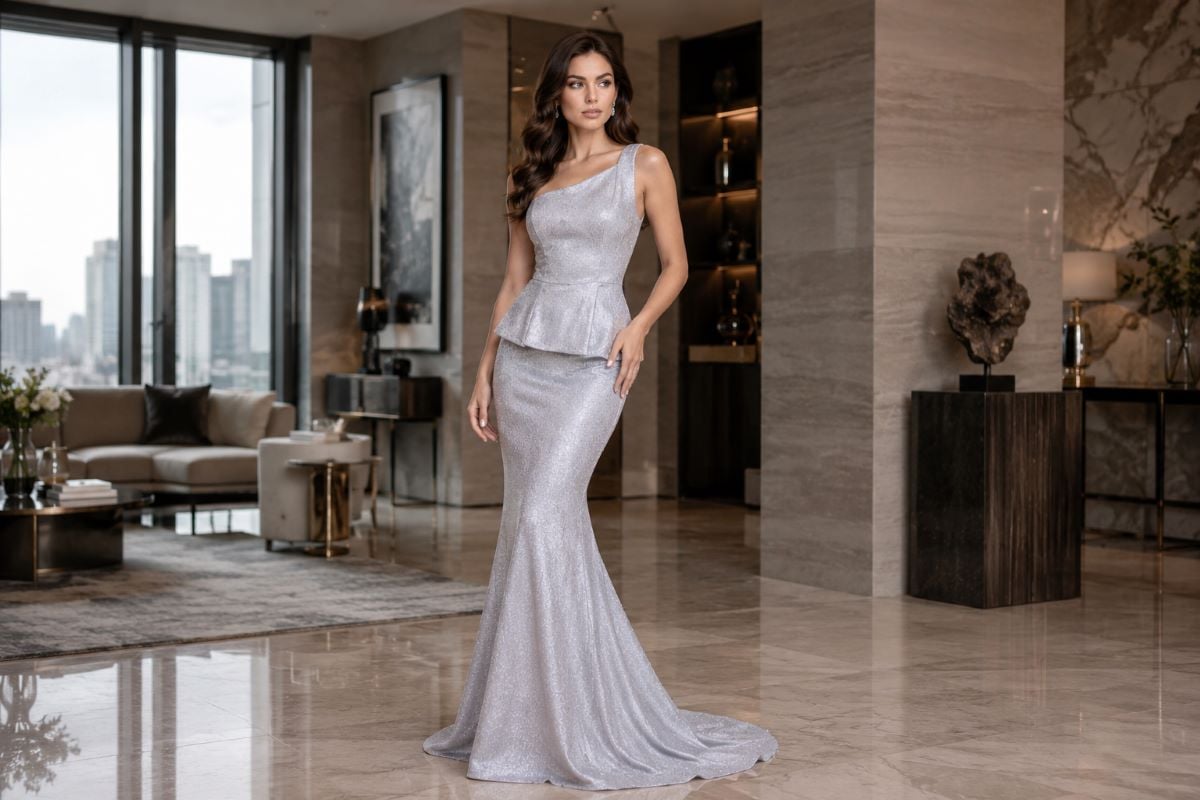
Understanding the specific visual impact of different silhouettes is vital for achieving a flawless presentation. If you wish to highlight an hourglass figure while adding an element of dramatic flair to your entrance, mermaid fornal gowns are an exceptional choice. The way this specific silhouette hugs the torso and hips tightly before flaring out dramatically at the knee creates a stunning, sculpted effect that commands immediate attention. However, if a woman who carries her weight primarily in her midsection chooses this same highly restrictive silhouette, she may spend the evening feeling physically uncomfortable and self-conscious. Knowing the ideal evening dress for your body type is about recognizing which structural elements will elevate your presence and which will work against your natural geometry.
Misunderstanding Fabric Weight, Drape, and Behavior
A gown can be beautifully designed and perfectly tailored, but if it is cut from the wrong textile, the entire look will collapse. Fabric is the ultimate medium of fashion, and every single material behaves differently under the strict constraints of gravity, movement, and event lighting.
The Role of Structural Textiles
Choosing the right fabric for formal wear requires you to anticipate exactly how the garment needs to perform. If the design features sharp, structural pleats, a corset bodice, or a dramatic, voluminous overskirt, it requires a textile with inherent memory and stiffness. Luxurious fabrics such as silk mikado, heavy duchess satin, or metallic brocade hold their shape independently of the body. If you attempt to achieve a highly structured, architectural look using a fluid fabric like silk charmeuse, the garment will look deflated and entirely miss the designer’s intended vision.
Fluid Fabrics for Softness and Movement
Conversely, if your aesthetic goal is a romantic, ethereal vibe that catches the air beautifully as you walk, heavy textiles will feel incredibly restrictive and look distinctly out of place. Understanding how to choose the right fabric for an evening dress means recognizing when to deploy lightweight materials like silk chiffon, organza, or fine tulle to create a sense of effortless, floating elegance.
How Lighting Interacts with Material
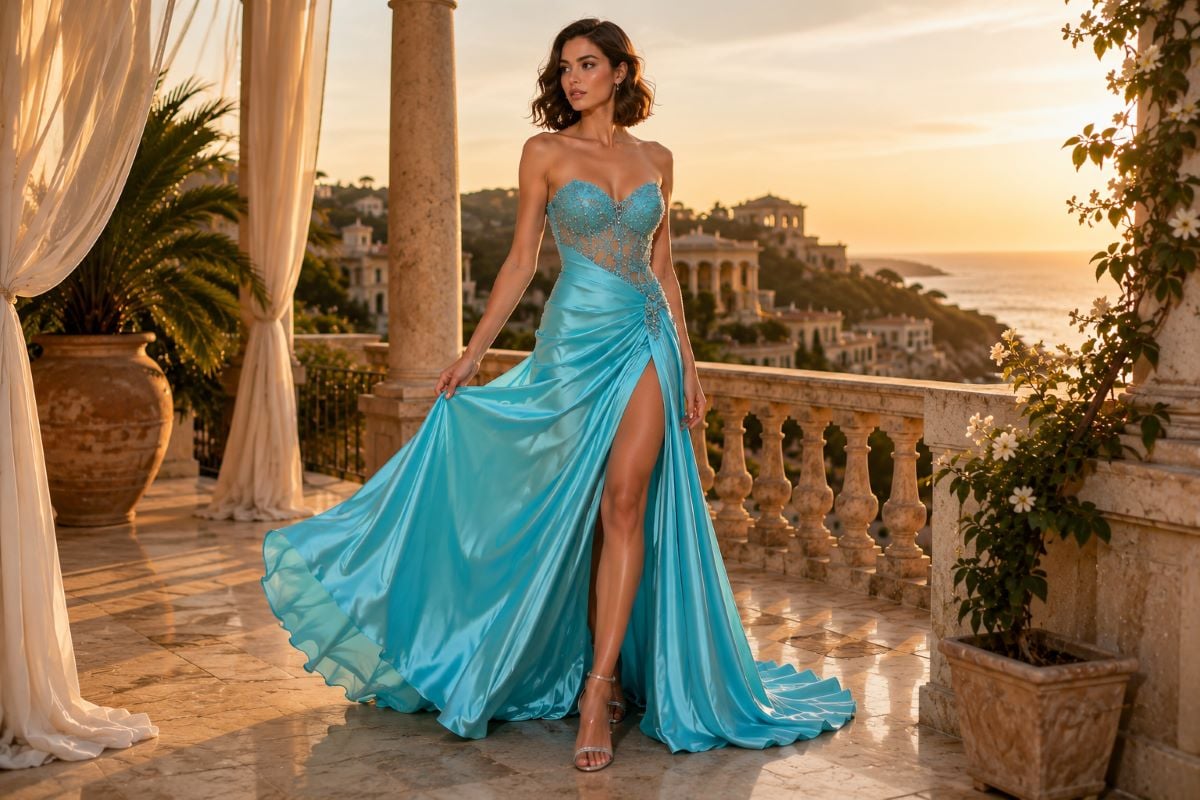
Furthermore, shoppers often forget that fabrics interact with event lighting in drastically different ways. A high-shine liquid satin will act as a mirror, reflecting light and highlighting every single curve, contour, and undergarment line underneath—which can be incredibly unforgiving if the tailoring is not absolute perfection. Matte crepe or velvet, on the other hand, absorbs light, creating a rich, dense color profile and a very forgiving, smooth silhouette. Ignoring these physical material realities is one of the most detrimental common mistakes when choosing an evening dress, as it directly impacts how the gown photographs and how it moves across a room.
The Pitfalls of Overlooking Proper Fit and Tailoring
Perhaps the most critical, unbreakable rule in the realm of high-end formal wear is that fit reigns supreme over all other factors. You can purchase the most exquisite, expensive designer creation in the world, but if it does not fit your body flawlessly, it will ultimately look unrefined.
The Myth of the “Off-the-Rack” Perfect Fit
A surprising number of women expect luxury formal wear to fit perfectly right off the rack. This expectation is a significant misunderstanding of garment production and leads directly to severe formal dress fit issues, which are instantly noticeable to the trained eye. Designer garments are constructed to accommodate a standard, symmetrical fit model, but real human bodies are beautifully diverse and naturally asymmetrical. Almost every single evening gown requires some level of intervention from a skilled seamstress or tailor to look its best.
Identifying Common Formal Dress Fit Issues
When evaluating a dress, pay close attention to areas where the fabric struggles. Common formal dress fit issues include a bodice that gapes awkwardly at the underarm or neckline when you lean forward, a waistline seam that sits an inch too high or too low for your natural torso length, or fabric that pulls tightly across the hips, creating horizontal wrinkles. Another major issue is a hemline that is improperly measured, resulting in a skirt that either exposes the toe of a shoe rather than floating gracefully, or drags excessively, creating a tripping hazard.
The Essential Role of the Master Tailor
Skipping the tailoring process is an unacceptable shortcut in formal styling. A master tailor does more than just shorten a hem. They will adjust the internal boning to support your specific bust shape, take in the side seams so the fabric smooths over your hips perfectly without pulling, and ensure the straps do not dig painfully into your shoulders. The difference between a dress that is merely your size and a dress that has been tailored to your unique measurements is astronomical. When determining how to choose an evening gown, you must always factor the time and financial investment of professional alterations into your final decision.
Playing It Too Safe or Ignoring Skin Tone Harmonies
Color theory is an incredibly powerful tool in a stylist’s arsenal, yet many women abandon it entirely when shopping for formal events, retreating instead into the safety of the familiar. Evening dress styling rules dictate that color should be used deliberately to enhance your natural features, not just as a default setting.
The Trap of Defaulting to Black
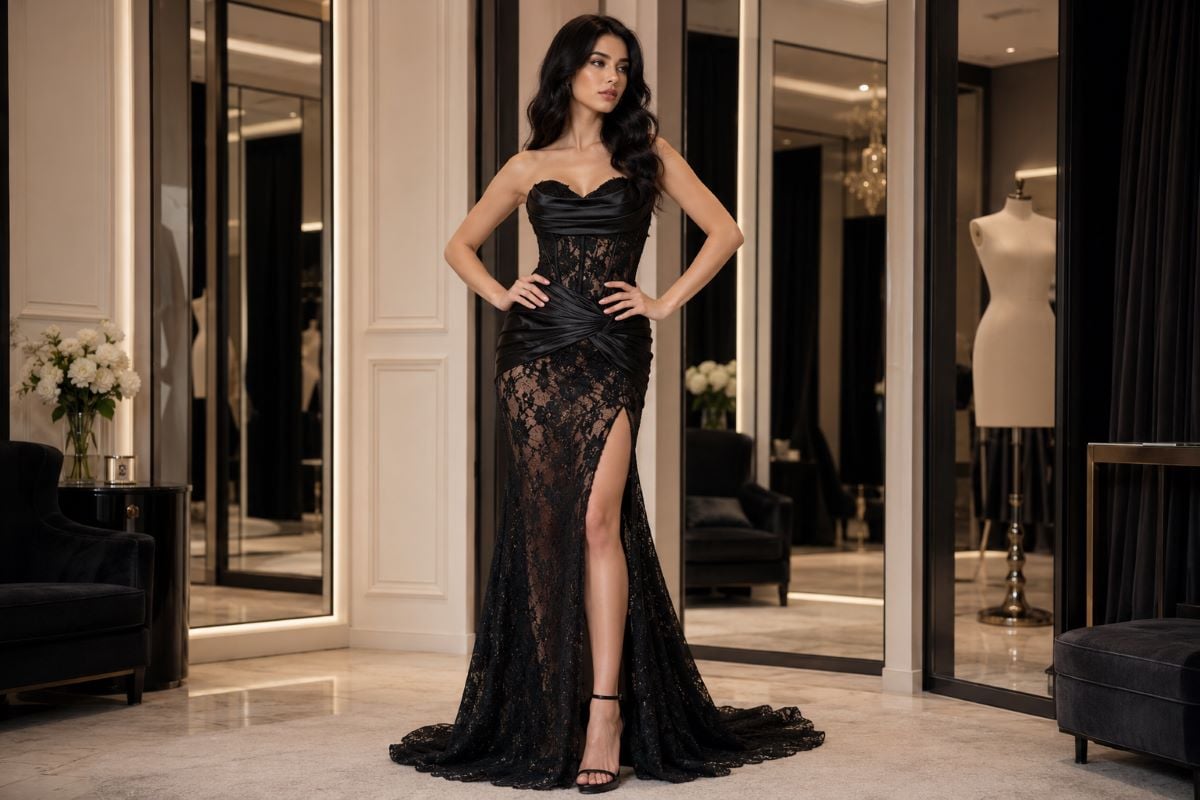
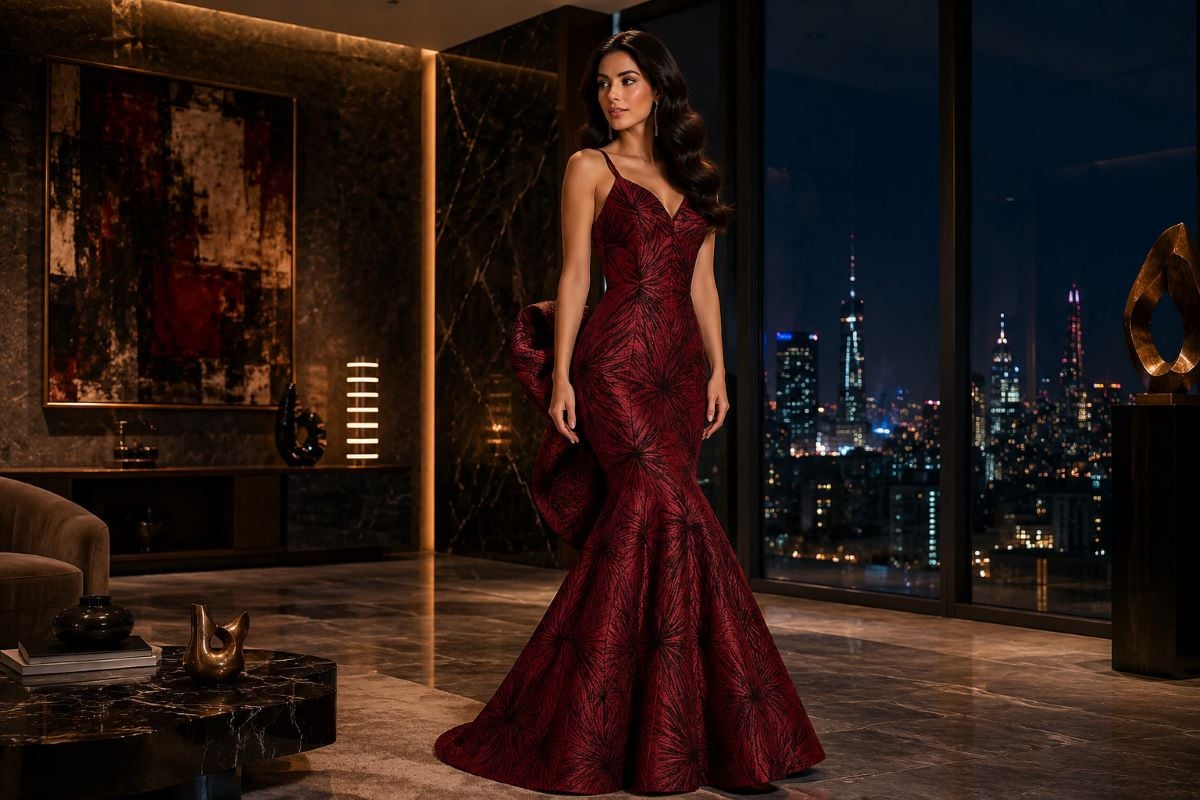
While there is undeniable power, slimming capability, and timeless sophistication in classic black evening gowns, making black your default choice simply because you are afraid to experiment with color is a missed opportunity to truly shine. Black is a staple, but it shouldn’t be a crutch. An event filled entirely with black gowns lacks vibrancy, and choosing a color is a wonderful way to stand out elegantly from the crowd.
Understanding Your Skin’s Undertone
Every woman possesses a unique skin undertone ranging from cool and pink to warm and golden, or perfectly neutral. Selecting a gown in a color that clashes violently with your natural undertone can cast harsh, unflattering shadows on your face, make your skin look sallow or tired, and generally diminish your natural radiance. Stepping into the world of color requires an understanding of these harmonies.
Matching Tones to Your Complexion
For example, a woman with cool, porcelain skin and pink undertones might look breathtaking in a rich, saturated jewel tone like sapphire blue, emerald green, or deep amethyst, but she might look entirely washed out in a pale, warm-toned pastel yellow. Conversely, someone with deep, warm olive skin will radiate in rich metallics, fiery ruby reds, and warm earth tones, whereas a stark, icy silver might create an unwanted, grayish visual contrast. One of the greatest evening dress shopping mistakes is falling in love with a color on the hanger without holding the fabric up to your face under natural lighting to test its impact.
Prioritizing Fleeting Trends Over Timeless Elegance
The fashion landscape is in a constant state of flux, driven aggressively by seasonal trends and viral social media moments. While it is exciting and fun to incorporate contemporary elements into your everyday wardrobe, formal wear requires a slightly different, more long-term approach.
Distinguishing Between Trendy and Contemporary
Evening gowns are significant financial and emotional investments, often intended to be worn to landmark events, heavily photographed, and remembered for years to come. Getting swept up in highly specific, aggressive micro-trends—such as extreme cutouts, neon color-blocking, or exaggerated, unconventional sleeve shapes is a frequent error that inevitably leads to early buyer’s remorse. When you look back at photographs from a gala ten years from now, you want the image to exude timeless elegance. You do not want the garment to clearly stamp the exact year the photo was taken because it relies on a fleeting gimmick.
Why Classic Necklines and Cuts Endure
This rule does not mean your dress must be boring, matronly, or rigidly traditional; it simply means focusing on enduring design principles. For instance, necklines play a crucial role in the longevity of a garment’s appeal. Plunging, architectural V-necks, elegant off-the-shoulder styles, and sophisticated straight strapless cuts have remained staples in couture houses for decades because they universally flatter the female form. An excellent styling rule is to allow your accessories, your hairstyle, or your makeup to carry the “trendy” elements of your presentation, while keeping the foundational gown rooted in classic tailoring and sophisticated, clean lines.
Forgetting About the Reality of Comfort and Mobility
A formal event is not a static, motionless photoshoot. It is a highly dynamic experience that involves walking across varied flooring, navigating staircases, sitting for long multi-course dinners, socializing standing up, and often dancing well into the night.
The Hidden Weight of Embellishments
One of the most physically punishing common mistakes when choosing an evening dress is prioritizing a striking visual over basic human comfort and mobility. Weight is a highly significant factor that shoppers often ignore. Elaborately beaded or heavily sequined gowns are undeniable showstoppers, catching the light beautifully and offering an unparalleled sense of luxury. However, head-to-toe crystal or glass beadwork carries substantial physical weight. If the gown does not have proper internal structural support, such as a built-in waist stay (a specialized inner belt) or reinforced shoulder straps, that heavy weight will bear down directly on your shoulders and neck throughout the evening, leading to severe fatigue and poor posture.
Ensuring Ease of Movement and Posture
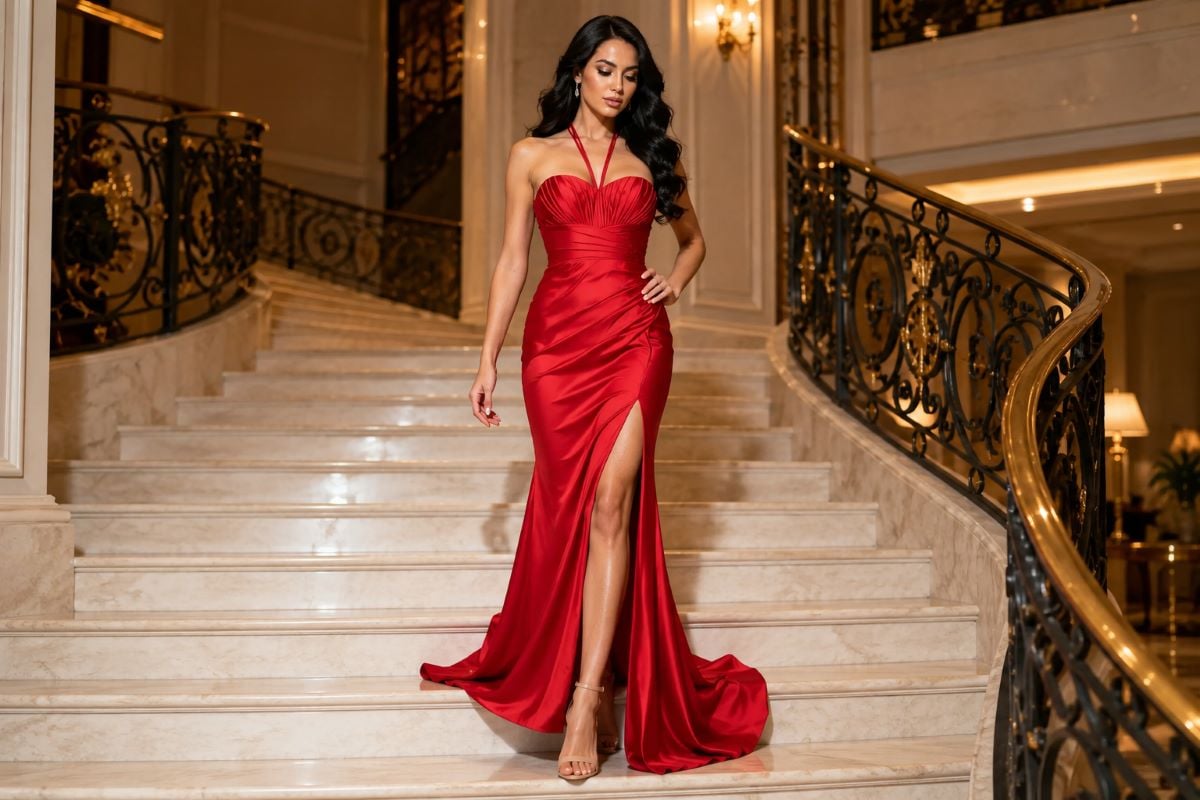
Similarly, you must carefully consider the physical restrictions of your skirt. A tightly tailored pencil skirt that extends all the way down to the ankle without a high enough vent or slit will literally force you to shuffle rather than walk gracefully. If you cannot breathe deeply while sitting down without the fabric digging painfully into your ribs, your discomfort will translate instantly to your facial expressions, ruining the elegance of the look. True luxury is the intersection of breathtaking aesthetic design and effortless wearability. When trying on a gown, you must simulate the movements you will actually make at the event to ensure the garment moves in harmony with you.
Mishandling the Delicate Balance of Accessories
The gown is the magnificent centerpiece of your formal ensemble, but the accessories are the critical supporting cast that can either elevate or ruin the final picture. Poor accessory choices can drag down the elegance of even the most beautiful dress, creating a look that feels cluttered, disjointed, or poorly thought-out.
Creating Visual Harmony with Jewelry
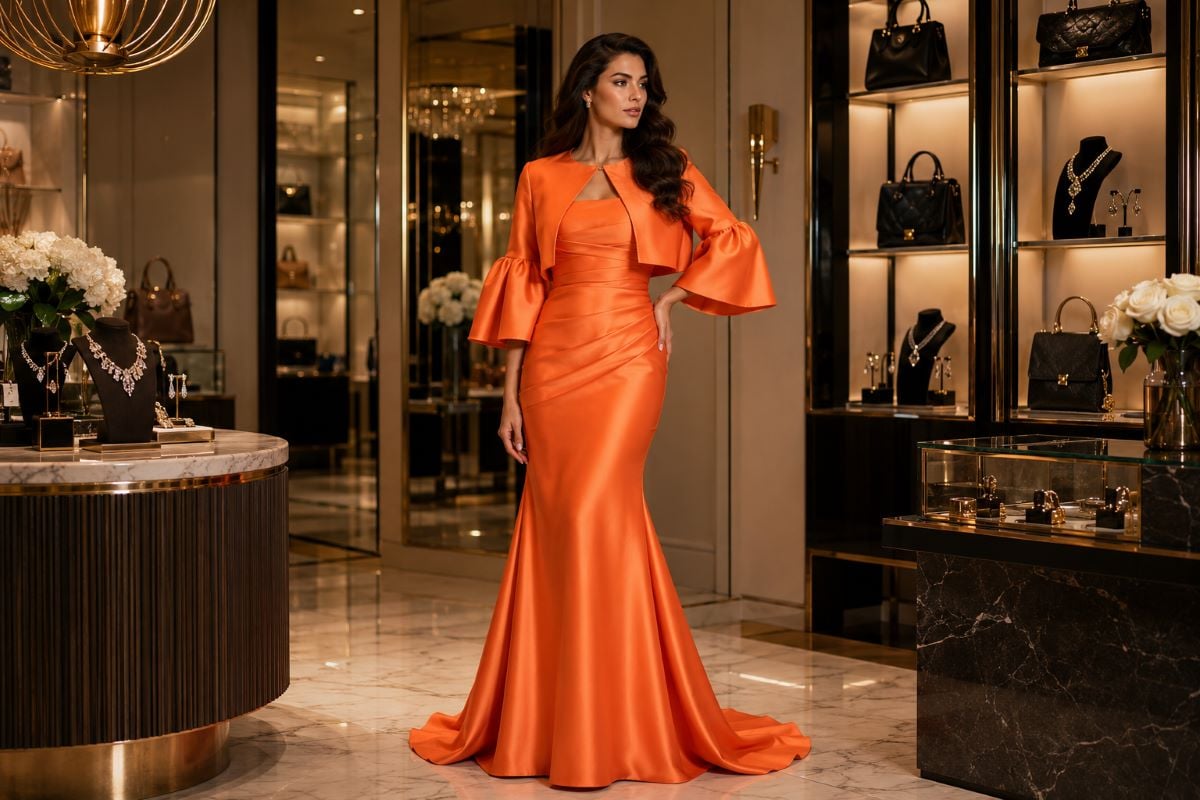
Following fundamental evening dress styling rules is essential for creating a cohesive, polished presentation. The most common error in this area is the urge to wear every beautiful piece of jewelry you own all at once. The rule of thumb is visual equilibrium. If your gown features a highly embellished, high neckline or intricate embroidery immediately near the face, adding a massive, statement diamond necklace will create visual warfare. In such cases, professional styling dictates that you should skip the necklace entirely and opt for dramatic chandelier earrings or a bold cocktail ring instead.
Architectural Considerations for Footwear
Footwear is equally problematic for many shoppers. The process of picking the perfect shoes is not just about matching colors; it is about matching the architecture and formality of the dress. Wearing a heavy, chunky leather platform shoe with a delicate, diaphanous silk chiffon gown completely ruins the visual weight and delicacy of the look. Furthermore, your exact shoe height dictates your final hemline. You must absolutely have your chosen event shoes with you during your tailoring appointments, or you risk the severe formal dress fit issues of a hem that is awkwardly short or dangerously long.
Waiting Until the Last Minute to Shop
Time is the ultimate luxury when it comes to securing high-end formal wear. The most easily avoidable, yet most frequently committed, evening dress shopping mistakes stem directly from waiting until a few short weeks before the event to begin the search.
Understanding Formal Wear Production Timelines
The luxury formal wear industry operates on a very distinct timeline, and attempting to rush this delicate process almost guarantees that you will have to compromise significantly on your vision, your fit, or your budget. High-quality evening gowns, particularly those from respected global design houses, are not always immediately available in every size, color, and style in a local boutique’s back room. Often, a specific dress must be special-ordered directly from the designer, which can take anywhere from several weeks to a few months depending on the intricate nature of the beading or specialized fabric sourcing.
Avoiding the Pitfalls of Rush Shopping
Once the dress finally arrives at the boutique, you must factor in the additional time required for a professional tailor to complete multiple fittings (usually an initial pinning, a second check, and a final steam). Shopping in a panic leads to settling for a garment that is merely “good enough” rather than “perfect.” It forces you to ignore whether the garment is truly the ideal evening dress for your body type, simply because it happens to be the only thing left on the rack in an approximate size. To ensure a stress-free experience, the shopping process should ideally begin a minimum of two to three months before your scheduled event.
Neglecting the Foundation: Undergarments and Shapewear
A magnificent house built on a shaky, uneven foundation will never look structurally sound, and the exact same principle applies rigorously to formal evening wear. The absolute finest Italian silk, the most expertly draped French chiffon, and the most precise bespoke tailoring cannot hide the distracting presence of the wrong undergarments.
Matching Foundations to Gown Architecture
Ignoring your foundational layers is a cardinal sin in the realm of evening dress styling rules. The structural architecture of your gown firmly dictates your undergarments, never the other way around. If you have selected a gown with a daring plunging open back, a sheer illusion bodice, or a dramatic thigh-high slit, standard daily undergarments are immediately rendered obsolete. You must invest in specialized foundational pieces—such as longline adhesive bras, seamless laser-cut shaping briefs, or specialized backless bodysuits—that remain entirely invisible to the eye while providing the necessary support, lift, and smoothing.
The Rule of Consistent Undergarments During Tailoring
Furthermore, you must commit to wearing these exact undergarments to every single tailoring fitting. A heavily padded push-up bra will completely alter how the bodice of a dress needs to be tailored compared to an unlined, soft-cup bra. Changing your shapewear or bra on the actual day of the event, after the dress has already been meticulously tailored to a different set of foundations, will instantly introduce formal dress fit issues, causing the delicate fabric to pull, bunch, or hang incorrectly. Treat your undergarments with the exact same level of importance as the gown itself.
How Jovani Elevates the Evening Wear Experience
Understanding how to navigate and avoid these common styling pitfalls is only half the battle; the other half is aligning yourself with a premier design house that inherently understands the complex architecture of the female form. At Jovani, our unwavering commitment to excellence ensures that you begin your styling journey with a garment engineered from the inside out for success. We do not just design beautiful dresses; we construct masterpieces of wearable art.
Our expert design team obsessively studies how different luxury fabrics drape, how specific necklines frame the collarbone to elongate the neck, and how hidden internal structure (like high-quality boning and bust cups) can provide both immense comfort and incredible, waist-cinching shaping. By offering an extensive, highly diverse array of silhouettes—from dramatic, sweeping royal ballgowns to sleek, modern, sophisticated bodycon designs—we ensure that there is a flawless, show-stopping Jovani gown tailored for every specific body type and every distinct personal aesthetic. Because our curated collections are available exclusively through a trusted network of premium, authorized boutique retailers, our clients have direct access to highly knowledgeable formal wear consultants. These experts can guide you away from common mistakes when choosing an evening dress and toward the perfect, confidence-inducing fit. Choosing Jovani means choosing a legacy of superior craftsmanship, ensuring that your only focus on the night of your event is how truly spectacular you feel.
FAQ Overcoming Evening Dress Fit and Shopping Challenges
How can I tell if an evening dress is the right length after tailoring?
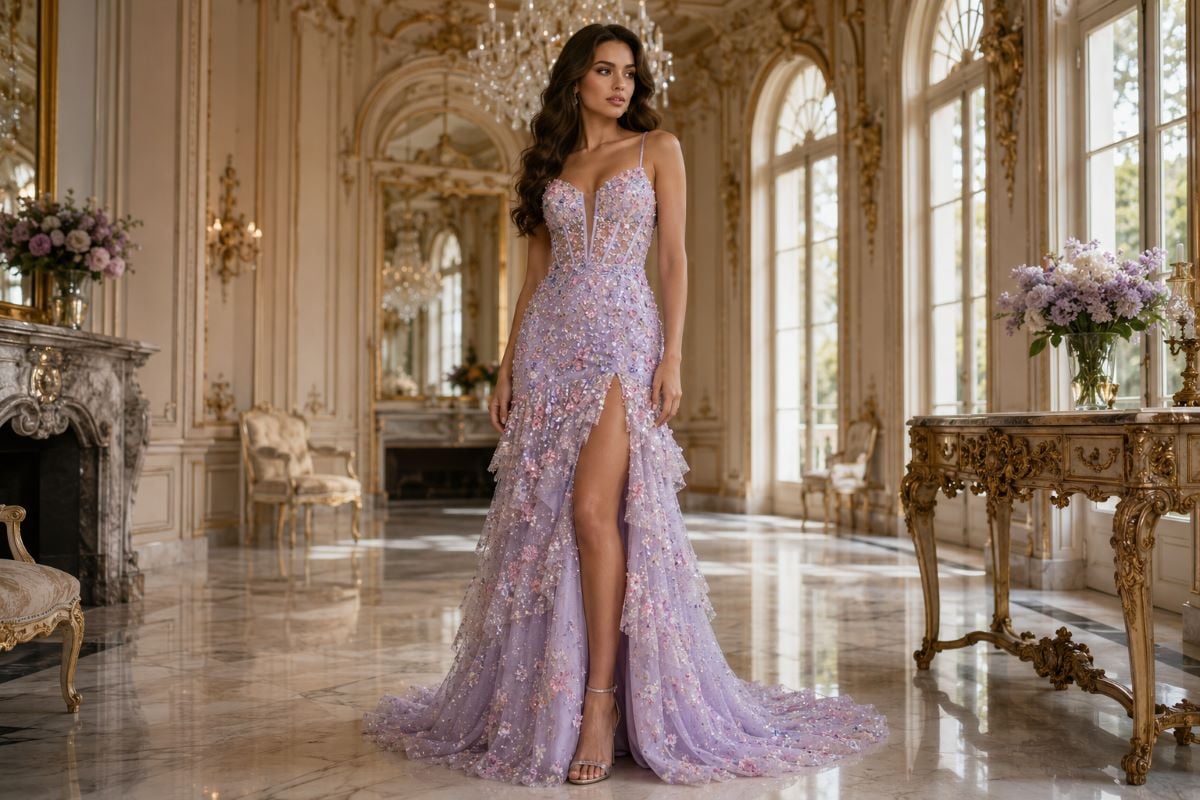
The perfect hem length depends entirely on the style of the gown and the strict formality of the event, but as a general rule of thumb for standard floor-length evening dresses, the front hem should hover approximately 1/4 to 1/2 inch off the floor when you are standing naturally in your chosen event shoes. The hem should never buckle or fold onto the floor in the front, which causes a dangerous tripping hazard and completely ruins the clean drape of the fabric. Conversely, it should not expose the entire toe of your shoe, which looks unfinished. If the gown features a sweeping train, the front should still maintain this clean, slight float, transitioning smoothly and continuously into the extended back length.
I am between sizes. Should I order a size up or a size down?
This is one of the most crucial, unbreakable rules of formal wear shopping: always, without exception, order the larger size. It is a standard, expected procedure in the formal wear industry for a skilled tailor to take a dress in at the seams and sculpt it down perfectly to your exact measurements. However, “letting a dress out” to make it larger is often incredibly difficult, and sometimes completely impossible, as designer gowns do not always feature excess fabric (known as seam allowance) hidden inside the seams. Forcing yourself into a gown that is too small leads to severe formal dress fit issues, permanently stretching the delicate fabric, distorting the designer’s intended silhouette, and causing immense physical discomfort that will ruin your evening.
How do I balance modesty with a modern, stylish look?
Choosing a modest gown absolutely does not mean sacrificing high fashion or settling for a frumpy, matronly aesthetic. The modern key to modesty is focusing entirely on luxurious, high-quality fabrics, impeccable precision tailoring, and subtle architectural details rather than relying on skin exposure for impact. Choosing the right fabric for formal wear is incredibly vital here; a fully covered, long-sleeve gown crafted in a rich, heavy stretch crepe or a sophisticated, structured silk mikado looks incredibly modern, powerful, and chic. Look for high jewel necklines paired with dramatic, puff or bishop sleeves, or elegant, asymmetrical draping at the waistline to add visual interest. You can also successfully play with illusion fabrics (like sheer lace over a nude lining) that provide full physical coverage while maintaining a lightweight, contemporary feel.
Should my evening bag match my shoes exactly?
While perfectly matching your dyed-to-match shoes and handbag exactly was once a very strict, unbreakable rule of traditional formal etiquette, modern evening dress styling rules are far more relaxed, flexible, and encourage creative coordination over rigid, mathematical matching. Instead of a direct, identical match, aim for harmonious, complementary textures and color palettes that elevate the overall look. For instance, if you are wearing metallic silver strappy shoes, a clutch in a cool-toned, dark charcoal velvet or a small minaudière bag adorned with clear crystal detailing works beautifully together without looking overly contrived. The primary goal is to ensure the accessories speak to each other visually and elevate the gown, rather than looking like a stiff, pre-packaged set.
Is it appropriate to wear a printed evening dress to a formal gala?
Yes, absolutely, but the specific nature of the print and the quality of the fabric entirely determine its appropriateness for a highly formal setting. Large, casual, brightly colored floral prints printed on basic cotton or simple daytime chiffon often lean too far into casual daytime or vacation resort wear. However, for a formal evening gala, you can confidently wear prints if they are executed on undeniably luxurious fabrics (like rich silk, heavy faille, or structured brocade) and feature sophisticated, artistic, or abstract motifs. Moody, watercolor-inspired dark florals, rich metallic jacquard weaving, or dramatic ombré color transitions can be breathtakingly elegant. These provide a unique, fashion-forward alternative to standard solid colors, provided that the overall silhouette and cut of the gown remains decidedly formal, structured, and floor-length.
Your presence at a formal event should be a masterclass in elegance, sophistication, and unshakeable self-assurance. Now that you are fully armed with the expert knowledge to navigate the shopping landscape and avoid these common missteps, you are ready to find a garment that truly reflects your inner brilliance. We invite you to explore the exquisite craftsmanship, impeccable tailoring, and unparalleled design of our latest collections of formal dresses to discover the spectacular gown you were always meant to wear.