
The rehearsal dinner is the one wedding-weekend outfit that gets decided last and worried about least, which is odd given that it is the evening where both families meet properly, where the toasts happen, and where a good number of photographs are taken. For the mother of the bride or groom the decision is not simply what to wear to a nice dinner. It is what to wear the night before the outfit that has probably taken months to choose, in a room that contains the other mother, without either of you having discussed it. This guide covers how formal a rehearsal dinner actually is, how the two mothers should coordinate, the relationship between this outfit and the wedding-day one, and how to read a specific invitation.
How formal is a rehearsal dinner
There is no single answer, and this is the source of most of the uncertainty. A rehearsal dinner can be a private room at a Michelin-starred restaurant or a barbecue in someone’s garden, and those two evenings call for completely different outfits.
As a rough guide, the evening usually lands a rung below the wedding on the formality ladder. What matters more for you is the second adjustment below, since your position at the event is different from a guest’s.
As a mother of the couple, there is one adjustment to that principle. You are a host rather than a guest at this event, and hosts sit at the upper edge of whatever the code is rather than the lower one. Where a guest might read semi-formal and choose smart separates, you would read the same invitation and choose a cocktail dress. The guidance in the piece on rehearsal dinner dress codes covers the guest version, and your version sits a notch above it.
Coordinating with the other mother
This is the part that causes real anxiety and the part almost every guide mentions in a single sentence before moving on. It deserves more than that, because the rehearsal dinner is often the first time both families are together and both mothers are photographed side by side.
Who reaches out, and when
There is a traditional order and it still works. The mother of the bride generally chooses first and the mother of the groom coordinates with that choice. In practice, a message from either of you a few weeks ahead saying what color and rough formality you are planning solves the whole problem in two minutes. The awkwardness people imagine around this conversation is almost entirely imagined; in most cases the other mother is relieved someone raised it.
What coordinating actually means
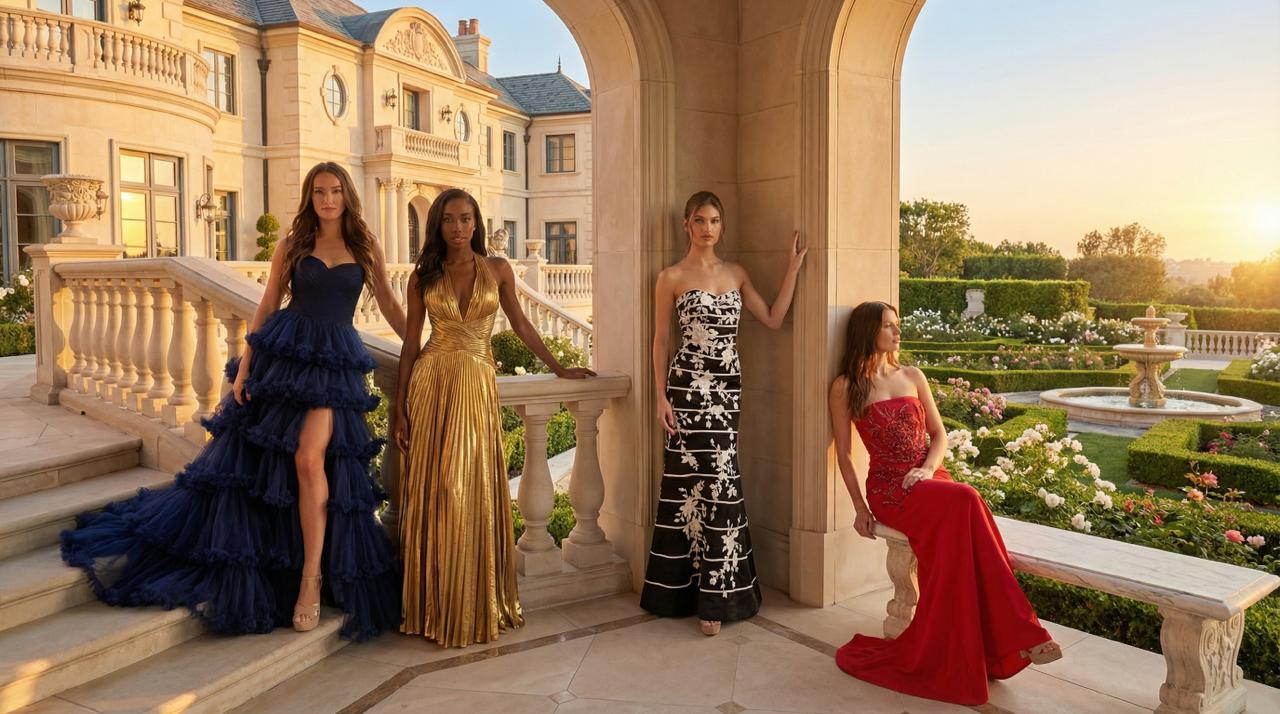
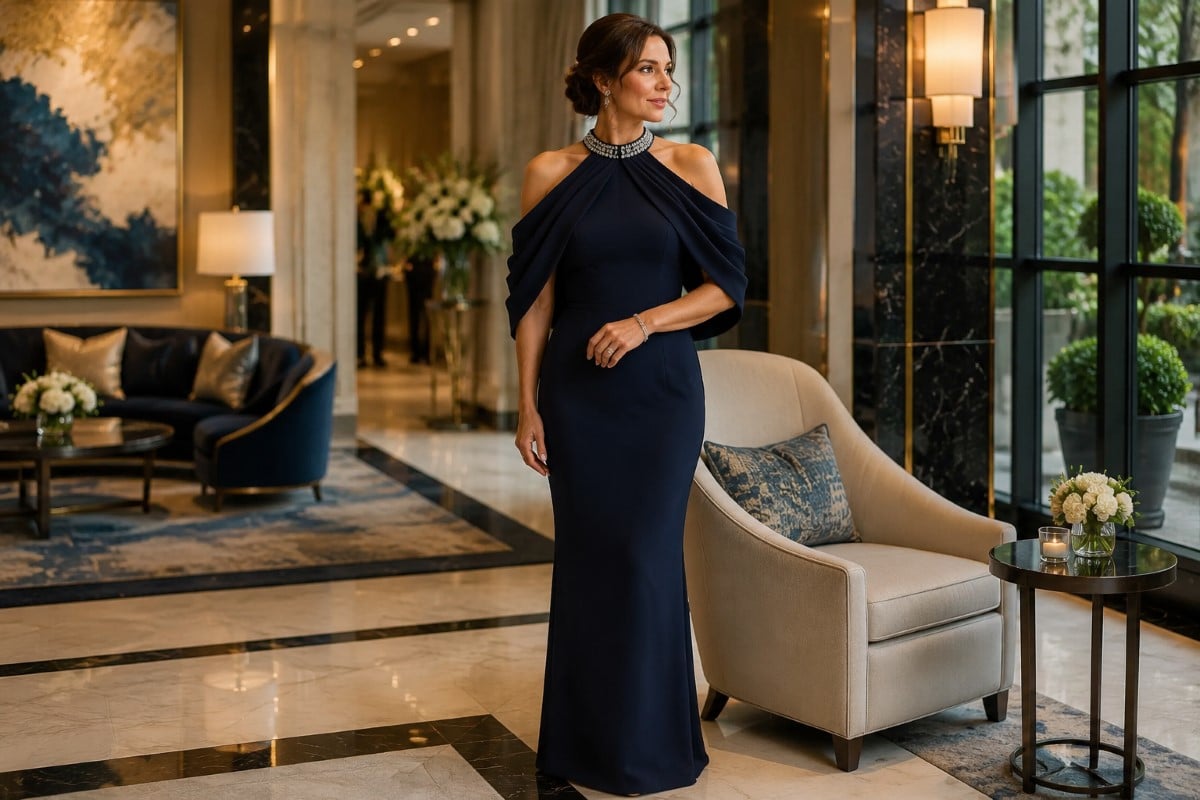
It means not clashing and not matching. Two mothers in the same shade of navy in a family photograph looks like a uniform, and two mothers in colors that fight each other looks accidental. Sitting in the same general register, one in a deep jewel tone and the other in a complementary neutral, reads as considered. It also means being at a similar level of formality, since one mother in a floor-length gown beside another in tailored trousers is the mismatch people actually notice. The mother of the groom gowns collection is a useful shared reference point when the two of you are comparing notes.
How this outfit relates to your wedding-day dress
The rehearsal dinner outfit does not exist on its own. It is the first of two or three looks across a weekend where the same people will see you and the same cameras will be pointed at you, and thinking of it as a set rather than a single decision makes it easier.
The wedding-day dress should remain the most formal thing you wear that weekend. That is the one rule here, and it means the rehearsal dinner outfit deliberately sits below it: shorter, simpler, less embellished, or all three. A mother who wears a beaded floor-length gown to the rehearsal dinner has left herself nowhere to go the following day.
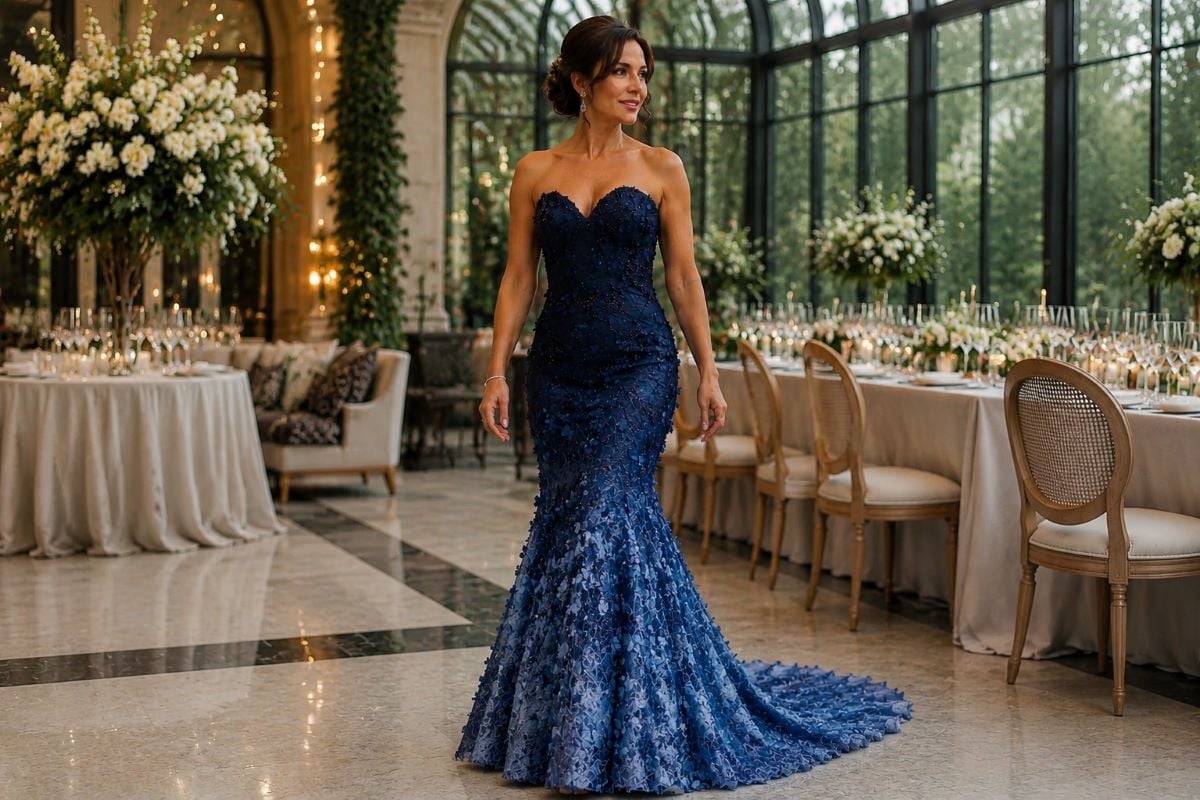
It also helps to make the two visibly different rather than variations on a theme. If the wedding dress is a long beaded gown in navy, a knee-length crepe dress in a different color reads as a separate look; the same silhouette in a slightly different blue reads as a repeat. Where a weekend includes a welcome dinner, a rehearsal dinner, the wedding, and a farewell brunch, planning them together saves buying something twice. The guide to what the mother of the bride wears to each wedding event covers the full sequence.
Color for the rehearsal dinner
Only two shades need checking before you decide, and everything else is genuinely your own choice.
The two colors to check first
The color conventions are looser here than on the wedding day, with two exceptions worth knowing.
White and ivory are the first. Many brides now wear white to their own rehearsal dinner precisely because it is one of the few chances to do so outside the wedding dress, which makes it the bride’s color for this evening as well. A quick check is worth it, since some brides have no intention of wearing white that night and will say so. If she is wearing it, choose something else. The piece on white rehearsal dinner dresses is worth a look before you ask her, so you know what she may be planning.
The second is the bridesmaid shade. As a mother you are already visually grouped with the wedding party, so matching their color exactly reads as a uniform rather than as coordination.
Where the field opens up
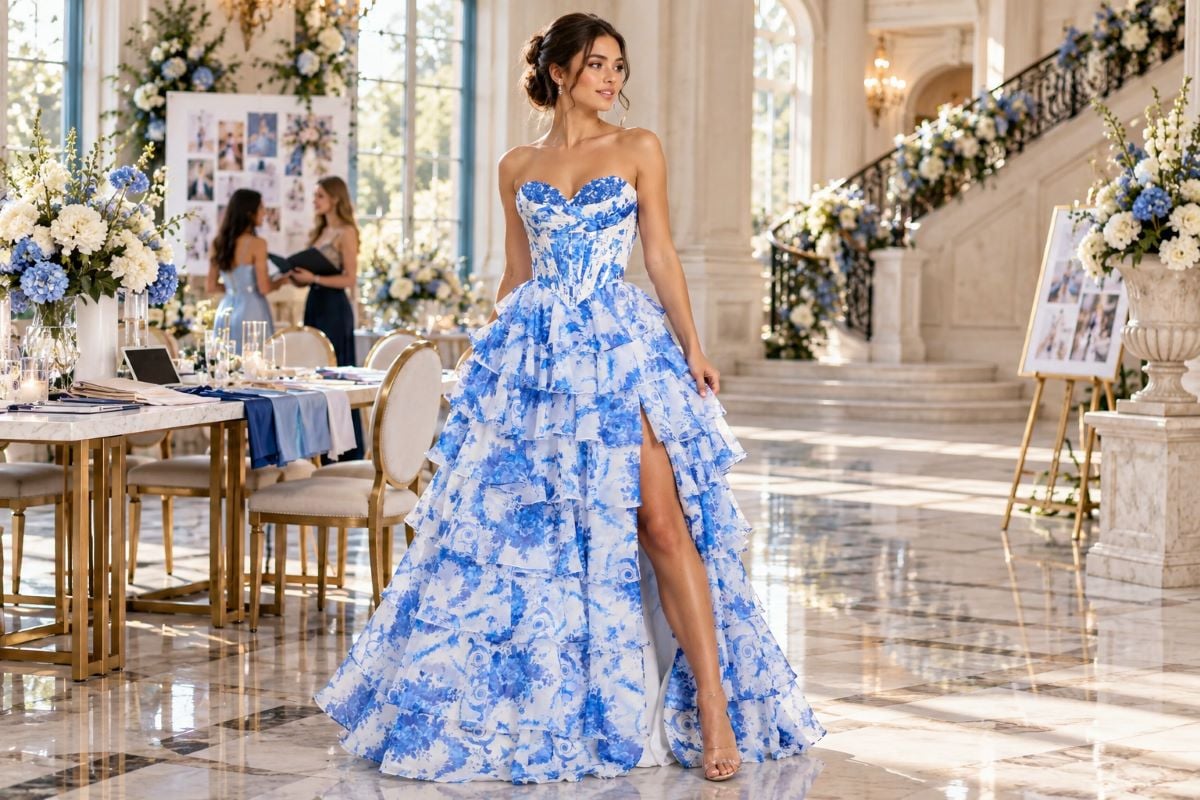
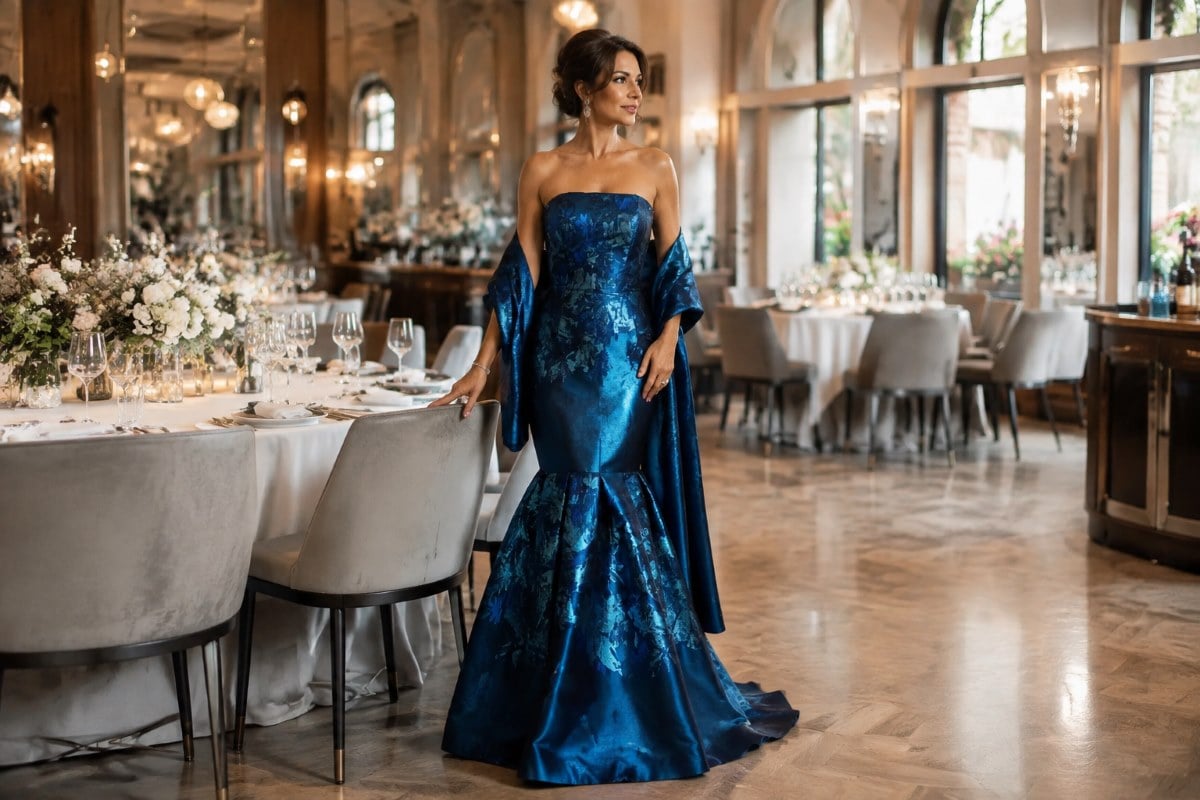
Beyond those, the field is open and rather wider than on the wedding day. Black is entirely acceptable at an evening rehearsal dinner and reads as elegant rather than somber. Jewel tones photograph beautifully in restaurant lighting. A print is more acceptable here than at the wedding, particularly at a garden or daytime rehearsal dinner. The styles among A-line mother of the bride dresses show a shape that suits a seated evening well.
Silhouettes and lengths that suit the evening
A rehearsal dinner is usually a seated dinner, often in a restaurant or a private room, and that setting rewards different choices than a wedding reception does.
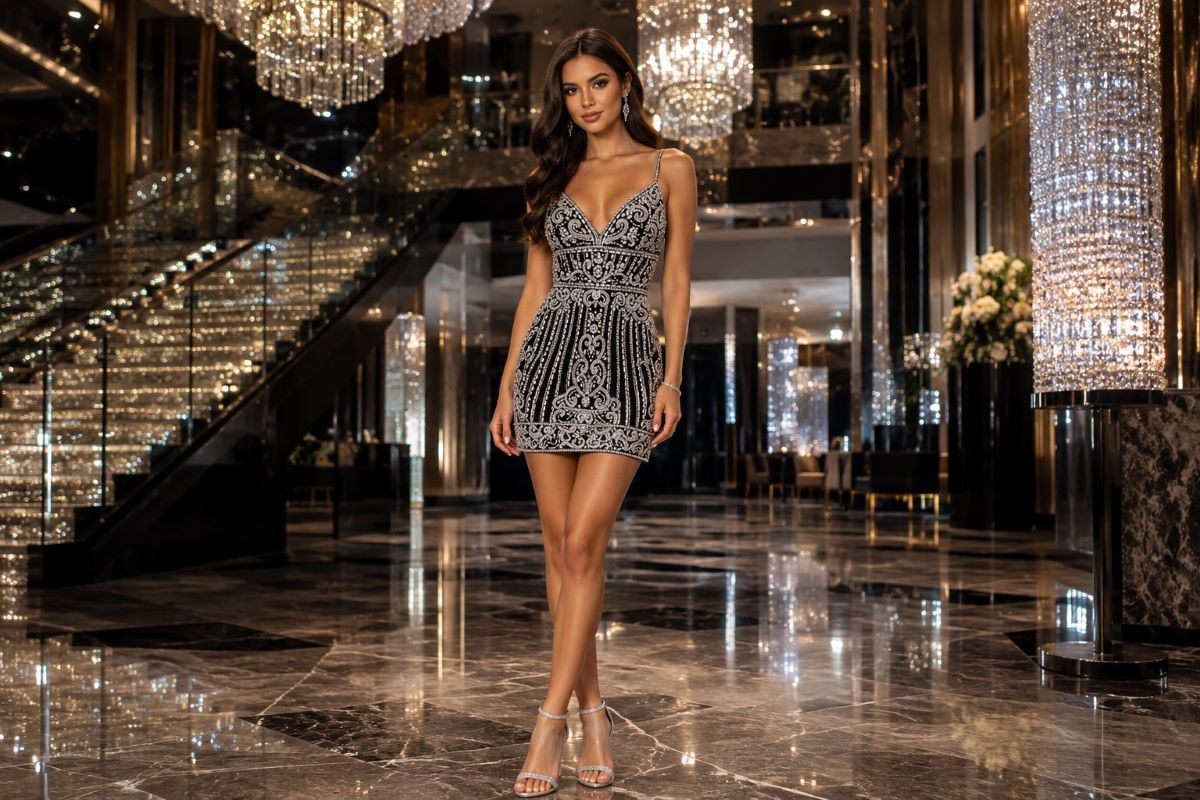
Knee-length or midi suits the role best, largely because you will be moving between tables rather than seated for the whole evening, and a shorter hem makes that easier than a gown does. The range of short mother of the bride dresses covers this length for the role.
Floor length works when the rehearsal dinner is genuinely formal, which is more common at a black tie wedding weekend or a destination celebration. If you go long here, keep the wedding-day gown clearly more elaborate.
Separates and a jumpsuit are both entirely appropriate and often more comfortable. Tailored trousers with a silk top, or a well-cut jumpsuit, read as modern and hold up through a long evening. The styles among formal jumpsuits show the option at an occasion level. Whatever the silhouette, a sleeve or a layer is worth having, since restaurant air conditioning and outdoor terraces both catch people out.
Reading the specific invitation
Four pieces of information tell you almost everything, and all four are available in advance.
The venue is the strongest signal. A private dining room at a hotel or a country club sits at the formal end; a family home, a brewery, or a casual restaurant sits at the relaxed end. The time matters next, since an evening dinner is dressier than a lunch or an afternoon gathering.
Size changes the register too, since an intimate family dinner asks less of an outfit than a large pre-wedding party where most of the guest list is already in town.
Finally, ask the couple. This sounds obvious and is skipped constantly. They have a picture in their head of how the evening looks, and a single question tells you whether that picture involves gowns or garden furniture. If a theme is involved, which is increasingly common, they will tell you that too.
Comfort across a long evening
As a host, your rehearsal dinner is not a sitting-down evening in practice. You will be greeting arrivals, moving between tables, managing details, and possibly giving or receiving a toast, which changes what works.
Shoes matter more than at the wedding, oddly, because there is usually less sitting and more standing about at a rehearsal dinner than during a wedding reception with a formal meal. A block heel or a low, stable heel handles an evening of moving between groups far better than a stiletto.
Fabric matters for the same reason. A fabric that creases badly will show it after two hours at a table, so crepe, jersey, and textured fabrics outperform stiff or very smooth ones. A dress you can eat a full meal in comfortably is not a low bar; a bodice that fits perfectly standing and pinches seated will define your evening.
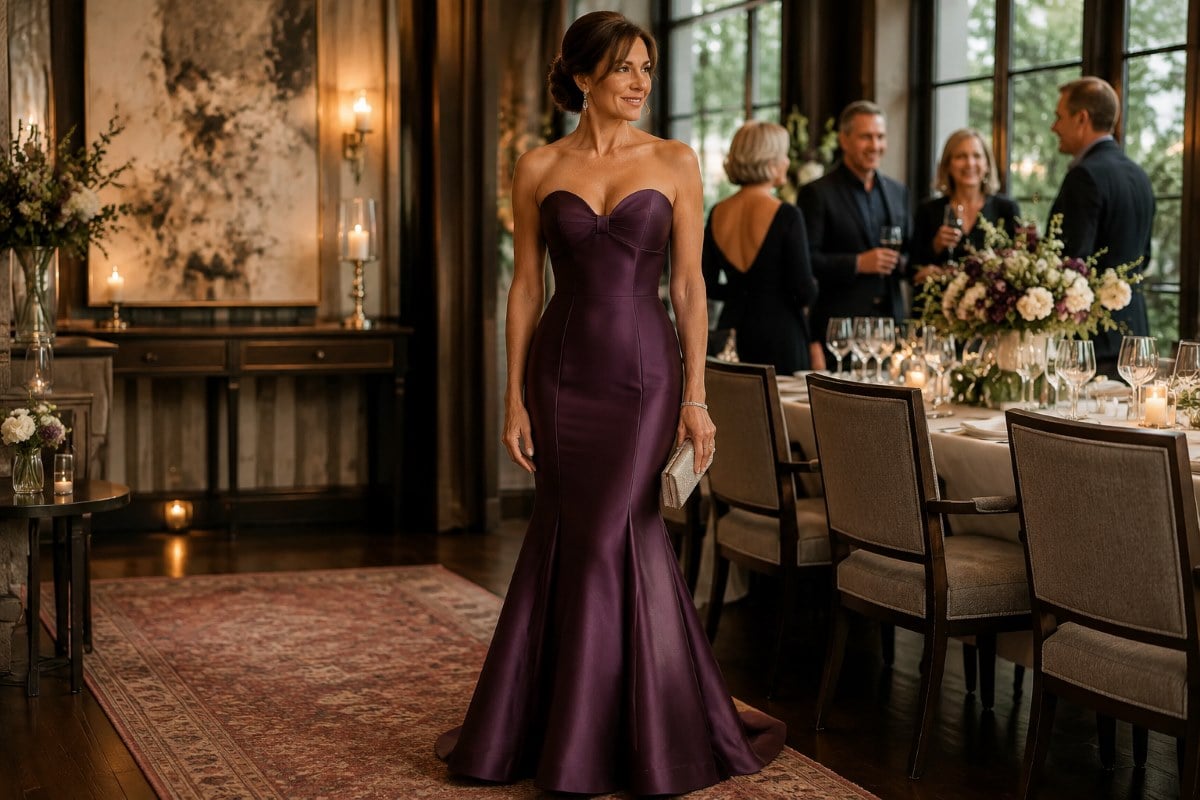
And bring a layer. Restaurants run cold, terraces run cool once the sun goes, and a wrap or jacket you can remove is more useful than committing to sleeves. The range of rehearsal dinner gowns shows the register the evening calls for.
Putting the decision together
Work down one step from the wedding formality, then move back up a notch because you are hosting. Send the other mother a message about color and formality. Keep this outfit clearly less formal than your wedding-day dress and visibly different from it. Avoid white if the bride is wearing it and avoid an exact bridesmaid match. Then choose something you can eat, stand, and be photographed in for four hours.
The evening itself is the relaxed one of the weekend, and the outfit should let you feel that way. A dress that looks lovely and takes no management is worth more here than one that photographs slightly better and needs attention all night. To find a dress that suits the evening before, explore the current styles through an authorized Jovani retailer.
The Night Before, Answered
How formal should the mother of the bride be at a rehearsal dinner?
One step below the wedding, then a notch back up because you are hosting rather than attending. If the wedding is black tie, the rehearsal dinner is likely cocktail or formal. If the wedding is cocktail, expect semi-formal. Where a guest reading a semi-formal invitation might choose smart separates, a mother of the couple would choose a cocktail dress. Hosts sit at the upper edge of whatever code applies.
Should the two mothers coordinate their rehearsal dinner outfits?
Yes, and a short message a few weeks ahead settles it. Traditionally the mother of the bride chooses first and the mother of the groom coordinates. Coordinating means not clashing and not matching: two mothers in the same shade look like a uniform, while two in colors that fight look accidental. Being at a similar level of formality matters just as much, since a gown beside tailored trousers is the mismatch people actually notice.
Can the mother of the bride wear white to the rehearsal dinner?
Ask her before you buy. It has become common for brides to claim white for this evening as well, treating it as a second occasion to wear it, in which case the shade is hers rather than yours. Plenty of brides have no such intention and will tell you straight away. The bridesmaid shade needs the same check, since as a mother you are already grouped with the wedding party visually.
Should the rehearsal dinner dress be less formal than the wedding dress?
Yes, and this is the one firm rule. Your wedding-day dress should remain the most formal thing you wear all weekend, so the rehearsal dinner outfit sits deliberately below it: shorter, simpler, less embellished, or all three. A beaded floor-length gown the night before leaves you nowhere to go the following day. It also helps to make the two visibly different rather than variations on the same silhouette and color.
Can the mother of the bride wear a jumpsuit or separates?
Yes, both are entirely appropriate and often more comfortable for an evening spent hosting. Tailored trousers with a silk top, or a well-cut jumpsuit in an occasion fabric such as crepe or satin, read as modern and hold up through a long dinner. Whatever the silhouette, a wrap or jacket is worth having, since restaurant air conditioning and outdoor terraces both tend to catch people out after dark.