
Rehearsal dinner invitations rarely include a dress code, which is why the question comes up at all. What they do include is a location, and that single line tells you almost everything you need. A private room at a country club and a backyard barbecue are both rehearsal dinners, and the outfit that works at one is visibly wrong at the other. This guide works through the venues these dinners actually happen in, what each one calls for, how the wedding’s own formality shifts the answer, and the practical details that make a difference across an evening of standing, eating, and being photographed.
Why the venue tells you more than anything else
A rehearsal dinner sits at whatever level of formality the hosts have chosen, and unlike a wedding there is no established convention setting it. The venue is the clearest signal of that choice, because the hosts picked it deliberately and it reflects the evening they have in mind.
There is one general principle worth holding onto alongside it: a rehearsal dinner usually sits one step below the wedding itself. A black tie wedding tends to produce a cocktail-level rehearsal dinner. A cocktail wedding produces a semi-formal one. A relaxed wedding produces a genuinely casual evening. Working down one rung from the wedding, then adjusting for the venue, gets you close almost every time.
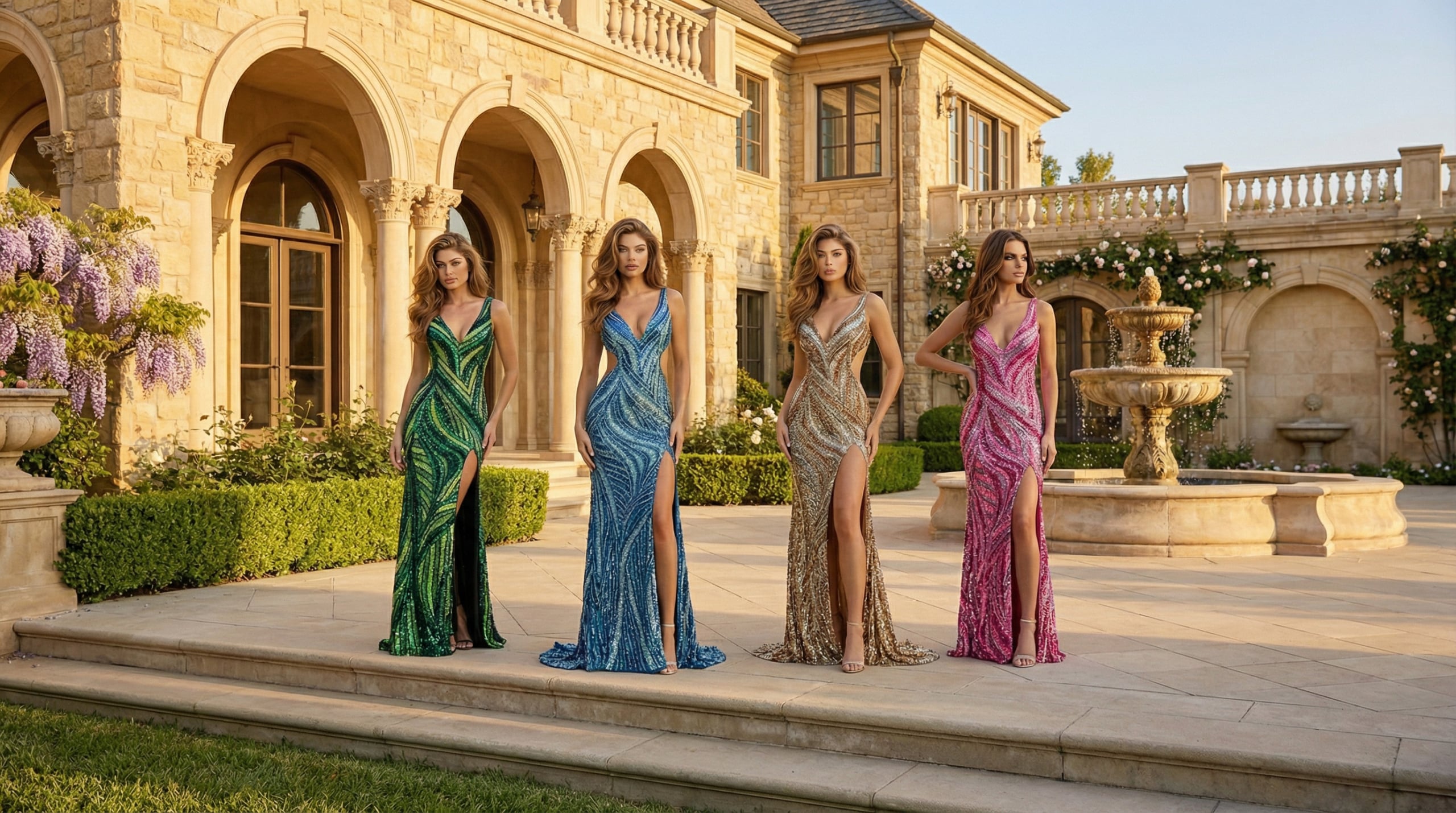
The time of day matters too, since an evening dinner is dressier than a lunch, and the guest count matters more than people expect. A dinner for twelve immediate family members is a different event from one for eighty guests who have travelled, and the larger version behaves more like a second reception. The range of rehearsal dinner gowns covers the spread these evenings run across.
Formal venues: country clubs, hotels, and private dining rooms
These venues are the ones most often underestimated, since the room itself sets a standard the invitation never mentions.
What to wear at this level
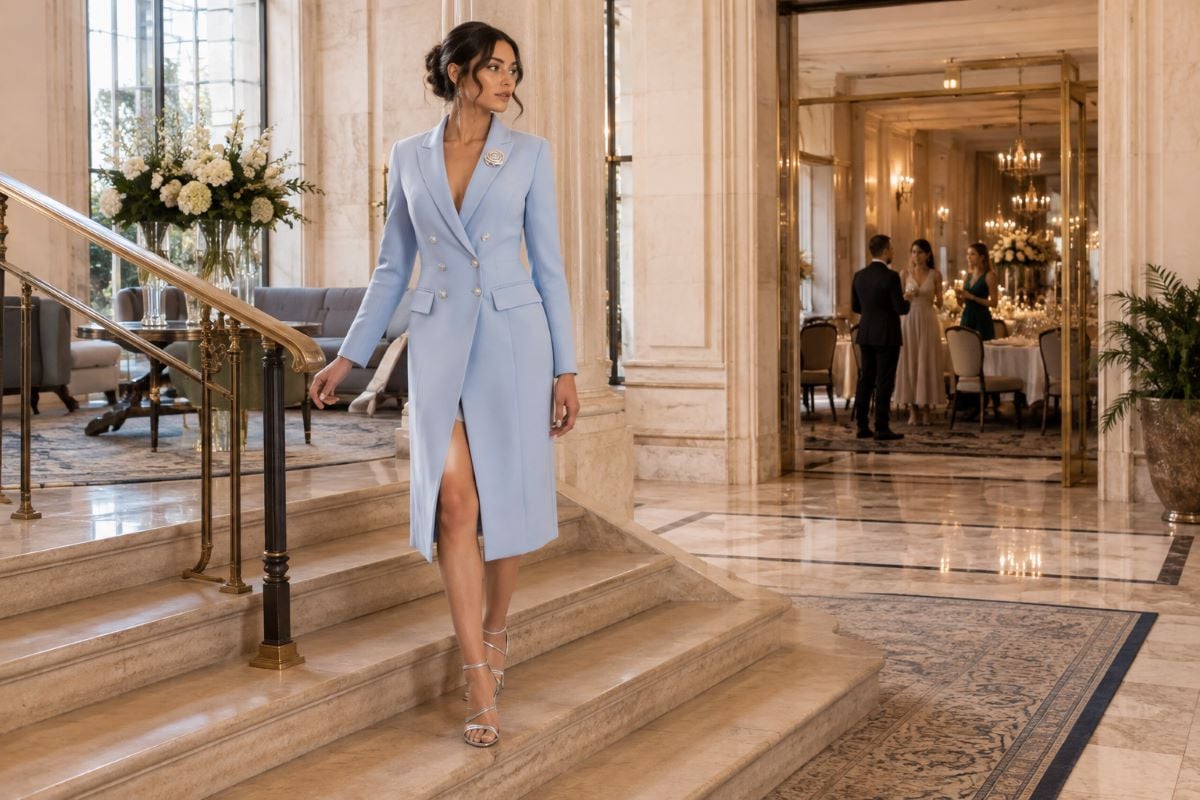
These are the dressiest rehearsal dinners and the ones most likely to be mistaken for something more casual. A private dining room at a hotel, a country club, or an upscale restaurant signals that the hosts want a polished evening, and the room itself will be formal enough that a casual outfit stands out.
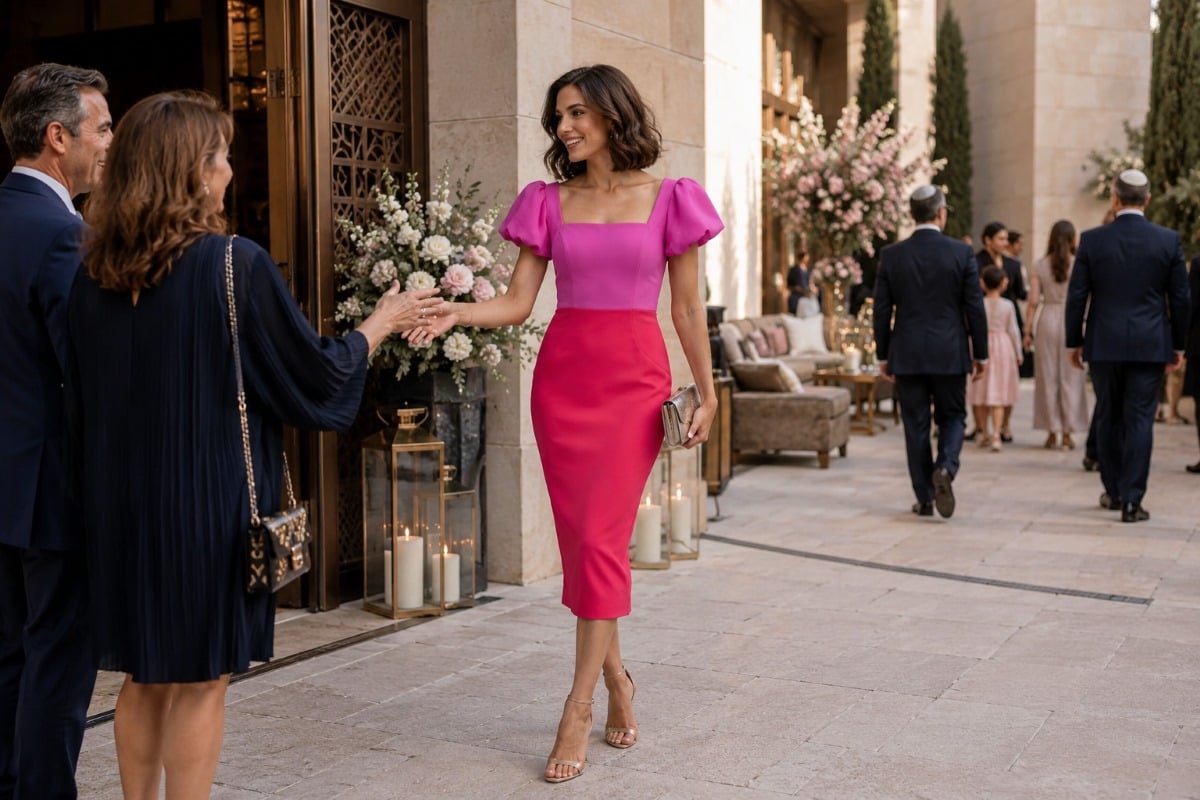
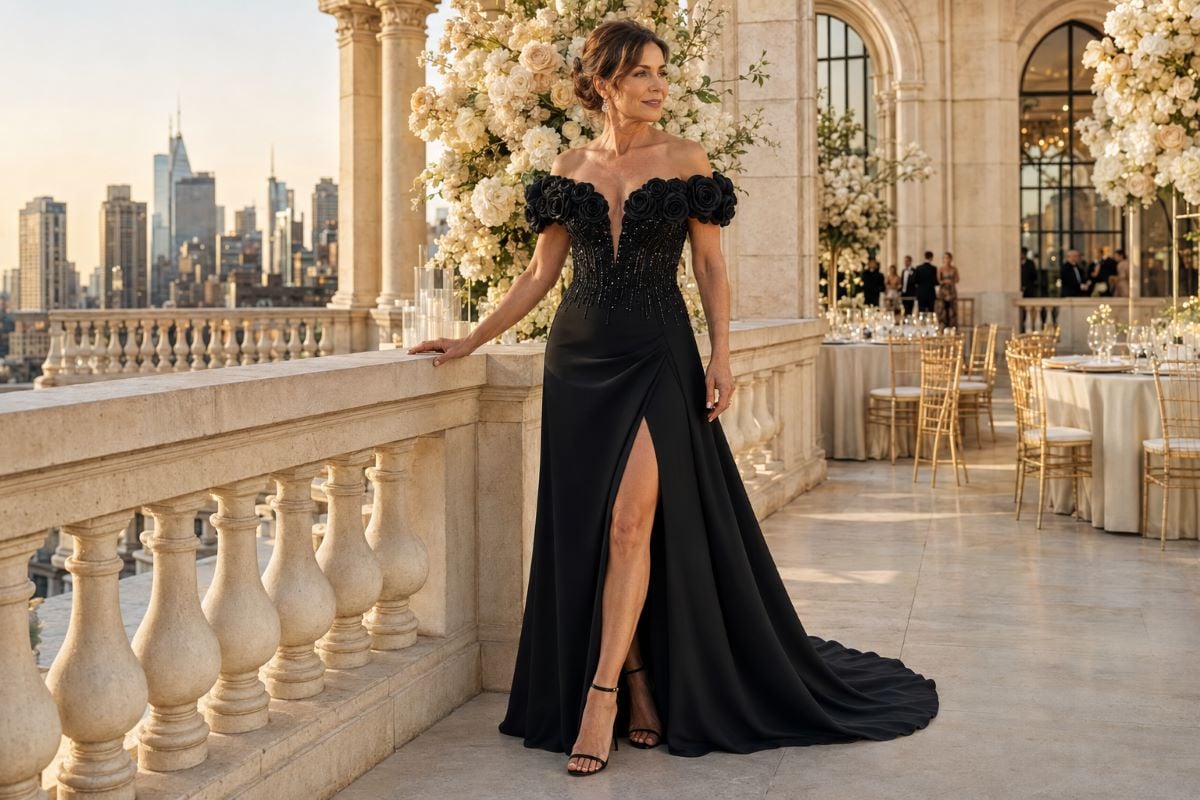
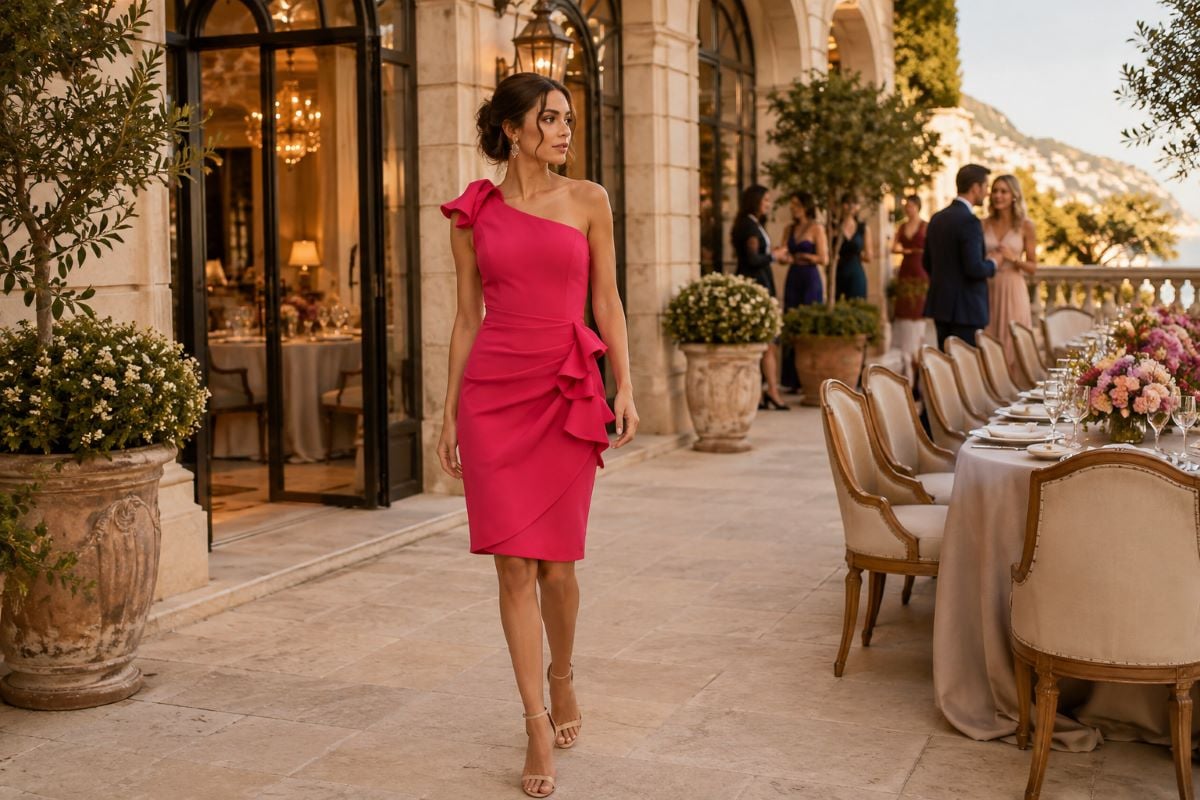
A cocktail dress is the reliable answer here. Knee-length or midi, in a quality fabric such as crepe, satin, or lace, reads exactly right. Tailored separates or a well-cut jumpsuit work equally well and are often more comfortable through a seated dinner. Floor length is acceptable at the top end of this range, particularly if the wedding itself is black tie, though it is worth staying clearly below whatever you are wearing to the wedding.
The arrival problem
The detail that catches people out at these venues is footwear on the way in, since country clubs and hotels often involve a walk across gravel or a lawn from the parking area. A heel you can manage on soft ground is worth more than an extra inch of height. The range of cocktail and party dresses covers the register these venues call for.
Restaurants and casual dining rooms
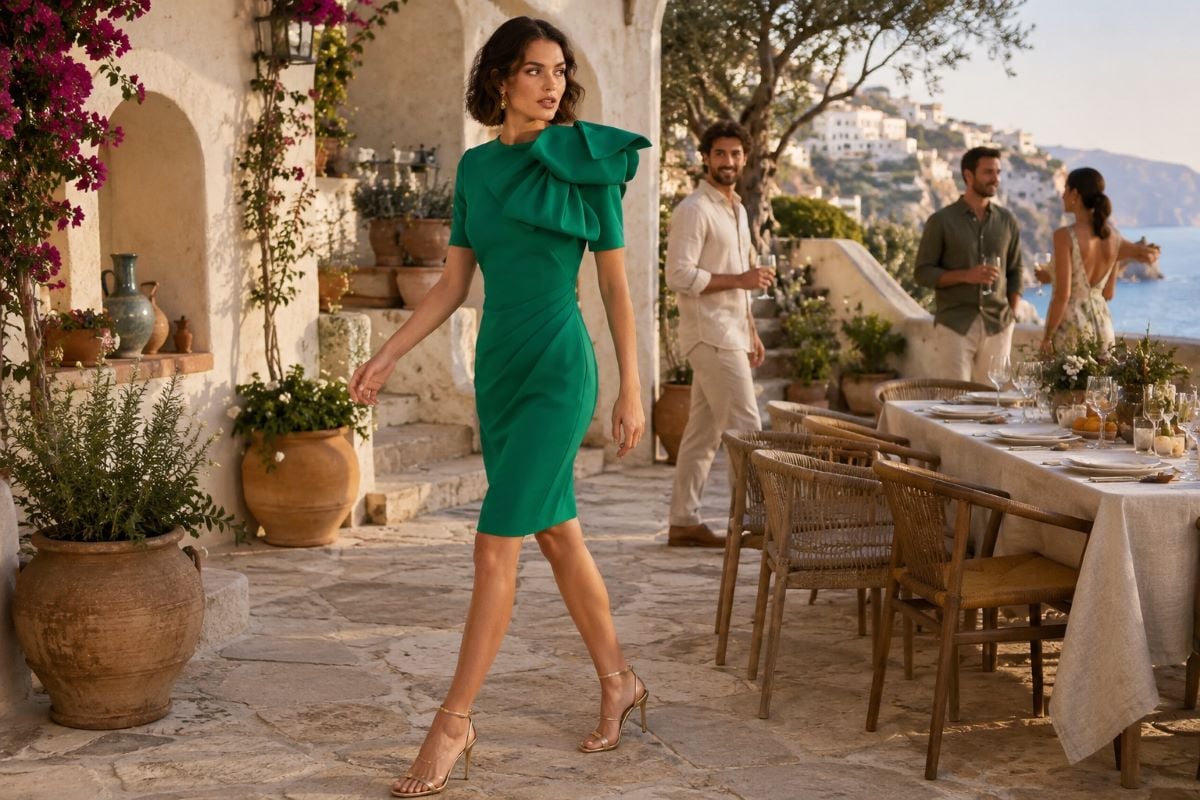
This is the most common rehearsal dinner venue and the most forgiving. A restaurant dinner, whether in a private room or at a long table in the main space, sits at the semi-formal level and takes a wide range of outfits.
A midi dress, a smart wrap dress, tailored trousers with a good top, or a jumpsuit all read correctly. The fabric does more work than the silhouette here: a simple shape in crepe or silk reads as considered, while the same shape in jersey reads as everyday. This is where a lot of rehearsal dinner outfits go slightly wrong, since the cut is right and the fabric is not.
One thing specific to restaurants: you will be seated for most of the evening at a table where the top half of you is what people see and photograph. A neckline and shoulders that look good seated matter more than a dramatic hemline. The styles among midi dresses cover the length that suits a seated evening best.
Outdoor venues: backyards, gardens, and terraces
An outdoor rehearsal dinner introduces variables the indoor ones do not, and they are practical rather than stylistic.
Ground, hems, and shoes
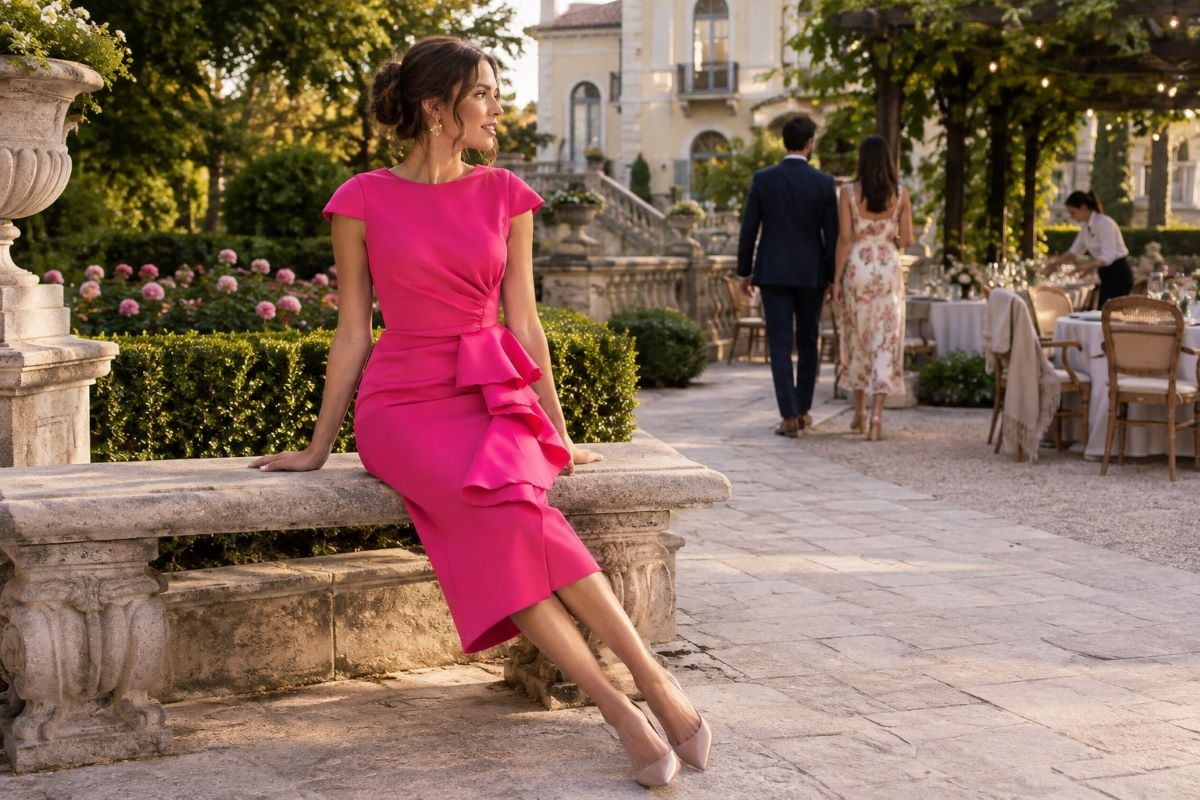
Grass, decking, gravel, and uneven patio stones all punish a thin heel. A block heel, a wedge, or a polished flat is the sensible choice, and it is worth checking with the hosts whether the evening moves onto a lawn at any point. A floor-length hem also drags on grass and picks up damp once the dew starts, which is an argument for midi or knee length at any outdoor dinner regardless of formality.
Temperature after dark
Outdoor evenings drop considerably in temperature once the sun goes, and a rehearsal dinner typically runs from daylight into darkness. A wrap, a jacket, or a dress with sleeves is worth planning rather than hoping for a patio heater. Fabric matters here too, since a light chiffon that felt right at seven feels thin by ten, while crepe and heavier silks hold up. The lighter styles among wedding guest gowns show the register that suits a garden or terrace evening.
Home and backyard dinners
A rehearsal dinner at a family home is the most casual version and the one where overdressing is a genuine risk. This is often an intimate evening for close family, sometimes a barbecue, and a formal cocktail dress can make everyone else feel underdressed at their own gathering.
Smart casual is the register: a nice day dress, a skirt and blouse, or well-cut trousers with a good top. The word that matters is polished rather than dressy. You want to look like you made an effort for an occasion, not like you have arrived from a different party.
The exception is when the couple has planned something more formal at a home, which does happen with a marquee or a catered garden dinner. This is the one venue where asking is genuinely worth it, because home covers everything from paper plates to a hired chef. The styles among contemporary dresses show the relaxed end of occasion dressing that suits a home gathering.
Destination and themed dinners
Destination weddings often build the rehearsal dinner around the location, and themes have become common enough that they deserve their own consideration.
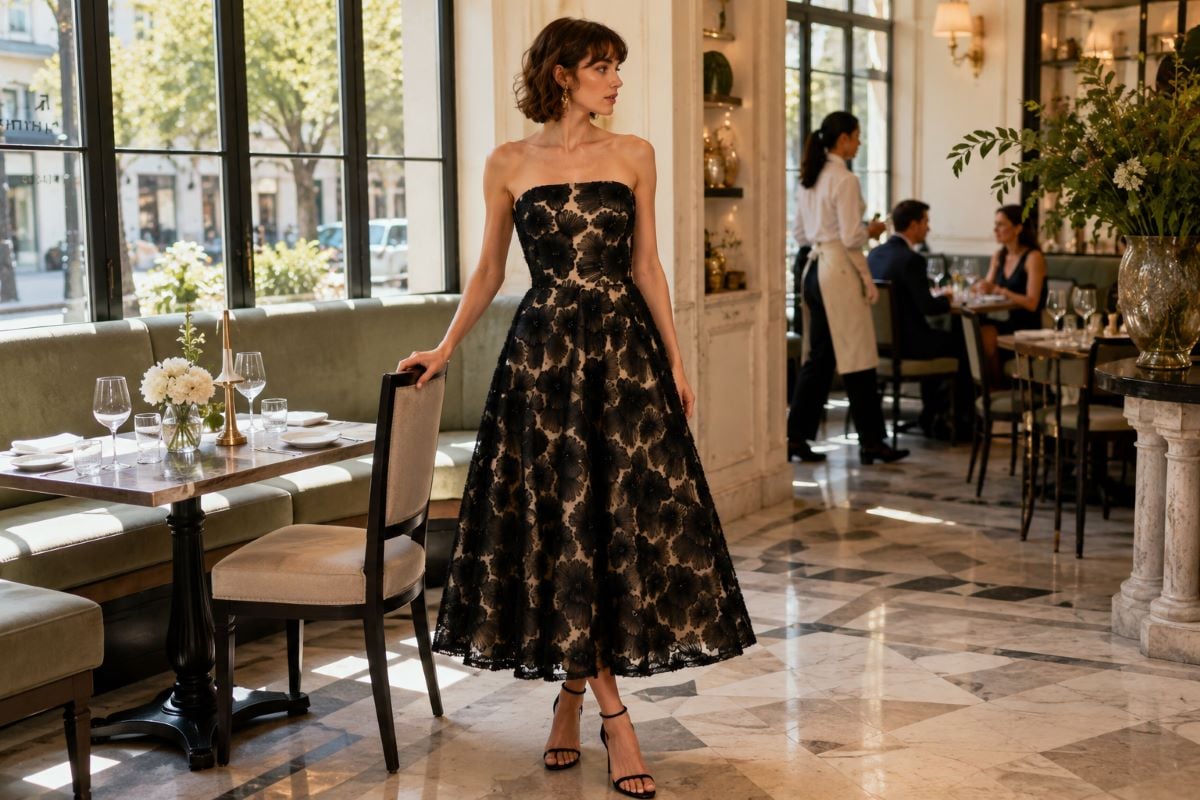
A beach or seaside dinner calls for lighter fabrics, a shorter or midi hem, and shoes that handle sand or boardwalk. A vineyard or rustic barn dinner sits at the smart casual to semi-formal level with a similar approach to an outdoor venue. A dinner with a stated theme, whether that is a color, a decade, or a cultural tradition, should be taken seriously, since the couple chose it and guests who ignore it stand out in the photographs.
Where a theme involves cultural dress, ask rather than assume. Couples are almost always glad to be asked, and a two-minute conversation is better than a guess. The breakdown of wedding guest dress codes covers the general levels these events map onto.
Color at a rehearsal dinner
The color conventions are looser here than at the wedding, with two exceptions.
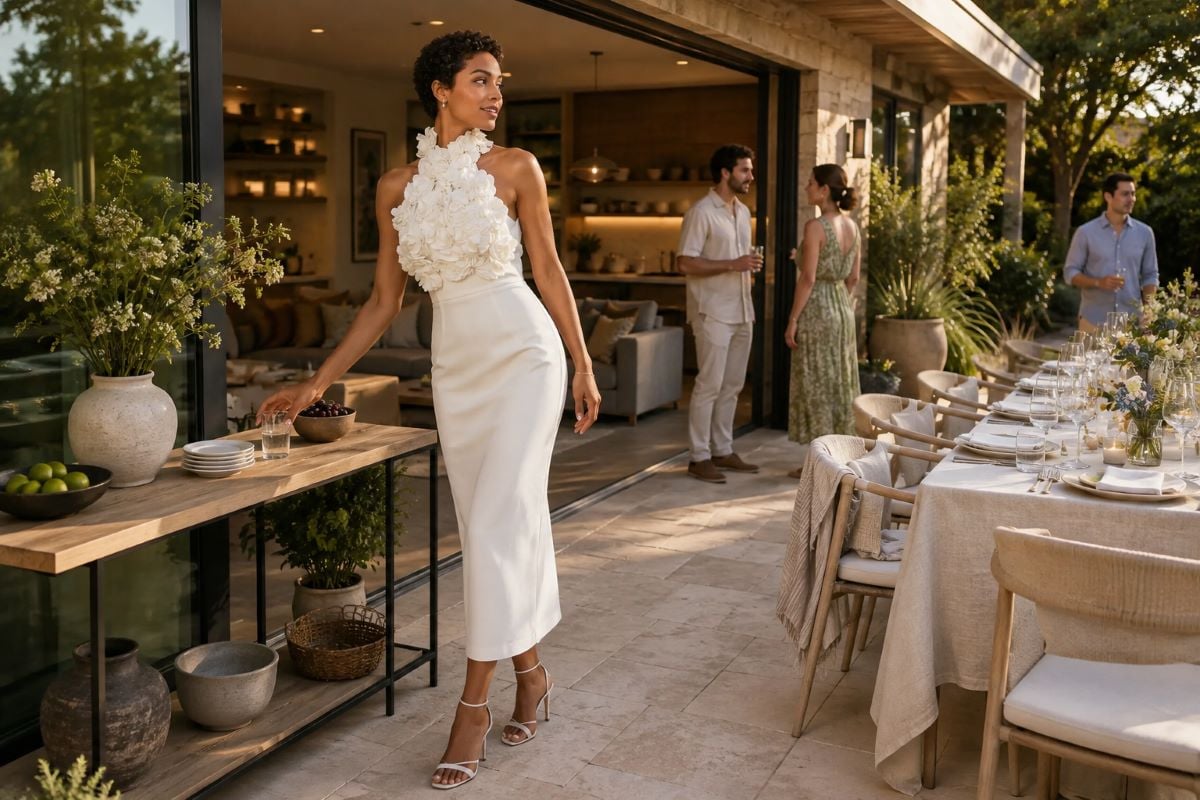
White and ivory are the first, and this catches more people here than at the wedding itself. Brides increasingly claim white for this evening as well, treating it as a second chance to wear it, which leaves a guest in the same shade looking like a rival rather than an attendee. The piece on white rehearsal dinner dresses covers what the bride is likely to be planning, which is useful to know before you choose.
The second is the bridal party palette. An exact match with the bridesmaid shade puts you in the lineup visually, which is worth avoiding, though sitting near the palette usually looks deliberate.
Beyond those, the field is wide open, and wider than at the wedding itself. Black is entirely acceptable at an evening rehearsal dinner. Prints are more welcome here than at the ceremony, particularly at a garden or daytime dinner. Jewel tones photograph well in restaurant lighting, which tends to be warmer and dimmer than people expect.
Practical details across the evening
Two things separate an outfit that works from one that merely looks right in the mirror.
The first is that a rehearsal dinner involves more standing and mingling than a wedding reception with a formal seated meal. Arrivals, introductions between families, toasts, and moving between groups all happen on your feet. Shoes you can stand in for three hours matter more than they would at the wedding.
The second is that this is a long meal, often several courses, and a bodice that fits perfectly standing can pinch seated. Trying a dress on sitting down is a two-second test that saves an uncomfortable evening. Fabrics that crease badly are worth avoiding for the same reason, since a linen dress that looked crisp at seven looks slept-in by nine. The guidance on rehearsal dinner dress codes for guests covers what is expected of attendees more broadly.
Working out your answer
Take the wedding’s formality and step down one level. Then adjust for the venue: up a notch for a country club, hotel, or private dining room, level for a restaurant, down for a home or backyard. Add the practical constraints of an outdoor setting if one applies, since ground and temperature decide more than style does at a garden dinner.
Then check the two color rules, choose a fabric that will still look good after three hours, and test the fit seated. If you are still uncertain after all that, err very slightly dressier than the venue suggests, since being marginally overdressed at a rehearsal dinner reads as respectful in a way that being underdressed does not. To find a dress that suits the venue you are heading to, explore the current styles through an authorized Jovani retailer.
Dressing for the Night Before
How dressy is a rehearsal dinner?
It depends on the venue and the wedding, and there is no fixed convention. The reliable principle is that a rehearsal dinner sits one step below the wedding itself: a black tie wedding produces a cocktail-level dinner, a cocktail wedding produces a semi-formal one, and a relaxed wedding produces a casual evening. Then adjust for the venue, since a country club calls for more than a family backyard does.
What should you wear to a rehearsal dinner at a restaurant?
A midi dress, a smart wrap dress, tailored trousers with a good top, or a jumpsuit all work, since restaurants sit at the semi-formal level. Fabric matters more than silhouette here: a simple shape in crepe or silk reads as considered while the same shape in jersey reads as everyday. Because you will be seated most of the evening, a neckline that looks good sitting down matters more than the hemline.
Can you wear a long dress to a rehearsal dinner?
Yes at formal venues such as a hotel, country club, or private dining room, particularly when the wedding itself is black tie. It should stay clearly less formal than whatever you are wearing to the wedding. At an outdoor or home rehearsal dinner a floor-length hem is impractical, since it drags on grass and picks up damp after dark, so midi or knee length is the better choice regardless of formality.
What should you wear to an outdoor or backyard rehearsal dinner?
Something that handles ground and temperature. Grass, decking, and gravel all punish thin heels, so a block heel, wedge, or polished flat is sensible. Midi or knee length avoids a hem dragging on damp grass. And outdoor evenings drop considerably once the sun goes, so a wrap, jacket, or sleeves is worth planning rather than relying on patio heaters. A home dinner is usually smart casual rather than dressy.
Can guests wear white to a rehearsal dinner?
Better not to. Many brides now deliberately wear white to their own rehearsal dinner, since it is one of the few opportunities outside the wedding dress, which makes it her color for that evening too. A guest in white beside her reads as competing. The same caution applies to matching the bridesmaid color exactly. Beyond those two, the color field is open and wider than at the wedding itself.