
Royal blue has become one of the most requested colors for homecoming, and the reason is easy to see once you stand in a room full of dance photos. Black disappears against a dim gym, pastels wash out under colored lighting, and red competes with everything around it. Royal blue holds its intensity, photographs vividly, and reads as confident rather than attention-seeking. It is also a color that suits a remarkably wide range of complexions, which is unusual for a shade this saturated. This guide covers what separates royal blue from the other blues, who it suits, how it behaves under dance lighting, which fabrics and silhouettes make the most of it, and how to keep the whole look age-appropriate for a high school dance.
What royal blue actually is
Royal blue is a vivid, medium-to-deep blue with a slight purple lean, saturated enough to read as a strong color but not so dark that it approaches navy. The name comes from a historical association with British court dress, and the shade has kept a formal, slightly ceremonial quality ever since.
Placing it against its neighbors makes the distinction clear. Navy is considerably darker and reads as conservative and mature, closer in feel to black than to a bright blue. Cobalt is brighter and more electric, leaning slightly toward green rather than purple, and it reads as more modern and more aggressive. Sapphire is deeper and richer, with a jewel-tone quality. Royal blue sits between them: bold enough to make an impression, warm enough in tone to flatter, and formal enough to suit an occasion.
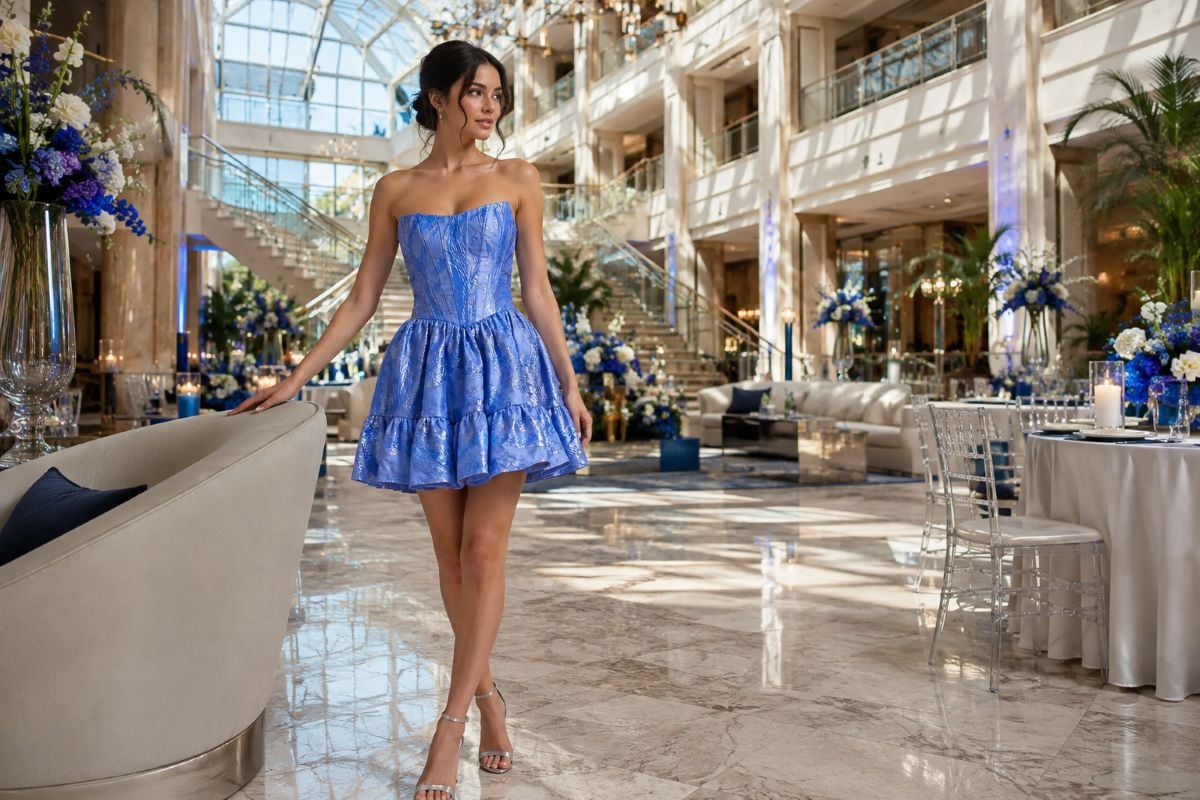
That in-between position is exactly why a royal blue homecoming dress works so well for a school dance. It is more celebratory than navy and less demanding than cobalt. The styles among royal blue homecoming dresses show the range the shade covers.
Why royal blue suits a homecoming dance specifically
Homecoming has a particular set of conditions that most formal events do not, and royal blue happens to handle them well.
The venue is usually a gym or a hall with low, often colored lighting rather than the warm, even lighting of a ballroom. Under those conditions, pale colors tend to lose definition and go gray, while very dark colors become an indistinct shape. A saturated mid-depth color like royal blue keeps its identity, which means the dress still reads as a color in the photographs rather than as a silhouette.
Photographs are the second consideration, and they matter enormously for a school dance where the pictures circulate far more than the evening itself. Royal blue photographs cleanly on a phone camera, which is what most homecoming photos are actually taken on, and it does not shift toward another color the way some purples and teals can under mixed lighting.
Third, it stands out without dominating. A room of homecoming dresses contains a great deal of black, red, and pink, so royal blue registers as distinctive simply by being less common in that particular crowd. For the broader picture of choosing a dress for the dance, the ultimate homecoming dress guide covers the wider decision.
Who royal blue flatters
Royal blue is one of the more universally flattering saturated colors, and it is worth understanding why.
The slight purple lean does the work
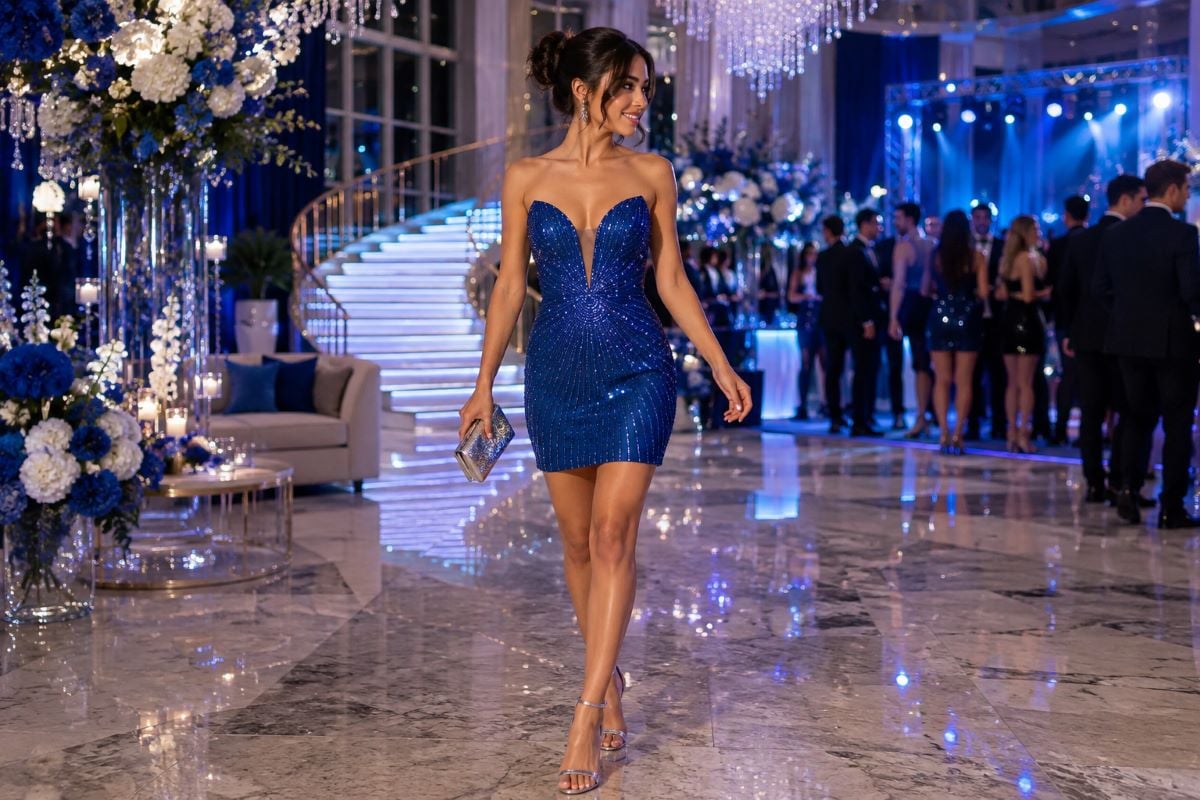
Because royal blue carries a touch of purple rather than sitting as a pure primary blue, it has a cool but not icy character. That combination tends to make skin look brighter and more even rather than draining it, which is what a very cold, pure blue can do. It flatters cool undertones naturally, since it sits in the same temperature family, and it works on warm undertones better than most cool colors do because the purple softens the contrast. Neutral undertones can wear it without any adjustment at all.
Depth of complexion changes which version to choose
Royal blue itself spans a small range, from a slightly lighter version to one closer to sapphire, and depth of complexion is a useful guide. Deeper complexions carry the most saturated versions beautifully, and the contrast between a vivid blue and deeper skin is genuinely striking. Medium and olive complexions suit royal blue across its range and often look best in the true, mid-depth version. Fair complexions can find the very darkest royal blues slightly overwhelming, in which case a version with a touch more brightness, or a fabric that lightens the shade such as chiffon, gives a better balance. The guide to the best dress colors for your skin tone covers how to work out your undertone.
How fabric changes royal blue
The shade responds strongly to what it is made of, and this is the easiest way to adjust a color that appeals but does not feel quite right.
Satin gives royal blue a glossy, saturated intensity and is the most common choice for a reason, since the sheen makes the color read as vivid under low light. Sequins amplify it further, throwing points of blue light across the room and photographing with real sparkle, which suits the energy of a dance. Velvet deepens royal blue considerably and gives it a rich, formal quality, though it is warmer to wear through an active evening. Chiffon lightens and softens the shade, so a royal blue that feels too strong on a swatch becomes airy and romantic in layers.
Tulle behaves similarly, softening the color while adding volume. Crepe mutes the shine entirely and gives a modern, tailored version of the shade that reads as more grown-up. Choosing the fabric is effectively choosing how loud the color will be. The range of blue homecoming dresses shows how differently the same family reads across finishes.
Silhouettes and length
Royal blue works across homecoming silhouettes, and the shape decides how much of the color is on show, which affects how bold the overall look reads.
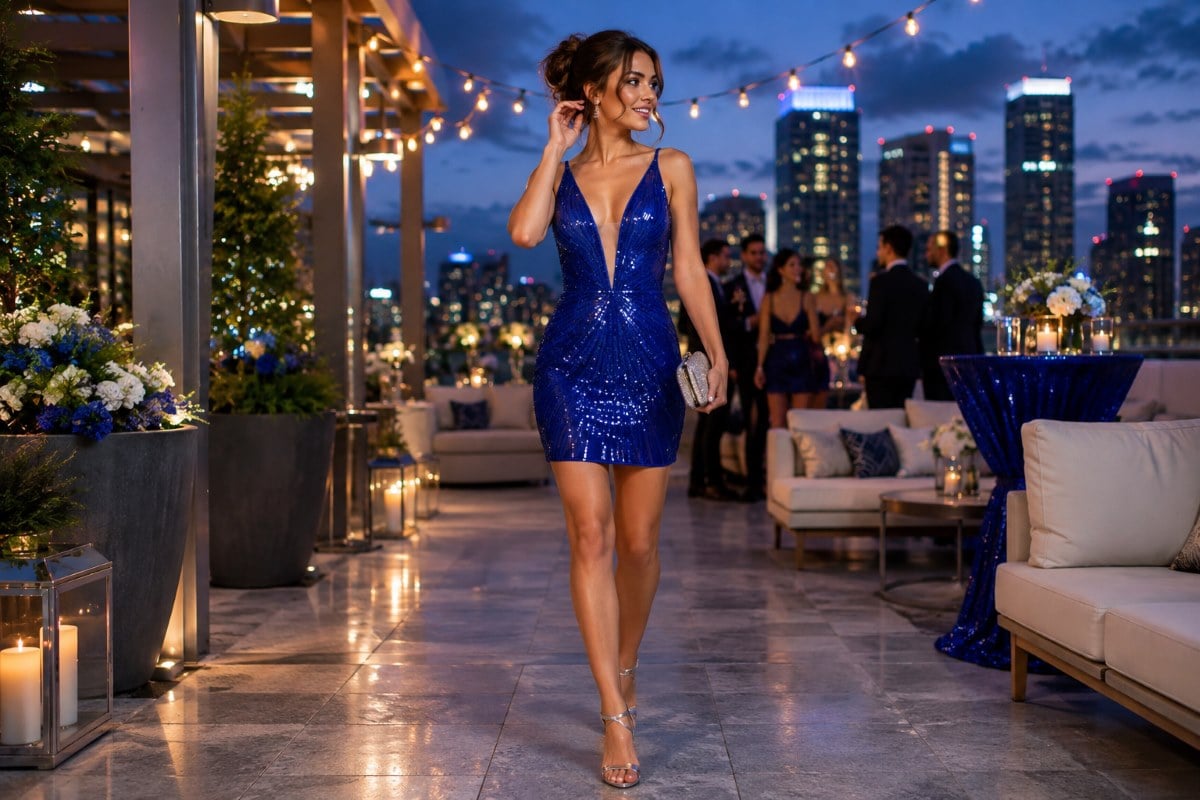
A short fit-and-flare or skater shape puts the color in a compact, playful package and is easy to move and dance in. A fitted or bodycon silhouette shows the shade in one unbroken line, which maximises its impact. An A-line offers a middle ground, with a defined waist and a skirt that moves. A short length is the most common choice for homecoming and generally the most practical, since the dance itself is the point of the evening.
Long dresses appear at homecoming too and are entirely appropriate at many schools, though it is worth checking what is typical at yours before committing, since arriving in a floor-length gown when everyone else is in short dresses can feel uncomfortable regardless of how good the dress is. The short styles among short homecoming dresses show the length most common at the dance.
If you are really torn between the two lengths, the guide to choosing a long or short homecoming dress covers how to make that call for your own school and venue.
Keeping the look age-appropriate
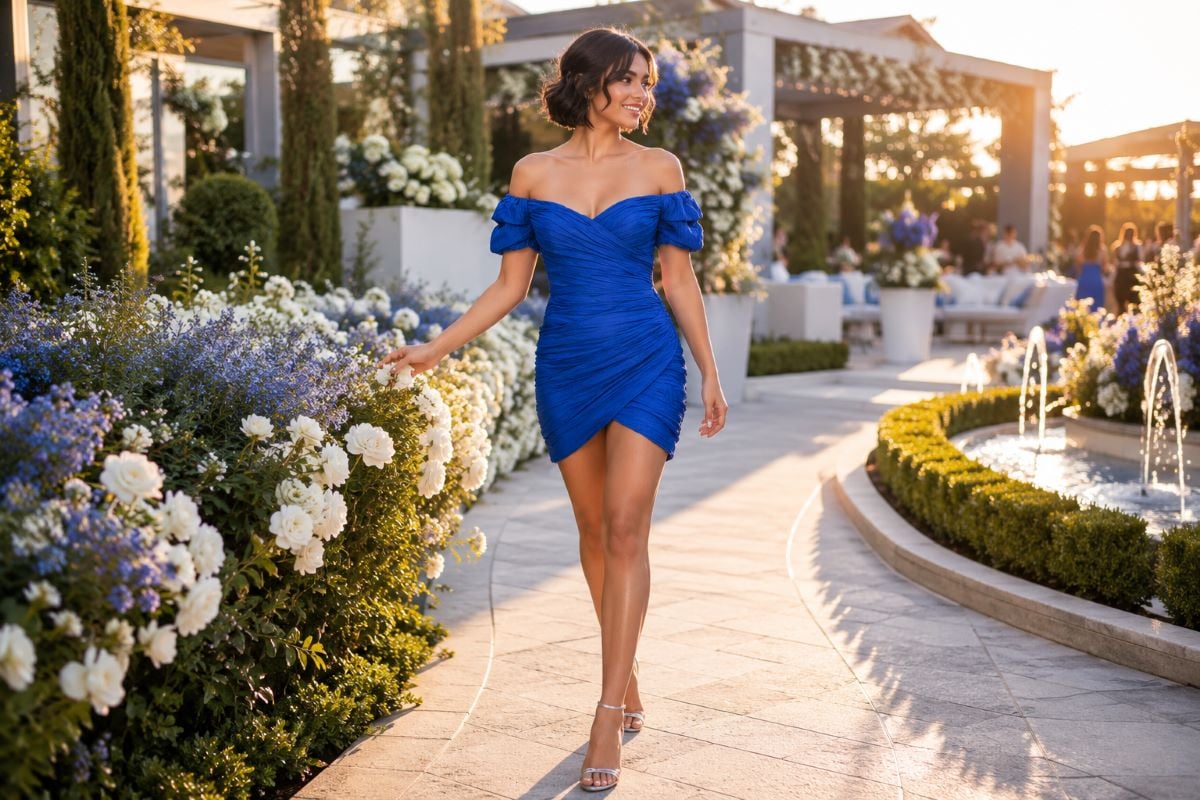
Homecoming is a high school dance, and the dress should suit that setting. Royal blue makes this straightforward, since the color itself reads as bright and celebratory rather than mature, so the dress can be vivid without the look becoming too grown-up.
The things that matter are the practical ones: a neckline and length that feel comfortable to move in, a bodice that stays secure without adjusting, and a fit that lets you dance rather than stand still. Most schools publish a dress code, and checking it before buying saves a difficult conversation later, since some specify hem length or coverage requirements.
A dress you feel confident in reads better in every photograph than one you are managing all night, which is the practical argument for choosing comfort alongside color. The modest styles in the wider hoco dresses collection show how coverage and a strong color work together.
A strong color rewards a simpler design
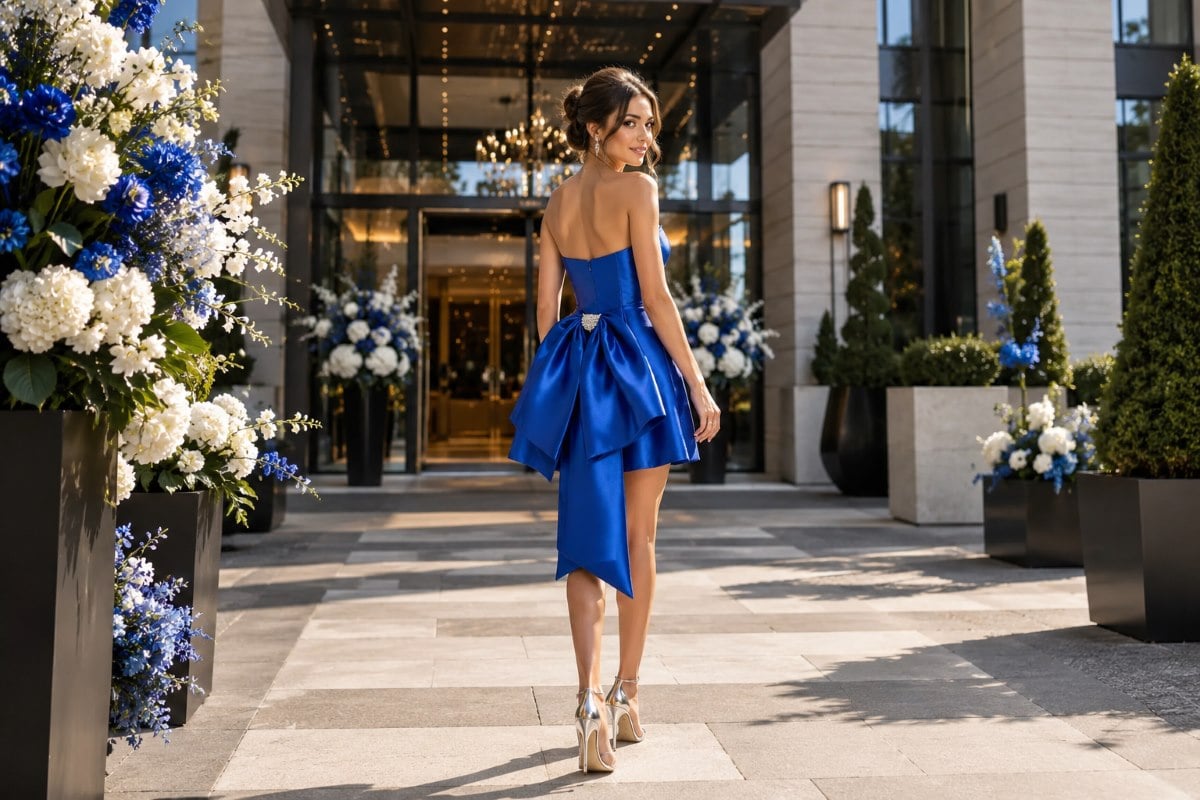
Because royal blue already carries a great deal of visual weight, a dress in this shade rarely needs elaborate construction to make an impression. A clean silhouette in a strong color often photographs better than a heavily detailed one, since the eye reads the shape clearly rather than being pulled in several directions at once. This is useful practically as well, because a simpler dress is generally more comfortable to dance in and less likely to need adjusting through the evening. If you want detail, one focal element such as a beaded bodice or a single dramatic neckline works better than several competing features.
Coordinating with a date or a group
Homecoming often involves group photographs and sometimes a coordinated look with a date, and a strong color makes coordination easier rather than harder. Royal blue pairs cleanly with a navy or charcoal suit and with silver or black accessories, so a matching tie or pocket square is straightforward to find. In a friend group where everyone is choosing independently, royal blue also sits comfortably beside most other colors in a photograph, since it is neither so pale that it disappears next to bolder shades nor so dominant that it overwhelms them. That makes it a considerate choice as well as a flattering one.
Accessorizing royal blue
Royal blue is a strong color, so the accessories work best when they support it rather than compete.
Silver is the most natural metal partner, since the cool tone sits in the same family and creates a crisp, clean result. Gold is the bolder option and produces a warmer, richer contrast that reads as more dramatic, and it works particularly well against deeper skin tones. Either is correct; mixing both tends to muddy the effect.
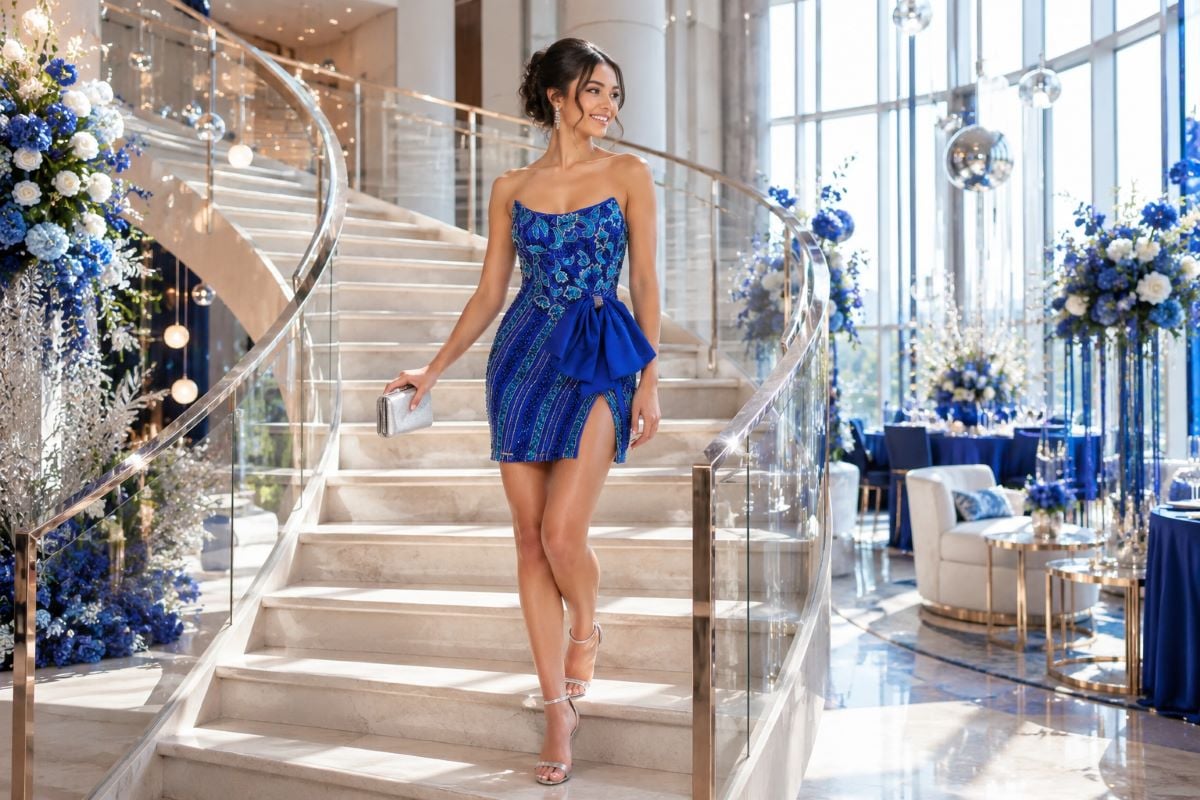
For shoes, silver and metallic options keep the look light, nude matched to your skin depth lengthens the leg, and a matching royal blue shoe produces the most cohesive result. Black shoes work but add weight, which can make a short dress read as heavier than intended.
For jewelry, keep it to one focal point. If the neckline is detailed, let earrings carry the look. If the neckline is simple, a necklace has room. And if the dress is sequinned or heavily beaded, minimal jewelry is almost always the better call, since the dress is already reflecting light from every angle.
One school-specific note worth mentioning: royal blue is a common school color, so if it happens to be yours, the dress may read as team spirit rather than personal style. That is entirely fine if you like the idea and worth knowing if you do not, in which case navy or a deeper sapphire gives a similar effect without the association. The styles among navy blue homecoming dresses show the more restrained alternative.
Before you decide
Choosing a royal blue homecoming dress comes down to a few checks that take very little time. Look at the shade against your face rather than only in a full-length mirror, since the color’s effect on your complexion is what you are actually judging. Consider the fabric as carefully as the shade, because satin, sequins, chiffon, and velvet will change how loud the same royal blue reads.
It also helps to see the dress in a photograph before the night rather than only in a mirror, since a phone camera renders saturated blues slightly differently than the eye does and it costs nothing to check. Move in the dress before deciding. Sit down, raise your arms, and walk, because a homecoming dress that only works standing still is the wrong dress for a night of dancing. And check the school dress code before buying rather than after.
Royal blue rewards this because it is a color that photographs well, suits most complexions, and stands apart in a crowded room without demanding attention. Chosen in a fabric and silhouette you feel good moving in, it is one of the most reliable choices available for the dance, whichever silhouette, fabric, and length you happen to settle on in the end. To see how royal blue translates across silhouettes, fabrics, and lengths for homecoming, explore the current styles through an authorized Jovani retailer.
Royal Blue at the Dance, Answered
What is the difference between royal blue and navy?
Royal blue is a vivid, medium-to-deep blue with a slight purple lean, saturated enough to read as a strong color. Navy is considerably darker and reads as conservative and mature, closer in feel to black than to a bright blue. The practical difference at a dance is that navy can become an indistinct dark shape under low lighting while royal blue keeps its identity, so the dress still reads as a color in photographs rather than as a silhouette.
Does royal blue suit most skin tones?
It suits an unusually wide range for a color this saturated. The slight purple lean means it is cool without being icy, so it tends to make skin look brighter rather than draining it. It flatters cool undertones naturally and works on warm undertones better than most cool colors because the purple softens the contrast. Deeper complexions carry the most saturated versions beautifully, while fair complexions often do best with a slightly brighter version or a lighter fabric.
Why does royal blue photograph well at a homecoming dance?
Dance venues usually have low, often colored lighting rather than even ballroom lighting. Under those conditions pale colors lose definition and very dark colors become an indistinct shape, while a saturated mid-depth color holds its identity. Royal blue also photographs cleanly on a phone camera, which is what most homecoming pictures are taken on, and it does not shift toward another color under mixed lighting the way some purples and teals can.
What fabric is best for a royal blue homecoming dress?
It depends on how bold you want the color to read. Satin gives a glossy, saturated intensity that shows well under low light. Sequins amplify it further and photograph with real sparkle. Velvet deepens the shade and feels formal but is warmer through an active evening. Chiffon and tulle lighten and soften it. Crepe mutes the shine for a more tailored look. Choosing the fabric is effectively choosing how loud the color will be.
Should you wear silver or gold with a royal blue dress?
Silver is the most natural partner, since the cool tone sits in the same family and gives a crisp, clean result. Gold is the bolder choice and creates a warmer, richer contrast that reads as more dramatic, working especially well against deeper skin tones. Either is correct, but mixing both tends to muddy the effect. If the dress is sequinned or heavily beaded, minimal jewelry of either metal is usually the better call.
Is royal blue too bold for a school dance?
No. The color reads as bright and celebratory rather than mature, so it stands out without appearing too grown-up for a high school setting. What makes a dress appropriate is the neckline, length, fit, and comfort rather than the intensity of the color. Checking your school’s published dress code before buying pays off, since some specify hem length or coverage, and a dress you feel confident in photographs better than one you are managing all night.