
The Couture Details That Hold a Gown Together
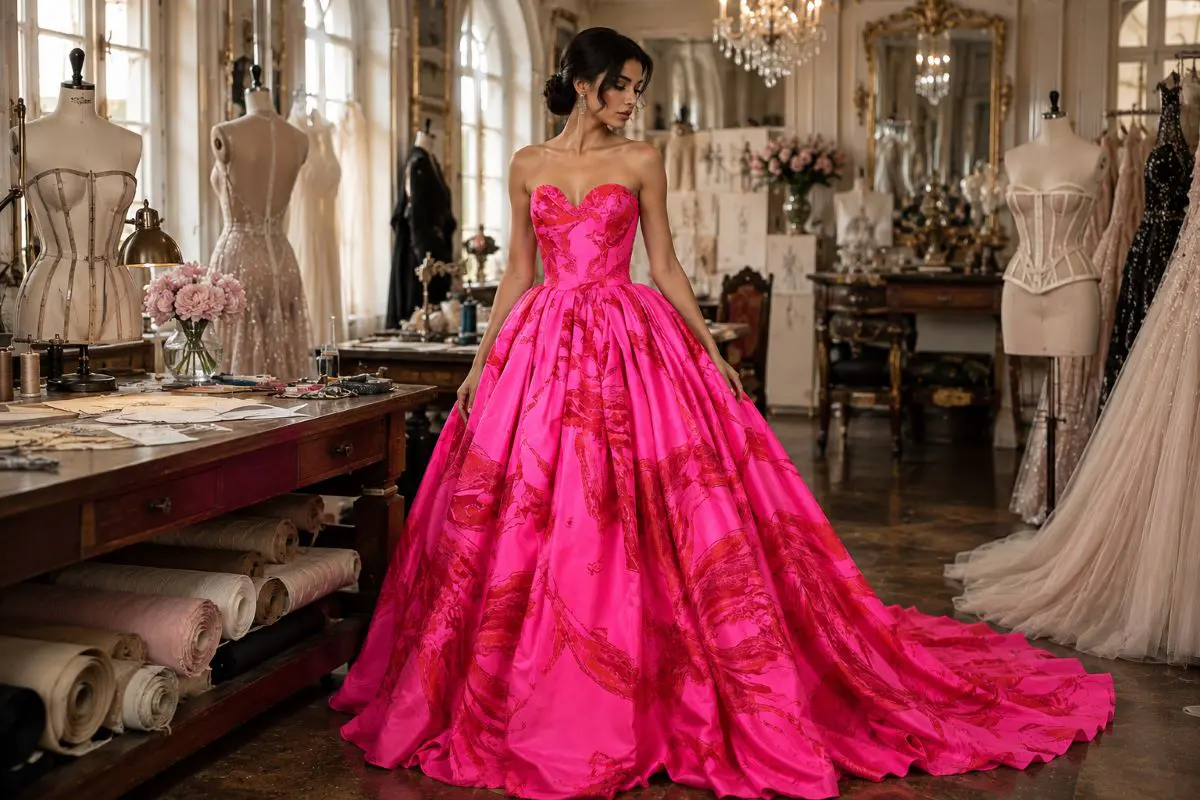
The most important parts of a couture gown are the ones you never see. A dress can look beautiful on a hanger and still fail the moment someone wears it, because what holds a gown's shape, supports the body, and keeps a hem flaring cleanly is the hidden architecture sewn inside it. Understanding couture dress construction means learning the vocabulary of that architecture: the structural elements that separate a gown that performs from one that collapses, wrinkles, or sags within an hour of wear. This glossary explains four of the most important terms, boning, crinoline, horsehair braid, and hand-beading, covering what each one is, what it does, and how to recognize it done well, so the next time you read a dress description or examine a gown in person, you know exactly what you are looking at.
Boning: the internal skeleton of the bodice
Boning is the term for the thin, semi-rigid strips sewn into the seams or channels of a bodice to give it structure. The name is historical, since these strips were once made from whalebone, but today they are made from steel or plastic. Their job is to hold the bodice's shape, support the bust, smooth the torso, and keep the dress sitting exactly where it should rather than shifting or buckling as the wearer moves. Boning is what allows a strapless bodice to stay securely anchored without straps, and it is a defining feature of couture dress construction in any fitted or structured style. The structure runs vertically through the bodice, often from the bust down to below the hip, distributing support across the whole upper body.
The quality of boning varies enormously, and it is one of the clearest signals of how well a dress is made. Cheap dresses often use lightweight plastic stays that bend, warp, and fail to hold their shape, while better construction uses spiral steel boning that provides genuine support while still flexing comfortably with the body. The boning should sit in finished, covered channels so it never digs into the skin or shows through the fabric. In a well-made gown, the boning is placed thoughtfully along the seams to shape the body without restricting breathing or movement. The styles among couture gowns show how internal structure shapes a gown, and boning is the element doing much of that quiet work beneath the surface.
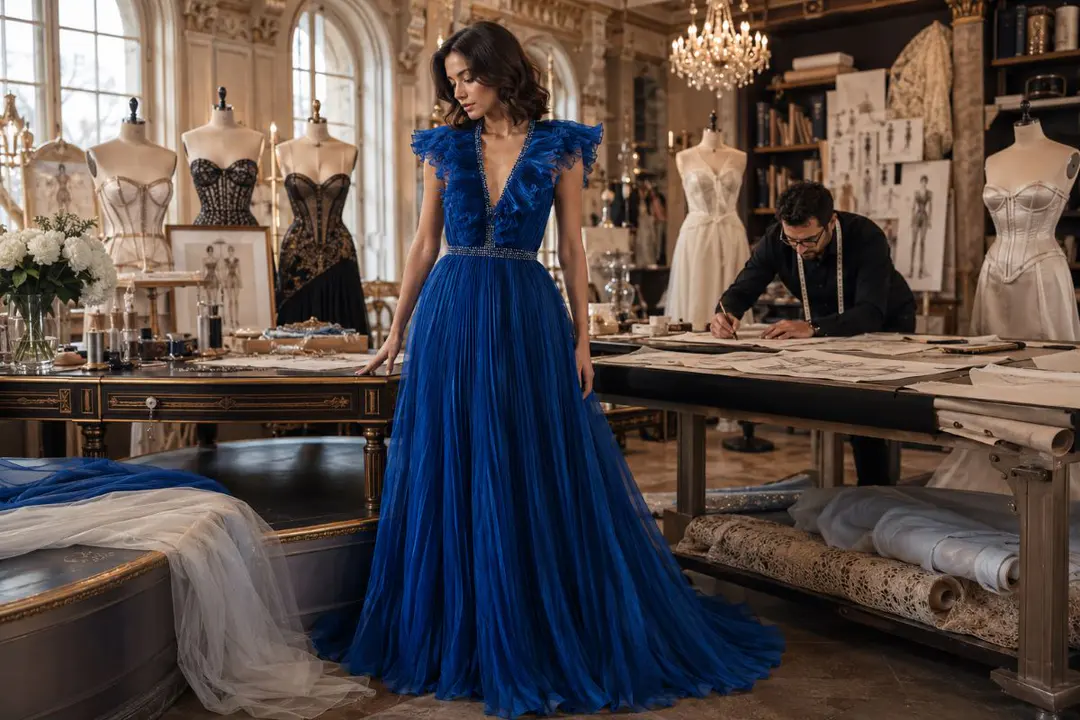
Crinoline: the foundation that builds volume
Crinoline is the term for a stiffened underskirt worn beneath a gown to give the skirt its volume and shape. Historically, crinolines were made from stiffened horsehair, which is where the name comes from, but today they are crafted from layers of tiered, stiff tulle or netting sewn onto a smoother inner lining. The crinoline acts as a buffer between the legs and the heavy outer fabric, pushing the skirt outward to create a full, rounded silhouette. It is the hidden layer responsible for the dramatic bell shape of a ball gown, holding that shape throughout an event so the skirt looks full even when the wearer is standing perfectly still.
The fullness of a crinoline should match the cut of the dress, since some offer volume starting right at the waist for a classic princess silhouette, while others stay fitted through the hips and flare lower down for a more gradual shape. The main advantage of a crinoline is its natural, fluid movement, since it is made entirely of fabric and sways organically as the wearer walks and dances. The styles among ball gown formal dresses rely on this kind of foundation to achieve their shape, since the volume you see is created entirely by the structure you do not.
For the most voluminous silhouettes, such as a traditional quinceañera gown, the crinoline often works alongside or is replaced by a hoop skirt, a wire structure that holds even heavier fabric away from the legs. The choice between them depends on the weight of the gown and the shape it needs to hold, and the detailed comparison in what goes under a quinceanera dress covers how each foundation creates and holds volume in depth.
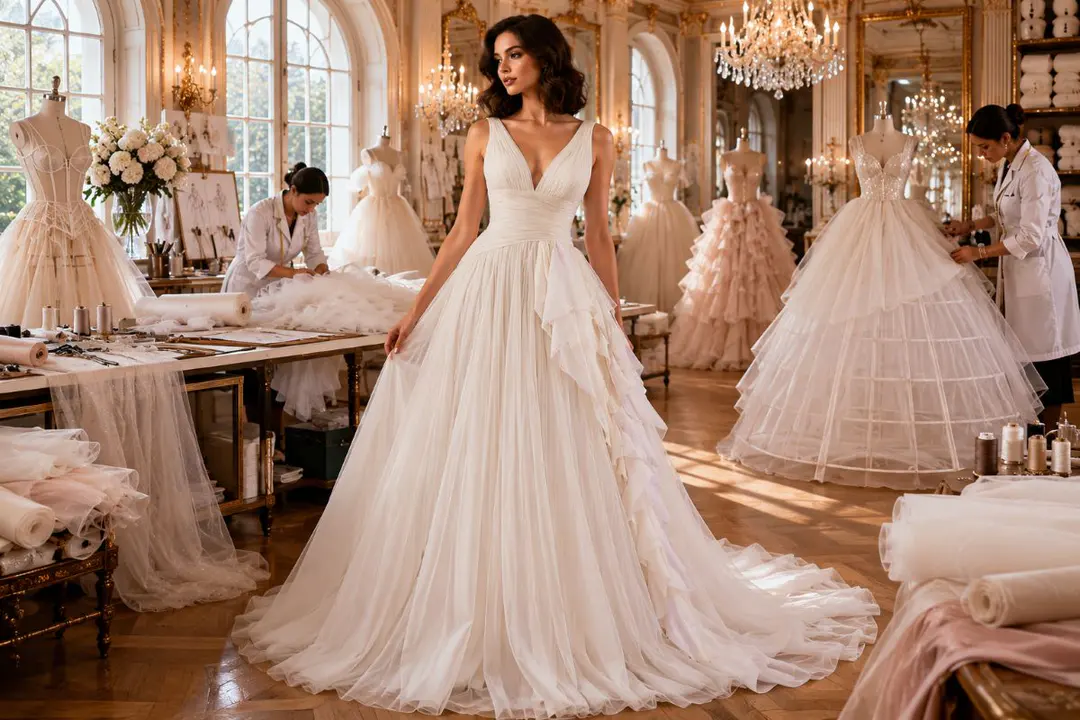
Horsehair braid: the secret behind a clean, bouncy hem
Horsehair braid is a stiff, woven trim sewn into the hem of a skirt to give it body and shape. Despite the name, modern horsehair braid contains no actual horsehair, since it is woven from a stiff synthetic mesh. Its purpose is to add structure and a slight spring to the very edge of a skirt, creating the bouncy, rippling effect that makes a hemline flare cleanly rather than hanging limp or collapsing inward. It is the detail that gives a full skirt its architectural sweep and keeps the hem holding a defined shape as the wearer moves, and it appears in everything from formal gowns to dramatic quinceañera and prom skirts.
Horsehair braid is also a quiet marker of construction quality, because it is labor-intensive to apply correctly. A well-made hem has the braid evenly and securely attached so the edge flares smoothly and holds its shape, while a poorly finished one can ripple unevenly or lose its shape over time. This is also why hemming a gown with horsehair braid is a skilled job rather than a simple alteration, since a tailor must carefully remove the braid, shorten the fabric, and reattach the trim to maintain the skirt's sweep. Fitted silhouettes benefit from it too, since a mermaid or fitted gown often uses horsehair braid at the hem to keep the flare crisp. The styles among quinceanera gowns show the kind of dramatic, full-skirted volume that horsehair braid helps create and hold.

Hand-beading: embellishment applied stitch by stitch
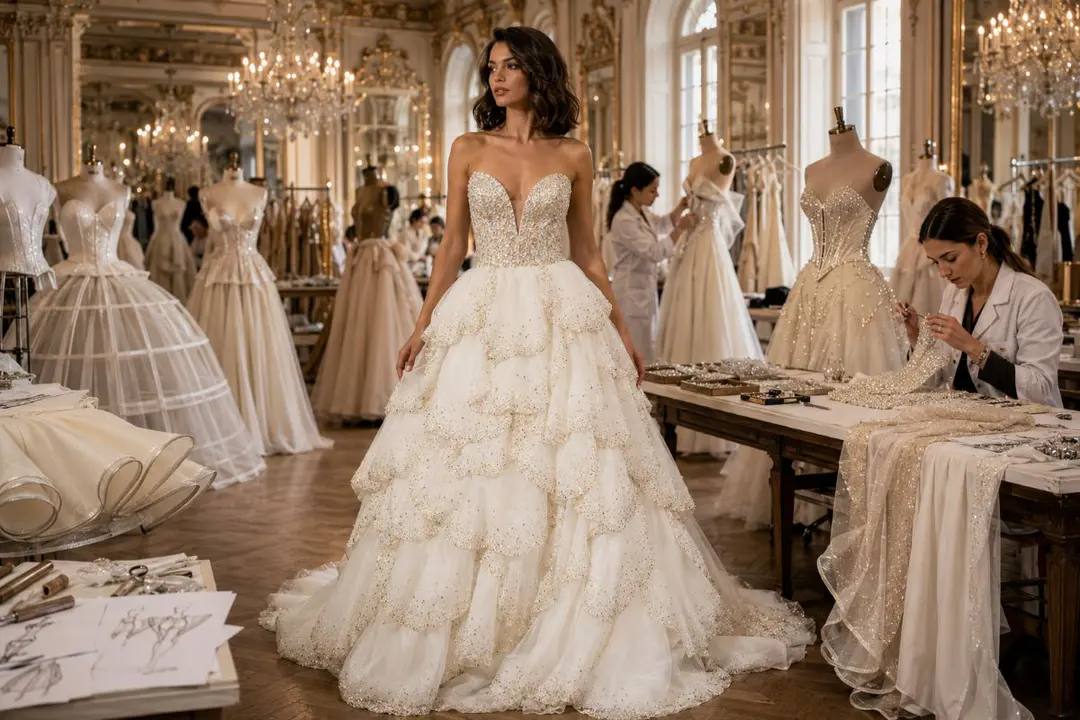
Hand-beading refers to beads, crystals, sequins, and other embellishments applied to a dress individually by hand rather than glued on or attached by machine. Each element is sewn into place with a needle and thread, which is far more time-consuming than the alternatives but produces a fundamentally different result. Hand-applied embellishment catches light with more depth and dimension, sits more securely, and lasts far longer than glued embellishment, which is one of the clearest dividing lines between couture-level dress construction and fast-fashion shortcuts. The placement of hand-beading is also intentional, with the embellishment concentrated where it flatters the body and catches the eye most.
The quality difference here is dramatic and easy to spot once you know what to look for. Budget dresses often use dull plastic sequins or lightweight stones attached with industrial fabric glue, which can yellow, loosen, and fall off, while a well-made gown has each bead or crystal securely sewn so it stays put and reflects light cleanly. Because hand-beading carries real weight, quality gowns use internal structure like boning and reinforced seams to distribute that weight across the torso rather than letting it pull from the shoulders. This is a deep subject in its own right, and the full breakdown in couture beading techniques covers the specific methods and how to recognize them.
The visual difference is immediate once you have seen both side by side, since hand-applied embellishment has a depth and a secure, settled quality that glued work never achieves. The styles among beaded evening dresses show how hand-applied embellishment reads in person, catching and holding light in a way that flat, glued sequins cannot.

Why these construction details matter
Individually, each of these elements does a specific job, but together they explain why two dresses that look similar on a hanger can perform completely differently once worn. Boning supports and shapes the bodice, crinoline builds and holds the skirt's volume, horsehair braid keeps the hem flaring cleanly, and hand-beading adds embellishment that lasts. A gown that gets all four right feels secure, holds its shape through a long event, and moves with the wearer, while a gown that cuts corners on any of them sags, wrinkles, shifts, or sheds. The hidden architecture is what you are actually paying for in a quality gown, even though it is the part you never see in a photograph.
This is also why understanding couture dress construction helps a shopper judge value accurately. A dress description that mentions steel boning, layered tulle construction, horsehair-finished hems, and hand-applied beading is signaling real construction quality, while one that stays vague about its structure may be relying on the fabric alone to do work it cannot do. The broader range of formal gowns shows how these elements appear across different silhouettes, and reading a dress through the lens of its construction, rather than only its surface, is the most reliable way to tell a gown that will perform from one that only photographs well.
How to recognize quality construction in person
When examining a gown in person, a few quick checks reveal how well it is built. Run a hand along the bodice seams to feel for boning, and notice whether it sits in smooth, covered channels rather than poking or warping. Hold the skirt and feel for the structure underneath, since a quality crinoline or hoop creates clean volume without feeling flimsy or scratchy against the lining. Check the hem for the slight stiffness of horsehair braid, and look at whether it flares evenly all the way around. These small inspections tell you more than the surface fabric ever could about how the dress will behave.
For embellishment, gently examine a few beads or crystals to see whether they are sewn or glued, and look at the back of the fabric where the stitching shows in hand-applied work. The way these details are executed reflects the time and skill invested in the gown, and Jovani has built structured eveningwear from its New York design studio since 1983 with exactly this kind of internal construction in mind. For a fuller picture of how all of these elements come together in a finished gown, the overview in anatomy of an evening dress walks through what makes a formal dress special from the inside out. The point of learning the vocabulary of couture dress construction is not to memorize terms but to read a dress accurately, so that whether you are comparing gowns online or examining one in a fitting room, you can recognize the hidden architecture that determines how a dress truly performs. A shopper who can name these elements and check for them is far better equipped to tell a gown worth its price from one that only looks the part. The vocabulary turns a vague sense that one dress feels better made than another into a set of specific things you can actually look for and confirm.
Frequently asked questions couture dress construction
What is boning in a dress?
Boning refers to thin, semi-rigid strips sewn into the seams or channels of a bodice to give it structure and support. Once made from whalebone, today they are made from steel or plastic. Boning holds the bodice's shape, supports the bust, smooths the torso, and keeps the dress in place, and it is what allows a strapless bodice to stay securely anchored without straps. Quality construction uses spiral steel boning in finished, covered channels, which provides genuine support while flexing comfortably with the body, rather than cheap plastic stays that warp and fail to hold their shape. The number and placement of the bones also matters, since a well-engineered bodice positions them along the seams where they shape the body most effectively, often running from the bust down past the natural waist for even, comfortable support across the whole torso.
What is a crinoline and what does it do?
A crinoline is a stiffened underskirt worn beneath a gown to give the skirt volume and shape. Modern crinolines are made from layers of stiff tulle or netting sewn onto a smoother lining, though historically they were made from stiffened horsehair, which is where the name comes from. The crinoline pushes the outer fabric outward to create a full, rounded silhouette and holds that shape throughout an event. Its fullness should match the cut of the dress, and its main advantage is natural, fluid movement, since it sways organically as the wearer walks and dances.
What is horsehair braid?
Horsehair braid is a stiff, woven trim sewn into the hem of a skirt to give it body and a clean, bouncy flare. Despite the name, modern horsehair braid contains no actual horsehair and is woven from a stiff synthetic mesh. It adds structure to the very edge of a skirt, creating a rippling effect that makes the hemline flare cleanly rather than hanging limp. It appears in full gowns, quinceañera skirts, and fitted styles like mermaids, where it keeps the flare crisp. Properly applied, it is evenly and securely attached so the hem holds its shape over time.
What does hand-beading mean?
Hand-beading means that beads, crystals, sequins, and other embellishments are applied to a dress individually by hand with a needle and thread, rather than glued on or attached by machine. This is far more time-consuming but produces embellishment that catches light with more depth, sits more securely, and lasts far longer than glued alternatives. It is a clear marker of couture-level construction. Quality hand-beading has each element securely sewn so it stays put and reflects light cleanly, and well-made gowns use internal structure to distribute the weight of the beading across the torso comfortably.
Why do these construction details matter when buying a dress?
These details determine how a dress actually performs once worn, which a photograph cannot show. Boning supports and shapes the bodice, crinoline builds and holds the skirt's volume, horsehair braid keeps the hem flaring cleanly, and hand-beading adds embellishment that lasts. A gown that gets all four right feels secure, holds its shape through a long event, and moves with the wearer, while one that cuts corners sags, wrinkles, shifts, or sheds. The hidden architecture is what you are paying for in a quality gown, so reading a dress through its construction is the most reliable way to judge real value.
How can I tell if a dress has quality construction?
A few quick checks help. Feel the bodice seams for boning that sits in smooth, covered channels rather than poking or warping. Feel the skirt for structure underneath that creates clean volume without feeling flimsy or scratchy. Check the hem for the slight stiffness of horsehair braid and whether it flares evenly all the way around. For embellishment, examine whether beads are sewn or glued by looking at the stitching on the back of the fabric. These small inspections reveal far more about how a dress will behave than the surface fabric alone. Together they take only a minute or two, but they tell you whether a gown was engineered to perform or simply assembled to photograph well, which is the single most useful thing to know before committing to a dress for an important event.
If understanding the architecture behind a gown makes you want to see quality construction up close, the best next step is to examine these details in person, which you can do by visiting an authorized Jovani retailer to feel the structure, support, and embellishment for yourself.