
Ask whether a jumpsuit is acceptable at a black tie event and you will get two confident answers that contradict each other. One camp says black tie means a floor-length gown and nothing else. The other says nobody enforces that anymore and a good jumpsuit is fine anywhere. Both are answering a question that was never quite the right one, because the useful question is not whether a jumpsuit is allowed. It is which of the two will serve you better at this particular event, in this particular room, doing whatever you will actually be doing for the next five hours. What follows is what black tie genuinely expects, and how to tell which of the two garments your particular event calls for.
What black tie actually asks for
Black tie is the second most formal dress code in general use, sitting below white tie and above black tie optional. For men the expectation is unambiguous and has barely moved in a century: a tuxedo. For women the code has always been looser, described in terms like evening dress rather than any single garment, which is exactly why the jumpsuit argument exists at all.
What the code genuinely asks for is a level of formality rather than a specific shape. That level is signaled by three things: floor length or close to it, evening fabrics with weight or luster, and construction that reads as deliberate rather than casual. A garment that delivers all three satisfies black tie. A garment that misses one of them usually does not, whether it is a dress or not.
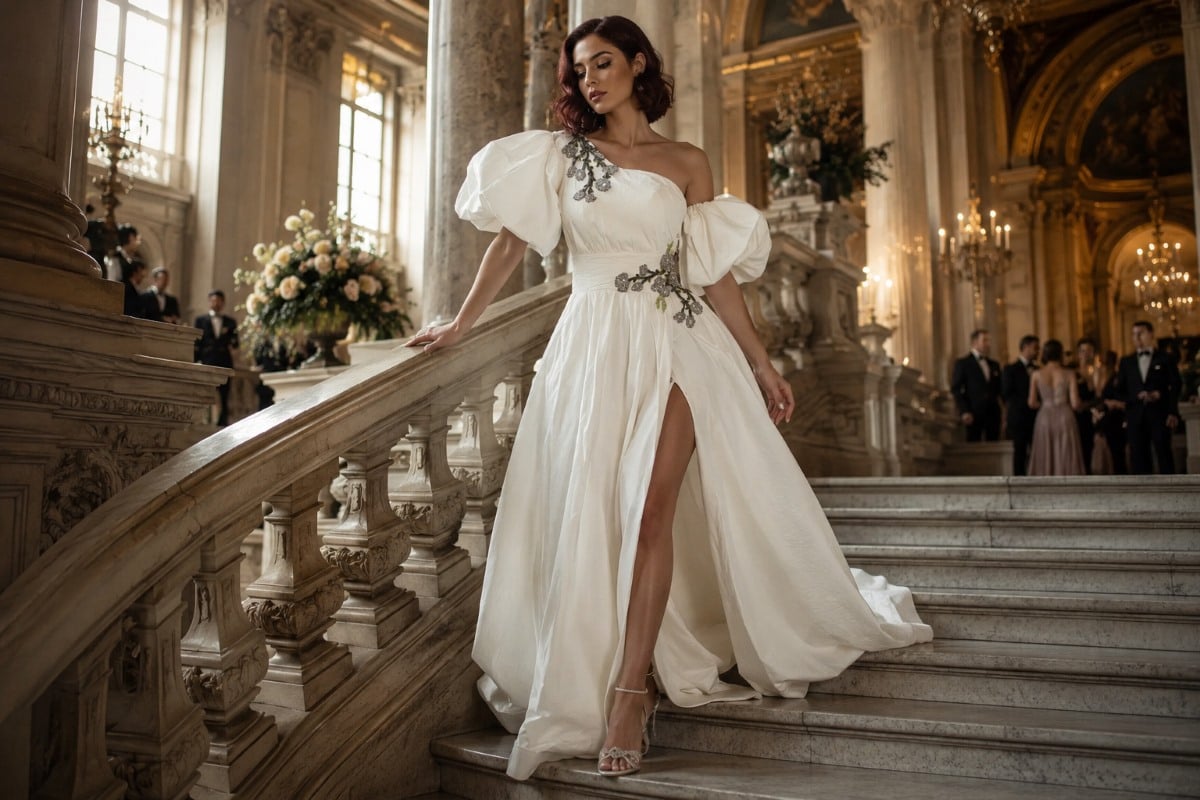
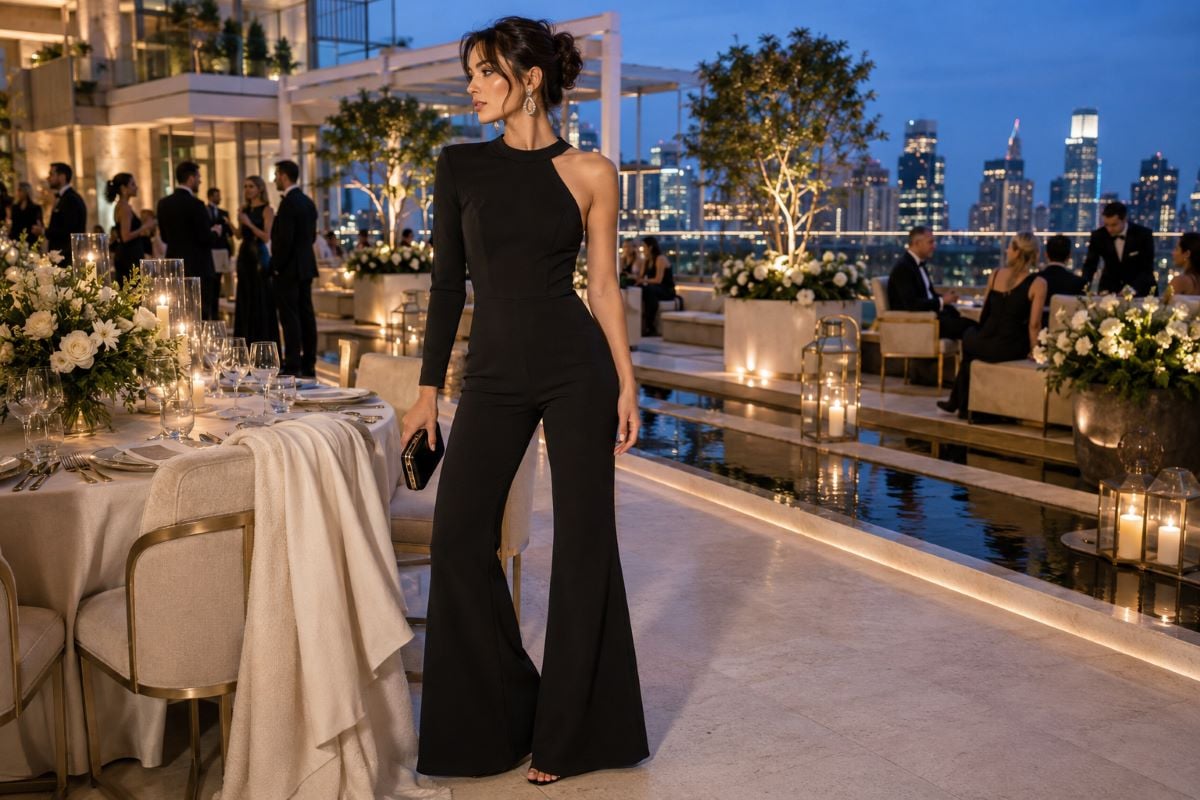
This is the reasoning behind the more permissive modern etiquette guidance, and it is sound. A floor-length tailored jumpsuit in silk crepe hits all three markers. A cocktail dress, despite being a dress, hits only one. The garment category is not what the code is measuring. The range of black tie gowns shows the level of formality the code expects, which is the standard a jumpsuit has to meet.
Where a jumpsuit outperforms a gown
Two conditions make a jumpsuit the better garment rather than merely a permitted one, and both are about what you will be doing rather than how you want to look.
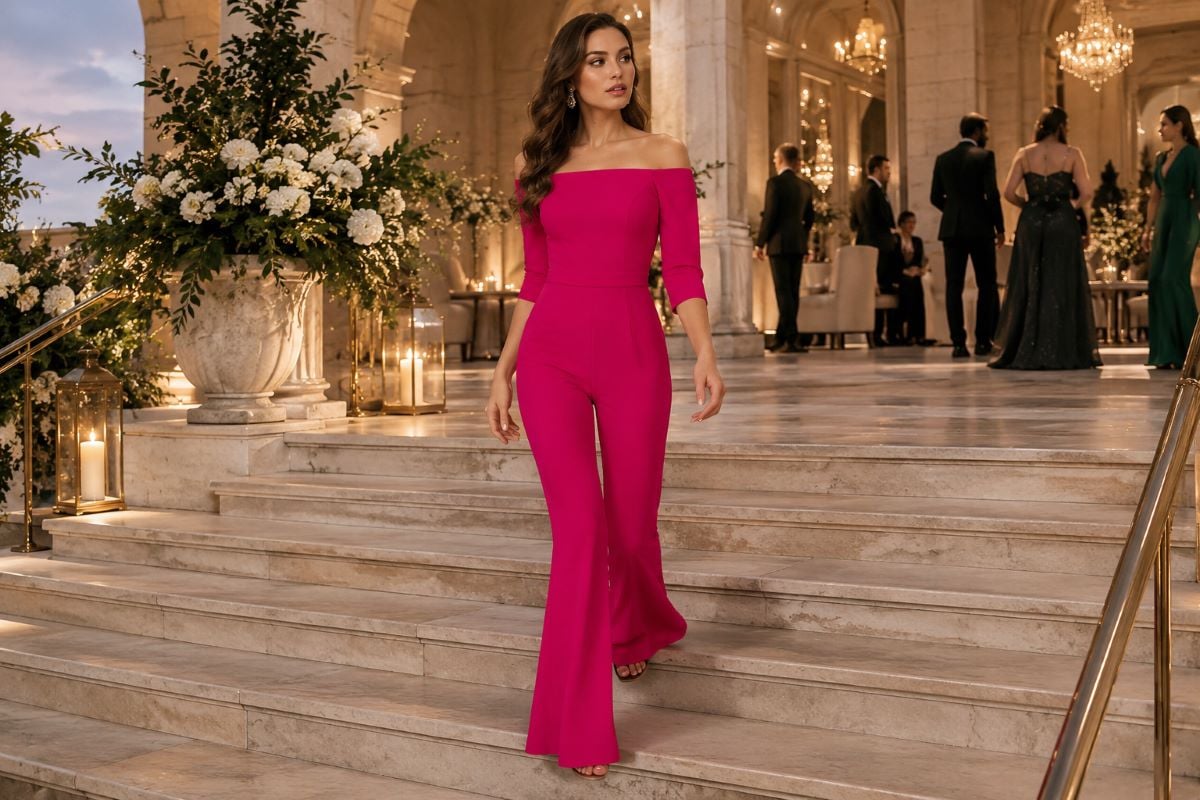
Events where you will be moving all evening
If the evening involves standing for hours, working a room, dancing seriously, climbing stairs, or navigating a venue with multiple levels, a jumpsuit removes an entire category of management. There is no hem to lift, nothing to step on, nothing to gather when you sit. For a host, an organizer, an award recipient, or anyone who will be on their feet rather than seated at a table, that difference compounds over five hours into something you actually notice.
Outdoor, cold, and awkward-terrain venues
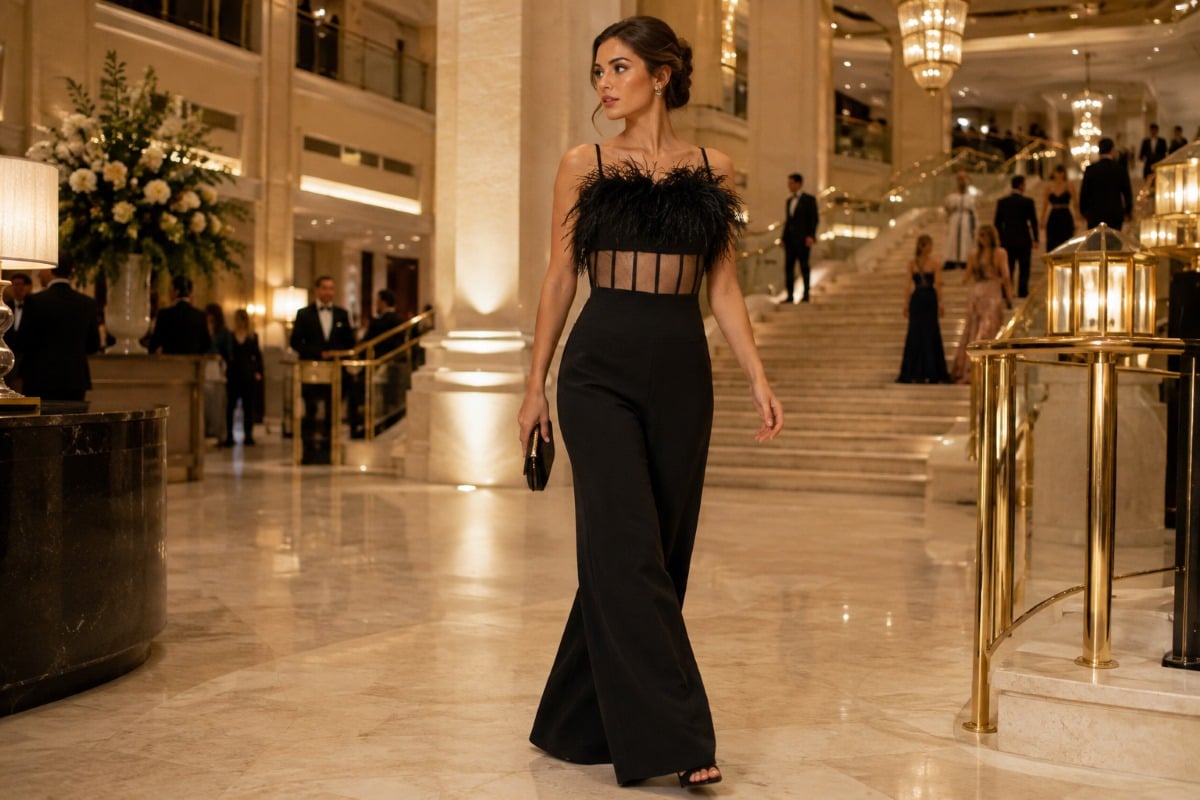
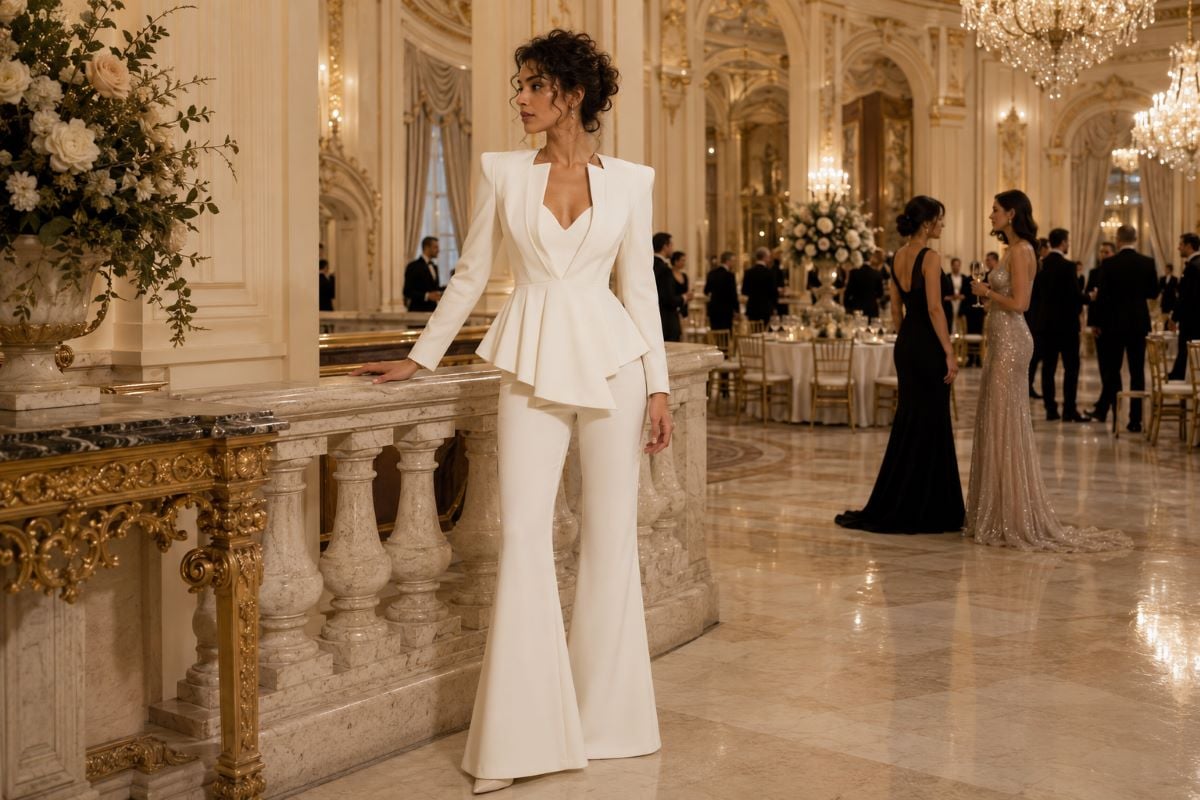
A floor-length gown and grass, gravel, or a cobbled courtyard are a poor combination, and a marquee wedding or an outdoor gala is exactly where a hem gets damaged. Trousers solve this completely. Cold-weather events follow the same logic, since covered legs are considerably warmer than a gown, and a heavier jumpsuit fabric such as crepe or velvet handles a winter evening better than most gowns manage. Where a gown asks you to accommodate the venue, a jumpsuit lets you ignore it. The range of formal jumpsuits shows how the silhouette translates at an evening level of formality.
What each garment costs and how long it lasts
There is a practical dimension to this choice that rarely appears in etiquette guidance. A formal gown is usually bought for one specific event and worn again rarely, because a floor-length beaded gown has limited occasions. A well-made evening jumpsuit has a wider working life, since the same piece can be dressed down for a cocktail event, a work function, or a smart dinner in a way a gown cannot. If you attend one black tie event every few years, the gown is a considered purchase for that occasion. If formal events come around several times a year, the jumpsuit tends to earn its place more often, which is worth weighing alongside the question of which looks better on the night.
Where a gown is still the stronger choice
Two conditions run the other way, and in both the gown is not just traditional but measurably better suited.
The most formal and most traditional events
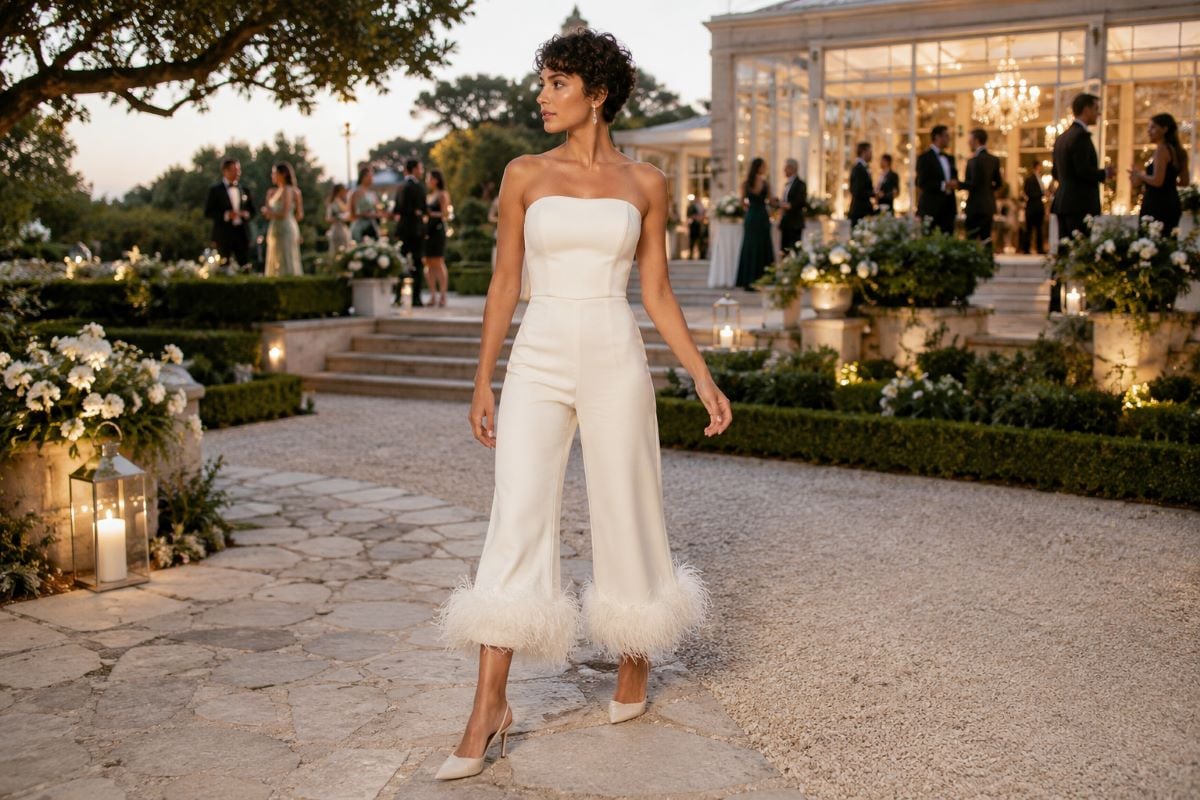
At an event that leans toward white tie, at a state or diplomatic function, at a very traditional wedding, or where the invitation explicitly specifies a long gown, a jumpsuit puts you in the position of testing a boundary at someone else’s occasion. It may well be accepted, but a formal event is rarely the place you want to be the person people are quietly assessing. If the host has been specific, follow the host.
Occasions built around photographs
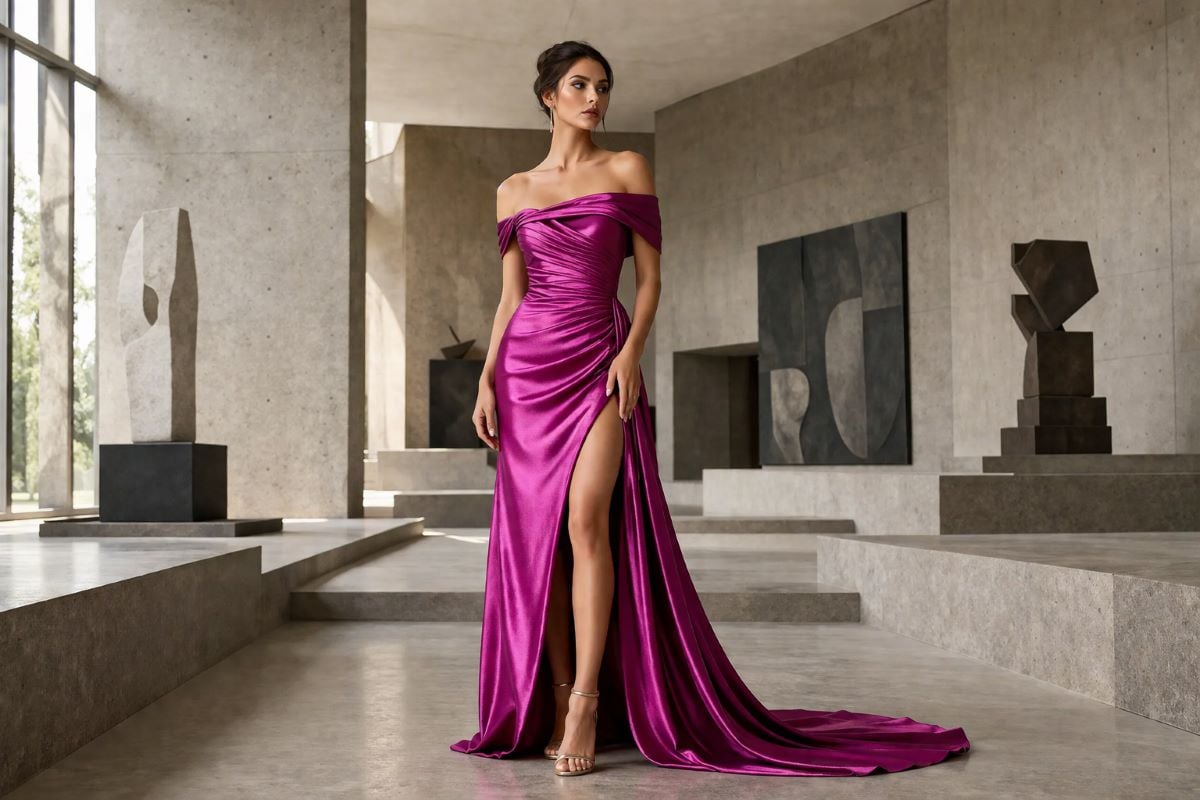
A gown has one clear advantage that no jumpsuit replicates: it creates an unbroken vertical line from waist to floor, which photographs as a single continuous shape and elongates. A jumpsuit, however well cut, is divided by the seam where the trousers begin, and wide-leg styles can read as heavier around the hip in a full-length photograph than they look in a mirror. For a heavily photographed event, or for formal portraits, the gown is the more reliable performer. The range of long evening dresses shows the unbroken line that makes a gown photograph the way it does.
What separates a black tie jumpsuit from an ordinary one
Most of the disagreement about jumpsuits at formal events comes from people picturing different garments. A jersey jumpsuit from a high street chain and a tailored silk crepe one share a category and nothing else.
The fabric has to be an evening fabric. Crepe, satin, silk, velvet, and beaded or sequinned fabrics all read as formal. Cotton, linen, jersey, and anything with visible stretch do not, regardless of how the garment is cut. This single factor decides more than any other.
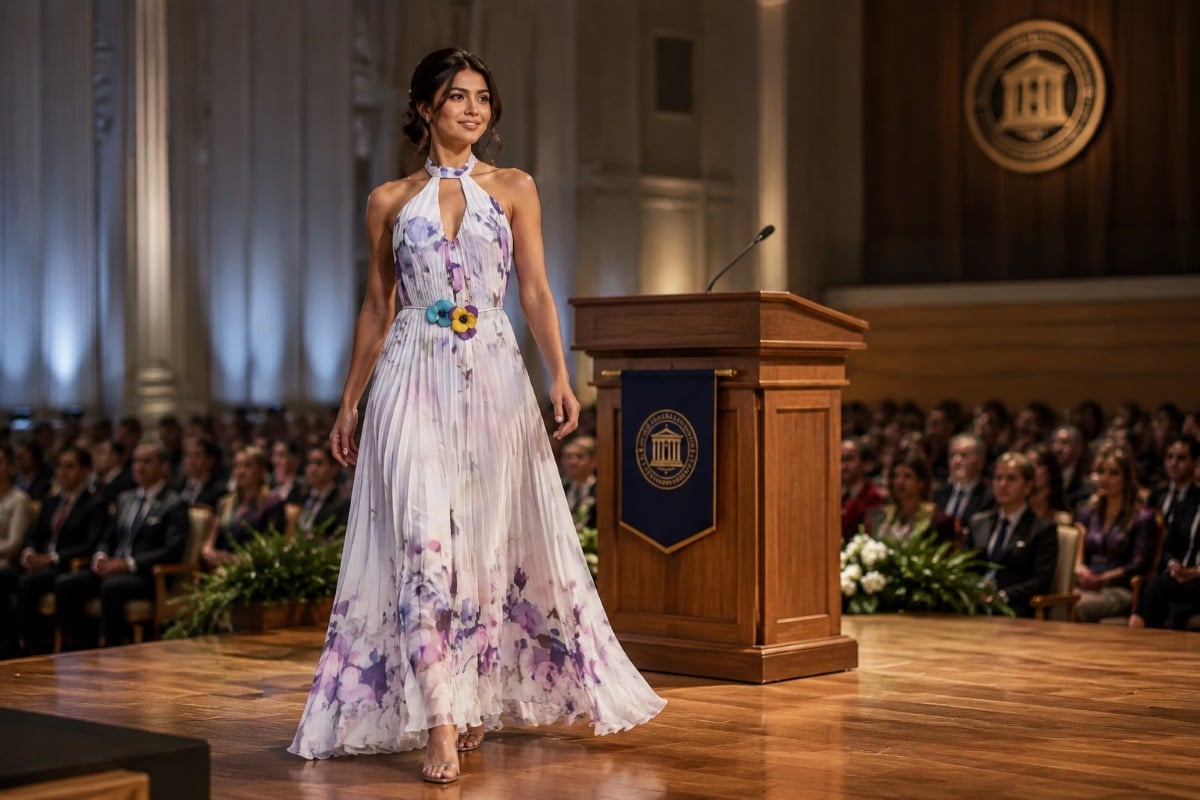
The leg has to be full length and it has to be hemmed to your shoes. A jumpsuit that stops at the ankle reads as daywear, and one that pools on the floor reads as ill-fitting. This is the most common failure and the easiest to fix. The overview of popular evening dress fabrics covers which materials carry formality.
The cut has to be structured rather than relaxed. A defined waist, a clean neckline, and tailoring through the body are what separate an evening jumpsuit from a comfortable one. Loose, drapey, elasticated, or utility-inspired shapes belong to a different register entirely. Color matters too: deep and rich shades, black, and metallics read as formal, while bright prints and casual patterns undercut the effect no matter how good the fabric is.
Reading the specific event
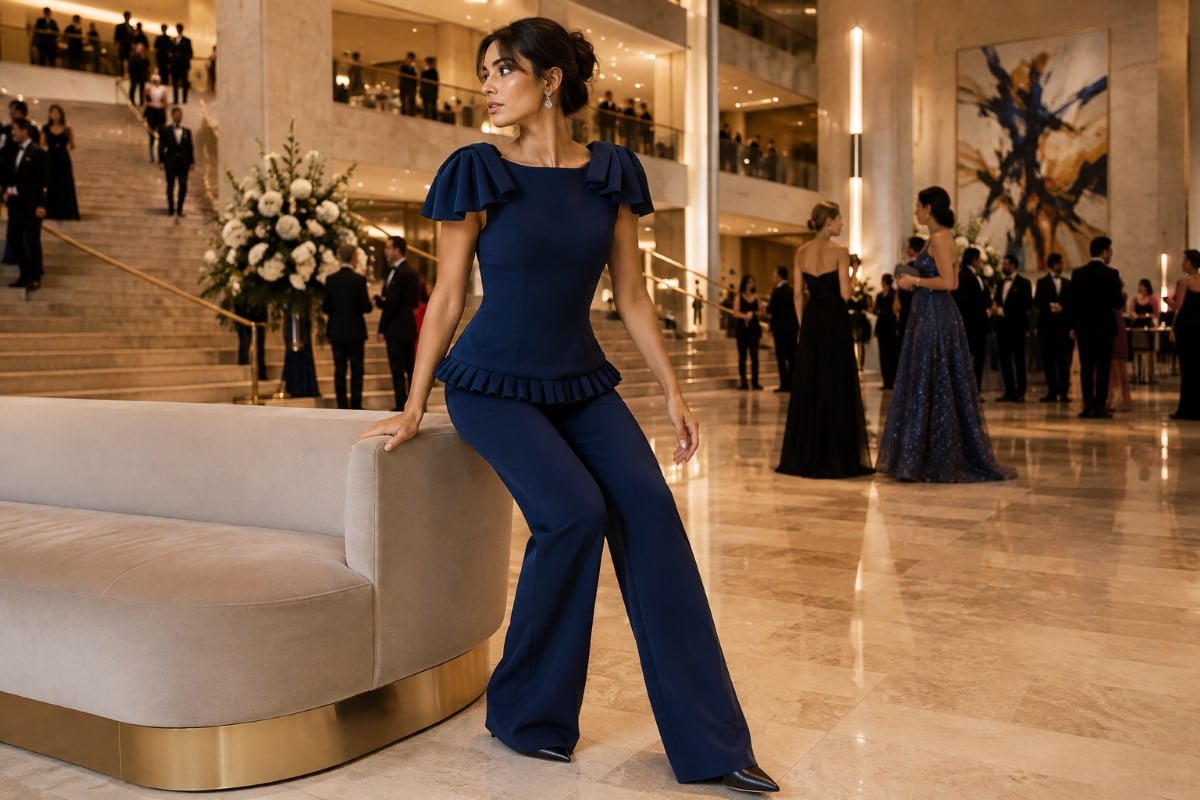
Four pieces of information settle it, and all four are available before you commit. Start with the invitation wording. Black tie is stricter than black tie optional, and if it names a long gown specifically, the question is settled. Then look at the venue, since a historic hotel ballroom carries different expectations than a modern gallery or a marquee. A traditional venue leans gown; a contemporary one is comfortable with either.
Consider the guest list and the culture around the event. A corporate gala, an industry awards dinner, or an event in a creative field tends to be relaxed about the distinction. A family wedding with older relatives, a religious institution, or a long-running formal society tends not to be. This is not about anyone being right; it is about whether you want your outfit to be a topic.
Finally, be honest about your role in the evening. A guest seated at a table for most of the night has different needs than someone hosting, presenting, or dancing. For a fuller sense of what the code expects across settings, the guide to black tie evening dresses covers the range the code allows.
It also helps to know where the really rigid line falls, since the codes above black tie are far less flexible about garment shape. The breakdown of black tie against white tie shows where that harder boundary sits.
Making a jumpsuit read as formal as a gown
Three decisions close the formality gap, and each compensates for something a gown supplies automatically. Heels are load-bearing here in a way they are not with a gown. A floor-length skirt carries the vertical line down to the ground by itself; a jumpsuit stops at the ankle and needs the shoe to finish the job. It also has to be the exact heel the hem was set for, since two centimeters in either direction shows immediately in a full-length trouser.
Because a jumpsuit has less surface than a gown, accessories carry more of the formality. Statement earrings, a refined clutch, and one considered piece of jewelry all read as evening dressing. A jumpsuit with everyday accessories reads as an outfit rather than as formalwear, which is the most common way the look falls short.
The finishing detail is the one people skip: a jumpsuit benefits from something at the shoulders in a way a gown does not always need. A tailored jacket, a cape, a wrap, or a fur-alternative stole adds the visual weight that a gown’s skirt would otherwise supply. The advice in the piece on evening party jumpsuits covers styling the silhouette for an occasion.
The practical trade that rarely gets raised
A one-piece garment has to be almost entirely removed to use a bathroom. Over a five-hour evening in a fitted formal jumpsuit, in a small cubicle, in heels, that is a real inconvenience. It sounds trivial written down and it is decidedly not trivial at eleven at night. Styles that separate at the waist, or that have a functional back zip you can manage alone, make this considerably easier, and it is worth checking in the fitting room rather than discovering it at the event.
The counterweight is the trade running the other way. A gown asks you to manage a hem all evening: on stairs, in a car, on a dance floor, and every time someone stands behind you. Neither garment is free of friction. The question is which friction you would rather have, and that is a personal answer rather than a rule.
Which one to choose for your event
What decides it is rarely the garment category and almost always the execution. A superb jumpsuit outperforms a mediocre gown at nearly any event, and the reverse is equally true. If you feel more confident in one than the other, that confidence will register in the room more than the silhouette does.
Where genuine doubt remains and the event is important to someone else, the gown carries less risk. Everywhere else, choose the garment you will still be glad to be wearing at midnight. The range of contemporary gowns shows the modern end of formal dressing where both options sit comfortably. To see how evening jumpsuits and formal gowns compare in the fabrics and construction that black tie calls for, explore the current styles through an authorized Jovani retailer.
Settling the Jumpsuit Question
Can you wear a jumpsuit to a black tie event?
Yes, provided it meets the same standard a gown would. Black tie asks for a level of formality rather than a specific garment, signaled by floor length, evening fabrics with weight or luster, and structured construction. A floor-length tailored jumpsuit in silk crepe meets all three. The exceptions are events leaning toward white tie, state or diplomatic functions, very traditional weddings, and any invitation that specifically requests a long gown.
What makes a jumpsuit formal enough for black tie?
Three things, and the fabric matters most. It should be an evening fabric such as crepe, satin, silk, velvet, or a beaded finish, never cotton, linen, jersey, or anything with visible stretch. The leg must be full length and hemmed to the exact shoes you will wear. And the cut must be structured, with a defined waist and clean lines, rather than loose or relaxed. Deep colors, black, and metallics read as formal; bright prints do not.
Is a gown or a jumpsuit better for photographs?
A gown, generally. It creates an unbroken vertical line from waist to floor that photographs as one continuous shape and elongates the figure. A jumpsuit is divided by the seam where the trousers begin, and wide-leg styles can read as heavier around the hip in a full-length photograph than they appear in a mirror. For formal portraits or a heavily photographed event, the gown is the more predictable performer.
What shoes and accessories work with a black tie jumpsuit?
Heels do real work here, because a gown’s length creates its own elongation while a jumpsuit depends on the shoe for it. Crucially, the hem must be set for the exact heel height you will wear, since a small difference shows immediately in a full-length trouser. Since a jumpsuit has less surface than a gown, accessories carry more of the formality: statement earrings, a refined clutch, and something at the shoulders such as a cape, jacket, or wrap.
What is the main drawback of wearing a jumpsuit to a long event?
The bathroom, which styling guides rarely raise. A one-piece garment has to be almost entirely removed, and doing that in a fitted formal jumpsuit, in a small cubicle, in heels, several hours into an evening is a genuine inconvenience. Styles that separate at the waist or have a back zip you can manage alone make it much easier. It is worth testing in the fitting room rather than discovering it at the event.