A-Line Wedding Dresses: Shape, Waist and Skirt Volume
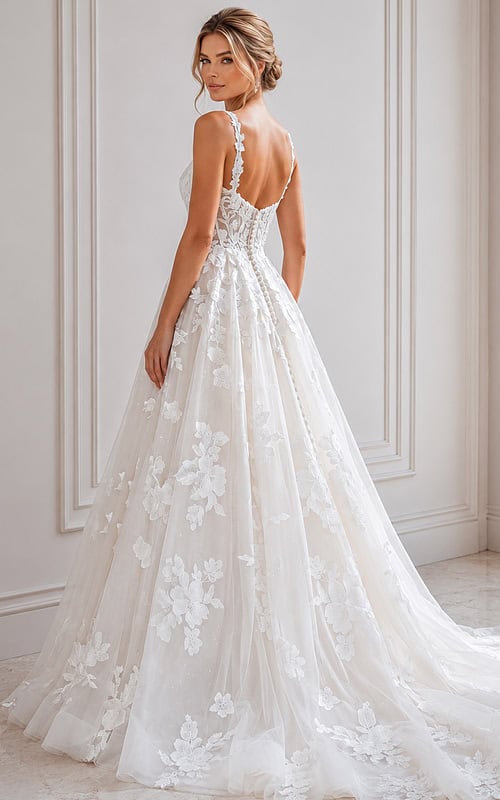
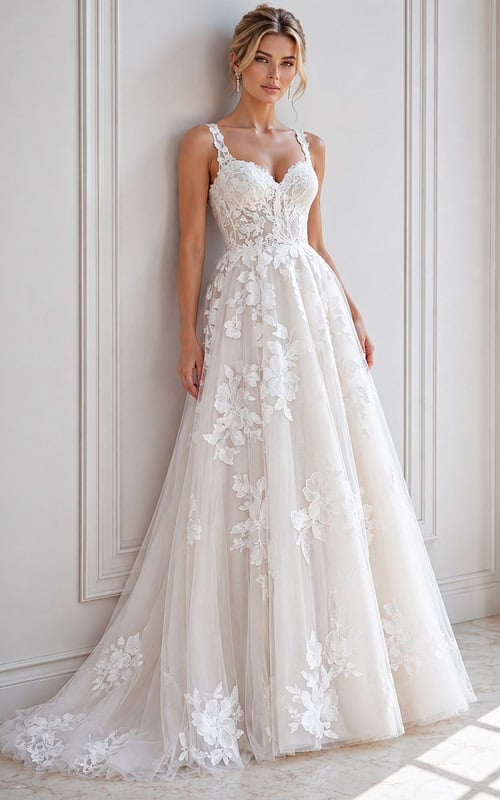
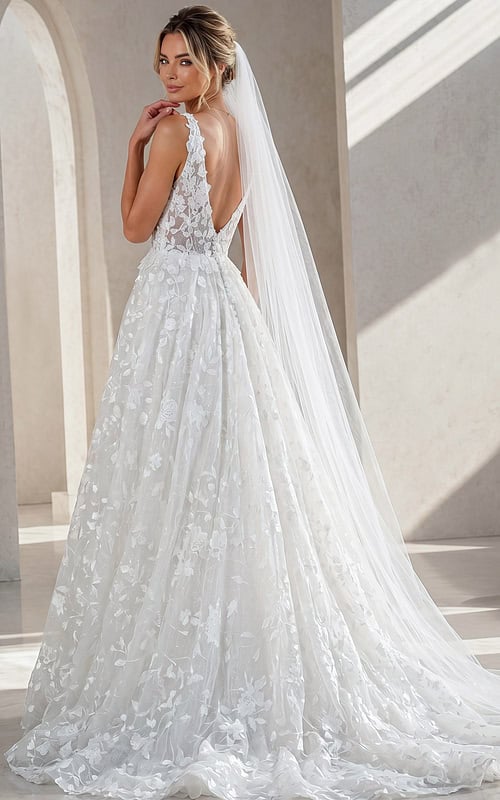
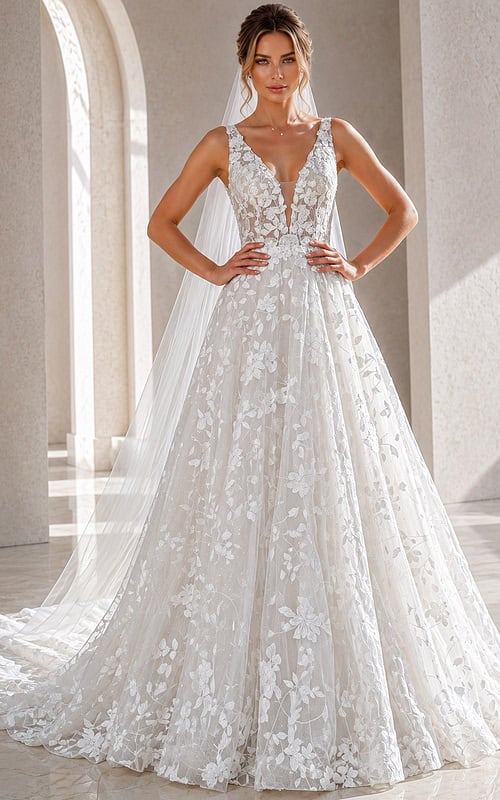
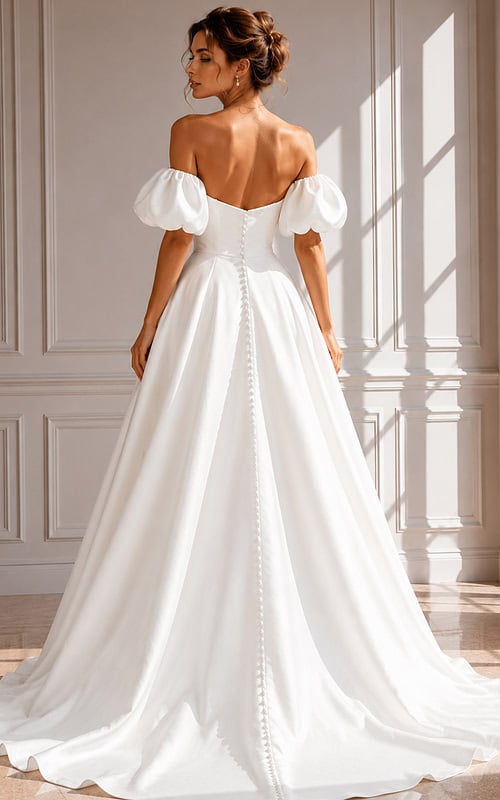
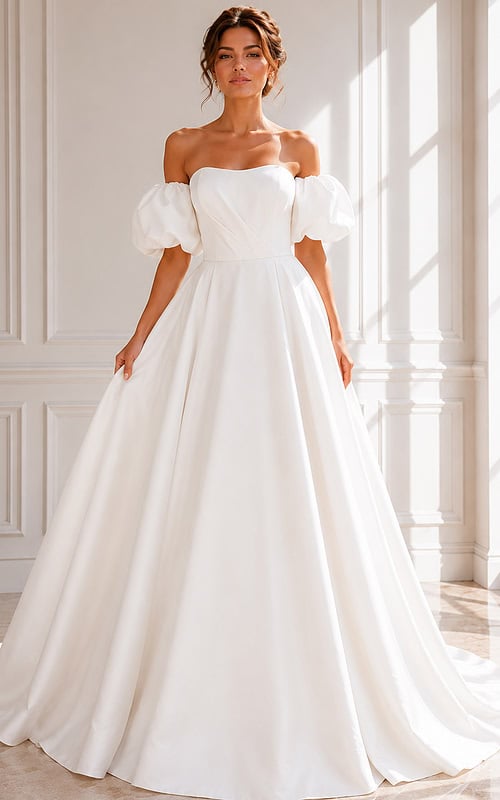
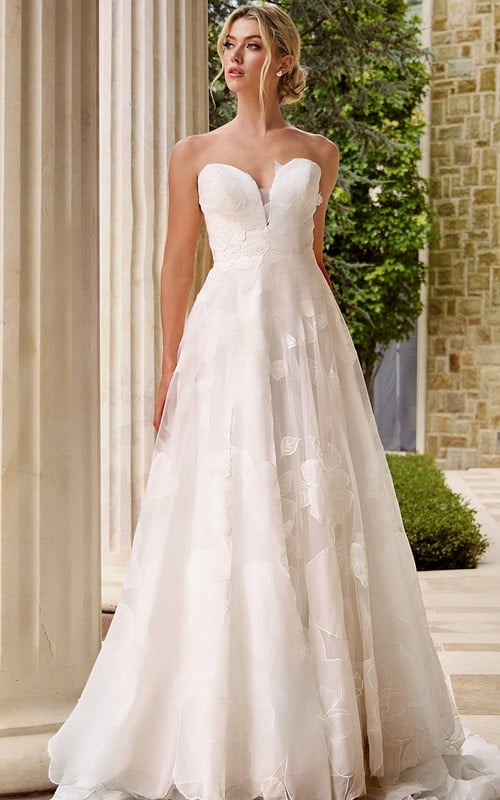
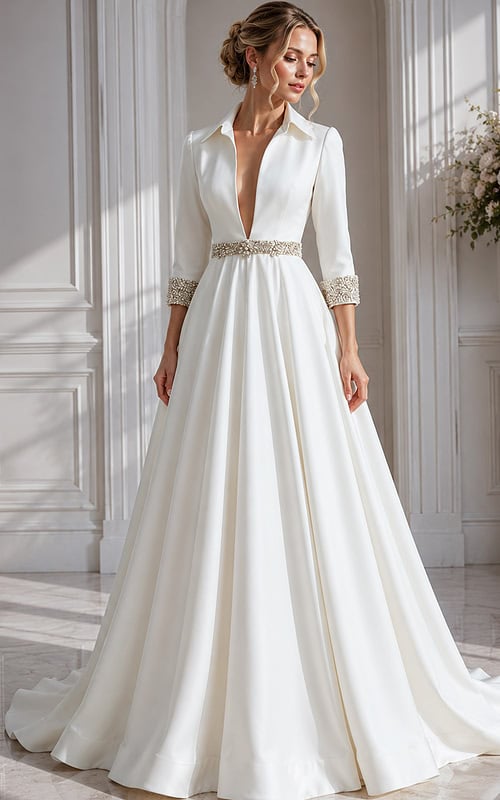
The defining feature of an A-line wedding dress is the transition from a shaped upper body into a skirt that widens progressively from the waist. That gradual release creates a clear bridal silhouette while leaving more space through the hips and skirt than a fitted gown. The exact proportion depends on where the waist is emphasized and how quickly the skirt begins to open.
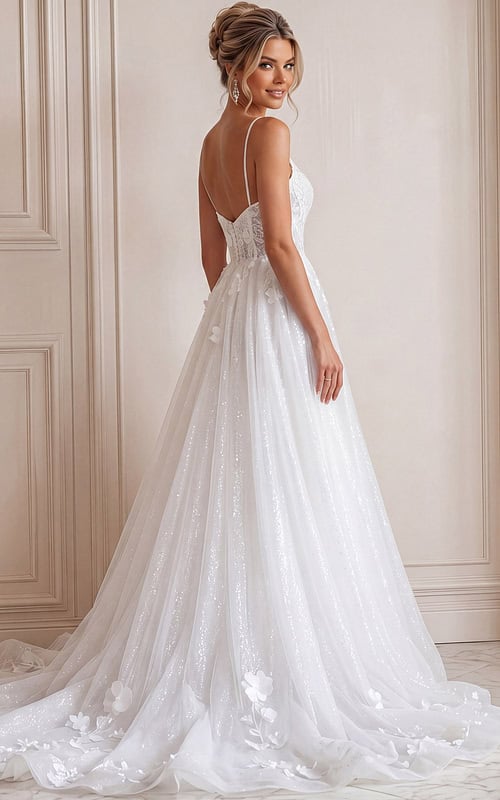
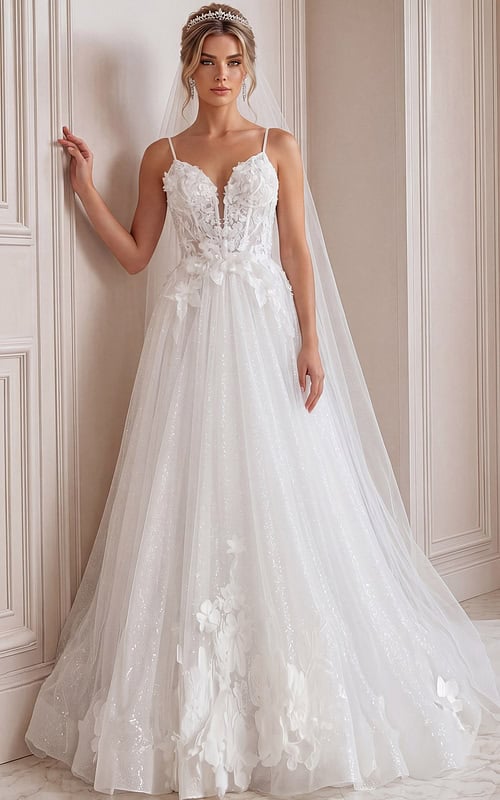
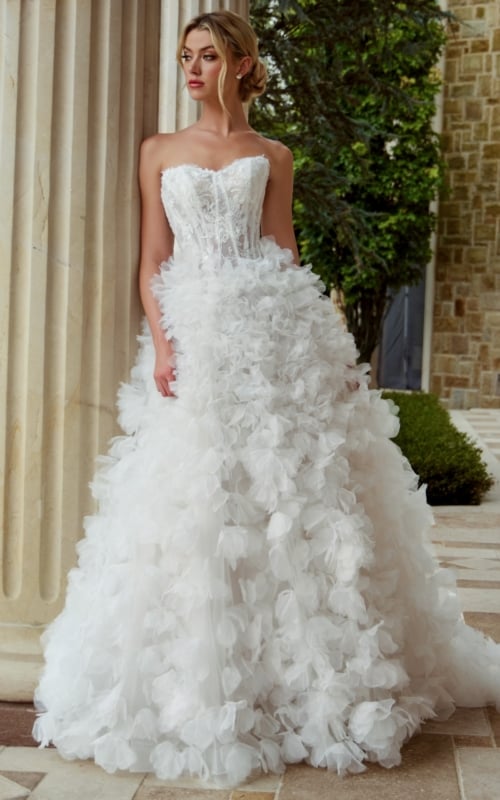
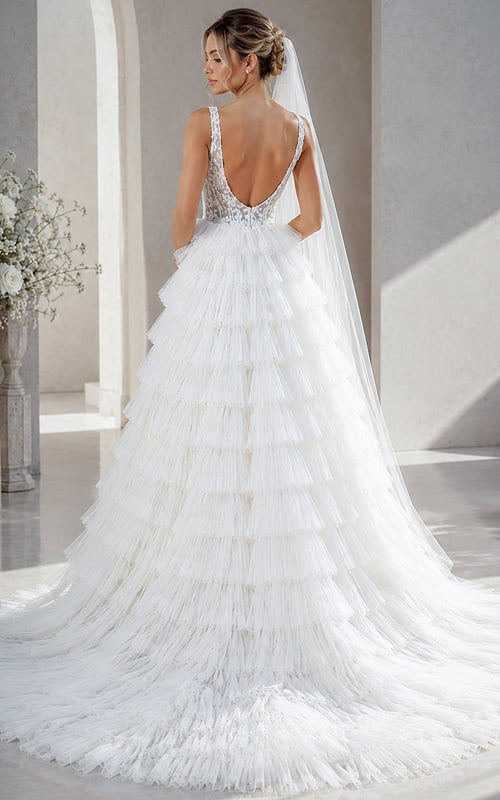
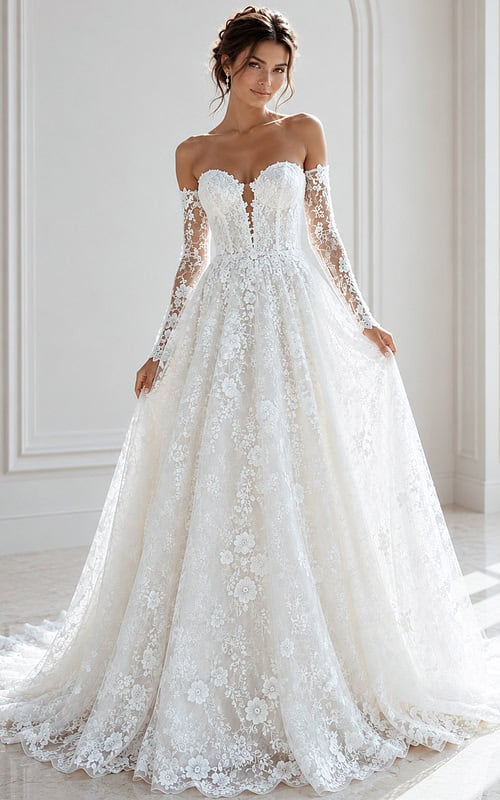
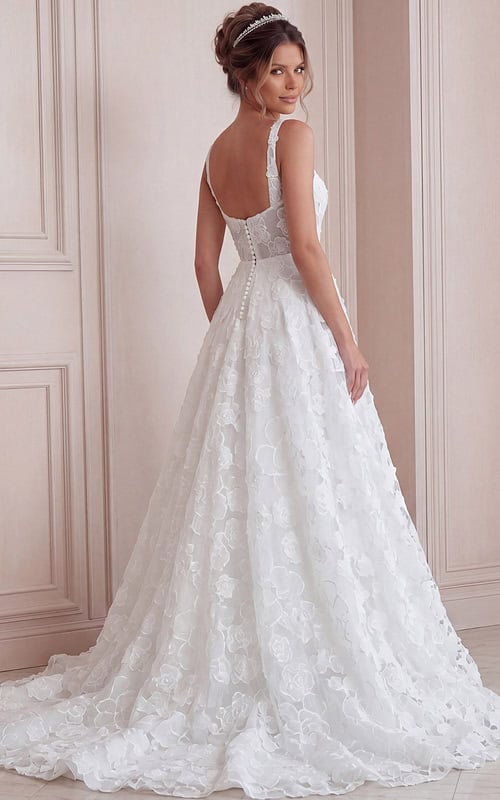
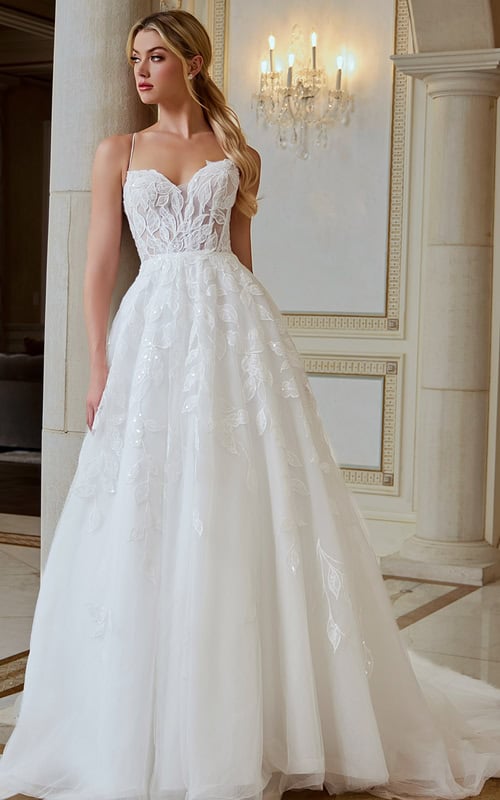
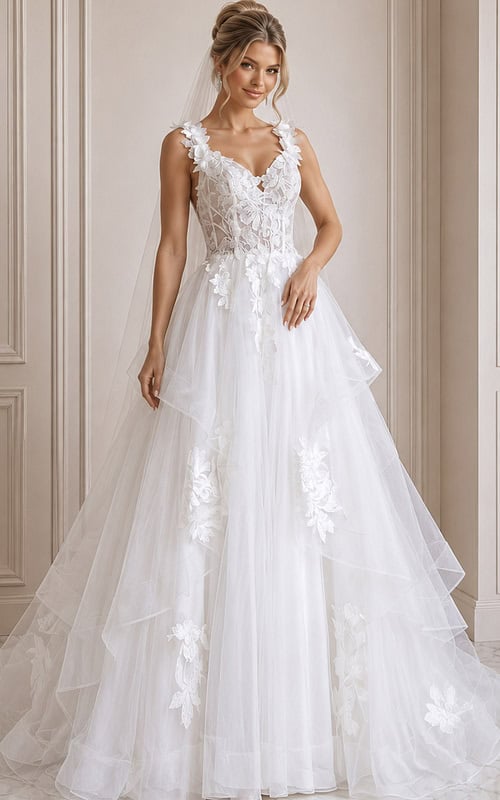
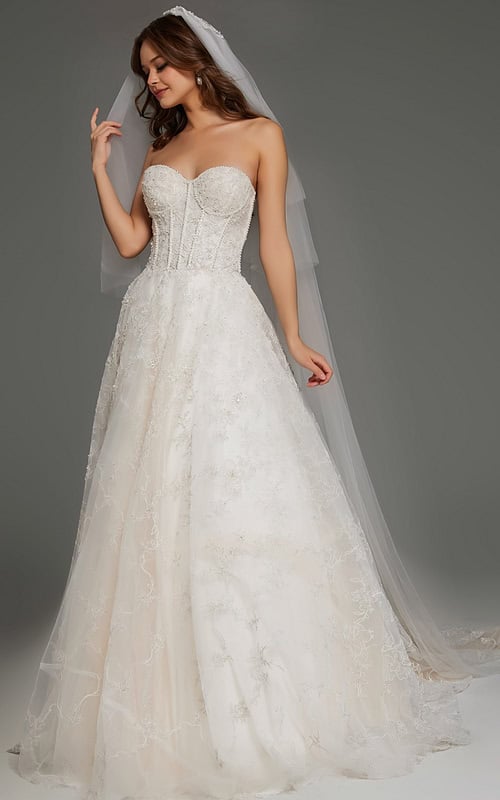
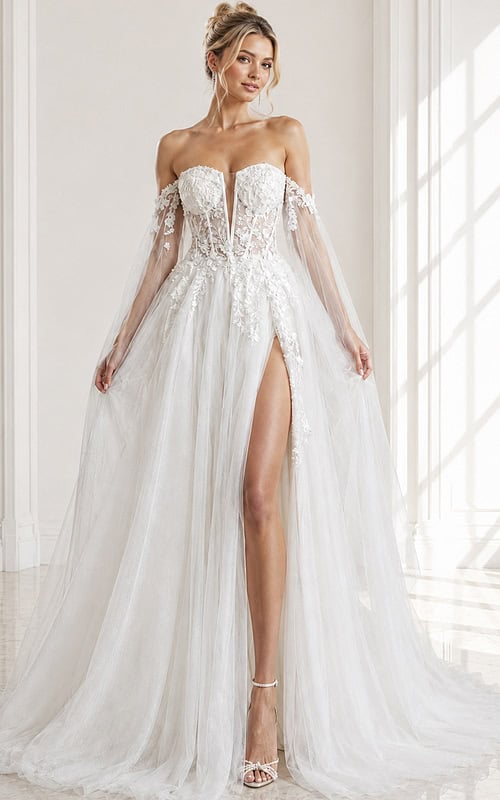
A natural-waist seam creates a distinct break between bodice and skirt, while an elongated corset or sculpted torso can extend the vertical line before the skirt expands. Light layering keeps the shape fluid; additional tulle, organza, or structured underskirts create more presence at the hem. Brides comparing broader silhouettes across the full assortment can also review Wedding Dresses to see how A-line proportions differ from ball gowns, sheath silhouettes, and more closely fitted shapes.
Bodice Construction Changes the A-Line Proportion
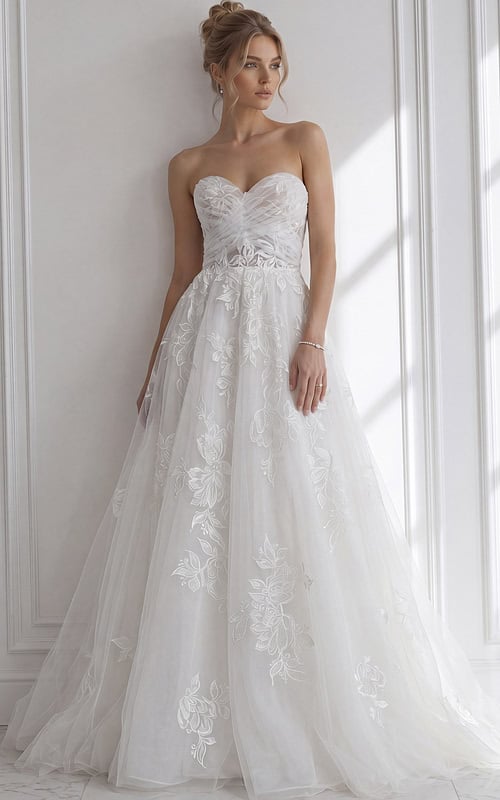
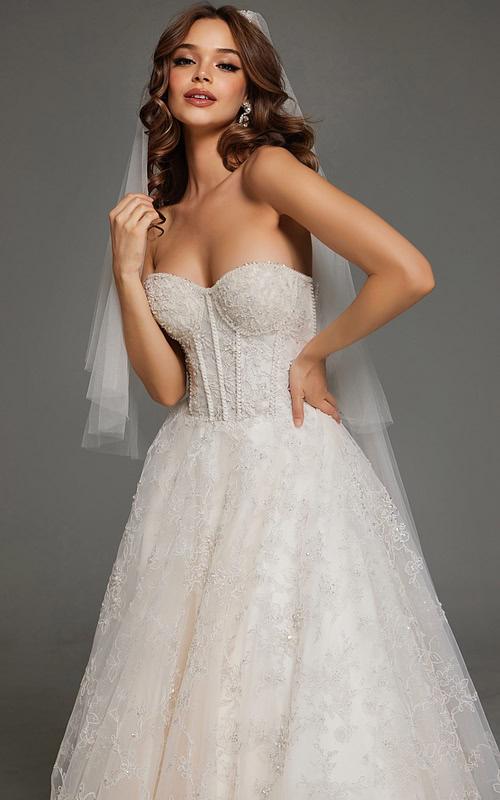
Because the skirt releases below the waist, the bodice carries much of the visual structure in an A-line gown. Corsetry, boning, seam placement, and lining determine how firmly the dress defines the bust and torso before the skirt begins. A sharply constructed bodice creates a more architectural transition, while softer construction produces a gentler line through the waist.
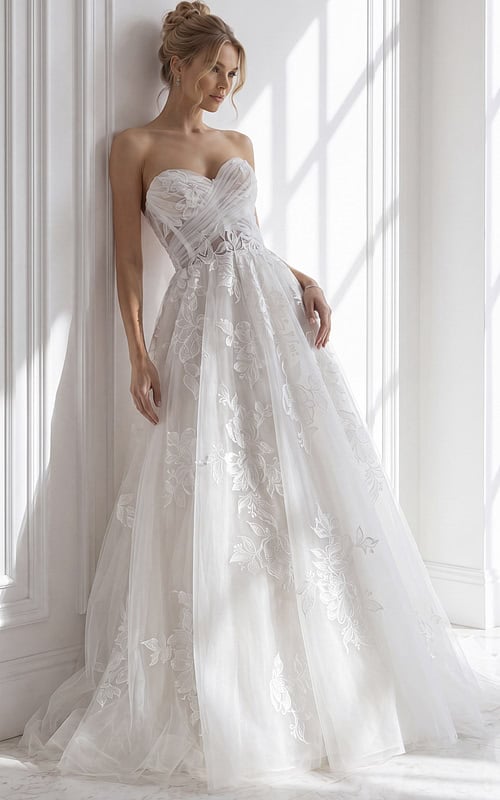
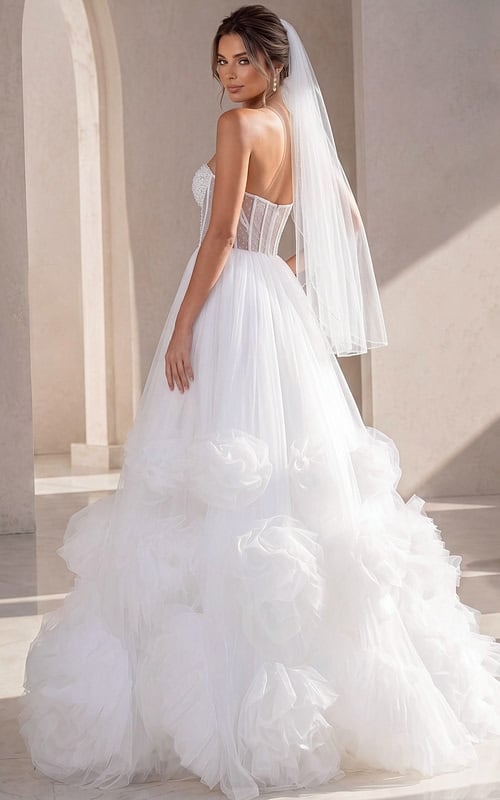
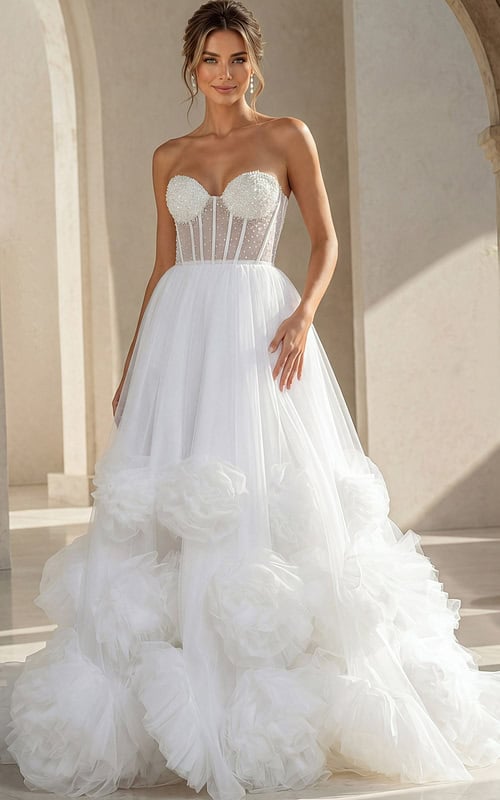
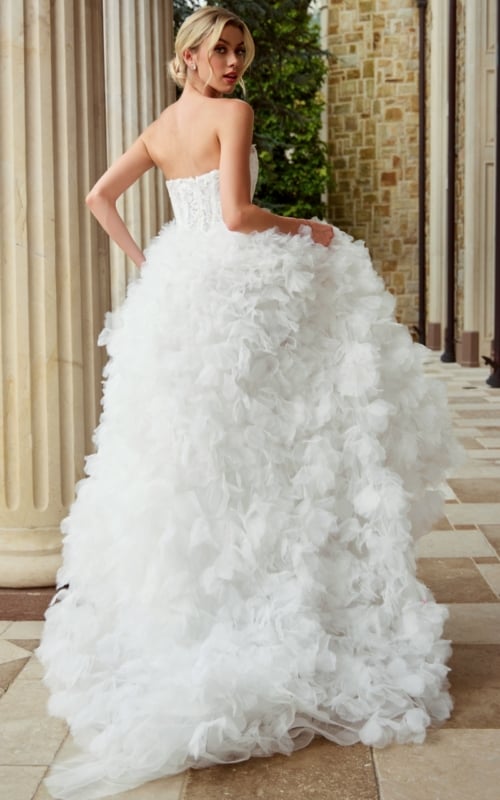
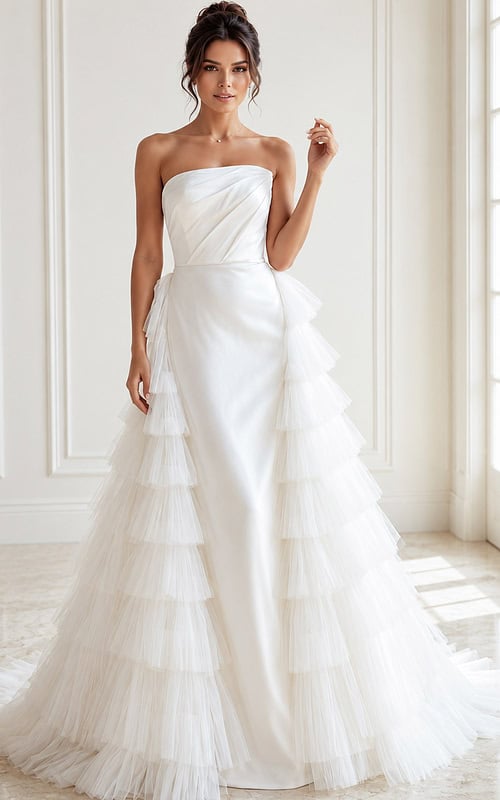
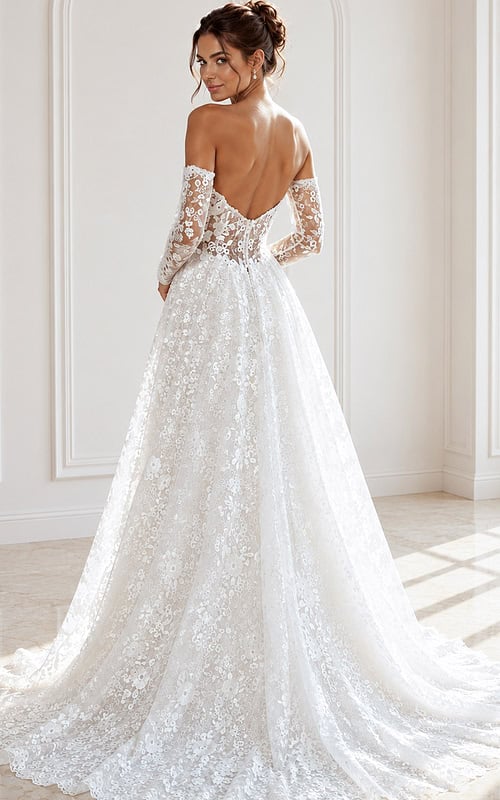
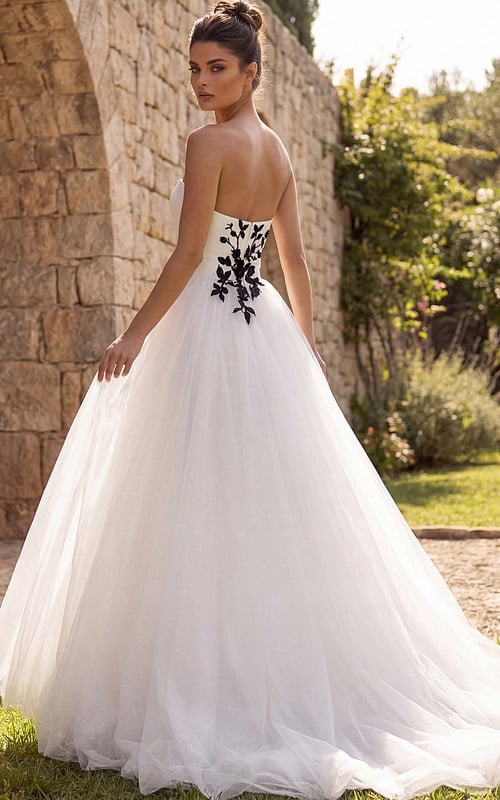
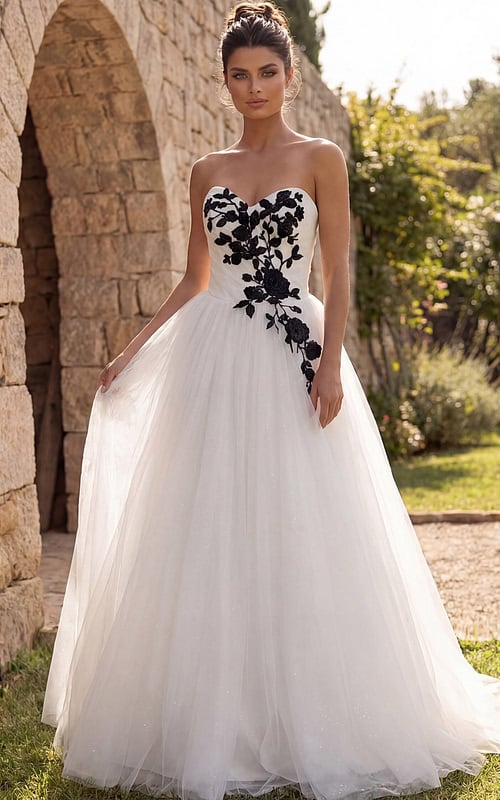
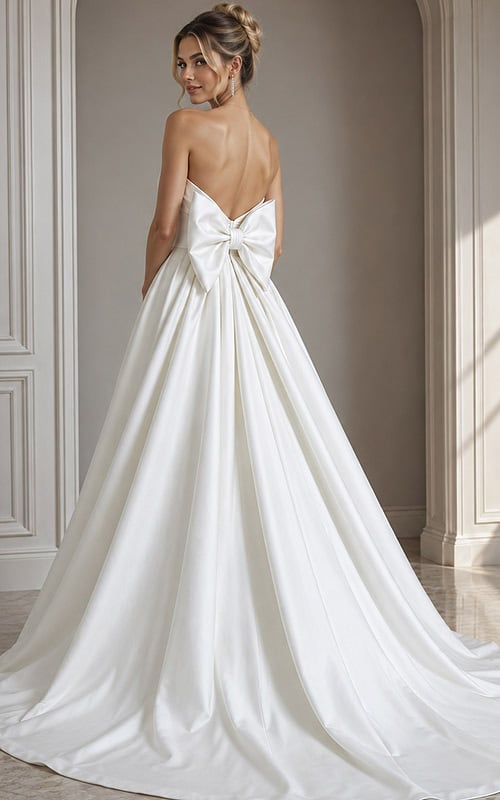
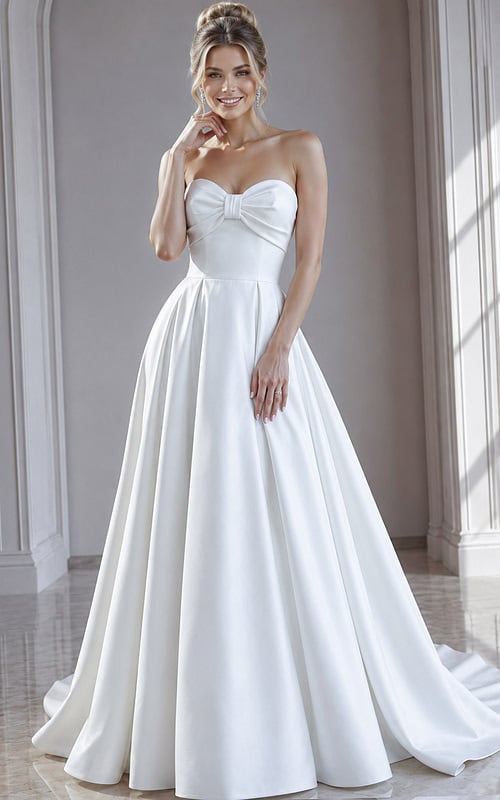
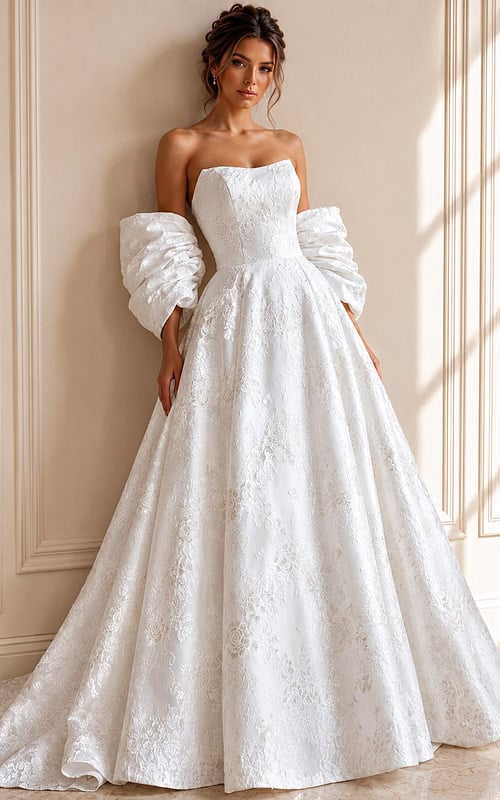
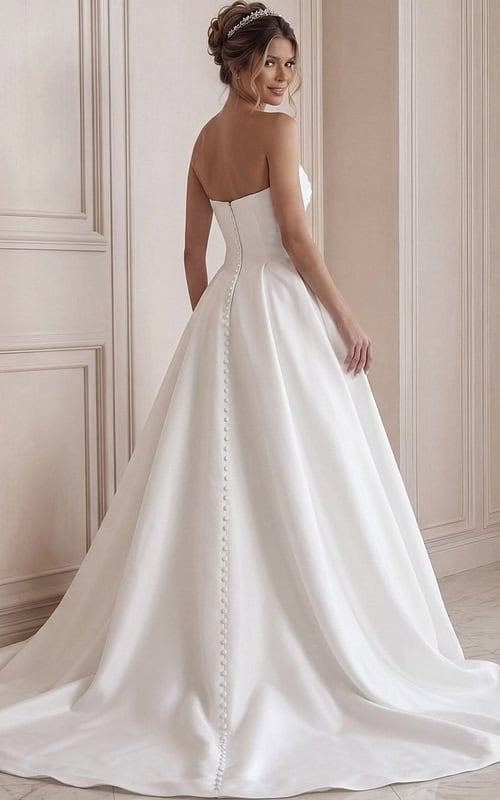
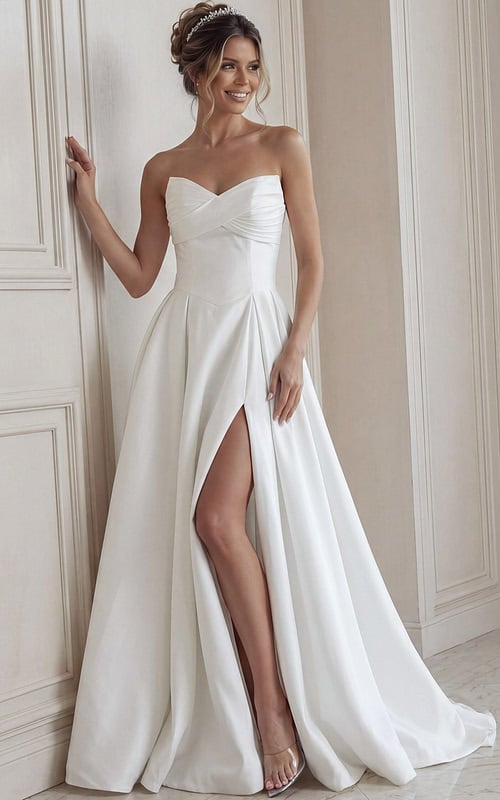
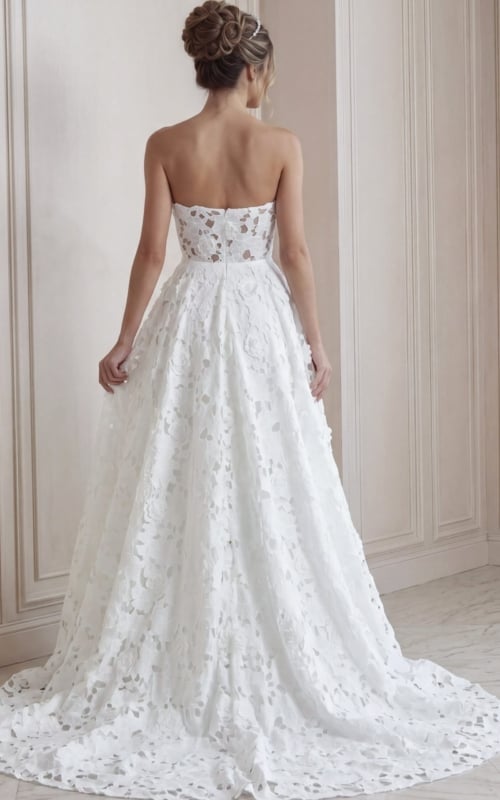
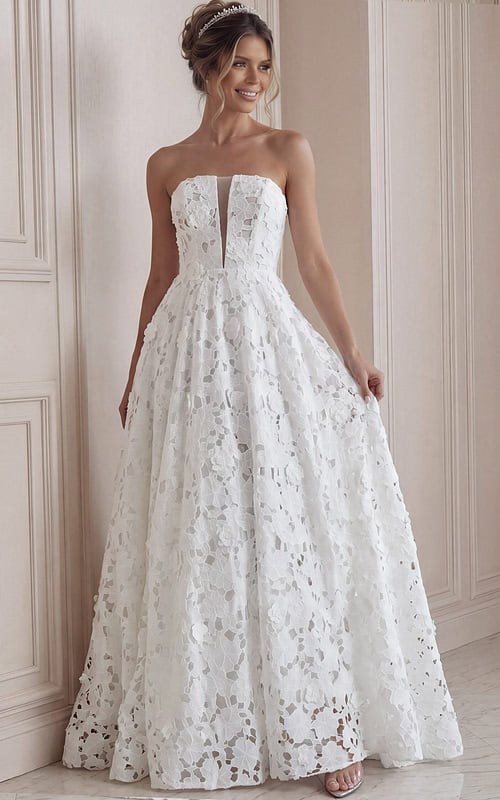
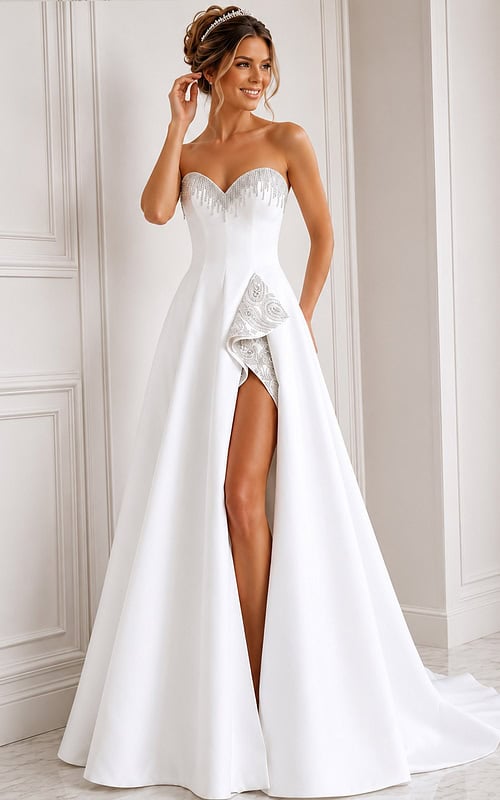
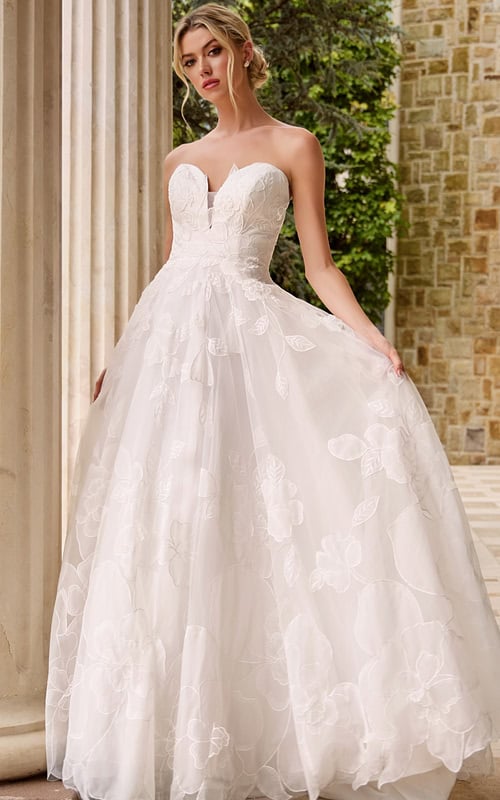
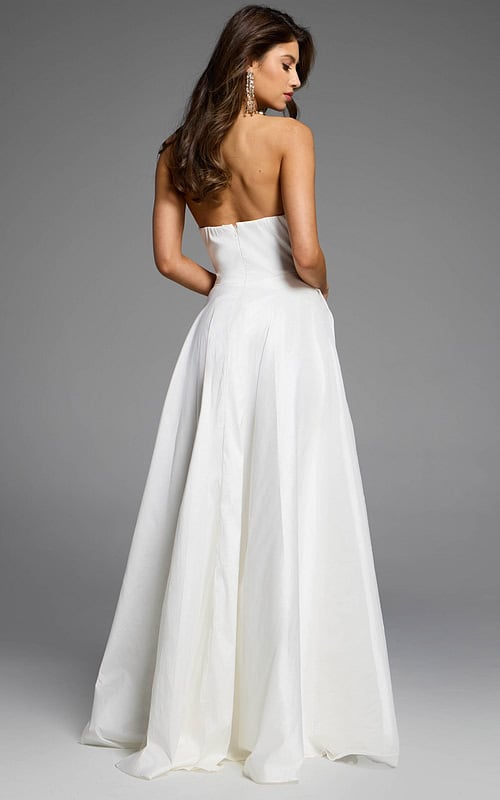
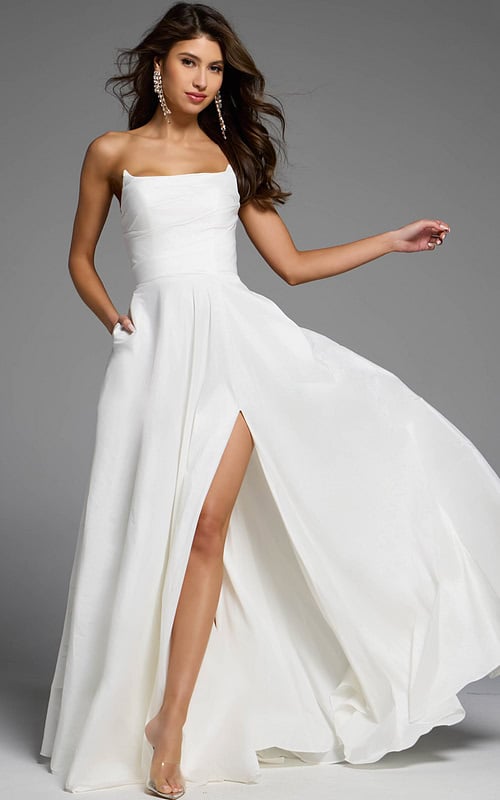
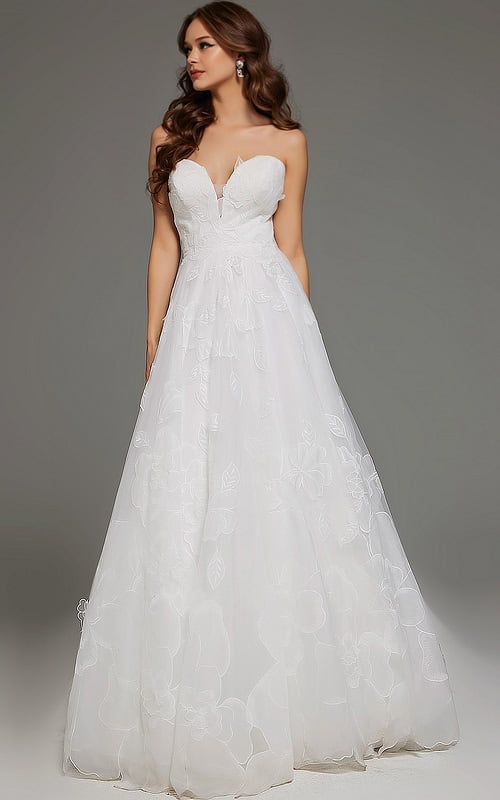
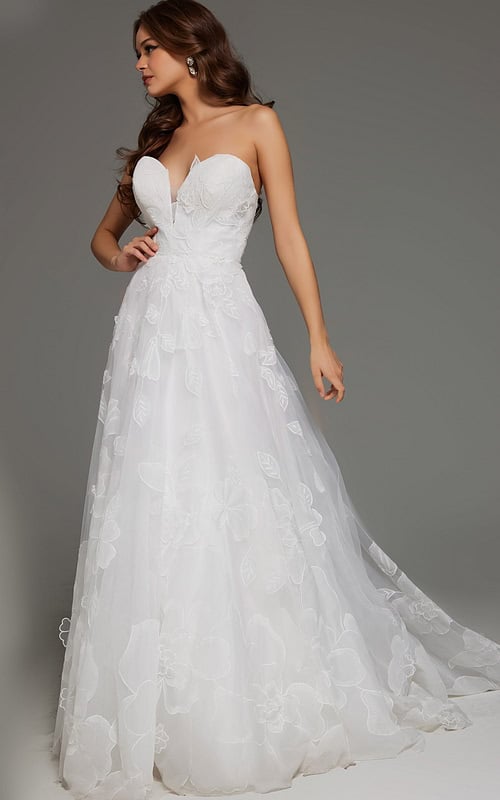
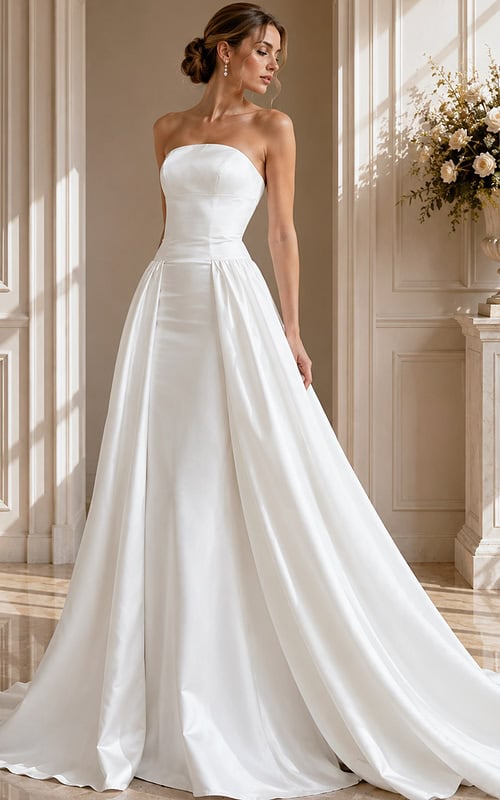
Strapless designs place even greater emphasis on this structure because the neckline remains open and the bodice must create both support and shape. Sweetheart, straight, and sculpted strapless necklines each change the upper-body balance. Brides comparing those options can explore Strapless Wedding Dresses, while off-the-shoulder and V-neck A-line gowns create different visual lines across the shoulders and décolletage.
Lace, Tulle and Satin A-Line Bridal Gowns
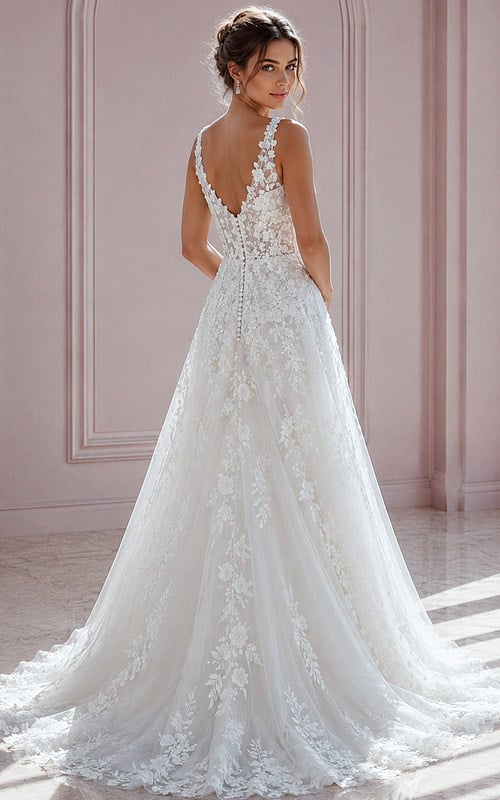
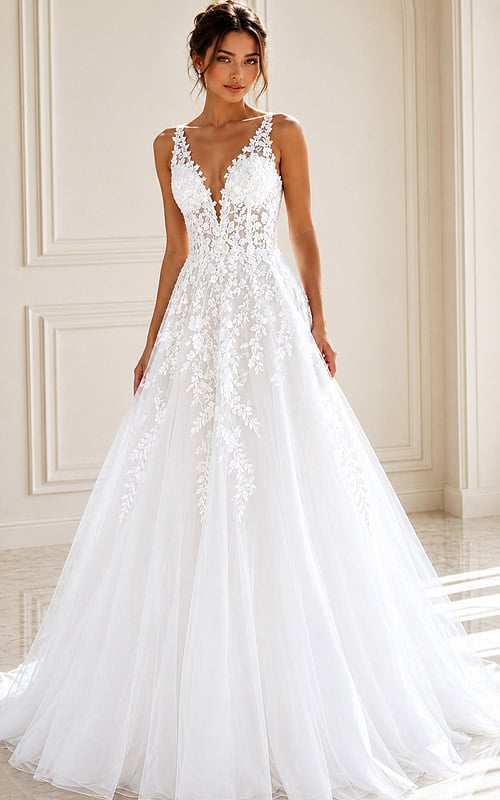
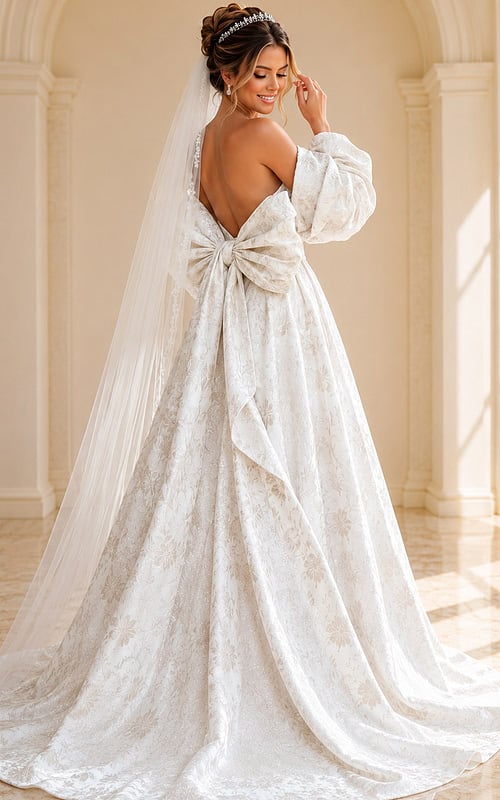
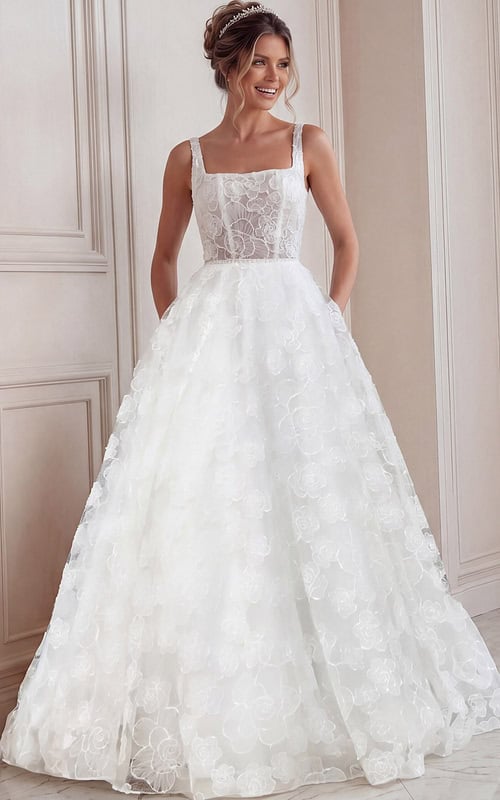
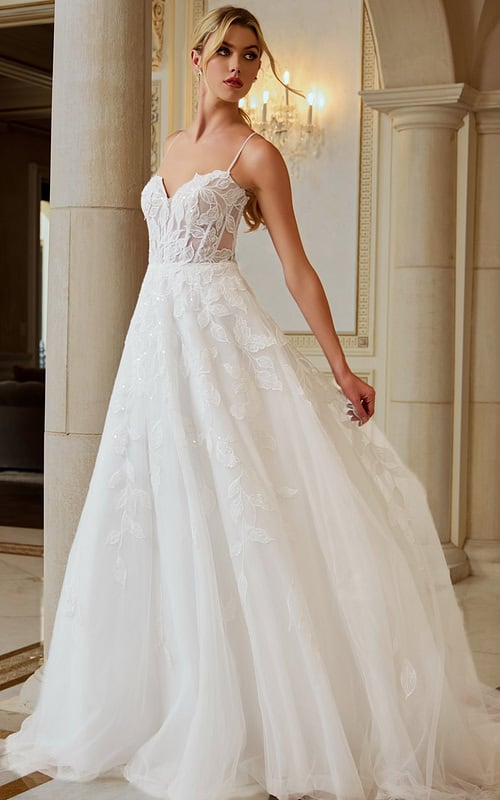
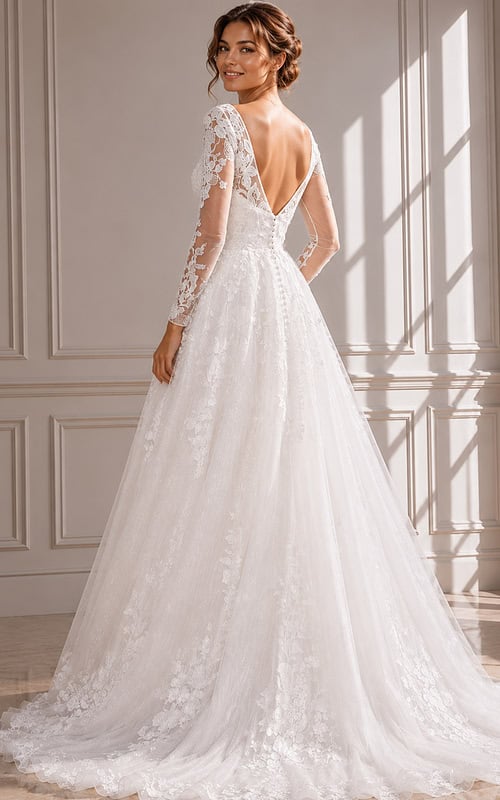
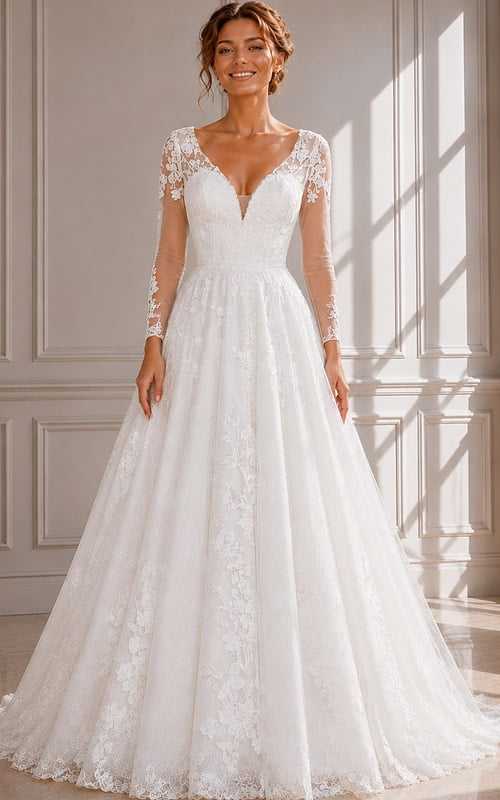
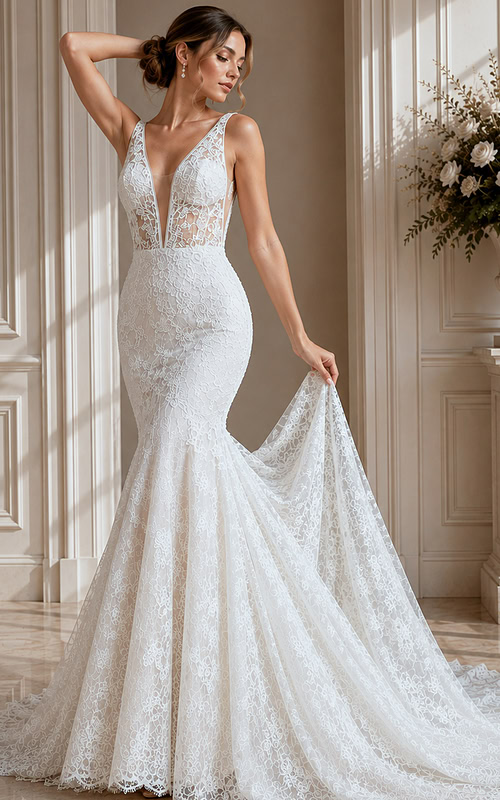
Fabric affects both the movement and the visual weight of an A-line wedding gown. Lace adds pattern across the silhouette, and its placement can draw attention to the bodice, waist, skirt, or train. Floral appliqué that continues from the bodice into the skirt creates a more connected surface, while concentrated lace at the top allows the skirt shape to remain cleaner. The Lace Wedding Dresses collection offers a useful comparison for brides who want texture to play a larger role in the overall design.
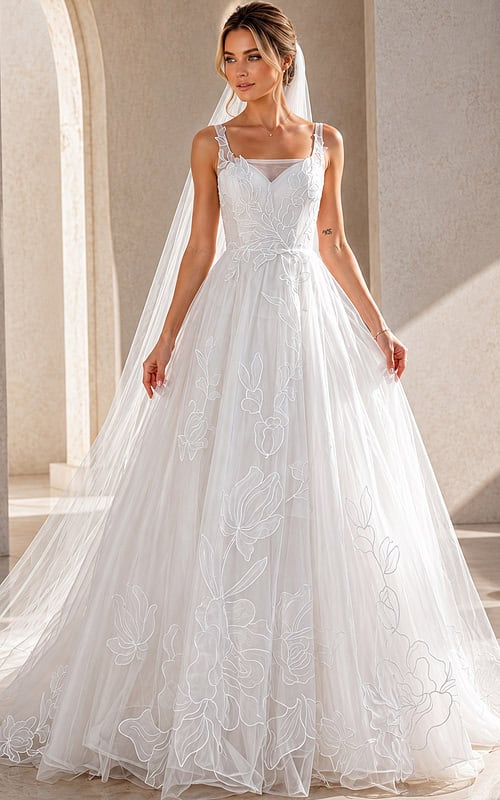
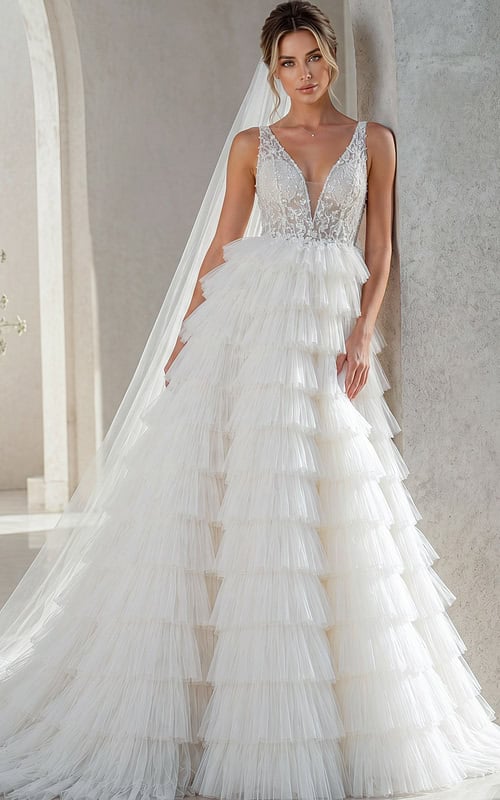
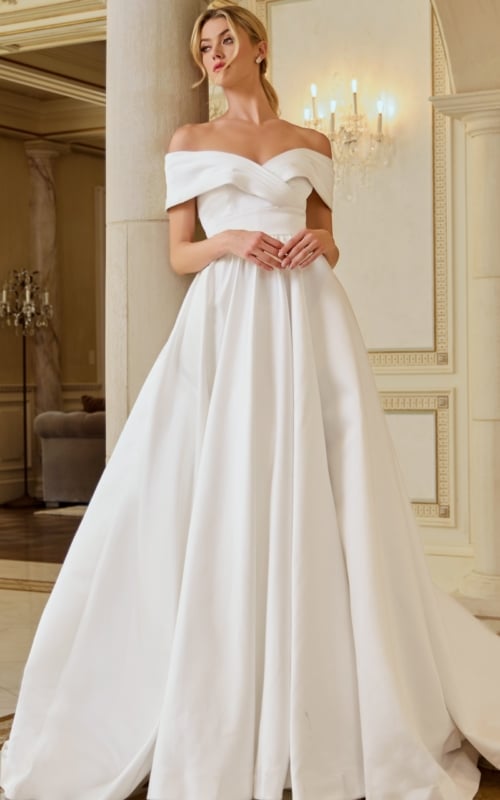
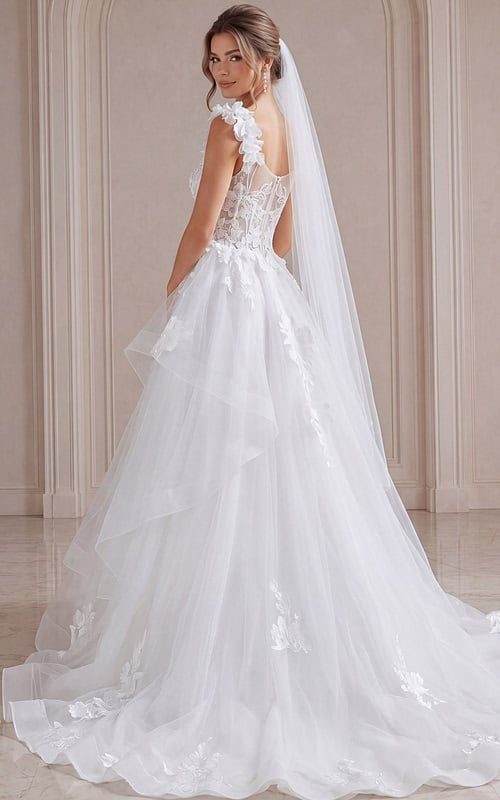
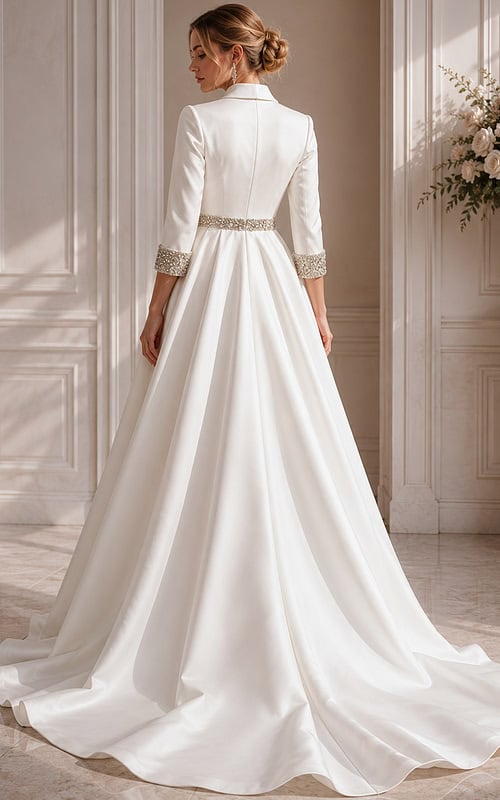
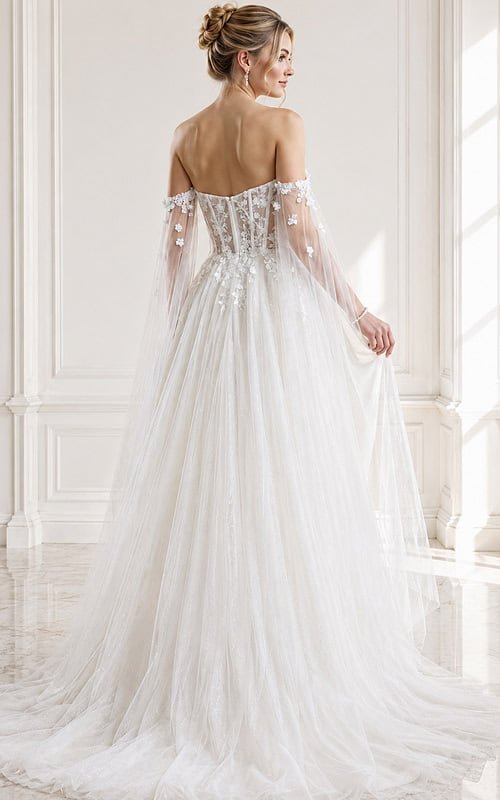
Tulle creates lighter volume and can soften the transition from a fitted bodice into a wider skirt. Embroidered or layered tulle adds dimension without relying on a dense fabric surface. Satin works differently: its smooth finish makes seam placement, pleating, waist construction, and skirt architecture more visible. A satin A-line can therefore read as restrained and sculptural even when the skirt has significant movement.
Necklines, Sleeves and Details That Shift the Balance
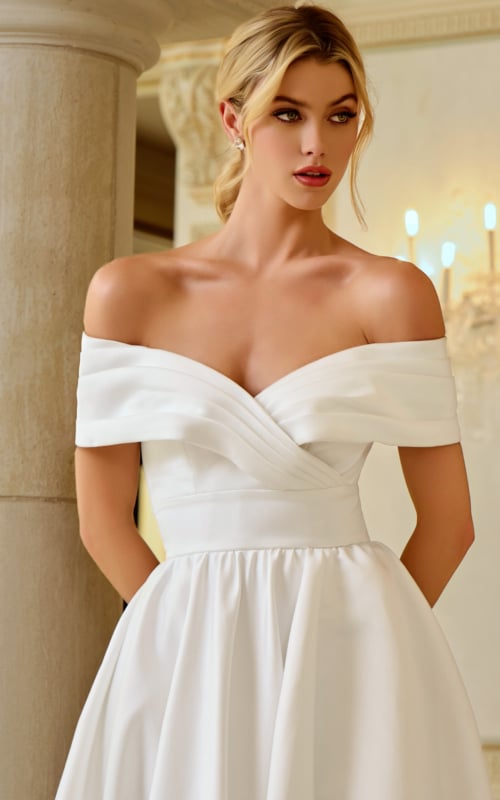
The same A-line skirt can look noticeably different depending on the neckline and upper-body treatment. Deep V-necks create a longer vertical line through the bodice, while square necklines introduce stronger horizontal and vertical edges. Off-the-shoulder sleeves broaden the visual line across the shoulders, and one-shoulder construction adds asymmetry above the balanced skirt shape.
Surface detail changes the balance as well. Crystal accents, beadwork, and embroidered motifs concentrate light and texture in specific areas, while cleaner fabrics keep attention on proportion and cut. Brides who prefer more reflective or densely embellished surfaces can compare Beaded Wedding Dresses without shifting the focus of this collection away from A-line construction.
How A-Line Differs from Mermaid and More Fitted Shapes
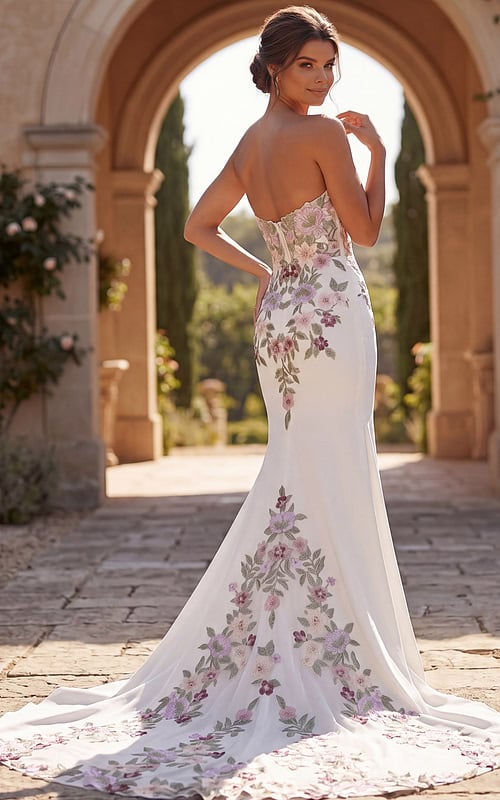
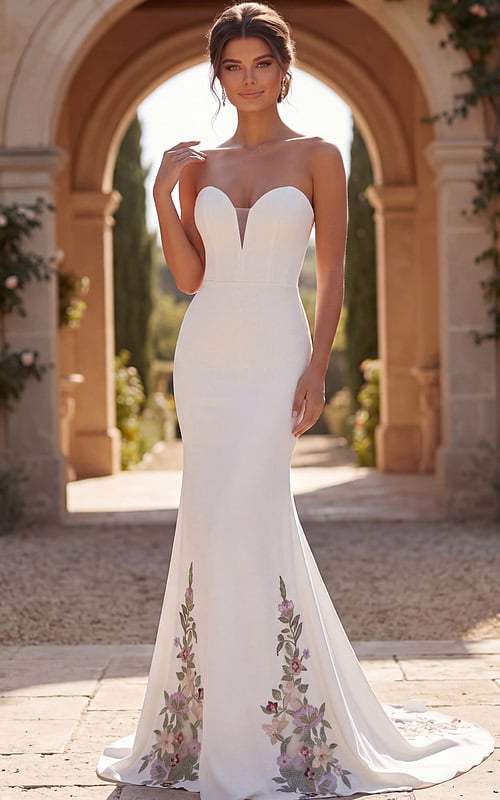
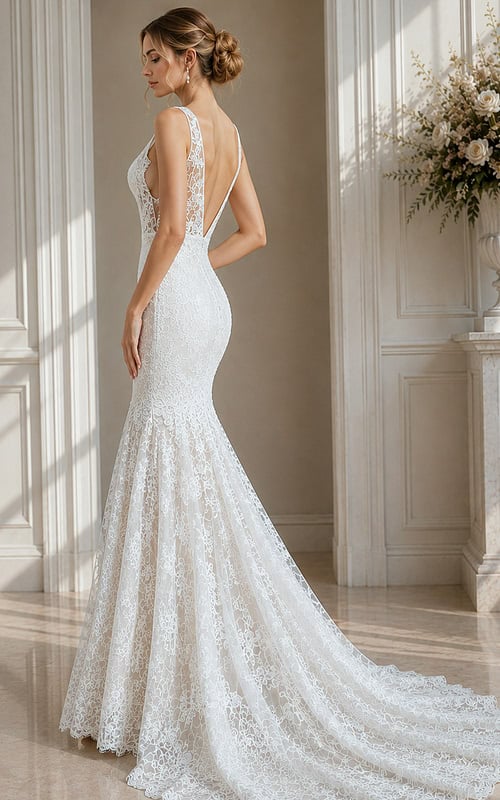
A-line and fitted bridal silhouettes handle the hip line very differently. An A-line begins opening at or near the waist and does not depend on a close fit through the hips. A mermaid or fitted gown stays nearer to the body for longer before releasing lower down, which creates a more pronounced contrast between the torso, hips, and lower skirt.
This distinction matters when comparing movement and proportion. A-line skirts generally allow more room through the lower body and create a continuous widening line toward the floor. Brides considering a more sculpted alternative can view Mermaid Wedding Dresses to compare where the skirt begins to flare and how closely the gown follows the body before that point.
Choosing the Right A-Line Wedding Gown
Start with the amount of structure you want through the bodice, then compare waist placement and skirt volume. A corseted style with a defined waist produces a stronger transition into the skirt; softer bodices and lighter fabrics create a more relaxed line. Next, look at how the neckline works with that structure and whether the train adds the degree of formality you want for the ceremony and venue.
Movement is equally important. Layered tulle can create an airy sweep, satin carries more visual weight, and lace introduces texture that changes how the skirt reads in photographs and at a distance. Jovani A-line bridal gowns use these materials across both clean and highly detailed designs, so the most useful comparison is not simply one fabric against another, but how fabric, bodice construction, waist definition, and skirt volume work together in the finished silhouette.