
1 Colors
Short Wedding Dresses
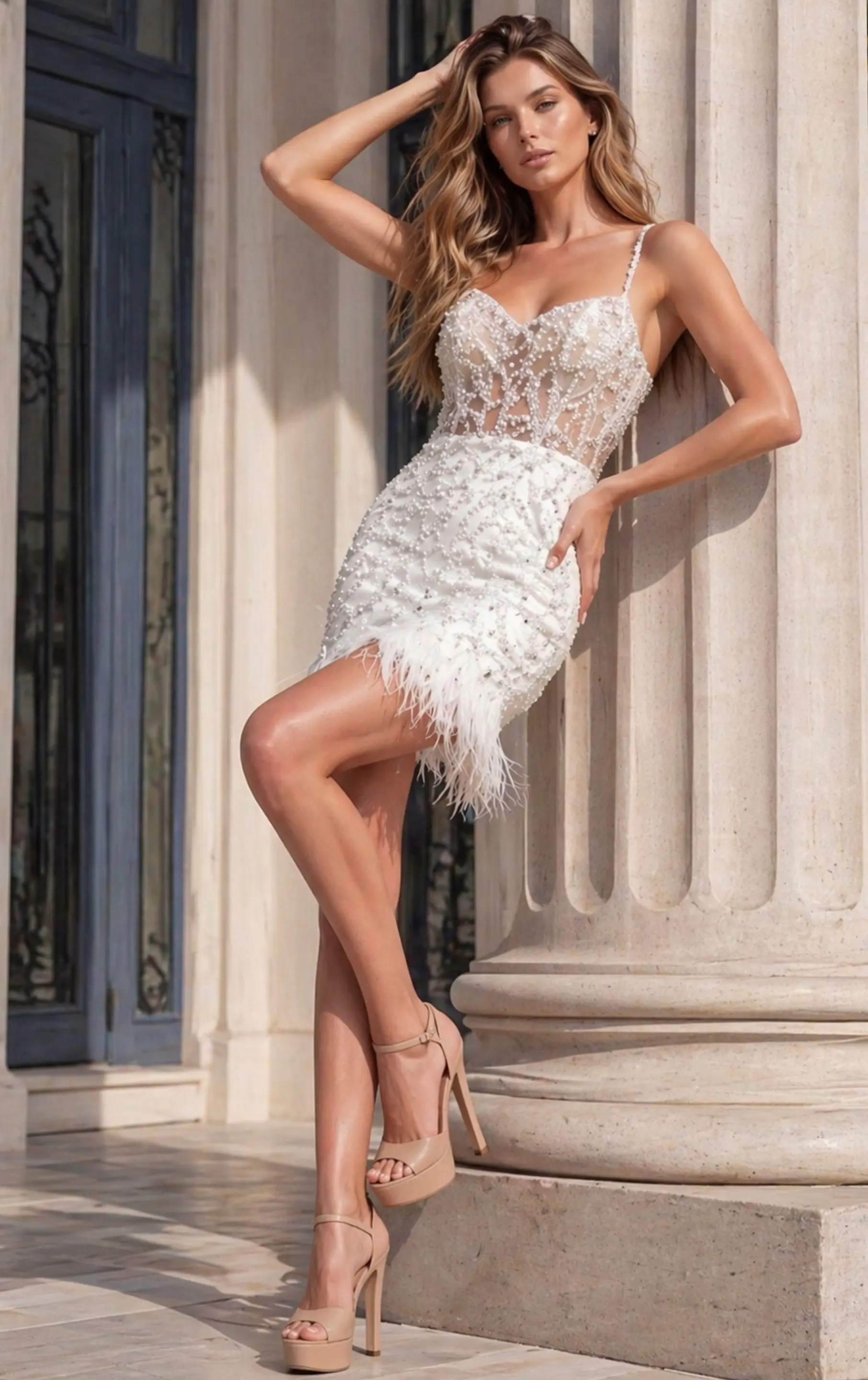
Short wedding dresses bring bridal structure and ceremony-ready detail into mini, midi, and tea-length proportions. Jovani's selection includes fitted sheaths, A-line minis, lace midis, high-low shapes, sculpted strapless bodices, floral appliques, beadwork, sequins, and clean satin finishes. Compare where the hem falls, how closely the dress follows the waist and hips, and how much volume sits in the skirt. Shorter lengths also make footwear more visible, so proportion between neckline, bodice, hem, and shoe becomes part of the overall look. These designs suit brides who want a compact silhouette without giving up deliberate construction or bridal finish.
2 Colors
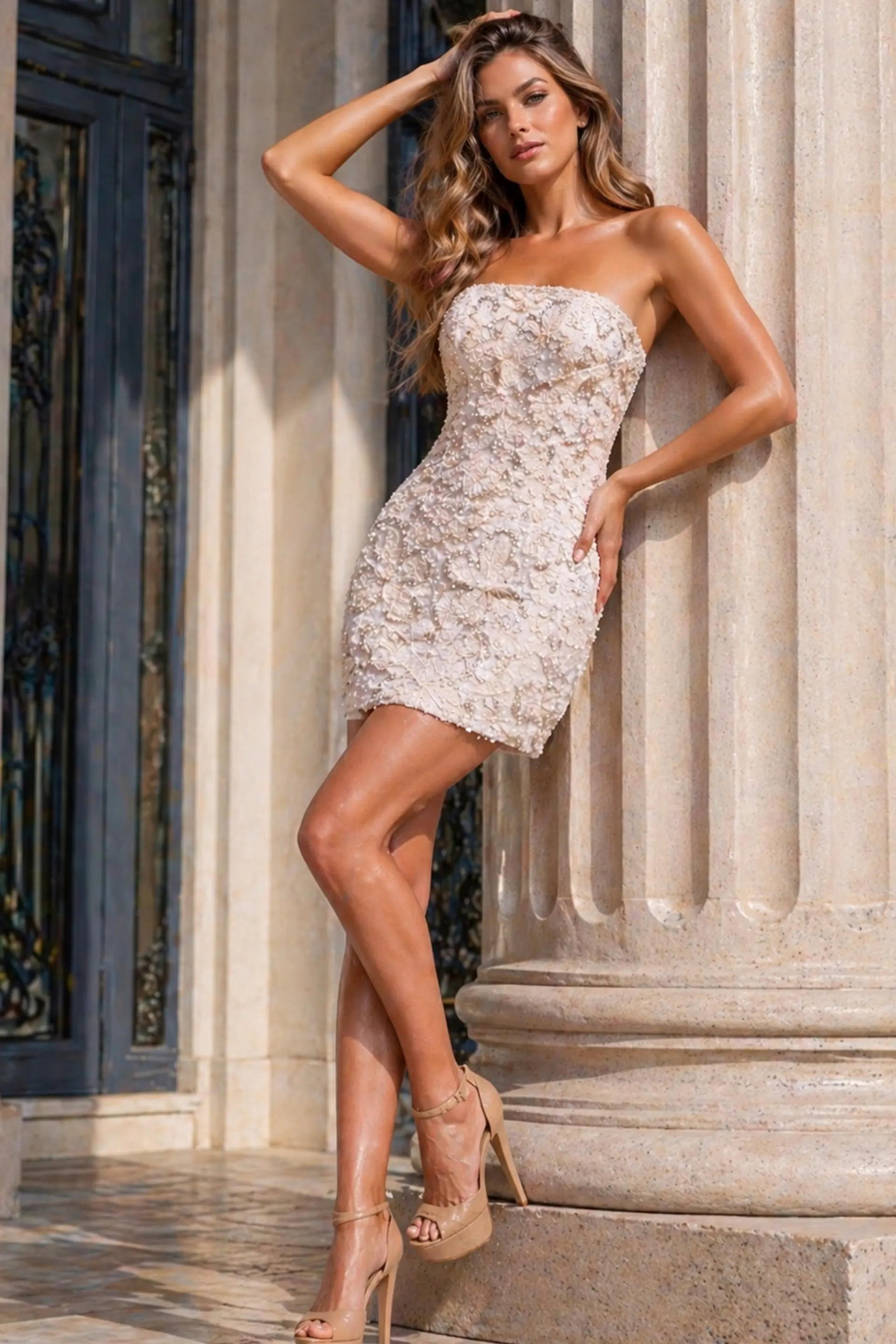
Strapless Embellished Mini Dress 52614
1 Colors
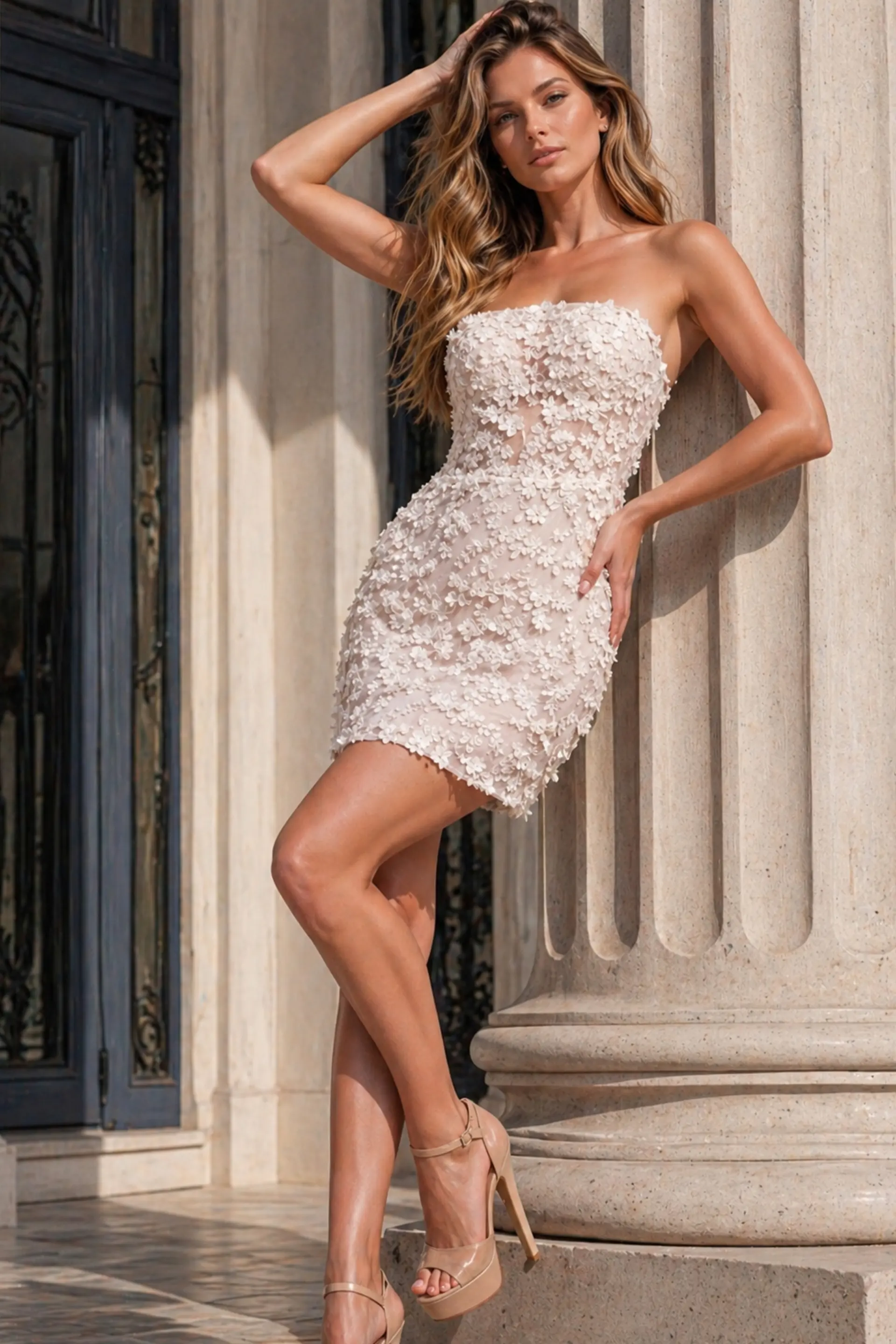
Strapless Floral Appliqué Mini Dress 52072
1 Colors
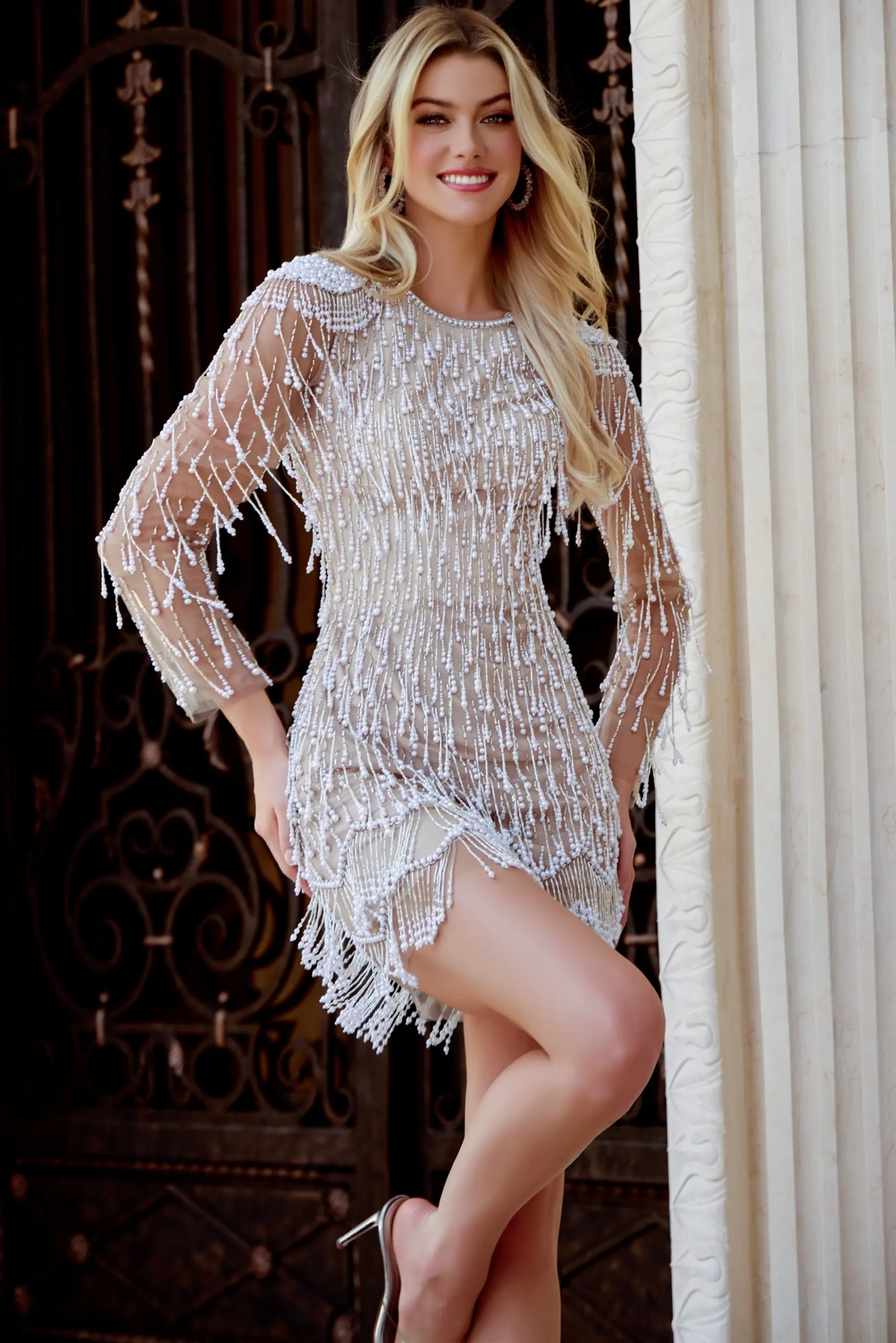
Short Beaded Fringe Mini Dress with Sheer Sleeves 48152
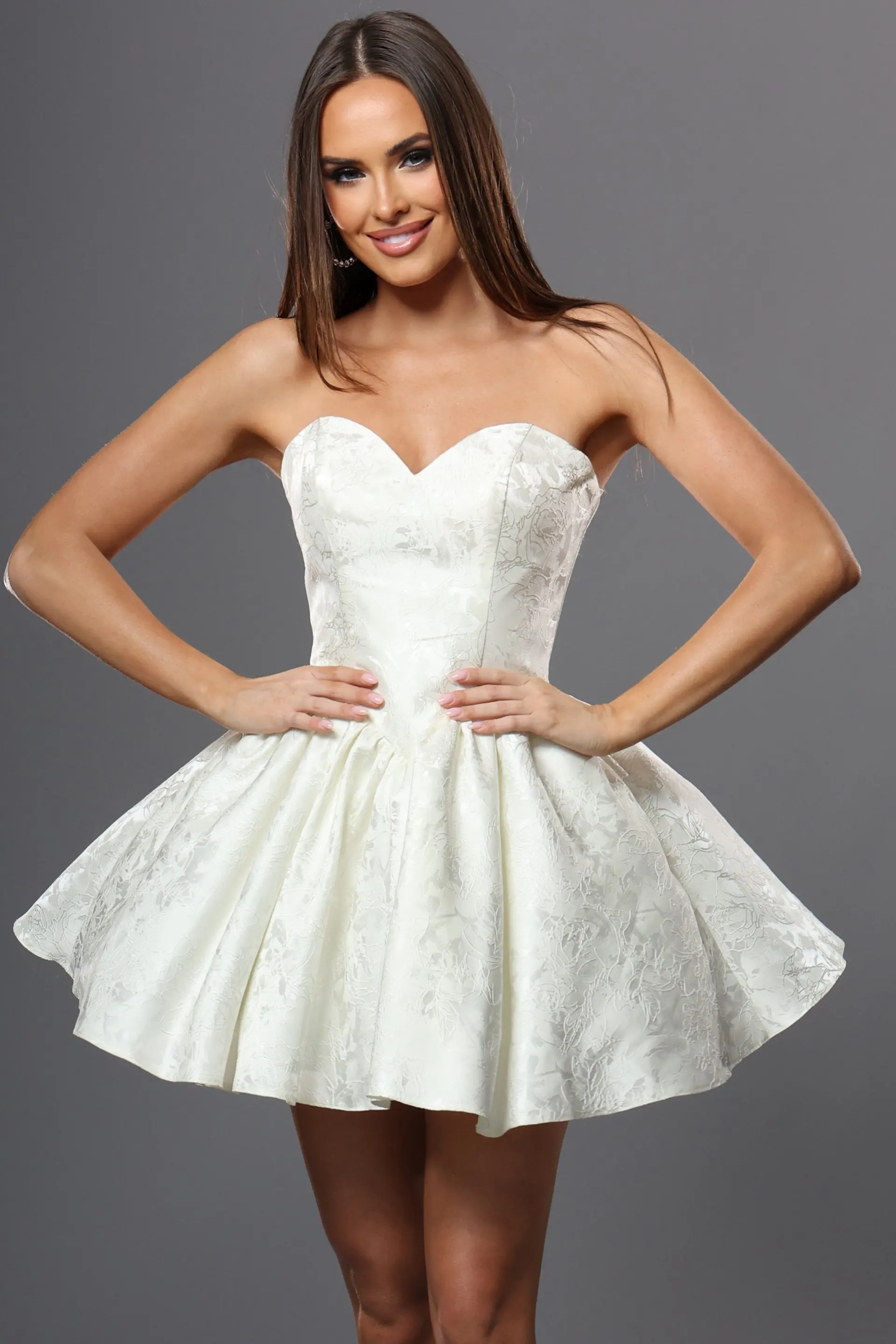
1 Colors
Floral Jaquard Fit And Flare Mini Dress 52228
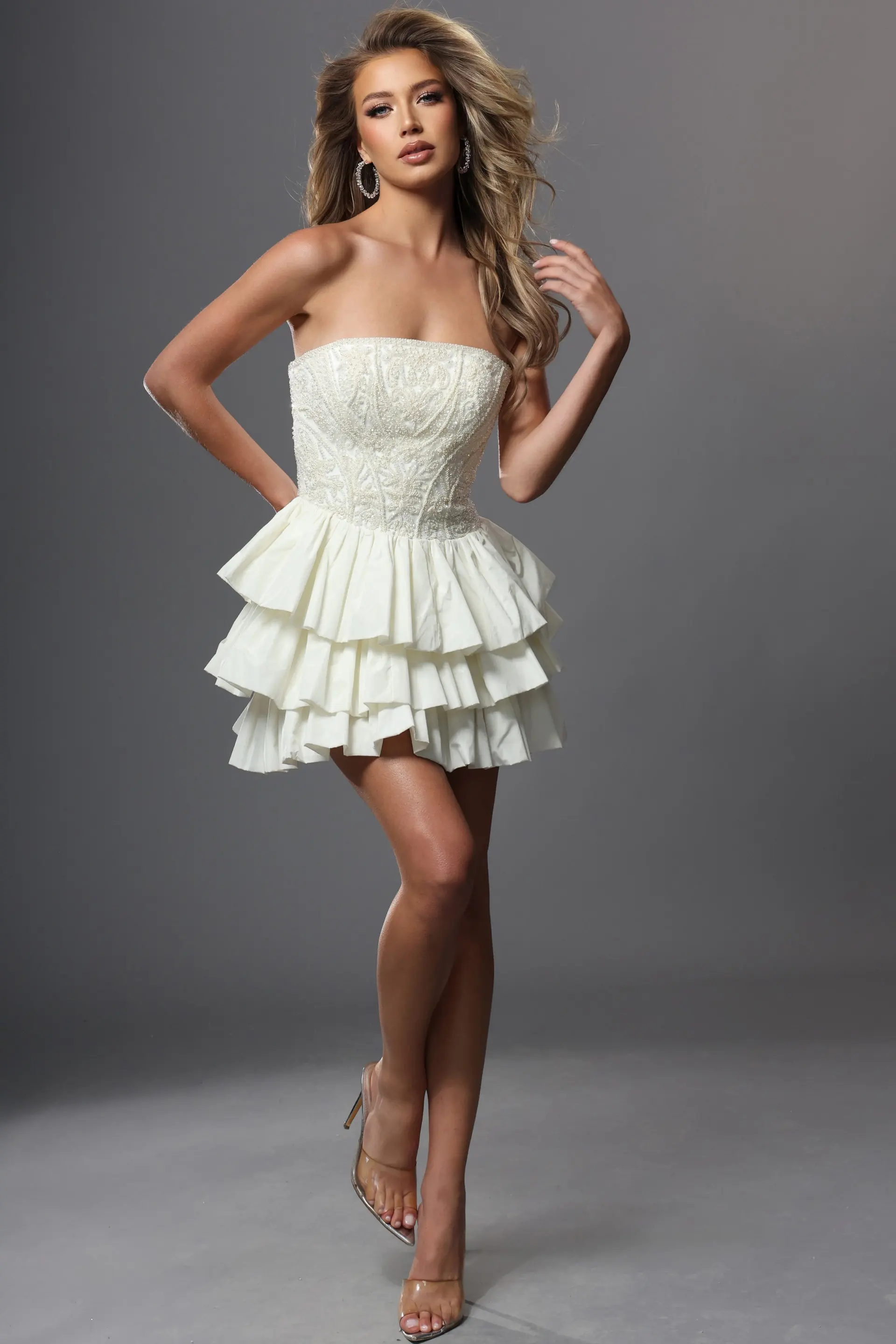
1 Colors
Tiered Ruffle Fit And Flare Mini Dress 46972
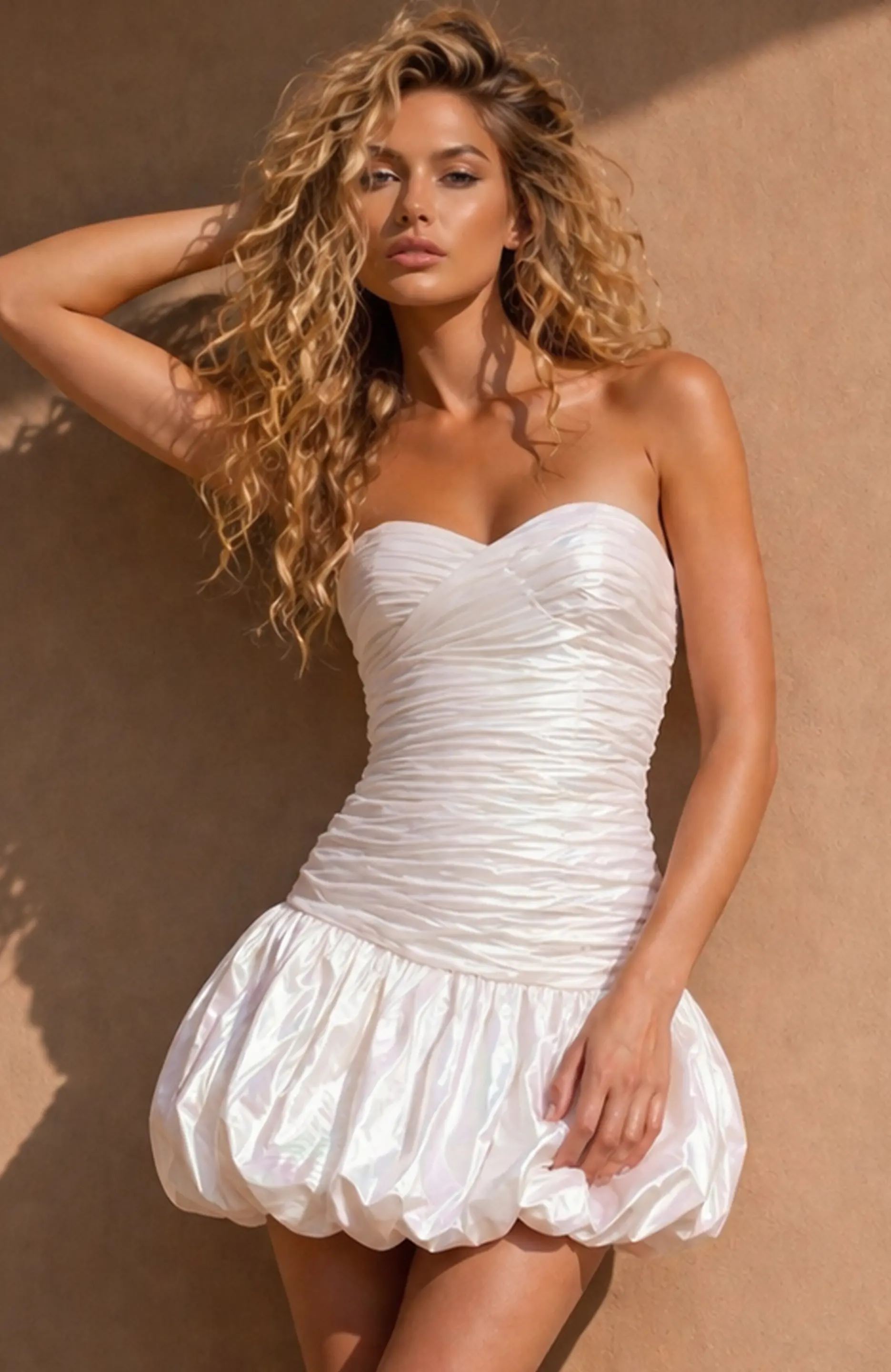
1 Colors
Ruched Strapless Bubble Hem Mini Dress 52225
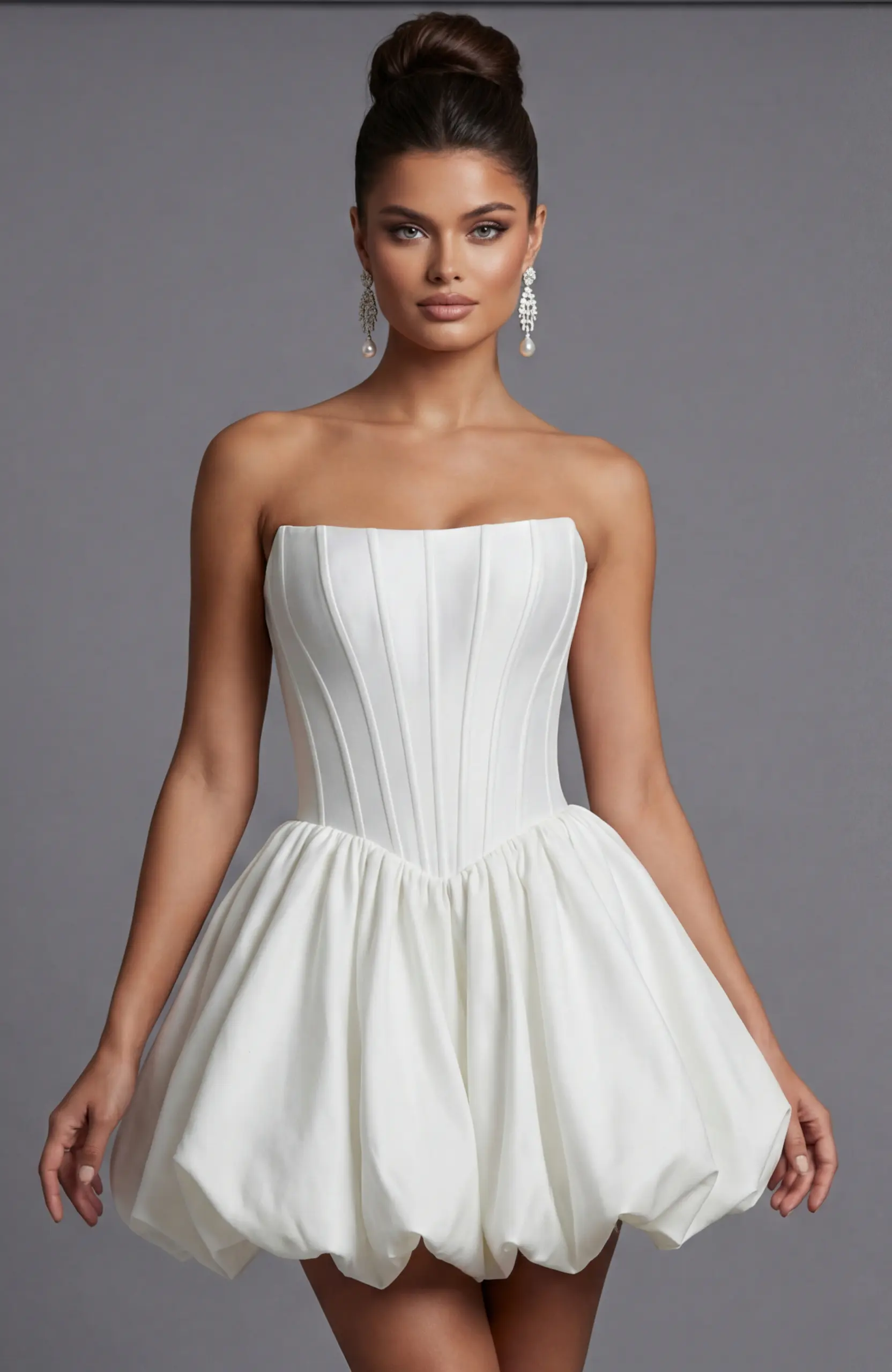
4 Colors
Strapless Corset Bodice Bubble Hem Dress 51573
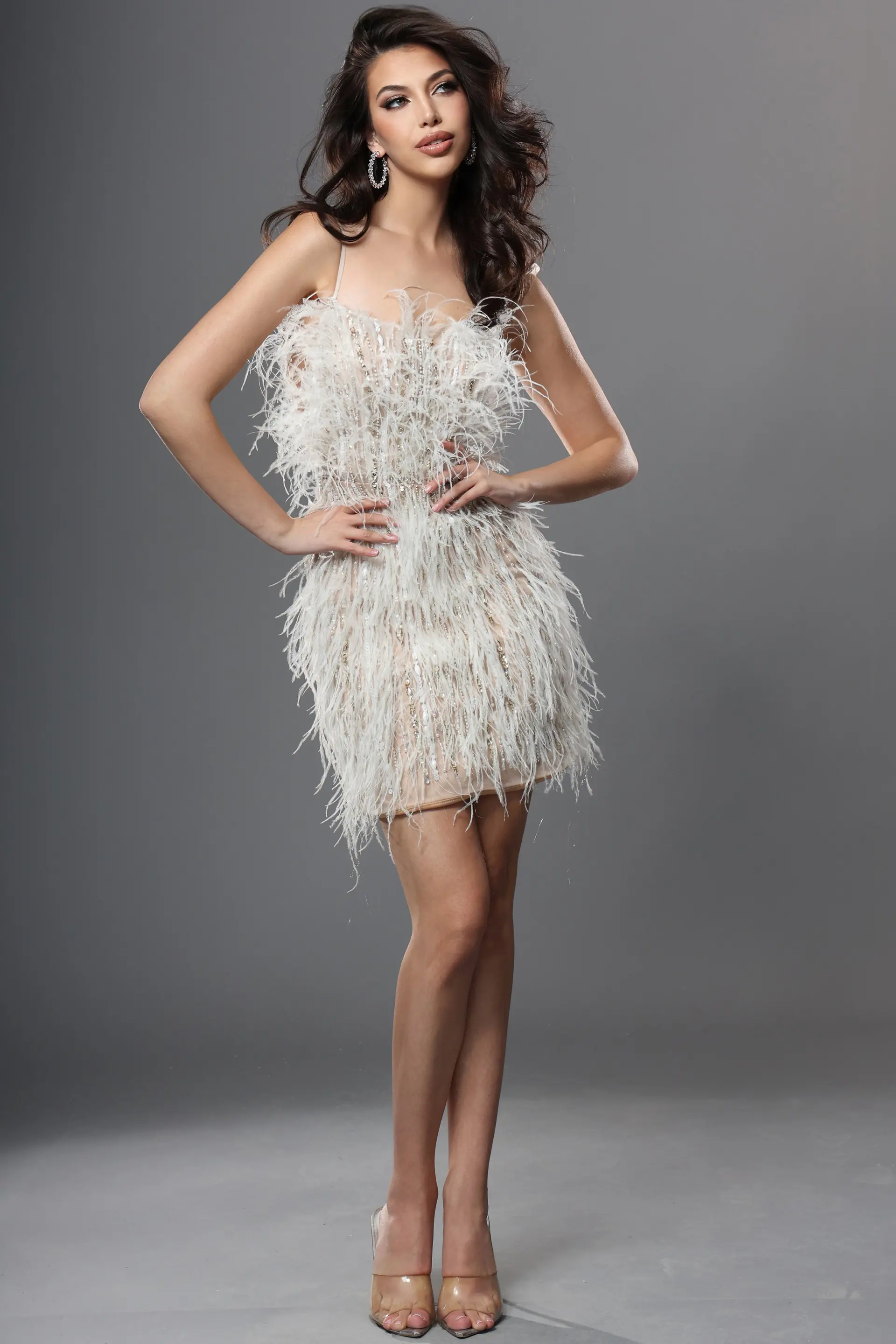
1 Colors
Sequin and Feather Mini Dress 52227
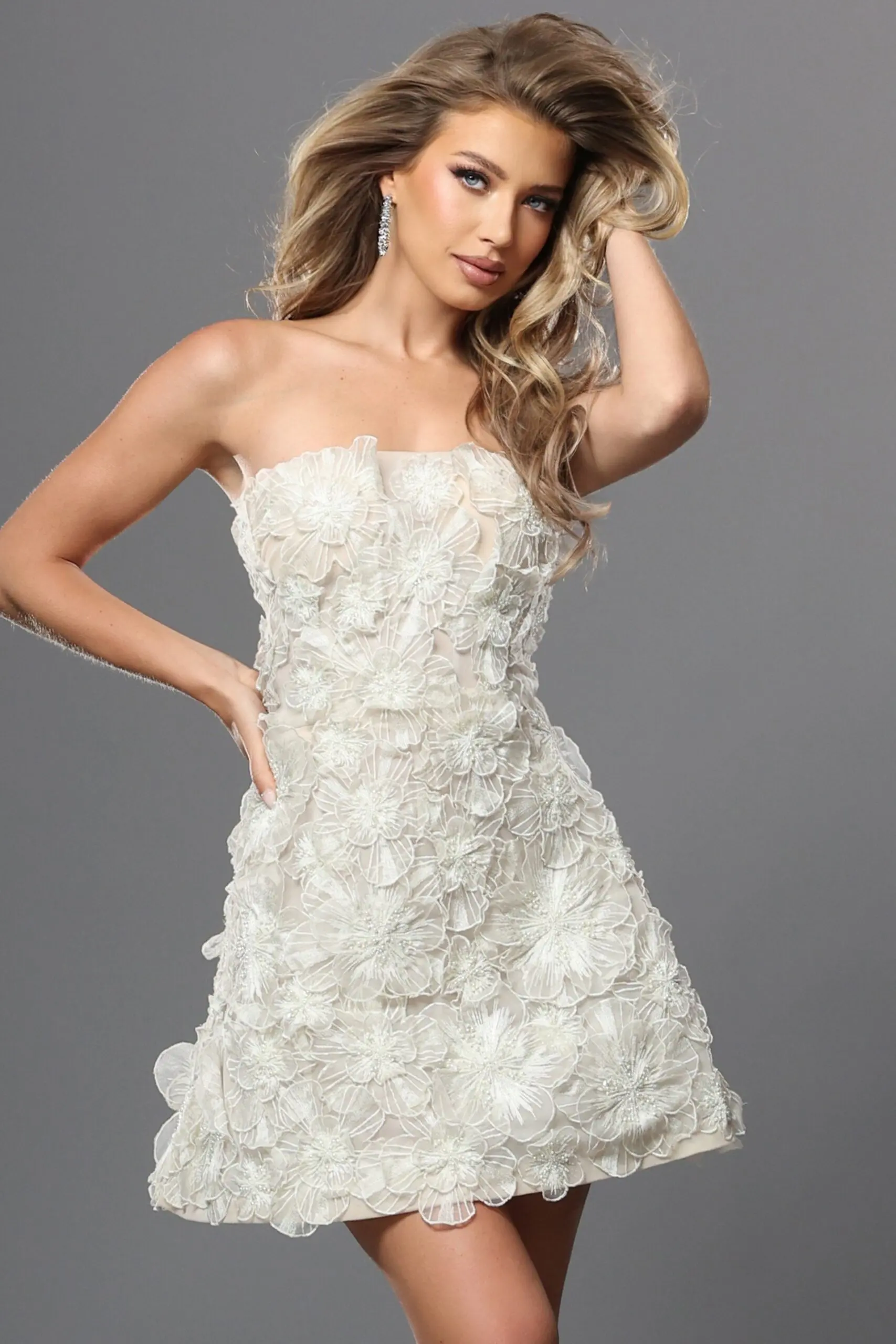
1 Colors
3D Floral Appliqué Strapless Mini Dress 52558
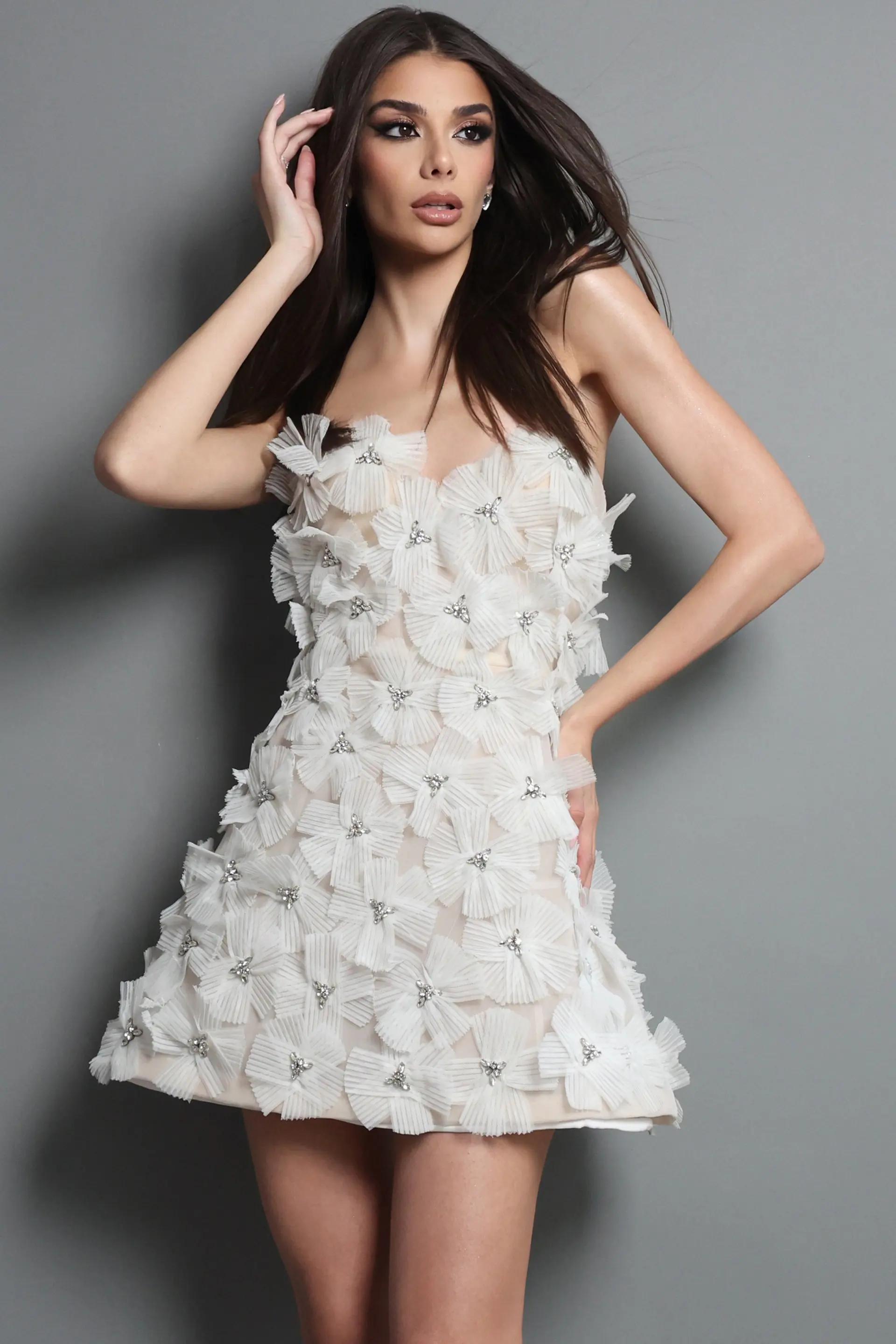
1 Colors
White 3D Floral Strapless Sweetheart Mini Dress 52559
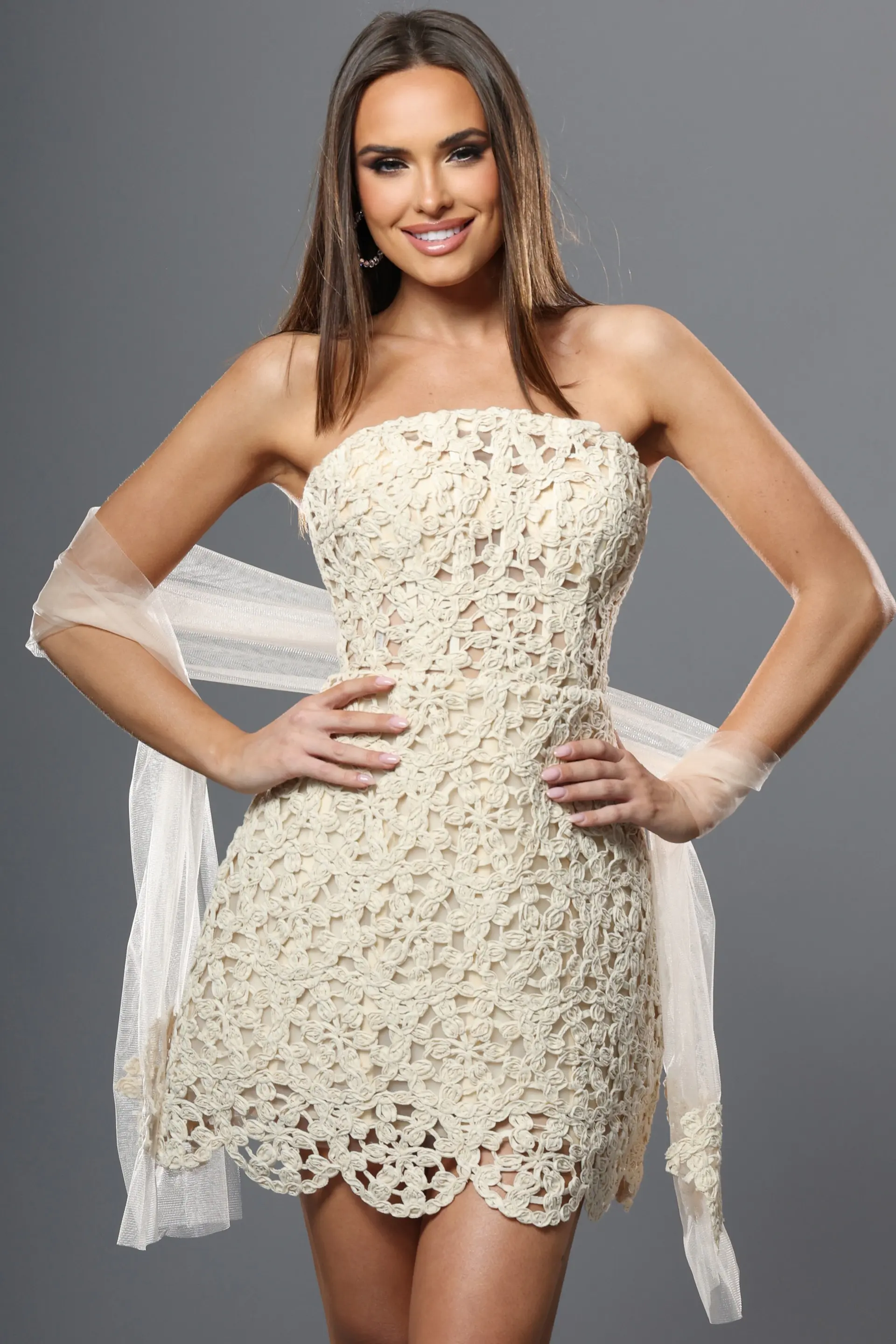
1 Colors
Floral Crochet Mini Dress with Gold Leaf Belt 48691
1 Colors
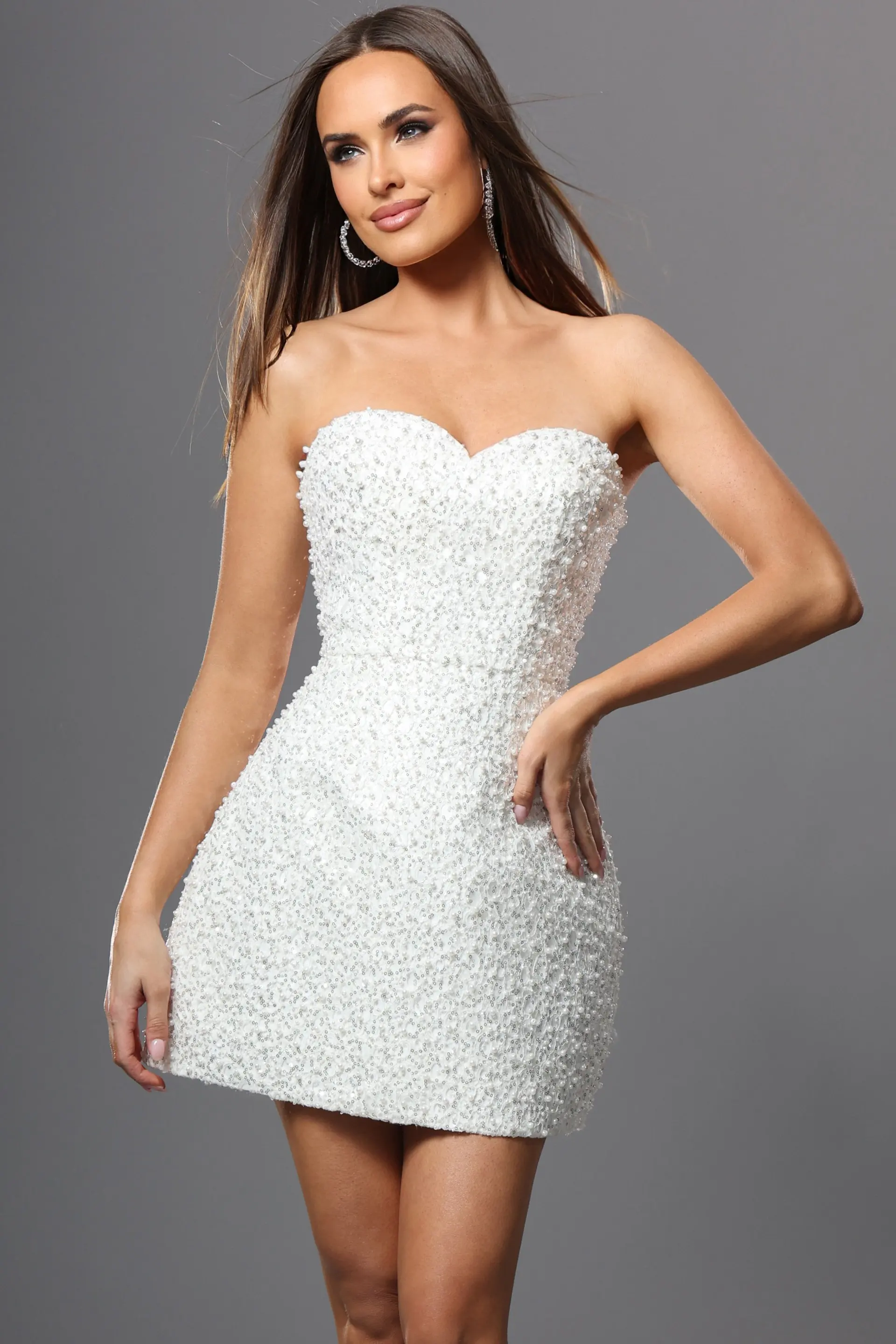
Pearl Beaded Sheath Mini Dress 52095
2 Colors
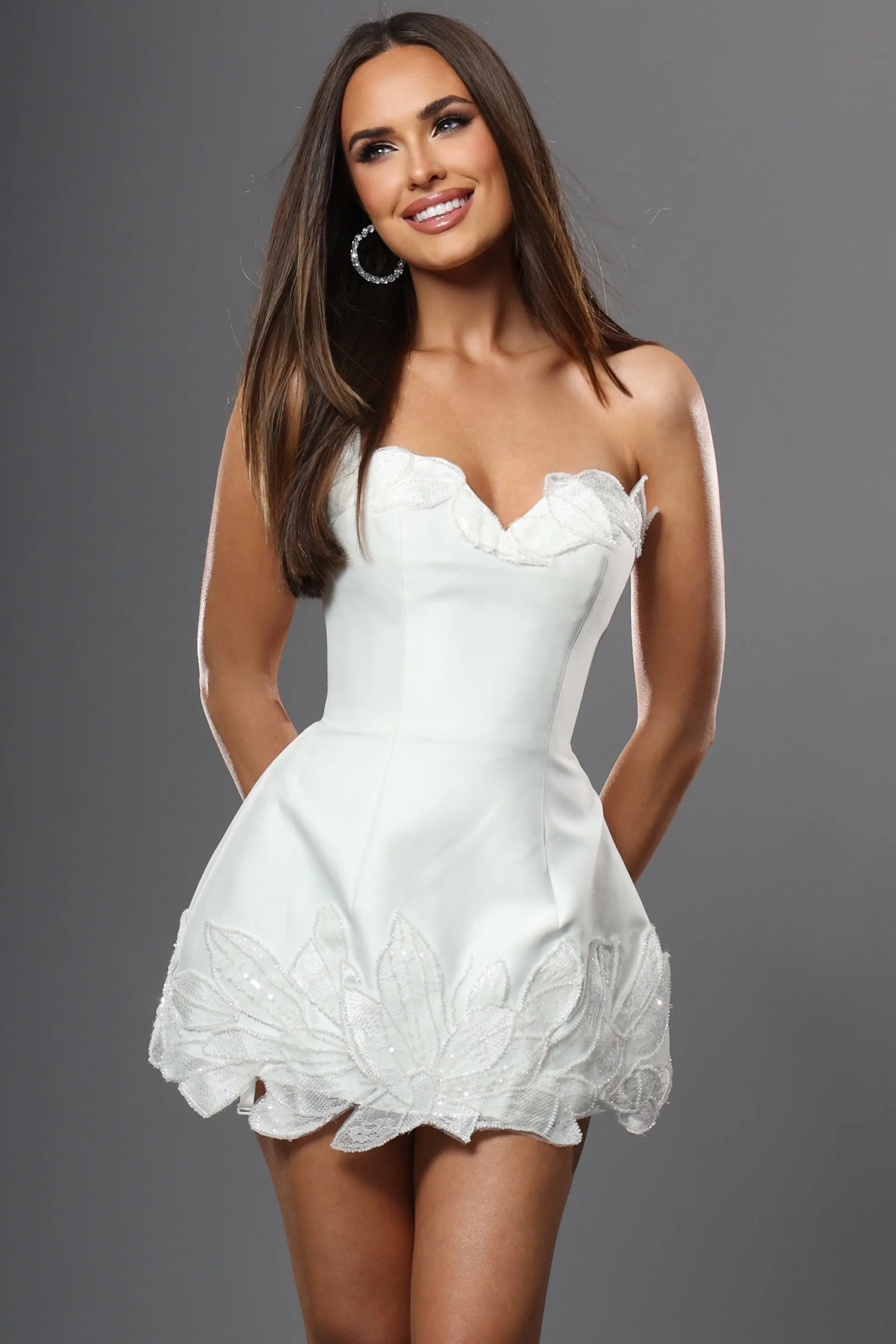
Strapless Beaded Mini Dress 49592
3 Colors
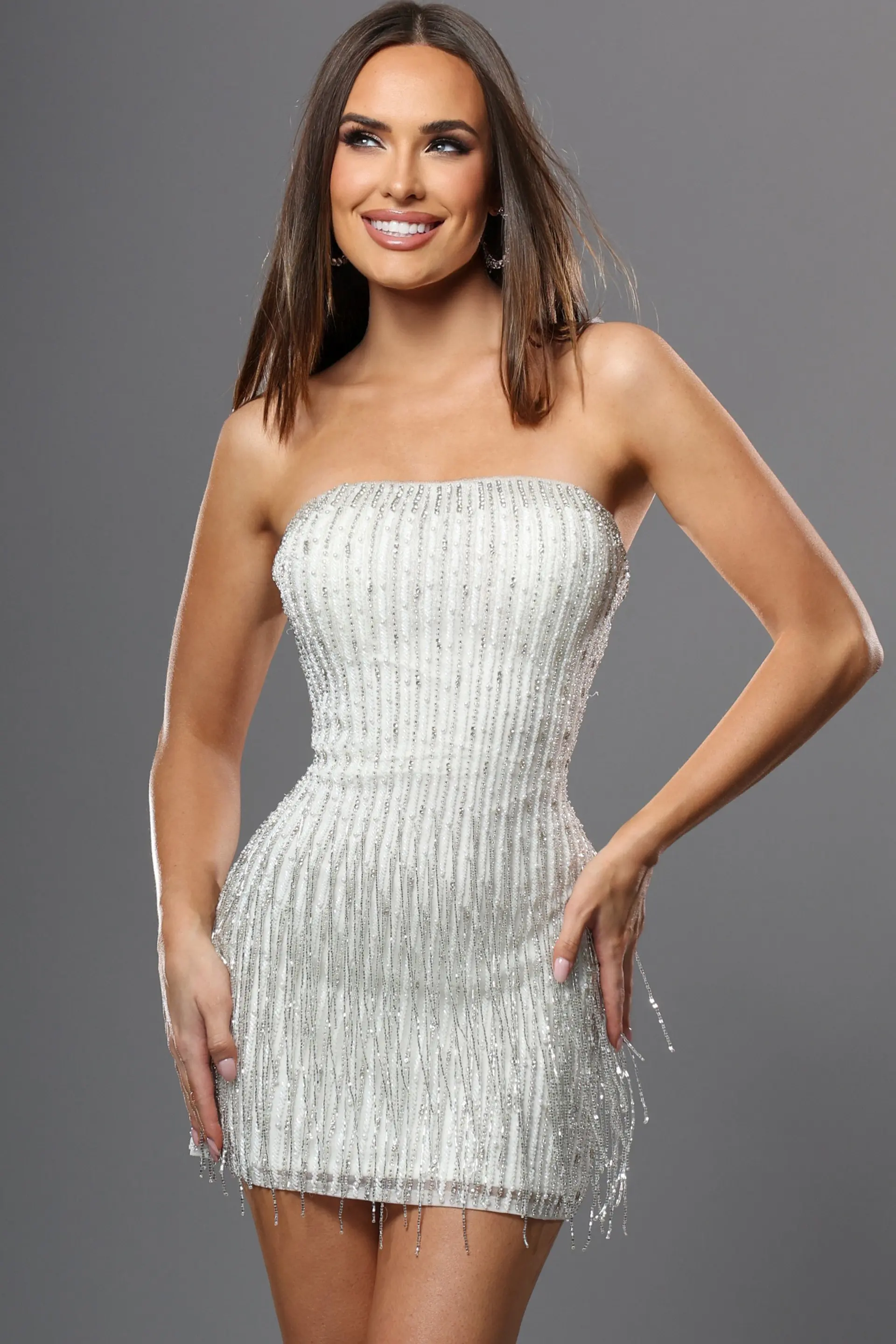
Strapless Beaded Fringe Sheath Mini Dress 53287
3 Colors
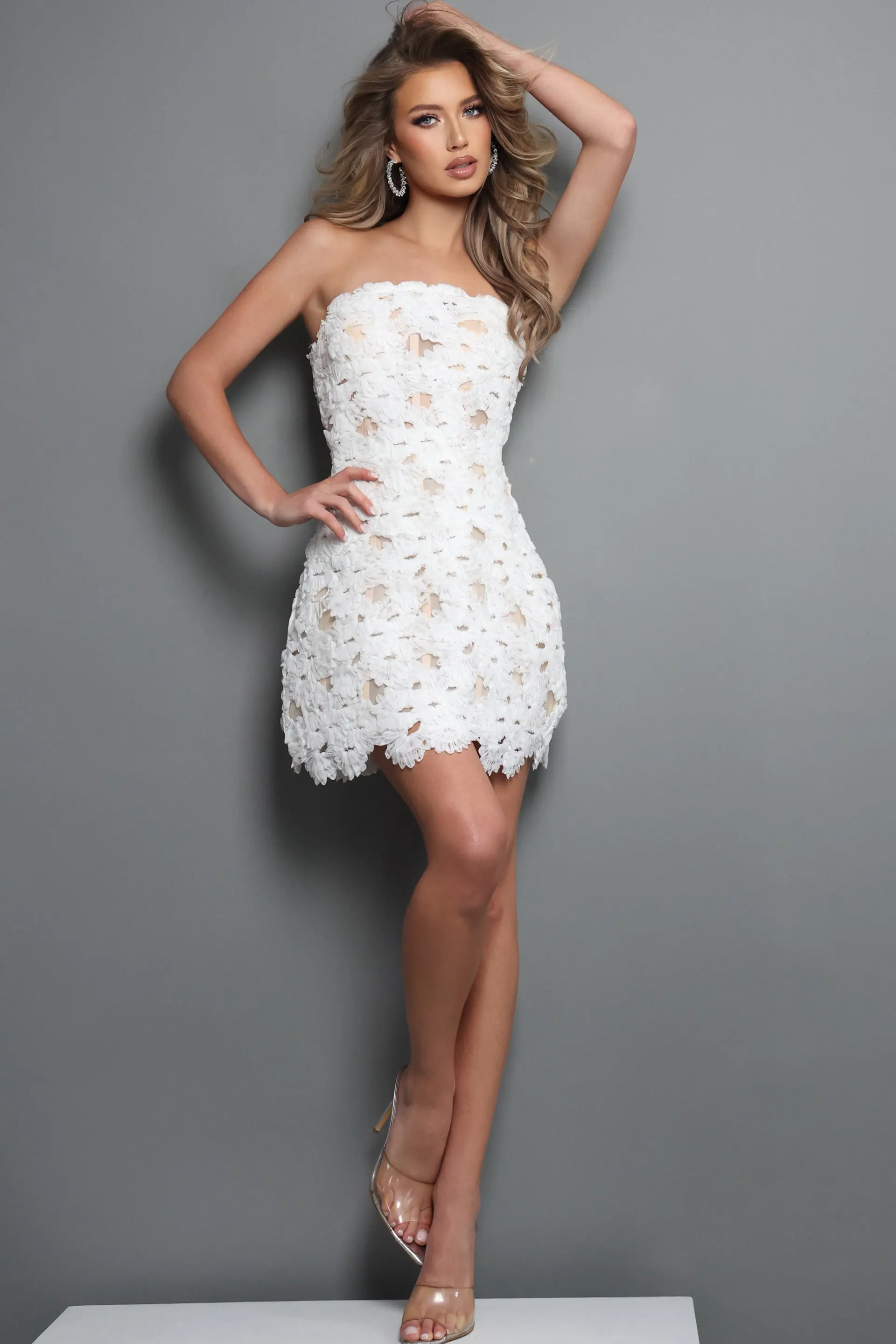
White Lace Strapless Mini Dress 52073
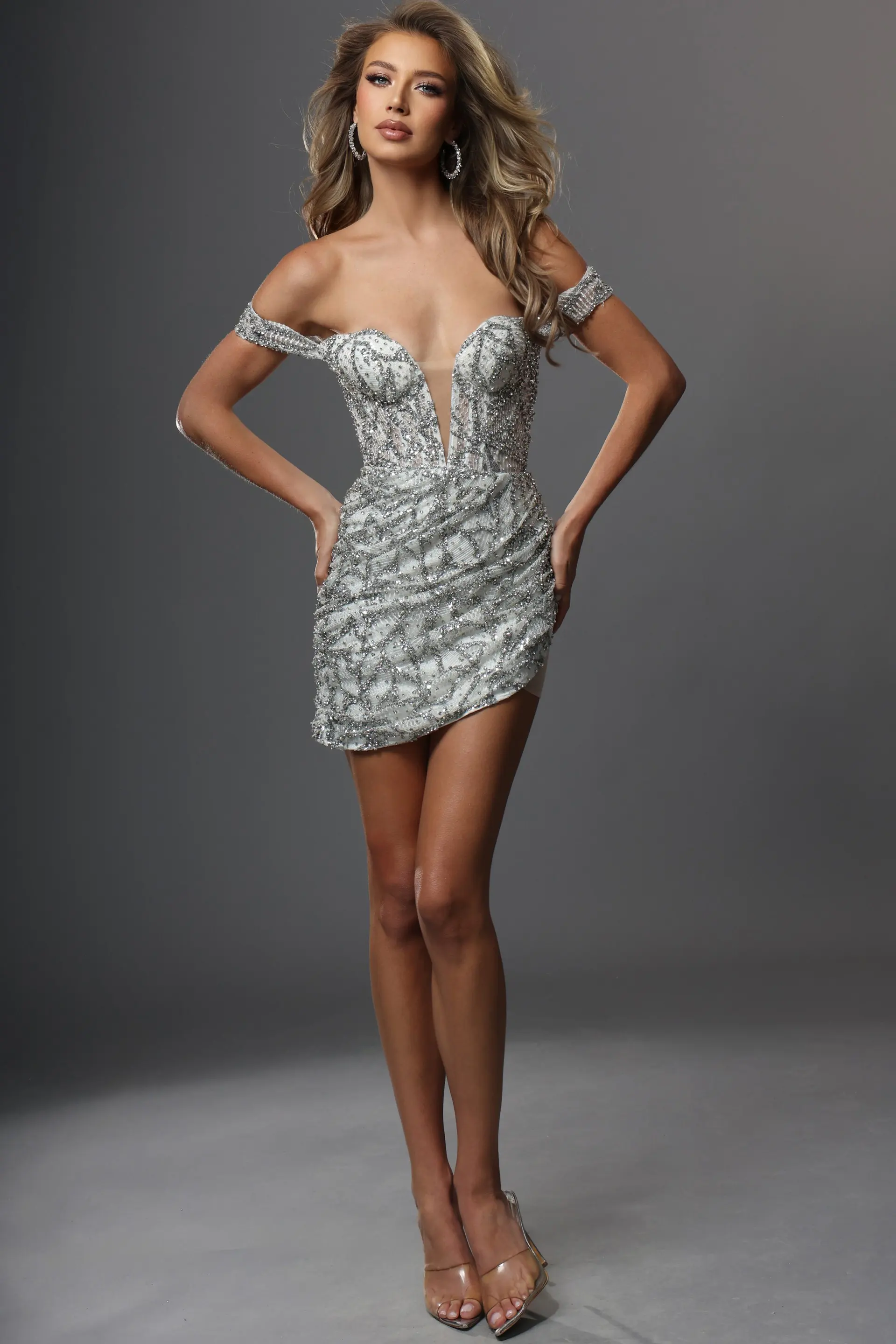
2 Colors
Beaded Sequin Bodycon Mini Dress 52875
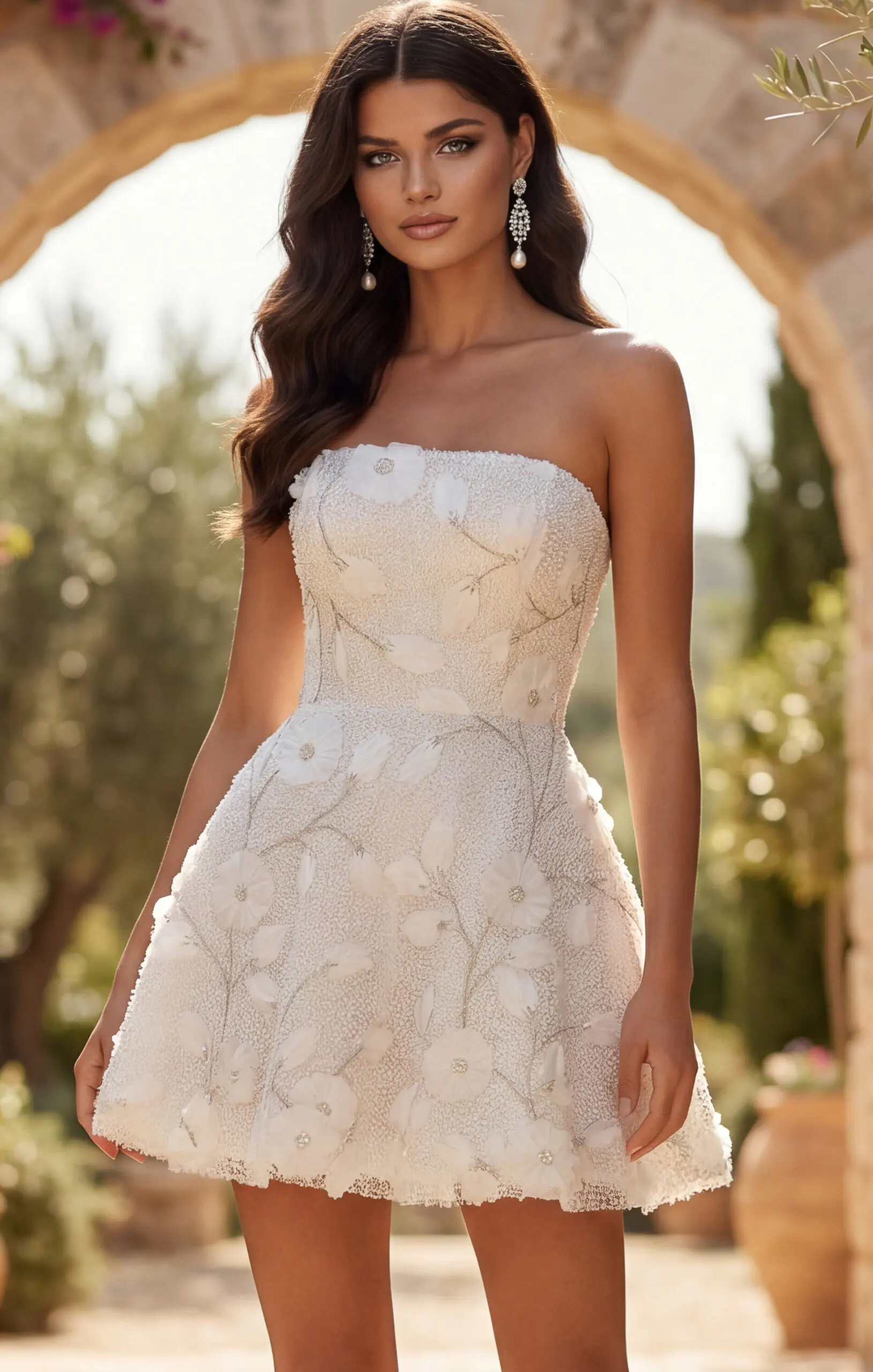
1 Colors
Strapless Floral Embellished Mini Dress JB49687
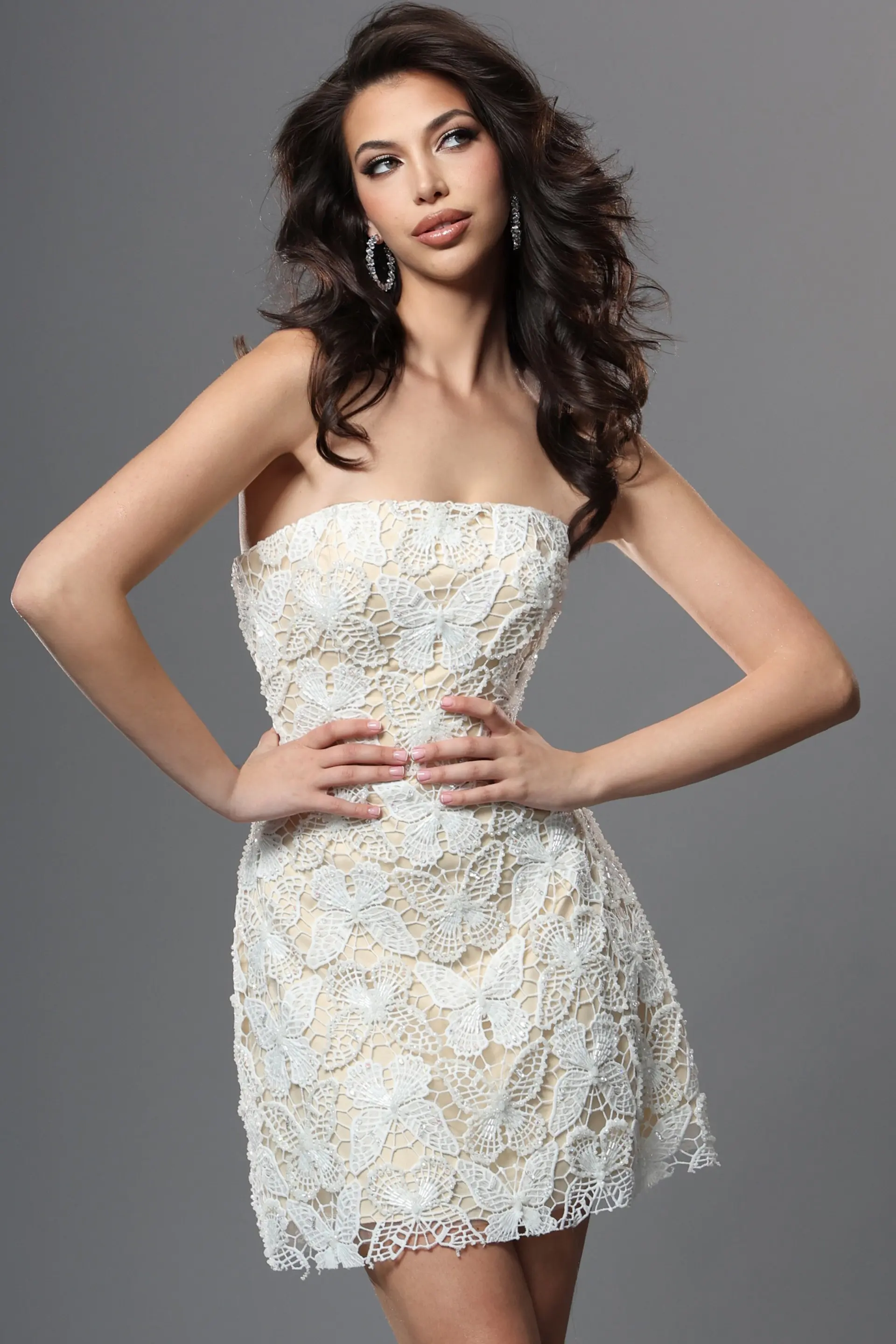
1 Colors
Lace Butterfly Beaded Mini Dress 51658
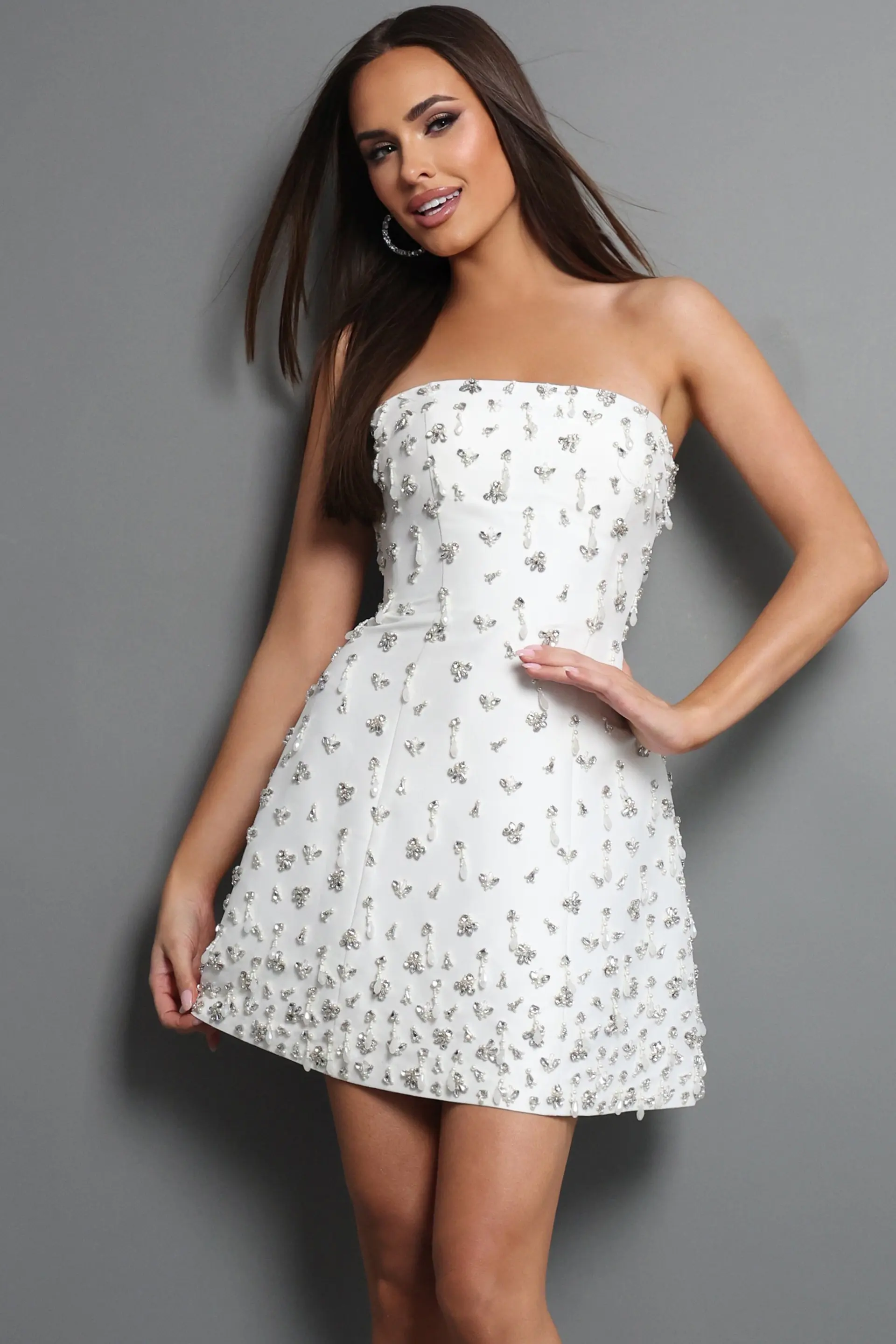
4 Colors
Crystal Embellished A Line Mini Dress 51615
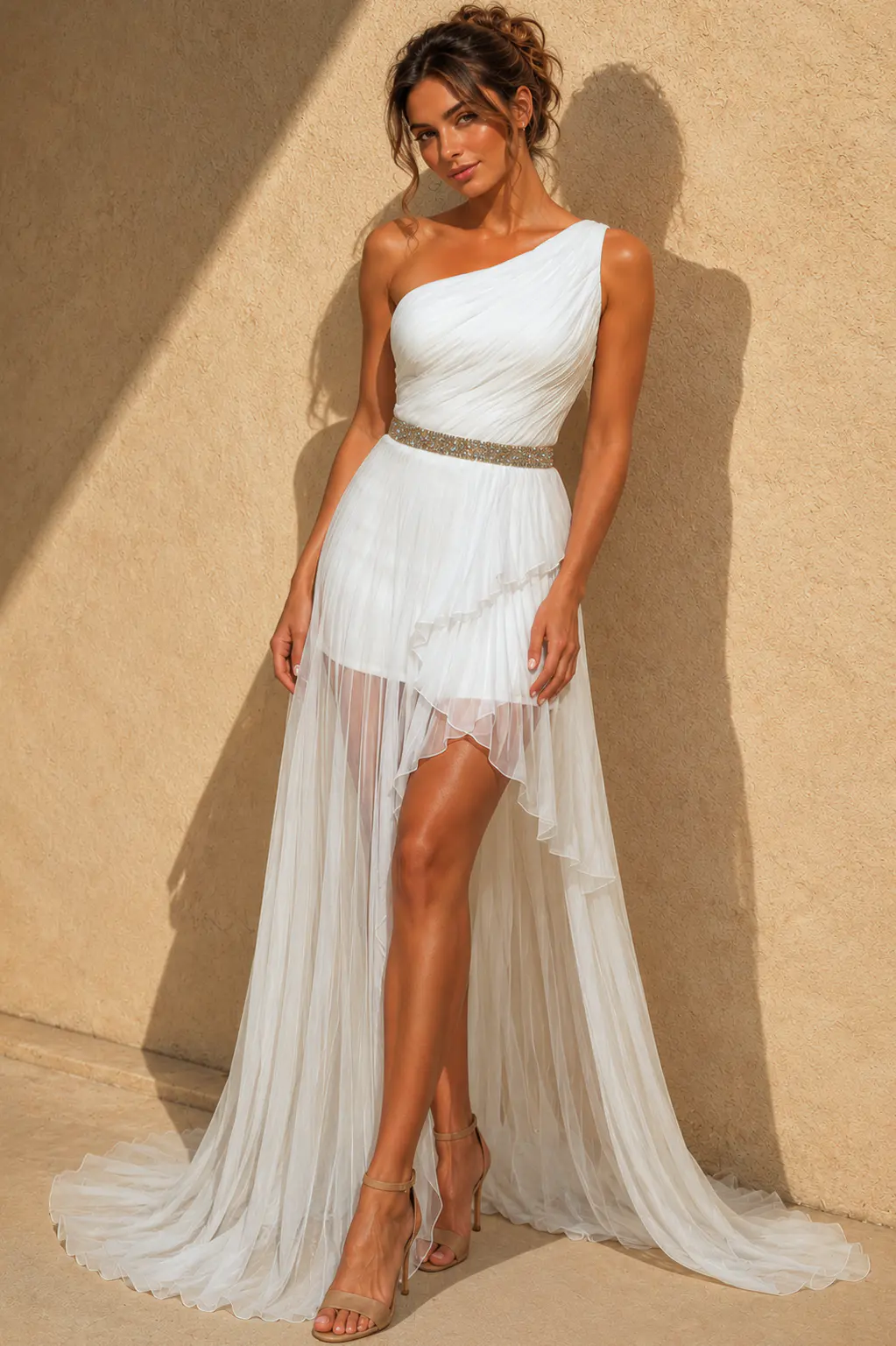
3 Colors
One Shoulder Beaded Belt Pleated High Low Dress 51660
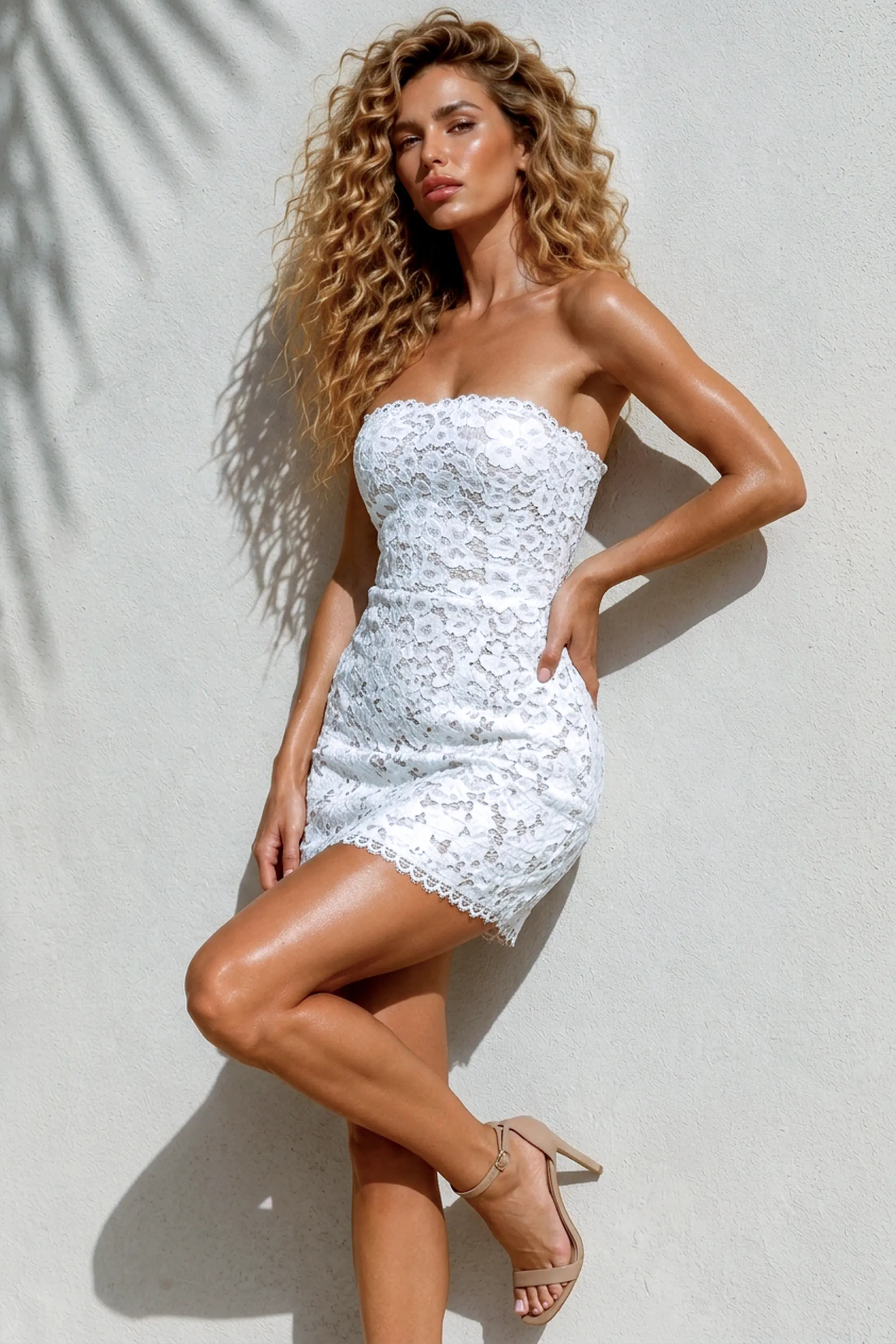
1 Colors
Strapless Lace Mini Dress with Lace Up Corset Back 52074
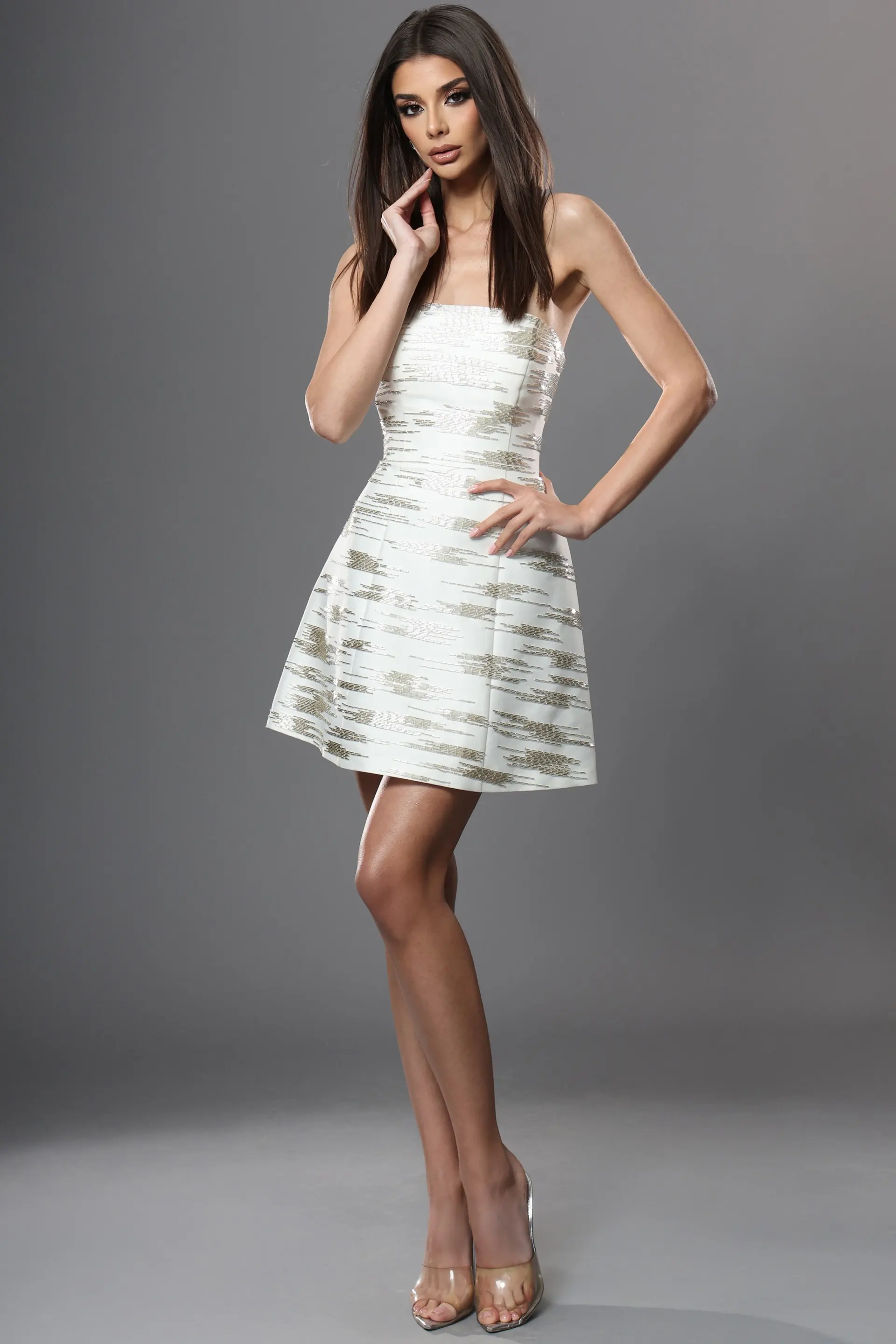
2 Colors
Strapless Sequin Mini Dress 53953
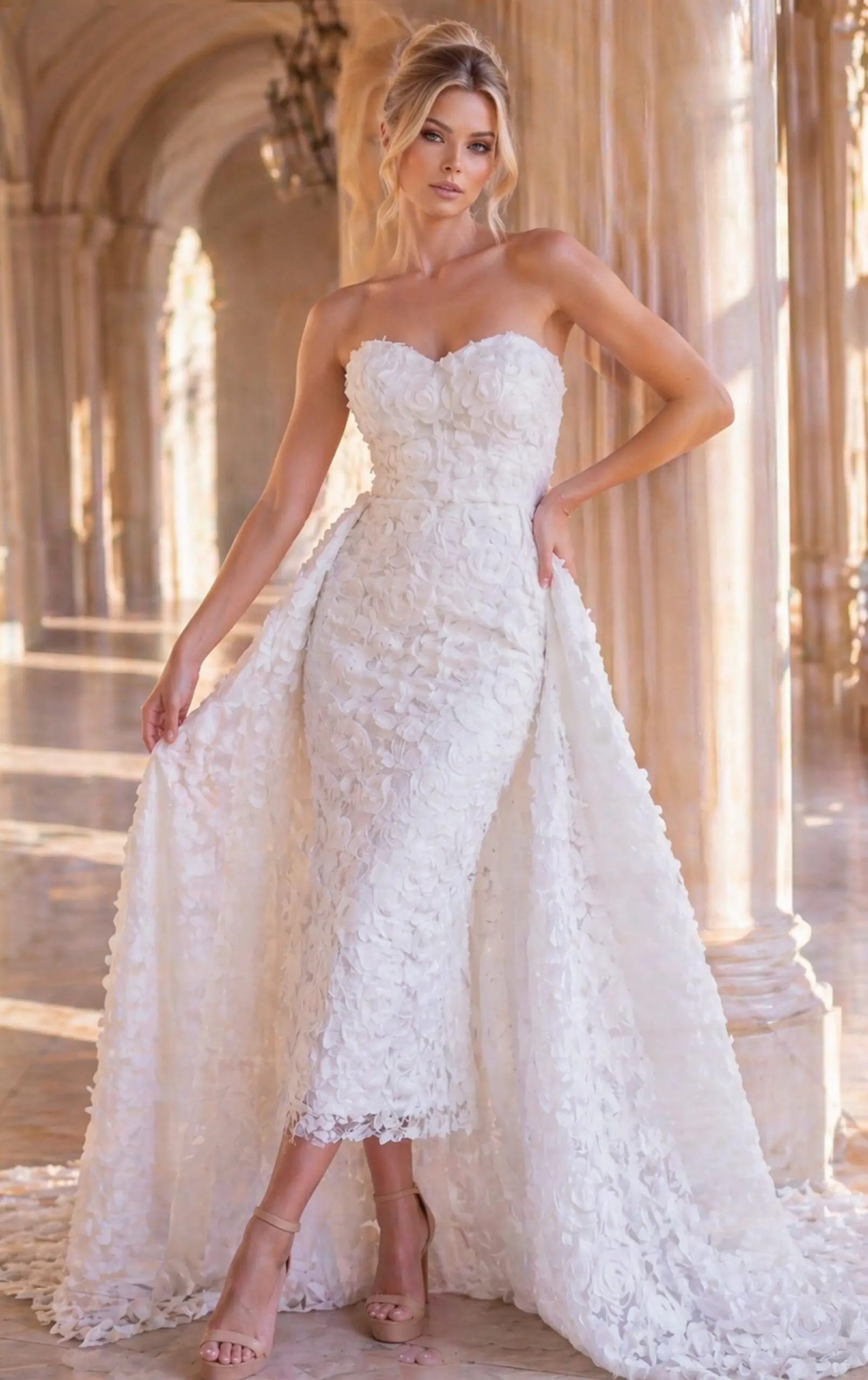
1 Colors
Strapless Lace Gown with Overskirt 49731
1 Colors
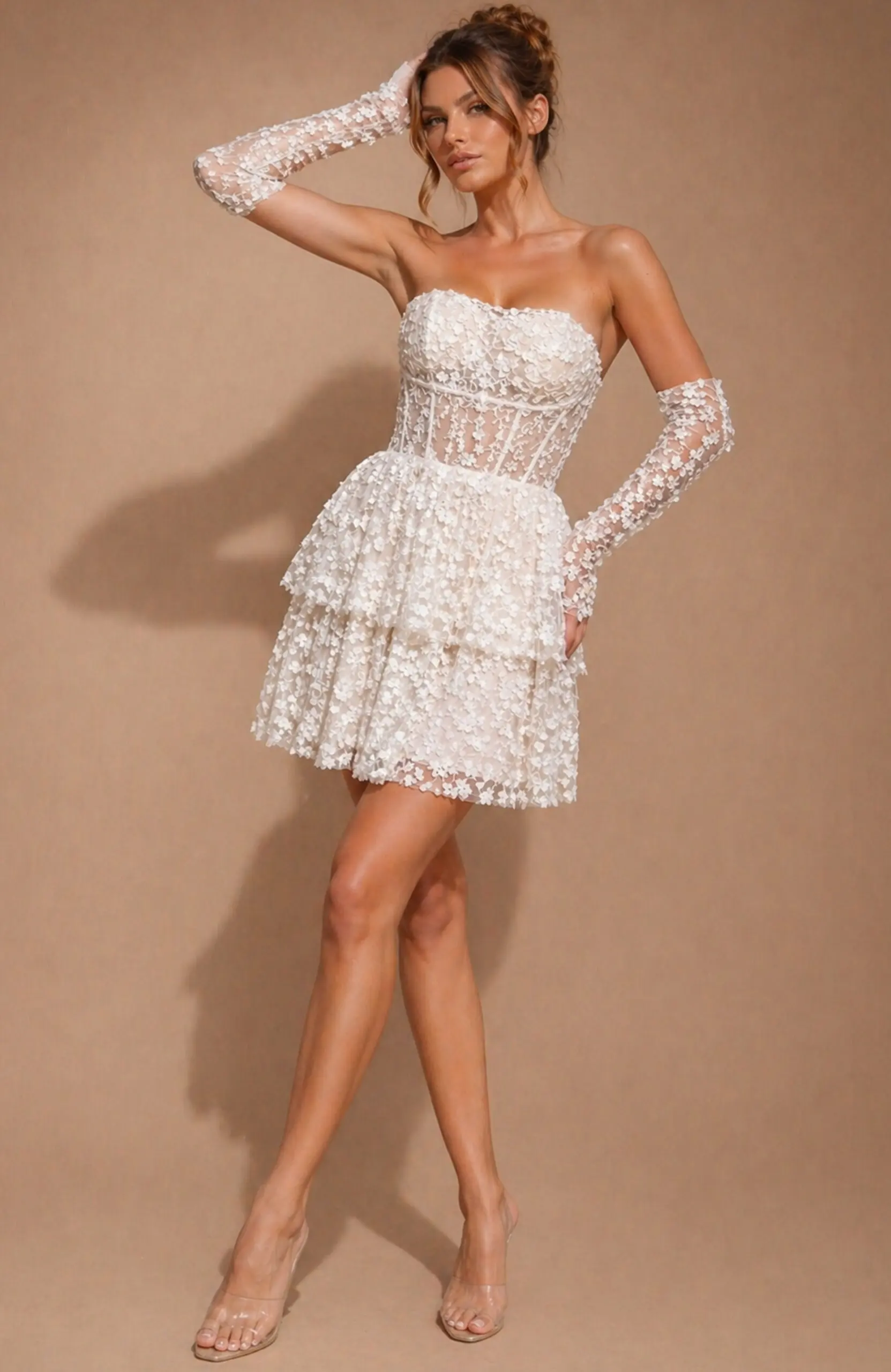
3D Floral Lace Strapless Tiered Mini Dress 52363
1 Colors
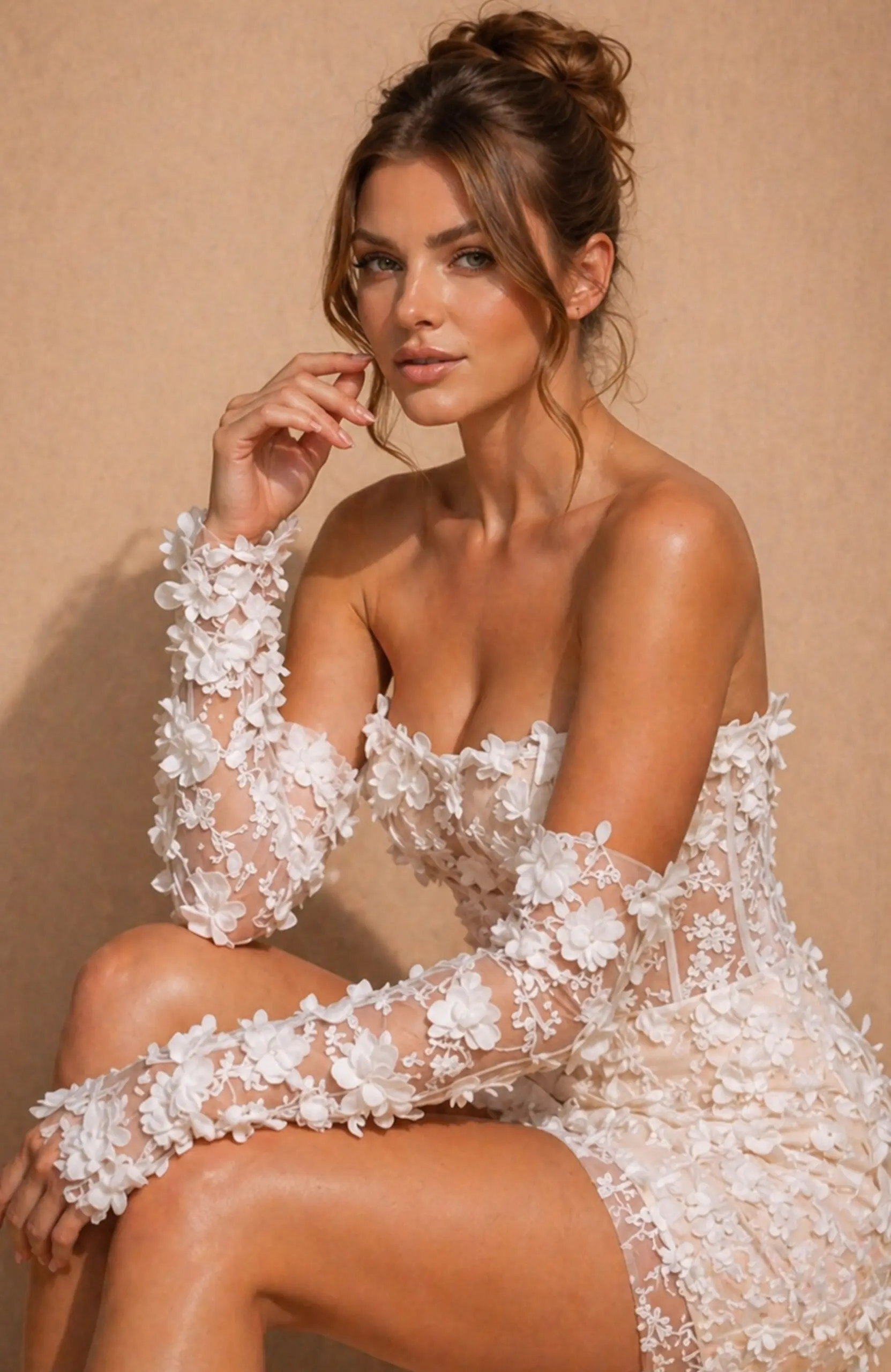
3D Floral Appliqué Strapless Mini Dress 52362
1 Colors
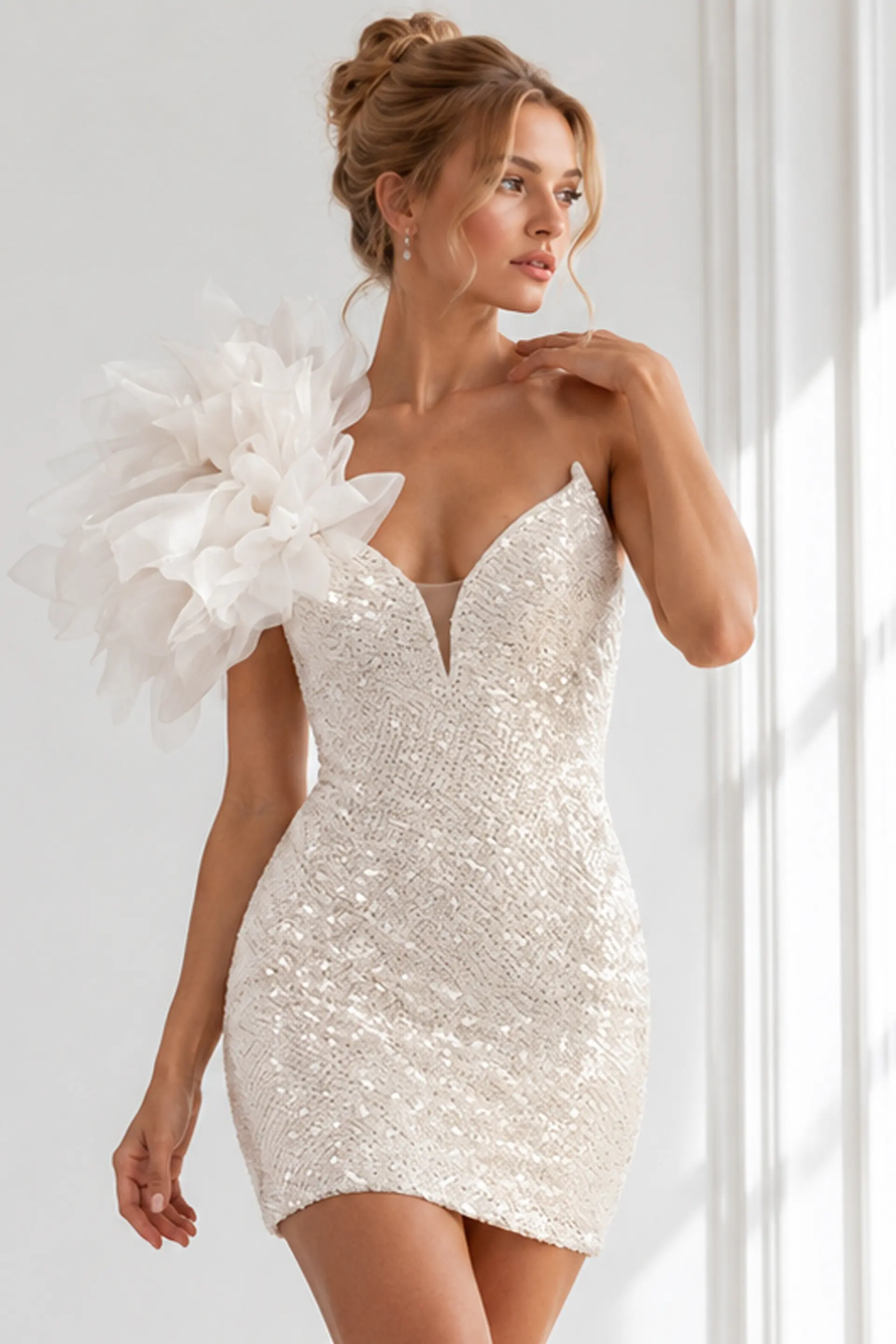
One Shoulder Sequin Mini Dress with Floral Ruffle Detail 39618
1 Colors
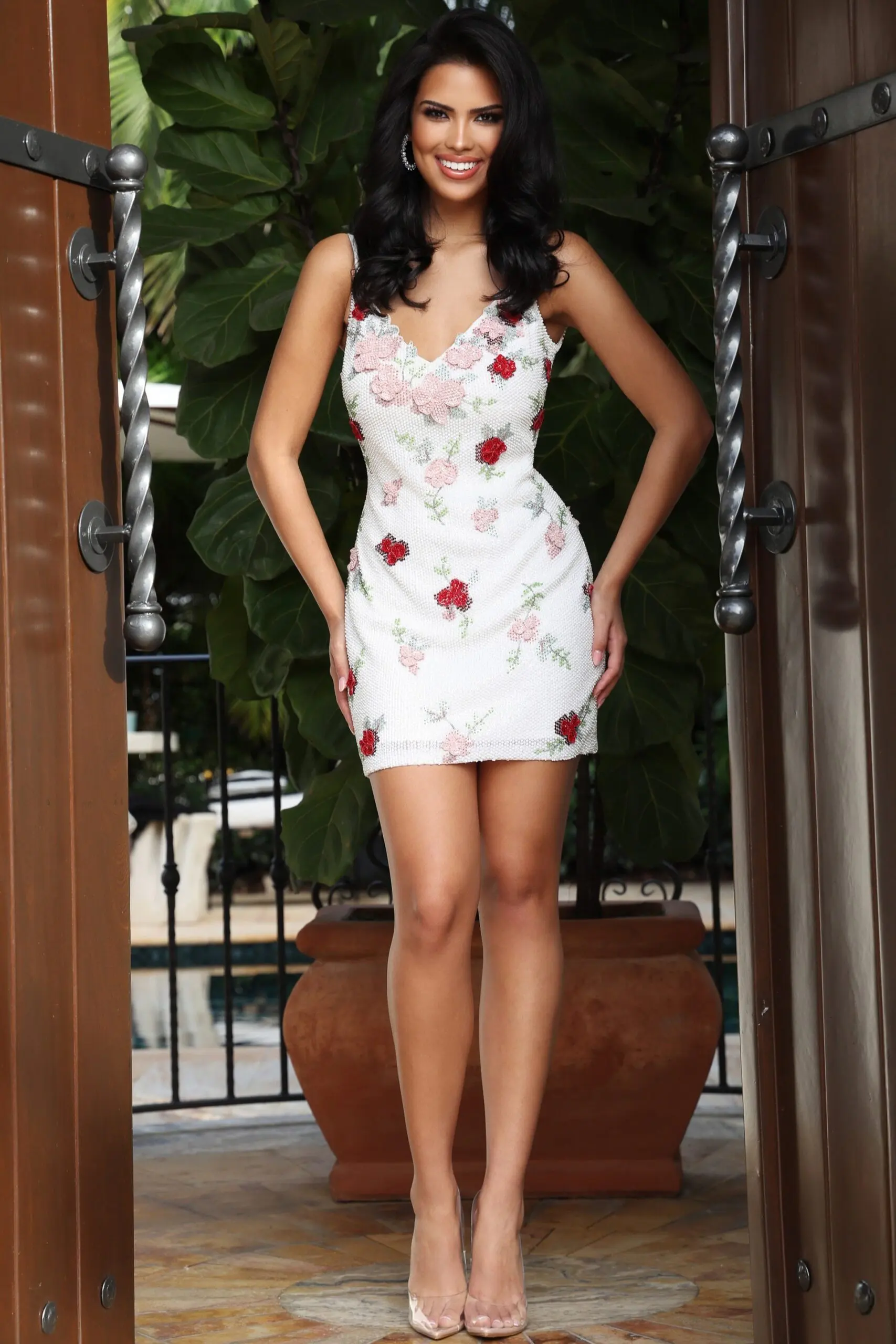
V Neck Floral Embellished Mini Dress 48606
1 Colors
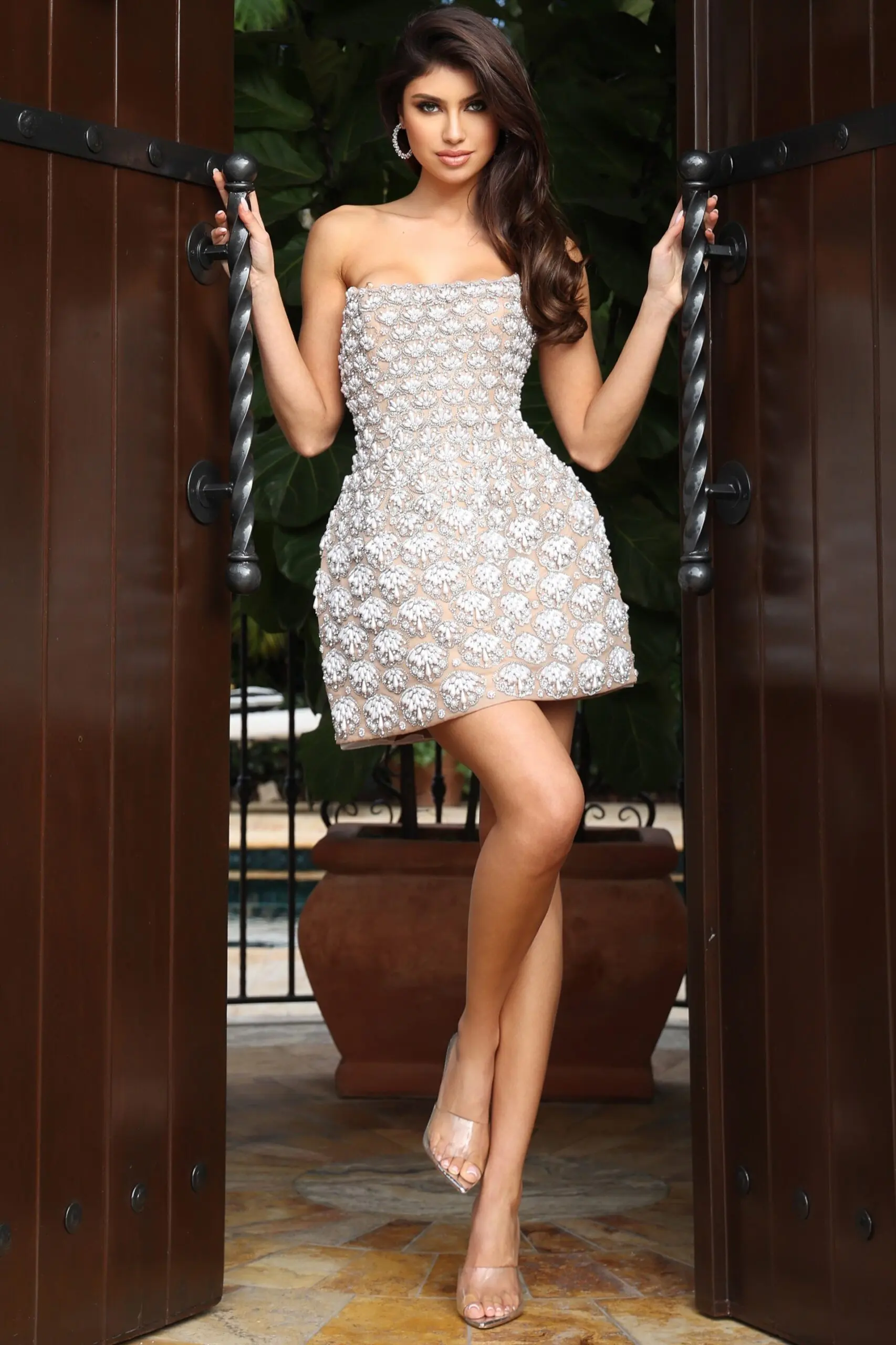
Strapless Beaded Sculpted Mini Dress 48592
1 Colors
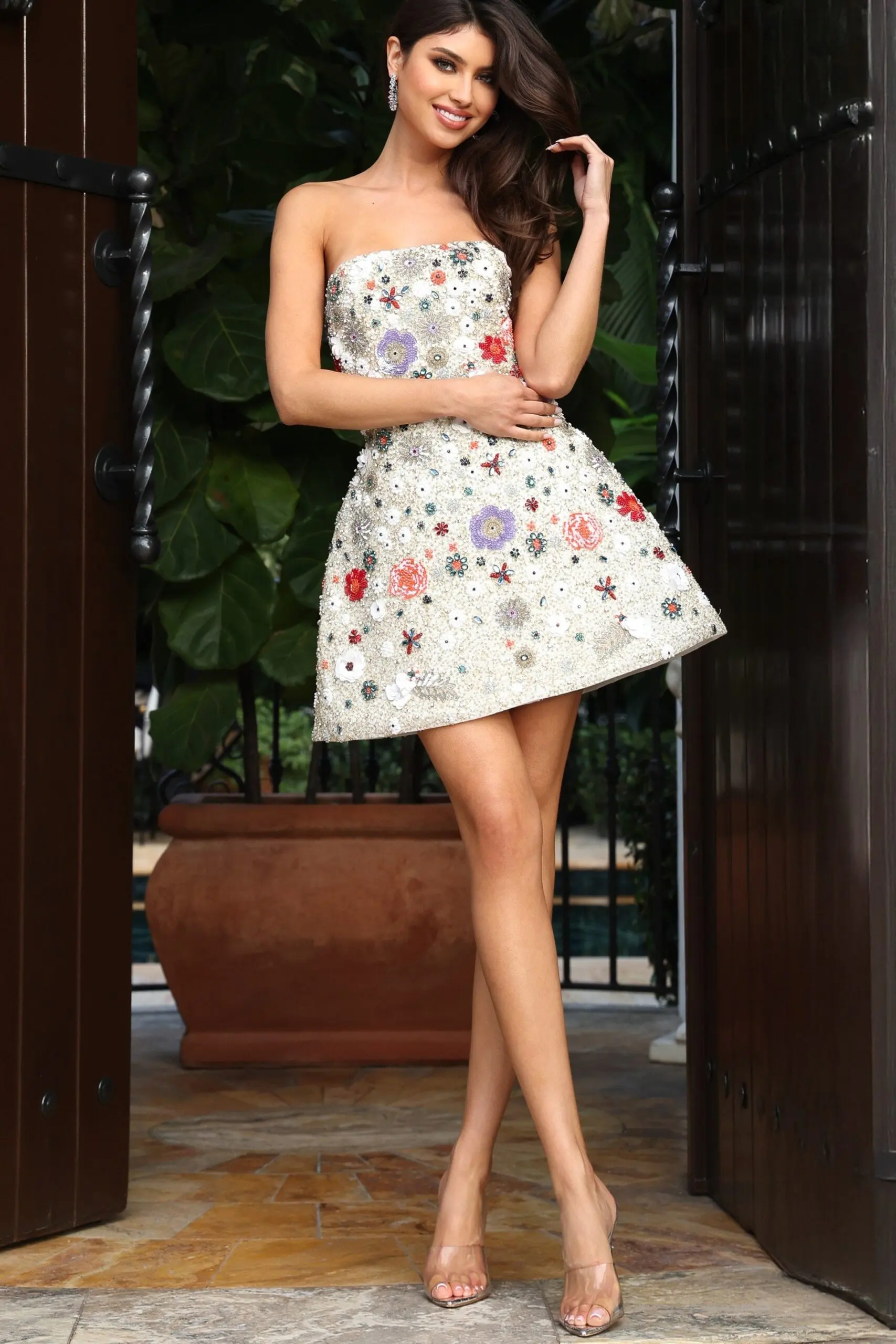
Strapless Floral Embellished A Line Mini Dress 48584
6 Colors
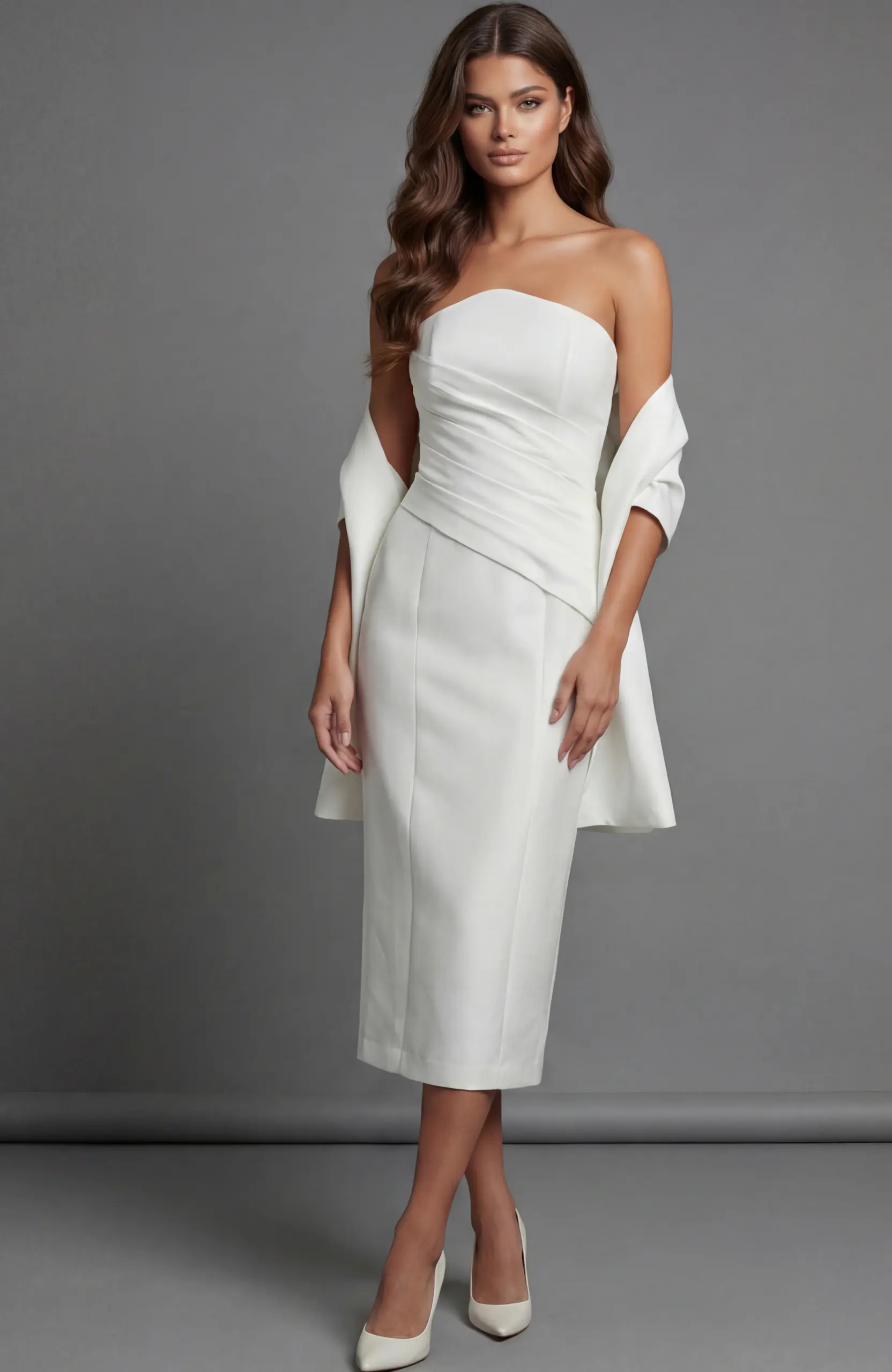
Strapless Dress With Structured Wrap Detail 51635
2 Colors
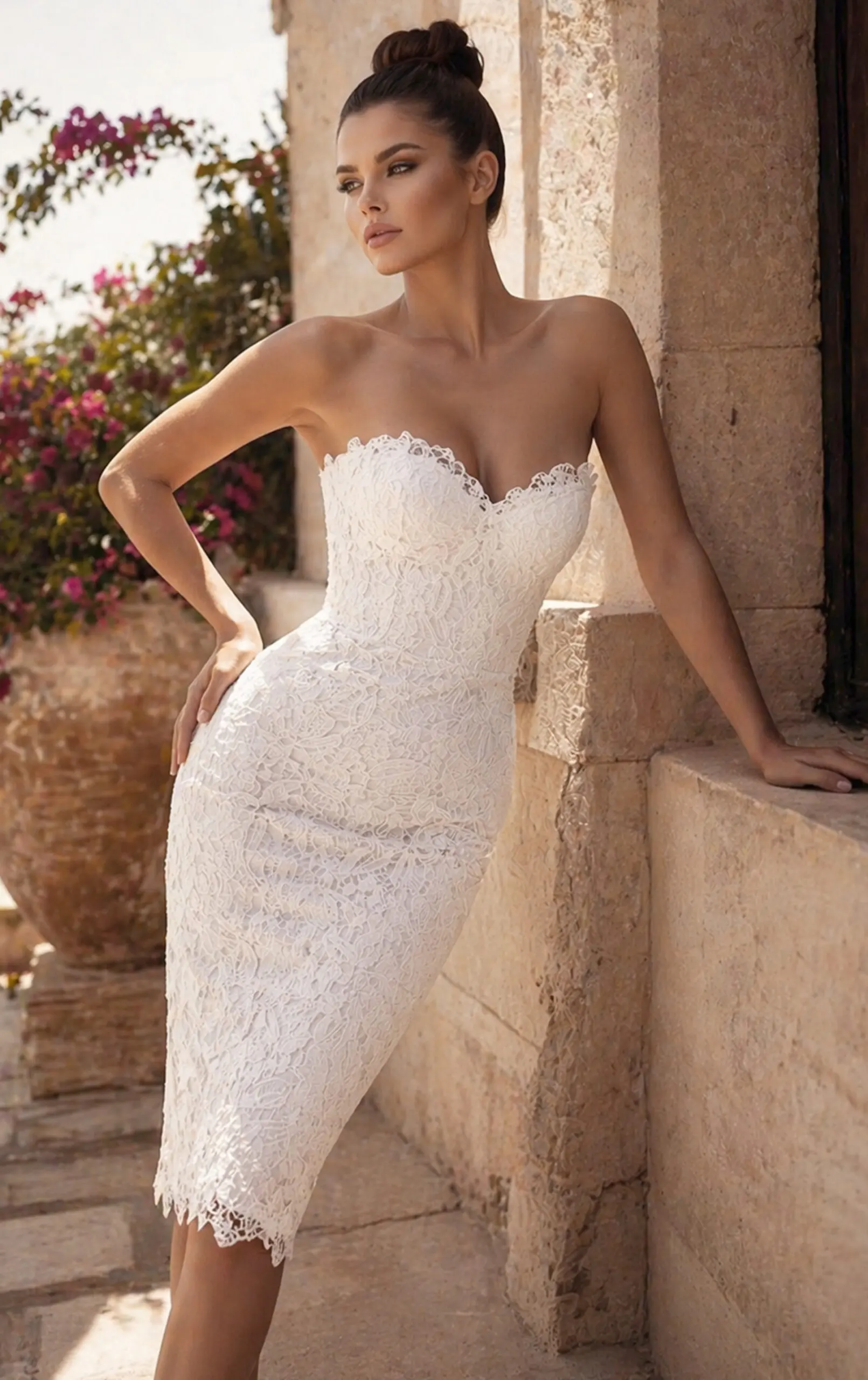
Strapless Lace Column Bridal Gown 49525
1 Colors
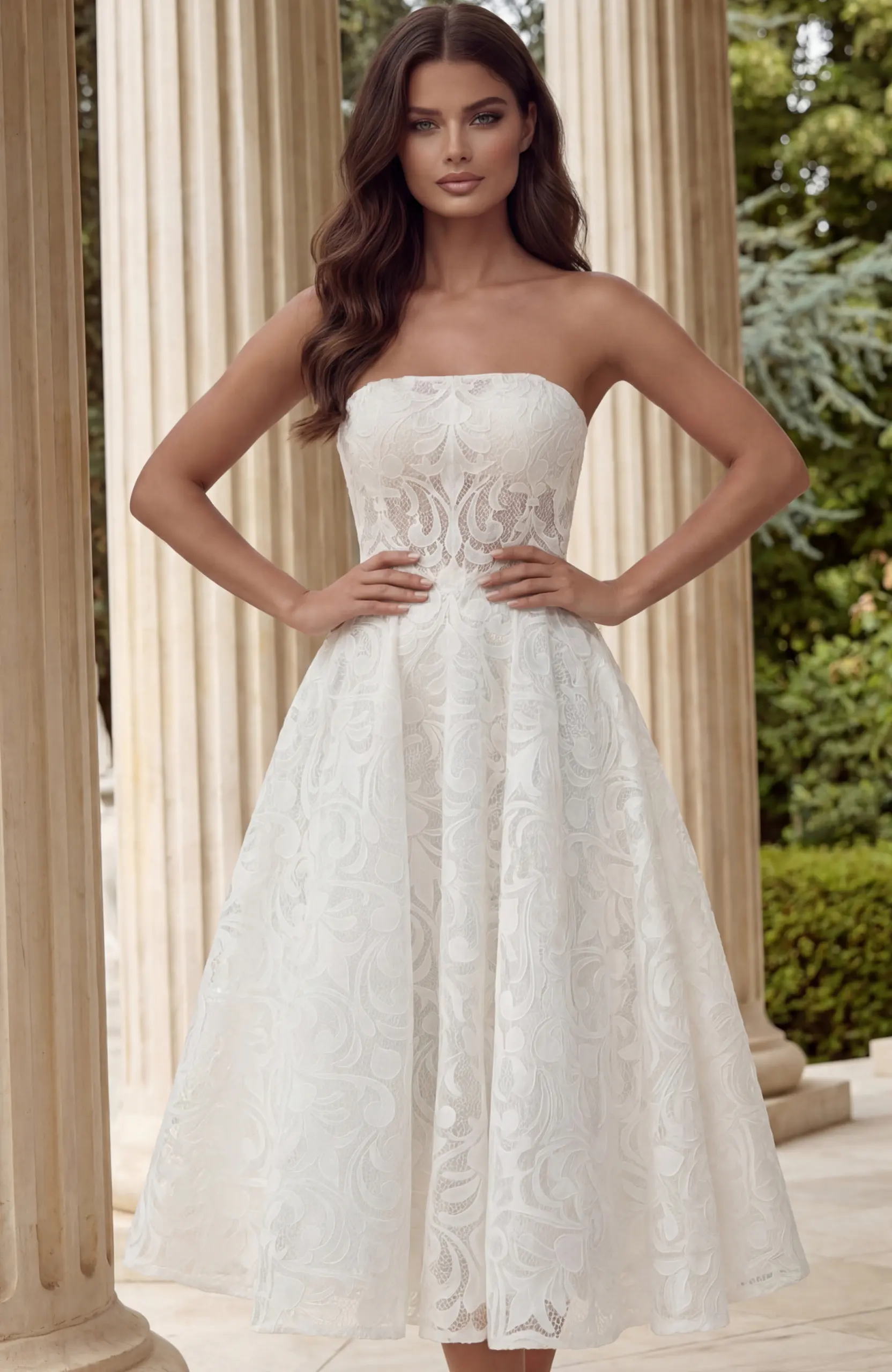
Strapless Lace Midi Dress With Flared Skirt JB48460
1 Colors
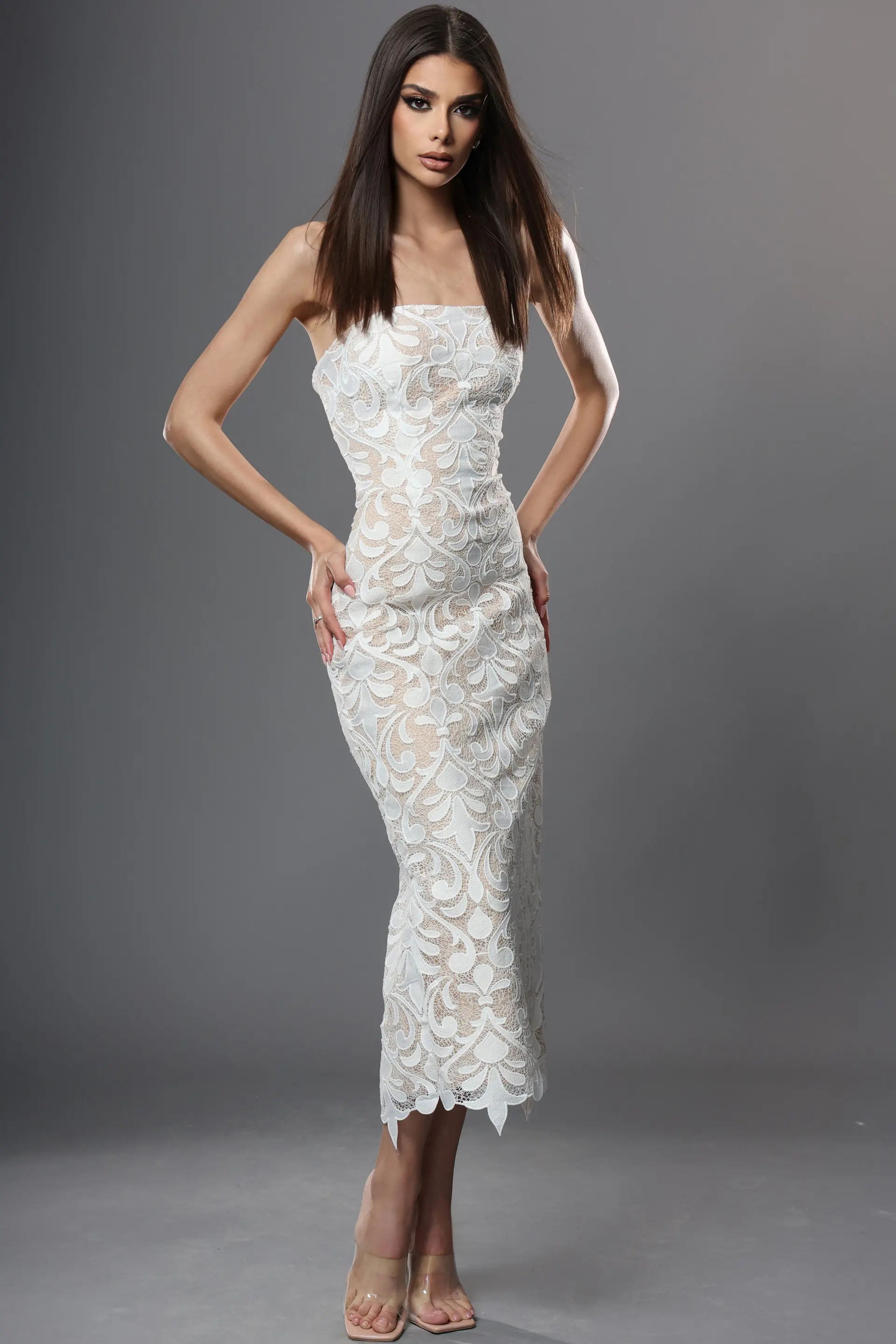
Strapless Lace Midi Dress With Fitted Silhouette 48461
3 Colors
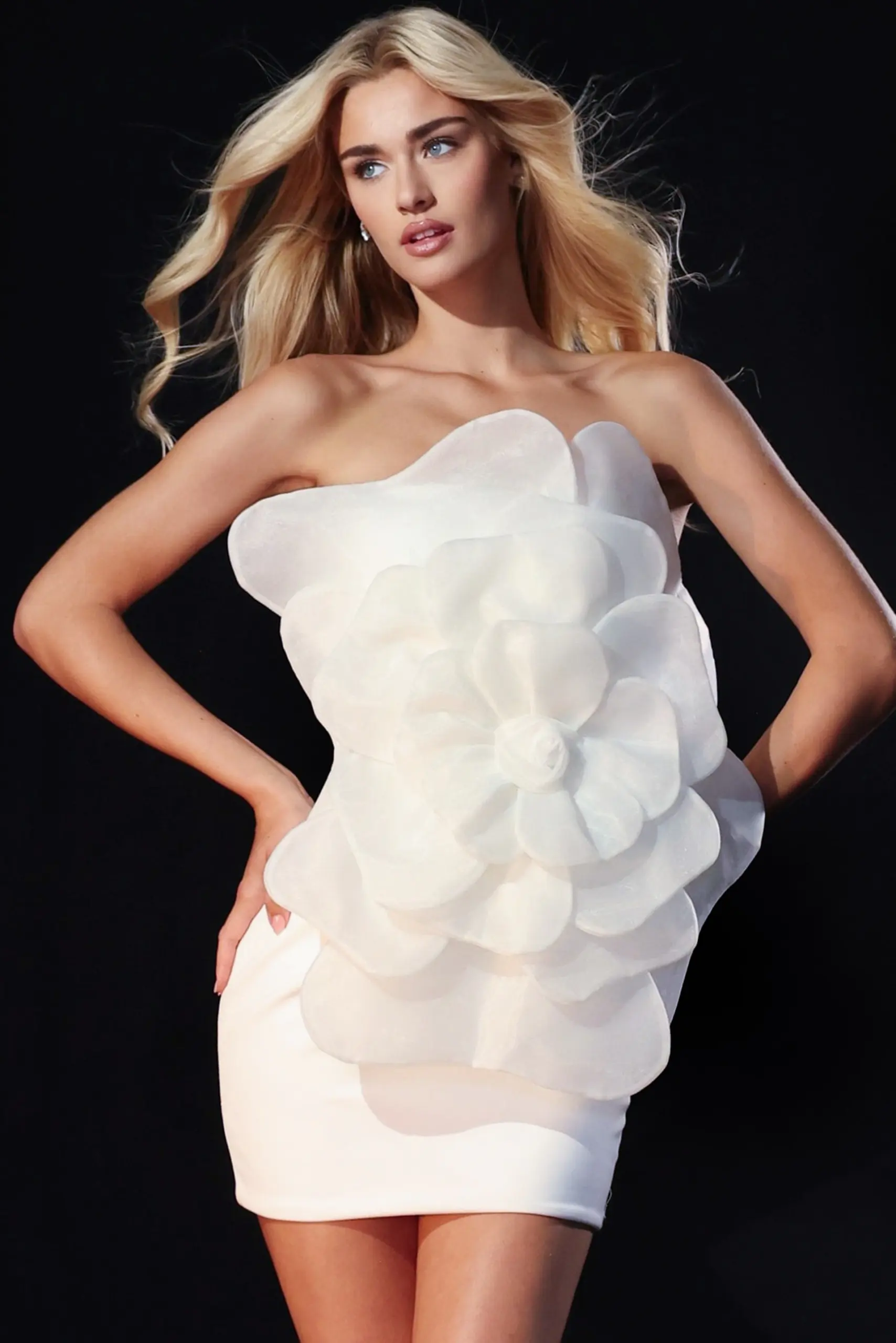
Mini Dress With Oversized Organza Flower 45921
1 Colors
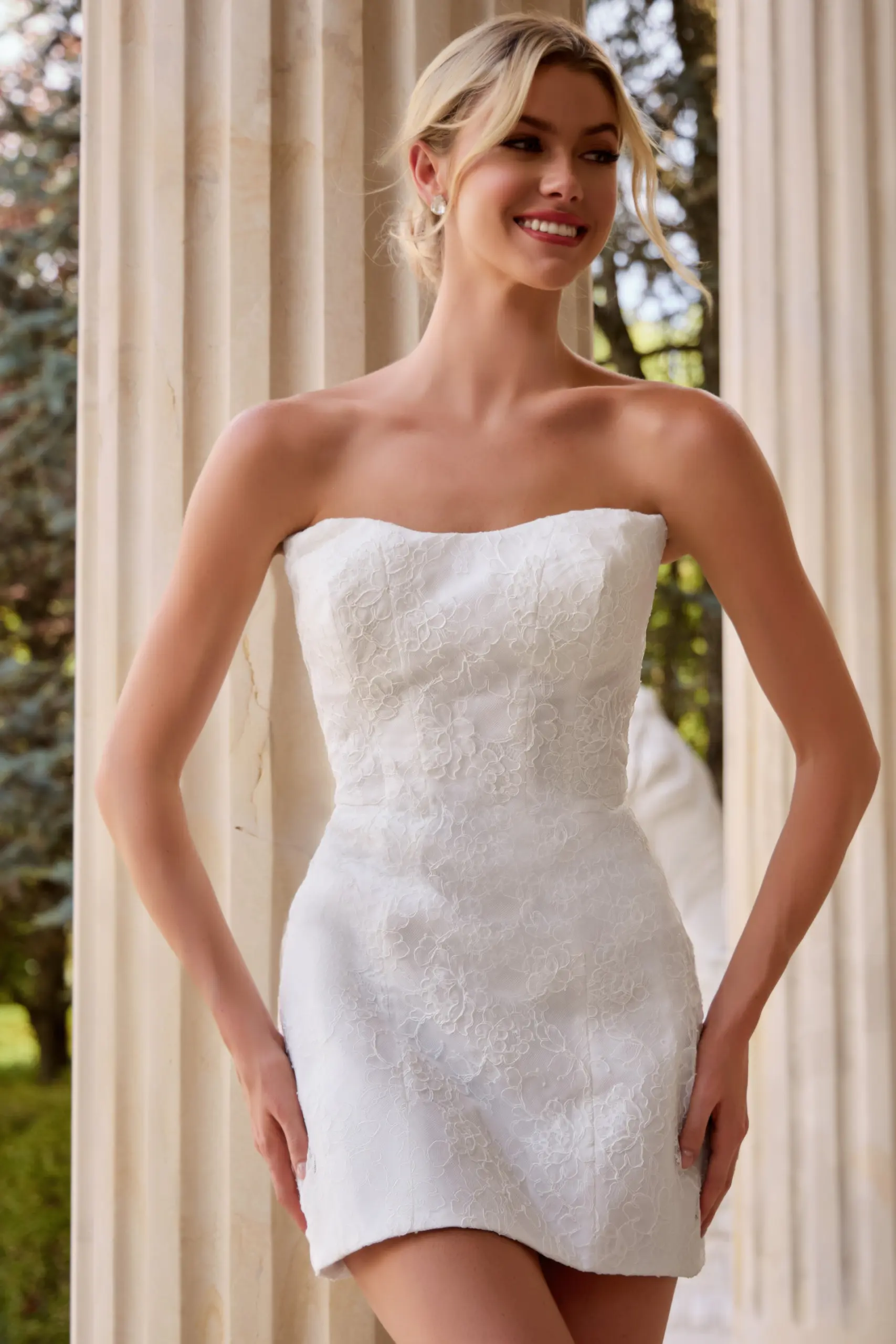
Strapless Mini Lace Bridal Dress JB50283
Trending Now
About This Category
Short Wedding Dresses Built Around Length and Proportion
Short wedding dresses are defined first by hemline, but the strongest designs also balance that shorter length with the right bodice and skirt shape. A mini creates the clearest visual break at the leg and places more attention on shoes, while a midi offers added coverage without returning to a floor-length profile. Tea-length and high-low silhouettes introduce more movement through the skirt and can create a softer transition between traditional bridal proportions and a shorter hem. Brides comparing a wider range of full-length and short silhouettes can start with Wedding Dresses, then narrow the choice by length, structure, and the amount of skirt volume they prefer.
Short bridal styles can also vary from sharply fitted sheaths to fit-and-flare shapes and compact A-lines. A fitted mini keeps the line close through the waist and hips, while an A-line releases earlier and creates more movement away from the body. For a softer level of formality, Casual Wedding Dresses provide a useful adjacent comparison without changing the central focus on bridal construction and proportion.
Mini, Midi, and Tea-Length Bridal Silhouettes
Mini wedding dresses create the most compact silhouette in the collection. Because there is less fabric below the waist, bodice construction, waist placement, and skirt architecture become more visible. Structured strapless minis can feel crisp and graphic, while lace or floral styles add texture without relying on a long train for impact. Midi dresses shift the balance lower, giving more room for a fitted column, flared skirt, or lace overlay while preserving a shorter bridal proportion. Brides comparing white occasion pieces outside the main ceremony context can also reference Little White Dresses, but short wedding dresses remain more specifically anchored in bridal structure and ceremony styling.
Bodice Support and Neckline Balance
A short hem increases the visual importance of the upper half of the dress. Corset-inspired bodices, internal boning, molded cups, seam placement, and secure strapless construction can define the torso and keep the silhouette balanced. Sweetheart necklines introduce a curved shape through the bust, straight strapless necklines feel cleaner and more geometric, and one-shoulder or V-neck designs can create a stronger directional line through the upper body. With shorter skirts, these neckline differences read quickly because there is less length below the waist to distribute visual weight.
The same principle applies to embellishment. A crystal bodice, floral applique, pearl surface, or lace panel can concentrate detail near the face and waist, while a cleaner skirt keeps the overall proportion controlled. Jovani's short bridal styles use both approaches, allowing the dress to feel either highly detailed or deliberately minimal without depending on floor-length scale.
Fabric, Texture, and Movement in a Short Bridal Dress
Fabric determines how a short wedding dress holds its shape and responds in motion. Satin and other smooth structured fabrics make pleating, draping, bubble hems, and sculpted skirt shapes especially visible. Lace introduces pattern across a smaller surface area, so motif size and placement can have a strong effect on the overall look. Tulle can build lighter volume through a mini or tea-length skirt, while sequins, beadwork, and crystals add surface reflection and visual density. The goal is not simply to choose a fabric category, but to consider how its weight and texture interact with the hemline.
Short Wedding Dresses for the Ceremony and Later Events
A short wedding dress can serve as the primary ceremony look, especially for courthouse, city, destination, or intimate weddings where a long train is not central to the setting. The same length can also work later in the day, but occasion should guide the construction. A structured bridal mini chosen for the ceremony may prioritize a secure bodice and cleaner finish, while a second look can place more emphasis on movement, fringe, sequins, or lighter skirt volume. For brides planning a dedicated second outfit, Wedding Reception Dresses provide a broader route into dance-ready bridal options.
A separate change around dessert or late-evening photos can call for a more specific direction. Cake Cutting Dresses focus more narrowly on that transition point, while this collection remains centered on short bridal length as the defining product feature. Keeping those purposes distinct helps prevent a short hemline from being treated as a single occasion category.
Choosing the Right Short Bridal Proportion
The most useful comparison is the relationship between hemline, waist, neckline, and skirt volume. A compact fitted mini creates a sharper vertical stop and keeps the silhouette close to the body. A flared mini adds width below the waist and increases movement. Midi and tea-length shapes extend the line and can support more fabric, lace, or skirt structure without reading like a full gown. Footwear also becomes more visible as the hem rises, so heel height, shoe shape, and leg line contribute more directly to the final proportion.
Jovani's short wedding dresses range from clean and architectural to heavily embellished, but the best comparison starts with construction rather than decoration alone. Look at how securely the bodice is built, where the waist is defined, how the skirt leaves the body, and where the hem lands. Those details determine whether a shorter bridal silhouette feels crisp, fluid, playful, or formal while keeping the look clearly connected to the wedding setting.