Bow Wedding Guest Dresses: Placement, Scale, and Shape
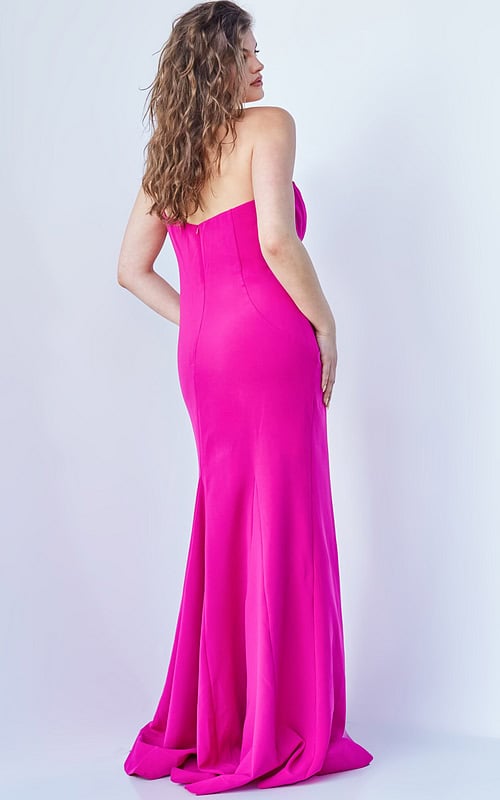
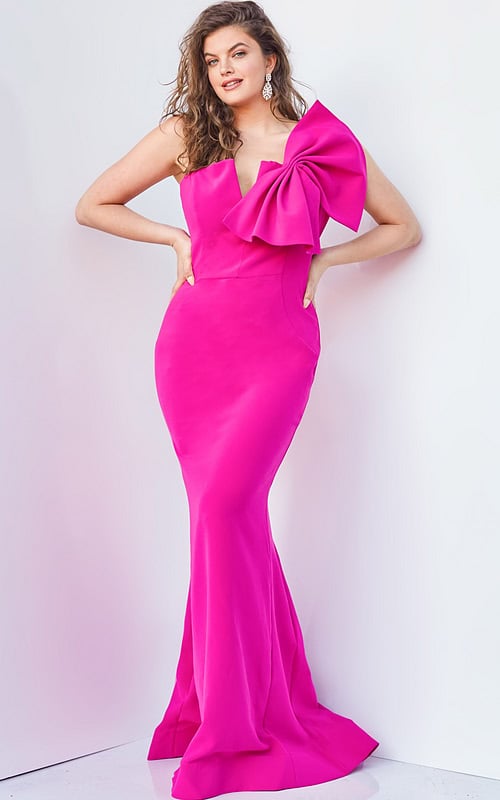
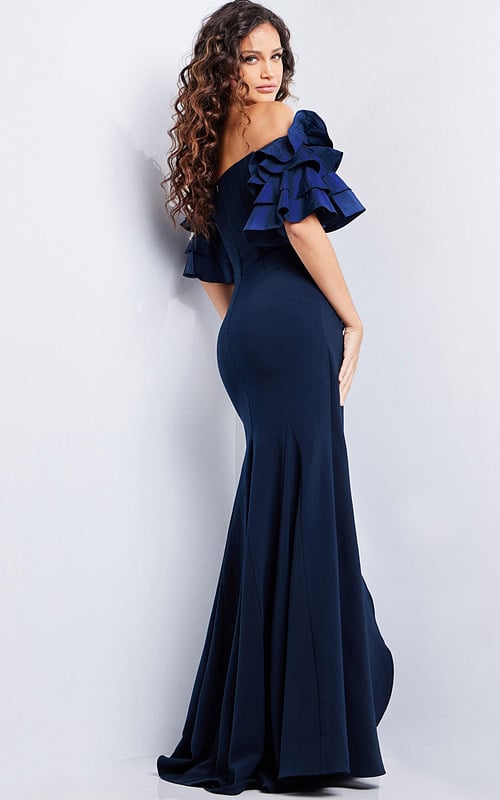
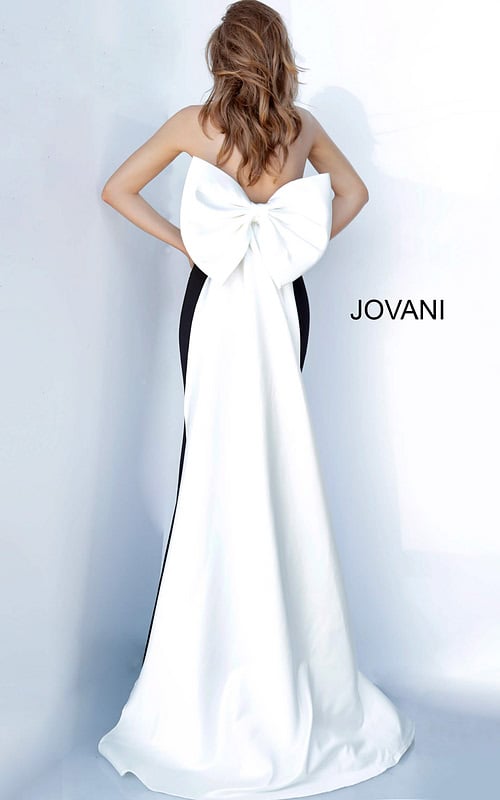
Bow wedding guest dresses can range from restrained designs with a small tied detail to more directional silhouettes built around an oversized sculptural bow. Placement is one of the main differences between styles. A bow at the waist can define a fitted or A-line shape, while a side placement brings dimension to a clean column or mermaid silhouette. Back bows work particularly well with open-back and strapless dresses, creating interest from behind without interrupting the front of the design. Shoulder bows introduce asymmetry and can give a simple sleeveless or one-shoulder gown a stronger fashion perspective.
Scale changes the effect just as much as placement. A compact tonal bow keeps the silhouette refined, while an oversized version becomes the focal point and works best alongside cleaner seams and controlled embellishment. For a broader comparison of lengths, necklines, and silhouettes, wedding guest gowns provide a natural starting point before narrowing the choice by bow detail.
Silhouette and Fit Should Lead the Design
A bow wedding guest gown is strongest when the underlying silhouette is resolved before the decorative detail is considered. Fitted columns and mermaid shapes need precise placement through the waist and hip so a bow does not distort the line of the dress. A-line silhouettes can support more volume because the skirt already moves away from the body, while minis and midis often benefit from sharper proportions and a more controlled bow.
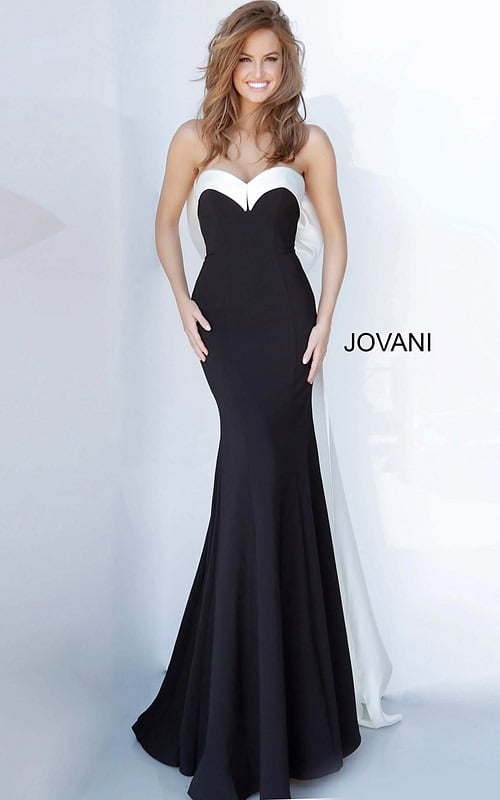
Structure becomes particularly important through the bodice. Strapless and corset-inspired styles should sit securely across the bust and waist, especially when a bow is positioned near the neckline or back closure. Jovani approaches this type of occasionwear with close attention to support, seaming, and fabric behavior so dimensional details remain aligned with the silhouette. Shoppers starting with neckline can also compare strapless wedding guest outfits to see how straight, sweetheart, and sculpted bodices influence the overall proportion.
Satin, Mikado, Crepe, and Textured Fabrics
Fabric determines whether a bow appears soft, crisp, architectural, or fluid. Satin reflects light across folds and loops, making it particularly suited to draped back details, side bows, and smooth fitted silhouettes. satin wedding guest dresses are a useful direction for anyone who wants a cleaner surface with enough sheen to make the detail visible without depending on contrast color or heavy decoration.
Mikado and structured jacquard hold a more defined shape, making them suitable for oversized or sharply folded bows. Crepe creates a quieter effect and keeps attention on line and fit, while organza and tulle can produce lighter dimensional volume. Fabric weight changes the proportion as well: a large bow in dense satin or Mikado feels architectural, while the same scale in organza appears softer and less visually heavy.
For bow wedding guest dresses with a stronger fabric statement, the most effective designs usually keep the rest of the surface relatively controlled. This allows the texture, sheen, and dimensional detail to work together rather than compete for attention.
Length and Proportion Change the Overall Effect
Floor-length bow wedding guest gowns can support a larger shoulder, back, or hip detail because the longer silhouette provides more visual space. A column gown with a side bow feels very different from a full-skirted design with the same detail, even when both use similar fabrics. Midi lengths tend to work well with controlled waist bows, back details, or asymmetric placements that do not interrupt the hemline.
Shorter silhouettes can carry more playful proportions, but the construction should still feel intentional. short wedding guest dresses offer a useful comparison between fitted minis, structured A-lines, and knee-length shapes where the bow becomes part of the overall geometry of the dress.
On longer styles, placement near a slit, shoulder, waist, or open back can direct the eye without requiring additional surface decoration. The strongest proportion usually comes from one clearly defined focal point supported by the cut rather than several competing details.
Embellishment, Color, and Visual Balance
A bow can sit alongside other decorative elements, but the hierarchy needs to remain clear. Crystal accents, beadwork, sequins, or metallic texture work best when either the embellishment or the bow is allowed to lead. beaded wedding guest gowns provide a useful comparison for shoppers deciding between a cleaner sculptural detail and a more decorative surface.
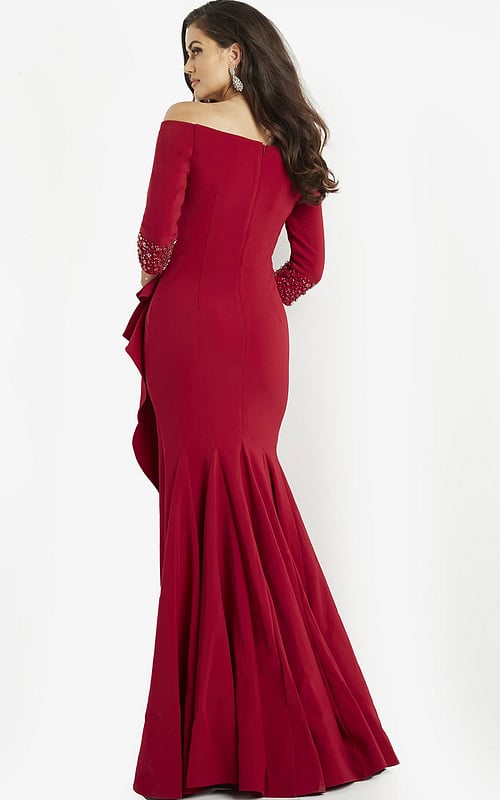
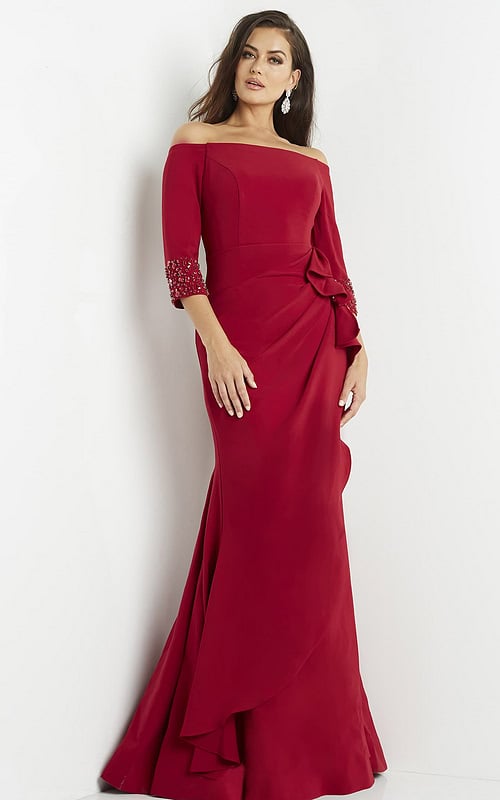
Color can also change how prominent the bow appears. Black, navy, burgundy, deep green, and saturated jewel tones tend to make a structured bow feel sharper, while pink, blue, lavender, and brighter shades give the detail a lighter character. Tonal bows keep the silhouette cohesive; contrast details produce a more graphic result and generally benefit from simpler styling elsewhere.
On a bow wedding guest dress with strong color, shine, or embellishment, restraint through the neckline and accessories helps preserve the intended shape. The visual focus should remain on the relationship between fabric, cut, and bow rather than on several unrelated decorative elements.
Choosing the Right Bow Detail
When comparing bow wedding guest dresses, look beyond the size of the bow and consider how it connects to the entire silhouette. A small shoulder detail can be enough on a gown with strong draping, while a minimal satin column can support a much larger back or hip bow. Neckline, waist placement, skirt volume, fabric weight, and surface treatment should all reinforce the same design direction.
Jovani’s approach to statement detailing is particularly relevant here because construction determines whether the bow maintains its intended placement and proportion. Secure bodices, controlled seams, and fabrics selected for either structure or movement allow dimensional details to remain part of the silhouette rather than sitting separately from it.
Whether the final choice is a fitted bow wedding guest gown, a structured midi, or a shorter design, the strongest option is usually the one where the bow appears necessary to the composition of the dress rather than added after the shape has already been established.