
1 Colors
Strapless Wedding Dresses
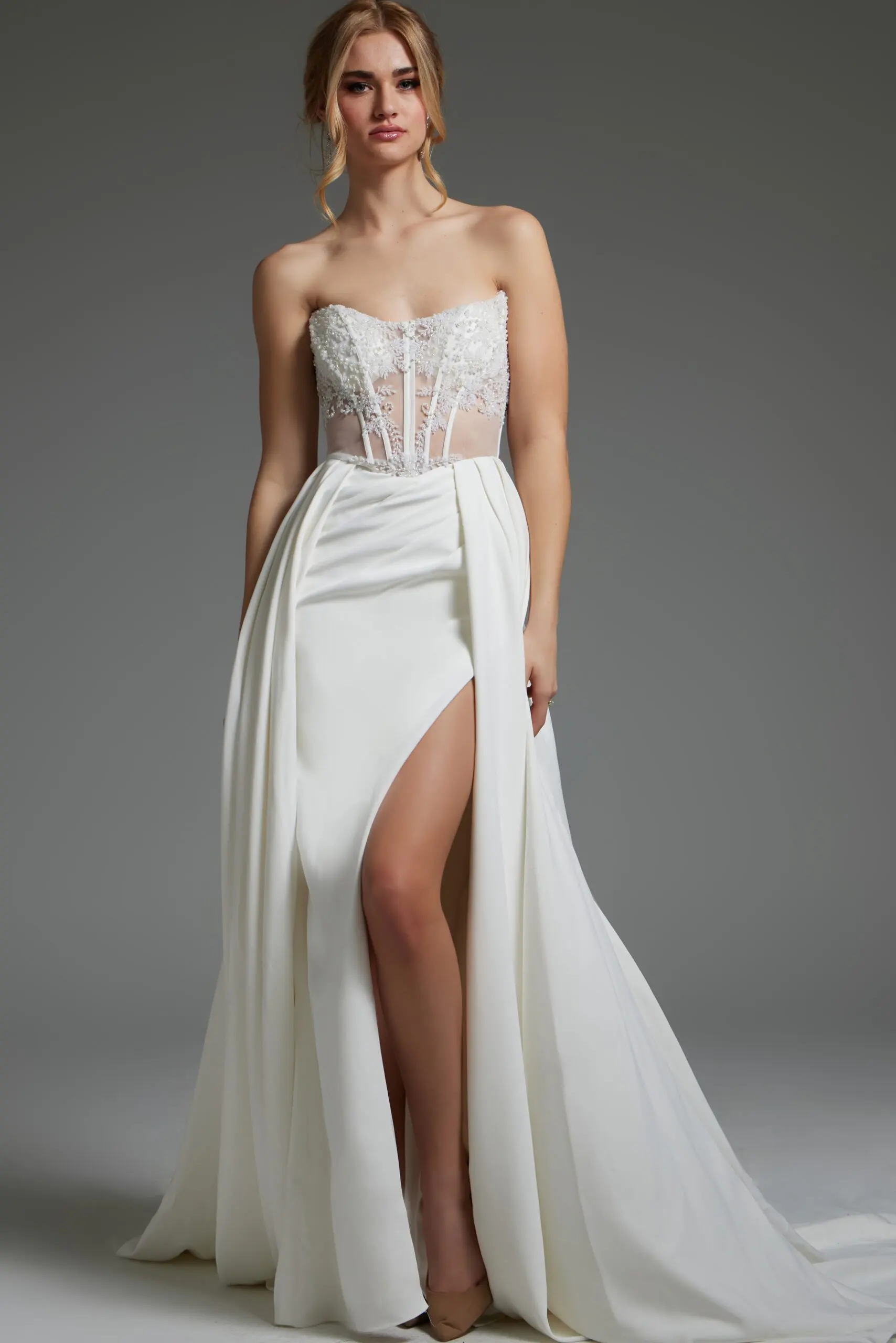
Strapless wedding dresses place more visual emphasis on the bodice, neckline, and balance between the upper body and skirt. Jovani bridal styles range from clean satin and crepe gowns to lace, tulle, and embellished designs, with sweetheart curves, straight necklines, sculpted corsetry, defined waists, and fuller or fitted skirts. Compare how securely the bodice holds its shape, where the waist begins, how the fabric supports the silhouette, and whether the skirt releases gradually or close to the body. These details determine how a strapless bridal gown looks from the front, side, and back while also influencing movement throughout the wedding day.
Products
1 Colors
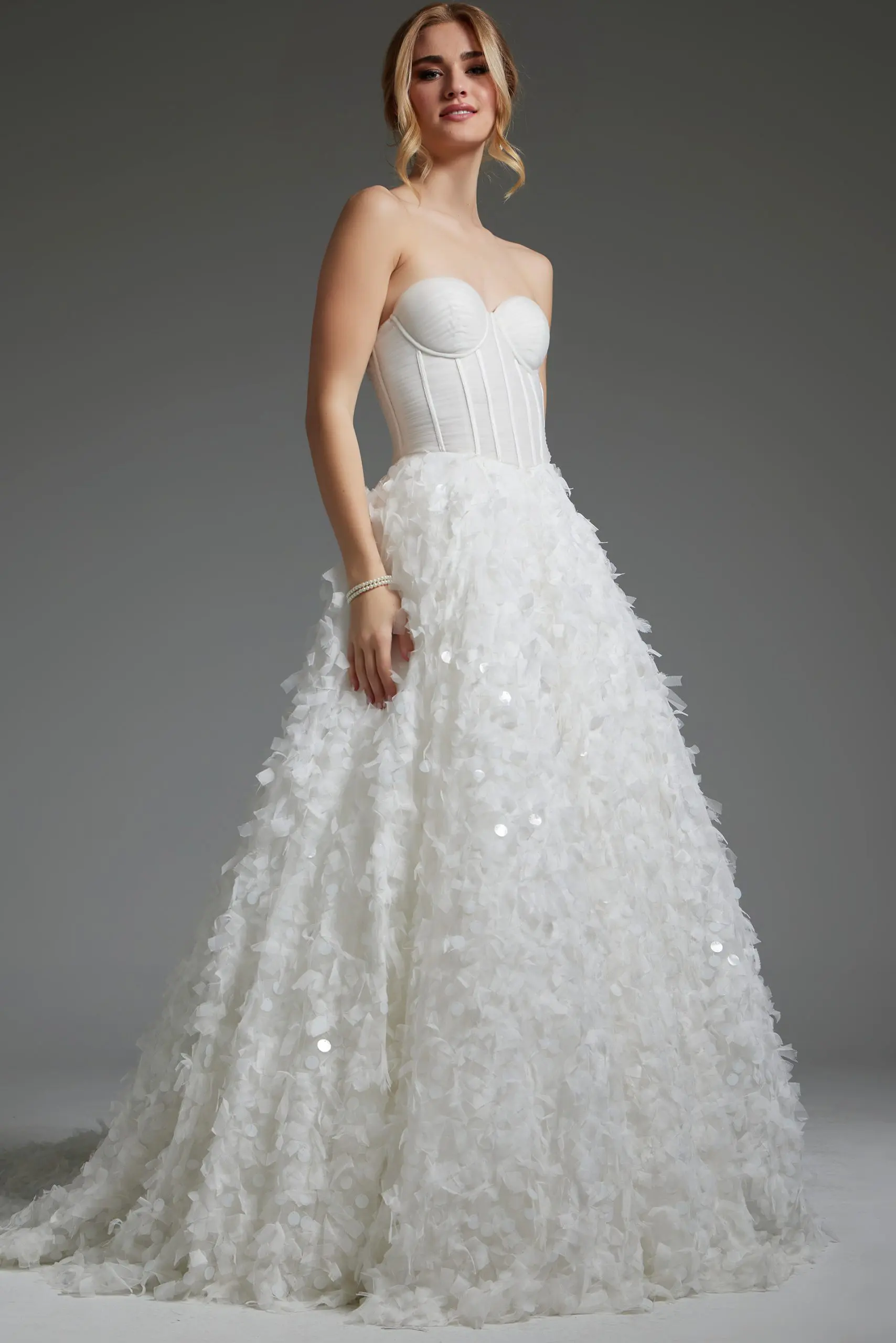
Off White Pailette Skirt Strapless Bridal Gown JB26295
1 Colors
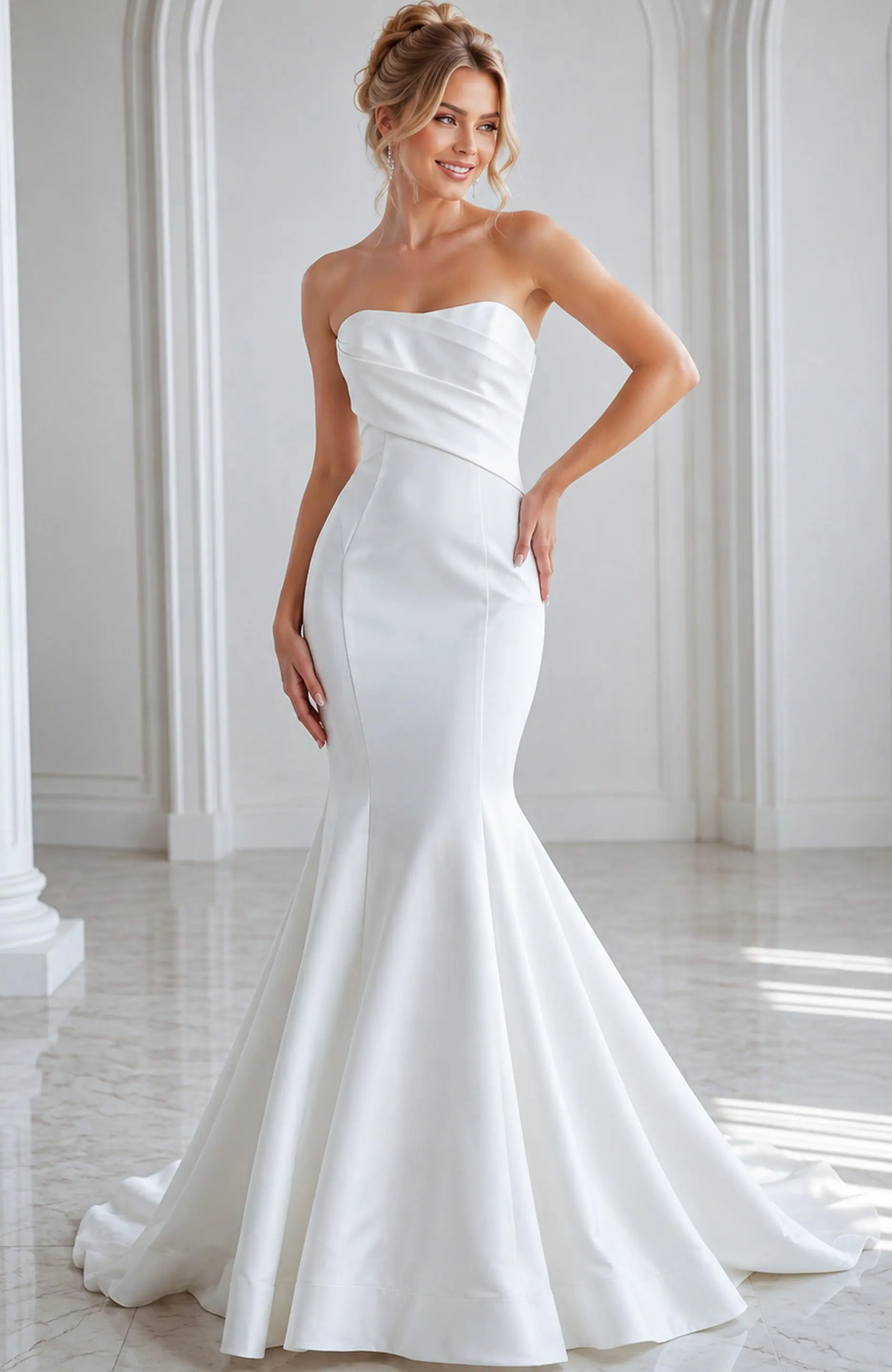
White Strapless Mermaid Bridal Dress JB24282
1 Colors
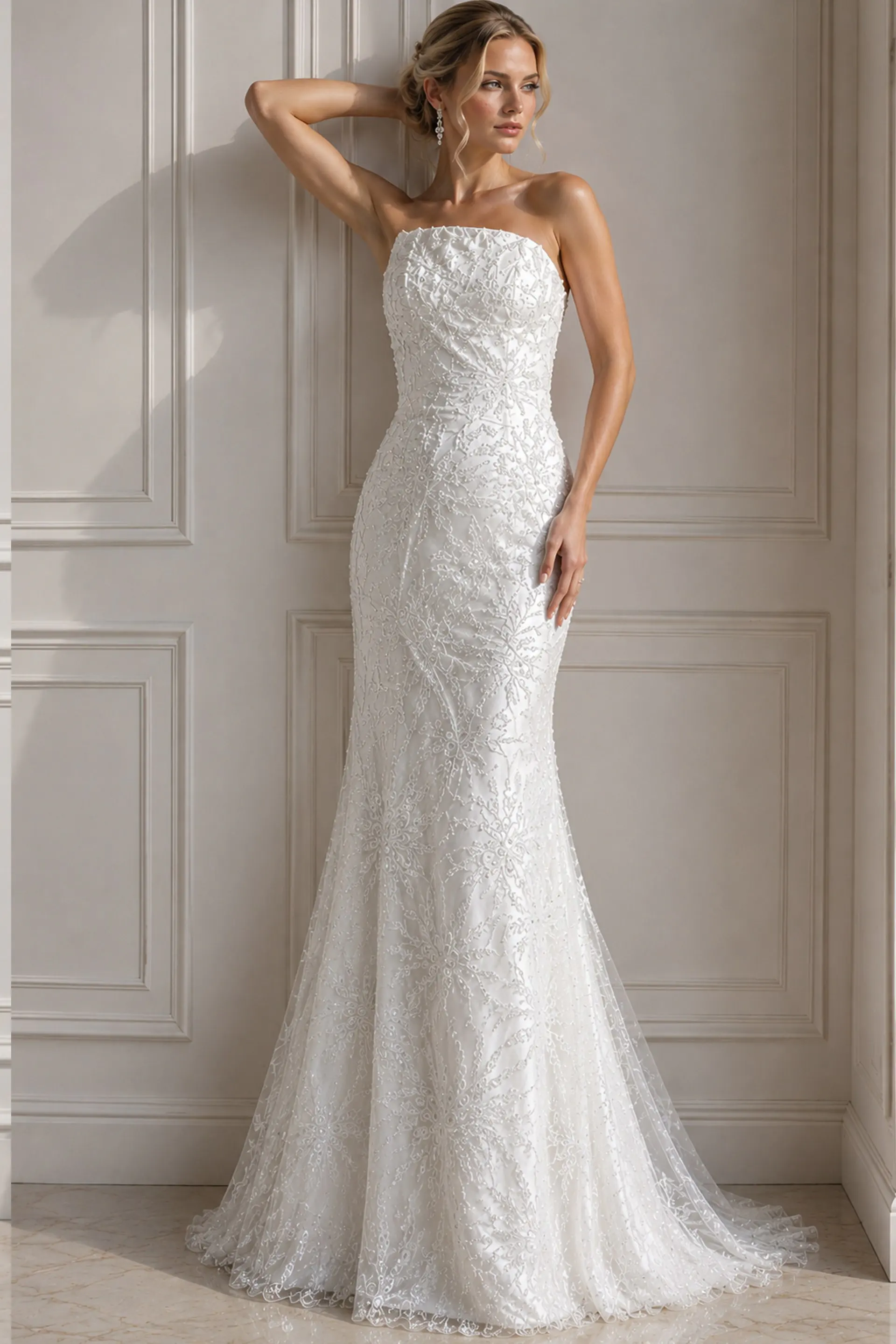
Off White Embellished Strapless Bridal Dress JB40608
1 Colors
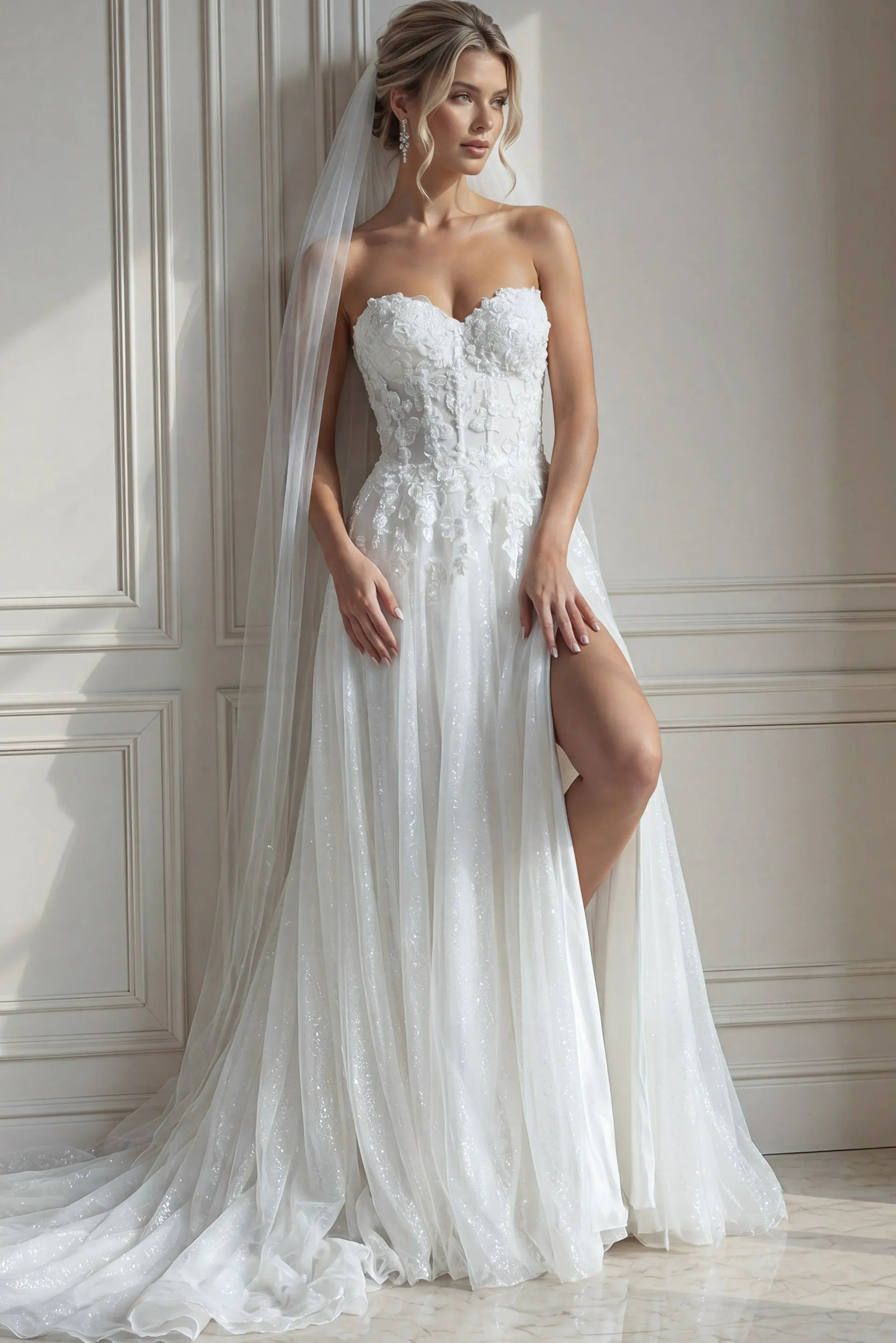
Off White Strapless Sweetheart Neckline Bridal Dress JB25730
1 Colors
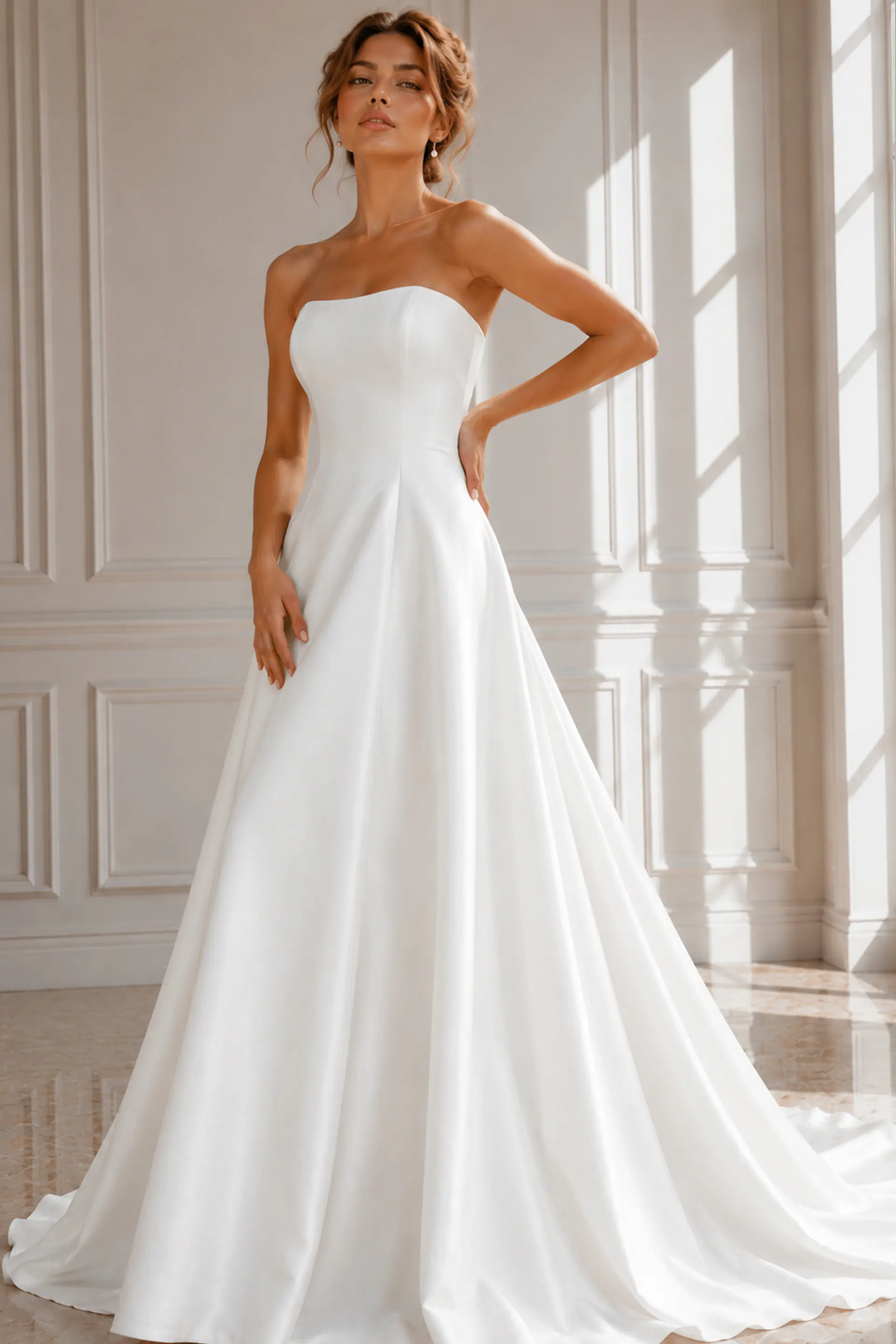
Off White A Line Strapless Bridal Dress JB42346
1 Colors
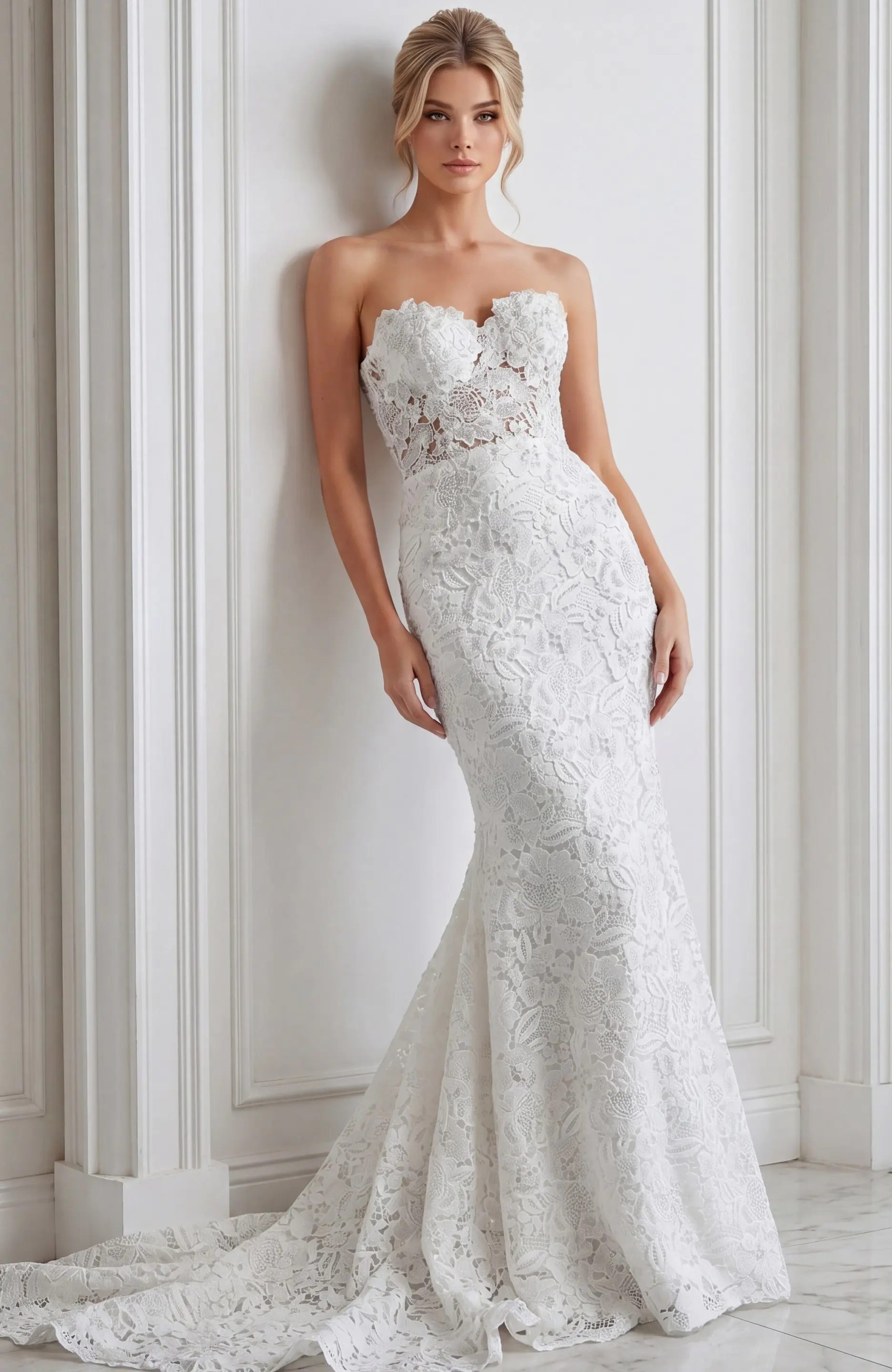
Off White Lace Strapless Bridal Dress JB39733
1 Colors
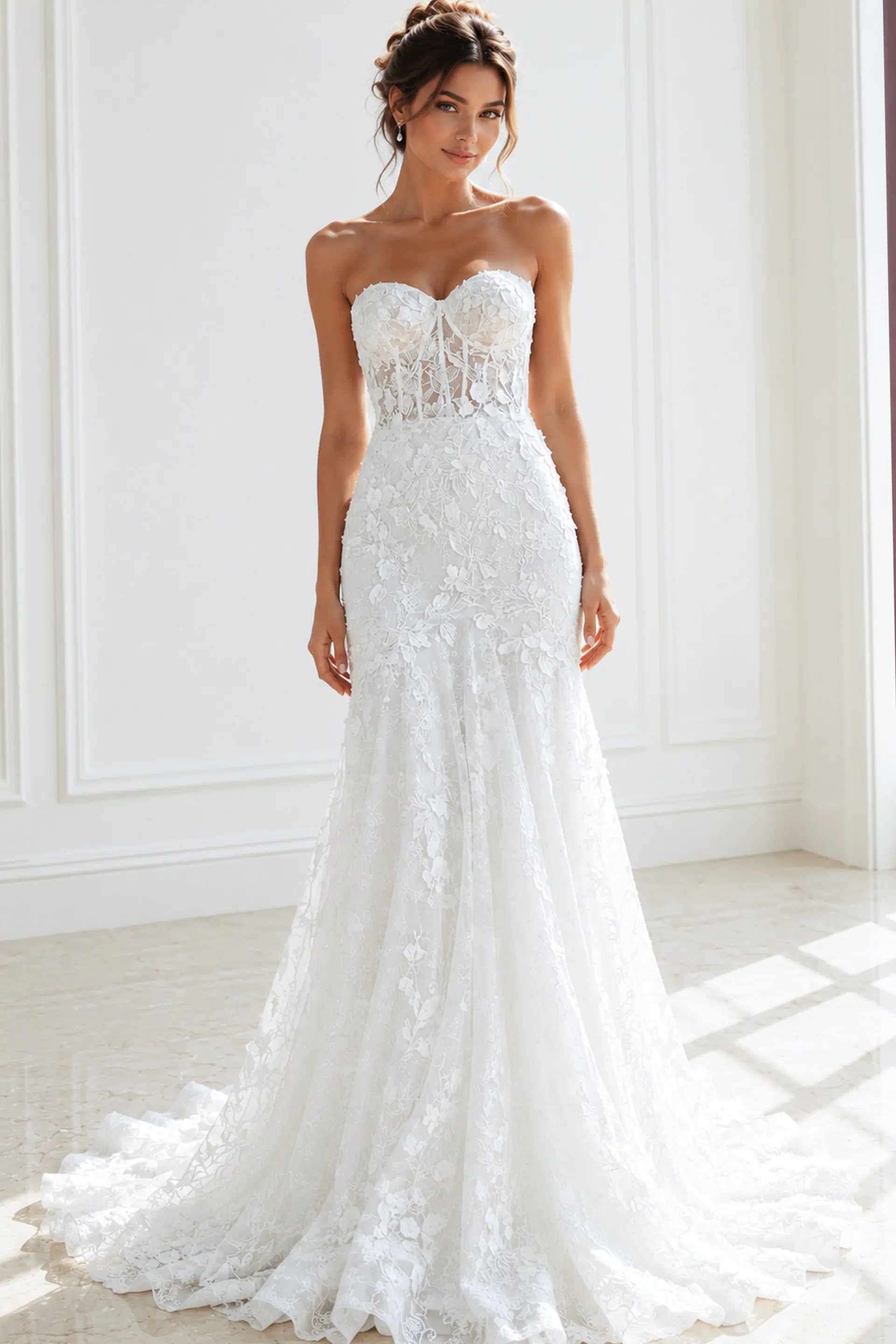
Jovani JB02836 Off White Strapless Embroidered Bridal Dress
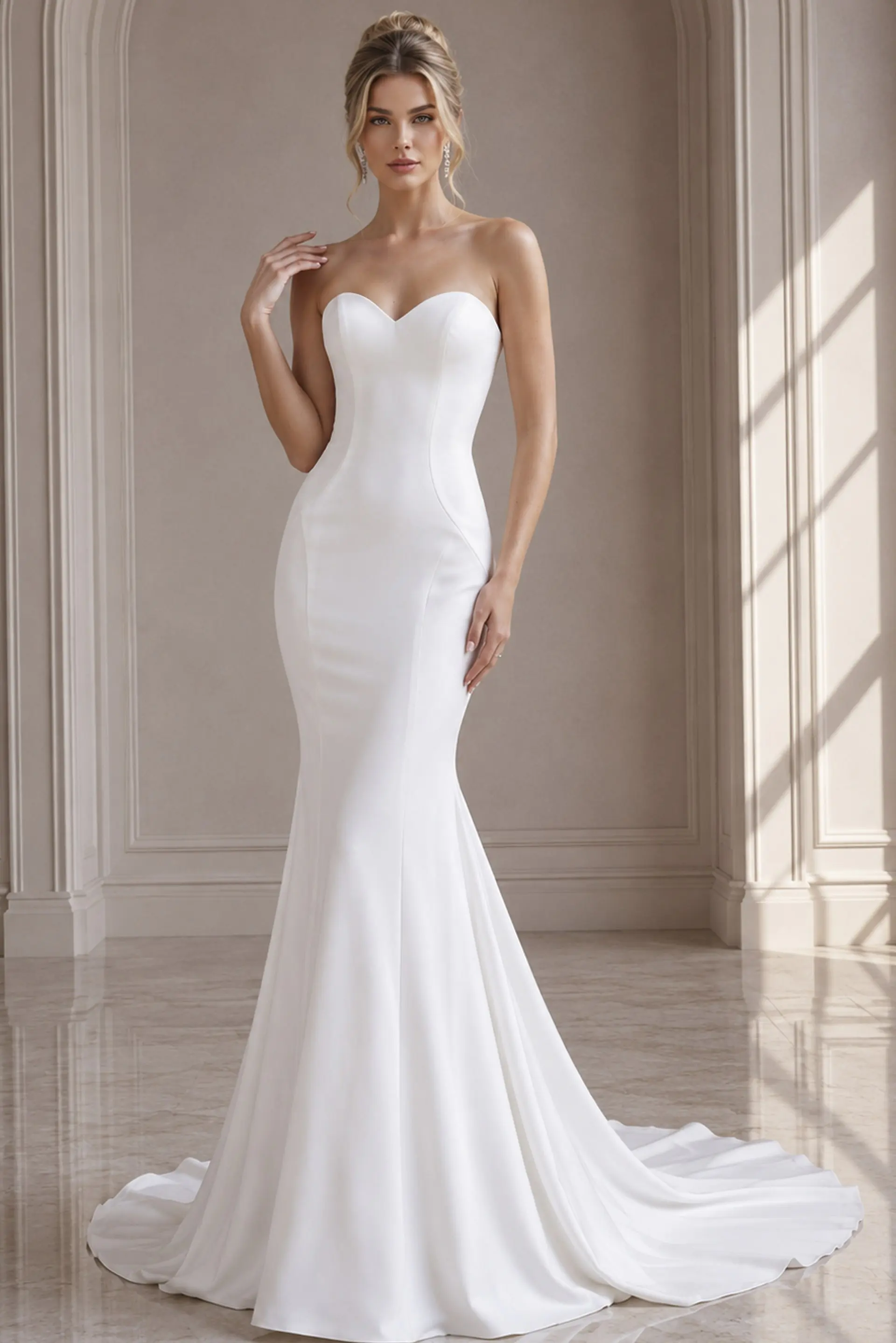
1 Colors
Jovani JB06912 Ivory Strapless Sweetheart Neck Wedding Dress
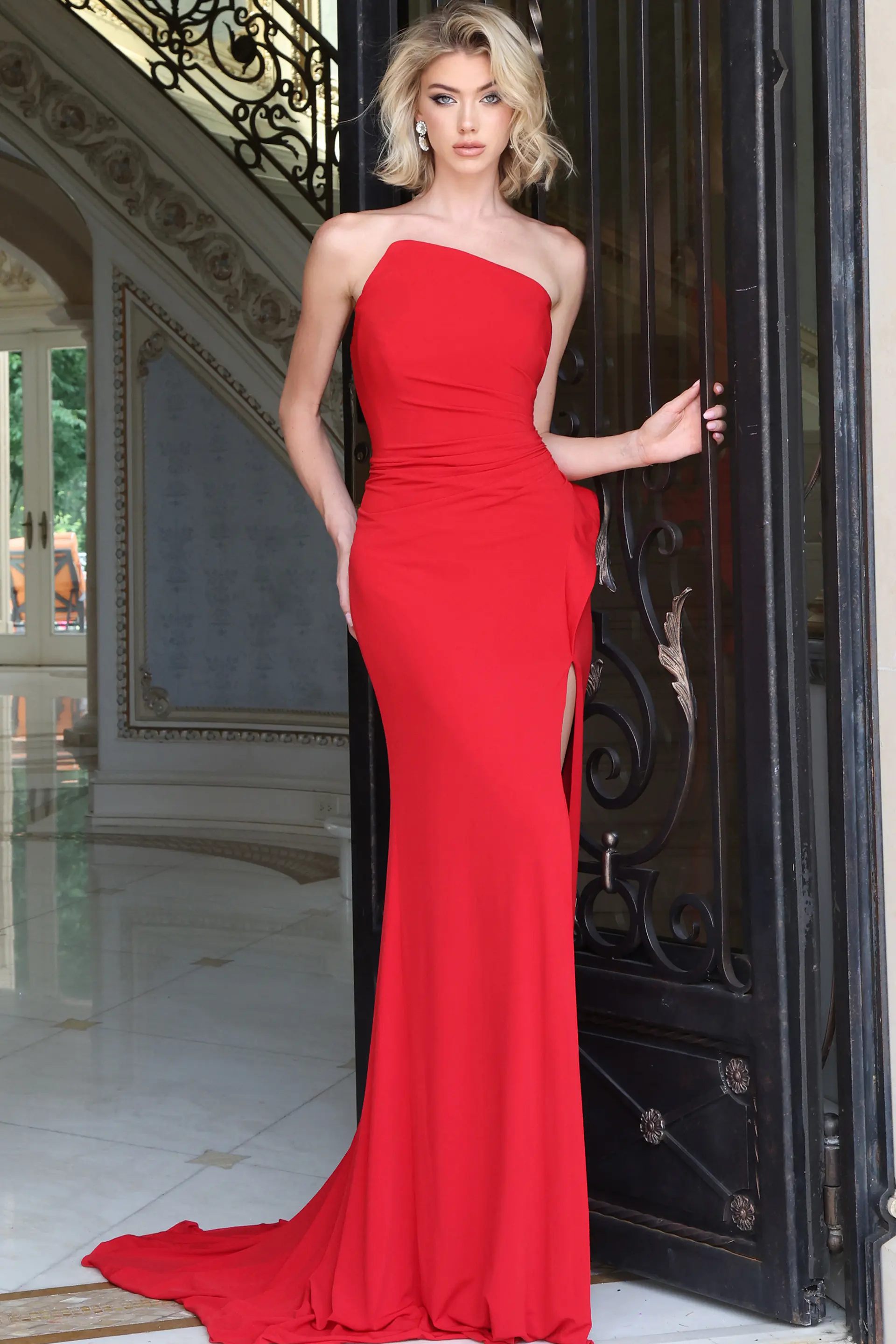
3 Colors
One Shoulder Draped Gown With Open Back 47150
Trending Now
About This Category
Strapless Wedding Dresses and Bodice Structure
Strapless wedding dresses depend on the bodice for both shape and visual stability. Without straps or sleeves, the construction through the bust and waist becomes more important, particularly in gowns with a close fit through the torso. Boning, corset-inspired seams, molded cups, lining, and internal support can help the neckline stay defined while the dress maintains its intended proportion. Brides comparing the full range of bridal silhouettes can begin with Wedding Dresses and then narrow the search by neckline, fabric, and skirt shape.
Sweetheart necklines create a curved upper edge that follows the bust, while straight strapless necklines form a cleaner horizontal line. Some bodices use visible corset seaming as a design feature; others keep the internal structure concealed beneath satin, crepe, lace, or applique. The most useful comparison is not simply how low or high the neckline sits, but how firmly the bodice is built and how naturally it connects to the waist.
A-Line, Fitted, and Fuller Strapless Silhouettes
The same strapless neckline can produce very different proportions depending on the skirt. A-Line Wedding Dresses define the upper body before opening gradually from the waist, creating movement without the full scale of a ball gown. In satin or structured woven fabrics, that transition can appear crisp and architectural; in tulle or lace, it tends to feel softer and more layered.
A closer silhouette places more attention on the torso and hip line. Fitted Wedding Dresses offer a useful comparison for sheath, column, mermaid, and fit-and-flare shapes that stay near the body for longer before the skirt releases. With a strapless bodice, seam placement and waist definition become especially visible, so small changes in construction can significantly affect the overall line.
Ball gowns create the strongest contrast between an open neckline and a full skirt. A structured bodice can appear more compact against layers of tulle, organza, satin, or textured fabric, while dropped or basque-style waistlines can lengthen the torso before the skirt gains volume. These differences are useful when choosing between a gown that feels streamlined, balanced, or deliberately dramatic.
Satin, Crepe, Lace, and Embellished Surfaces
Fabric determines how clearly the neckline and bodice construction are seen. Satin reflects light across broad, smooth areas, making draping, pleating, sculpted folds, and seam placement more noticeable. Crepe creates a quieter surface and often works well with fitted silhouettes where the cut and proportion carry the design. Tulle adds lighter volume and can soften the transition from a structured strapless bodice into a fuller skirt.
Lace Wedding Dresses show how surface pattern changes the character of the same basic neckline. Floral lace can frame the upper edge of a corset, continue through the waist, or spread into the skirt and train. Placement matters: concentrated lace through the bodice creates a different visual balance from an allover pattern, while sheer sections can make boning and corset lines more visible.
For more reflective detail, Beaded Wedding Dresses provide a useful contrast. Crystal, pearl, or beadwork concentrated around a strapless bodice can draw attention upward, while lighter embellishment leaves more emphasis on the silhouette itself. The density of the surface detail can also affect weight and movement, so it is worth comparing how much decoration is applied and where it is placed.
Waistlines, Neckline Shape, and Proportion
A strapless gown makes the relationship between neckline and waist especially clear. A natural waist creates a familiar break between bodice and skirt, while dropped and basque waistlines extend the bodice lower on the torso before the skirt begins. That extra length can make corsetry, seaming, and sculptural draping more prominent. Dresses with minimal waist interruption create a longer continuous line, particularly in fitted satin or crepe styles.
Neckline shape changes the upper proportion as well. A sweetheart edge adds curvature, while a straight neckline feels more geometric. Softly scooped or slightly peaked strapless shapes sit between those two directions. The neckline should be considered together with the width of the skirt, position of the waist, and amount of bodice detail rather than treated as an isolated feature.
Support, Movement, and the Wedding-Day Fit
A strapless bridal gown should remain stable during normal movement. During a fitting, it is useful to sit, walk, turn, lift the arms, and move through the range of motion expected during the ceremony and reception. The neckline should stay in place without frequent adjustment, while the bodice should feel secure without creating unnecessary pressure. The skirt should also be evaluated independently: a fitted hem, full tulle skirt, or extended train will each change how the gown moves.
Jovani strapless bridal designs use the neckline across fitted, A-line, mermaid, sheath, and ball-gown proportions, so the final choice is less about selecting a strapless dress in isolation and more about how its construction works with the rest of the gown. Comparing bodice support, waist placement, fabric weight, skirt volume, train length, and surface detail creates a clearer picture of how each dress will look and behave throughout the day.
Comparing Clean and Detailed Strapless Bridal Styles
Clean strapless gowns make cut and construction the main visual features. A satin ball gown may rely on pleating, a sculpted neckline, or a defined waist, while a crepe sheath can use long seams and controlled draping to create shape with minimal surface decoration. These styles make proportion easy to read and can place more emphasis on accessories, veil length, or the architecture of the train.
Detailed versions shift attention toward texture. Lace, floral applique, crystal work, pearls, dimensional flowers, bows, and detachable overskirts can all change how the neckline is perceived without changing the basic strapless construction. The most useful comparison is to look at where the detail is concentrated and whether it supports the shape of the gown. Jovani uses both clean and embellished approaches, allowing the strapless neckline to function as a framework for very different bridal proportions and finishes.