
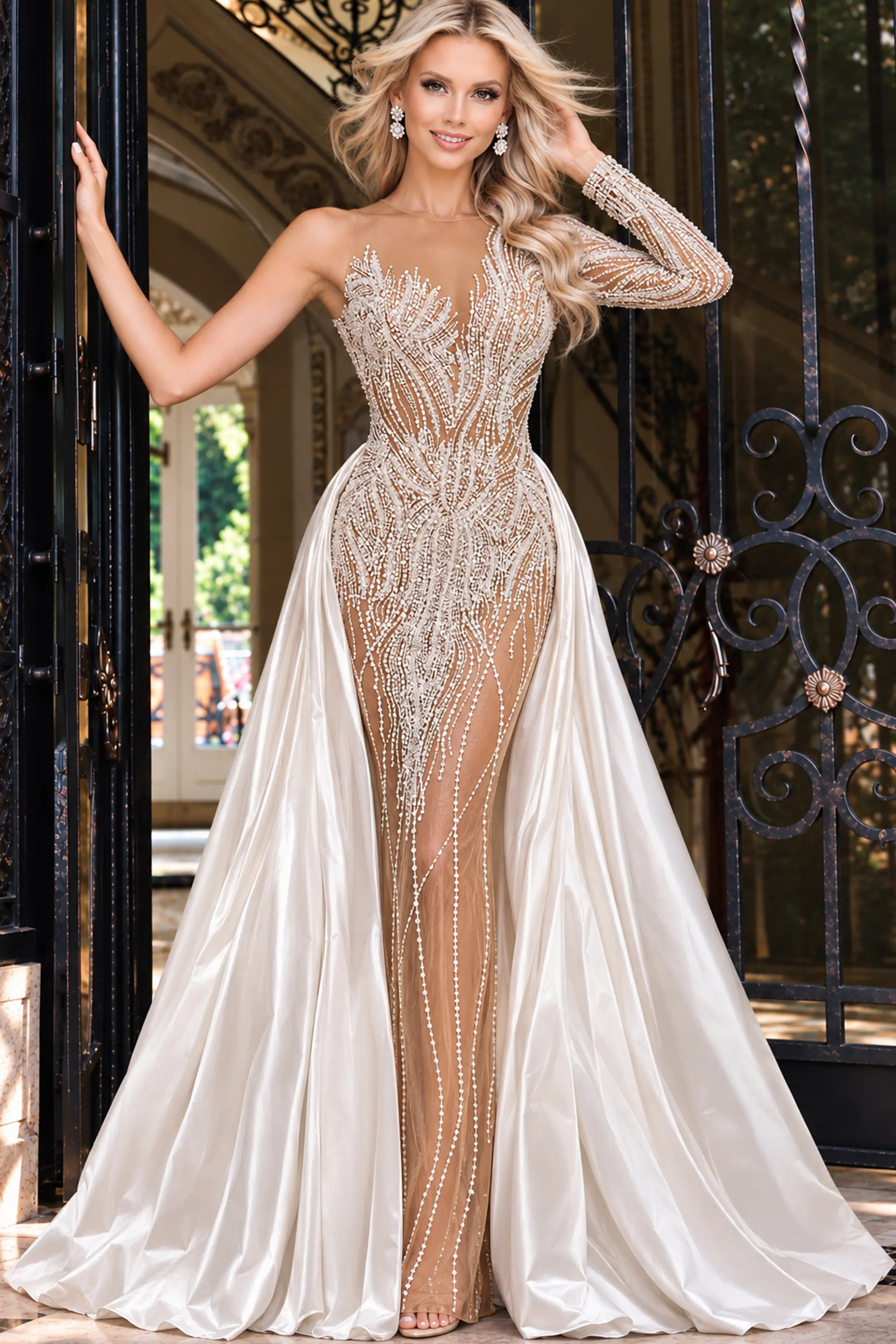
1 Color
White pageant dresses
White pageant dresses create a striking presence on stage, with silhouettes that range from sleek fitted gowns to dramatic mermaid shapes and flowing skirts. Jovani brings dimension to white through crystal beading, sculpted corset bodices, sheer detailing, and carefully placed embellishments. A white pageant gown can appear clean and architectural or richly textured, depending on its fabric and finish. Explore differences in neckline, waist definition, skirt movement, and train length to find a design that holds its shape under stage lighting and complements your presentation during the evening gown competition.
Products
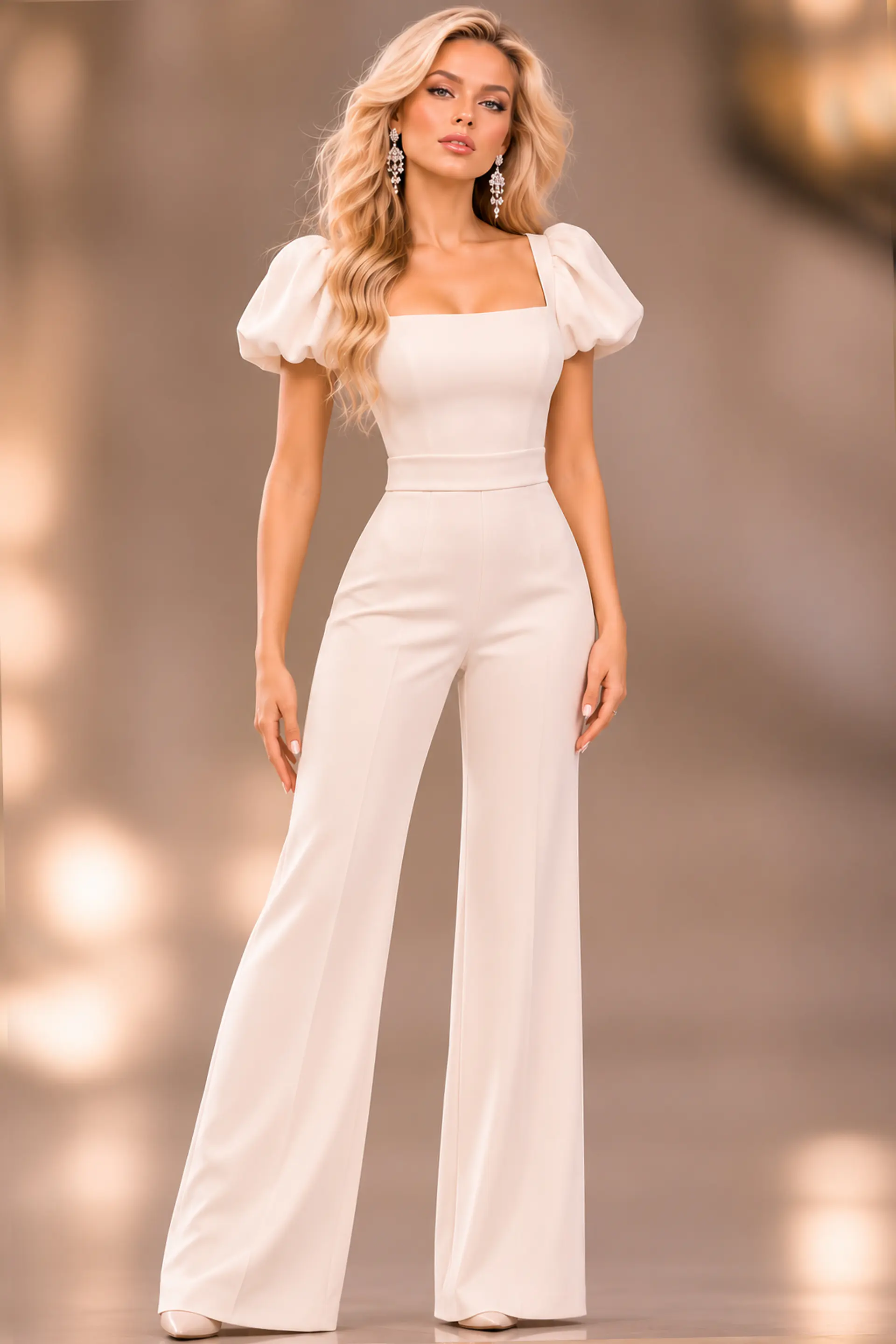
1 Color
Square Neck Puff Sleeve Wide Leg Jumpsuit 53807
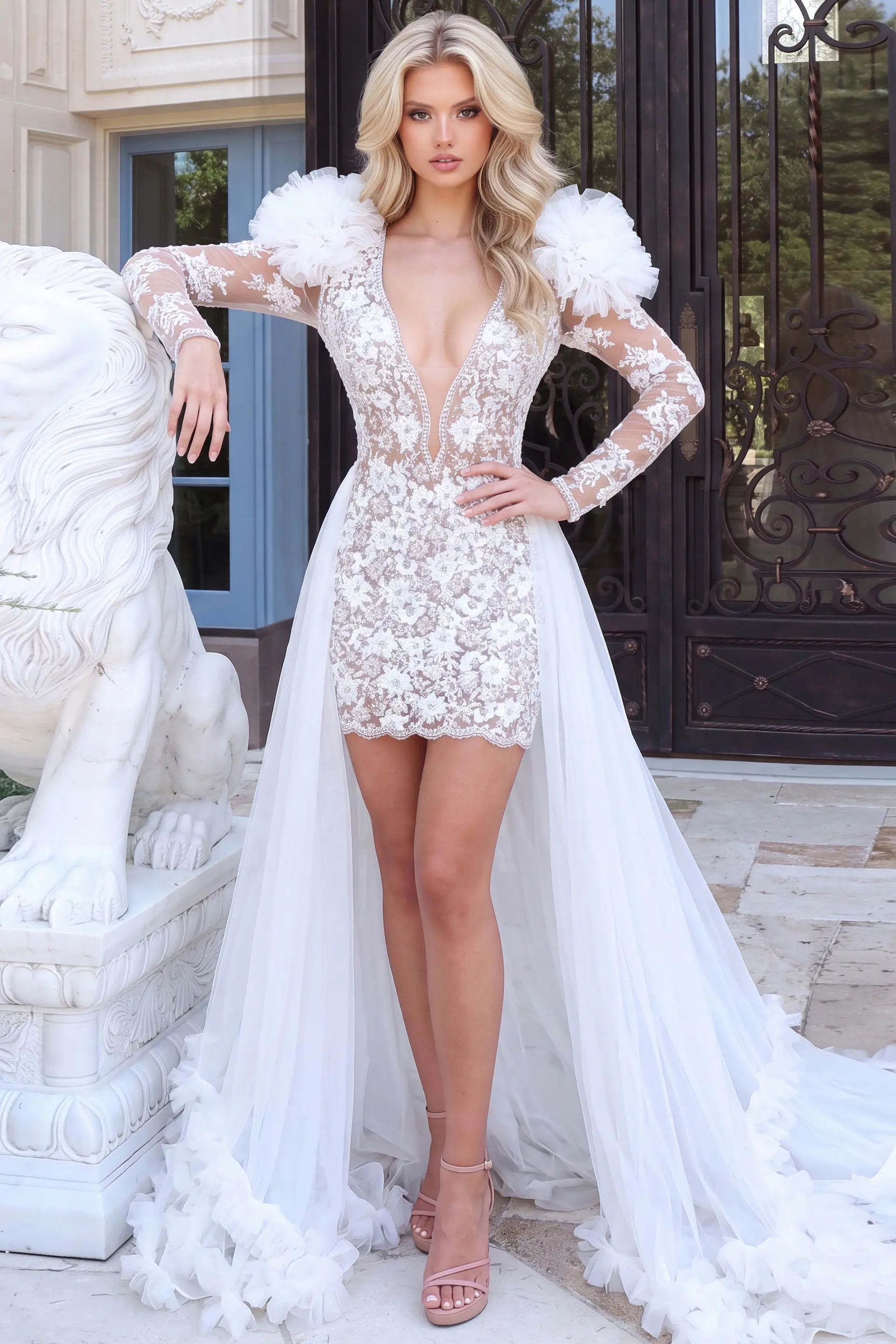
1 Color
Long Sleeve V Neck Lace Floral Mini Dress with Overskirt 51955
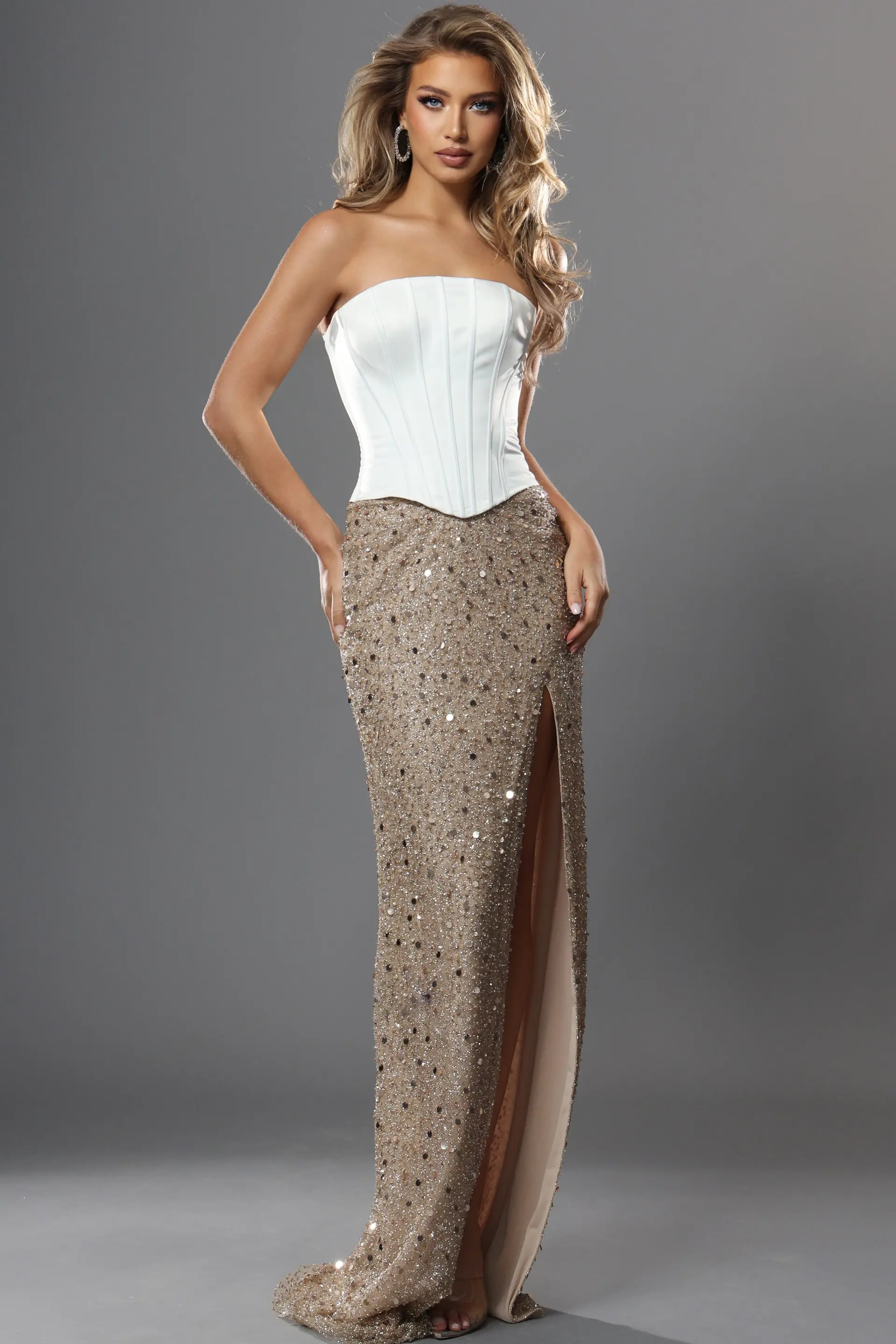
1 Color
Strapless Sequin High Slit Corset Dress 51916
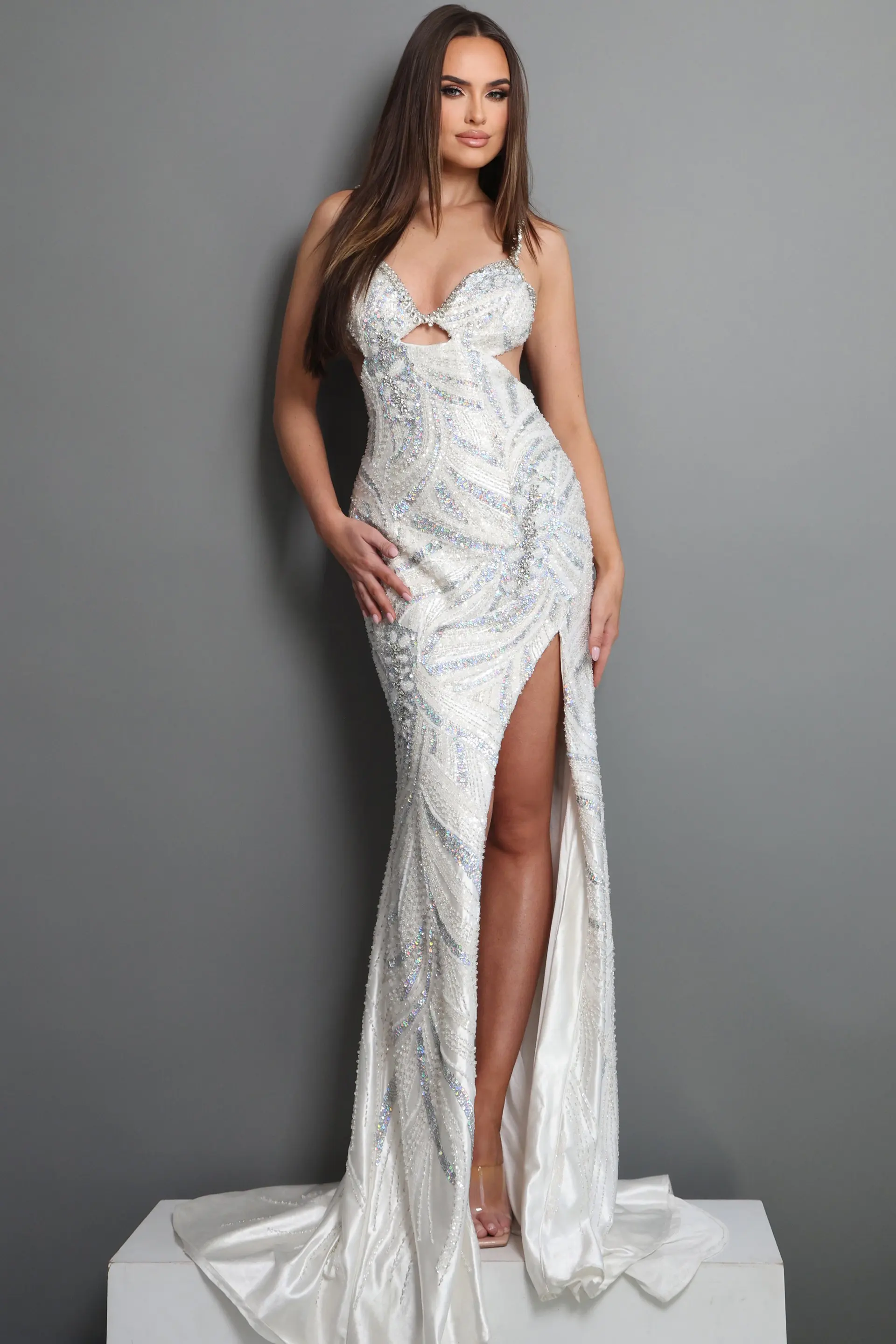
1 Color
V Neck Cutouts Sequined Dress 43074
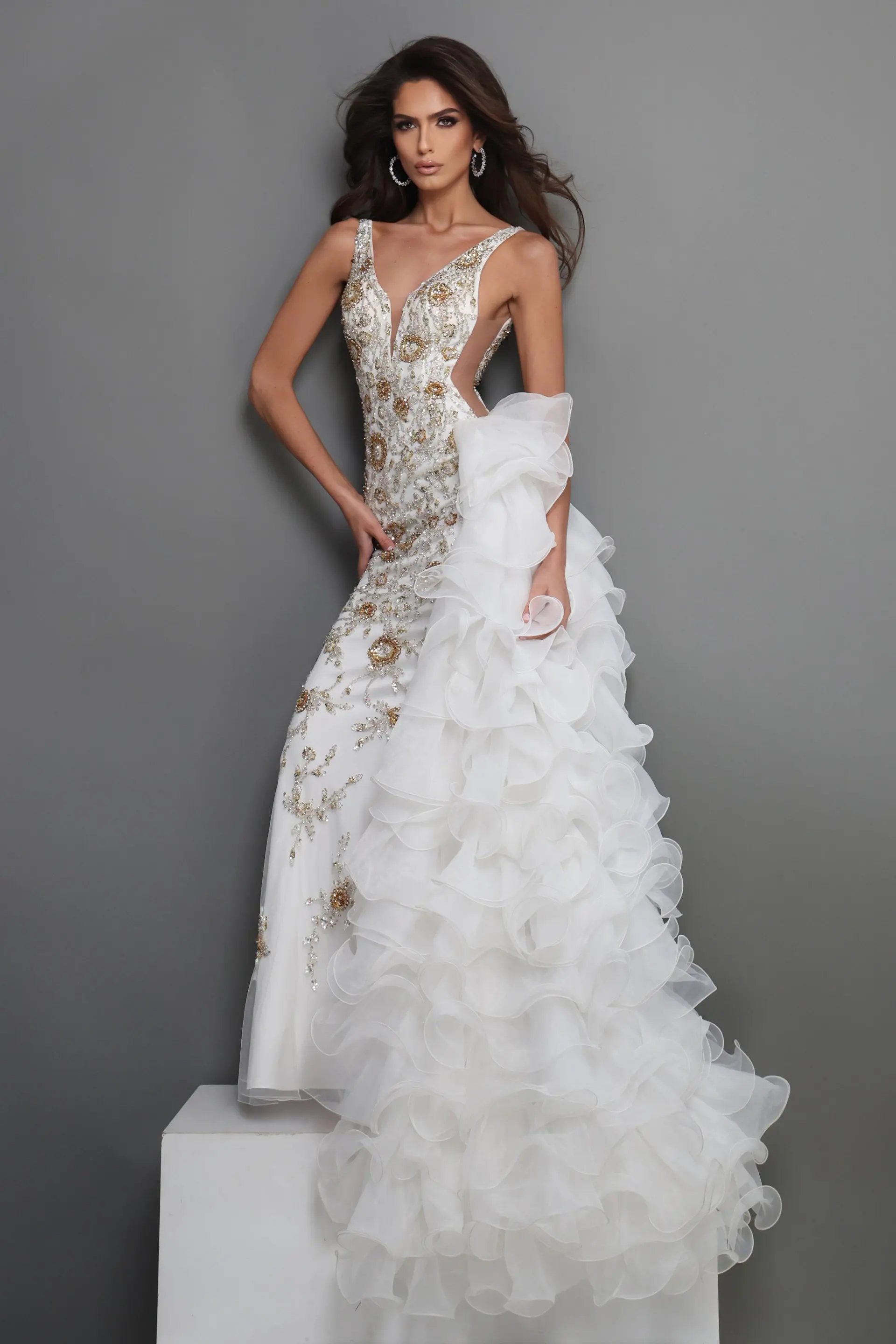
1 Color
Beaded Ruffled Train Mermaid Long Dress 41146
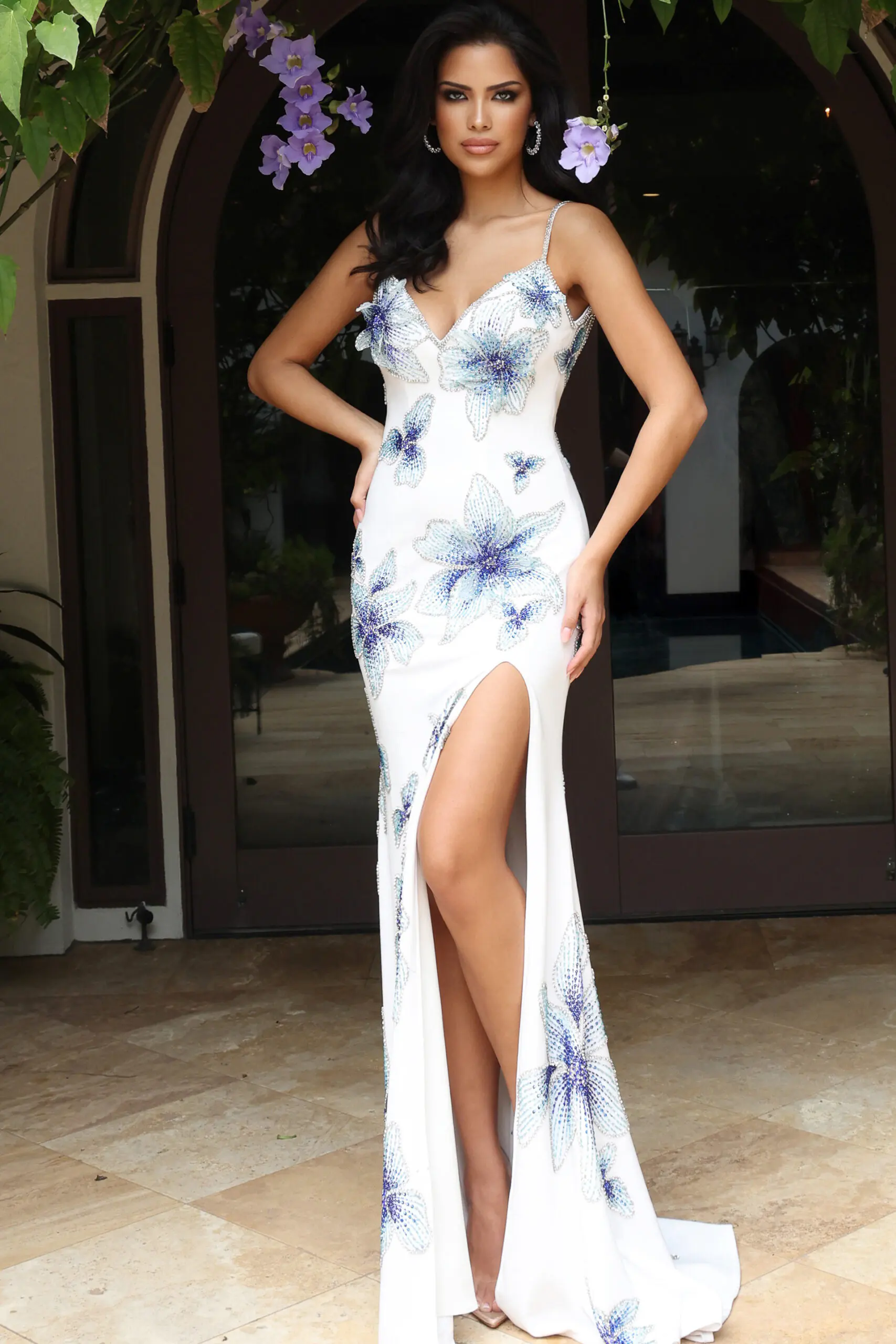
1 Color
Floral Embellished Spaghetti Strap Gown With Slit 48126
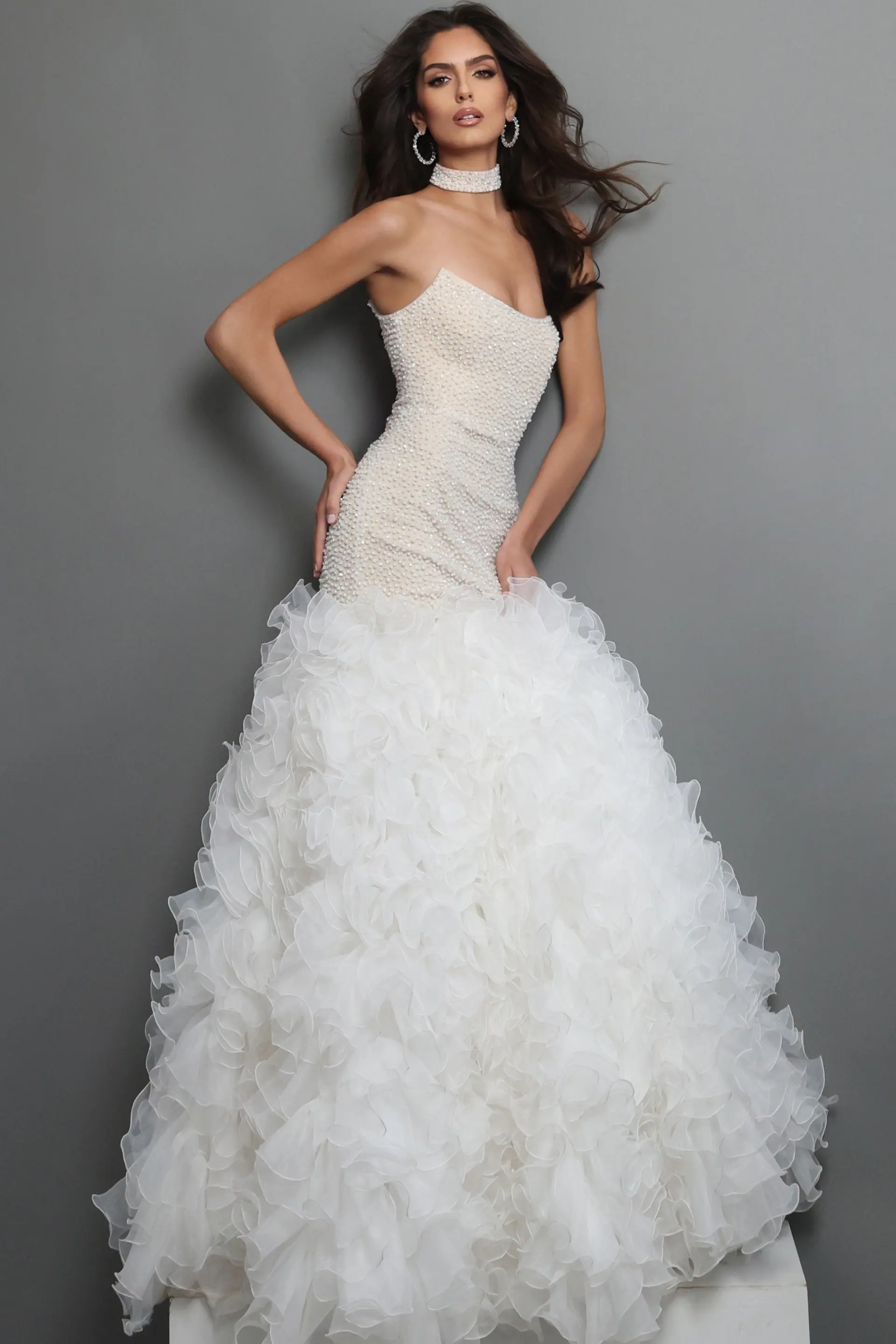
3 Colors
Pearl Beaded Strapless Mermaid Gown 45339
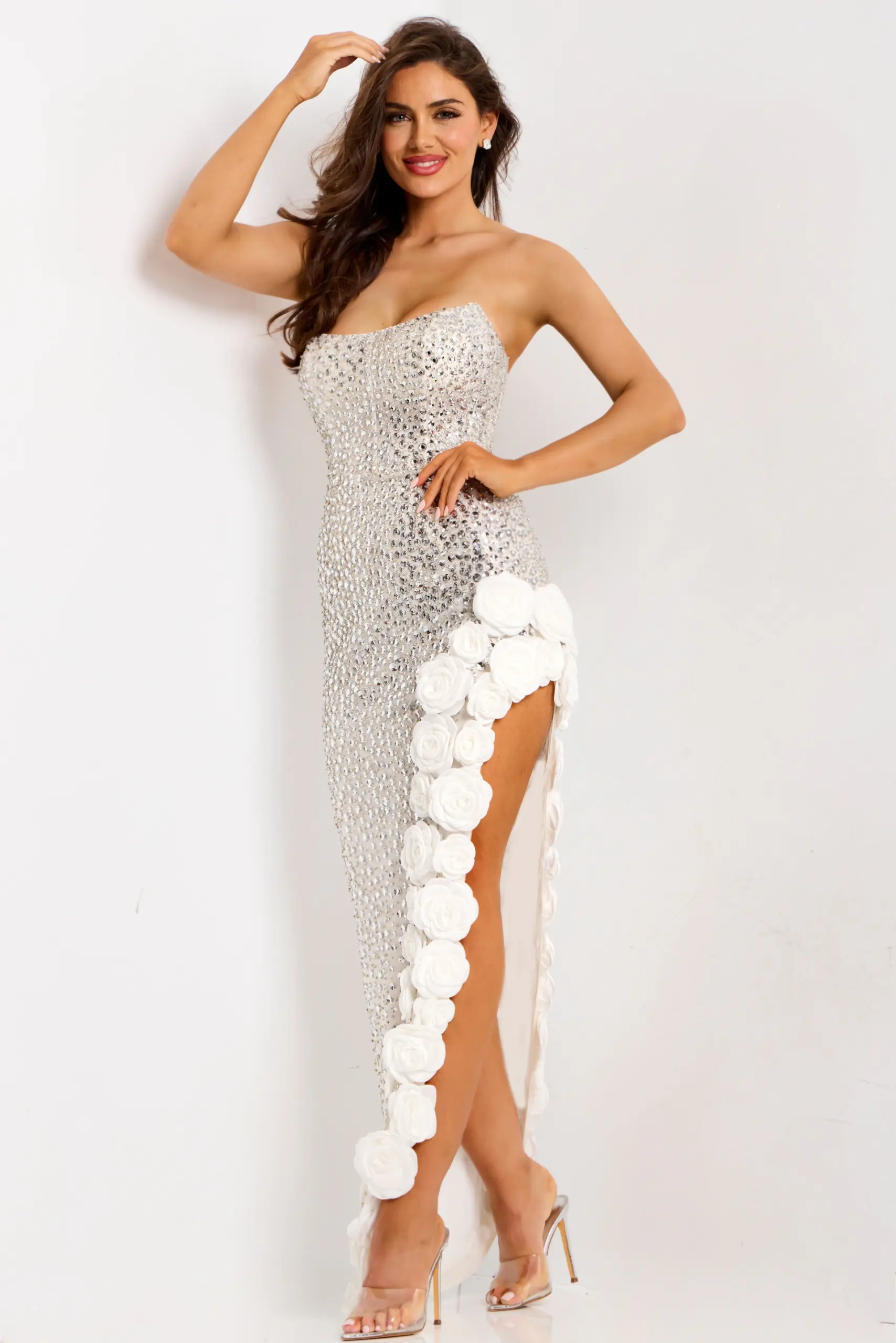
1 Color
Crystal Embellished Gown with 3D Floral Appliqué 47797
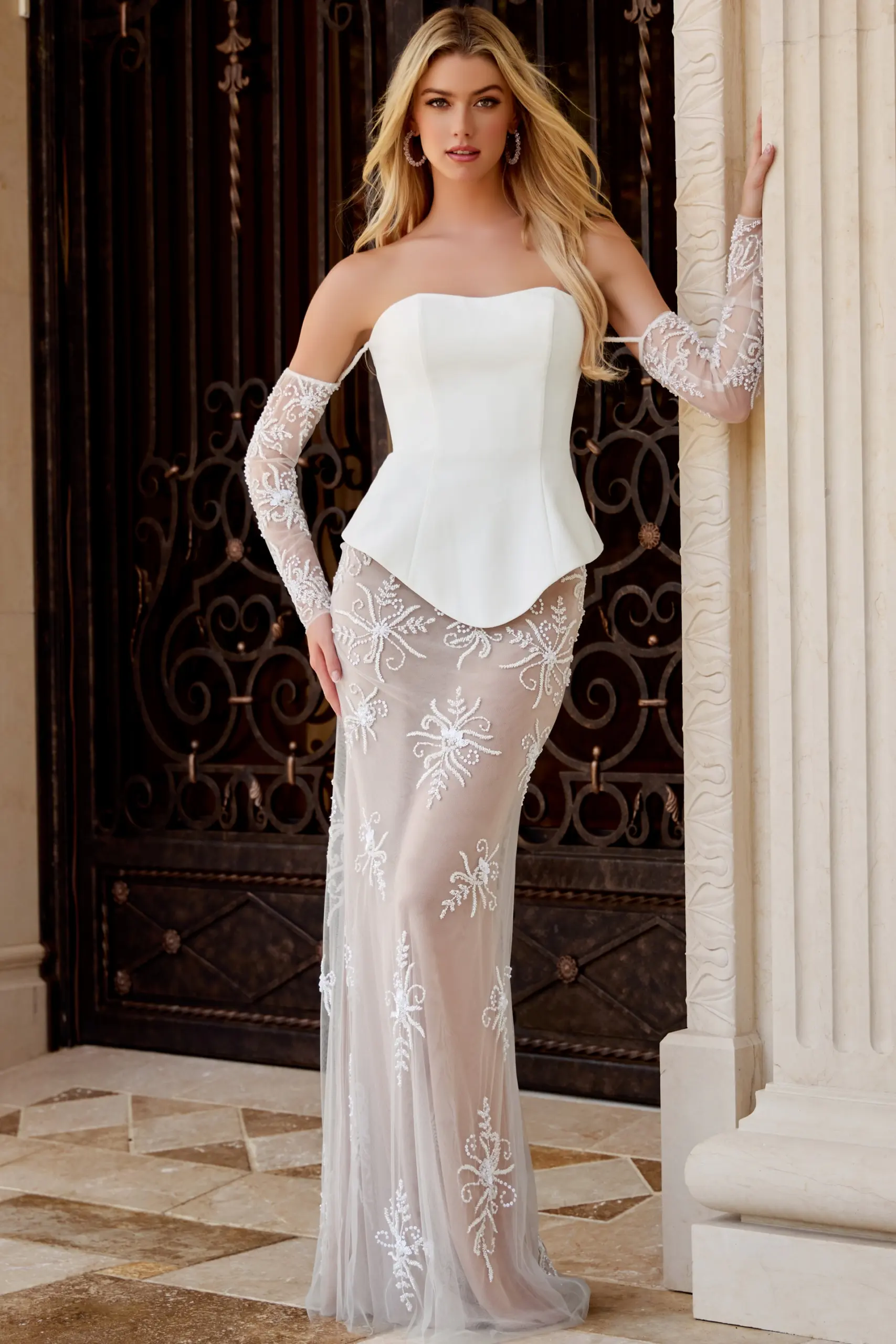
6 Colors
Corset Gown with Sheer Beaded Skirt 45326
About This Category
White Pageant Dresses in Fitted and Mermaid Silhouettes
The silhouette determines how a white gown reads from the judges' table and how it moves during the evening gown presentation. Fitted styles create a continuous line through the waist and hips, placing greater emphasis on tailoring, fabric texture, and embellishment placement. A column silhouette offers a straighter profile, while a mermaid design follows the body before opening into a more pronounced skirt.
White mermaid pageant dresses can create a particularly defined outline when the bodice is structured and the skirt releases cleanly below the hips. Ruffled hems, flared panels, and sweeping trains introduce movement without changing the fitted upper silhouette.
A fuller skirt produces a different effect. Layered tulle or chiffon softens the outline, while an A-line shape allows the skirt to move more freely from the waist. The contrast between a narrow bodice and a wider hem can be especially visible in white, where seams, folds, and volume are easier to distinguish.
Within the broader selection of pageant dresses, the right shape depends on the stage presentation as much as personal preference. A fitted white pageant dress emphasizes a precise silhouette; a more voluminous design gives the skirt a stronger role during turns and walking sequences.
Crystal Beading and Embellished White Pageant Gowns
White provides a neutral foundation for embellishment, allowing crystals, pearls, sequins, and metallic embroidery to create texture without relying on a contrasting base color. The effect varies considerably with the density and placement of the detailing.
Allover crystal beading creates a reflective surface that responds to movement and directional lighting. More concentrated embellishment around the neckline, bodice, or waist draws attention to specific areas of the silhouette while leaving other sections visually quieter.
White and silver combinations can produce a cooler, more reflective finish, while white and gold detailing introduces warmth. Sheer mesh panels, illusion necklines, and embroidered tulle can add another layer of detail, particularly when the embellishment follows the gown's seams or body contours.
Jovani's pageant designs include examples of beaded mesh, illusion construction, and metallic accents, illustrating how different surface treatments can change the appearance of a light-colored gown.
For more elaborate surface treatments, couture dresses provide a useful point of comparison. When comparing white beaded pageant dresses, consider the overall pattern rather than sparkle alone. Vertical embellishment can emphasize length, while curved motifs follow the waist and hips. Fringe and dimensional appliqué introduce additional movement, creating a different visual effect from closely set crystals.
Necklines, Corset Bodices and Back Details
Neckline construction changes the balance of a white pageant gown before any embellishment is considered. Strapless designs expose the shoulders and place emphasis on the shape of the bodice. A sweetheart neckline introduces a curved upper line, while straight or sculpted necklines create a sharper, more architectural finish.
Deep V-necklines establish a vertical focal point through the torso. Halter designs draw attention toward the shoulders and neckline, while off-the-shoulder details create a broader upper silhouette. Each option changes how the gown frames the face and balances the skirt.
Corset construction is especially important in fitted styles. Defined cups, internal boning, shaped seams, and secure closures help establish the waist and maintain the bodice's intended position during movement. Visible corset details can also become part of the design, particularly on white fabrics where seam placement is more apparent.
Back construction deserves equal attention. Open backs introduce contrast against a heavily embellished front, while corset closures can provide adjustability. Sheer panels and embellished straps add detail without requiring a fuller skirt.
The most cohesive designs connect the neckline, bodice, and back rather than treating them as separate features. For a different competition round, pageant interview dresses emphasize more tailored proportions.
White Fabrics and Their Appearance Under Stage Lighting
Fabric influences how white pageant gowns reflect light, hold their silhouette, and move across the stage. Smooth satin emphasizes draping and construction, while beaded mesh creates a textured surface that can catch individual points of light.
Tulle produces a lighter appearance and allows multiple layers to create volume. Chiffon moves more fluidly, making it relevant to designs with flowing skirts, capes, or soft extensions. Structured fabrics retain sharper folds and a more defined outline.
For contrast in how dark fabrics absorb light, black pageant dresses offer a useful reference. The shade of white also matters. Bright white, soft white, and ivory can appear noticeably different under warm or cool lighting. A bright white fabric may reflect a strong spotlight intensely, while warmer ivory tones can appear softer. Neither effect is automatically preferable; the result depends on the fabric finish, lighting setup, and surrounding embellishment.
Sheer sections require particular attention. Nude lining, illusion mesh, and embroidered overlays may change in appearance under direct light or flash photography. Checking the gown in lighting similar to the competition venue can reveal differences that are less obvious in a fitting room.
For a white pageant gown with crystals or sequins, the combination of fabric opacity and reflective detail is especially important. The surface should remain visually defined rather than losing its pattern under bright lighting.
Slits, Trains and Movement on the Competition Stage
A white pageant dress needs to retain its intended silhouette while the contestant walks, turns, and pauses. Skirt construction determines much of that movement, but details such as slits, trains, and overskirts can make an equally noticeable difference.
A high slit introduces movement through a fitted skirt and changes the line of the gown as the wearer walks. Its placement should allow a natural stride without pulling the fabric away from the hips or waist. In a mermaid design, the position and width of the flare are similarly important.
Trains create a longer visual line from the back, particularly on fitted or softly flared gowns. A sweep train adds a restrained extension, while a more substantial train increases the amount of fabric moving behind the contestant. The longer the train, the more important it becomes to test turning and walking.
Detachable overskirts offer another approach to volume. A fitted gown can retain a defined silhouette while an added layer introduces movement and a fuller profile. The attachment point should sit cleanly at the waist so the extra fabric does not interrupt the bodice's shape.
When comparing white pageant gowns with trains or dramatic skirts, look at front, side, and back views. The most effective details remain balanced throughout the presentation, not only in a stationary photograph.
Finding the Right Fit for a White Pageant Gown
Fit is particularly visible in white because the fabric can reveal pulling, folds, and uneven tension more readily than a heavily patterned surface. The bodice should remain secure through the bust and waist, while the skirt should follow the intended silhouette without restricting normal movement.
For fitted designs, check the hip line and the point where the skirt begins to flare. A gown that is too tight through the upper leg may alter the walk, while excess fabric can interrupt an otherwise clean outline. Corset styles require attention to cup placement, boning position, and how the waist sits when standing and turning.
Hem length should be assessed with competition shoes. A floor-length gown needs enough clearance for walking without losing the intended sweep across the floor. Trains, slits, and layered skirts should also be checked during turns rather than only while standing still.
The balance between embellishment and support matters as well. Heavily beaded fabrics add weight, making secure straps, closures, and internal structure important considerations.
Jovani's white pageant styles offer different approaches to silhouette and surface detail, from fitted embellished designs to gowns with more dramatic skirt movement. The strongest selection is one where color, construction, and proportion remain consistent throughout the evening gown presentation.
Frequently Asked Questions About White Pageant Dresses
Are white pageant dresses suitable for evening gown competitions?
Yes. White is an option for evening gown rounds when the competition rules allow it. Choose a silhouette and fabric that remain defined under the venue lighting, and check the event’s dress requirements before selecting a gown.
What is the difference between white and ivory pageant gowns?
True white generally has a cooler, brighter appearance, while ivory has a warmer undertone. Fabric texture and stage lighting can change how either shade looks, so compare swatches or try the gown under similar lighting.
Which silhouette works well for a white pageant dress?
Mermaid gowns emphasize a fitted hip line and flared hem; column styles create a straighter outline; A-line skirts add movement from the waist. The right choice is the one that supports your walk, turns and preferred stage presentation.
Do white beaded pageant dresses look different under spotlights?
They can. Crystals, sequins and beaded mesh reflect directional light, while satin and matte fabrics produce different highlights. Test the gown under bright light and review photos from multiple angles.
Should a white pageant gown have a slit or train?
Either can work, depending on the design and competition rules. A slit can improve stride length in a fitted skirt, while a train extends the back silhouette. Practice walking and turning in the exact gown and shoes.
How should a strapless white pageant dress fit?
The bodice should stay in position without constant adjustment. Check cup placement, waist support and closure security while walking, sitting and turning; alterations may be needed for a precise fit.
How far in advance should I choose my pageant gown?
Allow time for retailer availability, shipping where applicable, fittings and alterations. Begin earlier if your dress needs significant tailoring or if your competition has specific wardrobe approval requirements.