
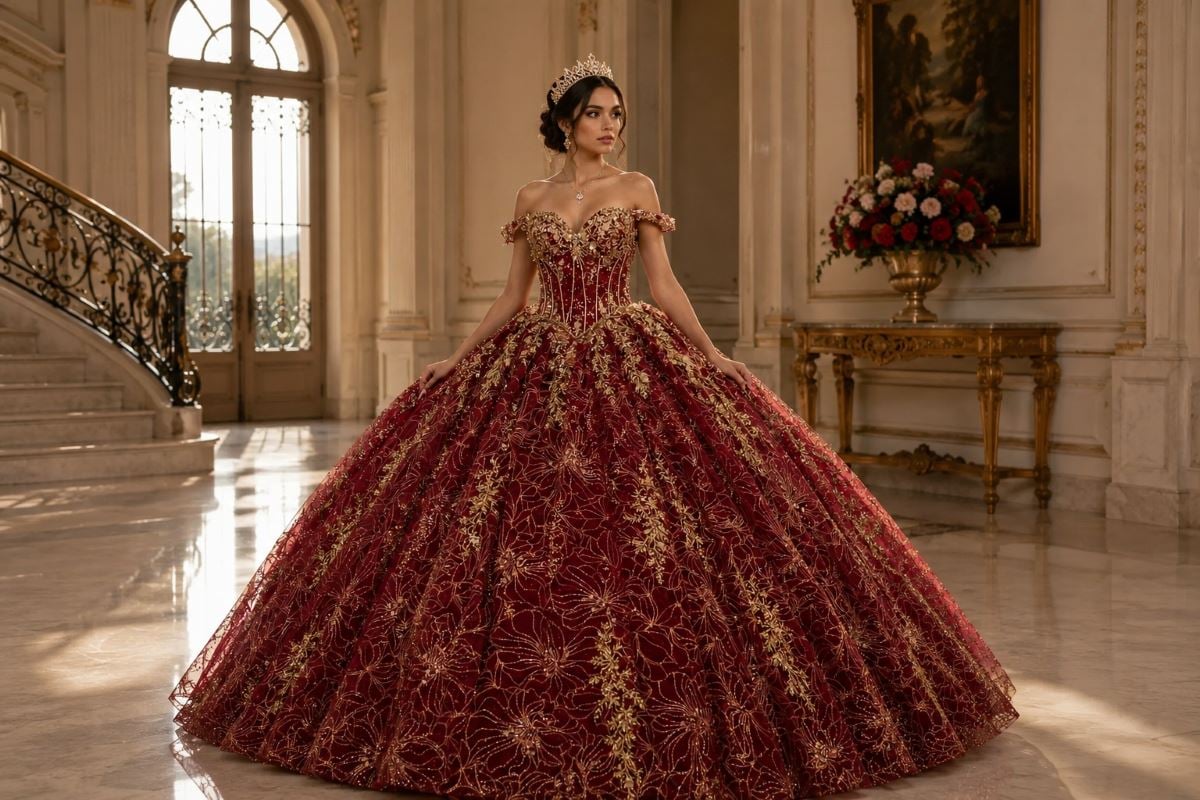
A Quinceañera is far more than just a lavish birthday party. It is a deeply cherished cultural milestone, a beautiful and poignant transition from childhood to young adulthood, and a grand celebration of heritage, family, and faith. At the very center of this unforgettable day, carrying the aesthetic weight of the entire event, is the dress. For many young women, visualizing the gown—the way it sparkles under the venue lights, the way the skirt moves during the traditional waltz, and the confidence it instills—is the first and most exciting step in the planning process. However, transforming that dream into a breathtaking reality requires significantly more than just picking a beautiful color or a glittering bodice. It requires an absolutely flawless, custom-tailored fit.
Understanding how to measure for a quinceanera dress is the single most important step in ensuring that the gown looks spectacular and feels comfortable from the morning religious ceremony to the final dance of the night. A dress that does not fit perfectly will distract the Quinceañera, making her constantly tug at her bodice, worry about her hemline, or feel physically restricted while trying to enjoy her once-in-a-lifetime celebration.
Unlike everyday casual clothing, formal wear is constructed with complex tailoring, built-in structure, and highly specific proportions. You cannot simply rely on the size of your favorite pair of jeans, a casual summer dress, or even an off-the-rack cocktail dress. Couture-level gowns, like those meticulously crafted by Jovani, are designed using precise measurement charts that demand pinpoint accuracy. Whether you are ordering your stunning Quinceanera dresses through an authorized high-end boutique or working closely with a professional seamstress to finalize your look, knowing exactly how to capture your unique physical dimensions is essential.
In this comprehensive, deep-dive guide, we will walk you through the entire process of taking measurements for a quince dress. We will explore the specific tools you need, the correct posture to hold, the fascinating nuances of formal sizing, the architectural structure of the gowns themselves, and the reasons why a perfectly measured garment is the ultimate secret to a stress-free, magical celebration.
Street Sizing vs. Formal Gown Sizing
One of the most common surprises—and sometimes sources of immediate stress—for families shopping for a Quinceañera gown is the realization that formal wear sizing is fundamentally different from street clothing sizing. To understand quinceanera dress sizing, you have to look at how the fashion industry operates today compared to historical couture standards.
Why Couture Sizing Differs from Retail
In the modern retail world, everyday clothing brands often utilize a practice known as “vanity sizing.” This means that over the past few decades, the physical dimensions of a standard “Size 6” or “Size 8” have gradually increased. Brands do this intentionally to make consumers feel more comfortable and confident fitting into smaller numbered sizes.
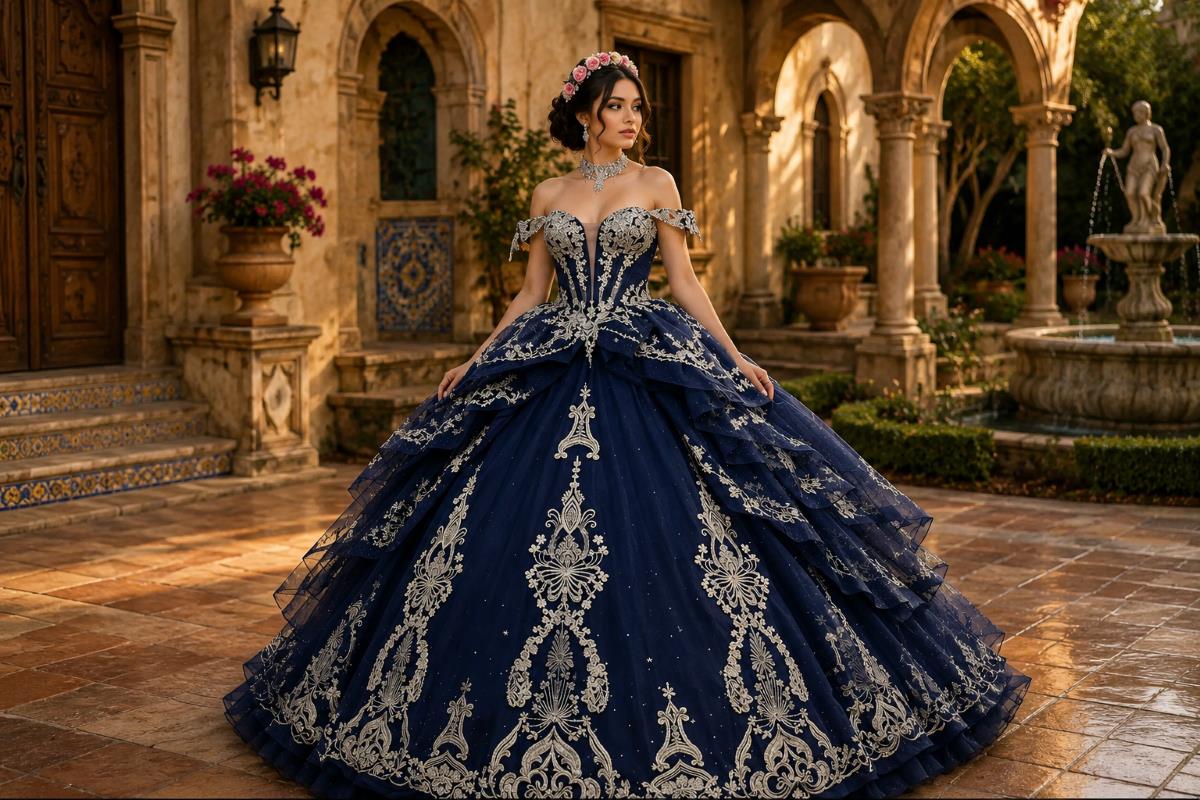
Formal wear, bridal gowns, and luxury Quinceañera dresses emphatically do not follow this modern retail trend. Instead, they adhere strictly to traditional, standardized European couture sizing. Because of this historical benchmark, it is entirely normal, and in fact expected, to wear a formal dress size that is one, two, or even three sizes larger than your everyday clothing.
It is absolutely vital for both the Quinceañera and her family to understand from the very beginning that the number on the designer tag is completely irrelevant. A Jovani gown is a work of structural art, and the size tag is simply a numerical code used by tailors and garment manufacturers to cut the fabric correctly. The only thing that truly matters is how the dress aligns with your unique, accurate dress measurements.
The Architecture of the Gown
A designer gown is built with heavy layers of structured fabrics, intricate internal boning, stiff interlining, and precise seaming. Luxury gowns are meticulously crafted to provide exceptional physical support, lifting the bust and cinching the waist to create a breathtaking, regal silhouette. This level of architectural design means there is very little stretch, spandex, or margin for error. If you do not understand how a quinceanera gown should fit, you risk ordering a gown that cannot be zipped over the ribcage, or conversely, a gown that is far too large to be properly altered without losing its original, intended design integrity.
Essential Preparation for Measuring
Before learning exactly how to measure for a quinceanera dress, you must set the stage for total accuracy. The preparation phase is just as important as the measuring phase itself. Jumping straight into measuring without the proper setup will almost always result in skewed numbers and an ill-fitting garment.
The Tools and Assistance You Need
First and foremost, you cannot measure yourself effectively. Reaching your arms around your own body with a tape measure inevitably twists your torso, raises one or both of your shoulders, expands your ribcage, and completely changes your physical dimensions. You will need a trusted assistant—a mother, a sister, a close friend, or ideally, a professional boutique consultant—to handle the measuring tape.
You will also need the proper tools. A flexible, soft cloth or vinyl measuring tape is non-negotiable. Never, under any circumstances, use a rigid metal tape measure designed for hardware or construction. A metal tape cannot contour to the natural curves of the human body and will yield artificially large numbers. You should also stand in front of a full-length mirror. This allows both you and your assistant to ensure the measuring tape remains perfectly parallel to the floor across your back and sides at all times.
Selecting Proper Foundation Garments
Perhaps the most overlooked aspect of preparation is your foundational garments. You must wear the exact type of undergarments you plan to wear on the day of your actual event. If you measure yourself while wearing a heavily padded, molded push-up bra, but you plan to wear a thin, unlined strapless bra or rely on the dress’s built-in couture cups for the party, your bust measurement will be significantly off. If you are unsure of the correct undergarments for your Quinceañera gown, it is highly recommended to consult with a formalwear specialist to secure those pieces before taking your final numbers.
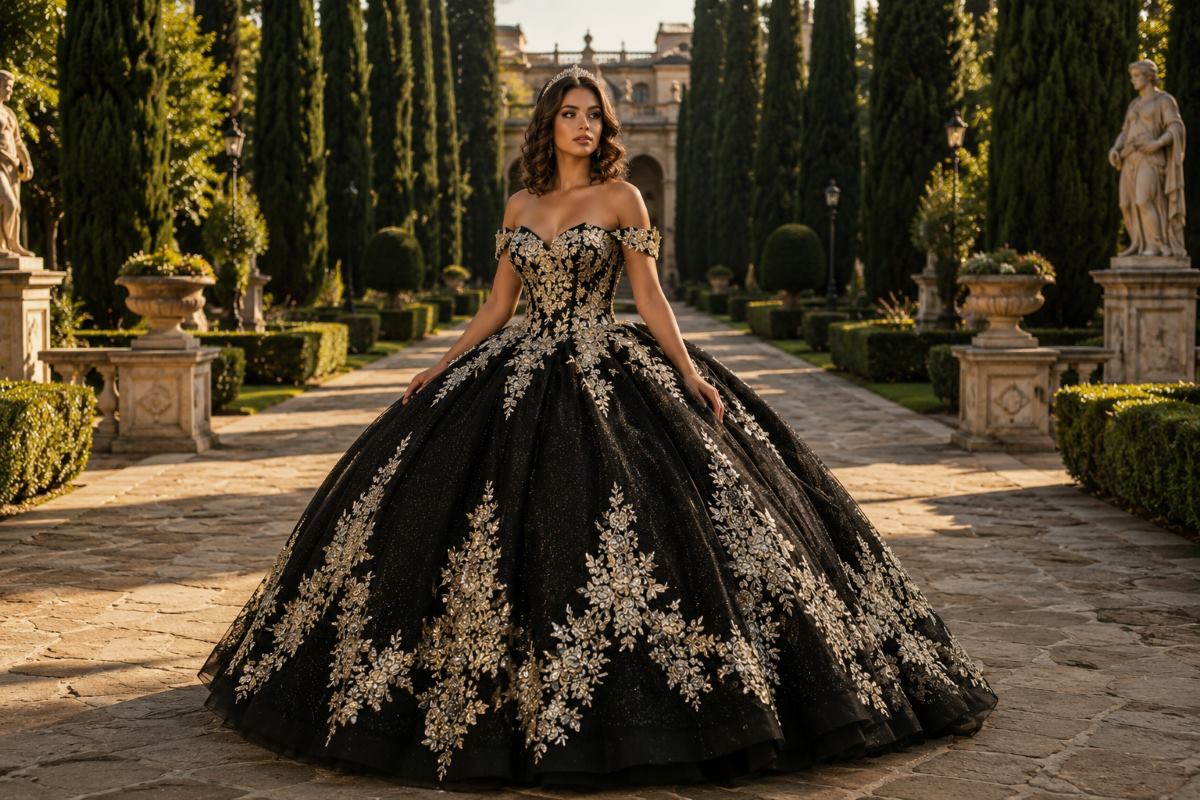
Furthermore, Quinceañera gowns require extraordinary skirt volume to achieve that iconic princess look. This regal volume is usually achieved through the use of a stiff crinoline, a tiered tulle petticoat, or a structured wire hoop skirt. Because this undergarment pushes the fabric of the dress dramatically outward, it physically lifts the hemline of the dress away from the floor. Therefore, you must physically wear your chosen hoop skirt or petticoat when determining the length measurement you will need.
Finally, consider the time of day. The human body naturally fluctuates throughout the day. By the late afternoon or evening, due to normal hydration, food intake, and gravity, your waist and lower body can expand by up to a full inch. Since your Quinceañera will take place over the course of a long, exhausting day and evening, it is often best to take your measurements in the mid-to-late afternoon to ensure your gown will remain comfortable even after a full banquet dinner.
Step-by-Step: Bust, Waist, and Hips
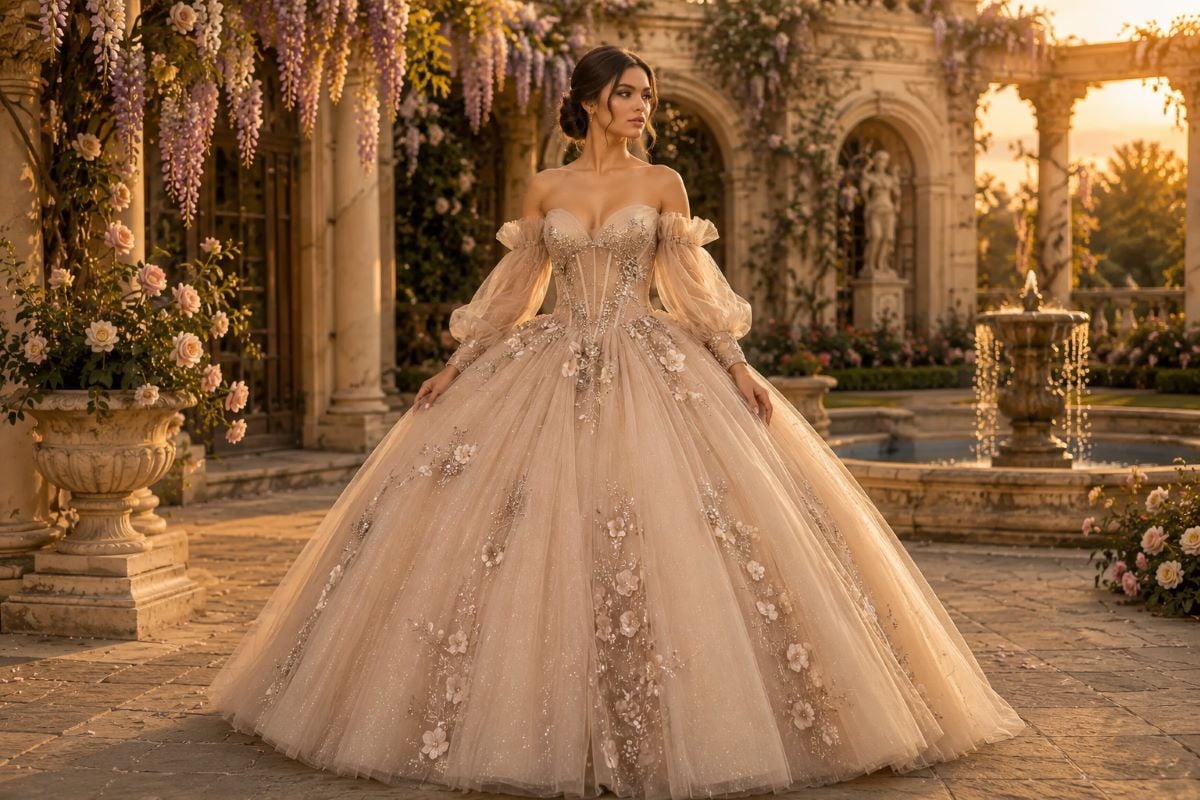
When determining the proper fit, the focus is almost entirely on the bodice. Because these gowns traditionally feature expansive, voluminous skirts, the precise fit of the waist and the bust dictates the success, comfort, and security of the entire look. Taking measurements for a quince dress correctly requires focusing on three core areas, plus length.
Measuring the Bust Accurately
The bust measurement is frequently misunderstood by first-time formalwear shoppers. Your formalwear bust measurement is not your bra size. Your bra size is a combination of your under-bust band width (e.g., 34) and your cup volume (e.g., C). Your bust measurement for a formal gown is the total circumference of the absolute fullest part of your chest.
To take this measurement accurately, stand up perfectly straight with your arms relaxed naturally by your sides. Your assistant should wrap the soft measuring tape around your back, bringing it across your shoulder blades, under your armpits, and directly over the fullest apex (the very center) of your bust. The tape should be snug against your skin or undergarment, but never tight. It should not compress your chest tissue, nor should it be so loose that it slides down your back. Check the mirror to ensure the tape is completely straight and level across your back; if the tape dips downward in the back, the circumference will measure artificially large, leading to a loose, unsupportive bodice.
Locating the Natural Waist
The natural waist is universally considered the most critical measurement when learning how to measure for a quinceanera dress. The structural anatomy of a formal dress dictates that the heavily boned bodice must anchor itself perfectly at your body’s narrowest point to support the weight of the garment.
If the waist of your gown is too tight, the dress will be incredibly uncomfortable. It will restrict your breathing, make eating practically impossible, and turn your beautifully choreographed waltz into an agonizing chore. If the waist is too loose, the heavy weight of the massive ball gown skirt will pull the entire dress downward, requiring you to nervously pull up your strapless bodice in every single photograph.
To find your true natural waistline, stand straight and bend your torso sharply to one side. The exact point where your torso creases and folds is your natural waist. It is typically located about one to two inches above your belly button, sitting just below the bottom of your rib cage. Wrap the measuring tape around this precise point. Again, monitor the mirror to keep the tape completely parallel to the floor. Do not suck in your stomach; breathe normally and stand in a relaxed, natural posture.
Measuring Hips for Special Bodices
Because Quinceañera gowns feature majestic skirts that flare out dramatically from the waist, many people assume measuring bust waist and hips is unnecessary, figuring the hips don’t matter. While it is true that massive ball gown prom dresses will easily glide over the lower body regardless of size, taking an accurate hip measurement remains an essential part of the protocol.
Why? Because certain gown silhouettes feature a dropped waistline or a classic Basque waistline. A Basque waist dips down into a sharp V-shape in the front, extending past the natural waistline and tightly hugging the high hips before the skirt finally flares outward. If you choose a style with this elongated bodice, your upper hips must comfortably fit inside the structured, boned portion of the dress.
To measure your hips properly, stand with your feet relatively close together. Wrap the measuring tape around the absolute fullest part of your hips and buttocks. As always, use the mirror to guarantee the tape remains level around the entire circumference of your lower body.
Length: The Hollow-to-Hem Measurement
Length is where the most expensive and permanent mistakes are made in formalwear measuring. You do not measure your height from the top of your head, nor do you measure from the top of your shoulders. Formal gowns are universally measured from the “hollow” of your neck down to the desired hemline. The hollow is the small, distinct dip at the very base of your neck, resting right between your collarbones.
Accounting for Volume and Undergarments
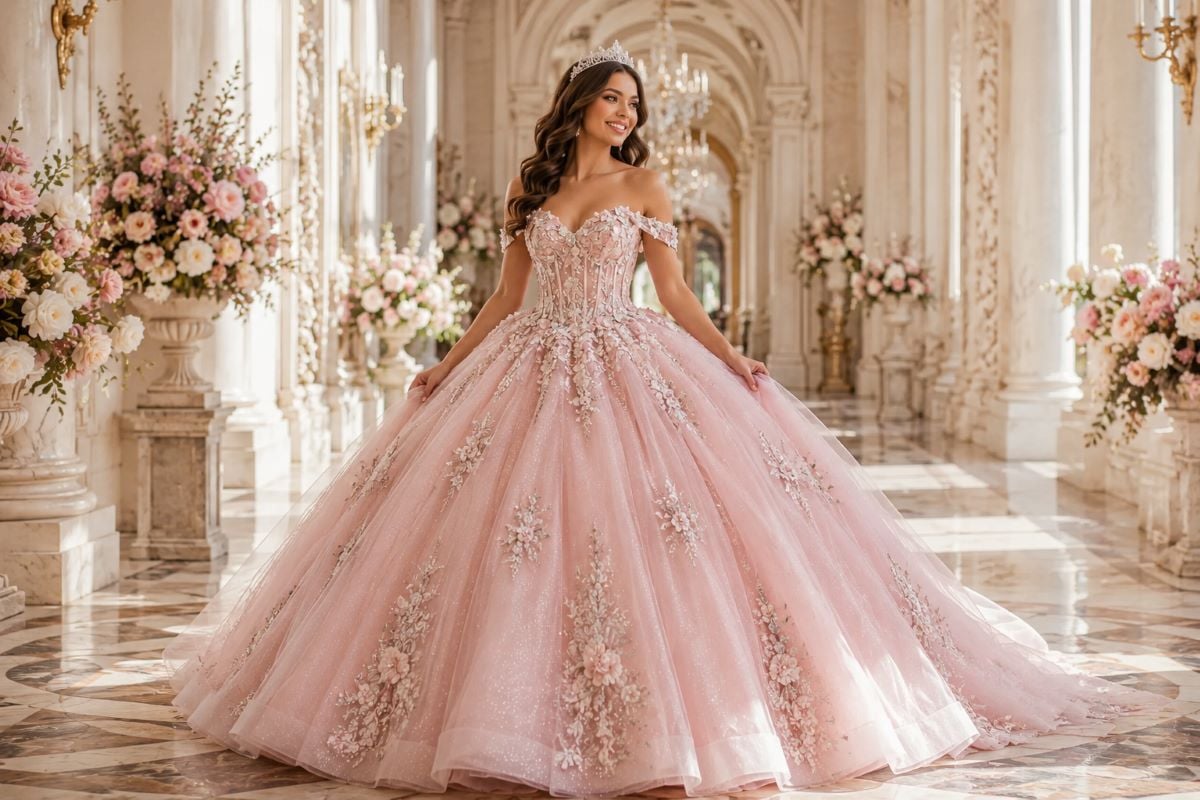
To measure your hollow-to-hem length, you must be wearing your hoop skirt or crinoline. Place the zero-mark of the measuring tape exactly at the hollow of your neck. Let the tape fall straight down the center of your body. The tape must naturally drape over the outward fullness of your hoop skirt before hitting the floor. If you measure straight down to the floor without the hoop skirt on, your dress will end up being several inches too short when you actually put the voluminous undergarments on.
Choosing the Right Shoe Height
You must also be wearing the exact shoes you will wear for the main portion of your event. The Quinceañera tradition often involves a highly symbolic “changing of the shoes” ceremony, where the young woman is seated and her father or a close relative changes her footwear from flat shoes into elegant high heels, signifying her transition into young womanhood.
Because you will be wearing two vastly different shoe heights on the same day, you must decide which shoes will dictate the length of the dress. Most formalwear experts recommend having the dress hemmed to perfectly accommodate the high heels, as you will likely wear them for your formal portraits, the main waltz, and the vast majority of the evening. The exact point where you want the hem of the dress to rest—typically hovering just a quarter-inch above the toe of your high heel—is your hollow-to-hem measurement.
Using a Dress Size Guide Correcty
Once you have successfully finished taking your measurements, you will compare your personal numbers to the designer’s official size chart. Luxury brands like Jovani provide highly detailed measurement charts for all collections to help you and your authorized retailer find the perfect baseline fit.
Understanding Split Sizing
When you look at a quinceanera dress size guide, you will rarely find that your three measurements align perfectly horizontally within a single size column. The human body is uniquely beautiful, wonderfully diverse, and very few people perfectly match a standardized mathematical template. Your bust might align perfectly with a size 8, your waist might match a size 12, and your hips might fall into a size 6. This is known as “split sizing.”
When your measurements cross over multiple sizes on the chart, the golden rule of formalwear is absolute: Always order the size that corresponds to your largest measurement. A professional seamstress can easily take in a dress that is slightly too large in the bust or the hips. They can add strategic darts, adjust the side seams, and sculpt the fabric to your narrower proportions. However, it is incredibly difficult, highly expensive, and sometimes structurally impossible to let out a dress that is too small. Always protect your investment by sizing up to your largest dimension.
How Gown Features Affect Sizing
Not all gowns fit the same way on the body, even if they are marked as the exact same size on the paper chart. The structural design, the neckline, the back closure, the sleeves, and the chosen fabric can drastically influence how the garment accommodates your measurements.
Corset Backs vs. Standard Zippers
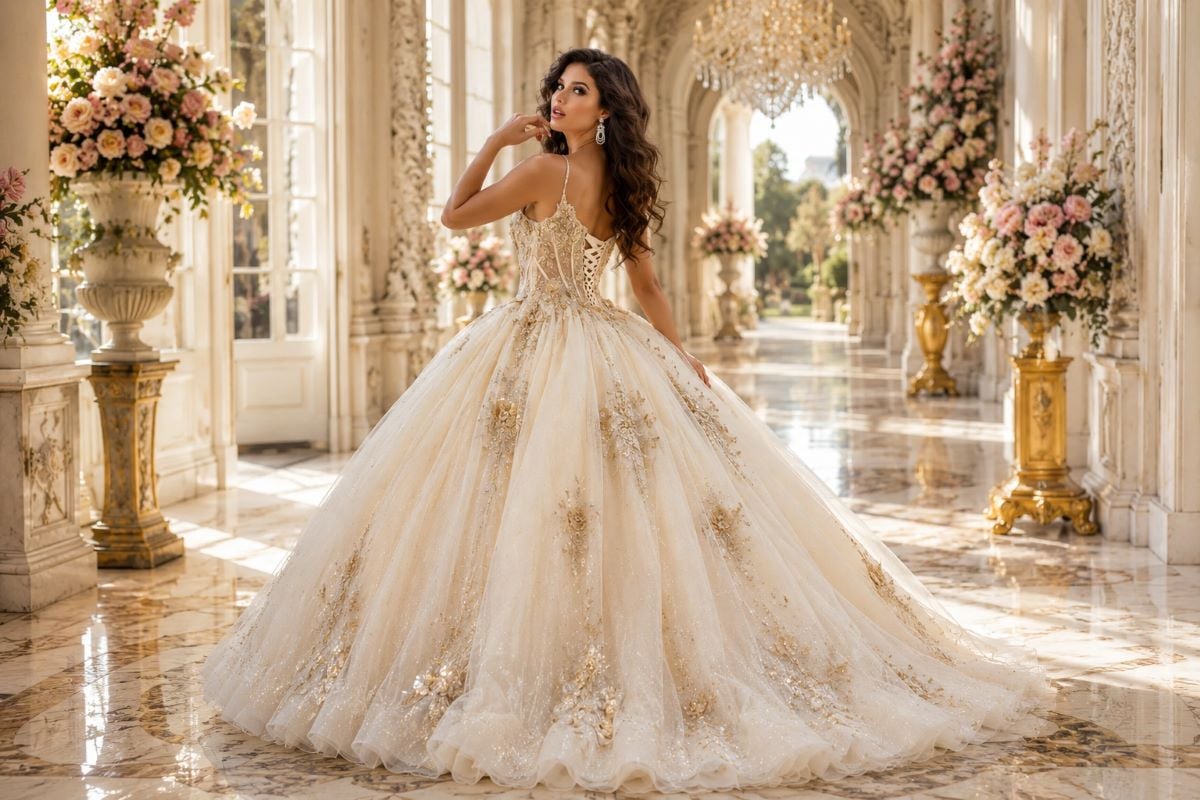
One of the most popular, beautiful, and highly recommended features for Quinceañera gowns is a lace-up corset back. Opting for dresses with corset backs offers a tremendous amount of flexibility and psychological peace of mind. While a traditional zipper requires exact, pinpoint accuracy to close smoothly, a corset back can usually accommodate bodily fluctuations of an inch or two in either direction.
You can pull the satin laces tighter for a dramatically cinched, highly secure fit around the waist, or you can loosen them slightly to accommodate a fuller bust or a recent teenage growth spurt. If your measurements are fluctuating, or if you find yourself sitting dead-center between two sizes on the designer chart, a corset back is an incredibly strategic and visually stunning choice that drastically reduces alteration costs.
Fabric Choices and Fitted Sleeves
Fabric plays a major role in how a dress feels and fits. Stiff, heavily woven architectural fabrics like Mikado, metallic brocade, or heavy duchess satin have absolutely zero stretch. If a gown is made of these rigid materials, your measurements must be absolutely exact, as the fabric will aggressively resist an extra half-inch. Conversely, softer, more pliable fabrics like English net, tulle, or stretch-crepe linings might feel slightly more accommodating, allowing for minor forgiveness in the fit.
Additionally, if you choose a gown with long illusion sleeves or off-the-shoulder straps, you will also need to take careful arm measurements. You must measure the circumference of your bicep and the length from your shoulder tip to your wrist. Accurate dress measurements must include the arms if the style demands it.
Top Measuring Mistakes to Avoid
Even with a high-quality tape measure, a full-length mirror, and a willing assistant, it is remarkably easy to make subtle errors that compound into significant fitting disasters. Be highly mindful of these common mistakes when taking your measurements:
- Measuring over clothing: Never take measurements over bulky clothing or thick denim. You should be in your actual event undergarments.
- Holding your breath: Do not suck in your stomach. Relax your posture, exhale completely, and let your body rest in its natural state.
- Pulling tape too tight: The tape measure should rest lightly against your skin. It should not indent your flesh.
- Looking down: This collapses your torso and changes your measurements. Look straight ahead into the mirror.
The Alterations Process Explained
It is vital to manage your expectations regarding the final fit of a newly ordered designer gown. Even if you follow every single instruction on how to measure for a quinceanera dress to the absolute letter, it is highly unlikely that the dress will fit you flawlessly right out of the delivery box.
Standardized gowns are designed to fit a general, mathematically averaged proportion, and every young woman’s body is beautifully distinct and asymmetrical. Expecting to need professional Quinceanera dress alterations is simply a reality of luxury formalwear shopping. You should budget both time and money for this crucial final step.
A skilled seamstress will take the factory-fresh gown you ordered—which comfortably accommodates your largest measurement—and meticulously sculpt it to your specific body. They will adjust the delicate shoulder straps so the neckline sits flush against your collarbone without gaping. They will nip in the waist seams so the heavy ball gown skirt is supported properly. A perfectly tailored Jovani dress does not just look like a beautiful dress you bought; it looks like a masterpiece that was draped and sewn exclusively for you.
When Should You Take Measurements?
Bodies change, especially for young women who are navigating their teenage years. Because of natural growth, the timeline for taking measurements and ordering the dress is a delicate balancing act that requires foresight.
Designer Quinceañera dresses are often made to order, which means it can take several months for the gown to be constructed and delivered. You will also need to allow at least six to eight weeks for the alterations process. Therefore, the act of shopping and taking your initial measurements should ideally happen six to nine months before the event.
If you are deeply concerned about potential growth spurts, discuss this openly with your boutique consultant. In many cases, intentionally sizing up slightly or opting for a corset-back design provides the necessary structural insurance. Do not fall into the trap of ordering a smaller size with the intention of losing weight; measure for the body you have today.
FAQ’s: Mastering Quinceañera Sizing
1. Can I measure myself to save time?
No. Reaching around your back physically alters your posture and twists your torso, resulting in highly inaccurate numbers. Always have a trusted friend, family member, or professional boutique consultant take your measurements while you stand still.
2. What if my measurements fall into three different sizes?
This is perfectly normal! You should always order the size that matches your absolute largest measurement. A seamstress can easily take in a dress to fit smaller proportions, but letting out a bodice that is too small is usually impossible.
3. Does the hip measurement matter for ball gowns?
While voluminous skirts are forgiving, you still need an accurate hip measurement for specific styles like Basque or dropped waists, where the structured bodice extends past the natural waistline.
4. How do I handle length for the changing of the shoes?
Generally, you should measure the hollow-to-hem length while wearing your high heels. These will be worn for portraits and the majority of the event. A balanced hemline can look elegant with heels while remaining manageable in flats.
5. Will I still need alterations if my size matches exactly?
Yes. A size chart accounts for circumference, but not for torso length, shoulder slope, or unique posture. A professional tailor will perfect these three-dimensional nuances for a flawless look.
Now that you understand how to measure for a quinceanera dress, finding the gown of your dreams is a spectacular, emotionally resonant moment. By taking accurate measurements, understanding size charts, and trusting the professional tailoring process, you can step into your Quinceañera celebration with absolute confidence. Explore our magnificent collections and discover the unmatched artistry of Jovani today.