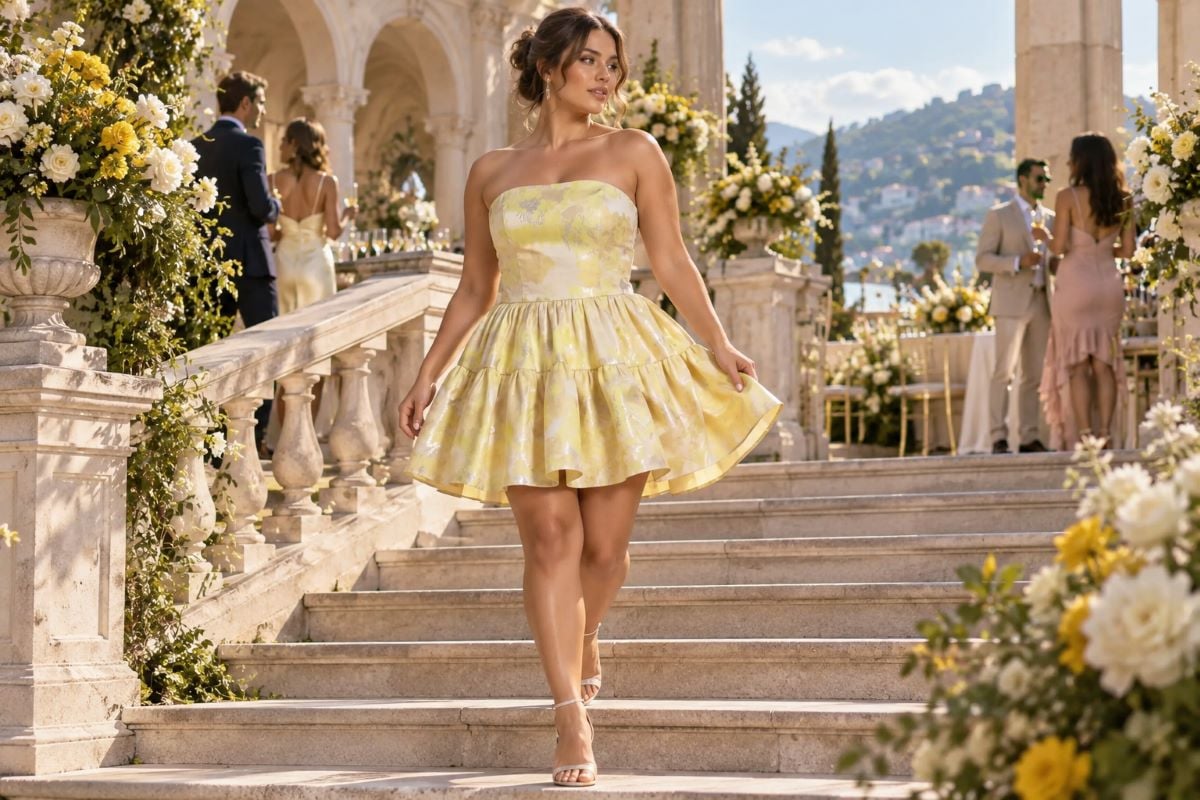


A wedding day is really two events in one. There is the ceremony, often calmer, sometimes held in daylight or in a place of worship, where the mood is reverent and the dressing leans a little more covered. Then there is the reception, warmer in every sense, with dinner, dancing, music, and hours of celebrating well into the night. For the mother of the bride, these two halves can ask for slightly different things from an outfit, and that is where smart planning pays off. Taking a mother of the bride dress from ceremony to reception gracefully does not mean buying two outfits or rushing off to change. It means choosing one dress thoughtfully and knowing a few simple tricks to shift its mood as the day moves on. This guide explains exactly how to do that, from selecting a dress built for the transition to the small, deliberate changes that carry you from the vows to the last dance looking polished the whole way through.
Why the ceremony and the reception are different
Before the practical advice, it helps to understand what actually changes between the two parts of the day. Once you see the differences clearly, planning for them becomes straightforward.
The ceremony is usually the more formal and more restrained moment. It may take place in a church, a temple, or another setting that calls for more coverage, and even an outdoor or secular ceremony tends to carry a quieter, more composed tone. It often happens earlier in the day, in stronger natural light. The reception, by contrast, is the celebration. It is longer, more relaxed, frequently held in the evening under softer artificial lighting, and it involves a great deal of movement, dining, greeting guests, and dancing.
Those differences point to three things an outfit must handle: a possible shift in how covered you want to be, a change in lighting, and a long stretch of active hours. The good news is that one well-chosen dress can carry all of it. The dress stays the constant, and a few adjustable elements do the work of bridging the two moods. Understanding this is the foundation of choosing the perfect mother of the bride dress in the first place, since the smartest gowns are bought with the whole day in mind.
Choosing a mother of the bride dress built for the transition
The easiest transition is the one you plan for at the shopping stage. Some dresses are naturally suited to moving from ceremony to reception, and choosing one of them removes nearly all the effort later.

Look for a removable layer
The single most useful feature is a layer you can take off. A dress that comes with a matching jacket, a bolero, a capelet, or a detachable overskirt or shawl gives you two distinct looks from one outfit. You wear the layer for a more covered, formal ceremony, then remove it for the reception to reveal a lighter, more festive version of the same dress. Because the layer is designed with the gown, the colors and fabrics match exactly, so nothing looks improvised. This is the cleanest transition there is, and it is especially valuable for a ceremony in a place of worship that calls for covered shoulders.
Consider a dress with built-in versatility
If a dress does not have a separate layer, look instead for one whose own design works across both settings. A gown with illusion sleeves or a higher neckline reads as appropriately modest for a ceremony while still feeling current and elegant at the reception. The styles among long sleeve mom of the groom dresses are a strong example, since the sleeves provide ceremony-appropriate coverage that needs no adjustment at all to carry into the evening. A gown like this transitions purely through styling rather than through changing the dress itself.
Think about fabric that performs all day
A dress that will be worn for eight hours or more needs a fabric that holds up. A quality gown in lace, crepe, or a structured satin keeps its shape through sitting, hugging, and dancing without crushing or wrinkling. The intricate texture of lace mother of the bride gowns is particularly forgiving, since lace hides minor creasing far better than a smooth, flat fabric and looks rich under both daylight and evening light.
Taking your mother of the bride dress from ceremony to reception: the layer change
If your dress has a removable layer, you hold the most powerful transition tool there is. Moving a mother of the bride dress from ceremony to reception is then as simple as taking that piece off, and the effect is genuinely transformative.
Here is how the change works in practice. For the ceremony, you wear the full look: the dress with its jacket, bolero, or shawl in place. This gives you coverage, a more composed silhouette, and a formality that suits the vows. The covered look also photographs beautifully in the often brighter light of a ceremony. Then, as the reception begins, you simply remove the layer. The same dress instantly reads as lighter, more celebratory, and ready for dinner and dancing. A bare or illusion neckline that was hidden under a jacket now becomes the focal point. The shift in mood is immediate, and yet you have never left the room or changed your outfit.
A few practical points make this seamless. Decide in advance exactly when you will remove the layer, usually as guests move from the ceremony space to the reception. Have a clear plan for where the layer will go once it is off, since a jacket or shawl needs somewhere to rest, and a small bag will not hold it. Many mothers hand it to a partner or leave it at their reception seat. If the layer is a detachable overskirt, practise removing it before the day so the mechanism feels familiar. And if you remove a layer to reveal a more open neckline, make sure the dress underneath is one you feel completely comfortable in on its own.
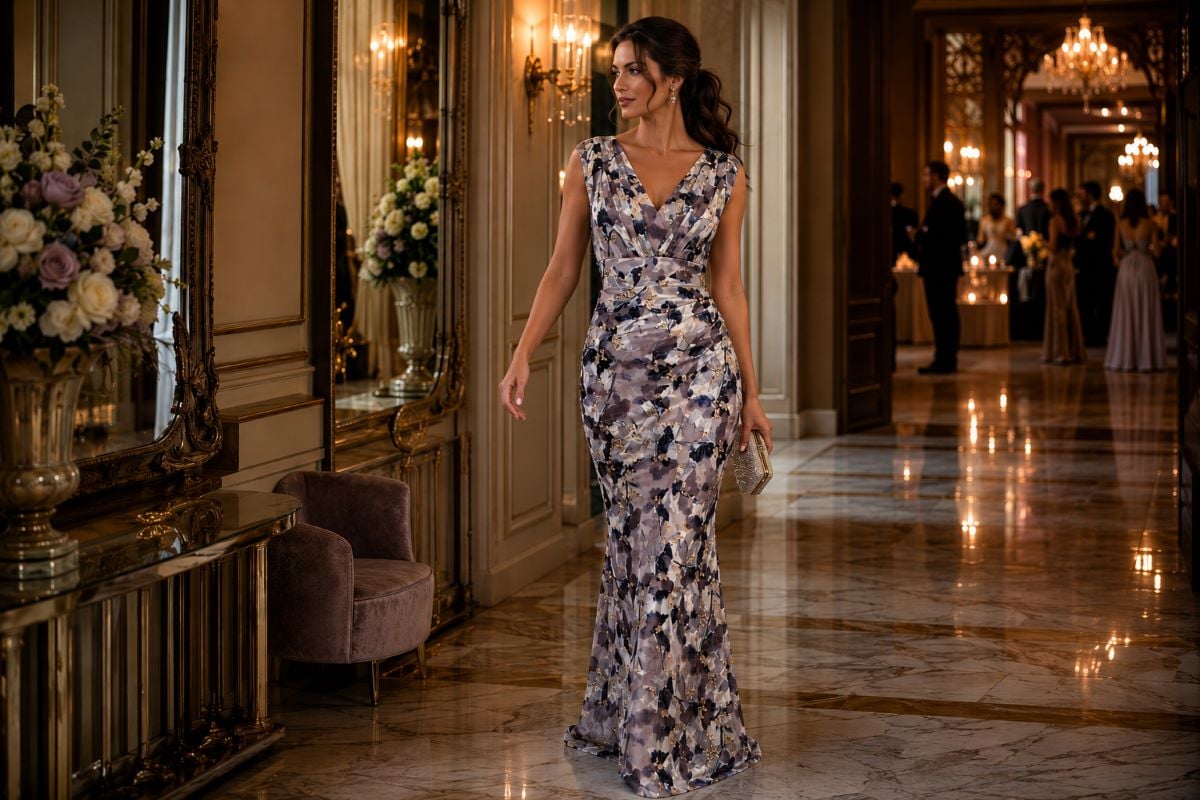
Restyling with accessories, no layer required
What if your dress does not have a removable layer? You can still create a clear day-to-night shift purely through accessories. Accessories carry a surprising amount of a look’s mood, and changing a few of them refreshes the whole outfit. This is where a little preparation turns one dress into two distinct impressions.
- Change the jewelry. This is the most effective single swap. Daytime ceremonies suit refined, understated pieces, such as pearls or a delicate pendant. For the reception, switch to something with more presence, a sparkling drop earring or a statement cuff that catches the warm evening light. Carry the second set in your bag.
- Add or remove a wrap. Even without a matching jacket, a simple shawl or pashmina worn for the ceremony and removed for the reception creates a visible change and solves the warmth question at the same time.
- Rethink the bag. A structured handbag suits the daytime, while a smaller, more decorative clutch feels right for the evening. Keeping the clutch ready means you can make the switch without a thought.
- Consider a hair change. A soft, partly-down ceremony hairstyle can be lifted into an elegant updo for the reception. An updo also feels cooler and stays neater through dancing. Even a small change, like adding a decorative pin, signals the shift.
- Refresh, do not redo, your makeup. A quick touch-up between the two parts of the day makes a real difference. A deeper or brighter lip is the fastest way to take a daytime face into the evening, and it takes a minute.
None of these changes require leaving for long or carrying much. A small kit with a second set of earrings, a clutch, a few hairpins, and a lip color covers the entire transition. For a fuller breakdown of which pieces work with which necklines and silhouettes, our guide on how to accessorize a mother of the bride dress goes into detail.

Dressing for the change in lighting
Lighting is the quietest part of the transition, and it is worth understanding because it changes how your dress actually looks. A ceremony in daylight and a reception under evening lighting present your gown in two different ways.
Daylight is bright and honest. It shows texture and color clearly and tends to favor matte and lightly textured fabrics, which look refined rather than harsh in strong light. Strong daylight also reveals the true depth of a color, so a rich shade reads as full and saturated rather than washed out. Evening reception lighting is softer and warmer, often candlelight, chandeliers, or ambient uplighting, and it is the most flattering setting for embellishment. This is where beadwork and subtle sparkle come alive. A gown with beaded detail can look quietly elegant during a daytime ceremony and then genuinely radiant once the reception lighting takes over, which is part of the appeal of beaded mother of the bride dresses for a full-day wedding.
Color behaves differently across the two settings as well. Soft and muted tones can look gentle and elegant in daylight but slightly faint under low evening light, while deeper jewel tones and metallics can appear quiet by day and then come alive under reception lighting. This is one more reason a gown with a little embellishment or a clear, confident color is a smart all-day choice, since it holds its presence whether the light is bright or low. The lesson is reassuring: a well-chosen dress is designed to look beautiful in both kinds of light, so you do not need to choose between them. A gown with a touch of sparkle gives you the best of both, understated by day and luminous by night, with no adjustment needed from you at all.

Comfort across a long day
A transition is not only about how the dress looks. It is about whether you can comfortably wear it from the first photograph to the last dance. The reception, in particular, is long and active, so comfort is part of dressing well.
Choose a dress you can genuinely move in. You will sit through a meal, rise for toasts, embrace many guests, and ideally dance, so the bodice should let you breathe and the skirt should allow a natural stride. A floor-length gown should clear the ground in your chosen heels so you can move safely, and the range of long mother of the bride dresses includes silhouettes cut for exactly this kind of all-day wear. Footwear deserves real thought, since you will be standing and moving for hours. Some mothers wear a slightly higher heel for the ceremony and photographs, then change into a lower, more comfortable shoe for the reception and dancing. This shoe swap is itself a small, smart part of the transition. Plan for temperature too, since a ceremony can be cool and a crowded reception warm, which is another reason a removable layer earns its place. The silhouette you choose affects comfort as much as appearance, and our guide on how to pick the right silhouette can help you find a shape that flatters and moves well.

Mistakes to avoid when planning the transition
A few recurring errors can undermine an otherwise smooth day-to-night plan. Knowing them in advance makes the transition genuinely effortless.
- Leaving the layer plan until the day itself. If you intend to remove a jacket or detachable piece, practise it beforehand and decide exactly where the layer will go once it is off. A piece with nowhere to rest tends to end up crumpled or lost.
- Sizing the dress for the covered look only. If you will remove a jacket to reveal the dress underneath, make sure the gown fits and feels comfortable on its own, not just under the layer. The bare version is the one you will wear longest.
- Forgetting to carry the second accessories. A day-to-night plan only works if the evening jewelry, the clutch, the hairpins, and the lip color are actually with you. Pack the small kit the night before.
- Choosing a fabric that wrinkles badly. A smooth, flat fabric can look creased after the ceremony and the drive, which undercuts the reception look. Lace, crepe, and textured fabrics hold up far better across a long day.
- Planning a complicated change. The best transition is simple. If your plan involves many steps or a long absence, it will feel like a chore. Keep it to a layer and a few quick swaps.
Putting the transition plan together
With the pieces understood, here is how the whole day can flow. Think of it as a simple sequence you set up in advance and then barely have to think about.
- For the ceremony, wear the full, more covered look: the dress with its jacket, bolero, or shawl if it has one, refined daytime jewelry, and your ceremony shoes.
- Between the ceremony and the reception, as guests move between spaces, make your changes. Remove the layer, switch to your evening jewelry, change into your reception shoes, refresh your lip, and adjust your hair if you planned to.
- For the reception, you now have a lighter, more festive version of the same outfit, ready for dinner, photographs, and dancing.
The entire shift takes only a few minutes and needs nothing more than a small prepared kit. The result is that you look intentional and polished through every part of the day, without the cost, the luggage, or the disappearing act of a second outfit.
About transitioning a mother of the bride dress FAQs
Can the mother of the bride wear one dress for the whole wedding?
Yes, and most mothers do. One well-chosen dress is designed to carry through the entire day. The trick is to plan small changes, such as removing a jacket or shawl and switching accessories, so the single outfit reads as appropriately formal for the ceremony and more festive for the reception.
How do I make my mother of the bride dress look different for the reception?
The most effective changes are removing a layer like a jacket or bolero, switching daytime jewelry for something with more sparkle, changing into a smaller clutch, lifting your hair into an updo, and refreshing your lip color. Together these create a clear day-to-night shift without a second outfit.
What kind of mother of the bride dress works best for both ceremony and reception?
A dress with a removable jacket, bolero, or shawl is ideal, since it gives you a covered look for the ceremony and a lighter one for the reception. A gown with illusion sleeves or a higher neckline also works well, as it stays appropriate for both settings and transitions through styling alone.
Should the mother of the bride change shoes for the reception?
Many mothers do, and it is a practical choice. Wearing a slightly higher heel for the ceremony and photographs, then changing into a lower, more comfortable shoe for dinner and dancing, keeps you comfortable across a long day. The shoe change is a simple, smart part of the transition.
Do I need to leave the wedding to change my look?
No. A well-planned transition happens in just a few minutes, usually as guests move from the ceremony to the reception. Removing a layer and swapping a few accessories can be done quickly, so you never need to disappear or carry a second outfit with you.
Will a beaded dress work for a daytime ceremony?
Yes. A gown with beaded detail looks quietly elegant in daytime light and then becomes more radiant under the warmer lighting of an evening reception. A little embellishment is one of the best ways to ensure a dress looks beautiful across both parts of the day.
When you are ready to find a versatile gown that carries you gracefully through the whole celebration, explore the full range of mom of the groom gowns through an authorized Jovani retailer.