
Pink is one of the easiest prom colors to wear and one of the easiest to get slightly wrong, and the reason is the same in both cases. The color already reads as soft, so almost everything you add either sharpens it or makes it sweeter, and the whole decision comes down to which of those you want.
Pink dress accessories are the whole subject here. This guide covers the shoe colors that work, which metal to choose, how to keep the look grown-up, what makeup sits well against it, and how blush and hot pink behave differently on the night.
How do you wear a pink dress to prom?
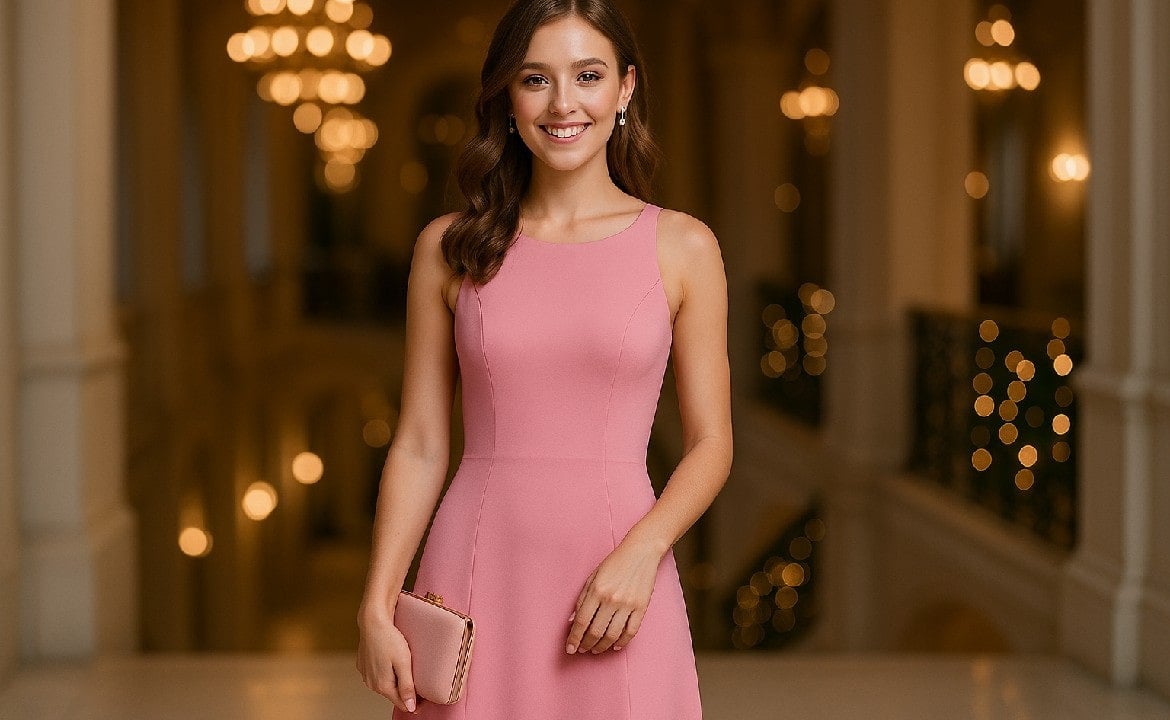
What goes with a pink prom dress? Start with the shoes, because they decide more than anything else. A heel close to your own skin tone gives the longest leg line and disappears against the hem, and a shoe in a shade one step deeper than the dress reads as deliberate. For metal, rose gold and gold suit warm pinks such as coral and peach, while silver suits cool pinks such as blush and fuchsia, and clear crystal works on all of them. Keep the jewelry fine, since the color is already doing the talking, and keep the makeup in a different family from the dress rather than matching it. If you want the look to read sharp rather than sweet, add one piece of contrast, usually a darker shoe or a single deep-toned accessory.
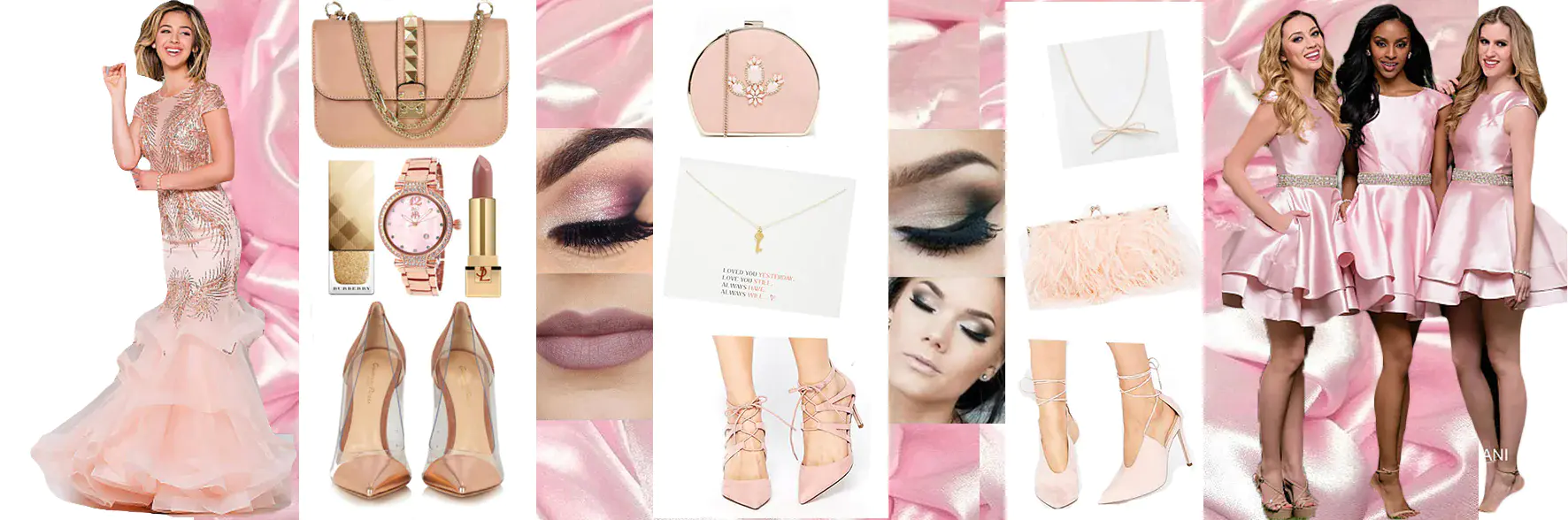
What color shoes with a pink dress
This is the question that comes up first, and the answer depends on whether you want the shoe to disappear or to be seen.
A shade close to your own skin tone is the safest and the most lengthening. It disappears against the hem, keeps the eye on the dress, and works with every pink from the palest blush to the brightest fuchsia.
Matching the shoe to the dress is the next option, and the useful rule is one step deeper rather than the same shade. An exact match is nearly impossible across two different fabrics and a near-miss looks like a mistake, while a slightly deeper pink reads as chosen.
Metallic works well and the metal follows the undertone of the dress. Rose gold or gold on a warm pink, silver on a cool one.
Black is the contrast choice and it is not wrong, whatever some guides say. It works when the dress is a strong pink and the black appears once more somewhere, in a clutch or a belt, so it reads as a decision rather than as the only dark thing in the outfit. On a pale blush, black can look heavy, and a deep burgundy or a bronze does the same job more softly.
What rarely works is a second bright color. A pink dress with red, orange or turquoise shoes is fighting with itself.
Which metal suits pink
Pink comes in two families and they want different metals, which is why the same necklace can look right on one pink dress and wrong on another.
Warm pinks lean toward orange: coral, peach, salmon and most shades sold as apricot. Gold and rose gold sit naturally against them, and silver can look cold.
Cool pinks lean toward blue: blush, rose, magenta and fuchsia. Silver, white gold and platinum sit naturally against those, and yellow gold can look brassy.
Rose gold is the one metal that crosses both families comfortably, which makes it the safe default if you are unsure which side your dress is on. Clear crystal and pearl work on every pink, because neither adds a color to coordinate.
Hold the piece against the fabric in daylight. The undertone that is hard to name in words is obvious in about five seconds with the metal next to it.
How to style a pink dress so it reads grown up
Pink carries associations with younger occasions, and the honest way to handle that is not to avoid the color but to control the details around it.
Fabric does most of the work. A smooth satin, a matte crepe or a clean mikado reads as formal in any pink. Layers of tulle and ruffles read as softer and younger, so if that is a concern, choose the structured fabric and let the color be the soft element.
Silhouette does the rest. A fitted line, a column, or a mermaid prom dress in pink reads as adult regardless of shade. A very full skirt in a pale pink reads as a different kind of event, and that is a choice to make deliberately rather than by accident.
Accessories finish it. One piece of contrast, usually darker, is what moves a pink look from sweet to sharp. A black clutch, a deep shoe, or a single dark stone in the jewelry does it without changing anything about the dress.
Blush versus hot pink
The two ends of the pink range behave so differently that they are almost different colors, and they want different styling.
A blush prom dress sits close to skin and reads as a neutral. It photographs softly, can wash out under a flash, and it takes stronger makeup and a stronger shoe than you would expect, because there is not much color in the dress to compete with. Silver and pearl suit it, and a defined lip keeps the face from disappearing into the dress.
Hot pink prom dresses are the opposite case. The color is doing everything, so the accessories stay quiet and the makeup stays clean. A shoe close to your skin tone, fine jewelry in silver or rose gold, and a soft lip. Hot pink photographs strongly under any lighting and needs nothing added to it.
Everything in between, dusty pink and mauve especially, sits closer to the blush rule than the hot pink one. The paler the pink, the more the accessories have to carry.
Makeup that works with pink
The rule that saves most pink looks is to keep the makeup in a different family from the dress. Pink eyeshadow with a pink dress reads as one flat wash of color, and a berry lip on a fuchsia gown competes.
For the eyes, neutrals work on every pink. Bronze, taupe, champagne and soft brown all sit well and let the dress hold the color. If you want a stronger eye, a smoky gray or a deep plum gives contrast without clashing.
For the lip, the choice is either a nude close to your own lip color, which keeps the look soft, or a defined shade in a different family, such as a warm red on a cool pink or a deep berry on a peach. What to avoid is a lip that is almost the shade of the dress, since almost is the version that looks wrong.
Blush is the one product where matching is fine. A soft pink cheek against a pink dress reads as natural rather than as coordinated.
Hair and the finishing pieces
Hair follows the neckline, the same as with any color. A strapless or sweetheart neckline leaves room for hair down or half up, while a halter or high neck already fills the space around the face and looks cleanest with hair up.
Keep the bag small and let it carry the contrast if you want some. A metallic clutch in the metal you chose for the jewelry, or a darker one on a strong pink, both work. A pink bag on a pink dress vanishes.
Wraps are worth planning rather than grabbing at the last minute. A fine shawl in ivory, champagne or the dress color itself gives coverage for a cool venue without breaking the line, and a satin prom gown in pink in particular looks better with a matching wrap than with a contrasting one.
Pink Prom Dress Questions
What color shoes go with a pink prom dress?
Three options cover nearly every pink. Your own skin tone if you want the shoe to vanish and the leg to look longest, a pink slightly deeper than the dress if you want it to match on purpose, or a metallic in the metal your jewelry uses. Black is a fourth option on a strong pink, provided it shows up once more in the outfit so it reads as a plan.
Gold or silver with a pink dress?
It depends on the undertone. Warm pinks such as coral and peach take gold and rose gold. Cool pinks such as blush and fuchsia take silver. Rose gold crosses both, which makes it the safe choice if you are not sure, and clear crystal or pearl works on every pink.
How do you make a pink dress look less childish?
Through fabric and one piece of contrast rather than by avoiding the color. A smooth satin, crepe or mikado reads as formal in any pink, while heavy tulle and ruffles read younger. Then add a single darker element, a shoe, a clutch or one deep stone, and the whole look sharpens.
What makeup goes with a pink dress?
Keep it in a different family from the dress. Neutral eyes in bronze, taupe or champagne on every pink, and either a nude lip or a defined shade from a different family, such as red on a cool pink. Avoid a lip that is almost the shade of the dress. Cheek color is the exception, since a pink cheek reads as natural rather than as coordinated.
Does blush pink wash you out in photos?
It can under a flash, because it sits so close to skin tone. The fix is contrast in the face rather than in the dress, so a defined lip and a slightly stronger eye than you would normally wear. A silver or pearl accessory near the face also gives the camera something to hold onto.
Can you wear a black shoe with a pink dress?
Yes, and most of the advice against it is really about pale blush, where black is too heavy for the dress. On a strong pink it works, with one condition: black should not be the only dark thing in the outfit. Repeat it once, in the bag or a belt, and it reads as chosen. If the dress is pale, burgundy or bronze gives the same contrast without the weight.
Seeing the undertone in person
Warm or cool is the one thing about a pink dress that a photograph cannot settle, and it decides the metal, the shoe and half the makeup.
Take a gold and a silver piece with you when you try on pink prom dresses, and look at both against the fabric in daylight.
An authorized Jovani retailer will let you hold both against the gown before you commit to either.