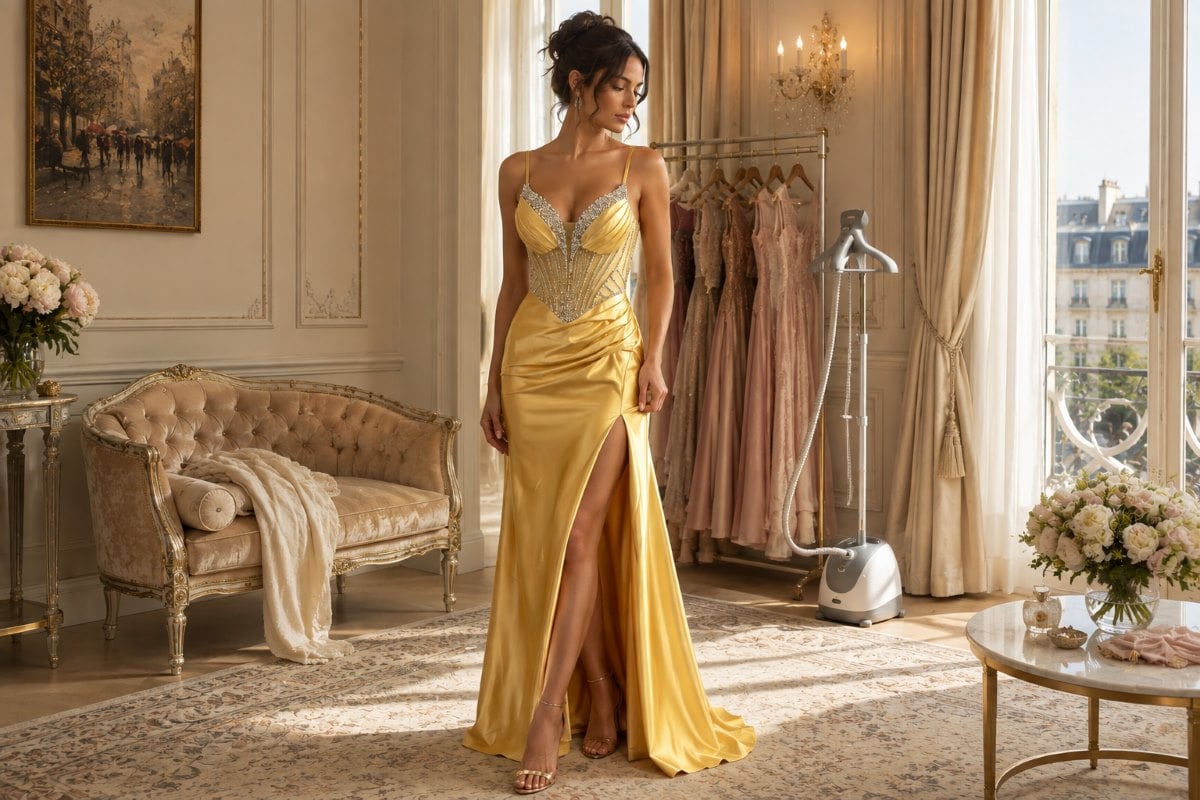

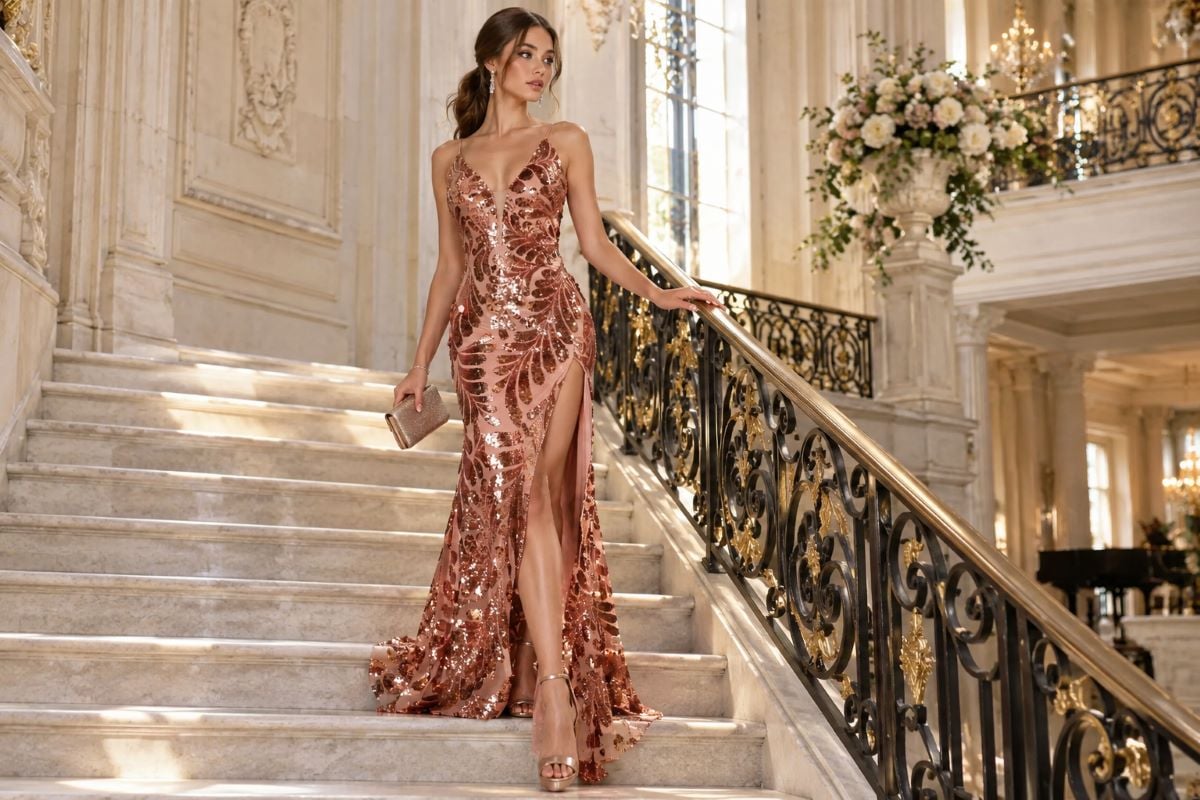
When a prom look works, every detail tells the same story. Your jewelry, hair, and shoes should all support the mood of your dress, not fight with it. When everything feels coordinated, you look polished in person and in every photo.
Choosing prom dress accessories works best in order, and the order starts with the gown rather than the jewelry box.
Before you think about earrings or heels, look properly at the dress and answer three things. What mood is it, romantic, minimal or dramatic? What is the silhouette, an A line, a ball gown or something fitted? And what is the finish, smooth satin, sequin, soft chiffon or structured taffeta? Those three answers decide almost everything that follows, because a sleek long prom dress in satin asks for completely different styling than a full tulle skirt covered in glitter, and a shorter hem changes the shoe decision entirely.
If you have not settled the dress yet, the junior prom dresses range is where the shorter lengths live, and the shoe decision follows from that choice rather than the other way round.
How to accessorize prom dress looks, in order
How do you choose prom dress accessories? Start from the dress rather than from the accessories. The neckline decides whether a necklace or earrings carry the look, since an open cut leaves room for a necklace and a high, halter or one shoulder cut fills that space already. The fabric decides how much sparkle to add, because a beaded gown is doing that job and a plain one is not. And the hem decides how much the shoes matter. Beyond that, one statement piece is the working limit, since the dress should stay the loudest thing you are wearing.
Jewelry: let the neckline lead
Jewelry is where most people either do too much or not enough. The rule is simple: your neckline is the boss.
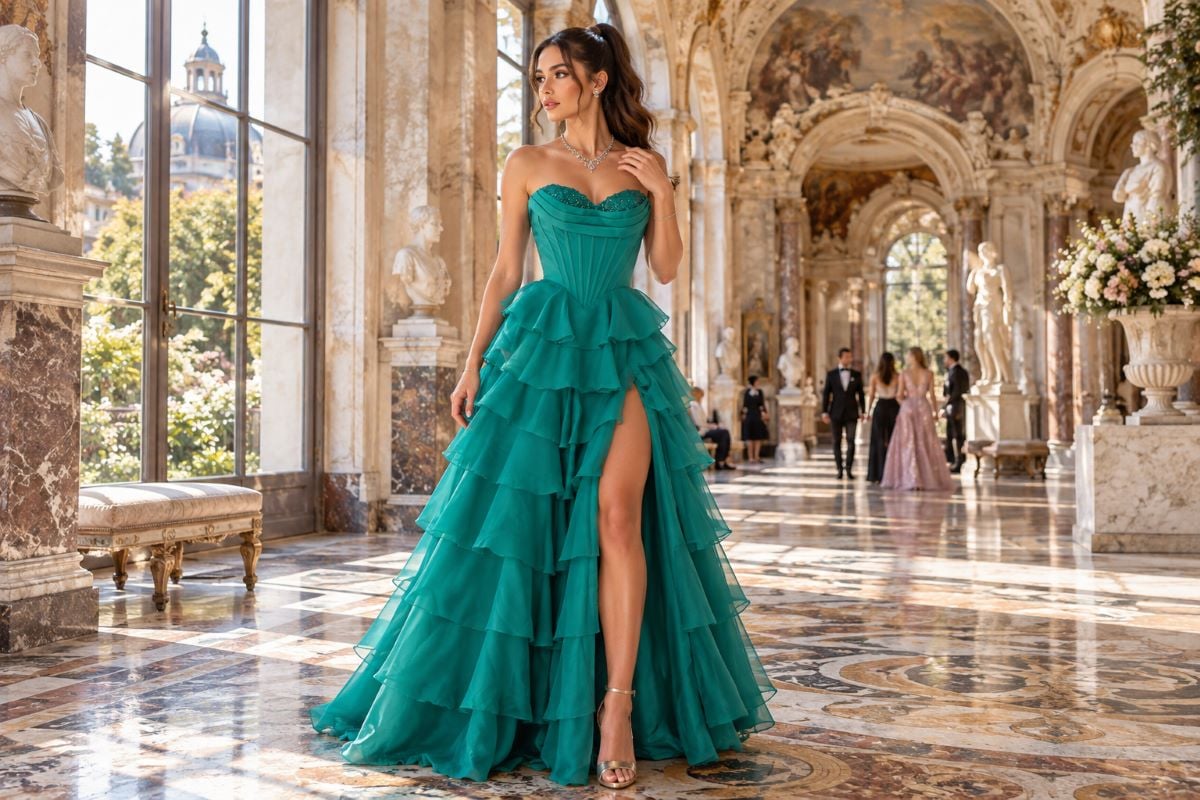
Strapless and sweetheart necklines
A strapless or sweetheart cut leaves the collarbone and shoulders open, which gives you the most room to work with. A soft statement necklace sitting just above the neckline works well, or you can skip the necklace entirely and let bold chandelier earrings carry the look instead. A delicate bracelet adds a little sparkle at the wrist, which shows every time you lift the skirt to walk.
With a romantic sweetheart A line prom dress that already has floral or beaded detail, a simple pendant and matching studs keep the focus on the gown while still framing your face.
V neck and plunging necklines
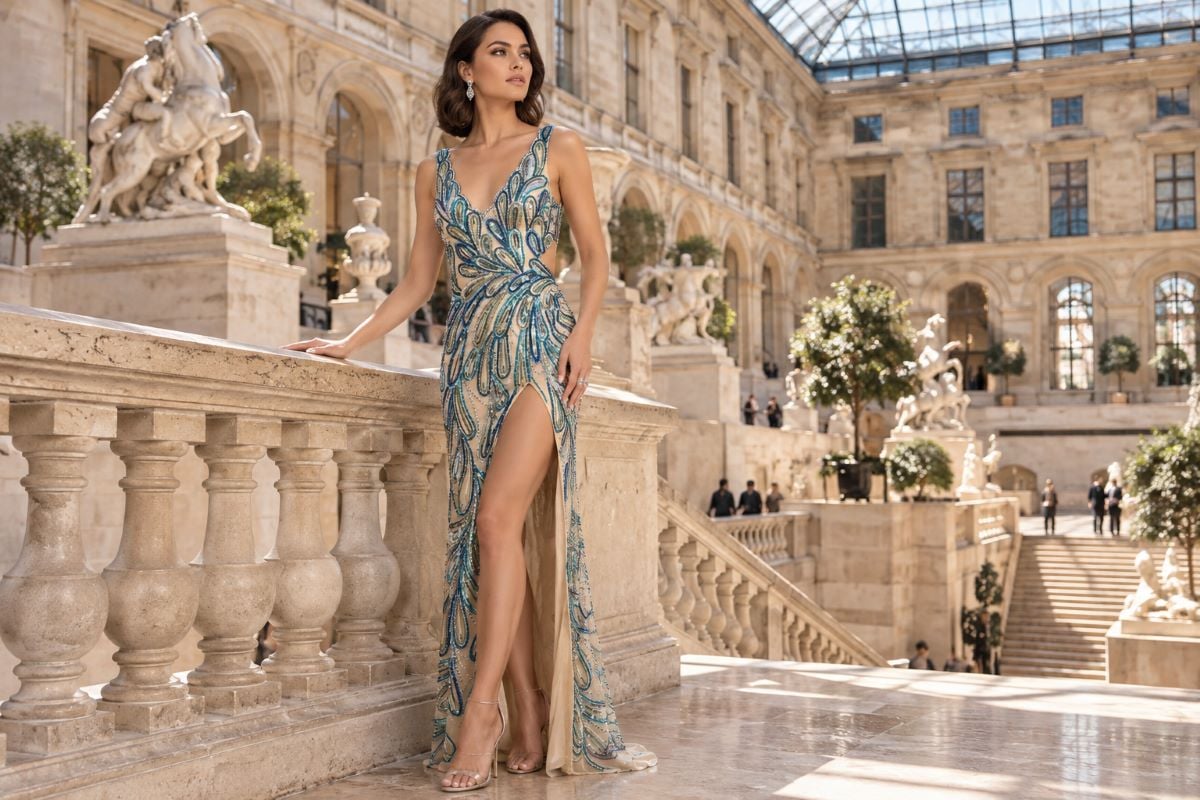
A V neckline already draws the eye down the center of the body, so the jewelry should follow that line rather than cut across it. A Y-shaped necklace or a single drop pendant echoes the shape, and medium earrings balance it without adding width. If the dress is heavily beaded, skip the necklace and put the interest in the earrings and a ring instead.
On a fitted silhouette with a plunging cut, one statement piece is the limit. Three at once reads as busy no matter how good each one is on its own.
High neck, halter and illusion necklines
A high neck, halter or illusion neckline comes with its own detail built in, which means a necklace has nowhere to sit and simply competes. Skip it and let the neckline do the work. Sparkly studs, small hoops or a clean ear climber finish the look, and a thin bracelet or a cocktail ring adds a little shine lower down.
This works particularly well with a smooth satin prom dress or any design with lace or beadwork near the collarbone, where the jewelry should read as a whisper rather than a second statement.
Metals and stones that suit your dress
Let the hardware on the gown decide the metal. Silver beading calls for silver or white gold, and warm-toned detail sits better with gold or rose gold, which also reads as softer and more expensive against a warm fabric. With a bold shade such as a red prom dress or a deep green, clear crystals, pearls and plain metals keep the color of the fabric in the spotlight rather than adding a second one.
The quickest way to settle it is to stand in natural light, look at which tones in the beading catch the most light, and match the jewelry to those rather than guessing from memory.
Hair and hair accessories: balance the silhouette
Your hair should balance the shape of your dress, not copy it. Think about volume, neckline, and how you want to feel on the dance floor.
When to wear your hair up
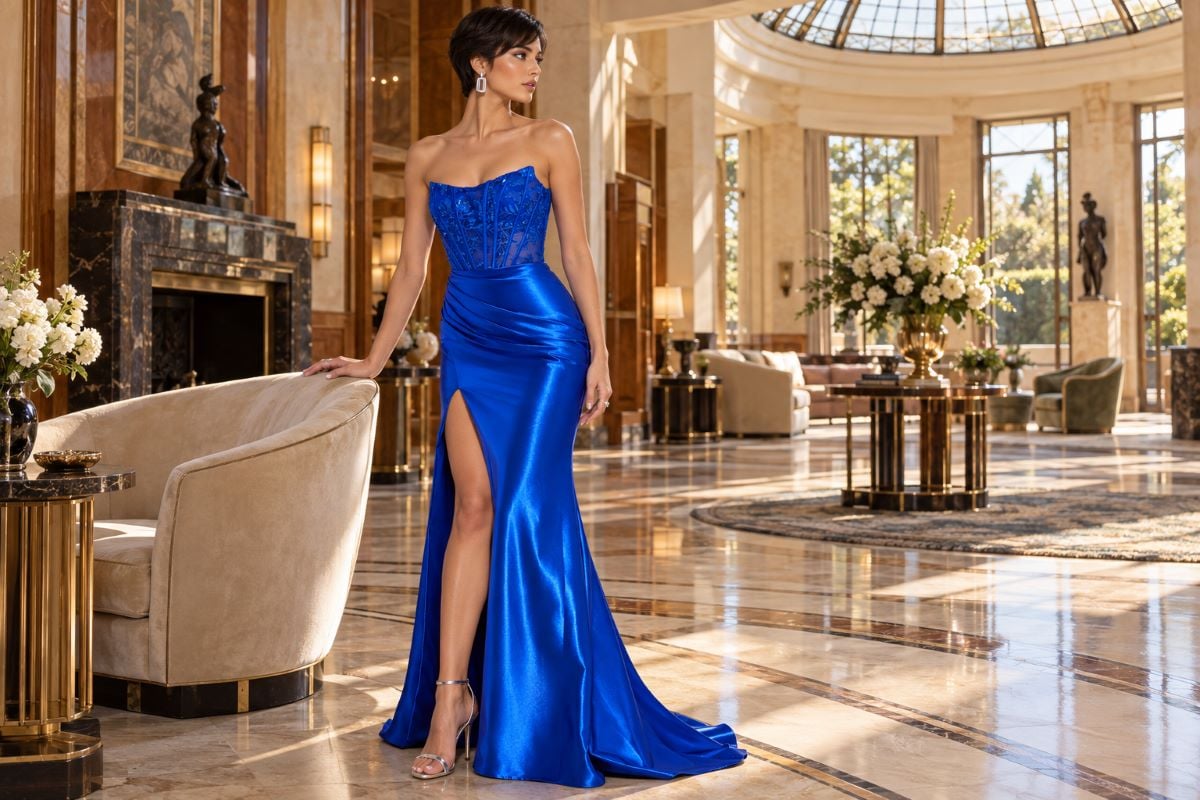
Hair up suits a gown with a high neck, a halter or detailed straps, because the neckline is already filling the space around the face. It also makes sense if you are wearing dramatic earrings and want them visible, or if the dress has a low or open back that would otherwise be hidden.
With a fitted silhouette such as a mermaid prom dress, a sleek bun or low chignon creates a long clean line from the neck down. A crystal comb, plain hairpins or a fine headband echo the sparkle in the gown without adding a third thing to look at.
When to wear your hair down or half up
Loose waves or soft curls suit a lighter gown in chiffon or tulle, a simple neckline, and anyone who wants hair that moves in photographs and on the dance floor. The trade is that hair down finds its way onto your face while dancing and tends to flatten by the second hour.
A half up style is the practical middle. It keeps the face clear for photographs, holds its shape far better through an evening, and still leaves the length visible. It works especially well with a fuller skirt, where a fully sleek style can look severe against the volume below.
Matching hair to the dress style
A few pairings work reliably. A full skirt from the ball gown prom dresses range sits well with side-swept curls and a single sparkling barrette. A minimal column gown suits a smooth low ponytail and clean modern earrings, since both are about line rather than volume. A shorter gown carries a high ponytail, bouncy curls or a polished braid comfortably.
Whatever you choose, test it at home by moving, sitting and pretending to dance. A style that survives that will survive from the first photograph to the last song.
Shoes: comfort first, style right behind
Shoes can make or break your night. The best shoes for prom are the ones you can actually walk and dance in, not just stand in for ten minutes.
Match the mood of your dress
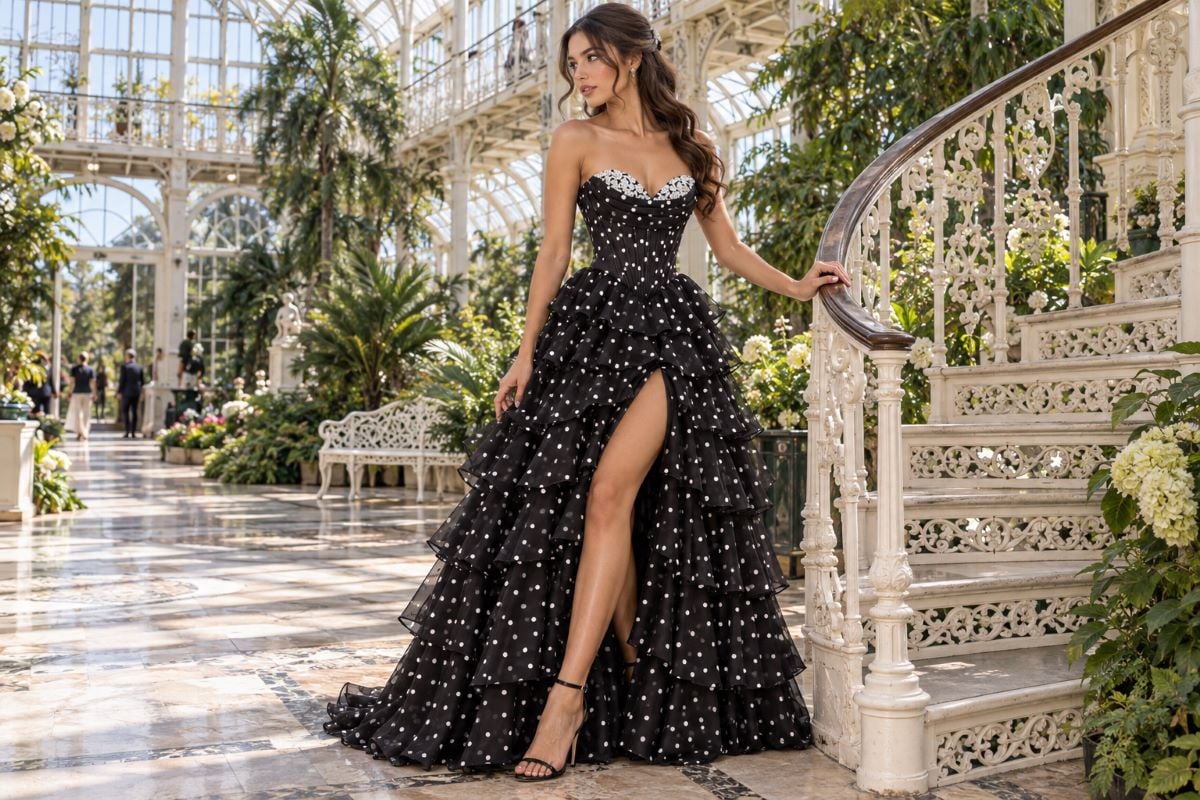
A dramatic skirt, whether a ball gown or a layered trumpet, is balanced by a classic heel or a platform sandal rather than anything delicate. A sleek fitted silhouette suits a strappy stiletto or a pointed heel, which keeps the line sharp. A simple gown with clean lines is where a metallic shoe, a little crystal or a deliberate color can add the interest the fabric is not providing.
Length matters as much as style. With a floor length gown the hem should just brush the top of the shoe without dragging, and with a shorter hem the shoe is fully visible, so it has to work with the dress rather than merely avoid clashing.
Color and finish
A shoe close to your own skin tone lengthens the leg more than any other color and works with almost every style. Metallic in silver, gold or champagne pairs well with most embellished gowns and adds light without introducing a color to coordinate. With a bold shade, either a plain metallic or a shoe a clear step darker than the dress works, while a near match almost never does.
Whatever you choose, try the shoes on with the actual dress at home. Walk a hallway, turn, then sit down and stand up. Matching shoes to a gown is about balance and ease rather than color alone.
Heels, flats or flat shoes
A heel gives height and a longer line, which is why it suits a floor length gown. A dressy flat is the better choice if you are already tall, if your feet give you trouble, or if you simply want to enjoy the evening, and in a formal material it reads as a decision rather than a compromise.
Whichever you pick, pack a foldable flat in your bag. The second half of the night is where heels stop being worth it, and a spare pair takes up almost no space.
Accessories prom dresses need, by look
Sometimes it helps to picture full looks from head to toe. Here are a few complete prom dress styling tips you can adapt to your own outfit.
A sparkly statement gown
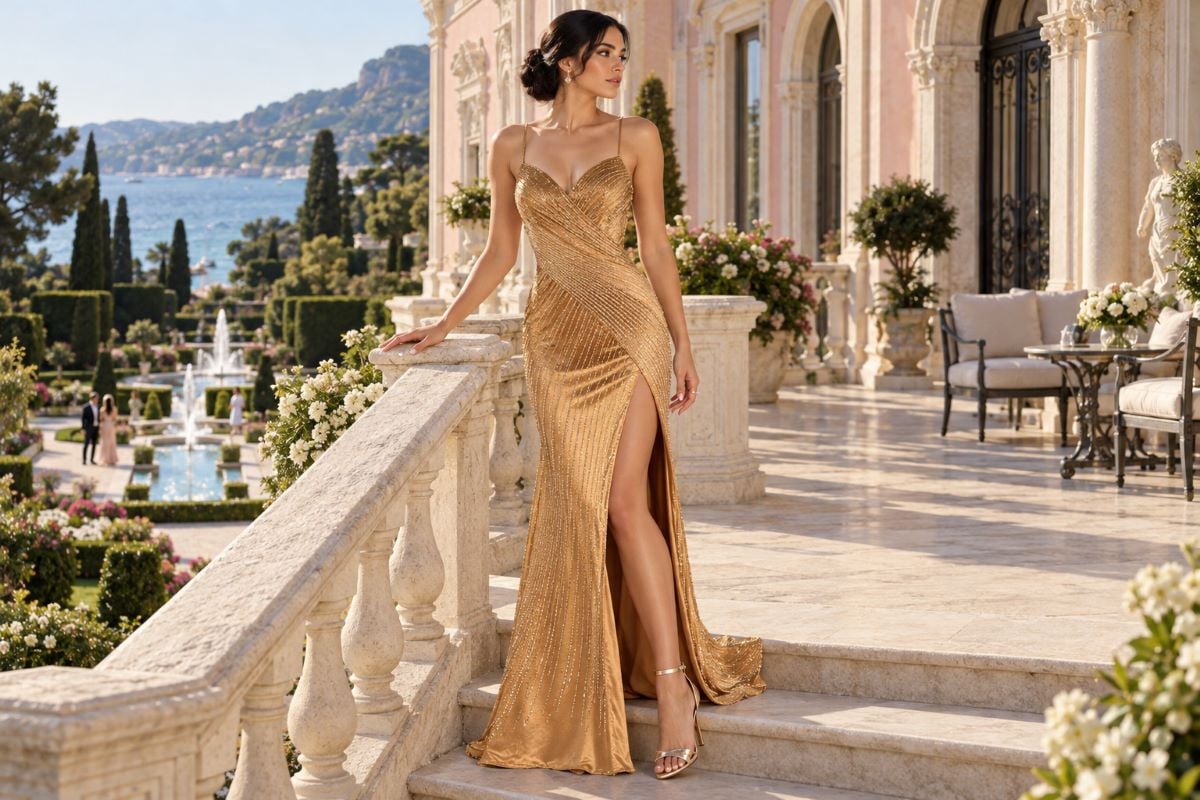
With a heavily sequinned gown the dress is already the statement, so everything else stays controlled. Skip the necklace and wear crystal drop earrings with a slim bracelet. Keep the hair smooth, either a low bun or a sleek high ponytail, so the sequins stay the thing people notice. Metallic stilettos matching the sequin tone and a small plain clutch finish it.
The result reads as glamorous without feeling heavy, which is the balance an all-over sparkle gown needs.
A soft chiffon A line
A soft pastel A line wants the opposite treatment, since the fabric is doing very little on its own. A delicate pendant with small studs or hoops works at the neckline, and loose waves half pinned with a small floral comb suit the softness of the fabric.
For shoes, a block heel in a shade close to your skin is the practical choice, particularly if photographs are happening outdoors where a stiletto sinks into grass. A simple bracelet and a satin clutch are enough to finish it. The whole look suits anyone who wants to feel light and comfortable while moving.
A bold red fitted gown
A fitted red gown carries itself, so the accessories support rather than compete. Gold or rose gold with clear stones works well, concentrated in the earrings and a ring rather than spread across several pieces. Soft waves swept over one shoulder, or a deep side part with smooth ends, suits the classic feel of the color.
For shoes, either a shade close to your skin for the longest leg line or a red a clear step darker than the dress. And if you want a red lip, match it to the gown or go slightly deeper, since a lighter red beside a darker dress reads as a mismatch.
A simple satin gown
A smooth satin gown with little embellishment is the one case where the accessories carry most of the story, so they should be sharp rather than plentiful. One strong piece does it, whether that is a geometric earring or a sleek cuff, with plain studs if you want a second point.
Keep the hair clean, so a low ponytail, a slick bun or straight hair tucked behind the ears. Strappy heels or mules in the same tone as the jewelry keep the whole look reading as one decision rather than several.
Prom dress add ons: last checks before you leave
A few last checks pull everything together. Try the whole look on at once, dress, jewelry, hair, makeup, shoes and bag, rather than testing each piece separately, since they only compete with each other when they are worn together.
Take a few test photographs in natural light, because jewelry and hair accessories sit differently on camera than in a mirror. Check that the bag actually holds your phone, lip color, a small mirror and the emergency items, meaning fashion tape and blister bandages. And check that bracelets and rings do not catch on the fabric of the gown, which is the most common way a dress gets damaged before the night even starts.
If something feels off when you look at the whole thing, remove one piece rather than adding another. Less almost always reads as more considered.
Prom Dress Accessory Questions
How do you choose prom dress accessories?
Work from the dress outward. The neckline decides between a necklace and earrings, the fabric decides how much sparkle to add, and the hem decides how much the shoes matter. One statement piece is the working limit, since the gown should stay the loudest thing you are wearing.
Should jewelry match the dress color?
Rarely exactly, since dye lots differ and a near match reads as a mistake. Clear stones and crystal add light without introducing a color. Metallic adds warmth or coolness without competing. If you want coordination, pull a secondary color from the beading rather than matching the main fabric.
What jewelry suits each neckline?
A strapless or sweetheart cut leaves the collarbone open, so a necklace belongs there. A high neck, halter or one shoulder design fills that space already, so earrings become the statement. A deep V works with either, but not both at once.
How many accessories are too many?
Statement earrings plus a bold necklace plus a cuff plus a decorated bag will always look busier than the sum of the pieces. Pick one area to carry the interest and keep the rest quiet, and the effect is stronger rather than smaller.
What shoes work with most prom dresses?
A heel close to your own skin tone gives the longest leg line, and metallic adds light without a color to coordinate. Under a floor length hem the shoe barely shows, so comfort should decide. With a short dress the shoe is part of the outfit and worth more thought.
Does hair count as an accessory decision?
Yes, and the neckline decides it the same way. A halter or high neck already fills the space around the face, so hair up keeps it clean. A strapless or sweetheart cut leaves the collarbone open, which is where volume and movement belong.
Trying the pieces against the dress
Metal, stone and shoe color all read differently against a specific fabric, and holding them against the gown settles in seconds what browsing cannot.
Bring the pieces you are considering to your fitting at an authorized Jovani retailer and look at them in daylight rather than under store lighting.