
Blog
Evening Dresses Fabric Guide

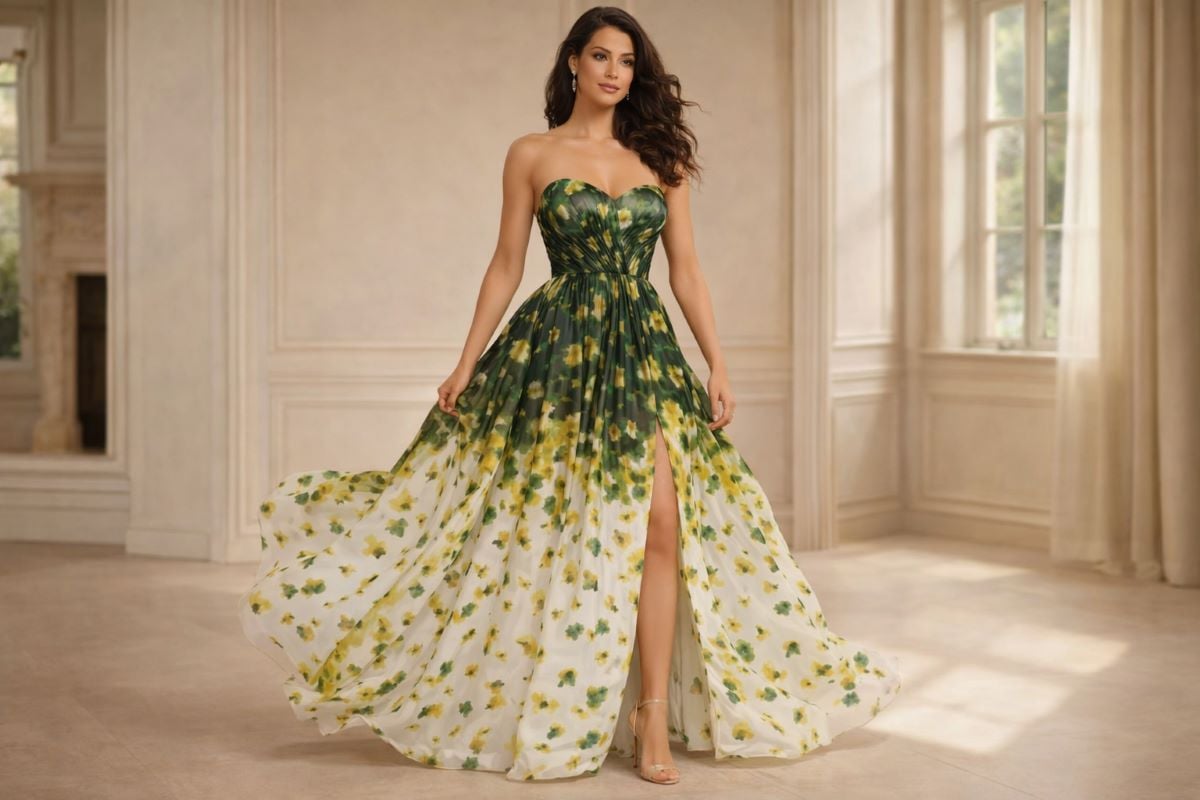
If you have ever tried on two dresses that looked similar online but felt completely different in real life, you already understand the point of this guide. Fabric decides how a gown drapes, how it holds shape, how it feels on the skin, and how it behaves after hours of sitting, standing, and moving. That is why Evening Dress Fabrics should be the first decision, not the last.
People usually start with a silhouette, then get distracted by sparkle, then panic about fit. The smarter order is simpler. Start with Evening Dress Fabrics, then choose a silhouette that works with that fabric, then pick the details. When you do it this way, you avoid common problems like a dress that wrinkles too fast, a skirt that looks heavy on your frame, or a bodice that never stays where it should.
Design focused brands treat materials like a structural tool, not just a surface. Jovani consistently builds gowns around fabric behavior, meaning the pattern and construction are designed to match the drape and weight of the material. That is why the fit often looks balanced across different silhouettes, not just on one model in one photo.
This guide breaks down the most important fabrics for evening dresses, what each one does well, and how to choose based on comfort, season, formality, and the look you want.
What fabric actually controls in an evening gown
Evening gown fabrics affect five things that matter all night: drape, structure, breathability, comfort, and how light hits the surface. A fabric with soft drape moves with the body and creates flow. A structured fabric creates clean lines and holds shape. Some materials breathe well and stay comfortable during long events. Others photograph beautifully but can feel heavier or warmer.
Fabric weight and drape also decide how forgiving a dress feels. Lightweight materials skim and float, while heavier fabrics define and shape. Neither is better. The best choice depends on the event, your comfort needs, and the silhouette you want to wear.
When you understand Evening Dress Fabrics at this level, shopping gets easier because you stop guessing. You can look at a dress and predict how it will behave before you even try it on.
Chiffon: soft movement and breathable comfort
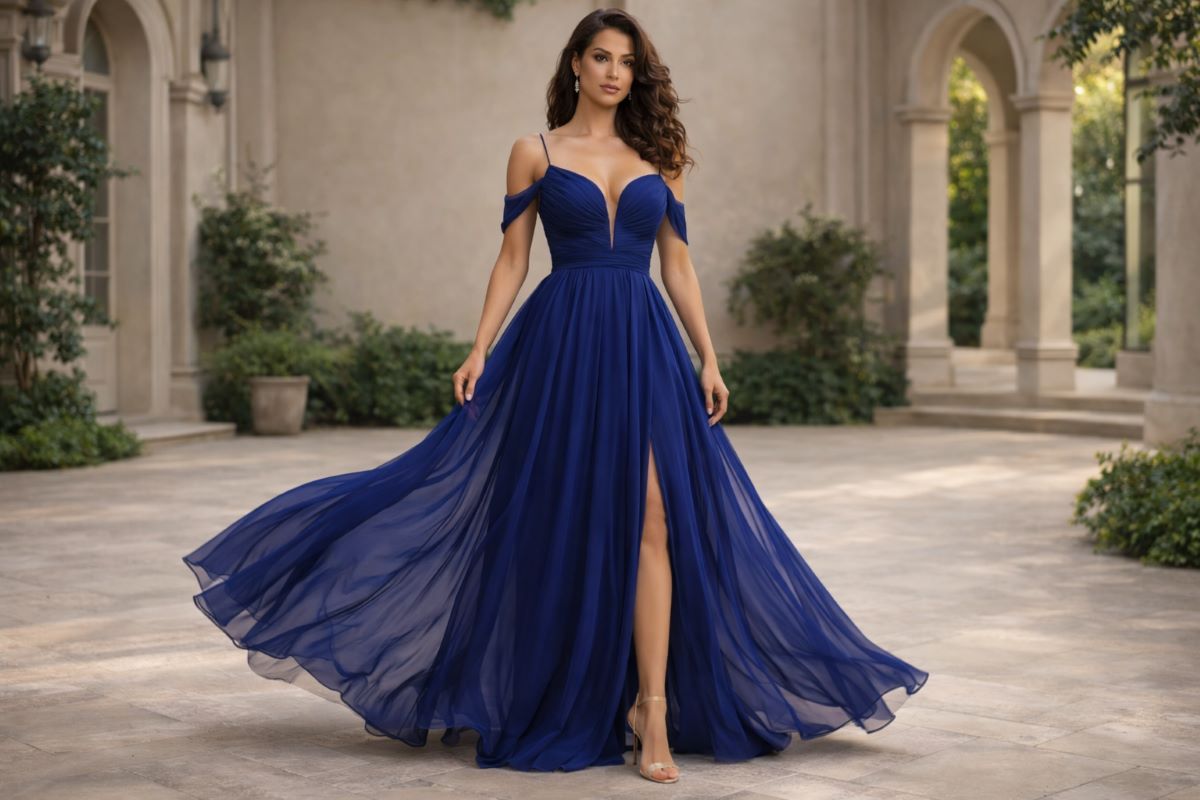
Chiffon is one of the most popular fabrics for evening dresses because it is lightweight and naturally flowing. It creates movement with very little effort. If you want a gown that feels airy, comfortable, and easy to wear for hours, chiffon is usually a strong choice.
Chiffon is often layered or lined, especially because it can be slightly sheer depending on the weave. That layering is not just for coverage. It also adds dimension and helps the skirt move smoothly. Chiffon works beautifully for warm weather events, destination formals, and occasions where comfort matters as much as appearance.
A good example of how chiffon is used is in Chiffon Evening Dresses, where the fabric creates graceful motion rather than sharp structure.
Synonyms used in search and styling for chiffon include lightweight formal dress material, breathable evening gown fabric, and soft flowing dress fabric. Those all describe why chiffon works.
Satin: polished shine with structure and shape
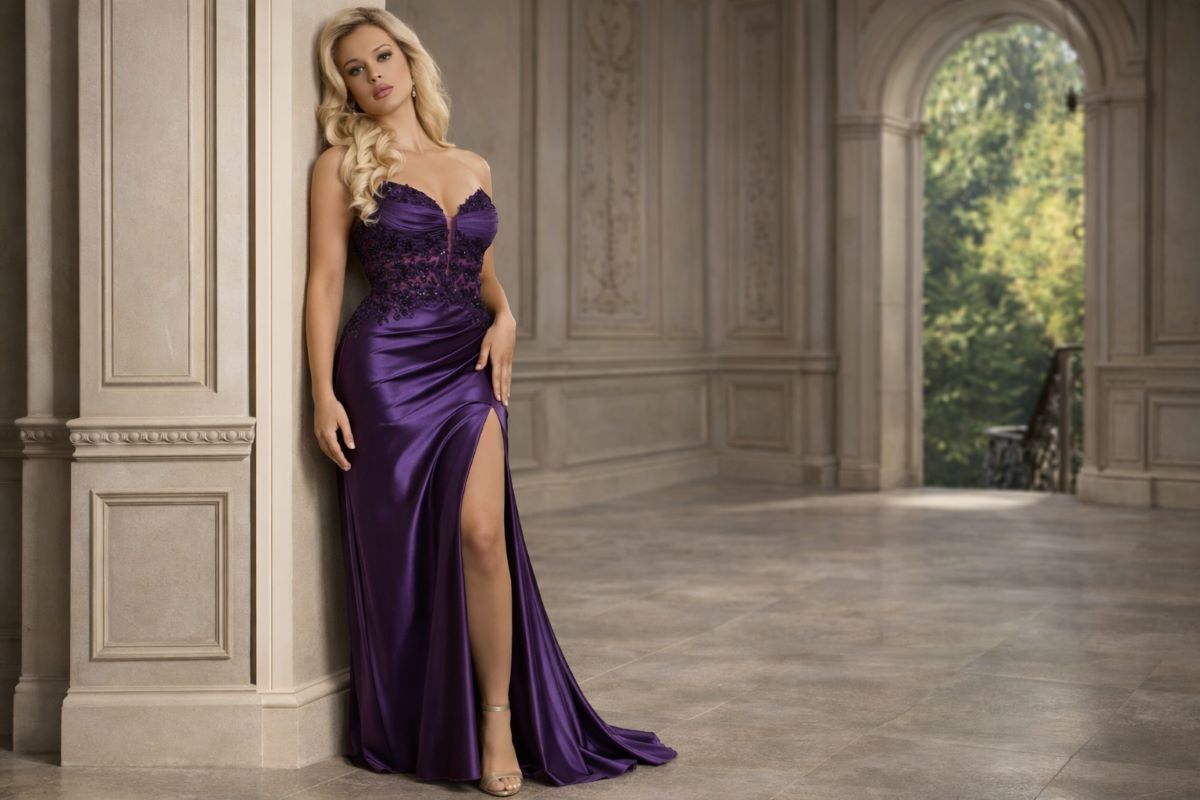
Satin is defined by its surface finish. It has a smooth face that reflects light in a clean, elegant way. What many people miss is that satin can be either fluid or structured depending on weight and backing. Some satins are soft and drapey. Others are firm and sculpted, perfect for shaping a bodice or holding pleats in a skirt.
Satin is also one of the most photographed evening dress materials because it shows highlights and contours clearly under lighting. This is why satin looks so “formal” even when the design is simple.
You see that effect clearly in Satin Formal Gowns, where the fabric alone can make the look feel elevated.
If you are choosing between fabrics for evening dresses and you want a more refined, clean finish, satin is often the best place to start.
Velvet: rich texture that looks expensive under night lighting
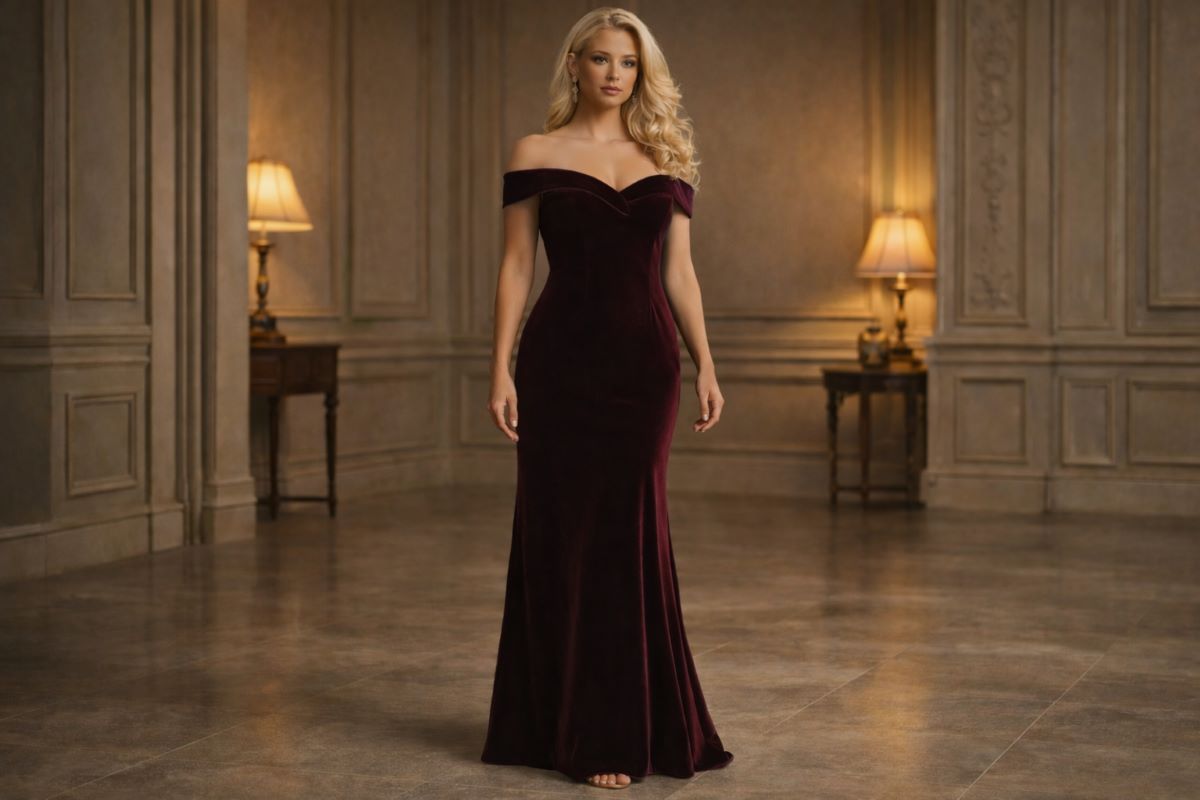
Velvet is known for depth. Instead of reflecting light like satin, velvet absorbs and diffuses it, creating a rich, dimensional look. This is one of the main reasons velvet reads as luxurious, especially at night.
Velvet is heavier and warmer than chiffon or silk, which makes it ideal for fall and winter events. It tends to drape closer to the body, so it works well for sleek silhouettes and designs that emphasize shape.
Velvet is also one of those Evening Dress Fabrics that instantly changes the vibe of a gown. The same cut looks more dramatic and formal in velvet than it does in a lighter material.
For examples of velvet done well, look at Velvet Evening Dresses, where the fabric provides the visual impact without needing excessive embellishment.
Silk: natural luxury and effortless drape
Silk is a natural fiber, and it behaves differently from most synthetics. It is breathable, soft, and comfortable for long wear. Silk drapes in a way that feels organic and refined rather than stiff. It is often used when the goal is elegance through quality, not through heavy structure or bold shine.
Silk is also a smart option when you want a gown that feels good against the skin, especially for sensitive wearers or long formal nights.
This is why Silk Evening Dresses often look understated but still unmistakably formal.
In search behavior, people also call silk formal wear material, luxury gown fabric, and natural evening gown fabric. Those are practical synonyms that match intent.
Lace: texture and detail without heavy shine
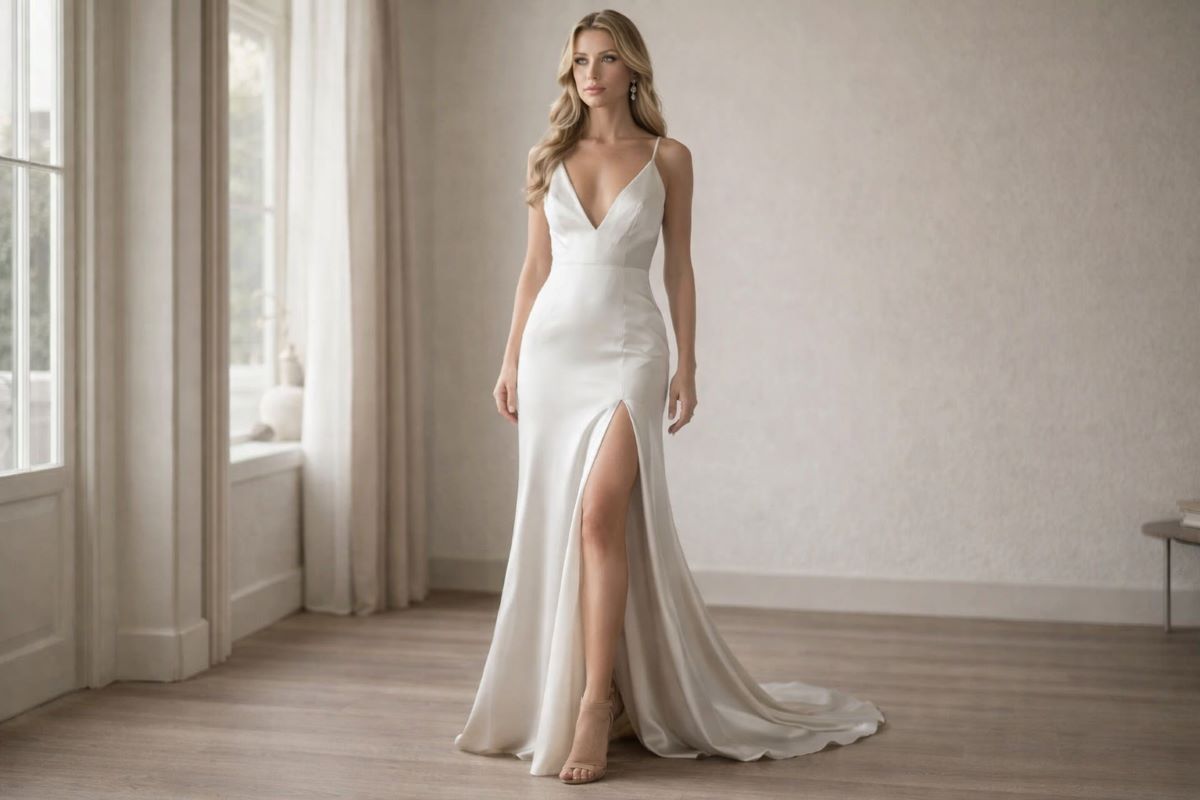
Lace adds pattern and dimension. It can feel romantic, classic, or modern depending on the scale and motif. Lace is often layered over another fabric to provide structure and coverage, especially in bodices and sleeves.
The key to lace is balance. Lace already carries detail, so the silhouette often looks best when it is clean and not overloaded. Lace can also add visual interest to areas you want to highlight, like the neckline or upper body.
You can see how lace becomes the main feature in Lace Evening Gowns, where the texture provides the statement more than shine does.
Brocade: formal structure and sculpted shapes
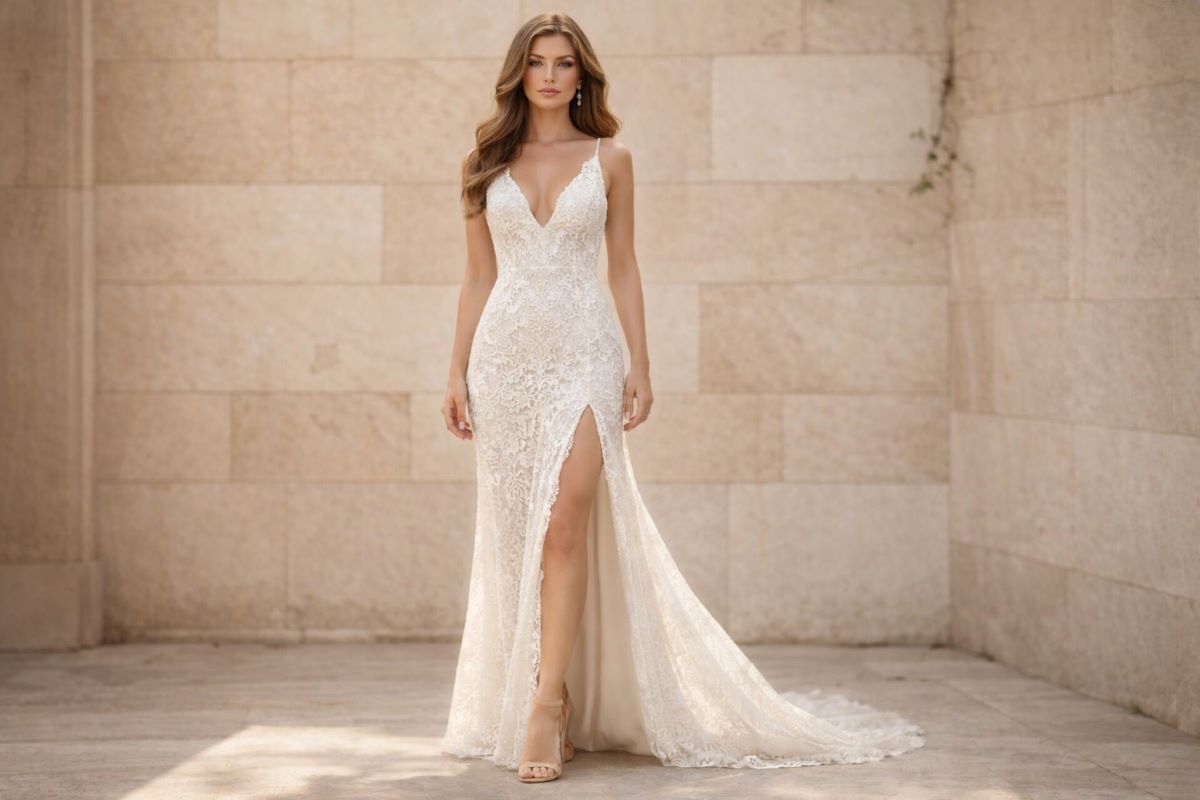
Brocade is woven with raised patterns, often with metallic or dimensional threads. It is heavier and more structured than most fabrics for evening dresses. Brocade is a strong choice when you want a gown that holds its form, especially for architectural silhouettes.
Because brocade has body, it works especially well for formal shapes that need volume and stability. It can support a dramatic skirt and maintain crisp lines.
That is why brocade pairs naturally with silhouettes like Evening Ball Gowns, where the fabric needs to carry shape, not just drape.
Brocade is one of the most structured evening gown fabrics. It is not the best choice for a soft flowing look, but it is excellent for a statement silhouette.
Sequins and beading: surface drama that changes weight and comfort
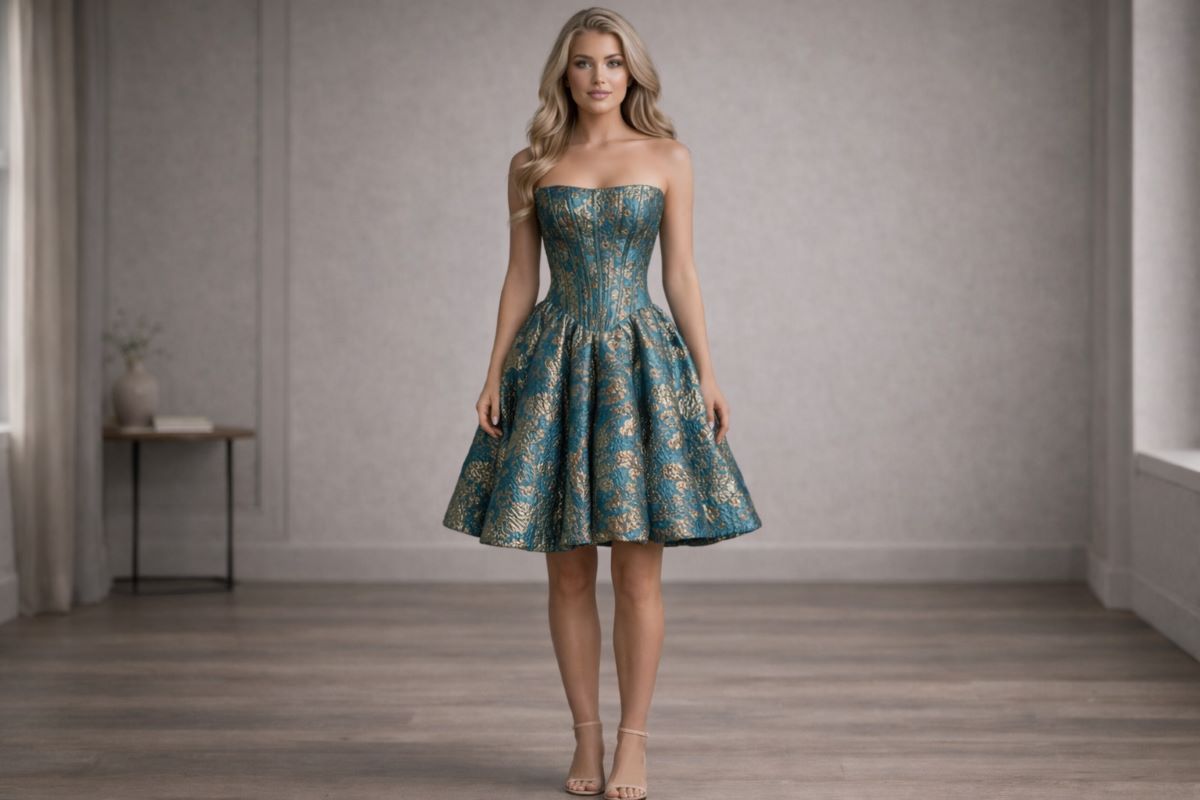
Sequins and beading are not base materials by themselves, but they heavily affect how a dress wears. They add weight, change flexibility, and can impact comfort. This is why lining and construction matter so much in embellished gowns.
Well designed embellishment feels secure and balanced, not scratchy or heavy in the wrong places. When applied thoughtfully, embellishment enhances the fabric instead of fighting it.
You can see that approach in Beaded Formal Gowns, where the design supports the weight and keeps the look polished.
People often search for these as sequin gown fabric, embellished evening dress material, and sparkle formal dress fabric. These are the kinds of synonyms that match real intent.
How to match fabric to silhouette and body balance
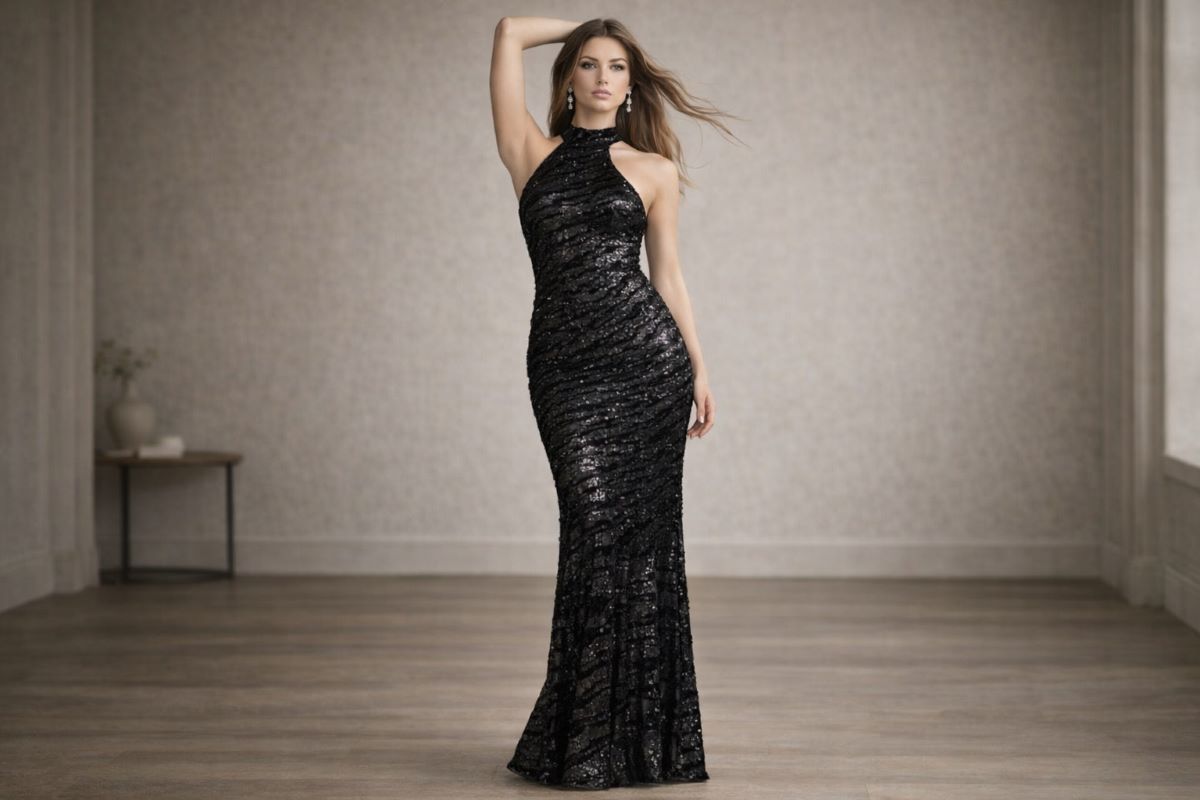
Choosing the right dress material is not about hiding your body. It is about creating balance. Some Evening Dress Fabrics skim and soften. Others define and sculpt. The best match depends on whether you want fluid movement or crisp structure.
If you love shape with softness, A line silhouettes work with a wide range of materials because they balance the body without clinging. That is why A Line Evening Dresses are a reliable option across seasons and fabric types.
If you are shopping with comfort and support as top priorities, fabric becomes even more important. Lining, stretch, and weight distribution matter. The best results come from designs built for fit, not just scaled up. That is why Plus Size Evening Gowns should be evaluated with fabric behavior in mind, especially around the bodice and hip area.
If coverage is your focus, fabric opacity, layering, and how the material lays against the body become the deciding factors. For that reason, Modest Formal Dresses often rely on stronger construction and smarter fabric choices rather than adding extra panels that feel awkward.
Practical fabric choices by season and event type
For warm weather events, breathable evening dress fabrics like chiffon and certain silks are usually the most comfortable. They move well and feel light even in crowded venues.
For cooler seasons, velvet and brocade perform better because they provide warmth and structure. They also look richer under evening lighting.
For very formal settings, structured evening dress fabrics like heavier satin and brocade tend to read more elevated, especially when the silhouette is clean and intentional.
If you want a gown that travels well, consider wrinkle behavior. Chiffon often hides wrinkles better than satin. Satin can crease, but it also looks stunning when pressed properly. Velvet resists wrinkling but needs careful storage to protect the pile.
When you focus on Evening Dress Fabrics first, you end up choosing a dress that looks right, feels right, and behaves well through the whole event.
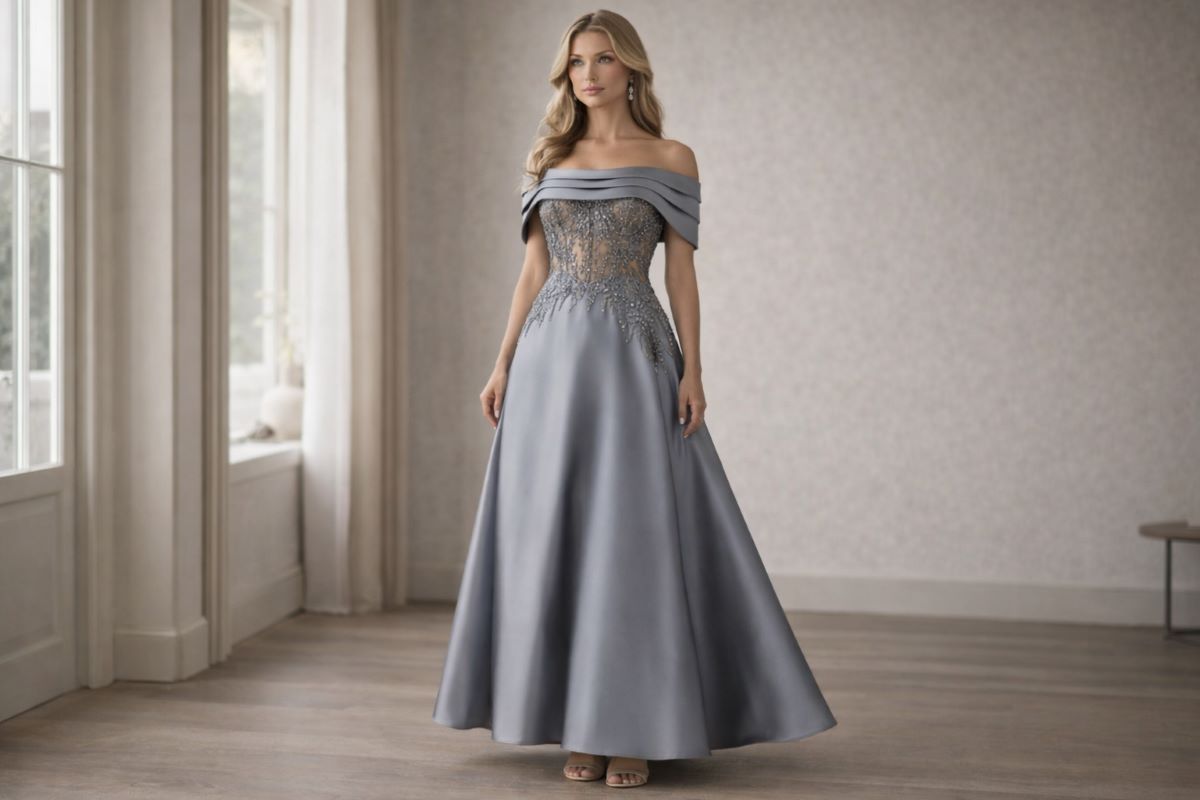
Why Jovani’s fabric first approach matters
Many dresses fail because the design idea and the material do not match. A fabric that is too soft for a structured bodice will slide and collapse. A fabric that is too stiff for a draped silhouette will look bulky. Jovani tends to avoid this mismatch by designing silhouettes around fabric performance, not just visual trend.
This matters most in the details you feel, not just the details you see. A bodice that stays in place, a skirt that moves cleanly, and a gown that remains comfortable after hours all come back to fabric choice and construction.
If you want to shop smarter, start by asking one question: what Evening Dress Fabrics are best for the silhouette and the event I have? The answer will narrow the options fast, and it will make the final choice feel obvious instead of stressful.
Explore the full Jovani evening gown collection to see how different fabrics shape the look, feel, and fit of each style.