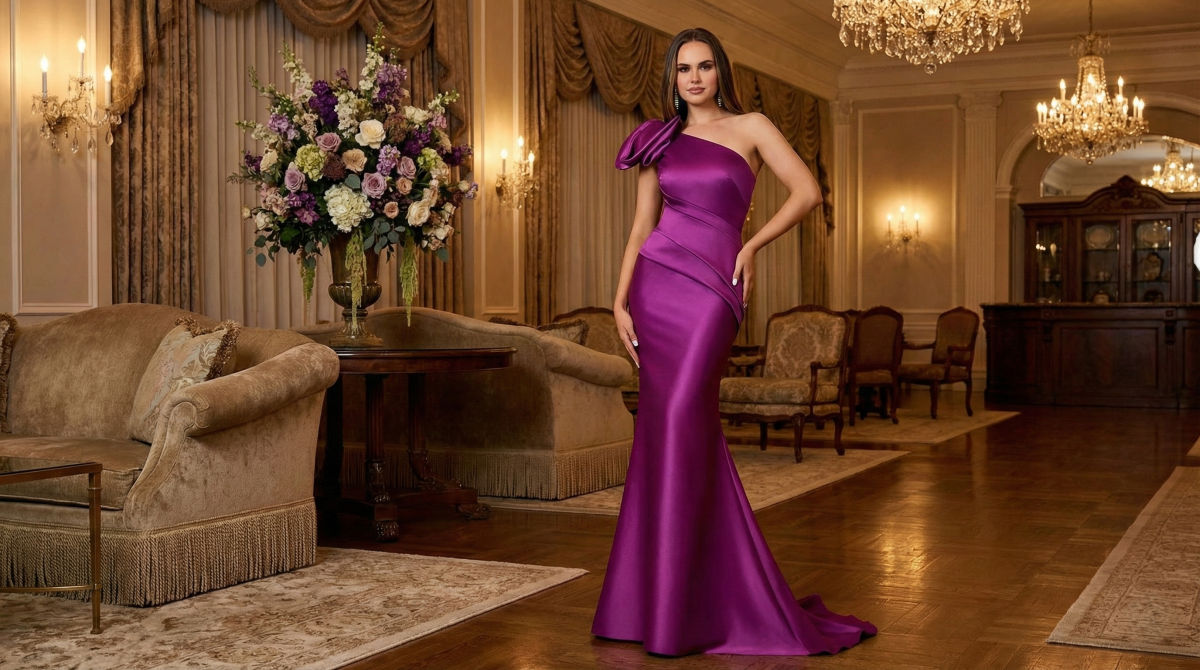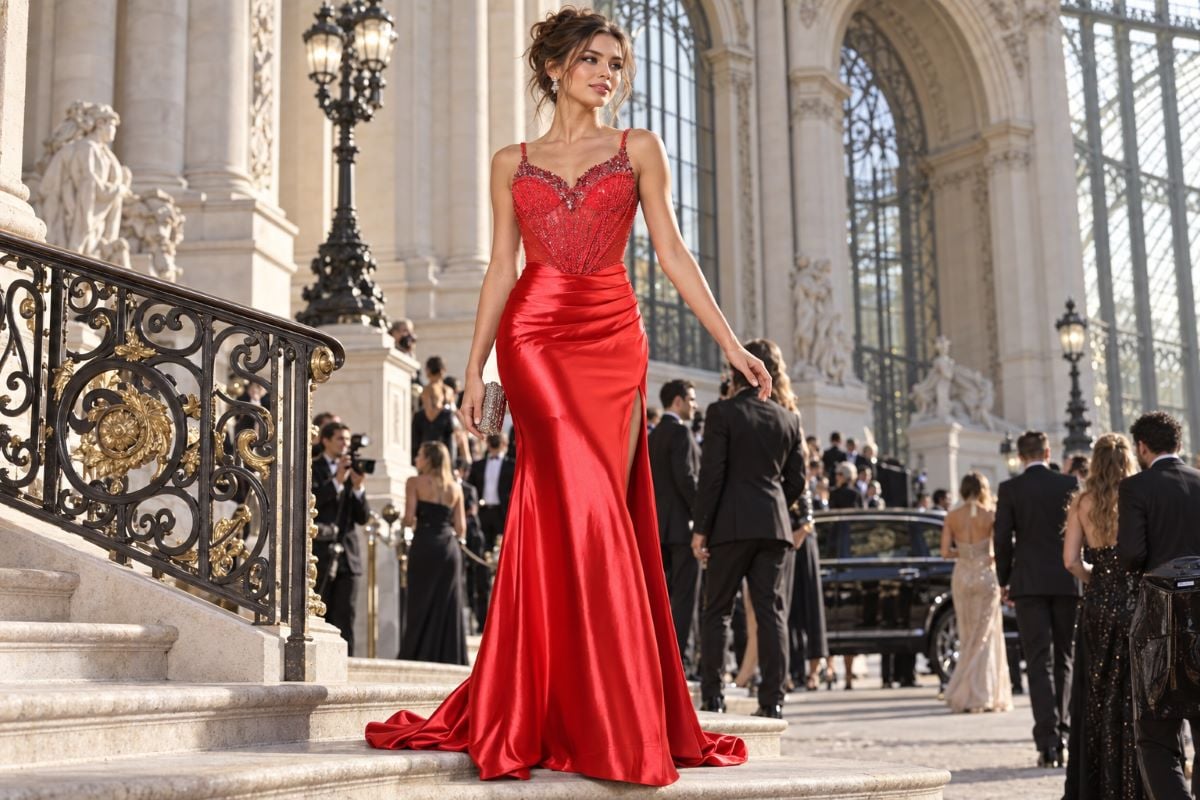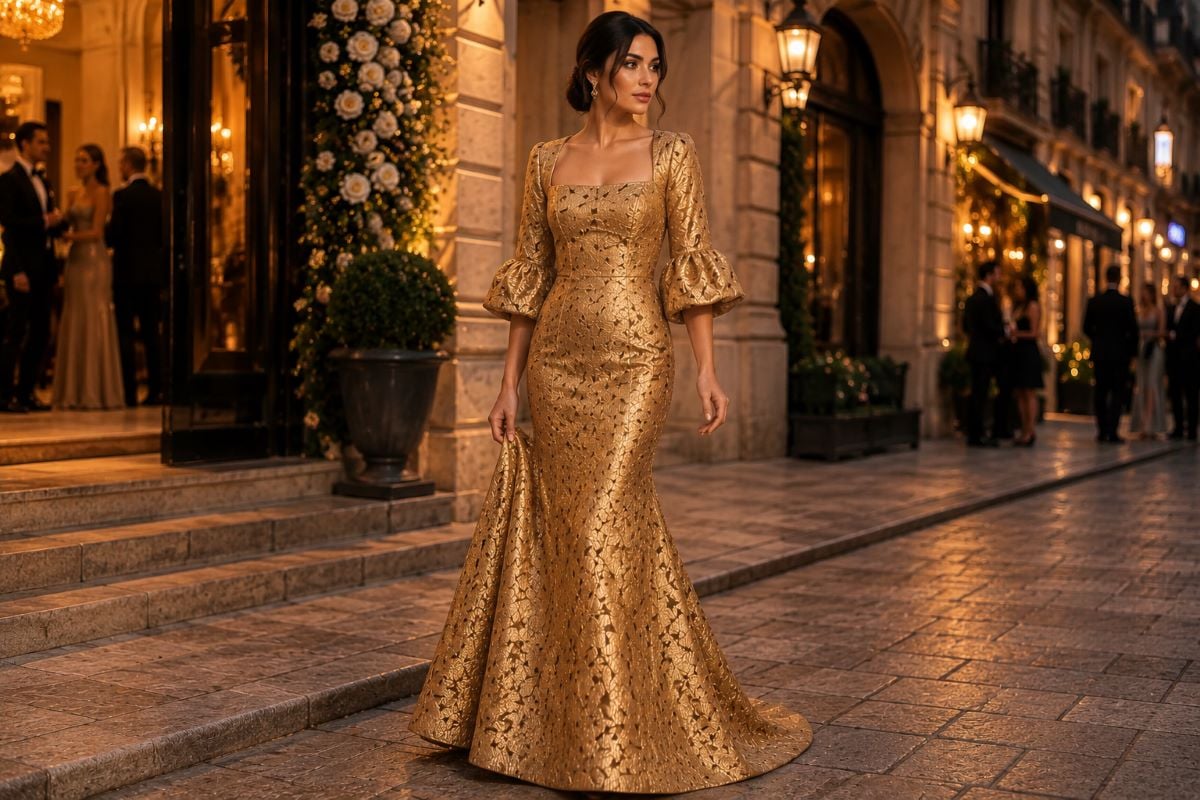


Most of the advice about prom dress shopping is about the dress. Very little of it is about the shopping, which is strange, because the fitting appointment is where the decision actually gets made and where most of the avoidable mistakes happen.
Knowing how to choose a prom dress starts with the trip itself. This guide covers when to book, what to wear to the appointment, what to bring, how to try on a gown properly, and what to check before you say yes.
How does prom dress shopping actually work?
What should you know before your first prom dress appointment? Book earlier than feels necessary, ideally three to five months ahead, since ordering and alterations both take weeks. Wear something easy to change out of and the undergarments you plan to wear on the night, because a gown fitted over the wrong ones is fitted wrong. Bring the shoes you expect to wear, or a pair at the same heel height, since the hem is set from them. Take a photograph of yourself in each gown from the front and the side rather than trusting the mirror. And do the four movements in every dress, sit, stand, raise your arms and take a step up, because a gown that fails any of them will fail on the night.

When to start
Three to five months before prom is the comfortable window, and the reason is arithmetic rather than caution. A gown ordered in your size can take several weeks to arrive, alterations need a week or two after that with a final fitting close to the date, and any of those steps can slip.
Starting later is possible, and the fast shipping options exist for exactly that reason, but every week later narrows the choice to what is physically in stock in your size. Starting in the final month means buying from the rail rather than from the range.
The other timing question is the appointment itself. Weekday afternoons are quieter than Saturdays in the months before prom, and a quieter store means longer in the fitting room and more attention from whoever is helping you.
What to wear prom dress shopping
This is the part nobody mentions and it changes the outcome more than people expect.
Wear the undergarments you plan to wear on the night, or the closest thing to them. A strapless gown tried on over a regular bra sits differently from the same gown over a strapless one, and a fitting done over the wrong foundation is a fitting done to the wrong body.
Wear clothes that come off and go on easily, since you will be changing several times. Avoid anything with a lot of makeup transfer, because a mark on a sample gown is embarrassing and a mark on a gown you have just decided to buy is worse.
Bring shoes at the heel height you expect to wear. The hem of a floor-length prom gown is set from the shoe, and a hem set to flats will drag in heels or float above the floor in flats if it was set to heels. If you have not chosen shoes, borrow a pair from the store at roughly the right height.
What to bring with you
Your phone, for photographs rather than for browsing. A photograph from the front and the side in each gown shows you what the mirror does not, since a mirror is face-on and most of prom is not.
A written note of your measurements, if you have taken them, and a copy of the school dress code if there is one. Both save a round of guessing.
One person whose opinion you actually want. A fitting with five friends produces five opinions and no decision. A fitting with one person who knows what you like produces a decision.
And a rough budget that includes alterations, since a gown at the top of the budget with alterations on top of it is over budget.
Trying on prom dresses properly
When trying prom dresses on, standing still in front of a mirror is the least informative thing you can do. Four movements tell you what the mirror cannot.
Sit down fully, in a chair rather than perching. A fitted gown that feels fine standing can pull across the thighs or ride up at the bodice once you are seated, and prom involves a lot of sitting.
Raise both arms. A strapless or fitted bodice that gaps or slips when you do this will gap and slip while dancing, and no amount of fashion tape fixes a bodice that was never close enough.
Walk the length of the room and turn. Stride length matters more than most people realize. A mermaid style prom dress that looks perfect standing still can shorten your stride to a shuffle, which shows in every video.
Take a step up, onto a low platform or the fitting room step. That catches a hem that is too long and a skirt that catches under the foot, which is how most falls at prom actually happen.
What to check before you decide
Beyond how it looks, five things are worth checking in the fitting room because they are hard to fix later.
Turn the bodice inside out or ask to see the inside. A fully lined bodice with boning down the seams holds its shape all evening. An unlined one relies on being tight, and tight is not the same as supported.
Check the closure. A zip that sticks in the fitting room will stick on the night. A lace-up back on a corset back prom dress is the most forgiving closure there is, since it gives several inches of adjustment without a tailor.
Ask what alterations it would need and what they would cost. A gown that needs the bodice taken in, the hem shortened and a strap adjusted is a different purchase from one that needs a hem only, and the quote belongs in the decision rather than after it.
Ask about the return window and whether it survives alterations, because most do not. Once a gown is altered it is yours.
And ask when it would arrive if it has to be ordered. A gown that arrives ten days before prom leaves no time for alterations if the fit is off.
The size question
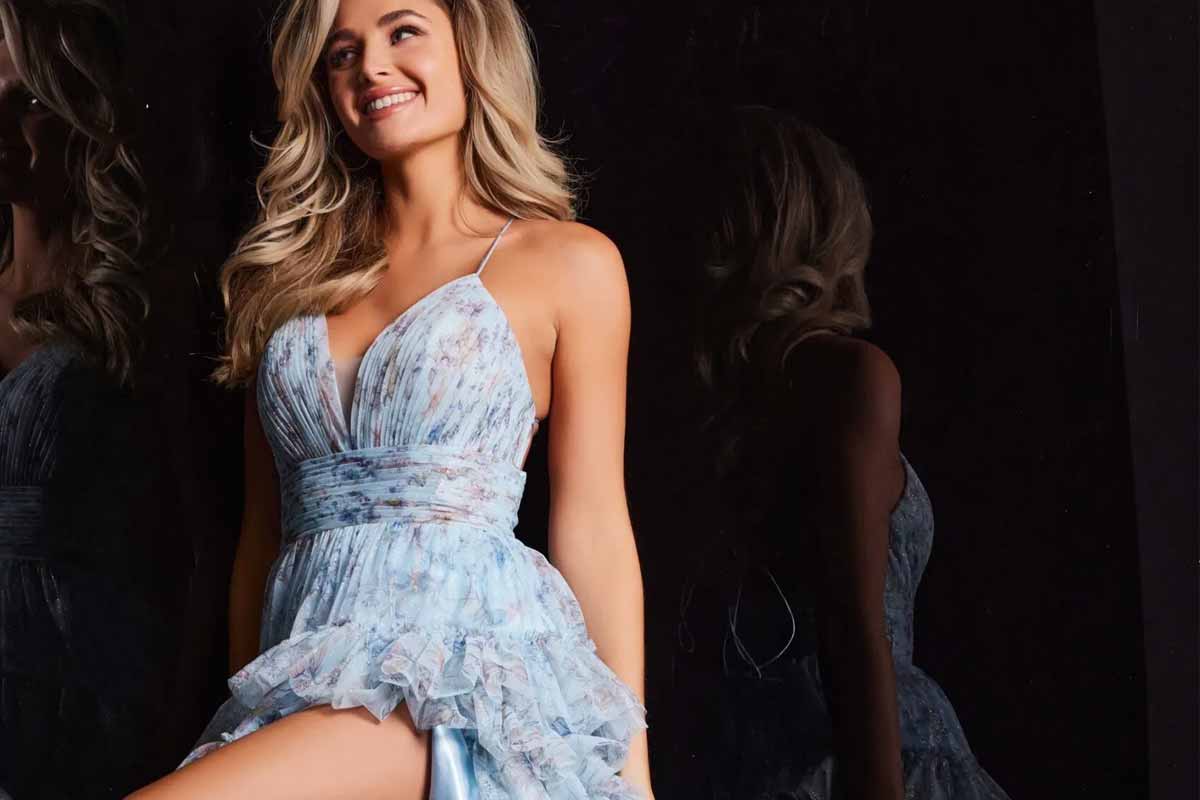
Formal sizing does not match everyday clothing, and it varies between designers, so ignore the number on the label and go by the fit.
If you are between sizes, order the larger one and have it taken in. Taking a gown in is routine work. Letting one out depends on seam allowance that is often not there.
Order to your largest measurement, whichever of bust, waist or hip that is, and have the others adjusted. On plus size prom dresses the same rule holds, and a range that is pattern-made at size rather than scaled up from a smaller block will fit better in the first place, so ask about that specifically.
And if a gown fits in the store, ask whether the size you tried is the size that will be ordered. Samples are sometimes a different size from what arrives.
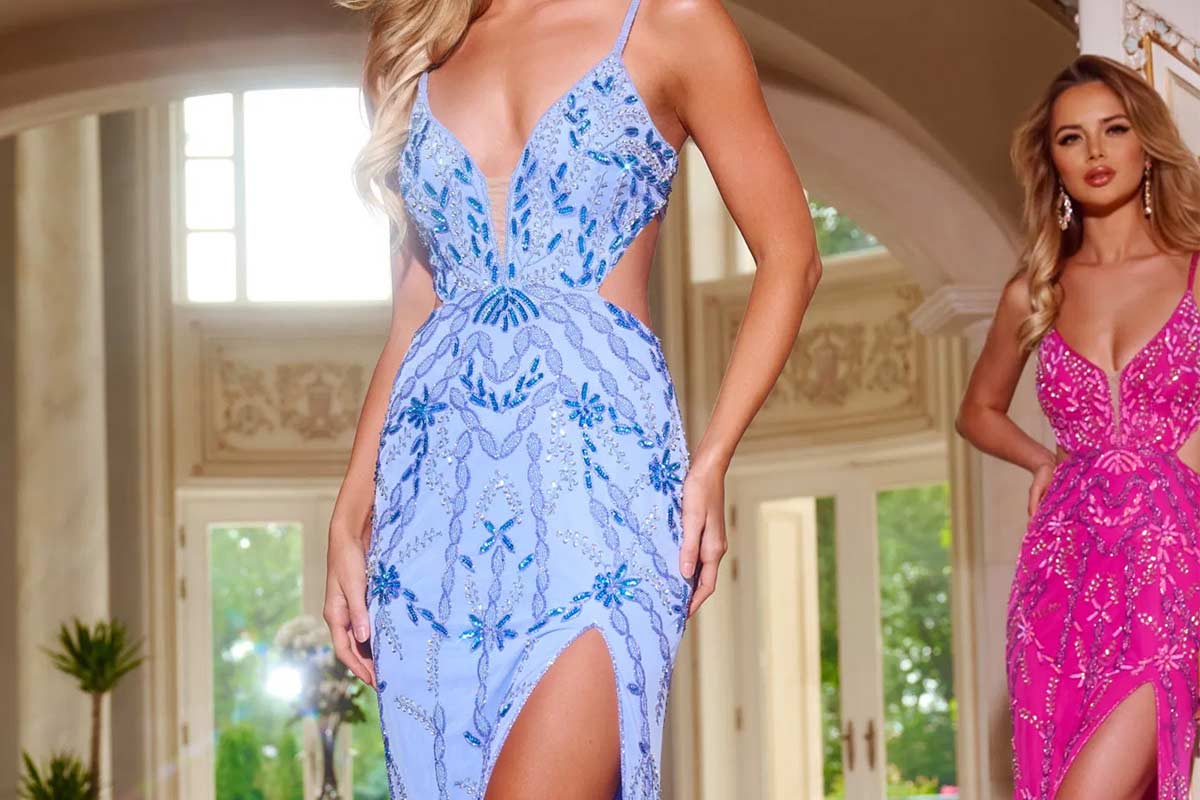
How to find a prom dress you will still like tomorrow
The gown you like most at the end of a long appointment is not always the gown you like most the next morning, and that is worth knowing before anyone hands you a form.
If you are unsure, ask whether the store will hold it for a day. Many will in the months before prom, and a day is enough to look at the photographs again with fresh eyes.
If two gowns are close, choose the one you moved best in rather than the one that photographed best standing still. The photographs last, but so does the evening, and a flowing A line style for prom you can dance in usually beats a dramatic gown you have to manage.
Prom Dress Shopping Questions
When should you start prom dress shopping?
Three to five months out, and the reason is that three separate things have to happen in sequence: the gown arriving, the alterations, and a final fitting close enough to the date to still be accurate. If prom is in May, that means starting around December or January rather than waiting for the invitations.
What should you wear to a prom dress fitting?
The undergarments you plan to wear on the night, clothes that change easily, and shoes at the heel height you expect to wear. A gown fitted over the wrong foundation is fitted wrong, and the hem is set from the shoe, so both change the outcome more than people expect.
How do you try on prom dresses properly?
Treat it as a rehearsal rather than a photograph. Sit in a chair, lift your arms above your head, walk the length of the room and turn, and climb the fitting room step. Anything that pulls, gaps, catches or shortens your stride during those will do the same thing at prom, and none of it shows while you are standing still.
Should you bring friends to a prom fitting?
Bring one rather than several. A group in a fitting room tends to react to the dress they would each choose for themselves, which is not the same as helping you choose yours. Photographs from the front and side are a more reliable second opinion than a crowd.
What size should you order if you are between sizes?
Size up, because a tailor can always remove fabric and cannot add what was never cut. Measure bust, waist and hips, match the largest of the three to the chart, and expect the other two to be taken in at the fitting. That is normal rather than a sign the size was wrong.
What should you ask before buying?
What alterations it needs and what they cost, whether the return window survives alterations, and when it would arrive if it has to be ordered. All three belong in the decision rather than after it, and all three are answered in a minute at the counter.
Booking the appointment
The appointment decides more than the browsing does, so it is worth booking one rather than walking in, especially on a Saturday in the months before prom.
Book with an authorized Jovani retailer, tell them your date when you book, and ask them to have the alterations quoted before you leave.