


The history of prom is shorter than most people assume, and high school prom in its current form is younger still.
Prom looks like something that has always existed, which is exactly why almost nobody knows where it came from. The short version is that it started at American colleges in the late 1800s, borrowed its manners from debutante balls, and only became a high school tradition decades later.
This guide covers what prom is in high school, why it carries that name, when it happens and for which year group, and how it changed from a college etiquette exercise into the event it is now.
What is prom, and why is it called prom?
Where does the word prom come from? Prom is short for promenade. The word is French, meaning a walk or a stroll, and it dates back to the 16th century. By the 1800s it described promenade concerts, European classical performances held in rooms without seating so guests could walk around while the music played. In American usage promenade also came to describe the formal parade of guests that opens a ball. The Oxford English Dictionary traces prom itself to an Ivy League tradition called presentation week, where formal dress and dancing accompanied a promenade concert. The promenade prom connection is literal: the name describes the walking, not the dancing, which also answers why is prom called prom.
What is prom in high school today? It is a formal dance held by an American high school, usually for junior or senior students, with formal dress, a prom king and queen vote, and photographs that outlast everything else about the night.
When is prom, and what year of high school?
When is high school prom is the most practical question here. Prom is a spring event at most American schools, and the majority fall between April and early June, close to the end of the academic year. Exact dates vary by school and district, so the reliable answer is always the school calendar rather than any general rule.
What year is prom has two answers, because two events exist. Junior prom is held for eleventh grade students, and senior prom for twelfth grade. Many schools run only one, usually senior prom, and invite juniors as guests. Where both exist, senior prom is normally the larger event.
That structure is inherited rather than designed. The earliest college proms were junior class events, which is why the term junior prom appears in the record before senior prom does, and it is the reason the split still exists in schools that keep both.
Where prom came from
The origin of prom is a debutante ball, an 18th century event that marked a young woman’s formal entry into society. Those balls were exclusive, expensive and tightly controlled by class. Prom took the format, the formal dress and the opening promenade, and applied it to a much wider group.
The sociologist Amy Best, writing in her study of the tradition, describes prom as a democratized version of the debutante ball, which is the clearest single summary of what happened. The point was never the dancing. It was teaching social manners to a graduating class in a supervised setting.
Further back, the idea of a formal event marking a young person’s entry into adult society is much older, and historians often point to the banquets held in ancient Greece for the same purpose. Prom is a recent version of a very old habit.
The first recorded proms
When was the first prom is a question with no clean answer, because nobody knows who held the first American prom, and any source claiming a specific first event is going beyond the evidence. What exists is a small number of early written references, all from northeastern colleges.
The earliest widely cited one is an issue of The Harvard Crimson from December 1879, which mentions the Junior Prom in a passage mocking Yale students for being unwilling to fund theirs. The quoted lines complain that neither the Ball Club, the Boat Club nor the Junior Prom Committee could get a dollar out of their pockets.
The second is a diary entry by Dwight Morrow, then a student at the all-male Amherst College and later a United States senator, describing an invitation to a junior prom at nearby Smith College. Sources date that entry to either 1894 or 1895, and the difference has never been resolved. A photograph in the Smith College archives dated 1895 shows a junior prom held in the school’s Alumnae Gymnasium.
What all the early records share is the setting. These were college events, held for a graduating class, in a gymnasium or hall, with tea and light refreshments and a great many chaperones.
How prom reached high schools
High schools began organizing their own proms in the first decade of the 20th century, but the custom did not become widespread until the 1920s and 1930s. Parents and educators liked the idea for the same reason the colleges had: a supervised formal dinner and dance would teach social skills to teenagers.
The early high school version was modest. Students wore their best clothes rather than formal gowns and tuxedos, the venue was the school gymnasium, decorations were homemade, and the refreshments were simple. Through the Depression years that stayed true out of necessity.
Prom decade by decade
| Era | What prom looked like | What changed |
|---|---|---|
| 1880s to 1900s | College junior proms, gym venues, tea and dancing | The tradition is established at northeastern colleges |
| 1910s to 1930s | High schools adopt it, Sunday best, homemade decorations | Prom becomes a school event rather than a college one |
| 1950s | Hotel ballrooms, country clubs, themed decor, live bands | Postwar prosperity turns prom into a production |
| 1960s and 1970s | Changing fashion, wider range of music, looser rules | Cultural shifts reach the dance floor |
| 1980s and 1990s | Limousines, designer gowns, prom in film and television | Prom becomes commercial and culturally central |
| 2000s onward | Promposals, social media, wider inclusion | The audience becomes public rather than local |
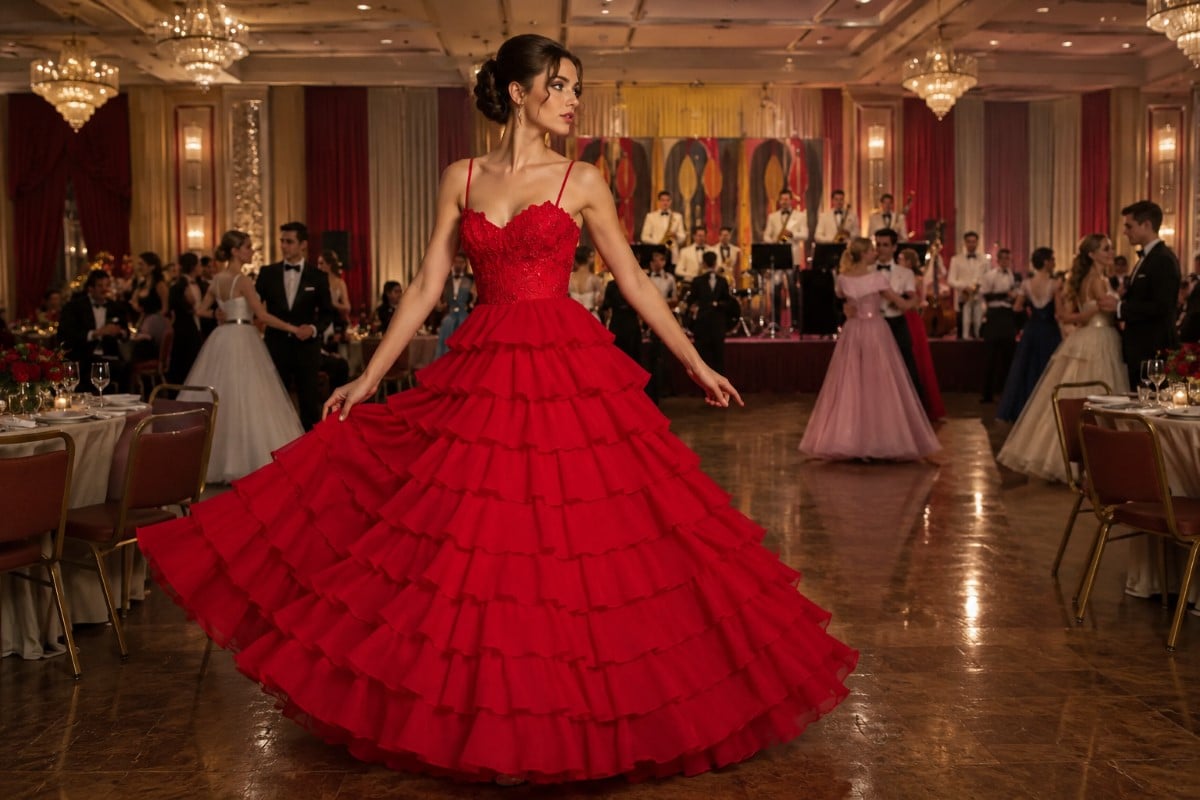
The 1950s are the real turning point. Before that decade prom was a school gym event. After it, junior proms and senior balls moved to hotel ballrooms and country clubs, competition over floor length dresses and transport began, and prom queen became a title worth campaigning for.
The grand march, and why it still exists
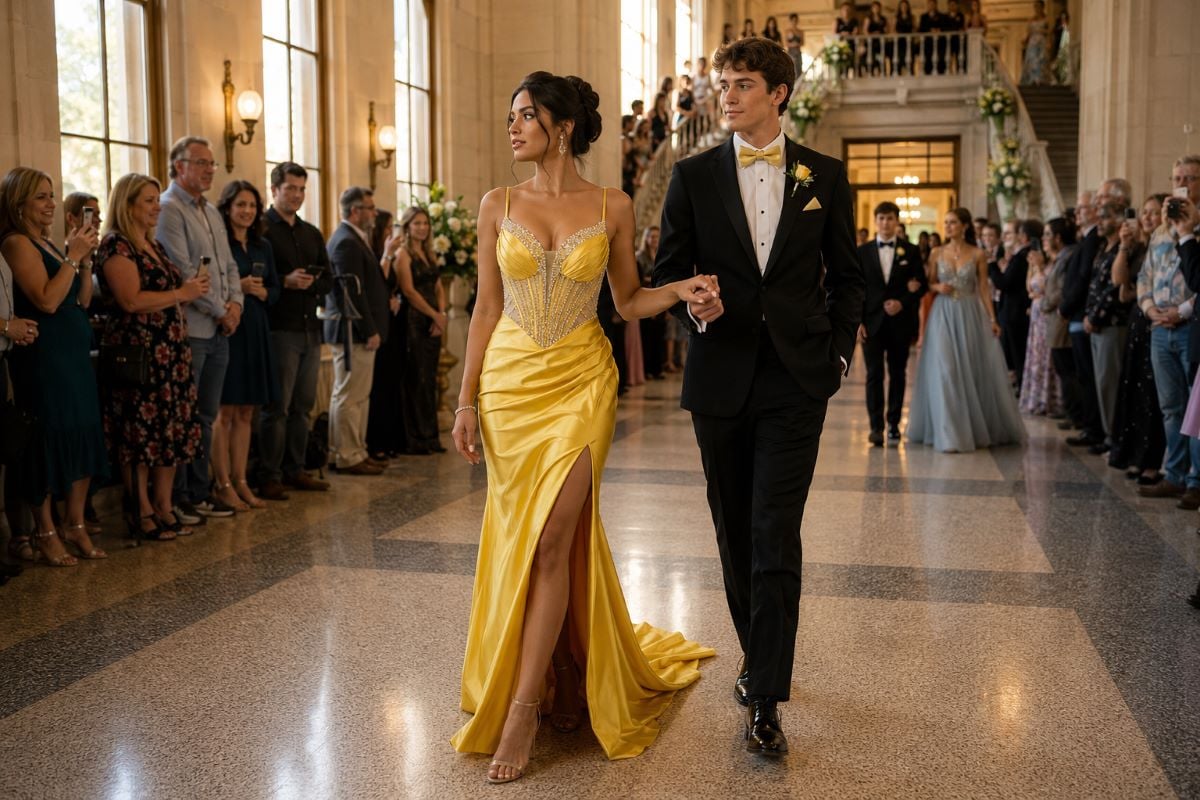
In many schools, particularly across the Midwest, prom opens with a grand march. Couples are announced by name and walk together in front of an audience of parents and community members before the dance itself begins.
That is not a decorative add-on. The grand march is the promenade the word prom is named after, still surviving in its original form while everything around it changed. In schools that keep it, the grand march is often the part families care about most, since it is the only portion of the evening they attend.
What prom is actually for
What is the purpose of prom has changed more than the event itself. In the college era it was instruction in manners. In the early high school era it was much the same. Today it functions as a rite of passage, a marker between school and whatever comes next.
Some of the older framing has not aged well, particularly the idea of prom as preparation for a wedding, which reflected assumptions about young women that no longer hold. The version that has lasted is simpler: a formal evening that a year group experiences together and remembers.
What has genuinely improved is who prom is for. Access across race, gender and economic background was contested for a long time and in some places actively restricted. That story is not finished, but the direction over the last two decades has been toward inclusion, and the tradition is stronger for it.
Prom History Questions
Where did prom originate?
Prom originated at colleges in the northeastern United States in the late 1800s, most famously at Harvard, Amherst and Smith. The earliest widely cited reference is an issue of The Harvard Crimson from December 1879 mentioning the Junior Prom. No single first prom has ever been identified.
Is prom short for promenade?
Yes. Promenade is a French word meaning a walk or a stroll, dating to the 16th century. By the 1800s it described promenade concerts, where guests walked around while music played, and also the formal parade of guests that opens a ball. That opening parade is what the name refers to.
When did prom start, and when was prom invented?
There is no invention date. The tradition emerged gradually at northeastern colleges through the late 1800s, with the first clear written reference in December 1879. High schools began holding their own proms in the first decade of the 20th century, and the custom became widespread in the 1920s and 1930s.
When is prom in high school?
Prom is a spring event at most American high schools, usually falling between April and early June near the end of the academic year. Dates are set by each school and district, so the school calendar is the only reliable answer rather than any general rule.
What year of high school is prom?
Junior prom is for eleventh grade students and senior prom for twelfth grade. Many schools hold only one, usually senior prom, and invite juniors as guests. The split is inherited from the college tradition, where junior class proms came first.
What is a grand march at prom, and why does it happen?
The grand march prom tradition is an opening ceremony where couples are announced and walk in front of an audience of parents and community members before the dance begins. It is common in the Midwest and is the original promenade that gave prom its name, surviving in almost unchanged form.
Dressing for the tradition today
What has changed least across all of it is the dress. A formal gown was the expectation at the first college proms and it remains the expectation now, which makes it the one continuous thread from 1879 to this spring.
Browse the prom dresses collection to narrow down a silhouette before anything else.
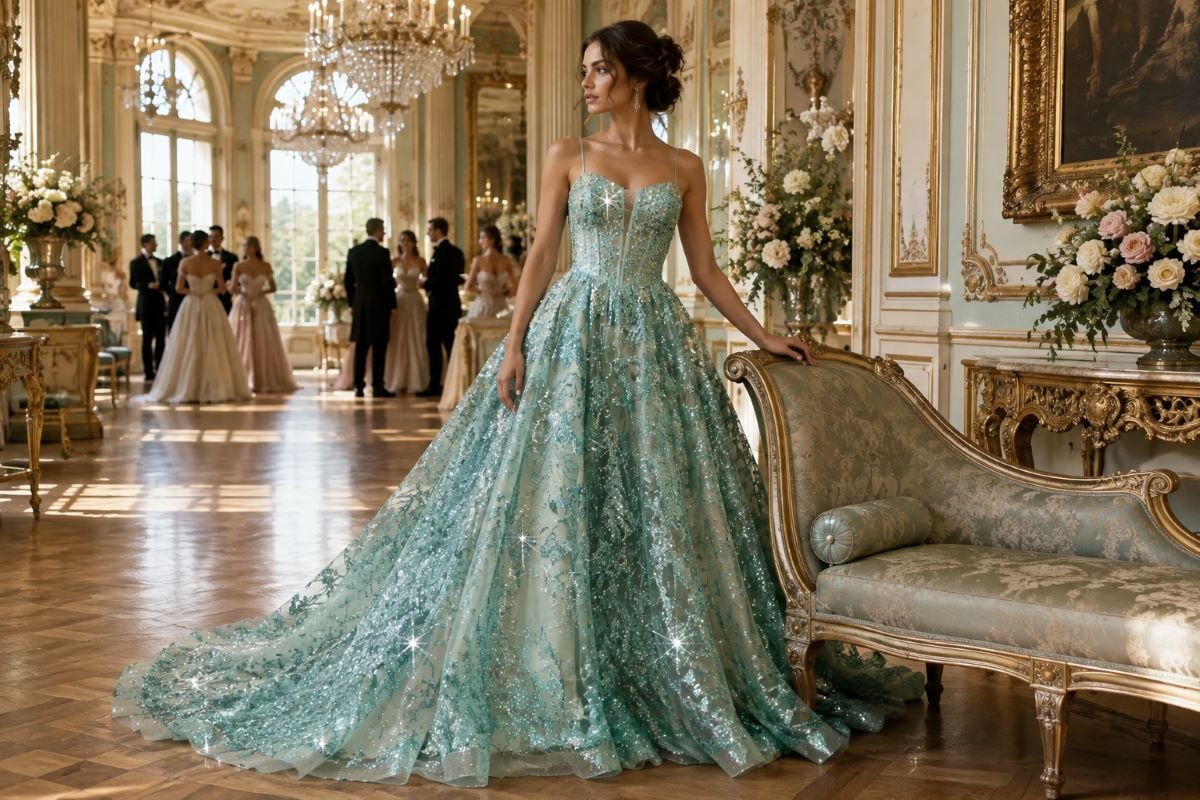
If you want the closest thing to the original event, a ball gown is what those first promenades were built around.
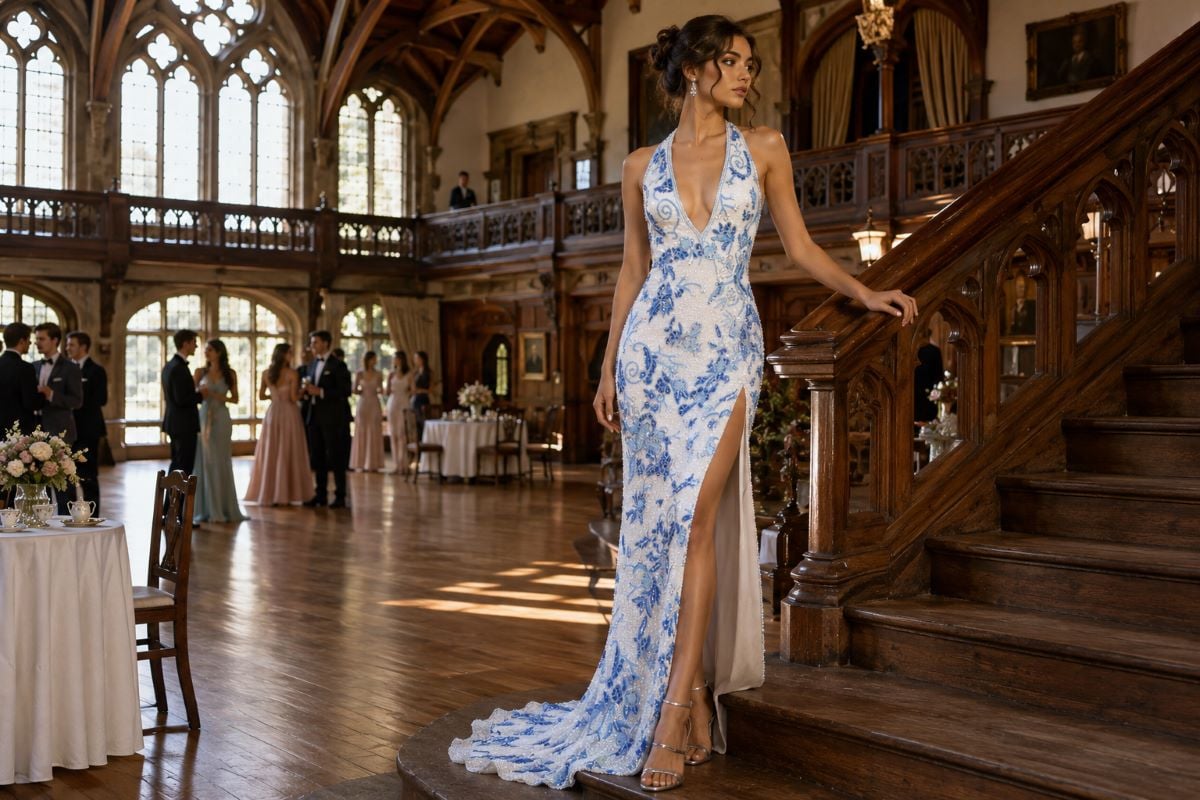
For a floor length gown in particular, the hem needs setting to the shoes you plan to wear.
Take your shortlist to an authorized Jovani retailer and have the fit checked properly before you commit.