
Blog
Mother of the Bride Dress Alterations Guide

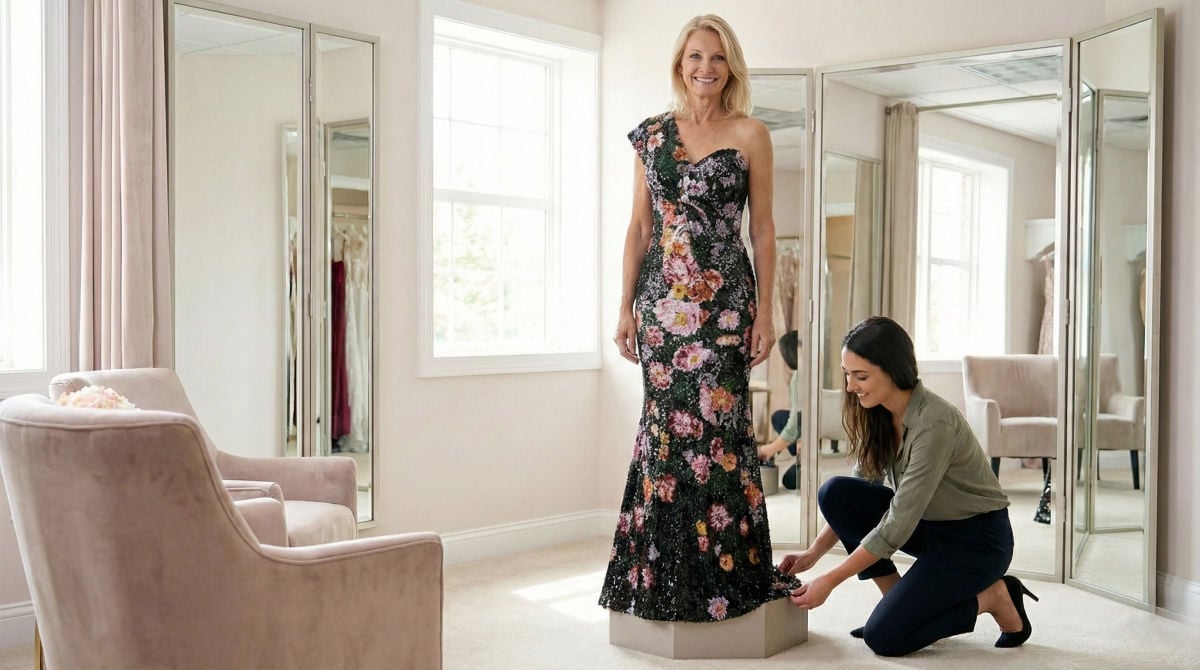
A great Mother of the Bride look is not only about the gown you choose. It is also about how it fits you when you walk, sit, hug, and pose for photos all day. This MOB Dress Alterations Guide is here to make that part feel simple, not stressful. Alterations are normal, even for a well made designer gown, and the goal is always the same: keep the design intact while making it feel like it was made for you.
Because Jovani gowns are purchased through boutiques and authorized retailers, you will usually choose your style first, then work with a local tailor for your mother of the bride dress alterations. If you plan early and use the right fitting steps, you can avoid last minute panic and still end up with a comfortable, polished result.
When to start alterations
The most common question is about timing, because every mother wants to know the wedding dress alterations timeline for mother of the bride. In general, plan to start earlier than you think, especially during peak wedding months when tailors book out quickly. This Mother of the Bride Dress Alterations Guide works best when your timeline has breathing room for multiple fittings, small refinements, and a final press.
If you are still deciding what silhouette to buy, remember that different styles require different work. For example, Long Mother of The Groom Dresses often need careful hem and length adjustment, while structured bodices may need more shaping sessions.
If you are shopping in extended sizing, do not wait until the last minute. Tailoring a gown in a way that supports and smooths without changing the design takes skill, and starting early creates options. That is why many mothers start their planning by browsing Plus Size Mother of The Bride Dresses and then booking a tailor as soon as the gown arrives.

How long do alterations take
How long do dress alterations take? It depends on the gown’s construction, the season, and how many adjustments you need. A simple hem can be quick, but detailed work like altering lace and beading takes more time because it often requires removing embellishment, stitching carefully, then reapplying it so it looks untouched.
This is also why a fitting appointment schedule matters. A realistic plan usually includes an initial evaluation, a shaping fitting, and a final fitting. If the gown has heavy detailing or multiple layers, you may need an extra check in between.
Choose the right tailor for the gown you picked
A common mistake is choosing a tailor based only on convenience. A better approach is choosing someone who understands formalwear structure and can protect the gown’s original line. This is especially important with design focused necklines like Off Shoulder Mother of The Bride Gowns, where the placement must be secure and symmetrical, and the support inside the bodice must be right.
The same goes for necklines with shaping needs, like V Neck Mother of The Bride Dresses. A V neckline can look stunning when it sits correctly, but if it is too open, too tight, or pulling, it can distract you all night. A skilled tailor knows how to stabilize it without changing the look.
Your first fitting should be about planning, not panic
Your first appointment is usually the most important, because it sets expectations. This is where you map out your mother of the bride gown alterations and decide what is truly needed. Bring the items you will wear on the day. This is part of what to bring to a fitting, and it makes the results accurate:
Your event shoes with the correct heel height
Your undergarments, including shapewear if you plan to wear it
Any jewelry that affects neckline comfort
A wrap or jacket if you will wear one
This helps the tailor measure correctly and prevents redoing work later.
Hem and length adjustment
Hem and length adjustment sounds simple, but it affects everything, including how your posture looks in photos. A hem that is too long makes you look like you are floating inside your gown. A hem that is too short can make the whole look feel off balance.
This is also where your silhouette matters. A fuller skirt often needs leveling across multiple layers. A more streamlined shape requires precision so the hem line stays clean as you move. If you love a sleek shape, you will often see that tailoring is about refining proportions more than changing structure. Many mothers who choose sheath mother of the bride gowns only need careful length balancing, a small waist adjustment, and smoothing at the hip to make the gown feel custom.
Take in the bodice without changing the design
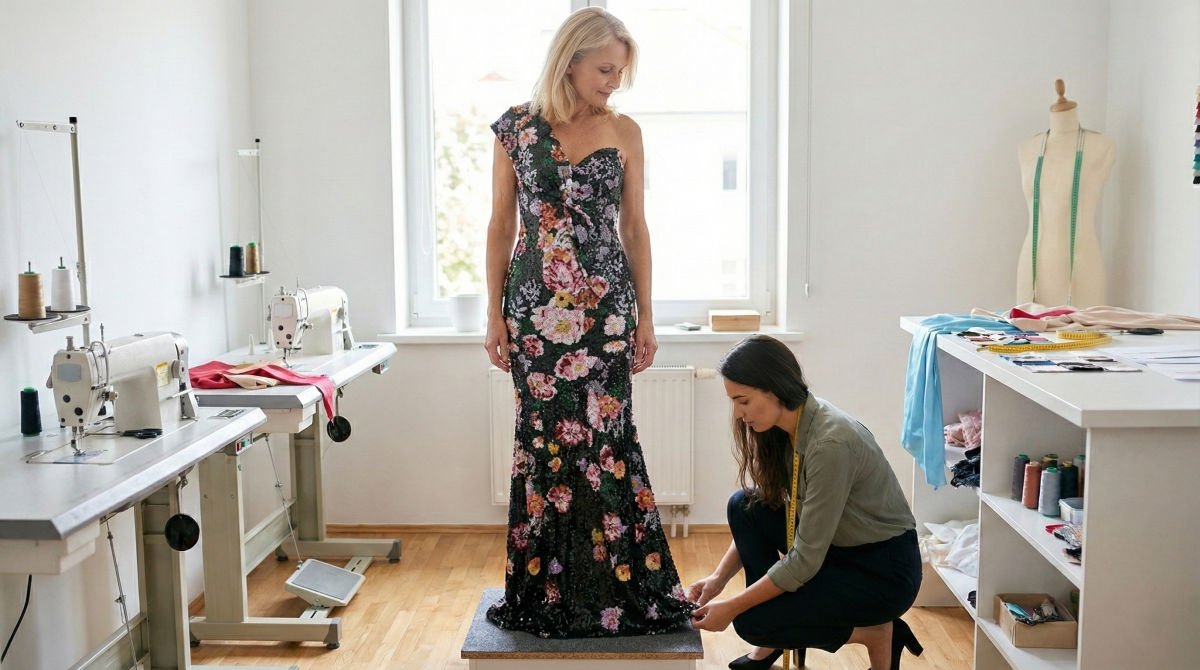
Take in the bodice is one of the most common requests, and it is also one of the most delicate. A bodice should feel supportive, not tight. The best fit lets you breathe, sit, hug, and lift your arms comfortably without the neckline shifting.
A good tailor will check:
Bust support and lining structure
Waist placement so it matches your natural waist
Back closure tension so it lies flat
Comfort at the underarm
This MOB Dress Alterations Guide emphasizes comfort because mothers spend the whole day moving. A bodice that feels too snug at first can become exhausting by the reception.
Sleeve alterations, from comfort to confidence
Sleeve alterations are very common, even when the gown fits well elsewhere. Sleeves can twist, pinch, or feel too loose depending on fabric and arm movement.
If you choose a style that already has built in coverage, it is still worth checking the sleeve fit early. long sleeve mother of the bride gowns
often need small refinements at the wrist, elbow, or upper arm so the line stays elegant instead of bunching.
If you are adding sleeves to a sleeveless gown, ask your tailor to match the fabric tone and weight as closely as possible. That is where experience matters most.
Neckline alterations that keep the look elegant
Neckline alterations can be subtle but powerful. Some mothers want a slightly higher neckline for coverage. Others need small shaping so the neckline stays flush against the body.
If your gown has lace, changes must be careful. Lace Mother of The Bride Dresses
often require special handling because the pattern must remain balanced. Raising a neckline or changing the strap placement can shift the lace motif, so the tailor may need extra time to keep the design looking intentional.
If your gown has embellishment, the same idea applies. Beaded Mother of The Bride Dresses need delicate work because beads add weight and can change how fabric drapes. The right tailor will reinforce seams, protect the beadwork, and avoid visible stitch lines.
Altering lace and beading without visible evidence
Altering lace and beading is where quality tailoring becomes obvious. The goal is that nobody can tell anything was changed.
Common situations include:
Shortening straps while keeping lace placement natural
Taking in side seams where bead patterns need to remain aligned
Adjusting the hem on a beaded skirt without cutting through important motifs
If your tailor says it will take longer for these steps, that is usually a good sign. Rushed work is where the gown can lose its original beauty.
Bustle or wrist loop for a long gown
Many mothers ask about bustle or wrist loop, especially for evening weddings with dancing. Not every mother needs a full bustle like a bridal gown, but a wrist loop can be a simple solution for holding the train or skirt when moving through crowds.
If your gown has a long hem or light train, ask your tailor to recommend the cleanest option that does not change the back view in photos.
Fabric matters, especially for comfort
Fabric impacts fit, comfort, and what alterations are possible. A structured fabric holds shape well, while softer fabrics move more. If you are wearing a lightweight fabric, you may need a bit more support inside the bodice, or special attention to how the skirt falls.
For warm weather weddings, movement is often the priority. Many mothers love a line mother of the bride gowns
because they feel graceful, breathable, and forgiving, especially when the fabric flows well. If you are selecting a soft fabric for a beach, garden, or summer celebration, chiffon mum of groom gowns often feel light and elegant, but the tailor may need to check lining and hem weight so the skirt does not cling or fly up in wind.
Alterations cost expectations
Alterations cost expectations vary a lot based on labor and complexity. The main things that raise cost are heavy beading, lace work, multiple layers, and major reshaping. A simple hem can be affordable, while a bodice rebuild or deep structural change costs more because it takes more time and skill. A helpful mindset is to budget based on the gown’s details. The more intricate the dress, the more you should plan for careful work.

Final fitting checklist and last minute peace of mind
Your final fitting should feel like confirmation, not discovery. Wear the full outfit again, including shoes and undergarments, and walk, sit, and move naturally. This final check is what turns a good fit into a confident fit. If you are dealing with a tight timeline, last minute alterations tips are about being realistic. Focus on comfort and stability first. Hem length, bodice security, and sleeve comfort matter more than tiny cosmetic tweaks.
This MOB Dress Alterations Guide is meant to help you feel prepared, not pressured. When the gown fits correctly, you stop thinking about it and start enjoying the day, which is the whole point. Explore the full Jovani Mother of the Groom collection to find a gown that feels beautiful now and fits even better after expert alterations.